One of the best new Instagram accounts of 2015 returned this weekend after a three-month hiatus. Here’s a season-shifting shot of an irrigation circle near the tiny town of Ferron, Utah:
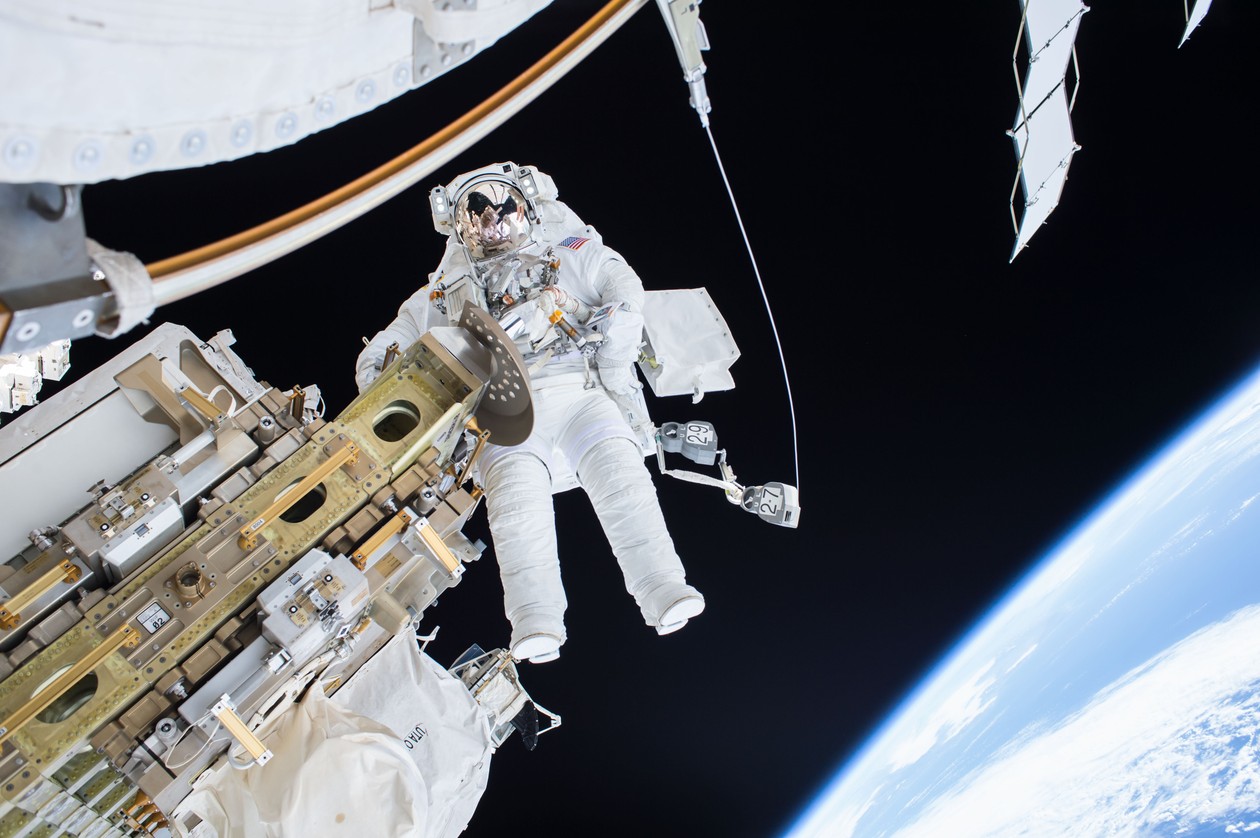
NASA released today this holiday card, er, photo of Tim Kopra during a spacewalk. Kopra and Scott Kelly ventured out of the orbital station for three hours and 16 minutes on Monday to fix a rail car before a Russian cargo supply spacecraft arrives Wednesday.
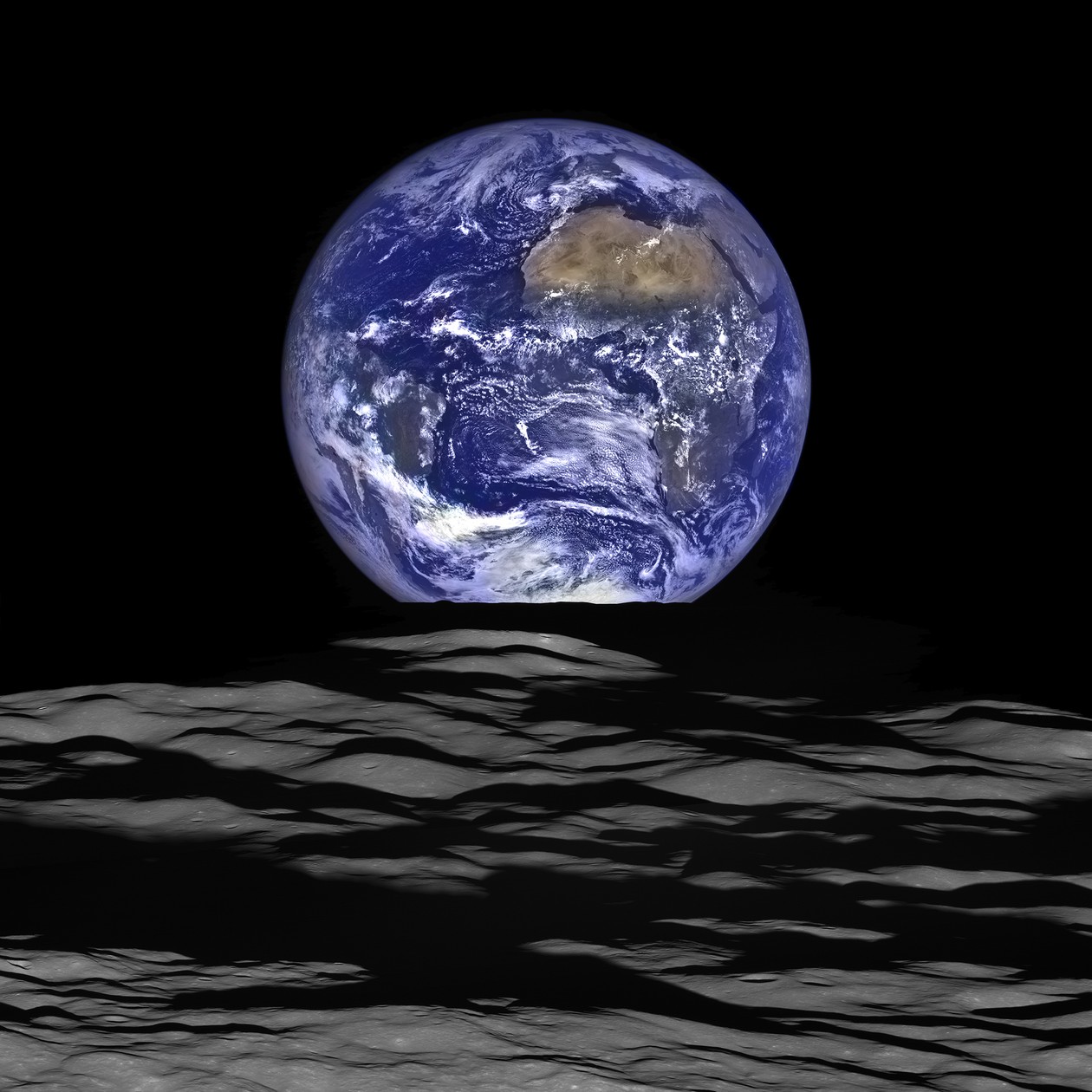
The pale blue dot sure is beautiful up close—close being the surface of the moon, about 238,900 miles away.
This photo, released by NASA Friday, is a composite of images captured in October by the Lunar Reconnaissance Orbiter, which has been orbiting the moon since 2009, photographing the features of its surface, like the crater here, called Compton. Sometimes, the spacecraft will turn toward space to analyze the lunar atmosphere or recalibrate its instruments, and catch a few glimpses of the Earth. Doing this, NASA explains, is a pretty miraculous feat:
First the spacecraft must be rolled to the side (in this case 67 degrees), then the spacecraft slews with the direction of travel to maximize the width of the lunar horizon in LROC's Narrow Angle Camera image. All this takes place while LRO is traveling faster than 3,580 miles per hour (over 1,600 meters per second) relative to the lunar surface below the spacecraft!
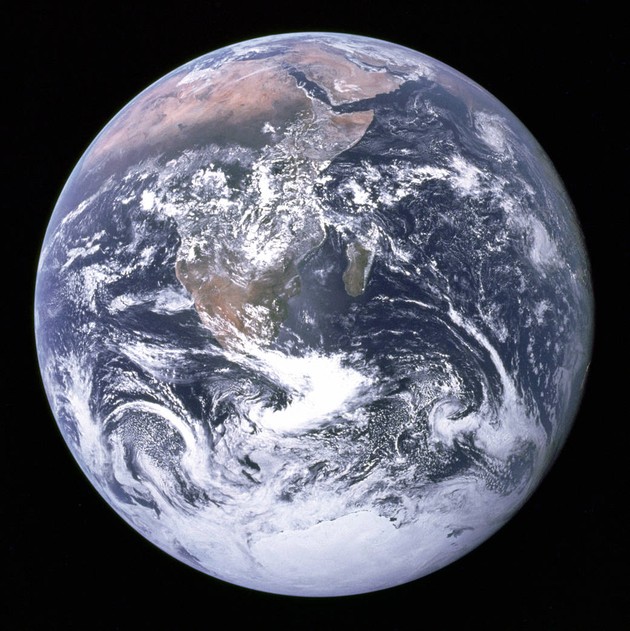
The coast of Liberia is visible at the center of the Earth, and the chunk of land to its right is the Sahara Desert. The image resembles the famous “Blue Marble” shot captured by the crew of Apollo17 in 1972, the first photograph taken of the whole round Earth and the only one ever taken by a human being.
The pool is 1,013 m (3,323 ft) long, covering 8 ha (20 acres), containing some 250 million litres (66 million US gallons) of seawater, with a maximum depth of 11.5 ft (3.5 m). The water is pumped from the Pacific Ocean, filtered, and treated. The pool was developed by Fernando Fischmann; his Chilean company Crystal Lagoons built the pool, which opened in December 2006. While early estimates put the total cost of construction at about US$3.5 million for the filtration system alone, more recent estimates are in the area of US$1.5 billion to US$2 billion total for construction and almost US$4 million in annual maintenance.
Head here for a long, laconic video tour accompanied by a sexy saxophone soundtrack.
Three astronauts got a new home address yesterday: The International Space Station, way, way up there.
Yuri Malenchenko of Russia, Tim Kopra of the United States, and Tim Peake of Britain arrived in a Russian Soyuz rocket, photographed by their new roommate as it docked:
At least it is for Kjell Lindgren, the NASA astronaut who spent the past few months photographing bodies of water from above. He returned to Earth on Friday after taking one last photo from the ISS:
A photo posted by Kjell Lindgren (@astro_kjell) on
We’ll be keeping our eyes out for photos from the newest residents of the orbital station, who arrived there today: Yuri Malenchenko of Russia, Tim Kopra of the United States, and Tim Peake, Britain’s first official astronaut to reach the ISS.
A photo posted by Daily Overview (@dailyoverview) on
Three years ago, Santa Cruz hosted a conference of the Amazon Network of Socio-Environmental Geo-Referenced Information (RAISG). Money quote:
“If all of the economic interests [projects] that are planned for the upcoming years occur, the Amazon rainforest will become a savanna with spots of forest,” warned the general coordinator of the RAISG, Beto Ricardo, from the Socio-Environmental Institute of Brazil. [...] The deforestation analysis shows that between 2000 and 2010 nearly 240,000 square kilometers (92,000 square miles) of Amazonian forest were deforested. This is equivalent to twice the Ecuadorian Amazon.
This view of the Argentine Rail Yard in Kansas City, Kansas, caught my attention because my dad used to teach middle school just a few miles from it and I would often catch glimpses of it from an overpass:
The rail yard contains 60 classification tracks, 10 receiving tracks, and 10 departure tracks:
As a 780-acre facility, Argentine Yard is the largest freight-car classification facility on the Burlington Northern Santa Fe system and is one of the largest yards of its type in the United States. The BNSF rail line converges at Kansas City, serving as a major hub where freights are transferred between several major railroads making Kansas City the second busiest U.S. rail center. It has a theoretical capacity of 5760 cars per day, but based on 1996 statistics, the yard handled about 2000 cars per day.
Trains arriving at Argentine Yard containing cars that need to be sorted enter the receiving yard. With the use of yard locomotives, the freight cars are pushed up a small hill known as the crest, and then are manually separated for their descent into the track “bowl.” As the cars roll down the crest, computers route them to the correct track based on the car’s destination. Then the groups of cars are removed from the bowl and made into trains on the 10 departure tracks of the yard.
For generations, the rail yard has been the economic lifeblood of the economically challenged Argentine and Turner communities, employing more than 2,000 people. But lately, residents have worried that air pollution from the yard could be damaging their health. For more than a year, they’ve been monitoring the air quality just outside the rail yard, stationing a portable air sampling device on porches and in front yards to collect microscopic particles of diesel exhaust increasingly linked to lung diseases, cancer, heart attacks and premature births. Those residents now say they have strong evidence that the rail yard’s locomotives produce unhealthy levels of pollution — high enough to create risks of death or hospitalization.
A recent figure estimates that 80% of the San Francisco Bay wetlands area—approximately 16,500 acres—have been developed for salt mining. The ponds get their particular, vibrant colors from the micro-algae that live there and the species’ tolerance to salinity. Areas that have a bright red hue are caused by the algae Dunaliella, which thrives in water with extremely high salt content.