Is Hurry the Great Enemy of Spiritual Life?
Pastor John Mark Comer has won a massive audience by encouraging his followers to free themselves from the gnawing sense that there is always more to do.
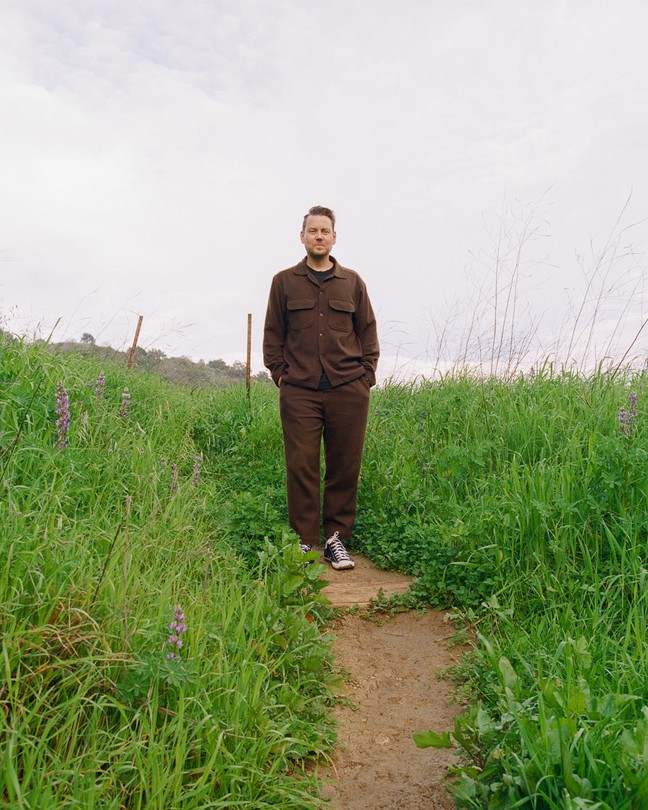
John Mark Comer can be a hard man to find. He’s one of the most famous pastors in America right now, an author whose books have together sold more than 1 million copies, but he’s not the most reachable guy. He has a professional website but no contact page. He rarely travels. And as I reported this story, I began to learn his habits: Sending him a text early in the day was a wash, for instance, because he doesn’t check his phone until after morning prayer time. Once, when I reached out by email, I got an out-of-office response that he had set before Christmas explaining that he was observing “rhythms of rest” and asking that I try him again after his return in mid-January. Incoming messages sent in the meantime would be deleted.

Explore the May 2026 Issue
Check out more from this issue and find your next story to read.
I had first seen Comer in October, at a service for Church of the City New York, held inside a historic chapel in Lower Manhattan. Lo-fi beats played over the speakers as hundreds of people, mostly in their 20s and 30s, milled around and looked for seats in the crammed pews. When Comer took the stage, dressed in a matching ochre shirt-jacket and pants, a silver stud in his left ear, the crowd cheered and whooped.
He pulled up a slide. It was not the usual Bible story or psalm, but an excerpt from Anne Helen Petersen’s 2019 BuzzFeed essay “How Millennials Became the Burnout Generation.” Burnout is “not a temporary affliction,” it read. “It’s the millennial condition.” The Gen Z one, too, Comer added. “It’s like we just churn out tired, exhausted souls like a widget factory,” he said. “I don’t know if you feel this at all yet in your body or in your bones. If you don’t, it’s because you’re still young and you haven’t been in the city very long. But you will. Trust me, you will.”
Then he clicked over to a passage from the Gospel of Matthew:
Come to me, all you who are weary and burdened, and I will give you rest. Take my yoke upon you and learn from me, for I am gentle and humble in heart, and you will find rest for your souls. For my yoke is easy and my burden is light.
“Most of us, as modern Americans,” Comer said, with a hand over his heart, “we read that line and there’s just this, like, deep, soul-level, Yes, I ache for that.” The guy in front of me took a picture of the slide with his phone. I noticed that his screen was set to gray scale. So was the screen of the person sitting next to me.
Signs of Comer’s influence had been popping up in my life all year. One friend had started observing a 24-hour, phone-free Sabbath. My roommates began fasting several times a month. Then, in quick succession, three different people recommended that I read The Ruthless Elimination of Hurry, Comer’s 2019 best seller.
In that book, Comer advances the theory that the great enemy of spiritual life is hurry. By this he means not simply busyness: Hurry is a gnawing sense that there is always more to do; a life spent hurtling oneself through each day; a schedule that makes little room for God. Technology has only exacerbated the problem. Comer calls the modern world “a virtual conspiracy against the interior life,” and urges readers to reclaim their focus from the algorithm and shift it toward God.
The Ruthless Elimination of Hurry, he told me, is “a book about discipleship to Jesus masquerading as a self-help book.” Many of its suggestions are similar to what you might find in articles about digital detoxes. To break a cellphone addiction, he offers detailed advice on how to “turn your smartphone into a dumbphone”: delete social media and web browsers, turn off notifications, and set your screen to gray scale, to curb the appeal of the remaining candy-colored apps. His prose, too, is rendered in a pithy, how-to style that one of his critics has dubbed “The Ruthless Elimination of Paragraphs.”
Because of this approach, Comer can seem more like a wellness personality, such as Andrew Huberman, than a pastor. Like Huberman, Comer offers a concrete regimen that’s attractive to people who feel unmoored in contemporary society. Comer’s skeptics, when remarking on his rapid ascent, point to these similarities and wonder if what he’s offering is simply baptized wellness, a pop spirituality tailored to the tastes and frustrations of affluent young people. But sitting among his followers, I wondered: Could Comer’s practices actually bring them closer to God?
I met Comer the next day at a coffee shop in the East Village. Our cashier, who looked about 24, recognized Comer and was visibly starstruck. “Your books are so amazing,” he said. “I pass them around to all my friends.” Our lattes, he insisted, were on the house. Comer told me that the same thing had happened yesterday in SoHo, then he shrugged. “Coffee shops are like bars for Christians.”
Comer is Protestant, nondenominational, and roughly in the evangelical sphere, but his work is mostly about how technology—what he calls “the machine”—is spiritually deforming people. “Any version of discipleship to Jesus that doesn’t seriously take into account that,” he said, pointing at my phone, “is going to be wildly deficient.” Christian spirituality has always adapted to its time, Comer said. In trying to adapt the faith for the 21st century, he looks to the life of Jesus, who took a Sabbath, fasted, and spent regular time in silence and solitude. To Comer, these weren’t the rhythms of Jesus’s life just because he happened to live in Galilee in 30 C.E. They are spiritual practices that Christians in any era ought to emulate.
Comer’s most recent book, 2024’s Practicing the Way, is a sort of how-to guide for Christlike living. Inspired in part by the monastic Order of Saint Benedict, Comer encourages readers to incorporate nine of Jesus’s habits into their lives: scripture reading, service, keeping the Sabbath, solitude, prayer, fasting, community, witness, and generosity. He calls his work “spiritual archaeology”—reintroducing modern believers to ancient Christian practices. “Everything we need, for the most part, is there in church history,” he said. “We’ve just lost a lot of it.”
Comer is hardly the first such archaeologist. Each generation of evangelical Christianity has three main celebrities, Russell Moore, the editor at large of Christianity Today, told me: the politics guy, the church-growth guy, and the personal-spirituality guy. In the 1980s, these roles were played, respectively, by Pat Robertson, Rick Warren, and Dallas Willard. Right now, Comer is the personal-spirituality guy (yes, it’s always a guy). Willard encouraged evangelicals to adopt virtually the same practices, such as fasting and taking a Sabbath, in 1988’s The Spirit of the Disciplines, and a subset of evangelicals has practiced them ever since. But Comer is making his case at a very different moment.
“A lot of American evangelical leadership right now is algorithmic,” Moore said, meaning that many pastors ratchet up their sermon rhetoric to find an audience on social media—usually by decrying homosexuality and abortion. Comer has written that God’s vision of marriage is between a man and a woman, and he’s argued against the idea of abortion as “reproductive justice.” But he doesn’t really preach about those issues, so the traditional Christian political camps aren’t sure what to make of him. He’s too conservative for the progressive Christians, and the conservative ones assume that he’s a tote-bag-carrying NPR liberal.
Comer doesn’t avoid the algorithm entirely. He has more than a quarter million followers on Instagram, where he mostly posts clips about the nine practices and shares quotes from Christian writers in minimalist fonts on earth-toned slides. He likens such social-media outreach to a street preacher at an Old West saloon: You say your piece about Jesus, hope you change some minds, and get out as quickly as you can.
In December, I went to Comer’s house for tea. About two and a half years ago, his family moved from Portland, Oregon, to Topanga Canyon, a mountain community outside Los Angeles known as a hub of West Coast hippiedom—think Deadheads, crystals, and astral-projection workshops. The road to Comer’s home is shaded by scrub oak and barely wide enough to accommodate a single car. We sat in the living room beside the Christmas tree, where presents lay wrapped in butcher paper. Comer was on cooking duty that night, and his wife unloaded the groceries. Their teenage son and daughter milled around the living room as Comer and I spoke. He apologized for the commotion.
Comer grew up in the ’80s in Silicon Valley; his parents were “first-generation Christians,” as he put it. His father, Phil, was a rock musician in the ’60s and ’70s who encountered God for the first time during one of Billy Graham’s crusades, eventually becoming the worship pastor at Los Gatos Christian Church, one of the Bay Area’s earliest evangelical megachurches. Comer took after his dad, joining the ministry and then co-founding a church in the suburbs of Portland with his parents in 2003, when he was 23 years old. Comer was the cool preacher, a West Coast urbanite just like his congregants; he understood why people might be cynical about religion. (When we met, I apologized for saying “damn” in front of a pastor. He reminded me that I was with a pastor from California.)
His church added about 1,000 congregants a year for seven years straight and soon outgrew its original building, coming to command multiple locations around the city. Comer became the head of what was essentially a ministry franchise, he reflected later—“the Starbucks model of ‘local’ church”—where he was trying to give thousands of people the same experience, whether they were in downtown Portland or the suburbs.
By about 2014, Comer was preaching six services on Sundays and heading home at 10 p.m., long after his kids were asleep. He didn’t have time for himself or his family. The Bible calls Christians to be patient, to love. But Comer was becoming more hurried and less loving. He realized, as he would later write, that “you can be a success as a pastor and a failure as an apprentice of Jesus.” In Millennial terms, he was suffering from burnout, badly.
Comer took a break from preaching and started reorganizing his life. He tried to emulate Christ’s daily actions, gradually incorporating them into his lifestyle both then and after he returned to pastoring, now at just one of the church’s locations, known as Bridgetown Church, in downtown Portland. He began fasting, eventually working up to two days a week, and observing the Sabbath by turning off his devices on Saturdays and spending his time resting and worshipping. He still needed to use email and social media for work, but he took these apps off his phone and checked them on his computer only once a week. And because Jesus lived simply, Comer pared down his closet to three outfits for the Oregon winter and two for the summer.
He worked less, spent more time with his wife, built more Star Wars Lego sets with his kids. “Even better,” he’d later write about that period, he could “feel God again.” Comer was convinced that his entire church would benefit from these practices. So, over the next five years, Bridgetown adopted the disciplines as a congregation, creating the blueprint for the nine practices that Comer later would lay out in Practicing the Way.
Running a huge church was hard on him; for years, he had wanted to write and to work one-on-one with people instead of preaching. Comer stepped down from Bridgetown in 2021 and now leads a nonprofit, also called Practicing the Way, which offers a free course that more than 21,000 church groups have adopted. He’s on the teaching staff at a church in Los Angeles, but mostly, Comer serves as the pastor of his own small church, which follows the Practicing the Way disciplines: The 30-person congregation fasts together, takes the Sabbath together, and, on Sundays, meets for a service in his living room. He has “built a quiet life,” his friend and successor at Bridgetown, Pastor Tyler Staton, told me. “Some might accuse him of being a touch boring.”
Comer told me that his average reader is 27, with at least some college education, living in a city. I’m 27, with a college degree, living in New York. I wondered whether I could adhere to his disciplines, and if so, how they might affect my faith. So, for the past six months, I’ve tried to structure my life around Practicing the Way’s nine core habits.
I’d wake up early to spend an hour alone at the window next to my fire escape, reading scripture and praying; this was a major upgrade from checking my phone first thing in the morning. Once a week, I’d observe the Sabbath—put away my screens, do some form of worship, revel in the fact that I could do nothing for a day and God would keep the universe going. As part of the service practice, I volunteered at a soup kitchen once a month and started carrying food with me when I walked around the city, in case I passed people who looked hungry.
I did chafe against some of the disciplines. Navigating modern life with no phone for a day was a mess: Without Google Maps, I’d get lost; without texting, every meetup with friends felt like the high-stakes rendezvous at the end of An Affair to Remember. And although sometimes I’d have a moment or two of transcendence on my weekly fasting day, for the most part, I was just hungry.
I am surprised, though, by how much these practices have become central to my life—not because I think I will be smote if I don’t do them, but because it turns out I like them. (Except for fasting. That one is still a bummer.) The new constraints on my time and attention forced me to truly consider what was important or not, and to prioritize those things. I spent less time on the parts of my day that brought me little joy (my phone) and more time with friends. My life is less hurried. I’m happier.
But my happiness is not the point, according to Comer. The purpose of a spiritual discipline is “not personal fulfillment. It’s not personal expression. It’s not emotional wellness. It’s not to de-stress,” he said. The point is to have your character transformed by your attunement to God. Then it will be easier to follow Jesus’s two greatest commandments: love God and love others. Fasting and discipline, you can get from Andrew Huberman; self-care, from Goop. But, Comer told me, “wellness culture is not talking about the Sermon on the Mount.”
That sermon—in which Jesus says people must love their enemies, must turn the other cheek, and cannot serve God and money—asks a lot from believers. Dallas Willard, Comer’s forebear, argued that a person who expects to live up to Jesus’s commands on the spur of the moment, without structuring their life at least somewhat around Jesus’s, is like “a baseball player who expects to excel in the game without adequate exercise of his body.” The theory is that, to become more Christlike, you have to find more ways to literally live like Christ.
Comer’s critics worry that by focusing so much on Jesus’s daily regimen, he risks recasting the son of God as the original lifestyle guru. “The (real) point of the Gospels—identifying who Jesus is, putting faith in him, and worshiping him—is put in the background, while living like Jesus is put in the foreground,” Kevin DeYoung, a theologian and Presbyterian pastor, wrote in a review of Practicing the Way.
According to DeYoung, this isn’t just a small matter of emphasis. “How effective can an approach to spiritual formation be when it almost completely misses the point of Jesus’s life and ministry?” he wrote. DeYoung told me that when the apostle Paul writes to the early Ephesian church about how to combat evil in their lives, “he doesn’t tell them, ‘Here are a set of rhythms and come up with 10 rules for your life.’ ” He tells them about the power of God.
DeYoung and others also criticize Comer for conforming his ministry too much to the lives of young, well-to-do urbanites—repackaging Christian monasticism for the TikTok generation. Given how inconvenient Comer’s disciplines can be, his skeptics think they’re achievable for yuppies in ways they may not be for others who have fewer resources or more demands on their time. DeYoung and his wife have a big family, and although Comer’s routine may sound nice, he told me, “we’re trying to just get through our week.”
Comer counters that many churches are facing what he calls a “crisis of discipleship” because they don’t give congregants enough instruction on how to actually live as Christians. But he says that he’s not doctrinaire about the practices; he doesn’t expect everyone to do all of them, all of the time: Jesus himself rebelled against the rigidity of the Pharisees by healing people and harvesting grain on the Sabbath. The night I saw Comer preach in New York City, he stressed that the question shouldn’t be Did I fast this week? or Did I observe the Sabbath? Comer wants his followers to ask themselves instead, Am I becoming more gentle? and Am I becoming more humble?
I Googled myself yesterday, so I still have a ways to go. But I had never asked myself those sorts of questions before. As a Christian moving in mostly secular circles, I’d felt that simply believing in God was a big enough feat. My faith had never shaped the way I lived each day. I am proof that you can say you love God and offer very little of your life to him. The practices became a way to call my own bluff.
I’m a member of the precise audience Comer is writing for—those who believe in the Gospels but haven’t made much time for a spiritual life; those who no longer feel at home in an evangelical community that has itself been warped by the imperatives of social media; those who (if we’re honest) can sometimes feel embarrassed to be seen as religious in a secular world. He told me that he is speaking to people who “want to figure out how to stay true to the Christian story in a very hostile cultural environment” but feel they need a road map. Even if the temptations of contemporary America look nothing like the ones the early Christian ascetics lived in the desert to avoid, that doesn’t necessarily mean the road map itself is out-of-date. And if, in promoting that road map, Comer can sometimes seem like many secular wellness influencers, maybe it’s a sign that they, too, are responding to a collective crisis of faith, and don’t yet know it.
This article appears in the May 2026 print edition with the headline “Can Turning Off Your Phone Bring You Closer to God?”
When you buy a book using a link on this page, we receive a commission. Thank you for supporting The Atlantic.