My Front-Row Seat to the Kennedy Center Implosion
I spent 10 months working at the institution because I thought I could help protect it. What I observed there is far worse than the public knows.
On the day I was laid off from the Kennedy Center, I felt a little like Dolley Madison saving the Stuart portrait of Washington before the British sacked the capital. I was the staffer in charge of the artworks in the building. A crucial difference is that my institution, unlike the White House in 1814, had been on fire for months.
About a year elapsed between the moment President Trump took over the Kennedy Center in early 2025 and his declaration this past February that he’d decided to shut down the nation’s cultural center for two years. In between, we had seen artist cancellations, shrinking audiences, firings of old staffers and influxes of new ones—a lot of drama, just not onstage. The date Trump announced for the closure was July 4, the country’s 250th birthday, an event that I had been hired to help commemorate as the institution’s first curator of visual arts and special programming.
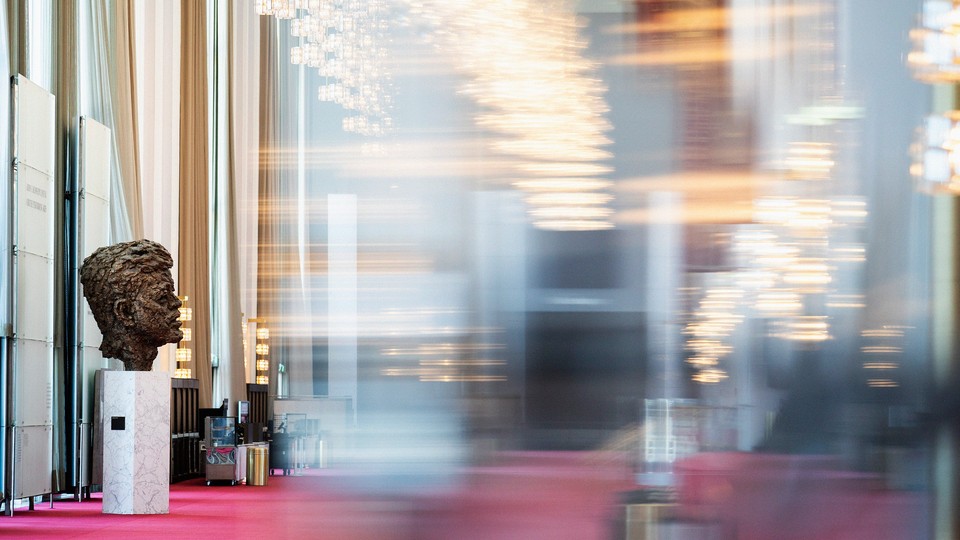
Though staffers had been assured that we’d have our jobs until July, I was one of dozens of people let go on March 26. From the moment I received a calendar invitation for a meeting with human resources, I knew I had to scramble. Shortly after Trump’s shutdown announcement, the center’s president, Richard Grenell, told me to “get rid of everything” in the permanent collection because we needed all new art for the reopening. Although I had slow-walked this demand for several weeks by pretending I was waiting on another colleague for updates, I now had only two hours to tie up loose ends. I hurriedly emailed the families of the late maestro Julius Rudel, the center’s first artistic director, whose bust sits outside the Opera House, and of the late Nehemia Azaz, whose wood-carved installation depicting 43 instruments mentioned in the Jewish Bible covers a wall in the historic Israeli Lounge. They had been anxious about the coming closure, and I told them I would no longer be able to give them updates about the artworks. (A spokesperson for the Kennedy Center says that it is taking inventory of all artwork as part of preparations for the closure.) I was told to pack up my stuff that day, although at least my exit was more dignified than that of a colleague from the development office, who, a couple of months earlier, had been terminated while conducting a tour for donors.
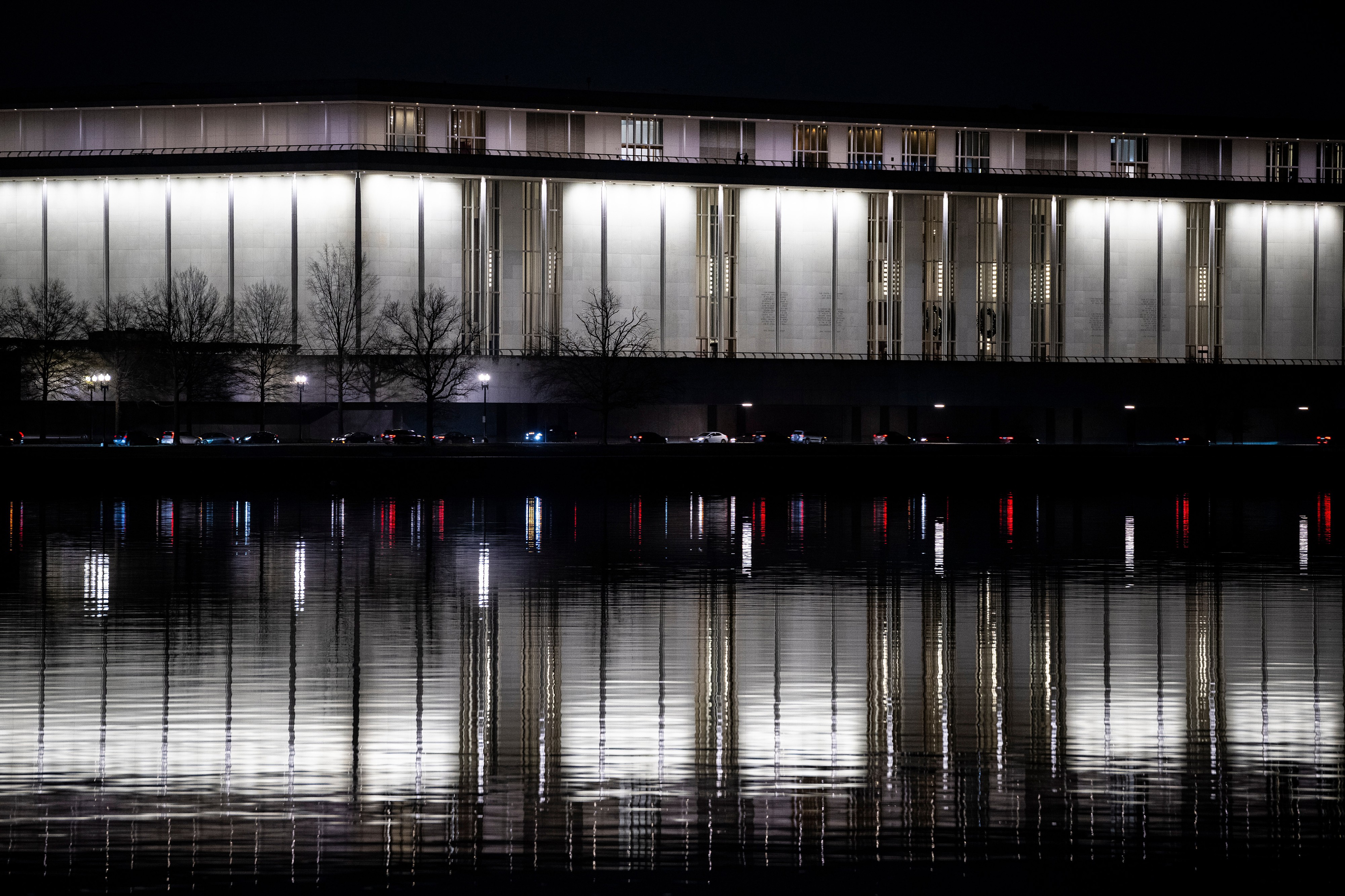
The ostensible reason for the Kennedy Center’s closing is a renovation to make it—in Trump’s words, and capitalization—“the finest Performing Arts Facility of its kind, anywhere in the World.” For months, my colleagues and I had been hearing chatter about a shutdown, but we suspected it wasn’t just because of problems with the physical structure (which certainly had issues but could have been upgraded piecemeal, without needing to close the entire complex), but also because a year of tumult had left the organization barely able to function artistically and financially. Trump had come in promising that “for the Kennedy Center, THE BEST IS YET TO COME!” On the inside, my colleagues and I instead saw cronyism, incompetence, and a series of bizarre moves that would lead to the Kennedy Center going dark.
Last April, after reading about how Grenell was responding directly—if punchily—to artists who wrote to him, I sent him an email pitching a public art project I had been developing with a major nonprofit for America’s semiquincentennial: a series of ephemeral happenings on the National Mall, each dedicated to a Stoic virtue. Like much of the philanthropic world after the 2024 election, the private foundation that was sponsoring my project had reassessed its priorities and withdrawn its funding. Might the Kennedy Center be interested?
One of Grenell’s deputies reached out to me. Not only did Grenell want to include my project in the center’s America 250 programming, but he wanted me to join the staff and build out a visual-arts program to give visitors something to see when the center didn’t have a show running.
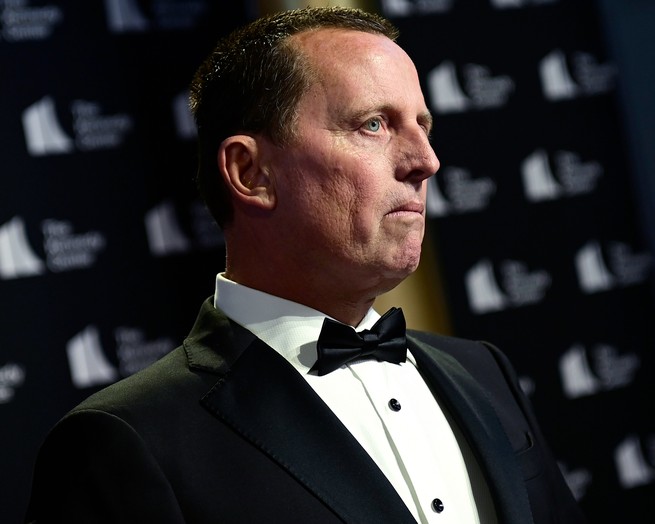
I was wary at first. For Washington’s arts community, the Kennedy Center takeover had felt like an assault—the old leadership had been purged, and Grenell had brought in people of his own (many of them with ties to Trump and Republican politics). Many artists (including Issa Rae and Lin-Manuel Miranda) had severed relationships with the center, often citing Trump’s politicization of an arts center that was supposed to be welcoming to all.
I told my prospective employers that I had never voted for Trump. They assured me that it wasn’t a problem. I was also concerned about potential political interference, which I had seen up close when I served on D.C.’s arts commission. After being told that my personal political views wouldn’t preclude my employment—that, in fact, it was preferable that the Kennedy Center’s new hires not exclusively be MAGA loyalists—I responded that I would need to have full creative control of my exhibitions and programming. The deputy assured me that there would be no interference with my work.
Ultimately, I decided the Kennedy Center was too important an institution to abandon. It’s one of the most prominent venues through which we present a national cultural identity to the world, and taking part in that mission was an unmissable opportunity. I earnestly believed I would have a chance to develop programs with wide appeal, centered on themes related to our collective identity and set against the backdrop of a historic national birthday. While I sympathized with those choosing to boycott it, simply bashing the institution for the sake of virtue signaling seemed to me like the wrong move for anyone who professed to care about the arts. And if I was ever asked to do something that violated my conscience, I promised myself, I would quit. Maybe I was naive, but as critics compared the institution to a burning building, I resolved to run, Dolley-like, toward the fire to save what I could. Perhaps I had a chance to create something for the Kennedy Center that would outlast this current moment.
Most of my friends in the city’s arts community were surprised by my decision. But after I explained my reasoning, they largely expressed cautious optimism. The outlier was a dear friend who told me I was the equivalent of a Nazi collaborator. But you can’t please all of the people all of the time.
I was excited to work and started to develop three exhibitions, each devoted to a revolution in American artistic production that had global impacts: one about trailblazing musicians, another about the legacy of street art, and a third showcasing American artists using artificial intelligence, robotics, and augmented reality in their work. But these exhibitions never came to be, because I couldn’t get anyone on the executive team to allocate institutional resources, or money, to them.
I quickly started noticing things getting weird. It was understood among staffers that the new leaders’ plan to bring in donations was to emphasize the association of the center with President Trump. They put together a fundraiser for a preview of Les Misérables, where one could pay $2 million to sit in a box seat and attend a private reception with the president. “We are grafting political management principles into a nonpolitical organization,” one of my colleagues, a veteran of Republican campaigns, told me. The center had clearly alienated many of its old donors—some of them former board members whom Trump had expelled—and a new class of benefactors, suited to Trump’s Washington, had to be found.
One red flag: the sudden decision to sell sponsorships of the center’s lounges, fixtures of the institution since its opening in 1971. That year, as a gift to the American people and in tribute to President John F. Kennedy, the Israeli government paid for the decoration of one of the center’s rooms to celebrate the connection between Judaism and music. The Israeli Lounge and other spaces—the Chinese Lounge, the Circles Lounge (which, until the 2022 invasion of Ukraine, was the Russian Lounge), the African Room—have been used for receptions and private dinners. They’ve also underscored the Kennedy Center’s role as a venue for cultural diplomacy.
Last fall, I organized an exhibition commemorating the anniversary of the October 7 Hamas attacks in the Israeli Lounge, featuring the paintings of an American Israeli artist. Speaking at the opening reception, Grenell warned the mostly Jewish audience that unless donors came forward to sponsor the space and pay for renovation costs, the lounge would be given away to a new donor. “It certainly would be a shame if we lost this room to a corporation or an individual and it was no longer the [Israeli] lounge,” he said. Such a strong-armed fundraising pitch, at an event commemorating a pogrom, struck many of us in the room as inappropriate. I was mortified.
Then there was the renaming of the Circles Lounge—a reserved space for donors who make annual gifts at a certain threshold—to the SyberJet Lounge, named for an aircraft manufacturer whose CEO was previously convicted of defrauding investors and who received a pardon from Trump in March 2025. According to The Wall Street Journal, the CEO paid “millions” for the naming rights. What was once the African Room now has a plaque on the door reading A Tribute to America’s Intelligence Community. This was a strange choice, not least when you considered the named donor for the new room: Gaurav Srivastava. Last year, Srivastava was the subject of a deeply reported profile—the Journal described him as “part Austin Powers, part James Bond,” someone who allegedly lied about having been in the CIA, and a living symbol of how anyone with enough “money and moxie can access Washington’s most influential people.” (A lawyer for Srivastava told the Journal that his client “never participated in any blackmail, fraud, threats, or extortion.”)
Among the priceless items that were taken down: beautiful handmade textiles from across the continent, a wooden sculpture donated by Ghana to represent Africans’ grief over President Kennedy’s assassination, and a pair of doors carved from 700-year-old wood depicting Yoruban village scenes. I was never told what happened to these items. A current Kennedy Center staffer told The Atlantic that they are now in the building’s archives. (A spokesperson said this was to “ensure safekeeping” during construction.) A long-empty room next to the center’s permanent exhibition on President Kennedy and the arts was prime real estate. When I wrote a memo to the executive team proposing that we convert it into a dedicated gallery for the new visual-arts program, a member of the team instead suggested that we sell the room as a lounge and drew up a list of Middle Eastern and Central Asian nations to approach. The center did bring in donations from Kazakhstan and other countries, but that space is currently still empty, the current staffer told The Atlantic.
In the 10 months that I worked at the Kennedy Center, Grenell never held an all-staff meeting, a fact that was widely discussed among staffers but that the Kennedy Center now denies. He seemed more interested in fighting Katie Couric on Instagram than doing the job he’d been hired to do. Indeed, he spent a lot of his time attacking people on social media, politicizing what is meant to be an apolitical arts institution while accusing others of doing the same exact thing. (“You sound vaccinated,” he once wrote to a critic in the comments section beneath the Kennedy Center’s Instagram post promoting The Sound of Music.)
Though Grenell had instituted a return-to-office mandate upon his appointment, the rule didn’t apply to him or his immediate inner circle. Colleagues told me their requests for meetings with Grenell were routinely denied or ignored. When I inquired with his scheduler in the middle of August if I could get a meeting to discuss my projects, I was told that he would be out of the office for several weeks. We knew where he was—a yacht off the coast of Croatia, then in California—because he posted about it on Instagram. (A spokesperson at the Kennedy Center now denies this.) His trip to the Balkans wasn’t all pleasure; in Montenegro, he made time to meet with the pro-Russian former president of Republika Srpska, as well as government officials in Albania. In November, The New York Times reported that Trump was bypassing Grenell and having almost weekly phone calls with the center’s facilities manager (who ultimately replaced Grenell as the head of the center).
Grenell, who was also Trump’s special presidential envoy for special missions, seemed to blur the lines between his two jobs and his other activities. A colleague once told me she’d noticed documents concerning Venezuela (where he had been leading controversial negotiations with the government in his role as “envoy for special missions”) on office printers. One of Grenell’s top lieutenants once texted me about an artist whose work Grenell owned and asked if we could “do something with him.” Displaying that artist’s work could have raised their prices at auction and benefited Grenell, so doing so would have been a potential ethical breach. I ignored the request.
Grenell—a former ambassador to Germany who came to the Kennedy Center with no arts expertise—is rumored to have wanted to be Trump’s secretary of state. Several of his hires were similarly miscast—including, crucially, Lisa Dale, the top fundraising officer, a friend of the Trump ally Kari Lake. We rarely saw her in the office except during weeks with red-carpet events. In conversation, she professed unfamiliarity with the terms permanent collection, performance art, and emeritus (as in “emeritus trustees”), concepts that senior leaders at a prominent cultural center ought to know. Other top staffers included figures with connections to Republican politics who hadn’t worked in the arts, including one spouse of a Republican National Committee leader whose longest professional experience was working as a marketing and events manager at a Toyota dealership in Ireland. Many seasoned employees from every corner of the center fled under Grenell, and the departures intensified, culminating with the exit of the entire Washington National Opera and the executive director of the National Symphony Orchestra, which has a tough road ahead of it as it seeks a home outside the Kennedy Center for two years. (Grenell did not respond to repeated requests to speak with The Atlantic’s fact checkers for this story.)
Some days felt like being in Shear Madness, the theatrical farce that has been playing at the Kennedy Center since 1987. When Trump announced that the FIFA World Cup Final Draw would take place at the center (the same weekend as the Kennedy Center Honors), many of us were caught off guard. Scheduled concerts and other shows had to be moved. For security purposes on Honors night, guests had to come early and wait in the building’s Grand Foyer for about an hour before the program began. None of the bars was open, creating an anarchic scene in which I saw old men plead for water and women in ballgowns argue with catering staff for cans of Diet Coke. For the show itself, senior-level staff and their friends occupied prime seats that might otherwise have been occupied by donors. “Peter Gelb at each gala sits in back row,” one of my colleagues observed, speaking of the Metropolitan Opera’s legendary general manager.
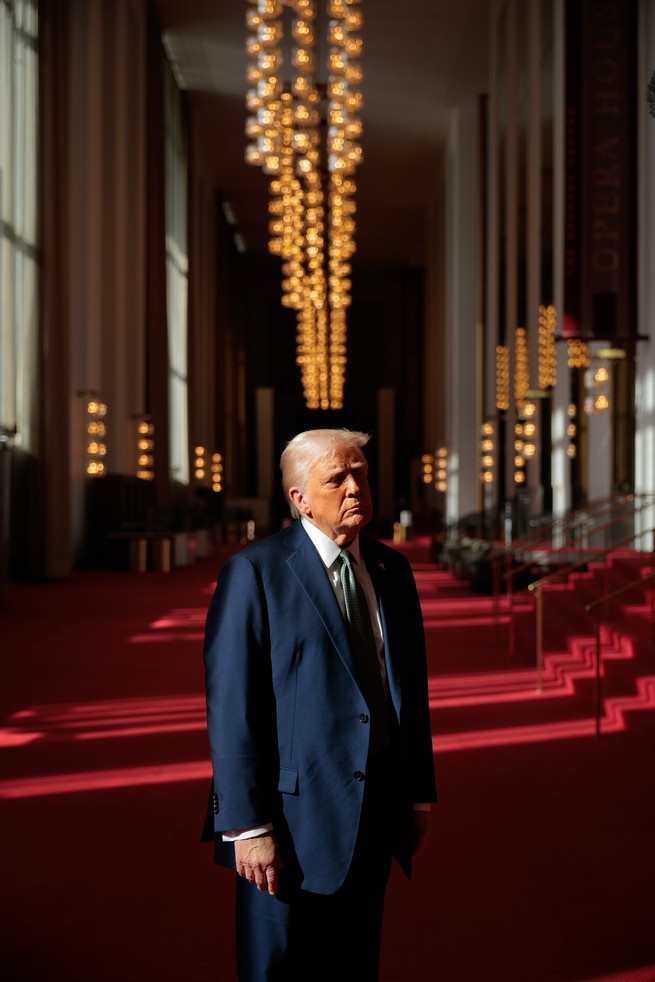
While emceeing the Honors event, Trump joked about adding his name to the institution. “This place is hot,” he told the audience, referring to “the Trump-Kennedy Center.” But few of us thought that Trump would go through with it. I found myself thinking most of Caroline Kennedy, whose daughter lay on her deathbed at the time, and I hoped that the president and his team would think better of this narcissistic scheme. But he went ahead with it. The rechristening immediately made our jobs more difficult. One artist I was corresponding with for an exhibition told me they had decided to go “in a different direction.” A jazz ensemble canceled its New Year’s Eve show, and a New York dance company canceled two performances in April that were meant to celebrate its 40th anniversary. Grenell lashed out at them for being “far-left political activists” who suffered from a “form of derangement syndrome.”
With an absentee leadership, a growing list of artist cancellations, declining ticket sales, and a lack of financial resources, my projects never got off the ground. Two former colleagues told me that Grenell tasked them with planning an America’s Got Talent–style talent show for the 250th anniversary, basically turning the nation’s cultural center into a community recreation hall. The institution’s spending priorities seemed dubious. The roof has been leaking for years, and the willow trees in the River Plaza outside the Grand Foyer were visibly rotting, and yet the high-priority renovations made to the building involved adding gold gilding to the chandelier of the presidential box in the Opera House.
I first started hearing whispers of a possible shutdown in August. Our chief financial officer, colleagues told me, proposed closing the center at the end of September, before the start of the next fiscal year. Around this same time, a colleague told me that the center hadn’t paid its invoices from the company that handles its fundraising postage. Were the center to close, it would be done under the guise of a renovation, and the blame would be laid at the feet of the former leadership.
All year, the Kennedy Center had boasted of big fundraising hauls even as it saw ticket sales decline. But Politico reported that the development efforts were actually in deep turmoil, so much so that the center was bringing in a top Trump fundraiser to help Dale, the nominal head of fundraising. Though Grenell told Politico that its story was “fake news” based on “anonymous gossip and lies,” it elicited nods around the center. The announcement of the closure followed soon after, and then Grenell’s departure. Dale and other members of the fundraising team were let go on the same day I was.
When Grenell instructed me to “get rid of” the center’s permanent art collection because we needed new art to adorn the building’s walls after its renovation, I was taken aback by his cavalier attitude. If the donors of the works didn’t want to pay for their removal, he said, we could put them up for auction or give them away. My mind raced immediately to the eight-foot, 3,000-pound brass bust of President Kenndy standing in the Grand Foyer. Designed by the sculptor Robert Berks, it is surely the most significant item in the center’s collection. When I reported the order to another top leader, his eyes grew wide; he told me not to do anything, and said his office would handle it. I can only hope that the bust—and all the other works—will be safe when the center closes its doors.
In a final indignity, those of us who lost our jobs would be eligible for another month of severance benefits (including health-care coverage) only if we signed a separation agreement with confidentiality and nondisparagement provisions. I rejected this offer because I believe Americans deserve to know about the desecration of our nation’s cultural center. This is also why I have begun participating in the ongoing investigation led by Senator Sheldon Whitehouse, and been in touch with Representative Joyce Beatty’s legal team to share information that may help her lawsuit. (She is suing the center in an attempt to stop its renaming.) There must be a firewall put in place by Congress to prevent this kind of hostile political takeover of the Kennedy Center from ever happening again. I hope that more of my former colleagues come forward too, even if anonymously.