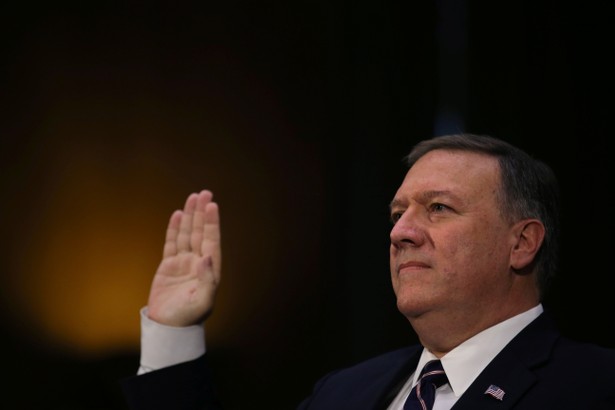
The Senate, in a bipartisan 66-32 vote on Monday evening, confirmed Mike Pompeo to be the next CIA director. Pompeo was in his fourth term in the House. The only Republican to vote against Pompeo was Kentucky Senator Rand Paul. The other 31 votes against Pompeo came from Democrats. As my colleague Russell Berman writes:
Pompeo’s harshest critic was Senator Ron Wyden of Oregon, a privacy hawk who delivered a lengthy speech criticizing the Kansas Republican’s “enthusiasm” for broad surveillance programs and what he said were Pompeo’s shifting positions on torture and on Russia’s interference in the November election. Other Democrats had said they were satisfied with Pompeo’s assertion during his confirmation hearing that he would not restart the CIA’s use of enhanced interrogation techniques in violation of the law, even if Trump ordered him to do so.
Snapchat Filter Not Responsible for Distracted Driver Claim, Judge Rules
Eric Thayer / Reuters
A lawsuit claiming Snapchat was to blame for a high-speed car crash was dismissed by a Georgia court Friday, citing the social media company’s immunity under the Communication’s Decency Act. The case was brought against Snapchat in April by Wentworth and Karen Maynard, who claimed the application’s “speed filter,” which shows how fast the phone is moving at the time the photo or video is taken, caused 18-year-old Christal McGee to crash into Wentworth Maynard’s car while driving at 107 miles per hour (171 kilometer per hour), leaving Maynard with severe brain damage. McGee, who was also sued by the Maynards, claimed she was “just trying to get the car to 100 miles per hour to post it on Snapchat.” In his ruling Friday, Spalding County State Court Judge Josh Thacker said the social media company was exempt from liability under the CDA’s immunity clause, which states that “no provider or user of an interactive computer service shall be treated as the publisher or speaker of any information provided by another information content provider.” Snapchat’s attorneys told the Associated Press Monday the ruling reaffirms the need for “responsible use of these technologies by the driver.”
The First Drone Strikes Under Trump Target Al-Qaeda in Yemen
Khaled Abdullah / Retuers
The U.S. carried out several drone strikes in Yemen over the weekend targeting al-Qaeda leaders, marking the first drone strikes under the new Trump administration. The bombings hit the country’s southwestern Bayda province, and among the targets was Abu Anis al-Abi, a field commander with al-Qaeda in the Arabian Peninsula. These strikes did not necessarily require Trump to sign off on them, because the Obama administration enabled the four-star commander of U.S. Central Command, General Joseph Votel, to oversee strikes. Drone strikes increased to unprecedented levels under Obama, much to the anger of human-rights groups, which decry their use because of the risk of collateral damage. On Thursday, U.S. intelligence officials released a report saying that under Obama as many as 117 civilians died in drone bombings. These numbers, however, are often viewed as extremely low by human rights groups.
Trump Signs Executive Order Withdrawing From the TPP
Kevin Lamarque / Reuters
President Trump signed an executive order Monday to withdraw the U.S. from the Trans-Pacific Partnership (TPP), a longstanding campaign pledge. The TPP, a project initiated by the Obama administration, would have placed the U.S. and 11 Asia-Pacific countries in an unprecedented free-trade zone. Trump’s executive order pulls the U.S. out of that deal, an effort to refocus on putting “America first,” as the president repeated in his inauguration address Friday. The trade deal had been a tough sell for both major political parties, with former-President Obama struggling to convince even Democrats of its worth because it had been painted during the election campaign as detrimental to U.S. manufacturing. Until this election, trade deals had received mostly bipartisan support. Trump has also said he wants to renegotiation the NAFTA, which set up a free-trade zone from Mexico to Canada.
Trump Reinstates Mexico City Rule, Blocking U.S. Funding for Abortion Services Worldwide
Kevin Lamarque / Reuters
President Trump, in one of his first acts since assuming office, reinstated Monday a policy blocking U.S. funding for health programs that provide abortions or related services overseas. Known commonly as the Mexico City policy or the “global gag rule,” the policy restricts foreign organizations receiving U.S. family-planning funding from conducting any abortion-related services, even if they are conducted with non-U.S. funds. Since it went into effect in 1984, the policy has routinely been enacted by Republican administrations and rescinded by Democratic ones. As my colleague Anna Diamond writes:
Now, the signing of the order is filled with symbolism. Always falling on or within days of the January 22nd anniversary of Roe v. Wade, it’s become a way for the incoming president to signal to his party and supporters an initial commitment for or against abortion rights.
A Violent California Storm Destroys an Iconic Concrete Ship
Gregory Bull / AP
A harsh storm hit the California coast this weekend and set surf records, with wave heights reaching nearly 35 feet in some places. They were particularly violent near Santa Cruz, about 80 miles south of San Francisco, where the storm wrecked a local icon, a historic World War I concrete ship called the S.S. Palo Alto. Then-President Woodrow Wilson ordered a fleet of concrete ships built in 1917, and while other ships had been made of this material, none had ever been made so large—420 feet long. The S.S. Palo Alto was one of 24 others built at the time, and it came to rest near Santa Cruz in 1930, where it connected to a pier and became a famous icon of the beach. The ship’s hull had been crumbling for some time, and over the decades it served as a home for the area’s wildlife, like sea lions, fish, and sea birds. In the mid-2000s, a leak in the ship’s tank spilled old oil into the waters and the California Department of Fish and Wildlife spent $1.7 million to clean up the fuel. This weekend’s storm sent waves crashing against the hull and split off the stern. It’s unclear what will be done with the crumbling remains.
What was once a solid structure, is now in 2 pieces. The S.S. Palo Alto's stern has taken enough beating and gave-in to Mother nature. pic.twitter.com/ljRytxwpf7
Syrian Government, Rebels Meet for Talks in Kazakhstan
(Mukhtar Kholdorbekov / Reuters)
Representatives of the Syrian government and rebel groups are meeting in Astana, the Kazakh capital, for the first time in more than a year for talks on ways to end the more than five-year-long civil war. Russian, Turkish, and Iranian officials are also attending; the three countries brokered a cease-fire between the fighting factions December 30. Bashar Ja’afari, Syria’s ambassador to the UN, and military officials are representing the government of President Bashar al-Assad. Mohammad Alloush of the Army of Islam is leading the rebel delegation. Talks are scheduled to continue until Tuesday.
The Trump Administration's War of Words With the Media
President Trump was inaugurated in Washington, D.C., Friday. A day later, a women’s march in the city, and others across the country and the world, vowed to oppose some of the Trump administration’s policies. Photographs from both events, coupled with crowd estimates, suggested more people turned out to the march in Washington than the inauguration. Trump and his aides apparently disagreed. At an appearance Saturday before the CIA, the president railed against the media, calling it “dishonest.” Later, Sean Spicer, the White House spokesman, repeated those claims, adding: “This was the largest audience ever to witness an inauguration, period, both in person and around the globe”—a demonstrably false claim. On Sunday, Kellyanne Conway, Trump’s counselor, went on NBC’s Meet the Press, and countered the view Spicer was lying, adding “our press secretary gave alternative facts to that.” When Chuck Todd, the show’s host, asked Conway why Spicer had said something that was clearly not true, she replied: “If we're going to keep referring to the press secretary in those types of terms, I think we're going to have to rethink our relationship here.” Trump himself initially criticized Saturday’s protest march, saying on Twitter he “was under the impression that we just had an election! Why didn't these people vote?” He later tweeted out a more conciliatory message:
Peaceful protests are a hallmark of our democracy. Even if I don't always agree, I recognize the rights of people to express their views.
Kash Patel has alarmed colleagues with episodes of excessive drinking and unexplained absences.
On Friday, April 10, as FBI Director Kash Patel was preparing to leave work for the weekend, he struggled to log into an internal computer system. He quickly became convinced that he had been locked out, and he panicked, frantically calling aides and allies to announce that he had been fired by the White House, according to nine people familiar with his outreach. Two of these people described his behavior as a “freak-out.”
Patel oversees an agency that employs roughly 38,000 people, including many who are trained to investigate and verify information that can be presented under oath in a court of law. News of his emotional outburst ricocheted through the bureau, prompting chatter among officials and, in some corners of the building, expressions of relief. The White House fielded calls from the bureau and from members of Congress asking who was now in charge of the FBI.
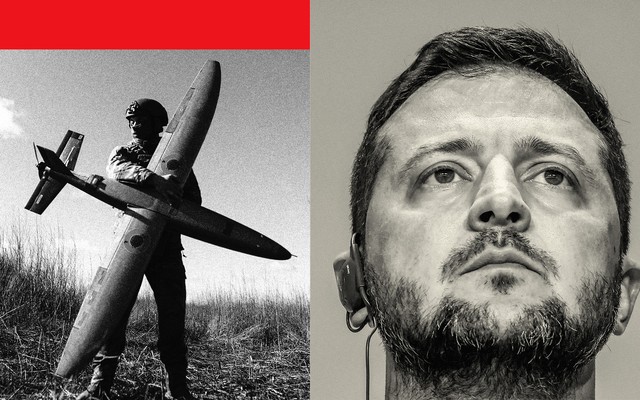
For more than a year after Donald Trump returned to the White House, Ukraine held out hope—at least publicly—of winning him over. Trump, who revealed his affection for Russia’s Vladimir Putin again and again, largely halted American military aid to Kyiv. He insulted Ukrainian leaders regularly, personally berating President Volodymyr Zelensky in the Oval Office in February 2025. Nevertheless, Ukraine diligently took part in Trump’s peace negotiations, which were tilted to reward Putin’s invasion and turned out to be fruitless. Zelensky agreed to mineral deals that supposedly promised to enrich Americans. He even lavishly praised Trump himself. Despite Ukrainian leaders’ growing doubts, they calculated that speaking sweetly of the American president would do no harm and just might gain his favor.
The Sorrow and the Pity has lessons for how authoritarianism takes root—and how to fight against it.
The best thing I watched in the past year was an epically long movie about retired militants, but it wasn’t One Battle After Another, the Oscar winner for Best Picture. It was The Sorrow and the Pity, a four-hour documentary from 1969 about life in Nazi-occupied France. Reviewing the film in The Atlantic in 1972, David Denby called it “one of the greatest documentaries ever made,” and that remains true. What makes the film so effective is not how it looks at the Germans, a spectral presence, but how it chronicles the way that many ordinary citizens simply lived their lives as if nothing had changed.
The director Marcel Ophuls, who died last year at 97, explores collaboration and resistance through the lens of a small city, Clermont-Ferrand. It’s about an hour from Vichy, where the Nazis established a puppet government headed by the World War I hero Philippe Pétain. Pétain’s former protégé Charles de Gaulle fled to Britain, coordinated resistance to the Nazis, and returned to lead a free France. The idea that the French almost uniformly opposed Nazism, with only a few bad apples collaborating, is foundational to France’s postwar identity. The problem, as Ophuls, a Franco-German Jew, demonstrates, is that this is a myth.
I spent 10 months working at the institution because I thought I could help protect it. What I observed there is far worse than the public knows.
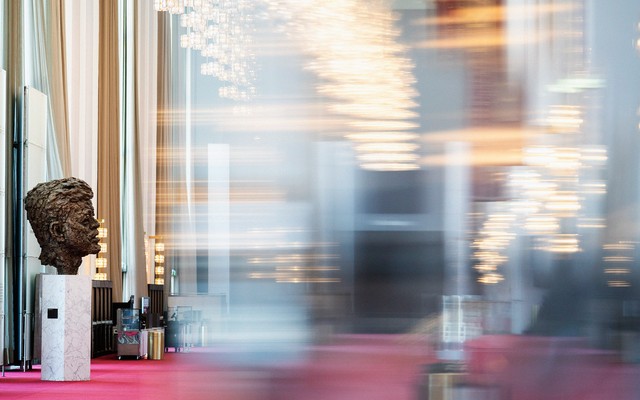
On the day I was laid off from the Kennedy Center, I felt a little like Dolley Madison saving the Stuart portrait of Washington before the British sacked the capital. I was the staffer in charge of the artworks in the building. A crucial difference is that my institution, unlike the White House in 1814, had been on fire for months.
About a year elapsed between the moment President Trump took over the Kennedy Center in early 2025 and his declaration this past February that he’d decided to shut down the nation’s cultural center for two years. In between, we had seen artist cancellations, shrinking audiences, firings of old staffers and influxes of new ones—a lot of drama, just not onstage. The date Trump announced for the closure was July 4, the country’s 250th birthday, an event that I had been hired to help commemorate as the institution’s first curator of visual arts and special programming.
Thirteen thousand miles. Infinite contenders. One beautiful loaf.
This article was featured in the One Story to Read Today newsletter. Sign up for it here.
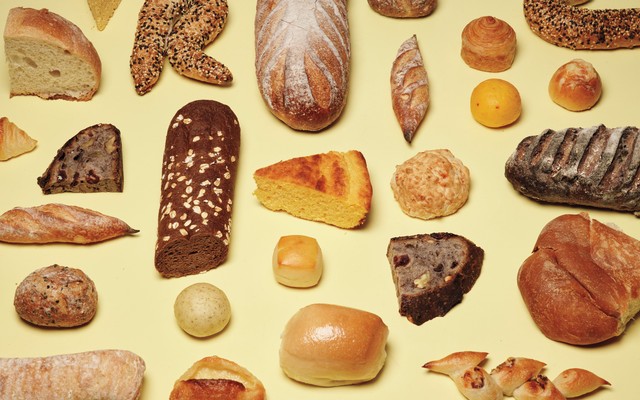
Here is the promise you and I must cling to across the thousands of words that follow: At some point within this text, I will reveal to you what—after 555 responses, 13,000 miles of travel, and months of monomaniacal research—I have determined to be the best free restaurant bread in America. I will not attempt to slither to the moral high ground, arguing that best is a meaningless measure, or insisting that all bread is dear in its own way. Even if you attempt to betray me—for instance, by merely scanning the text that follows for the phrase Here it is: the best free restaurant bread in America—I will uphold my end of the bargain.
Trump has developed a reputation for backing down from his most over-the-top threats, but dismissing his words is a mistake.
Twelve hours after Donald Trump warned that a “whole civilization will die tonight, never to be brought back again”—after he’d previously threatened to bomb Iran “back to the Stone Ages”—the president agreed to a temporary cease-fire. Since then, initial peace negotiations failed and Trump responded with a naval blockade of the Strait of Hormuz; a new round of talks may begin soon.
But what to do with his everyone in Iran is going to die comments last week? Because they were designed to pressure Iran to come to the table, and because the promised carnage did not materialize, many observers simply moved on, explaining away Trump’s threats as a ham-fisted negotiation tactic, some kind of 5-D chess, or another example of the president’s propensity to “TACO” (Trump Always Chickens Out).
Pastor John Mark Comer has won a massive audience by encouraging his followers to free themselves from the gnawing sense that there is always more to do.
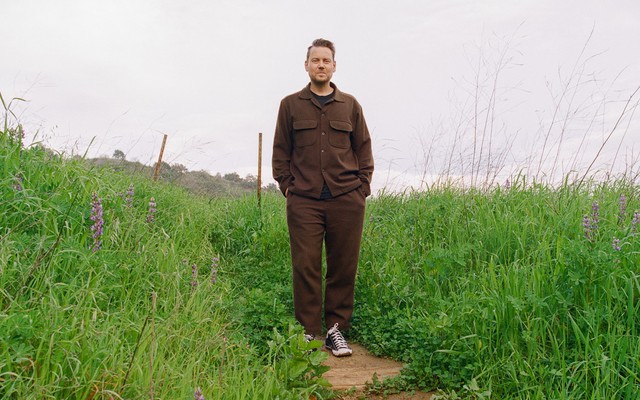
John Mark Comer can be a hard man to find. He’s one of the most famous pastors in America right now, an author whose books have together sold more than 1 million copies, but he’s not the most reachable guy. He has a professional website but no contact page. He rarely travels. And as I reported this story, I began to learn his habits: Sending him a text early in the day was a wash, for instance, because he doesn’t check his phone until after morning prayer time. Once, when I reached out by email, I got an out-of-office response that he had set before Christmas explaining that he was observing “rhythms of rest” and asking that I try him again after his return in mid-January. Incoming messages sent in the meantime would be deleted.
This article was featured in the One Story to Read Today newsletter. Sign up for it here.
Maybe you’ve seen photos of Tehran in the 1970s, just before the Islamic Revolution: images of young women going to work in miniskirts, of couples making out in parks while wearing bell-bottoms, of people at pools in bikinis. It looks like Paris or Milan or Los Angeles. But in 1979 the revolution happened, and now Tehran looks like something from an earlier century.
Sometimes I think that our whole world has become kind of like that—going backwards in time. The religious movements thriving in today’s secularized age are the traditionalist ones that dissent from large parts of contemporary culture—not only the Shiite Islam of post-revolution Iran, but Orthodox Judaism and conservative Catholicism. Young Americans are flooding into Eastern Orthodox churches.
A shocking number of the president’s supporters have turned against him.
Tomas Montoya has sold festival foods—funnel cakes, burgers, hot dogs—across the American Southwest for years. But lately, business has been rough. Costs are up, so he’s increased his prices. Employees are begging for hours he can’t give them. In Arizona, where he lives, Montoya pays $6 a gallon to fill up his food trucks with diesel. This summer, he may have to skip the California leg of his festival route because fuel is even more expensive there.
“It’s Trump,” Montoya told us outside a popular Hispanic grocery store in Casa Grande, Arizona, much of which sits in one of the most evenly divided House districts in the country. Montoya voted for President Trump in 2024, but now, well, frustrated doesn’t begin to cover how he’s feeling. The president is bragging about the economy, even though everyone Montoya knows is hurting; he promised to stop wars, but started one in Iran. “When Trump opens his mouth, three-quarters of what he says is stories, lies,” Montoya said. He’s planning to vote in the midterm elections this fall. But he may not choose a Republican.
The vice president has decided he’s a more accomplished theologian than Leo XIV.
The Trump administration doesn’t seem to have many rules, but one of them is that once the president picks a fight, his posse must show up to support him, no matter how ill-advised the conflict. And few senior officials are more eager to back up the boss in every embarrassing beef than Vice President Vance, who recently seems to have decided that he, and not Pope Leo XIV, is the true arbiter of Catholic doctrine.
President Trump is personally angry with Leo because the pontiff has been deeply critical of America’s war of choice in Iran. Accordingly, Trump lashed out at His Holiness twice over the past few days. Vance might have seen this as a valuable opportunity to say nothing and let the storm pass; Leo, naturally, doesn’t seem to care all that much what Trump thinks. (As my colleague Liz Bruenig wrote, Leo answers to a higher authority.) Had the vice president remained silent, Trump might have moved on, and Vance, a relatively recent convert to Catholicism, would have been able to stay out of a dustup between his president and his spiritual leader.