The Canary Who Lived a Full Life
By ROBERT FONTAINE
My FATHER has always had a theory that he could communicate with birds and animals quite clearly. If he were pressed, I think he would insist that insects and even flowers be included, too. We have never pressed him.
My father was a concert violinist for over a quarter of a century. Now he plays when he feels like it, and for himself and a few close friends. Every day, however, he plays the scales. I think he can play a violin with mittens on and the bow in his teeth. Still he always plays the scales. Every day.
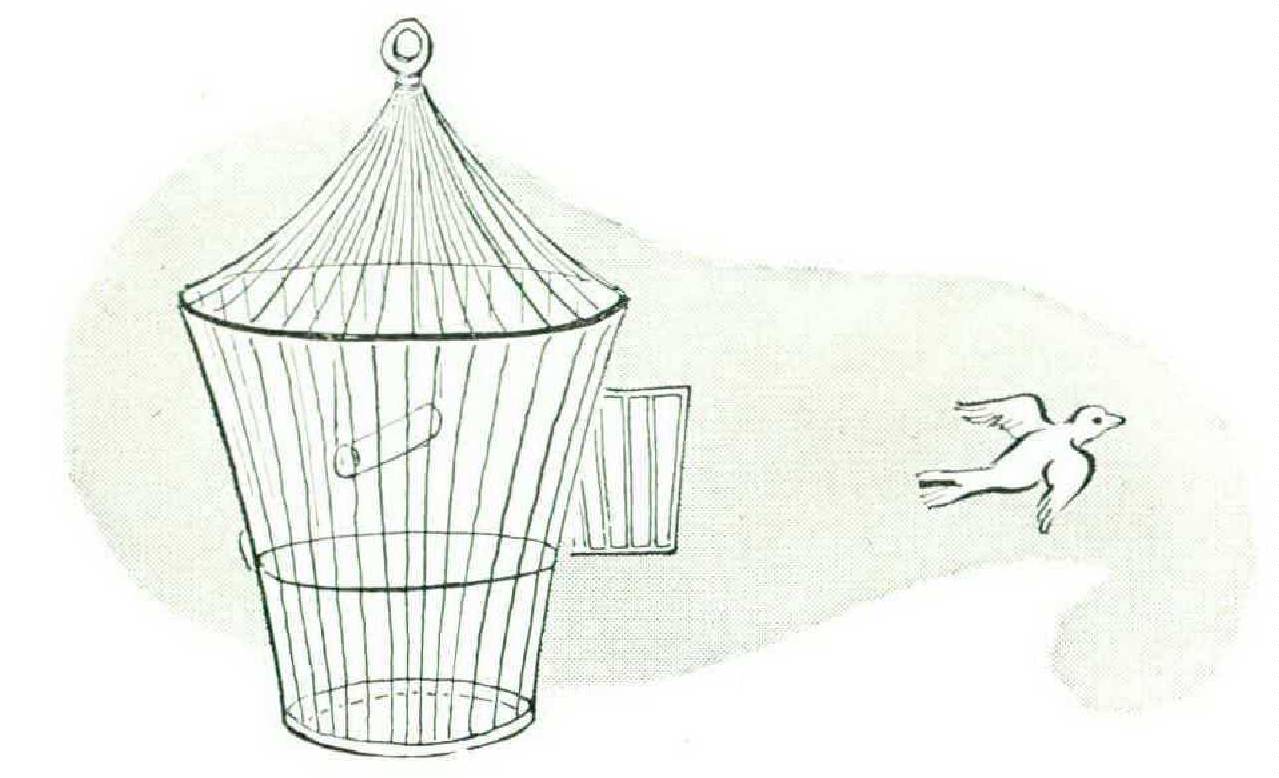
It was one day when he was playing the scales, and Millie and I were watering my mother’s generaniums, that the canary came to visit us.
We were on the front porch with my mother, who was fearing her geraniums were not going to be so vivid as Mrs. Costello’s. Suddenly a flash of lemonyellow went by us! We looked at each other, surprised.
“It was a very big bee, if it was a bee,” my mother offered.
My wife picked a dead leaf from the geraniums and smelled of it.
“It was a bird,” she said.
“ It was a canary,” I said. “ I hope no one in this family is secretly thinking of bringing home a kitten.”
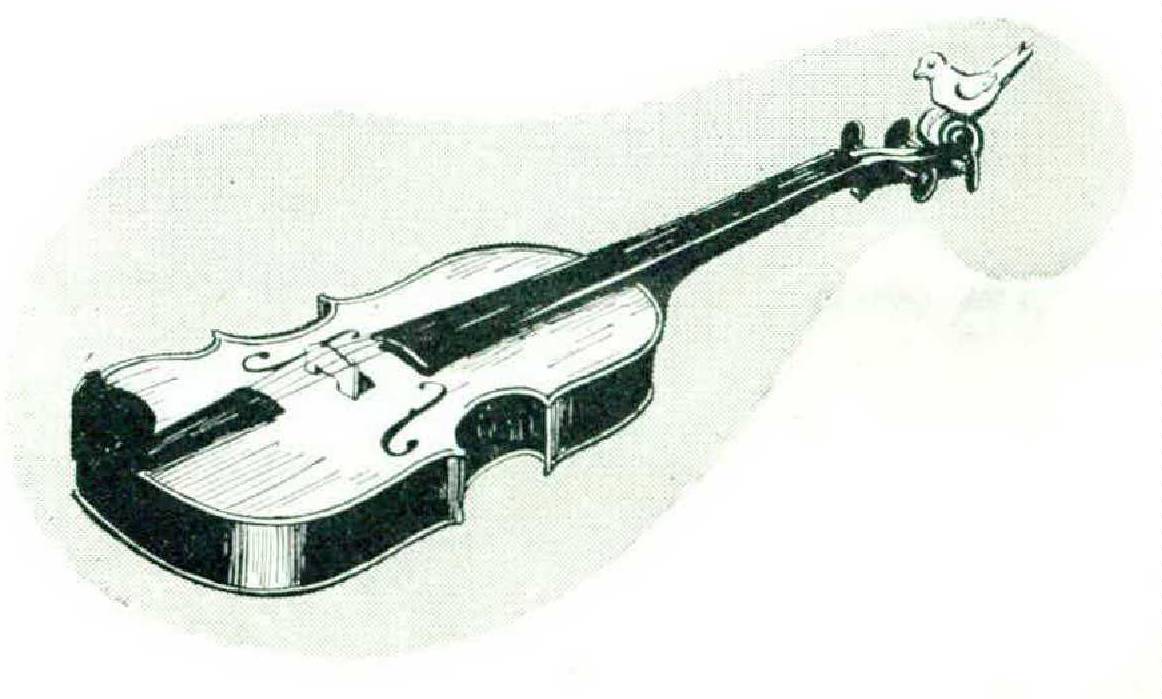
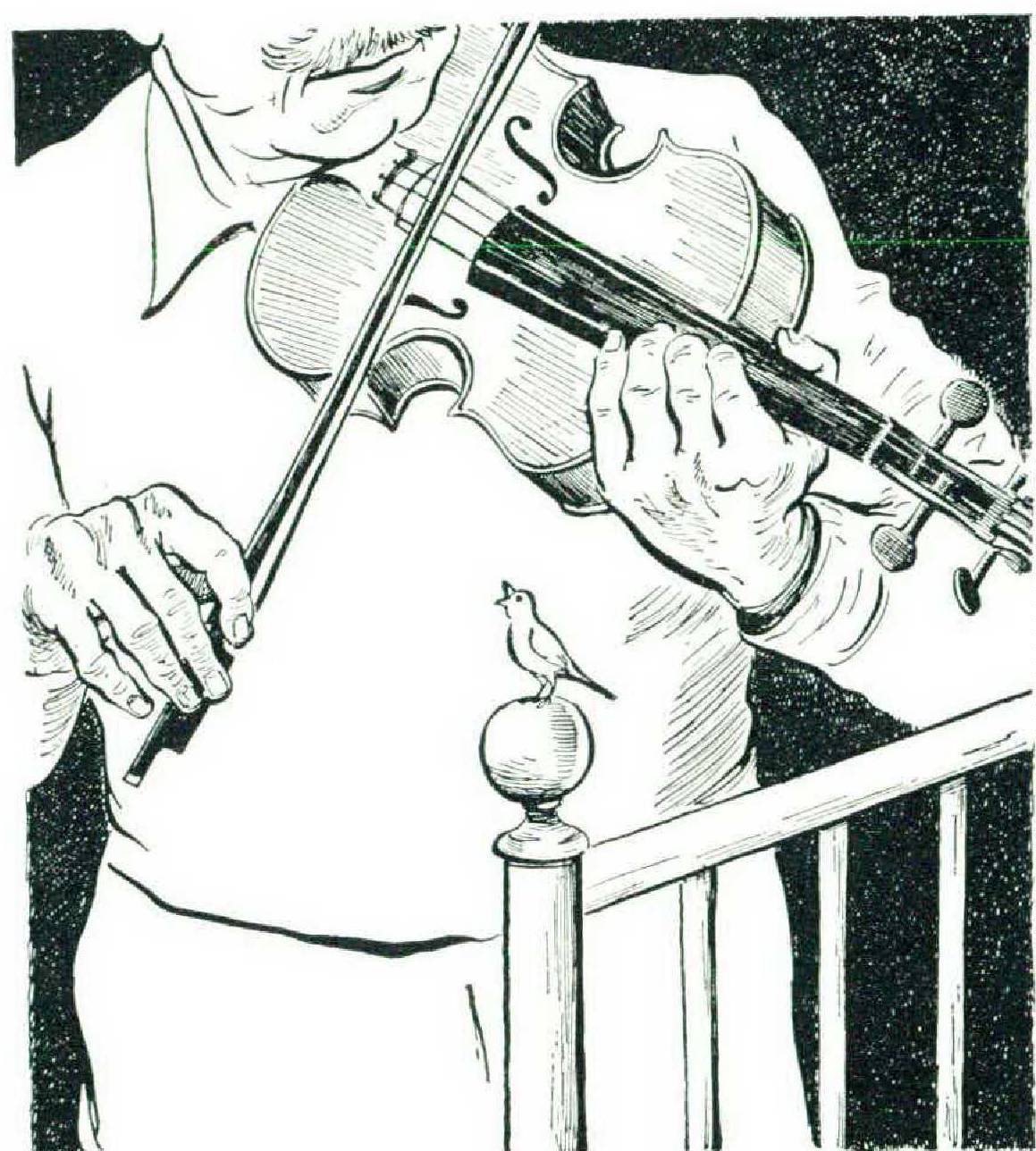
We followed each other into the house, and of course the bird had gone into my father’s room. Fat her was not playing the scales now. He was improvising: delicate, birdlike music. The canary was perched on the brass knob of the bed and was trilling away. Together they made a fine duet until my father became very tricky and the bird got all mixed up. He put his head under his wing as if he were ashamed. I say “he.” I know very little about birds.
My father smiled and wiped off the violin carefully with his old, white silk scarf and he put the instrument away carefully. Then he sat in his rocker and filled up his pipe, keeping his eyes always on the bird.
Millie and mother and I were sitting on the bed.
“The canary belongs to someone. It flew out of the cage. Someone has lost a canary,” my mother said.
My father tapped the tobacco into his pipe.
“The canary has made a free choice,” he said.
Millie laughed delightedly. “We’ll get a cage,” she said.
“We will not get a cage,” my father contradicted gently. “The bird has come freely. It shall go freely.”
“What about winter?” I said. “A canary does not know anything about winter. A canary would be very upset by a good New England snowfall.”
My father lighted his pipe.
“You are very young and you consider yourself an artist — a writer. But you do not understand the first thing about life. The canary has, in his song, expressed explicitly the desire to live his own life. This is a desire which should be granted anyone who expresses it.”
He puffed on his pipe with malicious pleasure.
You cannot argue against words like that. I smiled. “Since I am not en rapport with canaries, I shall have to take your word for it.”
“An excellent notion,” my father agreed.
Three times a day, before meals, my father and Arturo, as we named the canary, had a concert together. It is impossible to say who suggested the theme and who developed it. In time they were making music as if they had studied together in a conservatory.
A week later, at the end of one of their duets, my father said: “This bird has possibilities.”
What could I say to a remark like that?
Then the news came that Mrs. Costello had lost a canary. Naturally an alarm had been sent out weeks before, but we were all very careful not to hear it. We skipped the local news in the paper and held little converse with the neighbors.
Once Millie said, “Doesn’t Mrs. Costello have a canary?”
The way we all looked at her was enough.
Millie, after all, is new to our family. She cannot be expected to understand everything all at once.
But this day my mother could not resist the temptation of comparing the vividness of her best geranium with that of Mrs. Costello’s best. My mother bakes better than Mrs. Costello. She washes faster and whiter than Mrs. Costello. She finds beef and bananas away ahead of Mrs. Costello. But when it comes to geraniums, Mrs. Costello is always out in front by a shade.
Said Mrs. Costello: “You hear about it? How I lose a canary? The beautiful singer. Like a lark.”
According to my mother, she blushed a little and said, averting her eyes from the empty cage: “A lark does not sing very much like a canary.”
“The canary,” Mrs. Costello persisted, “flew out the window. He flew up the stairs. I mean outside, not inside. Sometimes in the night I think I hear him sing.”
“You should drink warm milk before going to bed,” my mother said. “You will not have strange dreams.”
Later, as I say, my mother told us.
“The canary is Mrs. Costello’s,” she announced, after we had finished a piece of her deep-dish green apple pie. It is difficult to be angry at such a time.
“I understand,” my father said solemnly, “that there is now a method of growing flowers with nothing but chemicals and water. You must try it with your geraniums.”
Millie said: “It’s a shame to lose the canary. He has become part of the family.”
“For ten years,” my mother explained, “Mrs. Costello and I have been friends. We have shared butter and sugar and coffee. I have made pie for her and she has made ravioli for me. Is a canary so much?”
My father wiped his lips with his napkin and put it slowly back into the bright silver ring.
“There is no proof that the bird belongs to Mrs. Costello. Mrs. Costello has lost a canary. We have found one. Does the bird answer to a name? Does he have perhaps a mole on his left leg? Think of the injustice of giving to Mrs. Costello a bird who is happy and contented and who might very well be repulsed by Mrs. Costello’s small mustache.”
Millie and I smiled at each other.
My father sipped on his hot, black coffee.
“No,” he averred, “the bird, I repeat, is a free agent.
He may go to Mrs. Costello if he wishes. He may stay here and partake of our hospitality if he wishes. It is up to the bird. Nothing could be more impartial.”
He patted himself twice on his bald head and then went to his room for an unscheduled duet. It was one of the best we had heard.
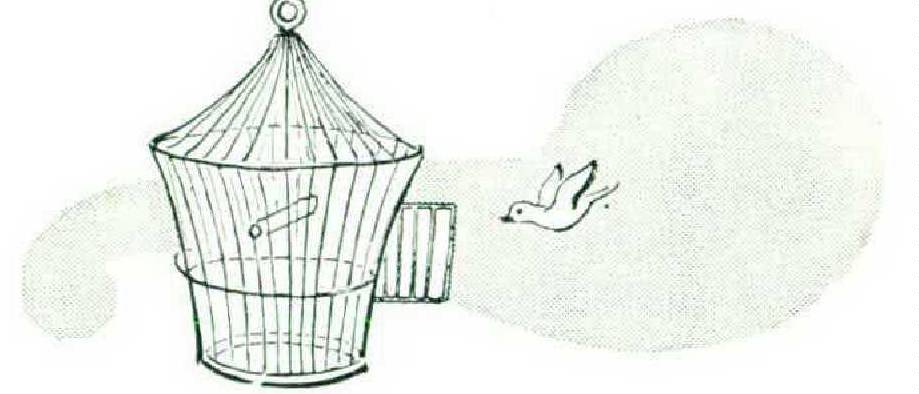
In the middle of October the bird disappeared. My father said nothing. He went back to the scales and that was all there was to it.
“I often wonder where the canary went to,” my mother said, a few weeks later. “I saw Mrs. Costello today and she seemed to be in high spirits.”
My father shrugged. “ It is none of our business, he said. “The bird has gone where he wanted to go and done what he wanted to do.”
The last week in November we found a canary on the back porch, dead.
“It tried to come back, you see,” Millie said sadly.
We called my father out from his room and he looked at the bird calmly.
“Yes,” he said quietly, “this is Arturo. He was alive and bright and singing. Now he is dead. Dead — but he lived a full life. He had good food, good friends, and good music.”My father went to his room and played a gentle, delicate variation on Chopin’s funeral piece while we buried the bird.
The next day Millie bought a Persian kitten. My father was very indifferent. He said the kitten knew nothing about music. He said he was not complaining. He was merely stating an unfortunate fact.