—Alabama Governor Robert Bentley resigned amid allegations he abused power and state resources to conceal an affair. More here
—Two adults and one child are dead in an apparent murder-suicide inside a classroom in San Bernardino, California. More here
—Neil Gorsuch was sworn in as the 113th U.S. Supreme Court justice, returning the court to its full complement of nine judges, as well as to its conservative tilt. More here
—We’re tracking the news stories of the day below. All updates are in Eastern Daylight Time (GMT -4).
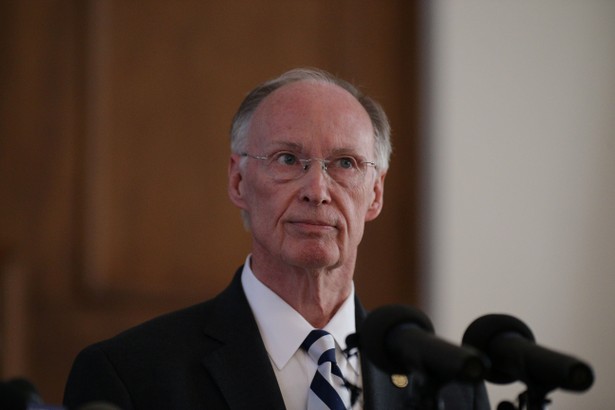
Alabama Governor Robert Bentley resigned Monday amid allegations he abused power and state resources to conceal an affair. As The New York Times’s Alan Blinder reports, the second-term Republican governor plead guilty Monday to two misdemeanor charges, including failing to file a major contribution report and converting campaign contributions to personal use—charges for which he was sentenced to 30 days in jail, though the sentence was suspended. Instead, he faces 12 months of probation, 100 hours of community service, and a $7,000 fine. Bentley, whose impeachment hearing began Monday, was confronted last week with allegations of “improper communications” with Rebekah Caldwell Mason, his senior political adviser with whom he is accused of having an affair, as well as abuse of power and violating state ethics and campaign finance laws. Though Bentley asked Alabama residents for forgiveness Friday, he said he had no plans to resign, adding that: “I have done nothing illegal. If the people want to know if I misused state resources, the answer is simply no. I have not.” Alabama Lieutenant Governor Kay Ivey is expected to be sworn in to replace Bentley, but as my colleague David Graham notes, the transition may not be that seamless.
Even with the handwriting so clearly on the wall, Bentley might not choose to leave office gently. His office denied any negotiation on an exit, and Alabama Media Group’s John Archibald wrote, with understated wryness, “It is possible that Bentley, who has changed his mind often during his term, could change his mind.”
Three Dead in Apparent Murder-Suicide at San Bernardino County Elementary School
Grant Hindsley / AP
Updated at 7:15 p.m. ET
Two adults and one child are dead in an apparent murder-suicide inside a classroom at North Park Elementary School, San Bernardino County Police Chief Jared Burguan said today. “We believe the suspect is down and there's no further threat,” Burguan said on Twitter. Lieutenant Mike Madden, a spokesman for the San Bernardino Police Department, said at a news conference that the shooter was Cedric Anderson and his victim was Karen Elaine Smith, a special education teacher. Later Monday, authorities said an 8-year-old boy, Jonathan Martinez, was killed in the gunfire. Madden said the shooter had a handgun and had visited the classroom. He said the injured students were in critical condition, adding they were not targeted; nor were they related to the adults who were killed, he said. Students at North Park Elementary were taken to Cajon High School for safety, Burguan said earlier. The San Bernardino City Unified School District said on Twitter that North Park, Cajon Elementary School, and Hillside Elementary School are on lockdown.
This is a developing story and we’ll update it as we learn more.
Tesla (Briefly) Becomes the Most Valuable U.S. Carmaker
Stephen Lam / Reuters
Tesla became the most valuable carmaker in the U.S. on Monday after its shares rose to about $313 to make it worth $51 billion, enough to edge out General Motors. It didn’t last long, however, and after the crescendo shares dipped slightly, putting General Motors back on top. But it was a clear message that investors are confident Tesla, headed by CEO Elon Musk, will lead the electric-car industry in the future. Last week Tesla passed Ford in value, despite selling a small fraction of what Ford does. In the first three months of the year, Tesla has sold about 25,000 of its Model S and Model X cars, while Ford sold more than 600,000 vehicles; GM sells 690,000. Skeptics say Tesla is overvalued, but Musk has also been venturing into non-car markets, acquiring a solar panel installation company, and debuting a new home solar-panel design. Tesla has been in a crunch to pick up car production, especially after last year, when it debuted the Model 3. At $35,000 the sedan is the company’s cheapest car, and is meant for middle-income buyers. Musk has said he hopes to produce half a million vehicles by 2018.
Neil Gorsuch Is Sworn In as the Newest Supreme Court Justice
Evan Vucci / Reuters
Neil Gorsuch was sworn in on Monday as the 113th U.S. Supreme Court justice, returning the court to its full complement of nine judges, as well as to its conservative tilt. Gorsuch, President Trump’s nominee to fill the vacancy created last year by the death of Justice Antonin Scalia, was confirmed last week by the Senate in a contentious vote that saw Republicans exercise the so-called “nuclear option” so a simple majority of senators could approve him. His appointment brings an end to a yearlong battle that saw Senate Republicans refuse to consider Judge Merrick Garland, President Obama’s nominee for the same seat. The new justice will have an immediate impact, as this week the court will decide which cases to take up in the coming year. At the confirmation ceremony at the White House Rose Garden, the oath was administered by Justice Anthony Kennedy, for whom Gorsuch once clerked. Trump congratulated Gorsuch, and said the justice would rule “not on his personal preferences but based on a fair and objective reading of the law.” The confirmation fulfills Trump’s campaign promise to put a conservative on the bench, and on Monday the president reminded people of that: “I got it done in the first 100 days,” Trump said. “You think that’s easy?”
Video Shows Police Drag Man Off an Overbooked United Airlines Flight
Louis Nastro / Reuters
Updated at 3:38 p.m. ET
A man was forcibly removed from a United Airlines aircraft by police Sunday because the flight was overbooked, according to eyewitnesses. Video of the incident, which took place Sunday on United Flight 3411 at Chicago’s O’Hare International Airport, shows a an unidentified male passenger screaming as three police officers forcibly removed him from his window seat. The man’s screams stopped after one of the officers pulled him to the ground and dragged him down the aisle. One passenger can be heard in the background saying, “Oh my God, look at what you did to him.” The Chicago Police Department said in a statement that the 69-year-old man struck his head on an armrest and was later treated at the Lutheran General Hospital for non-life threatening injuries. Tyler Bridges, a passenger on the plane, told the Washington Post the airline asked four passengers to voluntarily give their seats to stand-by United employees who needed to be in Louisville, Kentucky, where the flight was headed. Bridges said the airline began selecting passengers when no one volunteered and that when the man was asked to leave, he refused, noting he was a doctor and had patients to see the next day. Bridges said the man also accused the airline of choosing him because he is Chinese. Charlie Hobart, a United Airlines spokesman, said in a statement that law enforcement was asked to get involved after no one volunteered to leave the aircraft, adding “we apologize for the overbook situation.” In a separate statement, United Airlines CEO Oscar Munoz said the airline would work with law enforcement to review the incident and apologized “for having to re-accommodate these customers.” The Chicago Department of Aviation said the officer who dragged the man off the flight has been placed on leave.
Wells Fargo Takes Back $75 Million From Top Execs in Sales Scandal
CX Matiash / AP
Wells Fargo said Monday it would take back $75 million from two top executives accused of downplaying and ignoring aggressive policies that prompted thousands of employees to create fake accounts to meet sales goals. The announcement came as the company released a scathing 110-page report that found the bank’s management pressured employees to push unwanted or unneeded products on customers. This led to a wide practice of fraud, and thousands of employees created up to 2 million fake accounts and lines of credit without customer knowledge. Much of the blame for the scandal has been leveled on former CEO John Stumpf, and former head of community banking, Carrie Tolstedt. The report found that when presented with the problem, Stumpf refused to hear the criticism or change practices, and Tolstedt actively worked to downplay the issue. Wells Fargo has already paid $185 million in fines. It also settled a class-action lawsuit for $110 million. Both Stumpf and Tolstedt will have their compensation taken, as well as stock options.
Marine Le Pen Denies France's Role in the Holocaust
Lionel Bonaventure / Reuters
Marine Le Pen, the National Front (FN) presidential candidate, sparked outrage Sunday when she denied France’s responsibility for the wartime deportation of thousands of French Jews to the Nazi concentration camps. “I don’t think France is responsible for the Vel d’Hiv,” the far-right leader said Sunday in reference to France’s round up of more than 13,000 Jews at the Vélodrome d'Hiver indoor cycling track in 1942, adding: “I think that generally speaking if there are people responsible, it's those who were in power at the time. It's not France.” Both President François Hollande and former President Jacques Chirac have apologized for France’s role in the incident, though Le Pen argued the Vichy regime that ruled France during World War II was an “illegal” authority, noting Charles de Gaulle, the leader of the Free French Forces, lived in exile in London at the time. Such comments are not unusual for the FN. Jean-Marie Le Pen, Marine Le Pen’s father and the FN’s founder, has repeatedly dismissed the Holocaust as a minor “detail” of history and defended Vichy government collaborators—rhetoric that prompted the younger Le Pen to expel her father from the FN in 2015 as part of her effort to rebrand the historically fringe party. Le Pen’s comments come less than two weeks ahead of the French presidential election’s first round of voting that polls project her to win.
Egypt's State of Emergency Takes Effect After ISIS Attacks on Coptic Churches
(Mohamed Abd El Ghany / Reuters)
Egypt’s three-month state of emergency went into effect Monday, a day after ISIS claimed responsibility for attacks on two Coptic churches that killed more than 40 people. Egyptian President Abdel-Fattah el-Sisi declared a state of emergency Sunday following the attacks. The Egyptian Cabinet, which must approve the move, did so today. “The state of emergency allows both the armed forces and the police to execute those procedures necessary to combat the threats of terrorism and its financing, maintain security around the country and protect public and private property, as well as preserving the lives of citizens,” the Cabinet said in a statement. Yesterday’s attacks in the northern city of Tanta and in Alexandria targeted worshippers who had gathered for Palm Sunday.
U.S. Steps Up Pressure on Russia Over Its Support of Syria
U.S. Secretary of State Rex Tillerson attends a ceremony at the Sant'Anna di Stazzema memorial, dedicated to the victims of the massacre committed by Nazis in 1944. (Max Rossi / Reuters)
U.S. Secretary of State Rex Tillerson is meeting today with his colleagues from the Group of Seven (G-7) industrialized nations, ahead of a meeting this week with his Russian counterpart. The G-7 is hoping to pressure Russian President Vladimir Putin to end his military and diplomatic support for the regime of Syrian President Bashar al-Assad. Tillerson’s visit to Moscow comes days after the U.S. struck a Syrian airbase following what the U.S. says is Assad’s use of chemical weapons last week in Idlib province. The U.S. strike marked an apparent turning point in the U.S. view toward Assad: Just days ahead of the chemical-weapons attack, U.S. officials, including Tillerson and Nikki Haley, the U.S. envoy to the UN, said Assad’s removal from power was not a U.S. priority. After the strike, however, U.S. officials said they wanted Assad gone—but through a political process. Tillerson, speaking on CBS’s Face the Nation, said: “I think the issue of how Bashar al-Assad’s leadership is sustained, or how he departs, is something that we’ll be working with allies and others in the coalition. But I think with each of those actions, he really undermines his own legitimacy.” Haley, appearing on NBC’s Meet the Press, said: “In no way do we see peace in that area with Russia covering up for Assad. And in no way do we see peace in that area with Assad at the head of the Syrian government.” The U.S. has emphasized though that fighting ISIS remains its priority in Syria.
Kash Patel has alarmed colleagues with episodes of excessive drinking and unexplained absences.
On Friday, April 10, as FBI Director Kash Patel was preparing to leave work for the weekend, he struggled to log into an internal computer system. He quickly became convinced that he had been locked out, and he panicked, frantically calling aides and allies to announce that he had been fired by the White House, according to nine people familiar with his outreach. Two of these people described his behavior as a “freak-out.”
Patel oversees an agency that employs roughly 38,000 people, including many who are trained to investigate and verify information that can be presented under oath in a court of law. News of his emotional outburst ricocheted through the bureau, prompting chatter among officials and, in some corners of the building, expressions of relief. The White House fielded calls from the bureau and from members of Congress asking who was now in charge of the FBI.
I spent 10 months working at the institution because I thought I could help protect it. What I observed there is far worse than the public knows.
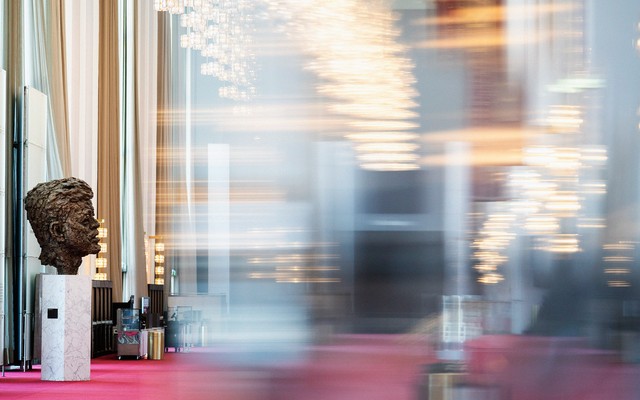
On the day I was laid off from the Kennedy Center, I felt a little like Dolley Madison saving the Stuart portrait of Washington before the British sacked the capital. I was the staffer in charge of the artworks in the building. A crucial difference is that my institution, unlike the White House in 1814, had been on fire for months.
About a year elapsed between the moment President Trump took over the Kennedy Center in early 2025 and his declaration this past February that he’d decided to shut down the nation’s cultural center for two years. In between, we had seen artist cancellations, shrinking audiences, firings of old staffers and influxes of new ones—a lot of drama, just not onstage. The date Trump announced for the closure was July 4, the country’s 250th birthday, an event that I had been hired to help commemorate as the institution’s first curator of visual arts and special programming.
A shocking number of the president’s supporters have turned against him.
Tomas Montoya has sold festival foods—funnel cakes, burgers, hot dogs—across the American Southwest for years. But lately, business has been rough. Costs are up, so he’s increased his prices. Employees are begging for hours he can’t give them. In Arizona, where he lives, Montoya pays $6 a gallon to fill up his food trucks with diesel. This summer, he may have to skip the California leg of his festival route because fuel is even more expensive there.
“It’s Trump,” Montoya told us outside a popular Hispanic grocery store in Casa Grande, Arizona, much of which sits in one of the most evenly divided House districts in the country. Montoya voted for President Trump in 2024, but now, well, frustrated doesn’t begin to cover how he’s feeling. The president is bragging about the economy, even though everyone Montoya knows is hurting; he promised to stop wars, but started one in Iran. “When Trump opens his mouth, three-quarters of what he says is stories, lies,” Montoya said. He’s planning to vote in the midterm elections this fall. But he may not choose a Republican.
Thirteen thousand miles. Infinite contenders. One beautiful loaf.
This article was featured in the One Story to Read Today newsletter. Sign up for it here.
Here is the promise you and I must cling to across the thousands of words that follow: At some point within this text, I will reveal to you what—after 555 responses, 13,000 miles of travel, and months of monomaniacal research—I have determined to be the best free restaurant bread in America. I will not attempt to slither to the moral high ground, arguing that best is a meaningless measure, or insisting that all bread is dear in its own way. Even if you attempt to betray me—for instance, by merely scanning the text that follows for the phrase Here it is: the best free restaurant bread in America—I will uphold my end of the bargain.
Trump has developed a reputation for backing down from his most over-the-top threats, but dismissing his words is a mistake.
Twelve hours after Donald Trump warned that a “whole civilization will die tonight, never to be brought back again”—after he’d previously threatened to bomb Iran “back to the Stone Ages”—the president agreed to a temporary cease-fire. Since then, initial peace negotiations failed and Trump responded with a naval blockade of the Strait of Hormuz; a new round of talks may begin soon.
But what to do with his everyone in Iran is going to die comments last week? Because they were designed to pressure Iran to come to the table, and because the promised carnage did not materialize, many observers simply moved on, explaining away Trump’s threats as a ham-fisted negotiation tactic, some kind of 5-D chess, or another example of the president’s propensity to “TACO” (Trump Always Chickens Out).
This article was featured in the One Story to Read Today newsletter. Sign up for it here.
Maybe you’ve seen photos of Tehran in the 1970s, just before the Islamic Revolution: images of young women going to work in miniskirts, of couples making out in parks while wearing bell-bottoms, of people at pools in bikinis. It looks like Paris or Milan or Los Angeles. But in 1979 the revolution happened, and now Tehran looks like something from an earlier century.
Sometimes I think that our whole world has become kind of like that—going backwards in time. The religious movements thriving in today’s secularized age are the traditionalist ones that dissent from large parts of contemporary culture—not only the Shiite Islam of post-revolution Iran, but Orthodox Judaism and conservative Catholicism. Young Americans are flooding into Eastern Orthodox churches.
The vice president has decided he’s a more accomplished theologian than Leo XIV.
The Trump administration doesn’t seem to have many rules, but one of them is that once the president picks a fight, his posse must show up to support him, no matter how ill-advised the conflict. And few senior officials are more eager to back up the boss in every embarrassing beef than Vice President Vance, who recently seems to have decided that he, and not Pope Leo XIV, is the true arbiter of Catholic doctrine.
President Trump is personally angry with Leo because the pontiff has been deeply critical of America’s war of choice in Iran. Accordingly, Trump lashed out at His Holiness twice over the past few days. Vance might have seen this as a valuable opportunity to say nothing and let the storm pass; Leo, naturally, doesn’t seem to care all that much what Trump thinks. (As my colleague Liz Bruenig wrote, Leo answers to a higher authority.) Had the vice president remained silent, Trump might have moved on, and Vance, a relatively recent convert to Catholicism, would have been able to stay out of a dustup between his president and his spiritual leader.
The Hungarian strongman Viktor Orbán, who lost his election in a landslide on Sunday after 16 years in power, presented himself as a defender of Western civilization. But at best, his lofty rhetoric was a code for bigotry and a justification for the persecution of minorities; at worst, it was a scam to fleece Hungarians by persuading them to blame everyone but those responsible for their problems. Maybe both.
Eventually Hungarians decided that a major source of their problems was Orbán himself. Maybe someday Americans will come to a similar realization about Orbán’s great admirer, Donald Trump, who praised the former Hungarian leader before the election as a “fantastic man” who had done a “fantastic job.”
In this episode of Galaxy Brain, Charlie Warzel speaks with Josh Owens, a videographer and the author of a memoir about his years working for Infowars, the media company of the conspiracy theorist Alex Jones. Owens traces his journey from a film-school student who stumbled onto Jones’s radio show to an insider who spent four years filming, editing, and traveling for the organization. Owens describes how Jones’s conspiracy machine works, as well as how his own moral compass was scrambled by Jones’s manipulative management. The conversation explores radicalization, the conspiratorial media ecosystem Jones helped create, and how Owens was able to pull himself out.
Control of a vital waterway gives Tehran the deterrence power it’s always wanted.
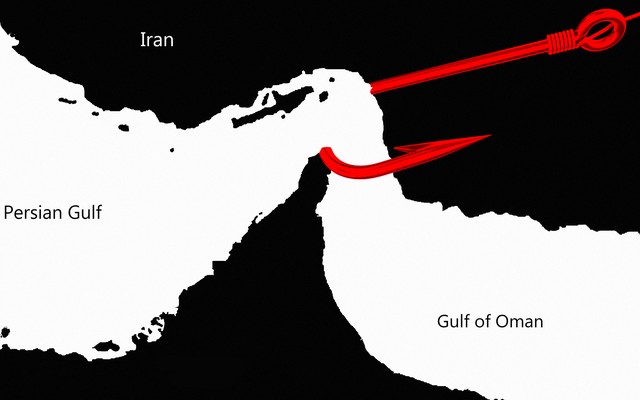
President Trump has said that he went to war to stop Iran from ever having a nuclear bomb. Unfortunately, the war he launched led Iran to discover that it already had an extremely effective doomsday weapon—one that promised the economic equivalent of mutual assured destruction. The Strait of Hormuz has always been vulnerable; the United States has always known that Iran might try to close it if attacked. But neither Washington nor Tehran imagined how easy it would be for Iran to do so, how hard it would be for the U.S. to reopen it, or how widely and rapidly the economic effects of a closed strait would fan out.
Fossil fuels are to modern industrial civilization what air is to the lungs: About 80 percent of the global economy is powered by oil, coal, and natural gas. Much of this comes from the states along the Persian Gulf: Saudi Arabia, Iraq, Iran, the United Arab Emirates, Kuwait, Qatar, Oman, and Bahrain. About 25 percent of global seaborne oil trade and 20 percent of global liquified natural gas transits the Strait of Hormuz, between the Persian Gulf and the Gulf of Oman.