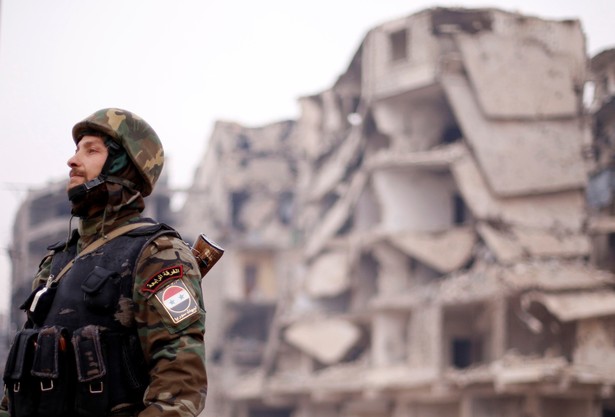
—The negotiated evacuation of citizens in Aleppo’s rebel-held eastern district has been halted, trapping between 50,000 and 100,000 people. More here
—The FBI and the director of national intelligence now agree with the CIA’s assessment that the Russian government intervened in the presidential election to help President-elect Donald Trump win. More here
—A Chinese Navy warship seized an unmanned, underwater glider drone from an American vessel in the South China Sea. More here
—We’re live-blogging the news stories of the day below. All updates are in Eastern Standard Time (GMT -5).
Princeton's Men's Swimming and Diving Team Is the Latest to Be Suspended for Sexist Messages
People walk by Princeton University's Nassau Hall. (Dominick Reuter / Reuters)
Princeton University joined the growing list of academic institutions that have suspended sports teams for exchanging offensive remarks online. The New Jersey school on Thursday announced its decision to suspend the men’s swimming and diving team’s season after discovering content on the team’s mailing list that the university described as “vulgar and offensive, as well as misogynistic and racist in nature.” John Cramer, a Princeton spokesman, told the university’s student newspaper, The DailyPrincetonian, that the specific contents of the emails were being withheld to ensure the privacy of “members of the women’s swimming and diving team,” though he did not confirm whether the women’s team members were the subject of the emails.
Other university sports teams have faced similar allegations resulting in suspensions. Massachusetts’ Amherst College announced Sunday the suspension of its men’s cross-country team after several of the team’s emails published by Amherst’s student magazine, The Indicator, revealed its members used lewd comments about eight of their female peers—including language referring to some of the women as a “meatslab” or a “walking STD”— that the university described as “racist, misogynist, and homophobic.” Harvard University canceled its men’s soccer team’s season last month after it was revealed that the team produced a “scouting report” of the women’s soccer team’s recruits, assigning each one a numerical rating and a hypothetical sexual position. Columbia University also announced last month its decision to suspend members of its wrestling team after eight of its members were revealed to have sent racist and sexually explicit messages in a group text.
Report: FBI Backs CIA Assessment That Russia Intervened to Help Trump
Gary Cameron / Reuters
Multiple news outlets are reporting that the FBI and director of national intelligence now agree with the CIA’s assessment that the Russian government intervened in the presidential election to help President-elect Donald Trump win. TheWashington Post reported Friday that CIA Director John Brennan recently told the agency’s employees that there is a “strong consensus” among himself, FBI Director James Comey, and Director of National Intelligence James Clapper “on the scope, nature, and intent of Russian interference in our presidential election.” According to NBC News, the FBI now believes Russian support for Trump was “one part” of a broader effort to undermine American democratic institutions. News outlets first reported last week that the CIA, which had already deemed Russia the culprit in the hacking, had revised its assessment to conclude the Russian government hoped to clandestinely aid Trump by undermining his Democratic opponent Hillary Clinton. President Obama has ordered all 17 U.S. intelligence agencies to prepare a report on foreign interference in recent presidential elections by January 20, the day Trump takes office.
It was an emotional few days for people in New York City who hoped to save a deer that wandered into Jackie Robinson Park in Harlem. For two weeks the “Harlem Deer” or “Lefty,” as the white-tailed, one-horned buck came to be known, had attracted crowds of excited locals. Meanwhile, city and state officials bickered over its fate. The city, citing state law, said the deer should be euthanized, because its chances of survival were low. Governor Andrew Cuomo, however, wanted to see the deer alive. The battle drew out to the final moment, with the deer’s execution scheduled for Friday. Friday morning, Mayor Bill de Blasio said on The Brian Lehrer Show on WYNYC radio, “If a deer is already in a natural location and you can leave them there, then they have a chance of survival, but if not, you don’t really have another option. It’s a question of is it going to be a quick and merciful death versus potentially a very long painful process.” Still, Cuomo, who has a reputation for inserting himself in city matters, was obstinate. Just before noon, the state Department of Environmental Conservation drove to the East Harlem shelter where the deer was kept and drove it, away heading somewhere beyond the city where it could live safely. Alas, on the way to freedom, the deer died. City officials blamed the stress of captivity.
U.S. Official: Chinese Navy Seized American Drone in South China Sea
An aerial view of Taiping Island, also known as Itu Aba, in the South China Sea on November 29, 2016. (Tyrone Siu / Reuters)
A Chinese Navy warship seized an unmanned, underwater glider drone from an American vessel in the South China Sea, the Department of Defense said Friday in a statement. The Pentagon says the incident took place Thursday in international waters off the coast of the Philippines at noon local time, officials said. A Chinese Navy vessel retrieved the U.S. drone from the water. An official said the USS Bowditch, an oceanographic research vessel, had deployed the drone as part of a survey mission to collect data on ocean and weather patterns. When the Bowditch’s crew asked for the drone back, the Chinese vessel reportedly ignored the request and left. The act prompted the State Department to file a demarche, or formal diplomatic request, asking that the drone be returned. This isn’t the first time the U.S. and China have clashed on the South China Sea. Beijing and Manila have both claimed portions of the area. The Hague-based Permanent Court of Arbitration ruled unanimously in favor of the Philippines in July when it declared that China has no legal rights to the contested waters, but China has rejected the ruling, and the international tribunal cannot enforce it. President-elect Donald Trump has promised to take a more hardline approach to China—and tensions have been heightened since Trump’s recent phone call with President Tsai Ing-wen of Taiwan, marking a departure from U.S. protocol, which treats Taiwan as an ally but does not recognize its independence.
Did Rodrigo Duterte Personally Kill 3 People or Not?
Romeo Ranoco / Reuters
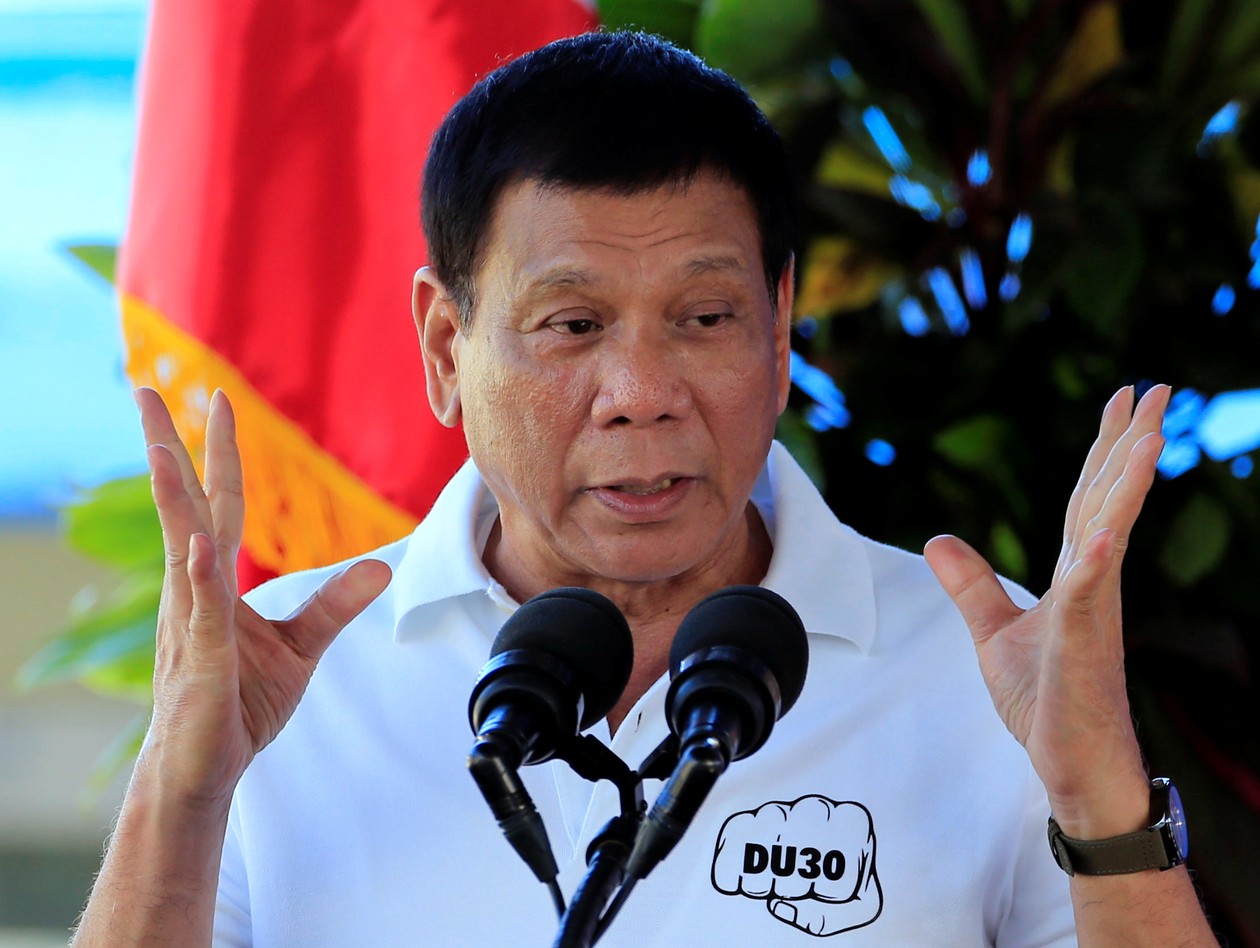
Did Philippines President Rodrigo Duterte shoot and kill three men while he served as mayor of Davao? As of Friday, it would seem so. Since his election this summer, the bellicose president has brought a bloody war on drugs and crime to his country, with the most recent estimates putting the death toll at about 6,000. His idea to purge the Philippines of drug users and pushers was implemented and tested first when Duterte served as mayor of Davao, a once-troubled city on the country’s south, which has since become a financial center. A rumor—perpetuated in part by Duterte himself—has said he oversaw a death squad in Davao, and that he even killed three men personally. On Wednesday, Duterte admitted for the first time to a group of businessmen that he rode the streets of Davao on a motorcycle, “looking for a confrontation so I could kill." But on Thursday Duterte's spokesman chalked that up to the president being flip. Then on Friday, in an interview with BBC, Duterte put it bluntly: "I killed about three of them ... I don't know how many bullets from my gun went inside their bodies. It happened and I cannot lie about it." It’s not clear what repercussion this admission will have for Duterte—if any. He has publicly said he hopes to kill hundreds of thousands of people, and his approval rating as of October was 86 percent.
Cuba Offers to Repay Its Debts to the Czech Republic With Rum
Bottles of rum line the shelves of a store in Havana, Cuba, on October 14, 2016. (Enrique de la Osa / Reuters)
Cuba owes the Czech Republic millions of dollars in Cold War-era debt—an obligation the country has offered to repay with its famous rum. The unusual proposal, which was announced Thursday by the Czech Republic’s finance ministry, would allow Cuba to repay its $276 million debt with its trademark liquor—enough to last the Czechs more than a century, based on their current intake of $2 million of Cuban rum per annum. The Czechs have been amenable to similar requests in the past. In 2010, the central European country considered allowing North Korea to repay a portion of its $10 million debt, which it also dates to the Cold War era, with ginseng. Though the Czech finance ministry said it would prefer that at least part of Cuba’s debt still be paid with cash, it is still weighing the offer, according to the Associated Press. We’ll drink to that. Na zdravi!
The negotiated evacuation of citizens in Aleppo’s rebel-held eastern district has been halted, trapping between 50,000 and 100,000 people. The cause of the stoppage was not immediately clear, and all sides blamed one other. The evacuation was brokered by Turkey and Russia to allow civilians to flee as Syrian government forces retake the city from rebels, and it was carried out by the Syrian Arab Red Crescent and the Red Cross. Evacuations began Thursday, and about 8,000 people escaped to rebel-held towns further east. But the column of buses, cars, and ambulances shuttling civilians out ground to a halt Friday morning. A World Health Organization official said Russia, which backs the Syrian government, ordered the evacuation stopped. The Syrian government accused rebels of trying to smuggle out weapons, and the rebels blamed the Syrian government for firing on evacuation buses. The Guardianreported the breakdown came after an al-Qaeda-affiliated group refused to allow the evacuation of wounded Syrian government supporters. In the past week Syrian government troops have swept through the city, which rebels have held since 2012, about a year after the civil war began. The Assad regime, with aid from Russia, has bombed the eastern district into rubble, and the status of the remaining civilian holdouts has become a humanitarian crisis. It is not yet clear when or if the evacuations will resume.
Obama Promises to Take Action Against Russia's Election Meddling
Manuel Balce Ceneta / AP
In an interview with NPR’s Steve Inskeep that aired Friday, President Obama said the U.S. must retaliate for Russia’s cyberattacks during the presidential election. Obama did not say what form this retaliation would take, partly because he’s waiting for a final report on the matter, but he promised to take action “at a time and place of our own choosing. Some of it may be explicit and publicized; some of it may not be." U.S. intelligence officials have concluded hackers working on behalf of Russia broke into the Democratic National Committee's computer network, and the email of John Podesta, a top adviser for Hillary Clinton. The question remains what Russia’s motivation was. Last week, The Washington Post published a secret CIA assessment claiming Russia aimed to help Donald Trump win. Reports this week have directly implicated Russian President Vladimir Putin in the hacks. Trump continues to dispute the intelligence assessments, and Thursday he tweeted:
If Russia, or some other entity, was hacking, why did the White House wait so long to act? Why did they only complain after Hillary lost?
This is not entirely true, however. The director of national intelligence issued a statement blaming Russia for the hacks on October 7, a month before the election.
Kash Patel has alarmed colleagues with episodes of excessive drinking and unexplained absences.
On Friday, April 10, as FBI Director Kash Patel was preparing to leave work for the weekend, he struggled to log into an internal computer system. He quickly became convinced that he had been locked out, and he panicked, frantically calling aides and allies to announce that he had been fired by the White House, according to nine people familiar with his outreach. Two of these people described his behavior as a “freak-out.”
Patel oversees an agency that employs roughly 38,000 people, including many who are trained to investigate and verify information that can be presented under oath in a court of law. News of his emotional outburst ricocheted through the bureau, prompting chatter among officials and, in some corners of the building, expressions of relief. The White House fielded calls from the bureau and from members of Congress asking who was now in charge of the FBI.
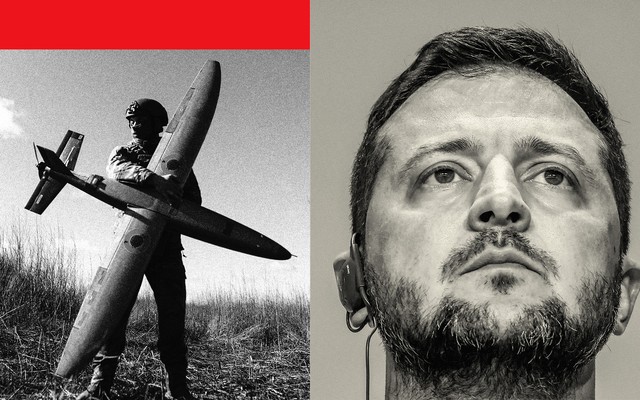
For more than a year after Donald Trump returned to the White House, Ukraine held out hope—at least publicly—of winning him over. Trump, who revealed his affection for Russia’s Vladimir Putin again and again, largely halted American military aid to Kyiv. He insulted Ukrainian leaders regularly, personally berating President Volodymyr Zelensky in the Oval Office in February 2025. Nevertheless, Ukraine diligently took part in Trump’s peace negotiations, which were tilted to reward Putin’s invasion and turned out to be fruitless. Zelensky agreed to mineral deals that supposedly promised to enrich Americans. He even lavishly praised Trump himself. Despite Ukrainian leaders’ growing doubts, they calculated that speaking sweetly of the American president would do no harm and just might gain his favor.
Thirteen thousand miles. Infinite contenders. One beautiful loaf.
This article was featured in the One Story to Read Today newsletter. Sign up for it here.
Here is the promise you and I must cling to across the thousands of words that follow: At some point within this text, I will reveal to you what—after 555 responses, 13,000 miles of travel, and months of monomaniacal research—I have determined to be the best free restaurant bread in America. I will not attempt to slither to the moral high ground, arguing that best is a meaningless measure, or insisting that all bread is dear in its own way. Even if you attempt to betray me—for instance, by merely scanning the text that follows for the phrase Here it is: the best free restaurant bread in America—I will uphold my end of the bargain.
I spent 10 months working at the institution because I thought I could help protect it. What I observed there is far worse than the public knows.
On the day I was laid off from the Kennedy Center, I felt a little like Dolley Madison saving the Stuart portrait of Washington before the British sacked the capital. I was the staffer in charge of the artworks in the building. A crucial difference is that my institution, unlike the White House in 1814, had been on fire for months.
About a year elapsed between the moment President Trump took over the Kennedy Center in early 2025 and his declaration this past February that he’d decided to shut down the nation’s cultural center for two years. In between, we had seen artist cancellations, shrinking audiences, firings of old staffers and influxes of new ones—a lot of drama, just not onstage. The date Trump announced for the closure was July 4, the country’s 250th birthday, an event that I had been hired to help commemorate as the institution’s first curator of visual arts and special programming.
The Sorrow and the Pity has lessons for how authoritarianism takes root—and how to fight against it.
The best thing I watched in the past year was an epically long movie about retired militants, but it wasn’t One Battle After Another, the Oscar winner for Best Picture. It was The Sorrow and the Pity, a four-hour documentary from 1969 about life in Nazi-occupied France. Reviewing the film in The Atlantic in 1972, David Denby called it “one of the greatest documentaries ever made,” and that remains true. What makes the film so effective is not how it looks at the Germans, a spectral presence, but how it chronicles the way that many ordinary citizens simply lived their lives as if nothing had changed.
The director Marcel Ophuls, who died last year at 97, explores collaboration and resistance through the lens of a small city, Clermont-Ferrand. It’s about an hour from Vichy, where the Nazis established a puppet government headed by the World War I hero Philippe Pétain. Pétain’s former protégé Charles de Gaulle fled to Britain, coordinated resistance to the Nazis, and returned to lead a free France. The idea that the French almost uniformly opposed Nazism, with only a few bad apples collaborating, is foundational to France’s postwar identity. The problem, as Ophuls, a Franco-German Jew, demonstrates, is that this is a myth.
Trump has developed a reputation for backing down from his most over-the-top threats, but dismissing his words is a mistake.
Twelve hours after Donald Trump warned that a “whole civilization will die tonight, never to be brought back again”—after he’d previously threatened to bomb Iran “back to the Stone Ages”—the president agreed to a temporary cease-fire. Since then, initial peace negotiations failed and Trump responded with a naval blockade of the Strait of Hormuz; a new round of talks may begin soon.
But what to do with his everyone in Iran is going to die comments last week? Because they were designed to pressure Iran to come to the table, and because the promised carnage did not materialize, many observers simply moved on, explaining away Trump’s threats as a ham-fisted negotiation tactic, some kind of 5-D chess, or another example of the president’s propensity to “TACO” (Trump Always Chickens Out).
This article was featured in the One Story to Read Today newsletter. Sign up for it here.
Maybe you’ve seen photos of Tehran in the 1970s, just before the Islamic Revolution: images of young women going to work in miniskirts, of couples making out in parks while wearing bell-bottoms, of people at pools in bikinis. It looks like Paris or Milan or Los Angeles. But in 1979 the revolution happened, and now Tehran looks like something from an earlier century.
Sometimes I think that our whole world has become kind of like that—going backwards in time. The religious movements thriving in today’s secularized age are the traditionalist ones that dissent from large parts of contemporary culture—not only the Shiite Islam of post-revolution Iran, but Orthodox Judaism and conservative Catholicism. Young Americans are flooding into Eastern Orthodox churches.
A shocking number of the president’s supporters have turned against him.
Tomas Montoya has sold festival foods—funnel cakes, burgers, hot dogs—across the American Southwest for years. But lately, business has been rough. Costs are up, so he’s increased his prices. Employees are begging for hours he can’t give them. In Arizona, where he lives, Montoya pays $6 a gallon to fill up his food trucks with diesel. This summer, he may have to skip the California leg of his festival route because fuel is even more expensive there.
“It’s Trump,” Montoya told us outside a popular Hispanic grocery store in Casa Grande, Arizona, much of which sits in one of the most evenly divided House districts in the country. Montoya voted for President Trump in 2024, but now, well, frustrated doesn’t begin to cover how he’s feeling. The president is bragging about the economy, even though everyone Montoya knows is hurting; he promised to stop wars, but started one in Iran. “When Trump opens his mouth, three-quarters of what he says is stories, lies,” Montoya said. He’s planning to vote in the midterm elections this fall. But he may not choose a Republican.
Pastor John Mark Comer has won a massive audience by encouraging his followers to free themselves from the gnawing sense that there is always more to do.
John Mark Comer can be a hard man to find. He’s one of the most famous pastors in America right now, an author whose books have together sold more than 1 million copies, but he’s not the most reachable guy. He has a professional website but no contact page. He rarely travels. And as I reported this story, I began to learn his habits: Sending him a text early in the day was a wash, for instance, because he doesn’t check his phone until after morning prayer time. Once, when I reached out by email, I got an out-of-office response that he had set before Christmas explaining that he was observing “rhythms of rest” and asking that I try him again after his return in mid-January. Incoming messages sent in the meantime would be deleted.
The vice president has decided he’s a more accomplished theologian than Leo XIV.
The Trump administration doesn’t seem to have many rules, but one of them is that once the president picks a fight, his posse must show up to support him, no matter how ill-advised the conflict. And few senior officials are more eager to back up the boss in every embarrassing beef than Vice President Vance, who recently seems to have decided that he, and not Pope Leo XIV, is the true arbiter of Catholic doctrine.
President Trump is personally angry with Leo because the pontiff has been deeply critical of America’s war of choice in Iran. Accordingly, Trump lashed out at His Holiness twice over the past few days. Vance might have seen this as a valuable opportunity to say nothing and let the storm pass; Leo, naturally, doesn’t seem to care all that much what Trump thinks. (As my colleague Liz Bruenig wrote, Leo answers to a higher authority.) Had the vice president remained silent, Trump might have moved on, and Vance, a relatively recent convert to Catholicism, would have been able to stay out of a dustup between his president and his spiritual leader.