—Donald Trump was elected the 45th president of the United States, stunning the American political establishment by defeating Hillary Clinton, the heavy favorite, to win. More here
—Demonstrations broke out across the country Wednesday evening, protesting Trump’s victory. More here
—We’re live-blogging the news stories of the day below. All updates are in Eastern Standard Time (GMT -5).
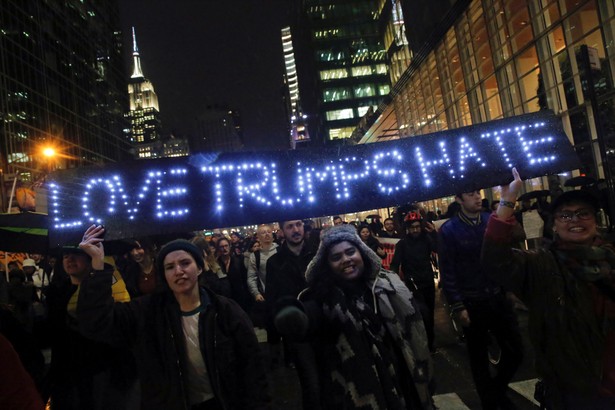
Demonstrations broke out across the country Wednesday evening, protesting the election of Donald Trump for president.
In Chicago, thousands marched through the downtown area, crossing the Chicago River, and chanting, “Don’t give in to racist fear, Muslims are welcome here,” outside the Wabash Avenue building named after the president-elect.
In New York, thousands more gathered in Midtown, at times chanting, “Not my president,” and carrying signs for gay rights and environmental issues.
In Boston, police say 10,000 protesters marched from the Massachusetts Statehouse to Copley Square, yelling, “We will not be silenced,” and waving signs that said, “He Will Never Be My President.”
Protesters flooded the streets of several other cities nationwide, blocking highways in Austin, crowding the steps of Los Angeles City Hall, and disrupting classes in Des Moines, Iowa. Demonstrators also took to the streets of Oakland, Seattle, and Portland.
Emergency-service workers inspect the damage of a tram collision in Croydon, south London on November 9. (Neil Hall / Reuters)
At least seven people have died and dozens more injured after a tram derailed Wednesday morning in Croydon, south of London.
The tram was traveling from New Addington to Wimbledon via Croydon “at a significantly higher speed than is permitted” when it derailed off a sharp curve, the Rail Accident Investigation Branch (RAIB) said Wednesday in a statement. The driver, a 42-year-old man from Beckenham, was arrested on suspicion of manslaughter, according to British Transport Police.
An estimated 51 people were taken to the hospital, the London Ambulance Service said Wednesday afternoon. Of the tram’s passengers, at least seven people were killed—a number Sadiq Khan, the London mayor, warned “may well increase.”
Though the tram was traveling at higher speeds than usual, transport authorities said it is too early in the investigation to determine exactly what caused the crash. Here’s a photo from the scene:
America's Toughest Sheriff Loses His First Election in 24 Years
Reuters
After 24 years of service marked with controversy, Joe Arpaio is no longer sheriff of Maricopa County, Arizona. The 86-year-old came up short in the race for his seventh-consecutive term Tuesday night; he was defeated by Democratic rival Paul Penzone, a former police sergeant who lost to Arpaio in 2012.
Arpaio had once seemed invincible in Arizona. As a local law enforcement leader, he found national fame by pushing the immigration debate to the right. For about a decade, his deputies practiced “crime sweeps,” routinely stopping county residents and asking them to prove their citizenship. In 2013 a federal judge found Arpaio’s office guilty of racial profiling and assigned a federal monitor to ensure the sheriff made changes to his department. Arpaio didn’t comply and landed in civil court, where he was eventually found guilty of contempt. The federal judge then recommended Arpaio be charged with criminal contempt, and he is scheduled to appear in court this December.
Penzone said Tuesday he ran for sheriff because he sought to “restore the respect, the transparency” of the office.
"No longer will we be known by the notoriety of one," he told supporters. "The only division we should see in the community is between those who commit the crime and those [who] are willing to hold them accountable."
Arpaio said he was disappointed about his loss, but he respects the voters’ decision.
'Schindler's List' Factory to Become a Holocaust Memorial
Reuters
The Czech Republic factory where German industrialist Oskar Schindler employed and simultaneously saved more than 1,000 Jews during the Holocaust will become a memorial.
The Czech culture ministry said Tuesday that portions of the factory complex in Brnene, which is near Schindler’s birthplace of Svitavy, will be restored to exhibit Schindler’s life and his work to save the lives of Jews during World War II, a story made famous by the novel Schindler’s Ark in 1982, and later by Steven Spielberg’s film adaptation, Schindler’s List.
Schindler used the factory, as well as one in Nazi-occupied Poland, to manufacture enamelware and munitions. During the war he employed 1,200 Jews to work at his facilities and saved them from execution. The now-dilapidated building will see restorations to its laboratory, mill, chemical depot, watch tower, and more. The memorial is scheduled to open in 2019.
North Dakota Pipeline Owner Will Continue Construction Despite Federal Government's Requests
Reuters
The owners of the Dakota Access Pipeline have vowed to press on with construction, despite months of protests from Native Americans and despite federal requests to delay the project so alternatives routes can be considered.
Energy Transfer Partners made the announcement Tuesday, saying it was readying equipment and would begin drilling within two weeks, Reuters reported. This phase of construction requires the company to drill on federal land and practically under the Missouri river. For months, hundreds of protesters, many of the them Native Americans calling themselves “water protectors,” have protested on private land against the drilling out of fears it may contaminate the only water source for the nearby Standing Rock Sioux Tribe. They have been met by a large police presence—and recently with considerable violence.
The U.S. Army Corps of Engineers had previously permitted Energy Transfer Partners to drill on the land. In September the U.S. government asked the company to temporarily halt work on the pipeline while federal regulators reconsidered its impact on the environment. On Monday, the Army Corp’s told Bloomberg that Energy Transfer had agreed to slow construction. Then as the nation focused on the presidential election, the company said it had made no such promise: "The statement released last night by the Army Corps was a mistake and the Army Corps intends to rescind it," Energy Transfer’s statement read, according to Reuters.
It’s uncertain what will happen next. Protesters have refused to leave; finance companies have also felt pressure to pull out of the deal; and North Dakota regulators are filing a complaint against Energy Transfer that accuses them of failing to disclose findings of Native American artifacts along the pipeline construction route.
Global Markets Fall Sharply on Trump's Win; Gold Surges
(Kai Pfaffenbach / Reuters)
U.S. stock futures are sharply lower this morning following Donald Trump’s stunning victory in the presidential election. You cal follow our live blog of the markets here.
Stocks in Europe and Asia dived before paring some of their earlier declines. Markets in Russia were up.
The price of oil, already battered by years of uneven global economic growth and China’s slowdown, was down about 0.5 percent in early trading. Gold, often seen as a commodity of last refuge, surged.
We should note here that markets often behave erratically during unexpected events—such as the possibility of a Trump presidency. Chances are they will settle down once Trump unveils his economic, domestic, and foreign policies.
I spent 10 months working at the institution because I thought I could help protect it. What I observed there is far worse than the public knows.
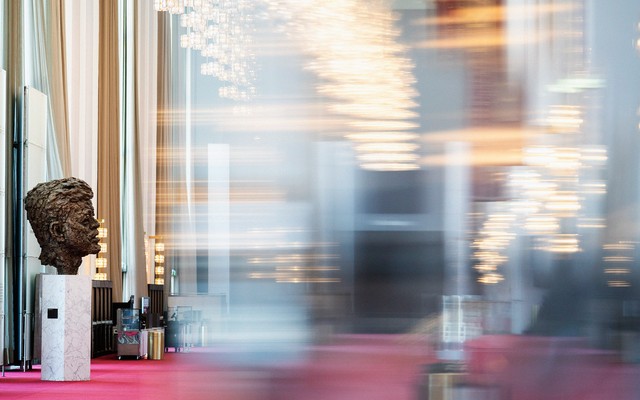
On the day I was laid off from the Kennedy Center, I felt a little like Dolley Madison saving the Stuart portrait of Washington before the British sacked the capital. I was the staffer in charge of the artworks in the building. A crucial difference is that my institution, unlike the White House in 1814, had been on fire for months.
About a year elapsed between the moment President Trump took over the Kennedy Center in early 2025 and his declaration this past February that he’d decided to shut down the nation’s cultural center for two years. In between, we had seen artist cancellations, shrinking audiences, firings of old staffers and influxes of new ones—a lot of drama, just not onstage. The date Trump announced for the closure was July 4, the country’s 250th birthday, an event that I had been hired to help commemorate as the institution’s first curator of visual arts and special programming.
Maybe you’ve seen photos of Tehran in the 1970s, just before the Islamic Revolution: images of young women going to work in miniskirts, of couples making out in parks while wearing bell-bottoms, of people at pools in bikinis. It looks like Paris or Milan or Los Angeles. But in 1979 the revolution happened, and now Tehran looks like something from an earlier century.
Sometimes I think that our whole world has become kind of like that—going backwards in time. The religious movements thriving in today’s secularized age are the traditionalist ones that dissent from large parts of contemporary culture—not only the Shiite Islam of post-revolution Iran, but Orthodox Judaism and conservative Catholicism. Young Americans are flooding into Eastern Orthodox churches.
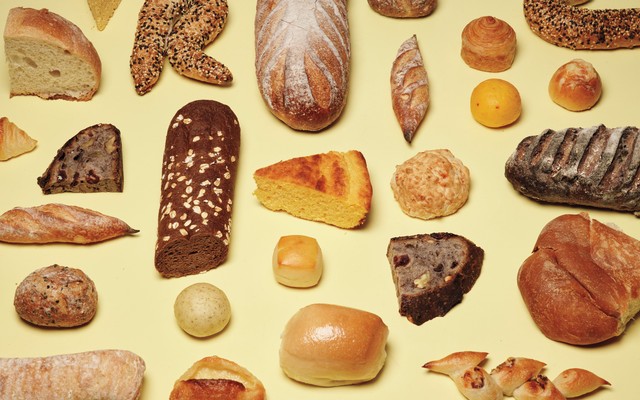
Thirteen thousand miles. Infinite contenders. One beautiful loaf.
This article was featured in the One Story to Read Today newsletter. Sign up for it here.
Here is the promise you and I must cling to across the thousands of words that follow: At some point within this text, I will reveal to you what—after 555 responses, 13,000 miles of travel, and months of monomaniacal research—I have determined to be the best free restaurant bread in America. I will not attempt to slither to the moral high ground, arguing that best is a meaningless measure, or insisting that all bread is dear in its own way. Even if you attempt to betray me—for instance, by merely scanning the text that follows for the phrase Here it is: the best free restaurant bread in America—I will uphold my end of the bargain.
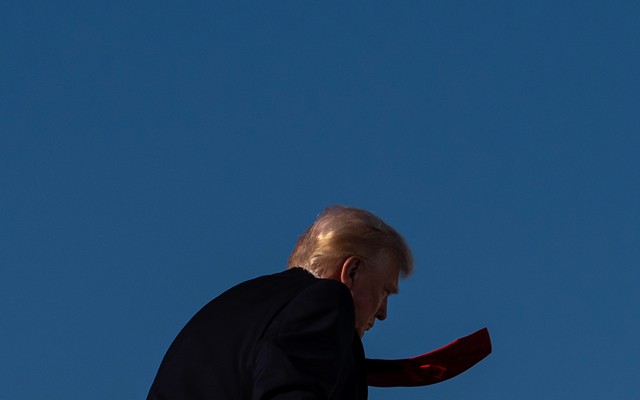
A shocking number of the president’s supporters have turned against him.
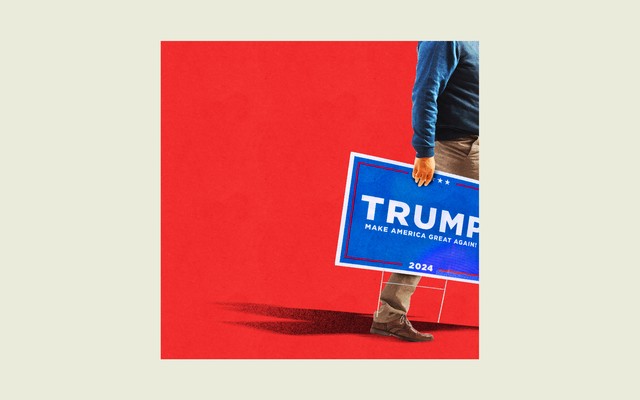
Tomas Montoya has sold festival foods—funnel cakes, burgers, hot dogs—across the American Southwest for years. But lately, business has been rough. Costs are up, so he’s increased his prices. Employees are begging for hours he can’t give them. In Arizona, where he lives, Montoya pays $6 a gallon to fill up his food trucks with diesel. This summer, he may have to skip the California leg of his festival route because fuel is even more expensive there.
“It’s Trump,” Montoya told us outside a popular Hispanic grocery store in Casa Grande, Arizona, much of which sits in one of the most evenly divided House districts in the country. Montoya voted for President Trump in 2024, but now, well, frustrated doesn’t begin to cover how he’s feeling. The president is bragging about the economy, even though everyone Montoya knows is hurting; he promised to stop wars, but started one in Iran. “When Trump opens his mouth, three-quarters of what he says is stories, lies,” Montoya said. He’s planning to vote in the midterm elections this fall. But he may not choose a Republican.
The vice president has decided he’s a more accomplished theologian than Leo XIV.
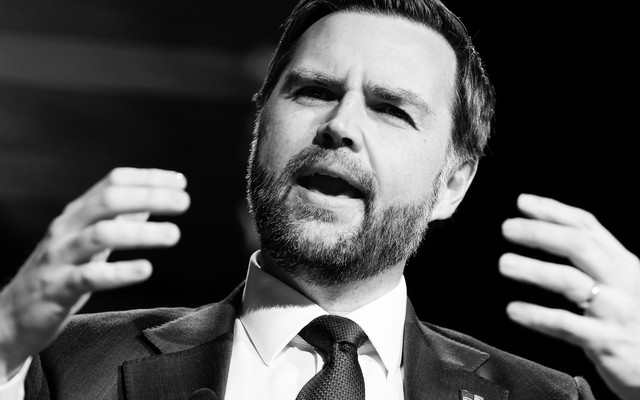
The Trump administration doesn’t seem to have many rules, but one of them is that once the president picks a fight, his posse must show up to support him, no matter how ill-advised the conflict. And few senior officials are more eager to back up the boss in every embarrassing beef than Vice President Vance, who recently seems to have decided that he, and not Pope Leo XIV, is the true arbiter of Catholic doctrine.
President Trump is personally angry with Leo because the pontiff has been deeply critical of America’s war of choice in Iran. Accordingly, Trump lashed out at His Holiness twice over the past few days. Vance might have seen this as a valuable opportunity to say nothing and let the storm pass; Leo, naturally, doesn’t seem to care all that much what Trump thinks. (As my colleague Liz Bruenig wrote, Leo answers to a higher authority.) Had the vice president remained silent, Trump might have moved on, and Vance, a relatively recent convert to Catholicism, would have been able to stay out of a dustup between his president and his spiritual leader.
A minimally speaking autistic man just wrote a best-selling book. Or did he?
Updated at 1:24 p.m. ET on April 16, 2026
On a recent morning at Rockefeller Center, NBC employees strolled through the crowd with copies of Upward Bound, the latest book-club pick from the Today show co-host Jenna Bush Hager. “It’s deeply heartfelt and moving,” Hager said, after holding up the debut novel from the 28-year-old Woody Brown, “and the reason it’s so authentic is that the author understands autism firsthand.”
That understanding is indeed profound. Brown’s autism is such that he can barely speak, and he communicates mostly by pointing to letters, one by one, on a laminated board. This is also how his novel, which is already a New York Times best seller, came to be. In the recorded interview that followed Hager’s introduction, Brown’s mother, Mary, sat beside him, holding the letter board and reading his tapped-out messages.
The president is on a losing streak, and even some of his aides are dismayed by his choices.
This article was featured in the One Story to Read Today newsletter. Sign up for it here.
You’ve heard the joke: The White House is going to start talking about the Epstein files to distract from how badly the Iran war is going.
Except that this reverse “Wag the dog” is based on bizarre truth: First Lady Melania Trump did bring the disgraced financier up, unprompted, late last week in an effort to distance herself from the scandal (in a move that, predictably, only shifted it back into the spotlight once again). Meanwhile, as negotiations with Iran stumble forward, the Strait of Hormuz is still in Tehran’s hands and now President Trump has authorized a risky naval blockade that will likely send prices soaring further. Moreover, Trump’s poll numbers have continued to fall, Republicans worry that both houses of Congress could be lost in November, and the president threw away a remarkable amount of geopolitical capital trying to support his now-defeated illiberal buddy Viktor Orbán of Hungary. Oh, and Trump deeply offended adherents of the world’s two largest religions in one week’s time.
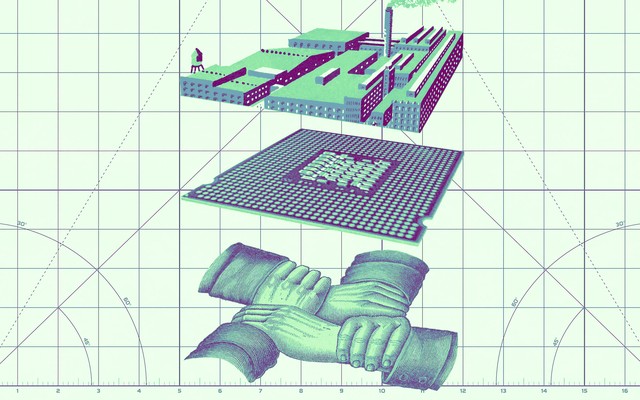
In a new report, the World Bank thinks better of its old free-market absolutism.
How does a country get rich? For decades, the economics establishment generally agreed on a simple answer: Embrace free markets and avoid “industrial policy”—state-led efforts to shape what an economy produces—at all costs. No institution embodied this viewpoint, widely known as the “Washington Consensus,” quite like the World Bank. Established in 1944 to provide low-interest loans to developing countries, the bank soon became the intellectual center of development economics. In the 1990s, it took a hard stance against industrial policy, turning the concept almost into a taboo.
But now industrial policy is back, and it has a surprising new champion: the World Bank. A report issued last month argues that the bank’s previous stance had things backward: Government intervention, when done right, can actually be an essential ingredient of economic success. Industrial policy “should be considered in the national policy toolkit of all countries,” the report concludes.
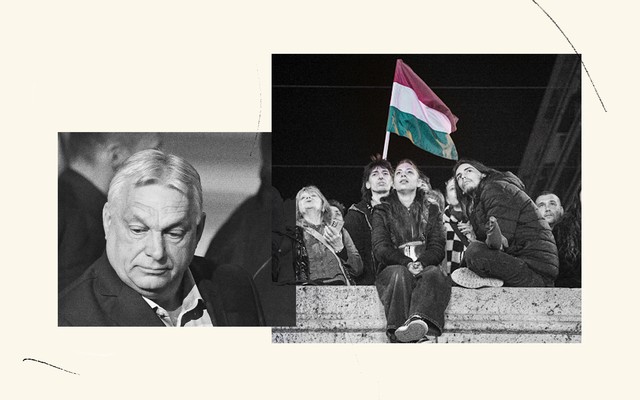
Among the many reasons for Viktor Orbán’s defeat was the rural clubs where citizens relearned democratic habits.
In the days after Donald Trump won his second term, I called a handful of Hungarian political analysts to ask what the American future might look like. My impulse was not an original one; the analysts had been fielding many calls of this sort. Hungary seemed like a bellwether for the illiberal direction in which Trump said he was going to lead the United States. Over his decade and a half reign, Prime Minister Viktor Orbán had rigged the electoral and legislative systems for his party’s benefit, come to control (directly or indirectly) 80 percent of the country’s media, and hobbled most independent institutions. But when I asked these Hungarians to give it to me straight, they started to tell me another story, about what was happening on “the islands.”
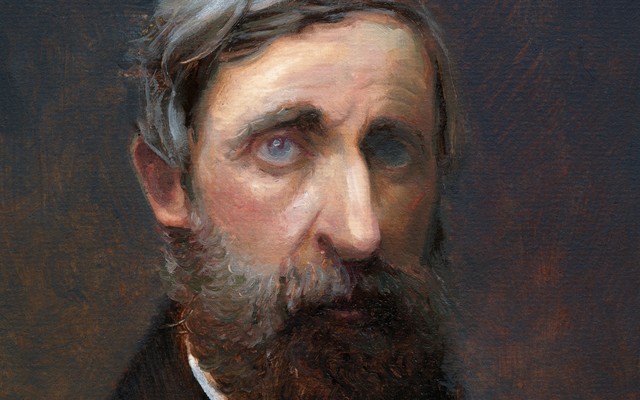
We’ve had Henry David Thoreau the environmentalist, the libertarian, the life coach. To understand his influence, think of him first as a dissident.
One afternoon in the summer of 1846, Henry David Thoreau left his hut near Walden Pond and walked into town to pick up a shoe he was having mended. He was stopped by the local tax collector, who nudged him for the umpteenth time about paying his poll tax—the dollar and a half that every man over the age of 20 had to pay annually, or else lose the right to vote. The tax collector, who wanted to clear his books, even offered to cover the bill, which hadn’t been paid for four years. But Thoreau refused, and he was taken to jail. The one night he spent in a second-floor cell overlooking his hometown of Concord, Massachusetts, was not particularly dramatic. But it was clarifying. As an opponent of slavery, he understood that paying the tax would mean legitimizing a government “which is the slave’s government also,” he later wrote. He couldn’t do that, and so he didn’t.