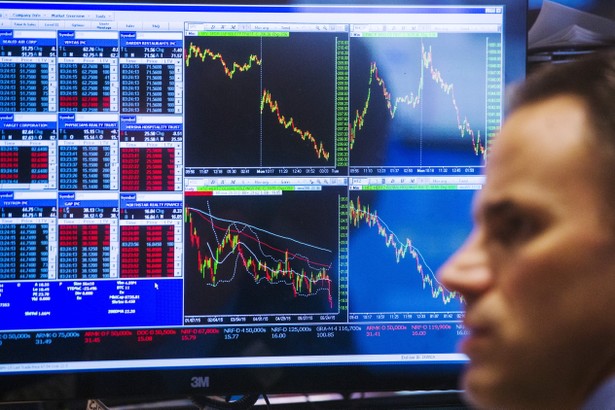
As election results rolled in, global and futures markets responded to the surprisingly close contest by plummeting, with the Dow dropping nearly 800 points. Follow along here for continuing updates on how the world financial markets are responding to the election of Donald Trump as 45th president of the United States.
While the U.S. election was still being decided on Tuesday night, markets in Asia took a dive during active trading as Donald Trump pulled ahead of projected-winner Hillary Clinton.
But markets in Asia bounced back this morning: An hour into trading, the Nikkei is up 6 percent, wiping out losses from yesterday. Stocks in Hong Kong and Shanghai have also recovered: Both the Hang Seng and Shanghai Composite have soared pass yesterday’s losses. (An odd sidenote: a stock in China which sounded like “Trump Wins Big” rallied while another stock which sounded like “Aunt Hillary” tumbled as votes were still being counted.)
It’s worth watching how investors in China will react to the actual Trump presidency. After all, the candidate has suggested that China’s economic relationship with the U.S. might get a lot more complicated once he takes office. During the course of his presidential campaign, Trump accused China of devaluing its currency (a claim that has been debunked) and unfairly taking manufacturing jobs away from Americans. Trump has also suggested imposing a 45 percent tariff on Chinese-made goods in order to reduce the trade deficit and bring jobs stateside, which would create a trade war between the two nations and undoubtedly affect China’s economic growth.
Reuters reports that Chinese President Xi Jinping congratulated Trump in a message earlier today, stating that he’s looking forward to working with Trump to “uphold the principles of non-conflict, non-confrontation, mutual respect, and win-win cooperation." For now, stocks in China, like those in the U.S., seem accepting of the impending Trump administration.
At the end of trading hours on Wednesday, it certainly seems that investors have digested Trump’s surprise victory in the U.S. Presidential election.
The Dow, S&P 500, and NASDAQ all rallied back from precipitous drops in the futures markets, with each closing up by at least 1 percent. The reversal was swift and intense—for the S&P the bounce back was largest since the days of the 2008 banking crisis. The Dow closed up 257 points, after diving 800 points last night in futures trading. Many analysts are attributing the market’s fast recovery to the tone of Trump’s late night acceptance speech, along with the potential benefits for Wall Street a Trump presidency could hold. Though Wall Street was expecting a Clinton win, the numbers seem to indicate that it is just as welcoming to the Trump presidency.
Asian markets open in just a few hours, and their performance tonight will either validate election night panic in emerging markets (the Nikkei plunged 5 percent, while the Hang Seng fell by 2 percent), or evaporate in the face of U.S. investor confidence.
DeVry Education Group is up 9 percent in today’s trading; Apollo Education Group, the company that owns several for-profit institutions—including the University of Phoenix—is up 7 percent; Bridgepoint Education (which was forced to forgive $24 million in student debt by the Consumer Financial Protection Bureau) up 17 percent; and Strayer Education (one of the most successful for-profit colleges) is up 12 percent.
The premise for investor confidence is that for-profit colleges—which have come under intense scrutiny in recent years by The Department of Education for fraudulent marketing, bad results, and saddling students with student-loan debt—might enjoy looser regulatory oversight once Trump becomes President. Afterall, Trump University, which shuttered in 2010, was a for-profit education company. Before Trump is sworn in next year, he will appear in court just after Thanksgiving as a witness in a class-action civil trial over alleged fraud at Trump University.
Bloombergreports that the billionaire investor Carl Icahn—a long time Trump supporter—left the president-elect’s victory party in the wee hours of the morning to bet $1 billion on the U.S. stock market.
Icahn’s take was that the 100-point drop in the S&P 500 was a temporary and irrational reaction that would soon reverse itself. And it looks like he was right, near the close of trading, the S&P was up more than 1 percent—the largest reversal for the index since the 2008 crisis.
As Rupert Neate of The Guardian notes, there are secondary market winners given the outcome of last night’s election: private prisons and oil companies.
The biggest corporate winners from Trump's victory. Private prisons and oil companies pic.twitter.com/xVjRgH1Ziz
The companies are soaring as analysts reckon that Trump will row back on the Department of Justice’s ruling this summer to phase out privately run jails. The companies could benefit still further from Trump’s plan for the mass deportation of immigrants.
And what about oil?
During his campaign, Trump has pledged to implement what he calls an “America first energy plan.” That plan calls for total energy independence achieved by undoing President Obama’s executive actions meant to curb energy production or emissions in favor of more climate-friendly policies, more exploration of shale, oil, and natural gas reserves, and exploration of “clean coal”.
Conversely, Trump has said that he would reverse the current U.S. commitment to battle climate change, including pulling out of the Paris Agreement. My colleague Robinson Meyer wrote about the potential environmental consequences of a Trump presidency here, saying:
This could shatter the international consensus on reducing greenhouse-gas emissions, similar to how the second Bush administration’s withdrawal from the Kyoto Protocol effectively ended that treaty’s functional life within the United States. It could enable other countries to abandon their commitments and emit greenhouse gases at much higher rates.
While markets have rebounded broadly, there are still big winners and big losers today.
At the conclusion of this election, concerns over the diminished power of the second amendment have seemed to dissipate. With Americans no longer concerned that a Clinton presidency would mean stricter gun control laws, the sense of urgency causing some to stock up on arms may have eased, causing a drop in major gun manufacturing stocks, such as Smith and Wesson, which declined by more than 3.75 percent around 12:20pm.
Sectors whose stocks were poised for a decrease in regulation under a Trump presidency —particularly large pharmaceutical organizations—climbed on Wednesday. Pharmaceutical and biotech companies have been cautious of a Clinton-presidency, based on her campaign promises that she would dramatically rein in drug prices. At 12:30 p.m, Bayer had surged more than 4 percent, while shares of Pfizer increased by more than 7.5 percent and GlaxoSmithKline was up more than 3 percent.
On Monday, world markets surged ahead on the projection that Democratic candidate Hillary Clinton would narrowly capture the presidency.
U.S. indicators—the Dow, the Nasdaq, and the S&P 500—rose 2 percent on forecasts predicting a Clinton victory.
But as the tides began to change last night—with Donald Trump pulling an eventual upset to become the U.S. president-elect—the market began to react. For a variety of reasons, markets don’t always respond well to uncertainty. The market shifts were somewhat predictable: the peso plunged to a record low, U.S. futures dived, Asian markets—particularly the Nikkei which dropped 5 percent by close—also dived, while gold rallied big. Analysts noted that the volatility seen last night was much greater than following the surprising result of the Brexit vote earlier this year.
This is not the outcome investors anticipated, but U.S. markets have since recovered: all three indices are surging ahead gaining nearly 1 percent by noon.
So why are the markets worried? First of all, the policy statements of Mr Trump have been both vague and erratic—on issues such as trade, foreign policy, the independence of the Federal Reserve and even the commitment to repay Treasury bonds in full. What is hard to know is how serious his policy proposals might be, and how much Congress would allow him to enact. He has more freedom in foreign policy areas than in the domestic arena. That is why emerging markets might take the greatest hit.
Maybe you’ve seen photos of Tehran in the 1970s, just before the Islamic Revolution: images of young women going to work in miniskirts, of couples making out in parks while wearing bell-bottoms, of people at pools in bikinis. It looks like Paris or Milan or Los Angeles. But in 1979 the revolution happened, and now Tehran looks like something from an earlier century.
Sometimes I think that our whole world has become kind of like that—going backwards in time. The religious movements thriving in today’s secularized age are the traditionalist ones that dissent from large parts of contemporary culture—not only the Shiite Islam of post-revolution Iran, but Orthodox Judaism and conservative Catholicism. Young Americans are flooding into Eastern Orthodox churches.
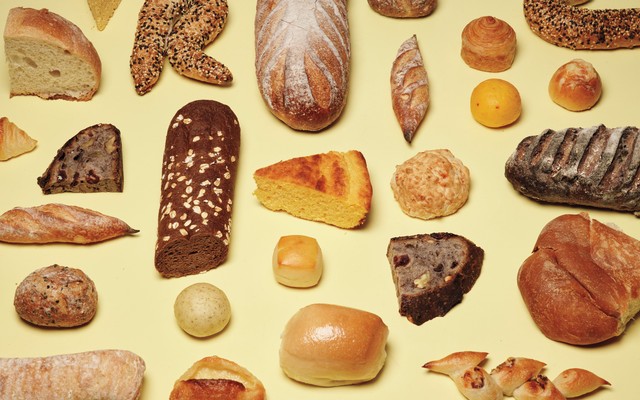
Thirteen thousand miles. Infinite contenders. One beautiful loaf.
This article was featured in the One Story to Read Today newsletter. Sign up for it here.
Here is the promise you and I must cling to across the thousands of words that follow: At some point within this text, I will reveal to you what—after 555 responses, 13,000 miles of travel, and months of monomaniacal research—I have determined to be the best free restaurant bread in America. I will not attempt to slither to the moral high ground, arguing that best is a meaningless measure, or insisting that all bread is dear in its own way. Even if you attempt to betray me—for instance, by merely scanning the text that follows for the phrase Here it is: the best free restaurant bread in America—I will uphold my end of the bargain.
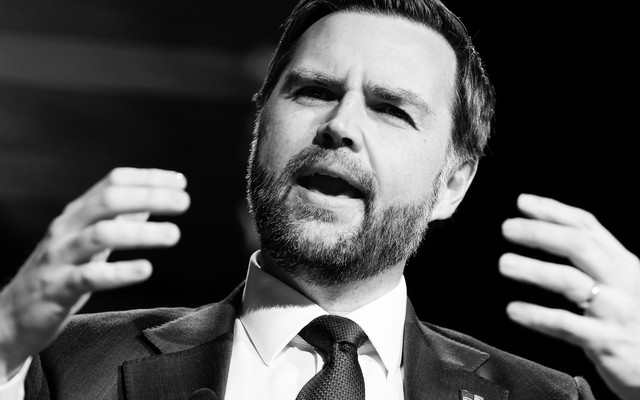
The vice president has decided he’s a more accomplished theologian than Leo XIV.
The Trump administration doesn’t seem to have many rules, but one of them is that once the president picks a fight, his posse must show up to support him, no matter how ill-advised the conflict. And few senior officials are more eager to back up the boss in every embarrassing beef than Vice President Vance, who recently seems to have decided that he, and not Pope Leo XIV, is the true arbiter of Catholic doctrine.
President Trump is personally angry with Leo because the pontiff has been deeply critical of America’s war of choice in Iran. Accordingly, Trump lashed out at His Holiness twice over the past few days. Vance might have seen this as a valuable opportunity to say nothing and let the storm pass; Leo, naturally, doesn’t seem to care all that much what Trump thinks. (As my colleague Liz Bruenig wrote, Leo answers to a higher authority.) Had the vice president remained silent, Trump might have moved on, and Vance, a relatively recent convert to Catholicism, would have been able to stay out of a dustup between his president and his spiritual leader.
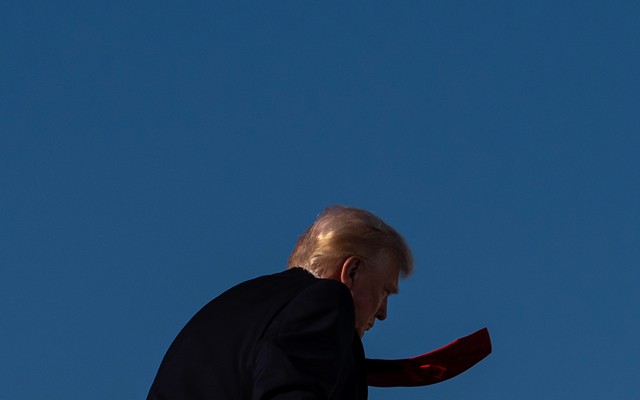
The president is on a losing streak, and even some of his aides are dismayed by his choices.
This article was featured in the One Story to Read Today newsletter. Sign up for it here.
You’ve heard the joke: The White House is going to start talking about the Epstein files to distract from how badly the Iran war is going.
Except that this reverse “Wag the dog” is based on bizarre truth: First Lady Melania Trump did bring the disgraced financier up, unprompted, late last week in an effort to distance herself from the scandal (in a move that, predictably, only shifted it back into the spotlight once again). Meanwhile, as negotiations with Iran stumble forward, the Strait of Hormuz is still in Tehran’s hands and now President Trump has authorized a risky naval blockade that will likely send prices soaring further. Moreover, Trump’s poll numbers have continued to fall, Republicans worry that both houses of Congress could be lost in November, and the president threw away a remarkable amount of geopolitical capital trying to support his now-defeated illiberal buddy Viktor Orbán of Hungary. Oh, and Trump deeply offended adherents of the world’s two largest religions in one week’s time.
A minimally speaking autistic man just wrote a best-selling book. Or did he?
Updated at 1:24 p.m. ET on April 16, 2026
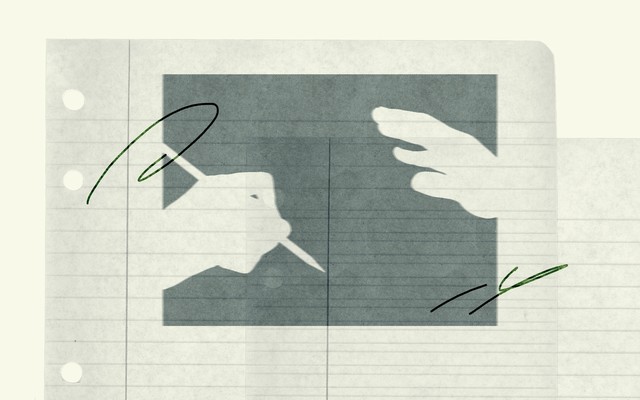
On a recent morning at Rockefeller Center, NBC employees strolled through the crowd with copies of Upward Bound, the latest book-club pick from the Today show co-host Jenna Bush Hager. “It’s deeply heartfelt and moving,” Hager said, after holding up the debut novel from the 28-year-old Woody Brown, “and the reason it’s so authentic is that the author understands autism firsthand.”
That understanding is indeed profound. Brown’s autism is such that he can barely speak, and he communicates mostly by pointing to letters, one by one, on a laminated board. This is also how his novel, which is already a New York Times best seller, came to be. In the recorded interview that followed Hager’s introduction, Brown’s mother, Mary, sat beside him, holding the letter board and reading his tapped-out messages.
In a new report, the World Bank thinks better of its old free-market absolutism.
How does a country get rich? For decades, the economics establishment generally agreed on a simple answer: Embrace free markets and avoid “industrial policy”—state-led efforts to shape what an economy produces—at all costs. No institution embodied this viewpoint, widely known as the “Washington Consensus,” quite like the World Bank. Established in 1944 to provide low-interest loans to developing countries, the bank soon became the intellectual center of development economics. In the 1990s, it took a hard stance against industrial policy, turning the concept almost into a taboo.
But now industrial policy is back, and it has a surprising new champion: the World Bank. A report issued last month argues that the bank’s previous stance had things backward: Government intervention, when done right, can actually be an essential ingredient of economic success. Industrial policy “should be considered in the national policy toolkit of all countries,” the report concludes.
We’ve had Henry David Thoreau the environmentalist, the libertarian, the life coach. To understand his influence, think of him first as a dissident.
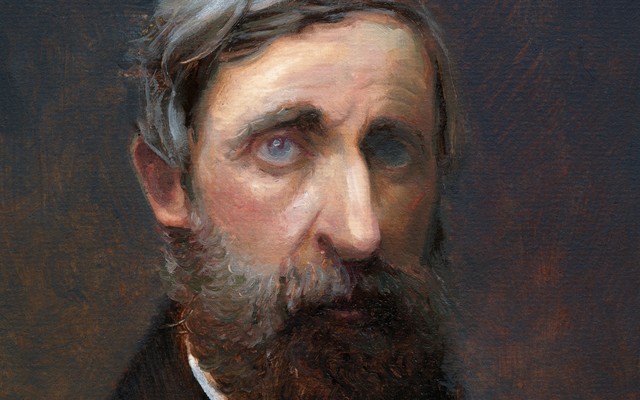
One afternoon in the summer of 1846, Henry David Thoreau left his hut near Walden Pond and walked into town to pick up a shoe he was having mended. He was stopped by the local tax collector, who nudged him for the umpteenth time about paying his poll tax—the dollar and a half that every man over the age of 20 had to pay annually, or else lose the right to vote. The tax collector, who wanted to clear his books, even offered to cover the bill, which hadn’t been paid for four years. But Thoreau refused, and he was taken to jail. The one night he spent in a second-floor cell overlooking his hometown of Concord, Massachusetts, was not particularly dramatic. But it was clarifying. As an opponent of slavery, he understood that paying the tax would mean legitimizing a government “which is the slave’s government also,” he later wrote. He couldn’t do that, and so he didn’t.
The car industry says it has an answer for drivers wary of going electric.
Two hours into a road trip in my Tesla, I start to get twitchy. By that point, the battery in my 2019 Model 3 has dipped to an uncomfortably low percentage. If I can’t reach the next plug, I’m in trouble. This is the kind of problem that Ram’s electric pickup truck—the first of a new breed of EV to arrive in the United States—is intended to solve. When the range starts to dwindle, the truck automatically fires up a hidden gas engine that refills the giant battery. The “electric” vehicle keeps on chugging down the highway, hour after hour; pit stops are once again decided by the need for bathroom breaks rather than battery range.
The Ram 1500 REV, set to debut later this year, is what’s called an “extended-range electric vehicle,” or EREV. In essence, it is an electric vehicle that burns gas. There’s nothing revolutionary about a half-gas, half-electric car, of course. Hybrids have been a mainstay in the United States since the Toyota Prius broke through two decades ago, and automakers have released more efficient plug-in hybrids—allowing drivers to charge up for about 30 miles of electric driving, just enough to accomplish daily errands without fossil fuels. An extended-range EV is a different kind of beast. The engine burns gasoline for the sole purpose of replenishing the battery—it never actually pushes the wheels. In the Ram, the battery can run for about 150 miles of electric driving, and the whole setup delivers enough range to travel nearly 700 miles between stops.
Long hours on the job can temporarily ease the symptoms of depression and anxiety. But you’re better off leaving the office and facing your feelings head-on.
Winston Churchill was many things: statesman, soldier, writer. He was one of the first world leaders to sound the alarm about the Nazi menace in the 1930s, and then captivated the global imagination as a leader against the Axis powers in World War II. While prime minister of the United Kingdom during the war, he kept a crushing schedule, often spending 18 hours a day at work. On top of this, he wrote book after book in office. By the end of his life, he had finished 43, filling 72 volumes.
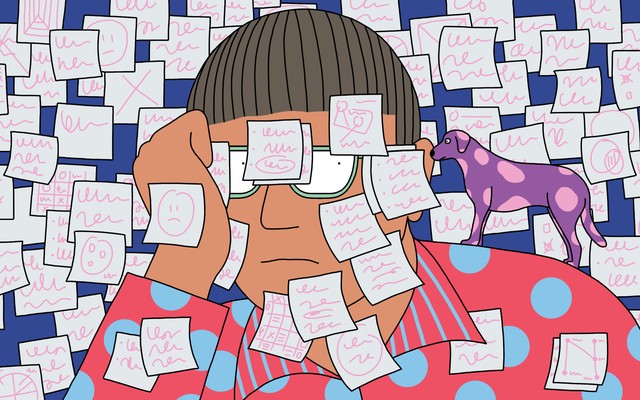
Churchill also suffered from crippling depression, which he called his “black dog,” and which visited him again and again. It seems almost unthinkable that he could be so productive in states so grim that he once told his doctor, “I don’t like to stand by the side of a ship and look down into the water. A second’s action would end everything.”
Is the president’s son-in-law carrying out the public’s business or pursuing his own private interests?
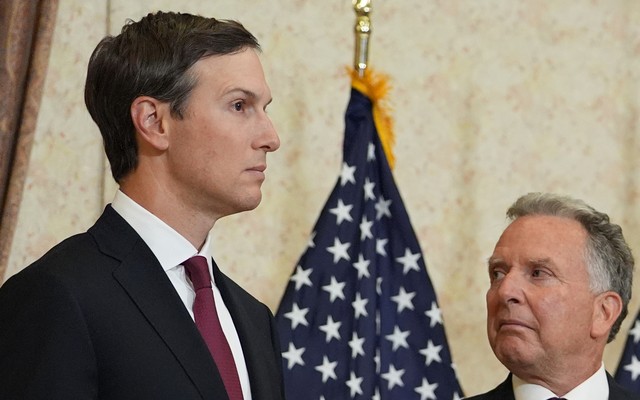
In 2021, shortly after he left his role as a senior White House adviser, Jared Kushner let it be known that he had loved his job but disliked the scrutiny and disclosure that came with being a top U.S. government official. He set up a private-equity firm and took a $2 billion investment from a Saudi fund led by Crown Prince Mohammed bin Salman. He proclaimed that he was embracing private life. “I’m an investor now,” Kushner said in a 2024 interview. If President Trump “calls you on November whatever and says, ‘I’d like you to come back to D.C.,’ you say, ‘Thanks, but I’m good’?” the interviewer, Dan Primack of Axios, pressed. “Yes,” Kushner responded.
But Kushner did come back. Two days before the United States and Israel attacked Iran this past February, he was in Geneva in a negotiation of the highest possible stakes. Over the weekend, he traveled with Vice President Vance to Islamabad to participate in failed peace talks with Iran. Without title or remit or any kind of official designation—only “presidential son-in-law”—Kushner has in the first 14 months of the second Trump administration sat down with world leaders including Vladimir Putin, Benjamin Netanyahu, and Volodymyr Zelensky, along with Saudis and multiple other actors from the Middle East.