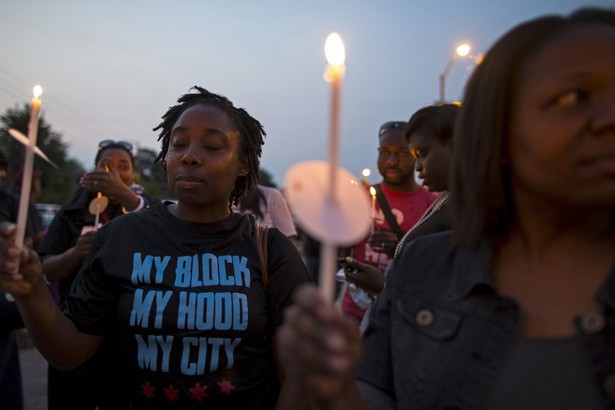
Chicago is already well past the 491 homicide-mark of last year. But with the death of a 24-year-old man on the city’s southwest side Monday, the city passed another bloody milestone: 600 homicides.
There are more homicides this year in Chicago than there are in New York and Los Angeles combined. The city has had 24 percent more homicides than this time last year. Meanwhile, non-lethal shootings are also up, as 2,100 people have been shot and injured, 500 more people than were shot this time last year.
Eddie Johnson, Chicago’s chief of police, put the blame on repeat gun offenders, saying in a statement Tuesday:
While we have increased our enforcement efforts this month—including arrests for murder and illegal gun confiscations—the lack of accountability for repeat gun offenders is sickening and it continues to drive the cycle of violence in Chicago.
Chicago already announced plans to hire an additional 1,000 police officers to help combat the crime surge. It would be the largest police surge of the last two decades.
Alabama Declares State of Emergency After Pipeline Explosion
A plume of smoke and flames caused by an explosion involving the Colonial Pipeline in Shelby County, Alabama, on October 31, 2016 (Marvin Gentry / Reuters)
Alabama declared a state of emergency Tuesday following the explosion of a gas pipeline in Shelby County, which killed one worker and injured six others.
The blast at the Colonial Pipeline took place Monday after a group of nine workers conducting repairs struck one of the gas lines, causing a large fire and forcing the evacuations of several homes in the area, according to Reuters. Colonial Pipeline Co. said its main gasoline line could remain closed until at least Saturday—a decision which caused gasoline prices to rise as much as 15 percent in affected areas. The 5,500-mile pipeline is one of the largest pipeline systems in the country, supplying more than 3 million barrels of gasoline to 13 states within the southeast and northeast United States.
The state of emergency is in effect until December.
This is the second time the Colonial Pipeline has been shut down in recent months. As my colleague David Graham reported, drivers in Georgia, Tennessee, and North Carolina faced gasoline shortages and price increases during repairs to the pipeline in September.
The Pope Reaffirms That the Catholic Church Will Never Ordain Women
Reuters
The pope has been in Sweden for the past two days commemorating the 500th anniversary of the Protestant Reformation. On the plane heading back to Rome, reporters asked whether the Roman Catholic Church will ever ordain women as priests. Francis affirmed what the Church has long taught: Women cannot be part of the priesthood, and that teaching will likely stand forever. “Really? Never?” a reporter asked, according to Catholic News Service. “If one carefully reads the declaration of St. John Paul, it goes in that direction, yes,” the pope answered.
Francis has recently pushed the Church to take up the question of women’s leadership. Last spring, he announced that a new commission will study the possibility of women as deacons, ordained ministers of the Church who can lead worship and conduct weddings, funerals, and baptisms. Deacons cannot administer some of the most important Catholic rites, though, such as offering communion or hearing confession. Many people, including the female religious-order leaders who proposed the idea, were thrilled that the pope created an opening for expanded women’s roles. Some want to see the Church go further, advocating the full ordination of women as priests. But as the pope said Tuesday, there’s little chance of that happening.
While Francis spent the beginning of this week working to strengthen ties between Catholics and Lutherans, his comments on the ride home show just how different the two groups’ teachings still are. While the Lutheran World Federation doesn’t have fully centralized rules on women’s ordination like the Roman Catholic Church, “more than 80 percent of [its] member churches ordain women.” Lutherans have steadily moved toward greater female participation in their leadership ranks, while the Catholic Church has remained firm that the Church has “no authority whatsoever to confer priestly ordination on women.” The pope may be working toward the “full communion of all Christians,” as he said during a mass in Malmo this week, but that doesn’t mean he will change the Church’s fundamental teachings.
Venezuela's President Releases 3 Imprisoned Opposition Activists
Jorge Silva / Reuters
Venezuelan President Nicolas Maduro released three jailed political activists, days after he met with opposition party leaders for the first time in two years in talks mediated by the Vatican.
The most well-known activist released was Carlos Melo, who was arrested in August and accused of carrying an explosive device as part of a coup to oust Maduro. The others, Andres Moreno and Marco Trejo, were accused of damaging military morale for allegedly making a political video of a soldier suffering the same economic afflictions that have befallen many Venezuelans. Opposition leaders praised Maduro’s decision to release the activists, whom they regard as political prisoners.
The Vatican-mediated talks come amid a backdrop of economic and political instability in Venezuela. The country’s economy has nearly collapsed amid the declining price of oil, a major contributor to the economy. Attempts to recall Maduro through a nationwide referendum, passed by the opposition-controlled legislature, were stymied by the electoral commission, which is packed with the president’s loyalists. The protests that followed turned violent. About 100 or so Maduro opponents are still in jail, and Maduro has called any motion to remove him from office a coup. Opposition leaders have also called for a march on the presidential palace this week.
A damaged mosque minaret in Dahiyet al-Assad, western Aleppo on October 29, 2016. (Ammar Abdullah / Reuters)
Civilian areas throughout Aleppo have faced repeated air strikes—attacks the United Nations says have been committed by “all sides” in the Syrian conflict and may amount to war crimes.
“All parties in Aleppo are conducting hostilities which are resulting in large numbers of civilian casualties, and creating an atmosphere of terror for those who continue to live in the city,” Ravina Shamdasani, a spokeswoman for the UN High Commissioner for Human Rights, said in Geneva Tuesday.
The remarks follow a weekend of heightened violence after rebel groups launched an offensive Friday to break the Syrian government’s siege on the eastern part of the city, considered the rebels’ last major stronghold in Syria. Eastern Aleppo has seen unparalleled destruction since Syrian and Russian forces began a bombing campaign in September to retake the city. Of the 275,000 people remaining in the city, more than 2,000 have been killed.
Western governments have accused Moscow and Damascus of war crimes, and on Sunday Staffan de Mistura, the UN envoy to Syria, said he was “appalled and shocked” that rebels conducted what he called “relentless and indiscriminate” rocket attacks in civilian centers, from which the BBC reports an estimated 40 people have been killed.
In Damascus, Syrian President Bashar al-Assad reaffirmed Monday the government’s aim to regain control of the entire country, which he said he expects to rule until the end of his term in 2021.
The Bizarre Political Scandal That Has Embroiled South Korea's President
A protester calls on South Korean President President Park Geun-hye to step down during a rally in Seoul, South Korea, on November 1, 2016. (Ahn Young-joon / AP)
Park Geun-hye, the South Korean president, has been embroiled in political scandal since it emergedlast week that she had allegedly received private counsel from her longtime friend, Choi Soon-sil—accusations that have spurred protests calling for Park’s resignation. Now, Choi, who has been compared to Rasputin, has been placed under emergency detention until authorities can determine if they’ll formally press charges, according to local media.
“Choi has denied all of the charges against her, and we're concerned that she may destroy evidence,” a prosecution official told Yonhap News Agency on Monday. “She has fled overseas in the past, and she doesn't have a permanent address in Korea, making her a flight risk. She is also in an extremely unstable psychological state, and it's possible an unexpected event could occur if she is released.”
Here’s what happened: Last Tuesday, Park issued a public apology after it was revealed she had received private counsel from Choi ranging from edits to her campaign speeches to sharing “certain” official documents with Choi. Though Park has denied receiving any improper counsel—having only apologized for causing “public distress”—her critics say the relationship afforded Choi, who holds neither public office nor security clearance, undue influence. They’ve accused Choi of embezzlement and of using her connection to the president to solicit millions of dollars in corporate donations for her two foundations. They further allege Choi’s daughter was admitted to one of the country’s top universities because of her mother’s relationship to Park.
Choi appeared before prosecutors Monday during which she said: “I have committed a crime I deserve to die for. Please forgive me.” With 48 hours to decide whether or not to press formal charges, Yonhap reported Tuesday, authorities are reviewing Choi’s financial records to determine if the embezzlement allegations are true.
Iraqi security forces continued to push into Mosul from the east on Tuesday, where they were met with sniper fire, mortars blasts, and booby-trapped car bombs set by the Islamic State. Meanwhile, to the north and west of the city, Kurdish fighters and government-backed Shia paramilitary forces have encircled the city in what is becoming a much quicker operation than expected to take back the ISIS stronghold in northern Iraq.
On Monday, Iraqi forces entered Mosul for the first time since ISIS claimed it in 2014. It is the largest city under ISIS’s control.
The battle for Mosul began a little more than two weeks ago, and though it could be months before it ends, the 50,000 Iraqi security troops have cleared most surrounding villages and are now pressing upon all sides toward the city’s center. Iraqi Prime Minister Haider al-Abadi said Monday that remaining ISIS fighters—believed to be about 3,000 to 5,000 strong—“have no escape, they either die or surrender."
As ISIS retreats, its fighters have lit oil fields on fire and used civilians as human shields. The group’s tactics has worried some humanitarian groups who fear for the 1 million citizens still living in Mosul. As Iraqi troops pressed into the edges of the city, there were reports of mass executions while ISIS moved people into the city center. About 18,000 civilians have been displaced since the operation began October 17. On Tuesday, Iraqi forces moved 500 citizens to a camp beyond the frontline, some of whom held white flags as they led their livestock away from the city.
The Chicago Tribune and the Los Angeles Times will not become part of Gannett. (Jim Yong / Reuters)
Gannett, the media giant that owns USA Today, says it will no longer pursue its acquisition ofTronc, which publishes the Chicago Tribune and the Los Angeles Times.
News of the possible acquisition first emerged in April, but Tronc rejected as inadequate Gannett’s offer of $12.25 per share. The two companies continued talks over the next few months and had apparently agreed that Gannett would pay $18.75 for each Tronc share. A deal was expected to be announced last week, but lenders deemed $18.75 too high given the state of the newspaper industry and the health of the two companies, Bloombergreported. Consequently, shares of both companies plunged sharply last week; Gannett’s decline was compounded by its poor third-quarter earnings.
The collapse of the deal is a blow to Gannett, the largest U.S. newspaper publisher. The LA Times notes the failure undermines the company’s “strategy to fight the decline in newspaper circulation by assembling a nationwide network for advertisers and saving money through consolidation and operational efficiencies.”
A successful deal would have brought under one roof USA Today, the LA Times, Chicago Tribune, San Diego Union-Tribune, Baltimore Sun, and hundreds of other daily newspapers.
Nearly 5,000 transit workers in Philadelphiabegan a strike at midnight Tuesday after talks between the Transport Workers Union Local 234 and the Southeastern Pennsylvania Transportation Authority (SEPTA) broke down over a new contract.
Here’s Philly.com on the issues separating the two sides:
Union workers were unwilling to accept the possibility of health care hikes that could have boosted their contribution from $552 a year to up to $6,000 if they wanted to keep equivalent medical coverage, union representatives said. They also were unhappy about a pension cap at $50,000 for workers while managers' pensions had no cap at all. Matters not related to dollars and cents were also in dispute. TWU members said SEPTA's break policies for vehicle operators barely left them enough time to use the bathroom between routes, and complained the nine hours of down time a worker must receive between shifts was not enough, forcing operators to drive vehicles while fatigued.
SEPTA, for its part, argued its $1.2 billion pension is only 62 percent funded and a substantial increase in pension benefits would make that disparity worse. It also said workers currently enjoy a "Cadillac" health care plan that costs them just $46 a month, and that work was already underway to adjust schedules.
The strike affects all of SEPTA’s operations: buses, trolleys, and subways, which together run about 850,000 trips per day. SEPTA said Regional Rail train service will be the only option for travel in and around Philadelphia.
It’s unclear how long the strike will last, but a prolonged dispute could have an impact on next Tuesday’s presidential election. Donald Trump, the Republican presidential nominee, is targeting Pennsylvania, a Democratic stronghold. But Hillary Clinton’s campaign is relying heavily on the strongly Democratic turnout in Philadelphia and its suburbs to keep the state blue. SEPTA could seek a court injunction to force workers back to their jobs if the strike lasts until Election Day.
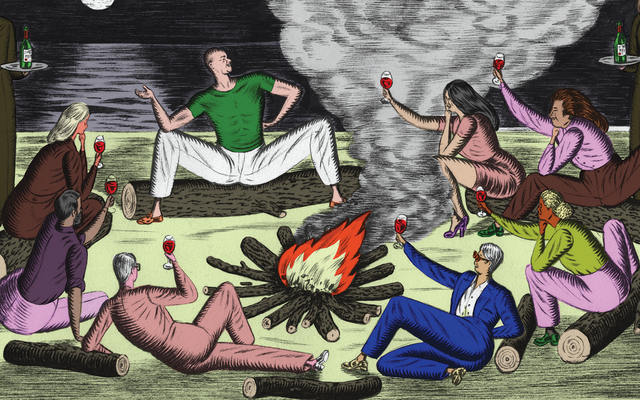
For the richest men on Earth, everything is free and nothing matters.
At the end of Paul Thomas Anderson’s 2007 movie, There Will Be Blood, Daniel Day-Lewis’s oil-baron character, old now and richer than Croesus, beats Paul Dano’s preacher to death with a bowling pin. Dano’s Eli Sunday, a nemesis of Day-Lewis’s Daniel Plainview during his seminal, wealth-building years, has come to sell Plainview the oil-rich land that he once coveted. But Plainview doesn’t need the land anymore, because—as he explains in one of the most famous monologues in modern cinema—he has sucked out all the oil hidden beneath it from an adjoining property, like a milkshake.
Desperate for money, Eli begs for a loan. Instead, Plainview chases him around a bowling alley and murders him with great enthusiasm. Once it’s over, a butler comes to see what all the noise was about. “I’m finished,” Plainview yells.
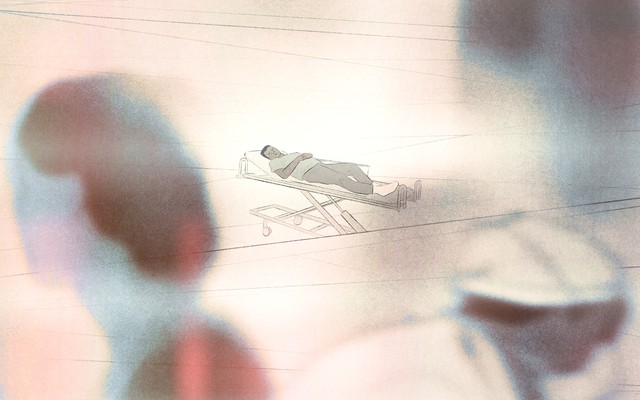
Patients are getting stuck in the emergency department for days while waiting for a spot in an inpatient ward.
In the last months, weeks, and days of his life, “I will not go to the emergency room” became my husband’s mantra. Andrej had esophageal cancer that had spread throughout his body (but not to his ever-willful brain), and, having trained as a doctor, I had jury-rigged a hospital at home, aided by specialists who got me pills to boost blood pressure; to dampen the effects of liver failure; to stem his cough; to help him swallow, wake up, fall asleep.
“I will not go to the emergency room”—emphasis on not—were his first words after passing out, having a seizure, or regurgitating the protein smoothies I made to pass his narrowed esophagus. He said it again and again, even as fluid built up in his lungs, rendering him short of breath and prone to agonizing coughing spells. He had been a big, athletic guy, but now, in the ugly process of dying, he was looking gaunt. Ours was a precarious existence, but I understood his adamant rejection of the emergency department. Most prior visits had morphed into extended trips into a terrifying medical underworld—to a purgatory known as emergency-department boarding.
The economist Adam Posen on the effect of the war in Iran on the world’s economy and the darkening economic outlook for the United States. Plus: A shifting partisan balance of power and Ask Not: The Kennedys and the Women They Destroyed, by Maureen Callahan.
In this episode of The David Frum Show, The Atlantic’s David Frum opens with a discussion of the likelihood that the partisan balance of power will shift from Republicans to Democrats at state-government level.
Then, David is joined by the president of the Peterson Institute for International Economics, Adam Posen, for a conversation about the state of the world’s economy. Frum and Posen discuss the economic effect of the war in Iran, the United States’ reputational hit caused by Trump’s tariffs, and the chance of global recession.
Finally, David ends the episode with a discussion of Ask Not: The Kennedys and the Women They Destroyed, by Maureen Callahan, and reflects on why reactions to the abuse of women by men in power seem to have become a partisan issue.
When President Trump last summer implored Republicans to launch a nationwide gerrymandering blitz to pad their narrow House majority, the fight he started did not seem fair. GOP lawmakers had both the will and the power to draw their party new seats, while Democrats were hamstrung by limits of their own making. The question was not whether Republicans could expand their edge in Congress, but by how much.
This morning the landscape looks a lot different, after Virginia voters yesterday approved a lopsided new House map that could hand Democrats an additional four seats that Republicans currently hold. The Democratic redistricting victory is the party’s second in a statewide referendum. When combined with new lines that California voters endorsed in November, Democrats have now succeeded in drawing districts that will likely yield them nine more seats this fall, at least matching what Republicans have been able to achieve in states that they control. By some measures, Democrats have jumped into the redistricting lead, bolstering their chances of winning back the House majority in the midterm elections.
Kash Patel has alarmed colleagues with episodes of excessive drinking and unexplained absences.
This article was featured in the One Story to Read Today newsletter. Sign up for it here.
On Friday, April 10, as FBI Director Kash Patel was preparing to leave work for the weekend, he struggled to log on to an internal computer system. He quickly became convinced that he had been locked out, and he panicked, frantically calling aides and allies to announce that he had been fired by the White House, according to nine people familiar with his outreach. Two of these people described his behavior as a “freak-out.”
Patel oversees an agency that employs roughly 38,000 people, including many who are trained to investigate and verify information that can be presented under oath in a court of law. News of his emotional outburst ricocheted through the bureau, prompting chatter among officials and, in some corners of the building, expressions of relief. The White House fielded calls from the bureau and from members of Congress asking who was now in charge of the FBI.
This article was featured in the One Story to Read Today newsletter. Sign up for it here.
The mystery of the missing scientists began with a Silver Alert. In late February, a retired Air Force major general named Neil McCasland left his house in New Mexico for a walk and never returned. Rumors spread on social media that the elderly former astronautical engineer had been abducted or killed. Forget Nancy Guthrie, they said. Here was a guy who used to run a “UFO-linked” lab. Here was a guy with knowledge of “America’s deepest, darkest secrets.” So where was this guy?
McCasland’s wife did her best with a post on Facebook to address what she called the “misinformation circulating about Neil and his disappearance,” but wild notions only multiplied. Dots were added, then connected: Another scientist—an advanced-materials researcher at NASA’s Jet Propulsion Laboratory (JPL) named Monica Reza—had disappeared while hiking near Los Angeles in June 2025. A physicist at MIT had been murdered in December. “What is going on seems to be an enemy action,” Walter Kirn, the novelist and podcast contrarian, said last month.
Republicans seem to have expected that Democrats would continue to follow rules they had long since enthusiastically abandoned.
Voters in Virginia approved a lopsided congressional map on Tuesday, reducing the expected number of Republican-leaning districts in the Democratic-controlled state from five to one. Republicans have reacted by complaining that conservative-leaning voters in the state have been disenfranchised by gerrymandered maps that reduce the influence of their vote.
And they’re right. That is exactly what the new Virginia map does.
Gerrymandering is an attempt to thwart the will of the voters. It circumvents the vital process of democratic feedback by insulating politicians from political backlash. It should not happen, and yet this latest chapter of the redistricting wars did not begin in Virginia. It did not even begin last year, when Donald Trump openly urged red states to gerrymander their congressional maps so Republicans might retain possession of the House during the midterms. He did so despite the fact that the maps had been drawn after the 2020 census and would normally be expected to last until 2030.
The people we were died at the exact moment our child did.
This article was featured in the One Story to Read Today newsletter. Sign up for it here.
My husband, David, hates Valentine’s Day. He once called it “New Year’s Eve with nuclear weapons.” I pretend not to care. Still, when the day passes entirely unremarked on, a woman can’t help but feel overlooked.
On Valentine’s Day 2024, David found a way out. He booked a speech on February 14 that required traveling from our home in Washington, D.C., to Toronto. I couldn’t object—he was getting paid. Anyway, I had my own plans: an “anti–Valentine’s Day” dinner hosted by one of the foreign embassies.
As I got ready, I called our oldest daughter, Miranda. She answered from her Brooklyn bathroom, getting ready for her own party. She propped her phone up beside her sink and laughed when I told her about her father’s strategic Valentine’s Day escape.
Modi styled himself a global leader but can’t seem to get ahead of events in the Middle East.
Pakistan is having a diplomatic moment, and India’s political elites are not enjoying it.
Indian Prime Minister Narendra Modi has spent the past decade promoting the notion that India is the leader of the global South and, as such, is indispensable to world affairs. Now a conflict in the Middle East has thrown the global economy, and, with it, India’s, into crisis. On top of that, Islamabad, not New Delhi, has hosted at least one round of talks between the United States and Iran and is preparing to mediate others, leaving the Indian government to ponder its irrelevance.
Indian Foreign Minister Subrahmanyam Jaishankar first dismissed Pakistan’s role in the U.S.-Iran talks, using a pejorative Hindi word for a kind of unsavory middleman. But in Indian political circles, particularly after the April 8 cease-fire was announced, criticism has been trained on the Modi government. Jairam Ramesh, a spokesperson for the opposition Congress Party, wrote on X that Pakistan’s role was “a severe setback to both the substance and style of Mr. Modi’s highly personalised diplomacy.” Ramesh mocked the Indian prime minister for calling himself vishwaguru, meaning “teacher of the world.” Asaduddin Owaisi, the country’s most prominent Muslim politician, lamented that India would have been the natural venue for the U.S.-Iran talks, if not for the Modi government’s missteps.
Each is animated by the author’s love—for their subject, for language, and for pushing the boundaries of what the genre can do.
Literary biography is a cruel genre. The authors of these books—by which I mean not just biographies about literary figures but also those that aspire to writerly excellence—have been described by the writer Janet Malcolm as “professional burglars.” After rifling through a person’s affairs, they must conjure inside their pages a living, breathing human being—and then, inevitably, they’ll have to close the coffin on their resurrected subject. But I like to think the “literary” element can temper the sting of these dastardly deeds, insofar as the author is tasked with perpetrating them in the most humane way possible: with the appropriate amount of reverence, style, and, yes, love. This is, at least, what I tried to do in my own literary biography, Baldwin: A Love Story, about James Baldwin’s life and relationships.