
My husband, David, hates Valentine’s Day. He once called it “New Year’s Eve with nuclear weapons.” I pretend not to care. Still, when the day passes entirely unremarked on, a woman can’t help but feel overlooked.
On Valentine’s Day 2024, David found a way out. He booked a speech on February 14 that required traveling from our home in Washington, D.C., to Toronto. I couldn’t object—he was getting paid. Anyway, I had my own plans: an “anti–Valentine’s Day” dinner hosted by one of the foreign embassies.
Explore the May 2026 Issue
Check out more from this issue and find your next story to read.
As I got ready, I called our oldest daughter, Miranda. She answered from her Brooklyn bathroom, getting ready for her own party. She propped her phone up beside her sink and laughed when I told her about her father’s strategic Valentine’s Day escape.
I asked what she planned to wear. She sent a selfie: It showed her looking at her bathroom mirror; her straight rose-gold hair bobbed along her jawline. A strapless black top exposed her pale, delicate shoulders. (Too pale and delicate, I worried reflexively, maternally.)
“Stunning,” I texted back.
It was the last communication I’d ever have with her.
Two days later, I was coming down the stairs when David’s voice shattered the morning. Words tumbled out in fragments: Miranda’s best friend calling from the apartment. Found unconscious. Not breathing. Maybe—
I seized the phone from David’s shaking hand. I could hear a police officer’s radio chatter, the soundtrack to all urban tragedy.
“I’m sorry—” a voice began.
What is the opposite of giving birth?
I hung up and stepped into my bathroom to pack my toiletry case. David was slumped in a chair, face in hands, moaning, “No, no, it can’t be.” I rummaged through my drawers, frantically pulling out pajamas, my medications, a toothbrush. My overwhelming instinct was to get to New York right away, to Miranda right away. I suppose I felt that I’d be able to straighten this all out somehow, as I had straightened things out for her so many times in the past. David was still in the chair: “No, no, no.”
I wrapped my arms around him. “We have to get to Brooklyn.”
We were waiting for our flight at Reagan National when the medical examiner called from Miranda’s apartment. He was matter-of-fact. Miranda had been found face down in her bedroom by her housekeeper around 9 a.m. The cleaner called Miranda’s friend—another client—who called the police. Based on body temperature and other physical evidence, the examiner estimated Miranda’s time of death to be approximately 3 a.m.
The examiner’s first thought was overdose—pills lay everywhere. But they were just her daily medications, scattered when she collapsed. Watching planes take off and land, I numbly shared Miranda’s medical history. Five years earlier, she’d had a nonmalignant brain tumor successfully removed. The tumor had damaged her pituitary gland beyond repair—but this was not a problem. The surgeon had assured us that medication could do everything the gland once did.
Lately, Miranda had been fighting what she assumed was a stubborn cold. When she was ill, she was supposed to take more cortisol, the stress hormone that her body could no longer produce. But cortisol came with a price: It bloated her face, thickened her waist, and made her feel unlike herself. I knew she’d been playing with her dosage to minimize these side effects.
The examiner said that people with compromised immune systems could sometimes present with flu-like symptoms that turned deadly if not treated.
A hundred questions charged through my mind: How could Miranda have been that sick without knowing it? How did we not know it? Had any of her doctors told her she risked dropping dead if she got her cortisol levels wrong?
But these were not the most urgent of my questions at that moment.
“May—may I ask you something … as a mother?”
“Of course.”
“I just need to know—” I had to run at the sentence a few times before I could get it out. “Would my daughter have been in any … pain … when she … ? If this was how she … ?”
“No,” he replied quickly, his voice softening. “She would have fallen unconscious before her heart stopped beating. She wouldn’t have been aware of anything.”
“Thank you.”
The examiner passed the phone to a police officer. “When do you think you’ll get here?” he asked abruptly.
My brain struggled to refocus. Maybe by four?
“I’m not sure if we’ll be here by then.” That afternoon the police would have to seal the apartment, and Miranda would be moved “to the examiner’s office downtown.” The officer gave me a case number and other details we’d need for what I would come to call the Bureaucracy of Death.
There was now no getting around the truth. “The examiner’s office downtown” was not some place where our daughter was going to receive urgent medical care. It was the morgue.
By the time we made it to Brooklyn, the apartment had been sealed. We checked into a hotel and grabbed Ringo, Miranda’s beloved dog, who had been in the care of her friend. We took an Uber to the medical examiner’s building in outer Brooklyn—a fortress of brick and concrete, its grid of windows glowing fluorescent against the dark. The doors were locked. We stood there anyway, as close to Miranda as we could get.
The February night was bleak. David and I sat on the icy curb with Ringo between us, the confused dog seeking warmth from both sides. David opened his phone to search for Psalm 121. We began to recite it together into the darkness. I lift up mine eyes unto the hills …
I lifted my eyes up to the building. Somewhere behind those windows lay our daughter, in a refrigerated drawer.
Years before, on a bitter winter’s day, I’d asked my stepfather if we might get snow. “Too cold to snow,” he replied. It was such a Canadian response, I laughed.
I realized now that “too cold to snow” perfectly described our emotional state. Too shocked to cry: that would be our personal weather report for days to come.
Less than a week after Miranda had sent me that selfie, I sat in front of my computer while a funeral director and I shopped online for coffins. He swiped through about a dozen. Which would suit our daughter best?
I thought back to all of the times Miranda and I had exchanged links for clothing, seeking each other’s advice: “This would look great on you!” We settled on a simple coffin made of pine.
Miranda’s body was transferred to the funeral home, where our surviving children met us. Our son, Nat, and his wife, Isabel, had flown in from Los Angeles. Our younger daughter, Bea, a junior in college, had returned from a semester abroad in France. Now we all gathered wordlessly in a waiting room until we were allowed into the chapel that held Miranda’s body.
Nothing can prepare you for the sight of your dead child. My first view when we entered the room was of the crown of Miranda’s head, the only part of her that wasn’t covered by a blanket. If some piece of me still refused to believe that Miranda was gone—if some corner of my mind clung to a final fantasy of error by the medical authorities—there was no mistaking that swirl of spun-rose-gold hair. I’d smothered that spot in kisses when Miranda was a baby. I’d stroked it through countless illnesses. It was the first part of her I’d seen when she’d emerged from brain surgery—on a gurney being raced to intensive care.
Now she lay before us on a gurney once more. I kissed the crown of her head one last time. Her hair felt dry, the scalp beneath frigid. I remembered how much she hated being cold.
The usher asked if we wanted him to pull the blanket from her face. We nodded. My mind has blocked many details of that moment, but I remember that Miranda was disfigured by her fall, her right cheek bruised and indented. When I rested my hand on her blanketed torso, she felt as stiff and lifeless as a tailor’s dummy.
I stroked her icy brow. I told her how much I loved her. After that, I don’t know what I thought or said. I rested my head on her chest, wrapped my arms around her, and wept.
We are not the first people to have lost a child, obviously. One of the first shocks was discovering how crowded this alternate universe was. We met people living parallel nightmares. The parents of a teenager—an only child—who’d committed suicide. A couple whose daughter died giving birth. A father who’d watched in horror as his 7-year-old boy was struck by a car at the bottom of their driveway.
However unique and precious your own loss feels, you realize that you’ve simply joined the limping thousands—millions—whose lives have been devastated by the routine catastrophes that befall someone, somewhere every second of every day. From them we learned what to expect: There would be no “healing.” No return to who we were. Those people died at the exact moment our child did.
Their wisdom was far more helpful than the advice I got from the happiness hucksters of TED Talks and TikToks who promised us “stages” to climb through, some sort of “acceptance” glimmering at the journey’s end. My social media overflowed with soothing quotes, burbling streams, the idea that grief is a “gift.” Believe it or not, there is no shortage of people who think that the worst thing that can happen to you is actually an opportunity for growth. They kept feeding me a bastardized version of a line from the 13th-century poet Rumi: “Sorrow prepares you for joy. It violently sweeps everything out of your house, so that new joy can find space to enter.”
To which Miranda would have joined me in saying: “Fuck off.”
Miranda’s death was not my spiritual gain. Nothing better would grow in her place. My “truth” was that my daughter was dead.
In those first days, I had no tolerance for bullshit. We buried Miranda in Canada, near our cottage on Lake Ontario, where our kids had spent every summer of their lives. David and I had discovered the cemetery when we’d shopped for our own burial places. Pity the immigration official who detained me at Dulles airport on my return. My U.S. passport was being renewed when Miranda had died; I’d had to travel on my Canadian one. I hadn’t known the rule: Americans must enter America as Americans, even those of us with dual citizenship.
I was ordered to a holding room; David was allowed to accompany me. We waited for more than an hour, exhausted, debilitated by grief. Finally, an officer called me to his desk. After confirming my identity, he asked me why I was traveling on a Canadian passport.
“My U.S. passport is being renewed,” I replied.
“I suppose,” he said sarcastically, “you must have had a very good reason to leave the country on a Canadian passport, right? It was so urgent that you couldn’t wait for your new passport to arrive?”
“Yes.”
“Well, what was the reason? I’d love to hear it.”
“I had to bury my daughter.”
David said afterward that it was as if I’d flung a bomb at the man. His body all but flew back and hit the wall.
Red-faced, he handed me my passport. “I’m sorry for your loss.”
Unfortunately, my no-bullshit period did not last long. It soon yielded to deep and hopeless depression.
Miranda was dead. Miranda no longer existed. Every thought about her had to contend with this untenable fact.
Friends asked if I was able to sleep. Yes, miraculously, I was. I slept the way an exhausted soldier passes out in the trenches while shells whiz overhead. Sleep wasn’t the problem. Waking up was the problem. Every morning, consciousness brought the same first thought: Miranda is still dead.
Sometimes the grief hit me in a general way: My beautiful girl, no, no, no. My beautiful baby girl. Other times, sharp and specific: She would have loved this recipe, but now I can’t share it. Small or large, it didn’t matter. Every thought had the power to punch me to the floor.
The first time I went grocery shopping, I passed Miranda’s favorite items: almond milk, edamame, those awful energy drinks she loved. Suddenly my chest seized. The floor tilted. I raced out of the store. Reminders of Miranda were everywhere. I’d unlock my phone and there, without warning, would be a carousel of AI-curated memories: “Family Fun,” “Furry Friends,” “Portraits”—Miranda’s face glowing from every frame. My car’s Bluetooth kept offering to “connect to Miranda’s iPhone.” The very ordinariness of these shocks underscored the fact that I hadn’t lost just a daughter, but a whole life.
One night, a jagged pain in my chest woke me up. It was just past 3 a.m. I felt the impulse to vomit and stumbled to the toilet. My left arm tingled. I struggled to breathe. I Googled female heart attack symptoms and then called 911.
At the hospital, I was taken to a quiet exam room. Somehow, my blood pressure was fine and my heart was in perfect condition—mechanically speaking. I told the cardiologist that my daughter had just died. Maybe I was having a heart attack, despite having a healthy heart? I had read about broken-heart syndrome, in which the body can mimic cardiac arrest from grief alone. Rarely fatal but terrifyingly real.
After expressing her condolences, the cardiologist explained what was actually happening: a medical-grade panic attack. She instructed a nurse to pump some sedative into my IV.
Back at home, my heart kept on aching. I mean that literally. The pain simmered in my chest like a covered pot. Several times a day, it would boil over. My knees would buckle. The wails would begin in my throat, and gradually descend deeper and deeper into my gut until no noise emerged at all. The weeping would continue even after my voice failed. I’d continue to convulse in terrible silence.
During these eruptions, the same vision always came to me: Miranda’s body in the ground. I imagined myself crawling down to join her, settling into that deep, cool, peaceful earth. How comforting it would be to lie beside her. Please let me go there; please, please let me be with her again. I can’t keep living with this.
In my previous life, suicide had been an abstraction—something I could grasp intellectually when others spoke of depression or terminal illness. Only now, writhing on the floor, did I understand it from the inside: The promise of eternal nothingness seemed preferable to relentless suffering.
I turned to the literature of grief—the scientific self-help manuals by Elisabeth Kübler-Ross, the memoirs of Joan Didion and others—to answer one urgent question: When would the pain stop?
Never, was the consensus. Grief must be “gotten through.”
The grief books were not going to tell me what I needed to know. I was simply pawing through them, searching for the spell that would bring Miranda back. But as an acquaintance who’d also lost a daughter warned us, “That’s not on the table.”
So what was on the table?
A tasting menu of pain, madame. Might we suggest the suffering sampler?
Maybe it was time to look into therapy.
Finding help when you’re desperately depressed is harder than you might think. My primary-care doctor sent me a list of grief specialists, but they either weren’t taking on new clients or had endless waiting lists. No one I called could see me for months. I needed help now. I called a local center that offered “crisis response.” A voice recording asked me to leave a message, but warned of a yearlong waiting list for treatment. If this is an emergency, please hang up and dial 911. After the beep, I said, “Hello, I recently lost a daughter. I’m really struggling and need help. I don’t know what to do. Please call me back.” I left similar messages at other practices, my voice cracking through each one.
Then I remembered a psychiatric center not far from our house, one I’d passed countless times while running errands. I drove there straight away. I was hyperventilating by the time I was buzzed into the lobby. A receptionist sat behind a wall of glass. “Can I help you?”
The words tumbled out between sobs: daughter dead, so much pain, was there someone, anyone—?
“Do you have an appointment?”
“No.”
She made a call.
“The person who would handle this isn’t picking up.”
Just over her shoulder was a cheerful poster boasting about the facility’s support for women.
“I’m really in a bad way. Is there no one I could speak to?”
“That would be the person I just tried.”
“Can I make an appointment to come back?”
“You would have to speak to them first.”
I took down the person’s name and number and left. Later attempts reached only the receptionist or rang into nowhere. Finally, someone answered: The person no longer worked there. No, there wasn’t another person. If this is an emergency, you should hang up and dial 911.
Apparently my only option was to walk into an emergency room and say the magic words about self-harm. The idea of being heavily medicated for days sounded like paradise. But sooner or later, they’d discharge me, and my daughter would be no less dead.
Googling treatments for acute grief, I came across eye-movement desensitization and reprocessing, a therapy for post-traumatic stress disorder. I’d associated PTSD with combat veterans, but I learned that it can encompass all trauma, including sudden loss. In EMDR, a patient revisits a trauma while the brain receives bilateral stimulation—their eyes track a dot on a screen, or they hold buzzers that alternate pulses in each hand. The idea behind the treatment is that some events are too awful for our brains to properly categorize as memories, so they float in limbo, omnipresent. Activating both sides of the brain while remembering the trauma seems to help neutralize it, so it no longer feels ever-present. I found a nearby therapist specializing in grief and EMDR who—miraculously—had an opening that week. During our appointments, she had me describe with forensic precision incidents that would usually send me to the floor—the phone call confirming Miranda’s death, that first glimpse of her body. Every session left me emptied, raw, surrounded by sodden tissues. And somehow, also, lighter.
My birthday arrived in April, on the fifth anniversary of Miranda’s tumor surgery. Miranda had been planning to mark this milestone with a characteristically irreverent party, including signature cocktails she called “tumor-tinis.” We’d all blocked off the weekend to celebrate with her. Instead, I wrote to the caterer: Party canceled. The hostess died.
My family took me out to dinner for my birthday. Halfway through the meal, Bea gently led me to the car. I’d broken down sobbing at the table.
I knew that Nat and Bea were suffering too, and at first, I felt useless. How could I do this to them, weeping and wailing in their presence? It felt like abuse. No child should have to witness this. Yet I couldn’t stop.
Mothers are often criticized or belittled for acting selflessly; it’s seen as weak and self-abnegating. But the ability to set aside your own fears and pain to protect those you love? That’s the maternal superpower.
Mine failed me when I lost Miranda, but it slowly flickered back to life. I learned to recognize when Nat or Bea needed me to be their mother, not their fellow mourner. The only energy I still possessed came from that dwindled superpower. Even if I wasn’t interested in living for myself, I knew I must stay alive for my family.
David and I made a pact not to retreat into what he called “silos of grief.” At first, he’d tried to process his sadness alone, afraid that sharing it might send me spiraling further. But when he spoke about his grief, I didn’t spiral. Instead, I felt the relief of recognition—we were the only two people on Earth who understood exactly what the other had lost. No matter how hard the day was, we made a point of sitting down together at the end of it. David would open a bottle of wine and I would cut flowers for the table. We instituted a “dinner dress code”—abandoning sweats for proper clothes. “Like British colonial administrators donning black tie for dinner in the jungle,” David joked. If not quite black tie, at least we showered, changed, and pretended to be human.
One morning, a friend called. “How are you?” Before I could answer, she caught herself. “Oh my God, I’m so stupid. Sorry. What a dumb question to ask.”
I surprised us both by laughing. “You meant ‘How’s the abyss today?’ ”
“Yes, exactly.” She laughed too. “Any daylight visible yet?”
“Not much,” I replied. “A pinhole in the distance.”
I was still crawling, but crawling upward.
Long ago, my friends nicknamed me “The Minister of Fun”—always orchestrating adventures, karaoke nights, impromptu dancing. After Miranda died, I retired from that position. My calendar opened only to days of blank space.
Many old friends vanished. During a career setback years earlier, David had offered a cheerful thought: “At least we know who our true friends are.” I replied that I’d been happier when I didn’t know. Now the joke turned bitter. The absence of once-close friends hurt and surprised me. Perhaps they had no capacity to let someone else’s suffering into their world. Or possibly our tragedy exceeded their emotional vocabulary. All anyone needed to do was squeeze my hand and ask how I was doing. But rather than risk saying the wrong thing, many people said nothing. They disappeared.
Casual encounters could be awful. You never knew who remembered. I’d see the flash of recognition, then that terrible calculation: Do I acknowledge it? Some asked to be reminded how Miranda had died.
“Consequences of a brain tumor.”
“Oh, of course, how terrible.”
I’d watch the relief pass across their faces: That couldn’t happen to my child. Can tick that box off on my list of worries.
David and I began calling another type of reaction “The Undertaker’s Stare”—that moment when someone spots you across a room, freezes mid-laugh, and rearranges their face into professional sorrow. I’m so sorry for your loss.
Some acquaintances avoided the topic completely, as if tragedy could spread like a virus and they didn’t want to be contaminated. Imagine walking into a crowded room wearing a shirt that has a fresh bloodstain spread over your chest—yet everyone is determined to keep their gaze above your shoulders. You talk about the weather, a sports game. Their gaze might fall for a moment upon the blotch, but they catch themselves and continue: Our son is now studying econ. We just returned from a trip to Spain.
I’d leave these encounters feeling annoyed, and then annoyed by my annoyance. What did I expect? They’d never entered the alternate universe. They didn’t speak its language.
Of all the reactions, the worst was the griefsplaining. Time heals. When I lost my great-aunt …
At a party, a man I barely knew came bounding at me wearing the Undertaker’s Stare. He grabbed my hand. “Danielle,” he implored. “Listen, you must understand, you will get better. It will get better. Please believe that. I know. It will just take time. Trust me on this.”
Some of these encounters turned darkly comic. Weeks after Miranda died, we were finally allowed legal entry into her apartment to pick up important items. Bea and I agreed to go together. The night before, we checked into a hotel. The reception clerk beamed at us, his hospitality smile cranked to the maximum.
“Why, hello, ladies! What brings you here? Business? Pleasure?”
So soon after Miranda’s death, we hadn’t yet developed poker faces for the unwary.
“Personal business,” Bea said quickly.
“Got any great plans while you’re here?”
“It’s not that kind of visit.”
“Not even a show?”
Impatient to end this friendly inquisition, I said: “My daughter died recently.” I explained that we had to deal with some things in her apartment.
The man’s smile remained fixed. “I’m so sorry to hear it!” He handed me back my credit card and ID. “But at least your daughter—what was her name?”
“Miranda.”
“At least Miranda’s in a better place now, right?”
“She was already in a good place,” I replied, so astonished that I now smiled myself. “A one-bedroom apartment in Brooklyn Heights near the promenade.”
New Yorker that he was, the man conceded the advantageousness of the real estate.
“Can I send you ladies something up to your room?” he asked. “Some champagne, maybe?”
“We’re not really celebrating.”
“What would you like, then?”
Oh well, I thought, what the heck. “White wine?”
“A bottle’s headed your way. You ladies have a great evening.”
In May, the court probated Miranda’s will. We could now empty out her apartment and prepare it for sale.
The night before the movers came, I invited Miranda’s friends for a final gathering. The same housekeeper who had found Miranda dead returned to clean. I was grateful to her, knowing that she would do the work with sensitivity and care. When we arrived, the apartment looked as if Miranda had just stepped out. The housekeeper apologized for two streaks on the carpet that she’d been unable to remove: the marks from the gurney’s wheels.
I arranged everything the way Miranda would have: olives and almonds in small bowls, flickering votive candles. David fetched her favorite wines. The evening felt ghostly, yet I was comforted to be among Miranda’s friends. Near midnight, they decided to climb to the roof deck one last time, where they’d celebrated New Year’s Eve just months before. Bea went with them. David wanted to return to the hotel. “I’ll tidy up and follow,” I told him.
Alone, I poured myself one last glass and sank back into her sofa. I must have drifted off, because when I checked my phone it was 1 a.m. and I saw worried texts from David. I wrote back that I was fine, and that I wanted to stay the night.
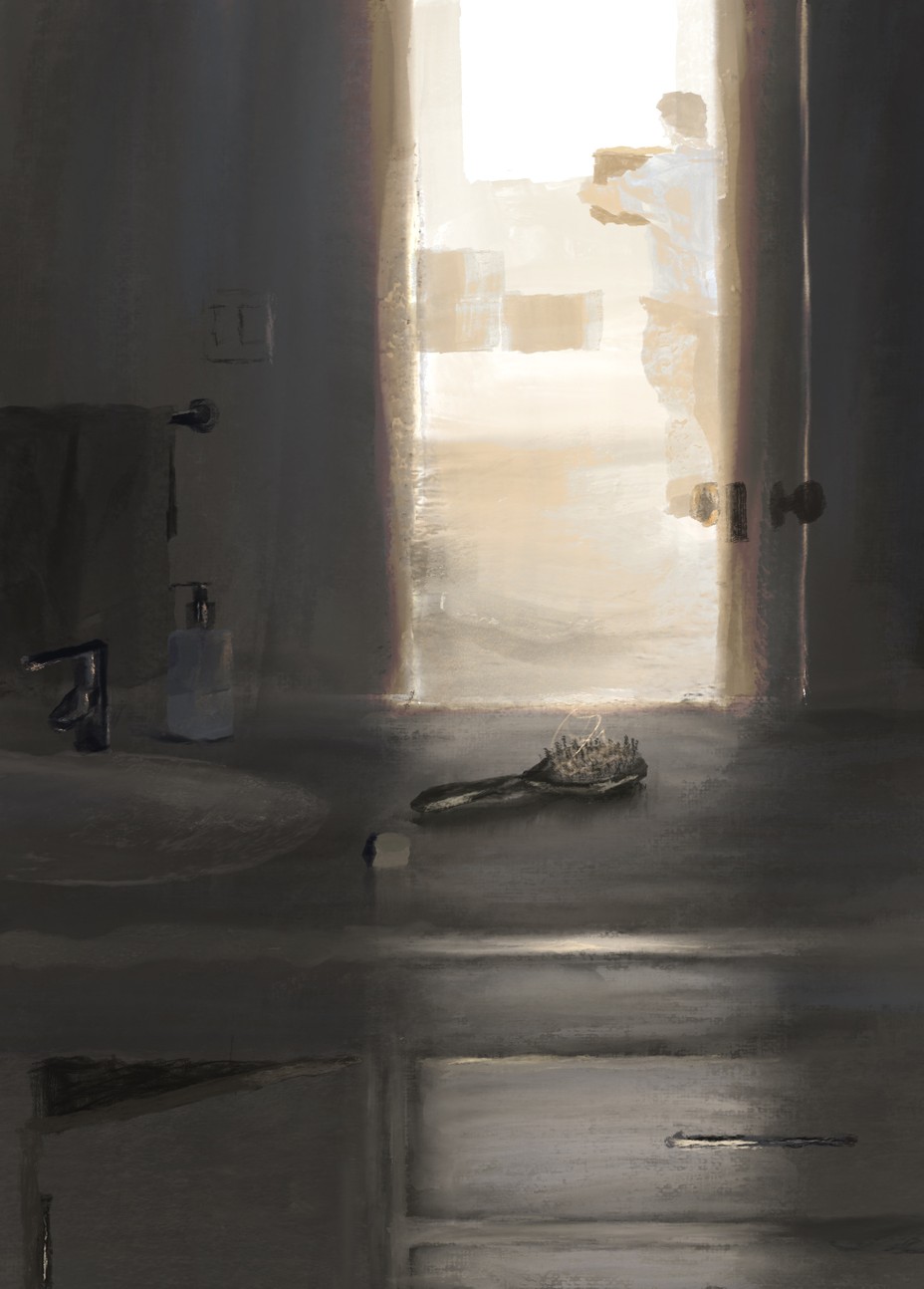
I washed my face with Miranda’s cleanser. The mirror that had framed her last selfie to me threw back a ruined version of my face—sad, swollen eyes; grief etched everywhere. I found pajamas in her dresser and climbed into her bed—the last place her living body had rested. I clutched her pillow and murmured prayers until sleep took me away.
The next morning, efficiency arrived in the form of moving men. They boxed everything and loaded it onto a truck bound for a storage facility in New Jersey. Three hours to dismantle a life.
A small pot of C.O. Bigelow lip balm indented by a finger.
A crumpled boarding pass, LAX to JFK, seat 8A.
A hairbrush clotted with rose-gold hair.
A set of keys.
A black satin evening purse.
What to do with relics for which there is no reliquary?
More than two years have passed, but Miranda’s absence never ceases to shock me. It retains the power to hit me anew each day. Why is she still not here? Haven’t we suffered enough? Don’t we deserve to have her back now?
Part of my recovery, my therapist says, will be to develop a new relationship with her. Little by little, her voice seeps back into my head. I smile at things she’d say: I think you can find that same type of dress in a more flattering shape. I try to summon what it was like to be with her: her impatient tone with naughty Ringo, the reward of her throaty laugh.
It’s common to compare grief to a heavy stone, but that’s exactly what it feels like. I carry it everywhere. Now and then, I’m able to set it down and enjoy a moment of beauty: the sparkle of winter sun on freshly fallen snow; a full moon’s silver path on the lake. Sometimes a joke makes me laugh so hard that I drop the stone. Soon enough, I will stoop to pick it up again. Those who have walked before me assure me that the stone’s weight will lighten. I’m not sure I want it to. Sometimes I miss the intensity of early grief—it meant I was closer to her in time; I could almost touch her still. That intensity has been replaced by something harder to name. Not acceptance, never acceptance. Resignation, maybe. Adjustment—better.
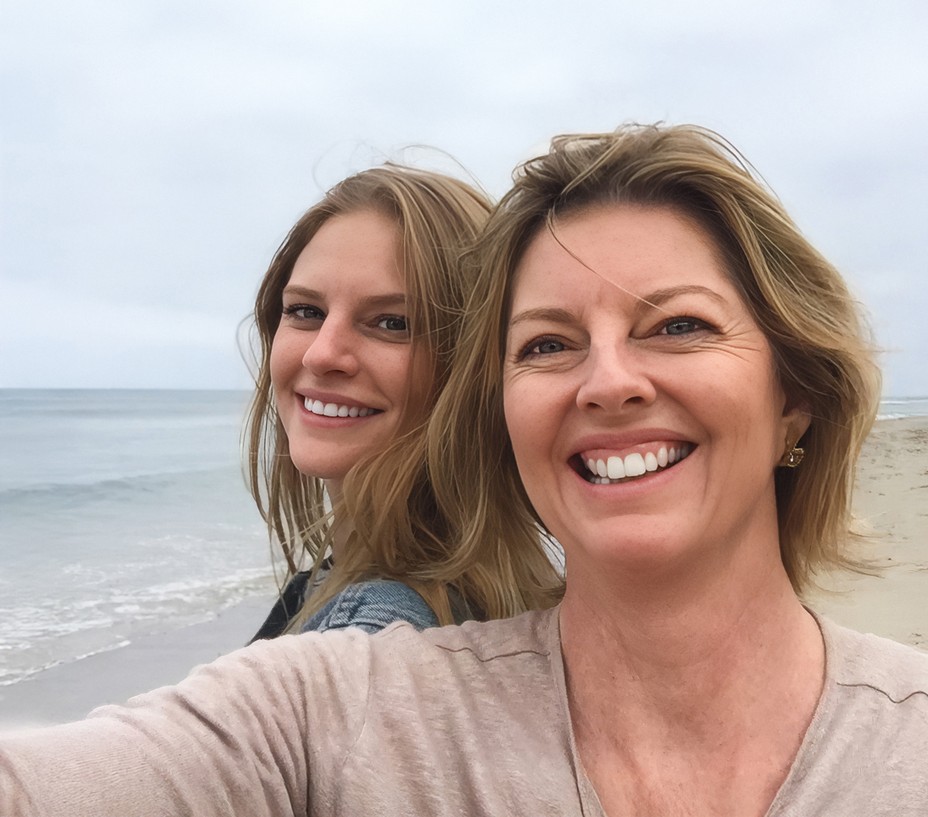
I still face the what-ifs: What if I’d urged Miranda to see the doctor? What if I’d been more insistent about how pale and thin she looked? What if, what if … But I know that these questions run up against the truth of Miranda’s forceful will. She lived her life passionately, bravely, sometimes recklessly. Her regal indifference to authority haunted every report card and drove us half mad. Looking back, I realized there was not a single day of Miranda’s life when I didn’t worry about her.
You might well wonder: Was it worth it? Would I still have chosen to bear and love Miranda, if I’d known I was going to lose her?
A close friend who’d never had children asked me exactly this, a few months after Miranda died. Not callously—he was genuinely trying to understand. I’d just confessed to having suicidal thoughts; here now was this stable, happy woman he’d known for years, utterly destroyed.
“My only regret is that I wasn’t the one who got sick,” I told him. “I would make that trade in a heartbeat if it would bring Miranda back.”
His eyes reddened. “I envy you,” he said.
He explained that he’d known many forms of love, but never one so absolute that he’d choose death over living without it. Yet that’s exactly what a bereaved mother feels.
Maternal grief seizes the body differently from other sorrows. The attachment to our child begins at conception. Fetal cells migrate during pregnancy, taking up residence in the mother’s brain and organs. The child’s cells can remain in the mother for as long as she lives. They can help her fight off illness, recover from surgery. I find this infinitely comforting: Even after death, Miranda remains alive within me, her cells woven through my brain and blood.
This article was adapted from Danielle Crittenden’s memoir, Dispatches From Grief: A Mother’s Journey Through the Unthinkable. It appears in the May 2026 print edition with the headline “On Losing a Daughter.”
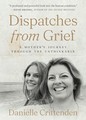
When you buy a book using a link on this page, we receive a commission. Thank you for supporting The Atlantic.