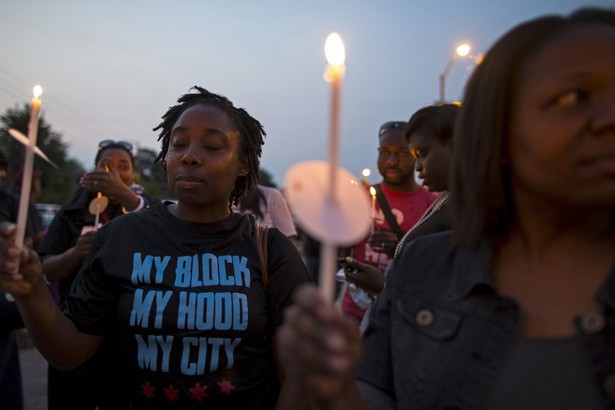
Chicago is already well past the 491 homicide-mark of last year. But with the death of a 24-year-old man on the city’s southwest side Monday, the city passed another bloody milestone: 600 homicides.
There are more homicides this year in Chicago than there are in New York and Los Angeles combined. The city has had 24 percent more homicides than this time last year. Meanwhile, non-lethal shootings are also up, as 2,100 people have been shot and injured, 500 more people than were shot this time last year.
Eddie Johnson, Chicago’s chief of police, put the blame on repeat gun offenders, saying in a statement Tuesday:
While we have increased our enforcement efforts this month—including arrests for murder and illegal gun confiscations—the lack of accountability for repeat gun offenders is sickening and it continues to drive the cycle of violence in Chicago.
Chicago already announced plans to hire an additional 1,000 police officers to help combat the crime surge. It would be the largest police surge of the last two decades.
Alabama Declares State of Emergency After Pipeline Explosion
A plume of smoke and flames caused by an explosion involving the Colonial Pipeline in Shelby County, Alabama, on October 31, 2016 (Marvin Gentry / Reuters)
Alabama declared a state of emergency Tuesday following the explosion of a gas pipeline in Shelby County, which killed one worker and injured six others.
The blast at the Colonial Pipeline took place Monday after a group of nine workers conducting repairs struck one of the gas lines, causing a large fire and forcing the evacuations of several homes in the area, according to Reuters. Colonial Pipeline Co. said its main gasoline line could remain closed until at least Saturday—a decision which caused gasoline prices to rise as much as 15 percent in affected areas. The 5,500-mile pipeline is one of the largest pipeline systems in the country, supplying more than 3 million barrels of gasoline to 13 states within the southeast and northeast United States.
The state of emergency is in effect until December.
This is the second time the Colonial Pipeline has been shut down in recent months. As my colleague David Graham reported, drivers in Georgia, Tennessee, and North Carolina faced gasoline shortages and price increases during repairs to the pipeline in September.
The Pope Reaffirms That the Catholic Church Will Never Ordain Women
Reuters
The pope has been in Sweden for the past two days commemorating the 500th anniversary of the Protestant Reformation. On the plane heading back to Rome, reporters asked whether the Roman Catholic Church will ever ordain women as priests. Francis affirmed what the Church has long taught: Women cannot be part of the priesthood, and that teaching will likely stand forever. “Really? Never?” a reporter asked, according to Catholic News Service. “If one carefully reads the declaration of St. John Paul, it goes in that direction, yes,” the pope answered.
Francis has recently pushed the Church to take up the question of women’s leadership. Last spring, he announced that a new commission will study the possibility of women as deacons, ordained ministers of the Church who can lead worship and conduct weddings, funerals, and baptisms. Deacons cannot administer some of the most important Catholic rites, though, such as offering communion or hearing confession. Many people, including the female religious-order leaders who proposed the idea, were thrilled that the pope created an opening for expanded women’s roles. Some want to see the Church go further, advocating the full ordination of women as priests. But as the pope said Tuesday, there’s little chance of that happening.
While Francis spent the beginning of this week working to strengthen ties between Catholics and Lutherans, his comments on the ride home show just how different the two groups’ teachings still are. While the Lutheran World Federation doesn’t have fully centralized rules on women’s ordination like the Roman Catholic Church, “more than 80 percent of [its] member churches ordain women.” Lutherans have steadily moved toward greater female participation in their leadership ranks, while the Catholic Church has remained firm that the Church has “no authority whatsoever to confer priestly ordination on women.” The pope may be working toward the “full communion of all Christians,” as he said during a mass in Malmo this week, but that doesn’t mean he will change the Church’s fundamental teachings.
Venezuela's President Releases 3 Imprisoned Opposition Activists
Jorge Silva / Reuters
Venezuelan President Nicolas Maduro released three jailed political activists, days after he met with opposition party leaders for the first time in two years in talks mediated by the Vatican.
The most well-known activist released was Carlos Melo, who was arrested in August and accused of carrying an explosive device as part of a coup to oust Maduro. The others, Andres Moreno and Marco Trejo, were accused of damaging military morale for allegedly making a political video of a soldier suffering the same economic afflictions that have befallen many Venezuelans. Opposition leaders praised Maduro’s decision to release the activists, whom they regard as political prisoners.
The Vatican-mediated talks come amid a backdrop of economic and political instability in Venezuela. The country’s economy has nearly collapsed amid the declining price of oil, a major contributor to the economy. Attempts to recall Maduro through a nationwide referendum, passed by the opposition-controlled legislature, were stymied by the electoral commission, which is packed with the president’s loyalists. The protests that followed turned violent. About 100 or so Maduro opponents are still in jail, and Maduro has called any motion to remove him from office a coup. Opposition leaders have also called for a march on the presidential palace this week.
A damaged mosque minaret in Dahiyet al-Assad, western Aleppo on October 29, 2016. (Ammar Abdullah / Reuters)
Civilian areas throughout Aleppo have faced repeated air strikes—attacks the United Nations says have been committed by “all sides” in the Syrian conflict and may amount to war crimes.
“All parties in Aleppo are conducting hostilities which are resulting in large numbers of civilian casualties, and creating an atmosphere of terror for those who continue to live in the city,” Ravina Shamdasani, a spokeswoman for the UN High Commissioner for Human Rights, said in Geneva Tuesday.
The remarks follow a weekend of heightened violence after rebel groups launched an offensive Friday to break the Syrian government’s siege on the eastern part of the city, considered the rebels’ last major stronghold in Syria. Eastern Aleppo has seen unparalleled destruction since Syrian and Russian forces began a bombing campaign in September to retake the city. Of the 275,000 people remaining in the city, more than 2,000 have been killed.
Western governments have accused Moscow and Damascus of war crimes, and on Sunday Staffan de Mistura, the UN envoy to Syria, said he was “appalled and shocked” that rebels conducted what he called “relentless and indiscriminate” rocket attacks in civilian centers, from which the BBC reports an estimated 40 people have been killed.
In Damascus, Syrian President Bashar al-Assad reaffirmed Monday the government’s aim to regain control of the entire country, which he said he expects to rule until the end of his term in 2021.
The Bizarre Political Scandal That Has Embroiled South Korea's President
A protester calls on South Korean President President Park Geun-hye to step down during a rally in Seoul, South Korea, on November 1, 2016. (Ahn Young-joon / AP)
Park Geun-hye, the South Korean president, has been embroiled in political scandal since it emergedlast week that she had allegedly received private counsel from her longtime friend, Choi Soon-sil—accusations that have spurred protests calling for Park’s resignation. Now, Choi, who has been compared to Rasputin, has been placed under emergency detention until authorities can determine if they’ll formally press charges, according to local media.
“Choi has denied all of the charges against her, and we're concerned that she may destroy evidence,” a prosecution official told Yonhap News Agency on Monday. “She has fled overseas in the past, and she doesn't have a permanent address in Korea, making her a flight risk. She is also in an extremely unstable psychological state, and it's possible an unexpected event could occur if she is released.”
Here’s what happened: Last Tuesday, Park issued a public apology after it was revealed she had received private counsel from Choi ranging from edits to her campaign speeches to sharing “certain” official documents with Choi. Though Park has denied receiving any improper counsel—having only apologized for causing “public distress”—her critics say the relationship afforded Choi, who holds neither public office nor security clearance, undue influence. They’ve accused Choi of embezzlement and of using her connection to the president to solicit millions of dollars in corporate donations for her two foundations. They further allege Choi’s daughter was admitted to one of the country’s top universities because of her mother’s relationship to Park.
Choi appeared before prosecutors Monday during which she said: “I have committed a crime I deserve to die for. Please forgive me.” With 48 hours to decide whether or not to press formal charges, Yonhap reported Tuesday, authorities are reviewing Choi’s financial records to determine if the embezzlement allegations are true.
Iraqi security forces continued to push into Mosul from the east on Tuesday, where they were met with sniper fire, mortars blasts, and booby-trapped car bombs set by the Islamic State. Meanwhile, to the north and west of the city, Kurdish fighters and government-backed Shia paramilitary forces have encircled the city in what is becoming a much quicker operation than expected to take back the ISIS stronghold in northern Iraq.
On Monday, Iraqi forces entered Mosul for the first time since ISIS claimed it in 2014. It is the largest city under ISIS’s control.
The battle for Mosul began a little more than two weeks ago, and though it could be months before it ends, the 50,000 Iraqi security troops have cleared most surrounding villages and are now pressing upon all sides toward the city’s center. Iraqi Prime Minister Haider al-Abadi said Monday that remaining ISIS fighters—believed to be about 3,000 to 5,000 strong—“have no escape, they either die or surrender."
As ISIS retreats, its fighters have lit oil fields on fire and used civilians as human shields. The group’s tactics has worried some humanitarian groups who fear for the 1 million citizens still living in Mosul. As Iraqi troops pressed into the edges of the city, there were reports of mass executions while ISIS moved people into the city center. About 18,000 civilians have been displaced since the operation began October 17. On Tuesday, Iraqi forces moved 500 citizens to a camp beyond the frontline, some of whom held white flags as they led their livestock away from the city.
The Chicago Tribune and the Los Angeles Times will not become part of Gannett. (Jim Yong / Reuters)
Gannett, the media giant that owns USA Today, says it will no longer pursue its acquisition ofTronc, which publishes the Chicago Tribune and the Los Angeles Times.
News of the possible acquisition first emerged in April, but Tronc rejected as inadequate Gannett’s offer of $12.25 per share. The two companies continued talks over the next few months and had apparently agreed that Gannett would pay $18.75 for each Tronc share. A deal was expected to be announced last week, but lenders deemed $18.75 too high given the state of the newspaper industry and the health of the two companies, Bloombergreported. Consequently, shares of both companies plunged sharply last week; Gannett’s decline was compounded by its poor third-quarter earnings.
The collapse of the deal is a blow to Gannett, the largest U.S. newspaper publisher. The LA Times notes the failure undermines the company’s “strategy to fight the decline in newspaper circulation by assembling a nationwide network for advertisers and saving money through consolidation and operational efficiencies.”
A successful deal would have brought under one roof USA Today, the LA Times, Chicago Tribune, San Diego Union-Tribune, Baltimore Sun, and hundreds of other daily newspapers.
Nearly 5,000 transit workers in Philadelphiabegan a strike at midnight Tuesday after talks between the Transport Workers Union Local 234 and the Southeastern Pennsylvania Transportation Authority (SEPTA) broke down over a new contract.
Here’s Philly.com on the issues separating the two sides:
Union workers were unwilling to accept the possibility of health care hikes that could have boosted their contribution from $552 a year to up to $6,000 if they wanted to keep equivalent medical coverage, union representatives said. They also were unhappy about a pension cap at $50,000 for workers while managers' pensions had no cap at all. Matters not related to dollars and cents were also in dispute. TWU members said SEPTA's break policies for vehicle operators barely left them enough time to use the bathroom between routes, and complained the nine hours of down time a worker must receive between shifts was not enough, forcing operators to drive vehicles while fatigued.
SEPTA, for its part, argued its $1.2 billion pension is only 62 percent funded and a substantial increase in pension benefits would make that disparity worse. It also said workers currently enjoy a "Cadillac" health care plan that costs them just $46 a month, and that work was already underway to adjust schedules.
The strike affects all of SEPTA’s operations: buses, trolleys, and subways, which together run about 850,000 trips per day. SEPTA said Regional Rail train service will be the only option for travel in and around Philadelphia.
It’s unclear how long the strike will last, but a prolonged dispute could have an impact on next Tuesday’s presidential election. Donald Trump, the Republican presidential nominee, is targeting Pennsylvania, a Democratic stronghold. But Hillary Clinton’s campaign is relying heavily on the strongly Democratic turnout in Philadelphia and its suburbs to keep the state blue. SEPTA could seek a court injunction to force workers back to their jobs if the strike lasts until Election Day.
Thirteen thousand miles. Infinite contenders. One beautiful loaf.
This article was featured in the One Story to Read Today newsletter. Sign up for it here.
Here is the promise you and I must cling to across the thousands of words that follow: At some point within this text, I will reveal to you what—after 555 responses, 13,000 miles of travel, and months of monomaniacal research—I have determined to be the best free restaurant bread in America. I will not attempt to slither to the moral high ground, arguing that best is a meaningless measure, or insisting that all bread is dear in its own way. Even if you attempt to betray me—for instance, by merely scanning the text that follows for the phrase Here it is: the best free restaurant bread in America—I will uphold my end of the bargain.
The president is on a losing streak, and even some of his aides are dismayed by his choices.
This article was featured in the One Story to Read Today newsletter. Sign up for it here.
You’ve heard the joke: The White House is going to start talking about the Epstein files to distract from how badly the Iran war is going.
Except that this reverse “Wag the dog” is based on bizarre truth: First Lady Melania Trump did bring the disgraced financier up, unprompted, late last week in an effort to distance herself from the scandal (in a move that, predictably, only shifted it back into the spotlight once again). Meanwhile, as negotiations with Iran stumble forward, the Strait of Hormuz is still in Tehran’s hands and now President Trump has authorized a risky naval blockade that will likely send prices soaring further. Moreover, Trump’s poll numbers have continued to fall, Republicans worry that both houses of Congress could be lost in November, and the president threw away a remarkable amount of geopolitical capital trying to support his now-defeated illiberal buddy Viktor Orbán of Hungary. Oh, and Trump deeply offended adherents of the world’s two largest religions in one week’s time.
The car industry says it has an answer for drivers wary of going electric.
Two hours into a road trip in my Tesla, I start to get twitchy. By that point, the battery in my 2019 Model 3 has dipped to an uncomfortably low percentage. If I can’t reach the next plug, I’m in trouble. This is the kind of problem that Ram’s electric pickup truck—the first of a new breed of EV to arrive in the United States—is intended to solve. When the range starts to dwindle, the truck automatically fires up a hidden gas engine that refills the giant battery. The “electric” vehicle keeps on chugging down the highway, hour after hour; pit stops are once again decided by the need for bathroom breaks rather than battery range.
The Ram 1500 REV, set to debut later this year, is what’s called an “extended-range electric vehicle,” or EREV. In essence, it is an electric vehicle that burns gas. There’s nothing revolutionary about a half-gas, half-electric car, of course. Hybrids have been a mainstay in the United States since the Toyota Prius broke through two decades ago, and automakers have released more efficient plug-in hybrids—allowing drivers to charge up for about 30 miles of electric driving, just enough to accomplish daily errands without fossil fuels. An extended-range EV is a different kind of beast. The engine burns gasoline for the sole purpose of replenishing the battery—it never actually pushes the wheels. In the Ram, the battery can run for about 150 miles of electric driving, and the whole setup delivers enough range to travel nearly 700 miles between stops.
A minimally speaking autistic man just wrote a best-selling book. Or did he?
On a recent morning at Rockefeller Center, NBC employees strolled through the crowd with copies of Upward Bound, the latest book-club pick from the Today show co-host Jenna Bush Hager. “It’s deeply heartfelt and moving,” Hager said, after holding up the debut novel from the 28-year-old Woody Brown, “and the reason it’s so authentic is that the author understands autism firsthand.”
That understanding is indeed profound. Brown’s autism is such that he can barely speak, and he communicates mostly by pointing to letters, one by one, on a laminated board. This is also how his novel, which is already a New York Times best seller, came to be. In the recorded interview that followed Hager’s introduction, Brown’s mother, Mary, sat beside him, holding the letter board and reading his tapped-out messages.
Is the president’s son-in-law carrying out the public’s business or pursuing his own private interests?
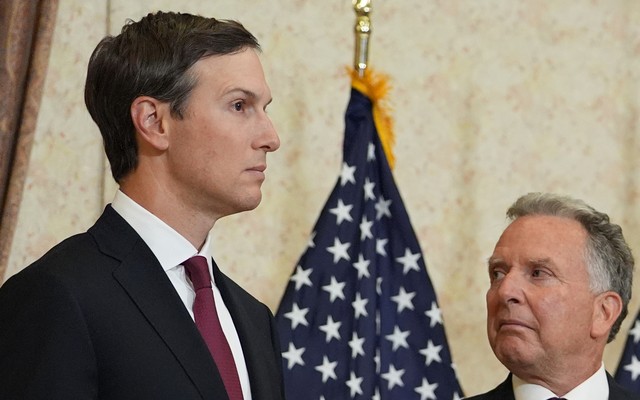
In 2021, shortly after he left his role as a senior White House adviser, Jared Kushner let it be known that he had loved his job but disliked the scrutiny and disclosure that came with being a top U.S. government official. He set up a private-equity firm and took a $2 billion investment from a Saudi fund led by Crown Prince Mohammed bin Salman. He proclaimed that he was embracing private life. “I’m an investor now,” Kushner said in a 2024 interview. If President Trump “calls you on November whatever and says, ‘I’d like you to come back to D.C.,’ you say, ‘Thanks, but I’m good’?” the interviewer, Dan Primack of Axios, pressed. “Yes,” Kushner responded.
But Kushner did come back. Two days before the United States and Israel attacked Iran this past February, he was in Geneva in a negotiation of the highest possible stakes. Over the weekend, he traveled with Vice President Vance to Islamabad to participate in failed peace talks with Iran. Without title or remit or any kind of official designation—only “presidential son-in-law”—Kushner has in the first 14 months of the second Trump administration sat down with world leaders including Vladimir Putin, Benjamin Netanyahu, and Volodymyr Zelensky, along with Saudis and multiple other actors from the Middle East.
The president’s attempts to interfere with the midterms demand vigilance, but a recent flimsy gambit is an argument against despair.
This is an edition of The Atlantic Daily, a newsletter that guides you through the biggest stories of the day, helps you discover new ideas, and recommends the best in culture. Sign up for it here.
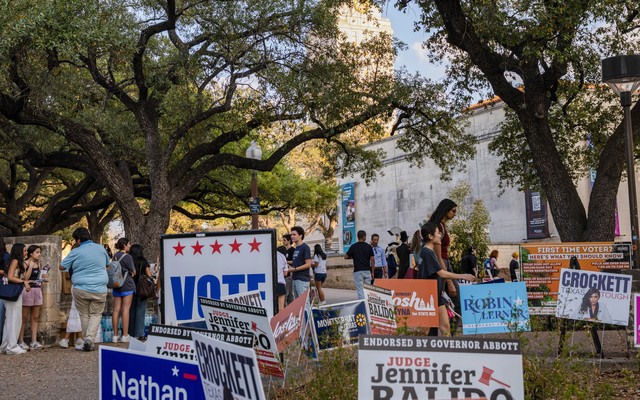
Anxiety among election officials and experts had been building for months before Donald Trump issued his latest executive order purporting to ensure election integrity late last month. When the actual text emerged, the reaction wasn’t relief exactly—but a definite sense that things could have been much worse.
Americans have many reasons to be worried about whether the midterm elections will be free and fair. As I laid out in a cover story last fall, the president’s plan to subvert the 2026 election is multifaceted and already in swing. But last month’s order and the dismissive reaction it’s received from experts—along with this weekend’s decisive defeat of Hungarian Prime Minister Viktor Orbán, which shows how the competitive-authoritarian playbook that Trump has imitated can be beaten—also point to the reasons to resist doomerism.
Testing has become so advanced that doctors now miss important elements of diagnosis.
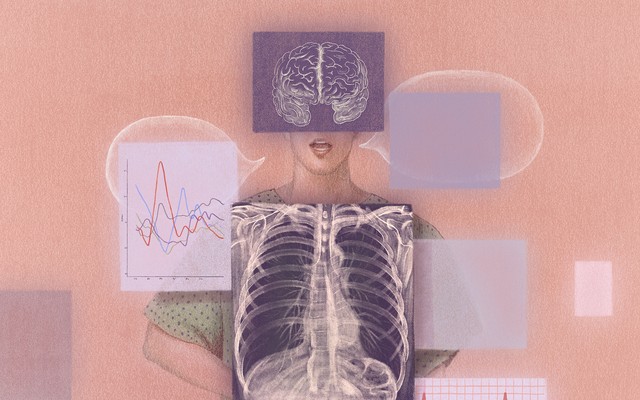
In her first year of medical school, Diana Cejas discovered a lump in her neck. She went to the student medical center to have it evaluated and was told that it was likely benign. But the lump kept growing, and she returned to her doctors, who reassured her that it was just a large lymph node. One night, following a 36-hour shift in her residency, the lump hurt so much she couldn’t sleep. The next day, after she begged for help, a doctor finally ordered a CT scan. She looked up her results on the hospital computer system. There, on the screen, was a large mass in her neck. It turned out to be cancerous. Even as she had been learning how to correctly diagnose others, she had not been able to get an accurate diagnosis herself.
A phonics-based curriculum is only one part of how Mississippi went from worst to first in education. The other part is much harder to pull off.
Updated at 8:52 p.m. ET on April 9, 2026
This article was featured in the One Story to Read Today newsletter. Sign up for it here.
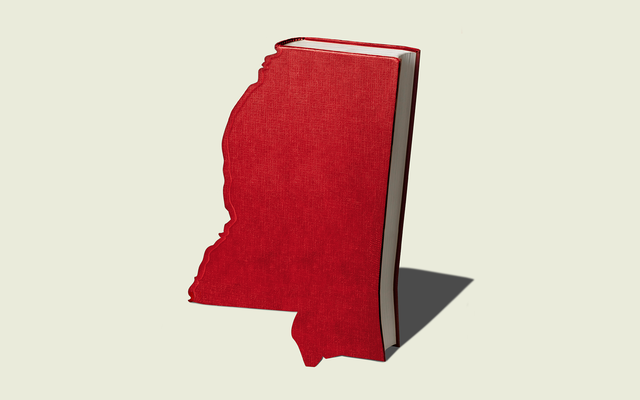
No story has caught the imagination of education reformers this decade quite like the “Mississippi miracle.” From 1998 to 2024, fourth-grade reading and math scores in my home state—the nation’s poorest—rose from among the worst in the country to among the best. When adjusting for demographic factors such as poverty, we’re in first place.
Other states are now trying to emulate what Mississippi did. Those efforts largely revolve around adopting what’s known as the “science of reading”— a set of principles and teaching techniques, including phonics, that are grounded in decades of empirical research. Last fall, for example, the Wall Street Journal editorial board marveled that “even California is now following Mississippi’s lead by returning to phonics” as Governor Gavin Newsom prepared to sign a major new reading bill into law. But what many outsiders fail to understand is that Mississippi changed far more than just how reading is taught. They therefore miss why and how our literacy approach succeeded.
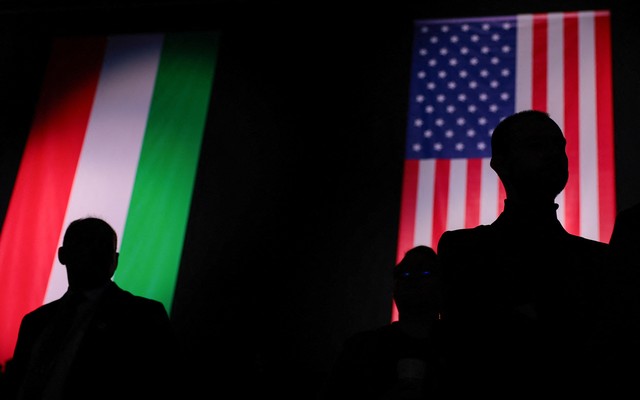
Hungary offers lessons in defeating right-wing populists.
To the outside world, Hungarian Prime Minister Viktor Orbán began his rule as a pariah—an obstreperous, often lone dissenter from European Union policies, especially over migration. Then he became a prophet to new-style “national conservatives”—the anti-immigration, anti-elite right-wing movement that has reshaped the politics of the West. After resoundingly losing national elections held on April 12, Orbán has become a parable for how populism can be defeated.
His political demise was hardly inevitable. It had to be shrewdly engineered by politicians and voters who put aside their ideological differences to defeat him. In politics, there is no natural law of self-correction.
From 2010 until now, Orbán and his Fidesz party transformed Hungary into a new kind of state, which he proudly proclaimed as an “illiberal democracy.” He and his allies rewrote the constitution to entrench his power, centralizing control over civil society and countervailing institutions such as courts and universities. Péter Magyar, the presumptive next prime minister, triumphed against a tilted electoral system—gerrymandered districts, government influence over traditional media and even over the country’s billboards—designed to keep Fidesz in power. Magyar understood that such a regime does not simply collapse under the weight of its own contradictions and mismanagement.
Former U.S. Deputy National Security Adviser Matt Pottinger on the U.S.-Iran cease-fire, Trump’s Hormuz blockade, and China’s reaction to the Iran war. Plus: A seismic election in Hungary, and Labyrinths, by Jorge Luis Borges.
In this week’s episode of The David Frum Show, The Atlantic’s David Frum opens with his reaction to the recent election in Hungary and the defeat of Viktor Orbán. David counters Orbán defenders who claim that this loss proves Orbán was never a threat. Antidemocratic leaders often face institutional constraints, and it was those institutional constraints that compelled Orbán to accept a defeat after years of abuse of power.
Then, David is joined by former U.S. Deputy National Security Adviser Matt Pottinger to discuss the current state of President Trump’s war in Iran. David and Pottinger talk about the recent failed negotiations between the two sides in Pakistan, the blockade of the Strait of Hormuz, and what could happen next. They also discuss how the Iran war is viewed in China and how it has been a financial gain for Russia.