Daddy, You're Perfectly Swell!
The thing to be is a disturbing novelist. On the other hand, there is much to be said for being a comforting novelist. One can say things for it. Things can be said, for being comforting.
Why are you writing that way, said Belinda. Belinda looking over my shoulder.
Hostility of Belinda. Threatenedness of me.
You are writing like Donald Barthelme. In his manner. It gives offense. Impertinent rejoinder.
Touch of Belinda’s breast to the neck nape. Moment of detente. Belinda’s glance. Belinda regarding THE DEAD FATHER (Farrar. Straus & Giroux. $7.95).
So. He has committed a novel, said Belinda.
Nod of assent.
You have drunk all of it.
Further nods.
How can you do this to yourself? Consider the brain cells you have wiped out, Belinda said.
But he is such a comfort, I said.
Well, enough of that. Or faugh, as a Barthelme character would say.
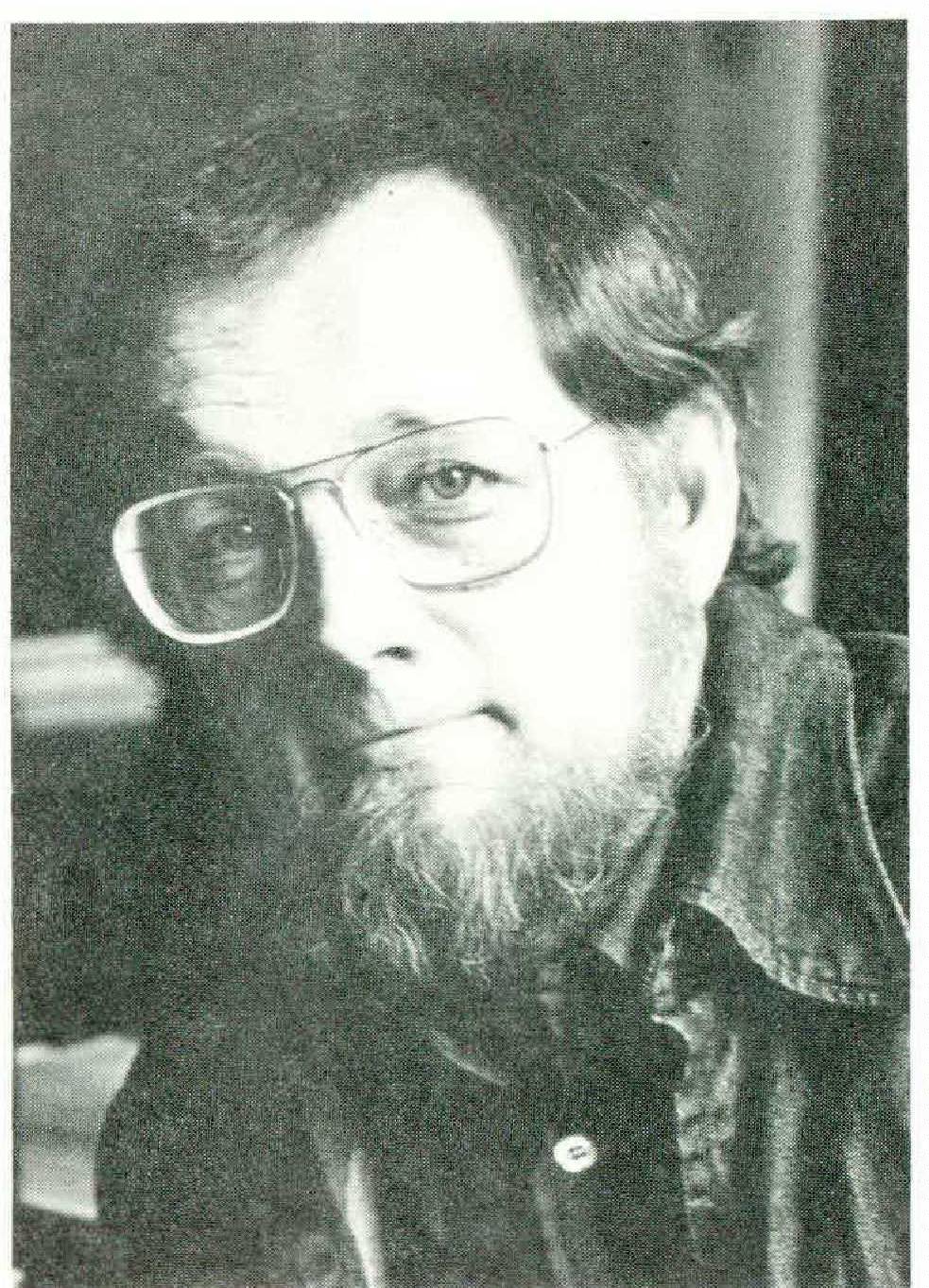
The Dead Father has appeared. Donald Barthelme’s second novel, or his eighth book of stories, depending on how you look at it. I think novel is closer to the truth, though long passages of it might find a place anywhere in the collected works. It is full of delights, even if not all of them attach themselves to one another.
There is a way of talking about Barthelme that allies him with a distinguished modernist movement—disciple of Borges, exemplar of the ideas of Roland Barthes, and so on—but this overlooks the distinctive pleasures of his work, his gift for parody and social satire. He has an ear as deadly as a black belt’s hand. He speaks dozens of the specialized dialects that make up our language, and he mocks their pretension and the pretentious surety of those who use them. If he addresses himself mainly to sufferers of contemporary spiritual malaise, he is particularly merciless on the language that is used to describe that illness. He sometimes indulges in low college humor. He cuts up, is cute. But at his best, he achieves a lunatic poise; he provides a way of listening to the cacophony around us; he gives comfort.
What is going on in The Dead Father is that a figure of that name is being hauled across the landscape by means of a steel cable to his final resting place. The figure resembles a human being in many respects, though it is “3200 cubits” long. The Dead Father has a wooden leg. large enough to contain confessionals. Nineteen men do the hauling, while four aristocratic types do the existential suffering over the meaning of this event. This novel, as may be clear, takes a bit of getting into. It is heavy on symbol. Actually, The Dead Father becomes a symbol of some plasticity. He is God first of all. God as a father. And father as God. After that he’s what you will: The Novel. Western Culture, Truth. Duty. Honor. Country. He is the order that we seek, and the control we seek to escape. A symbol with multiple possibilities--but still a heavy symbol, and it isn’t at all clear at the start that Barthelme can bear up under the load. But he inventively does.
The party wends its way across the countryside in a parody of any number of literary quests. The party encounters the Wends. (I guess Barthelme meant the pun.) The Wends don’t recognize fathers:
We Wends are the fathers of ourselves.
You are?
Yes, said the Wend, that which all men have wished to be, from the very beginning, we are.
Amazing, said Thomas, how is that accomplished?
It is accomplished by being a Wend, the leader said. Wends have no wives, they only have mothers. Each Wend impregnates his own mother and thus fathers himself. We are all married to our mothers, in proper legal fashion.
Thomas was counting on his fingers.
You are skeptical, said the chief. That is because you are not a Wend.
The mechanics of the thing elude me, said Thomas.
Take my word for it, said the Wend, it is not more difficult than Christianity. . . .
The party moves on.
Not every moment in this book relates neatly to Oedipal themes. Random and innovative dalliances occur. Clitoral politics are explored. Indoor gardening and vegetarianism are considered. Allusions to the writing of Erving Goffman and the music of Karlheinz Stockhausen. The need for newness in sexual sport is affirmed, culminating in a dance with the apes. But the best section of the book does in fact have to do with fathers, actual fathers. The party meets a translator “from English into English,” who has prepared “A Manual for Sons.”(This section appeared originally as a short story in The New Yorker.) It consists of meditations on the bestiality of fatherhood, inspired monologues from father to son, and it includes this touching sentence: “He is mad about being small when you were big, but no, that’s not it, he is mad about being helpless when you were powerful, but no, not that either, he is mad about being contingent when you were necessary, not quite it, he is insane because when he loved you, you didn’t notice.”
Sentiment earns a larger place for itself in this novel than in anything Barthelme has written before. It resides. mostly, in The Dead lather himself. As perhaps I should have made plain before. The Dead Father has died only “in a sense.” He is “dead bui still with us. still with us, but dead.” He has lost his clout. He knows he’s hound for the grave. But he speaks. He occasionally breaks away from his cable and accomplishes some mavhem. He is a randy old goat, yearns for the attention of both fetching ladies in the party. Told he is too old. “The Dead Father fell down on the ground and began chewing the dirt of the road.”
We are sorry to see The Dead Father go. when the bulldozers appear and begin to fill his grave. He reminds us of whatever it is that we imagine to have existed in a more coherent world. Not to put too fine a point on this, but if Barthelme continues in this direction, he might become a disturbing novelist.
Further fathers
I n the South Seas, on the imaginary decks of the Pequod. to the very end of his life. Herman Melville was looking for a father. This is the central argument of MELVILLE (Braziller, $15.00). a psvchobiography by Edwin Haviland Miller. “Call me Ishmael!” Miller says, “can also be translated. ‘Call me Allan Melvill’s son.’ ”
Well. I learned a lot from this book, and its thesis is not unpersuasive. Allan Melvill (the original spelling of the
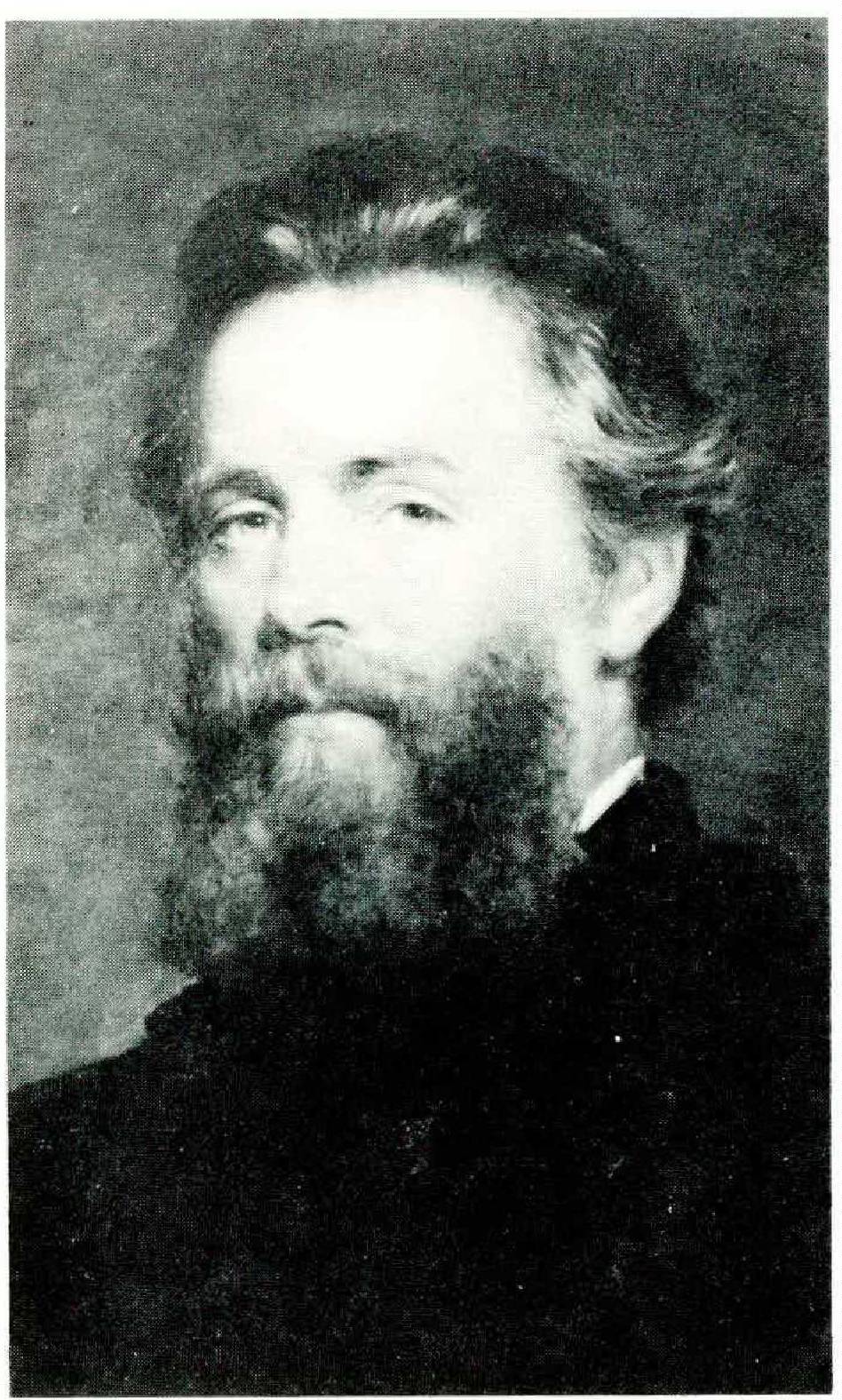
family name) was a charming, unstable failure who died young and was frighteningly deranged just before his death. Herman was twelve. He was haunted by the episode, and at the same time he cherished a memory of his father as a figure of Apollonian grace. And thought himself a lumpish and unattractive person however, his mature face was strong and handsome. Melville kept his secrets to himself, though he left behind the sort of clue that makes as cheerv a sight for the psychobiographer as the first fire of fall. (On the birth certificate of his second son. Melville entered his mother’s name where his wife’s name belonged.) In Nathaniel Hawthorne, he briefly found a figure worthy of his filial longing. But Hawthorne backed off in puzzlement from the intellectual and emotional bear hug that Melville offered him. Miller looks illuminatingly at their famous correspondence but with a clinical eye.
This book demonstrates most of the difficulties of its growing genre. It’s full of reflexive thought (wit is “defensive”; people who have children are “asserting the life principle”). And it is permeated with the vulgar insistence that psychiatric truths, because they are buried, are somehow more true than moral, social, or spiritual ones. It seems to me that a psychobiographer owes his subject what a psychiatrist owes his patient, a respect for the totality of his life. Miller need only quote to reveal inadvertently how much of Melville eludes diagnosis. He misses, for instance, the dark exuberance of those resonant but offhand maxims Melville produced: “There is a wisdom that is woe; but there is a woe that is madness.”
Melville finished Moby Dick when he was only thirty-two. Its genius of course went almost wholly unrecognized, and he lived stoically in gathering obscurity for forty years. He took a desk job in the New York Customs House. He seems by force of character to have used his gifts to ward off the madness that stalked him. I wish Miller brought more awe to this life; I wish he liked Melville more.
Ahab in a canoe
John McPhee has published his twelfth book. THE SURVIVAL OF THE BARK CANOE (Farrar. Straus & Giroux, $7.95), more evidence that he is one of the country’s best . . . best what? I was about to say reporters, but the term includes too much: news doesn’t seem to
interest McPhee, and I doubt he’s ever “investigated” anything. He watches. He brings a reverence to observation. The title of his first book. A Sense of Where You Are, suggests an attribute of them all, an intense affection for the here and now. He can also be a sort of surreptitious essayist, letting the evidence state his case. His profile of David Brower, for example (Encounters with the Archdruid). turns into a complex discussion of the contrarieties of environmentalism.
The Survival of the Bark Canoe documents a bit of the life of a young man who has given himself to preserving the Indian craft of canoe-making. Nice subject for McPhee: the young man carves canoe thwarts the way McPhee writes, without apparent effort but with a lust for perfection.
The book takes a curious turn. Along with some others. McPhee and his friend travel by bark canoe through the Allagash lakes in Maine, and the voting man reveals perfectionism’s ugly side. He seizes control of the trip, forces his companions to paddle through storms and darkness, becomes an Ahab of his tiny boat. MePhee remains his unruffled self, but one senses an unexpressed tension: he must know well the urge to break out of the limits of one’s craft, and the dangers in doing so.
The only aspect of McPhee’s work that one can criticize is his circumspect caution; I can’t be alone among his fans in hoping that he’ll take larger risks.
—RICHARD TODD