The Clearest Truth Is in Fiction: Jesse Hill Ford's Novel of the South
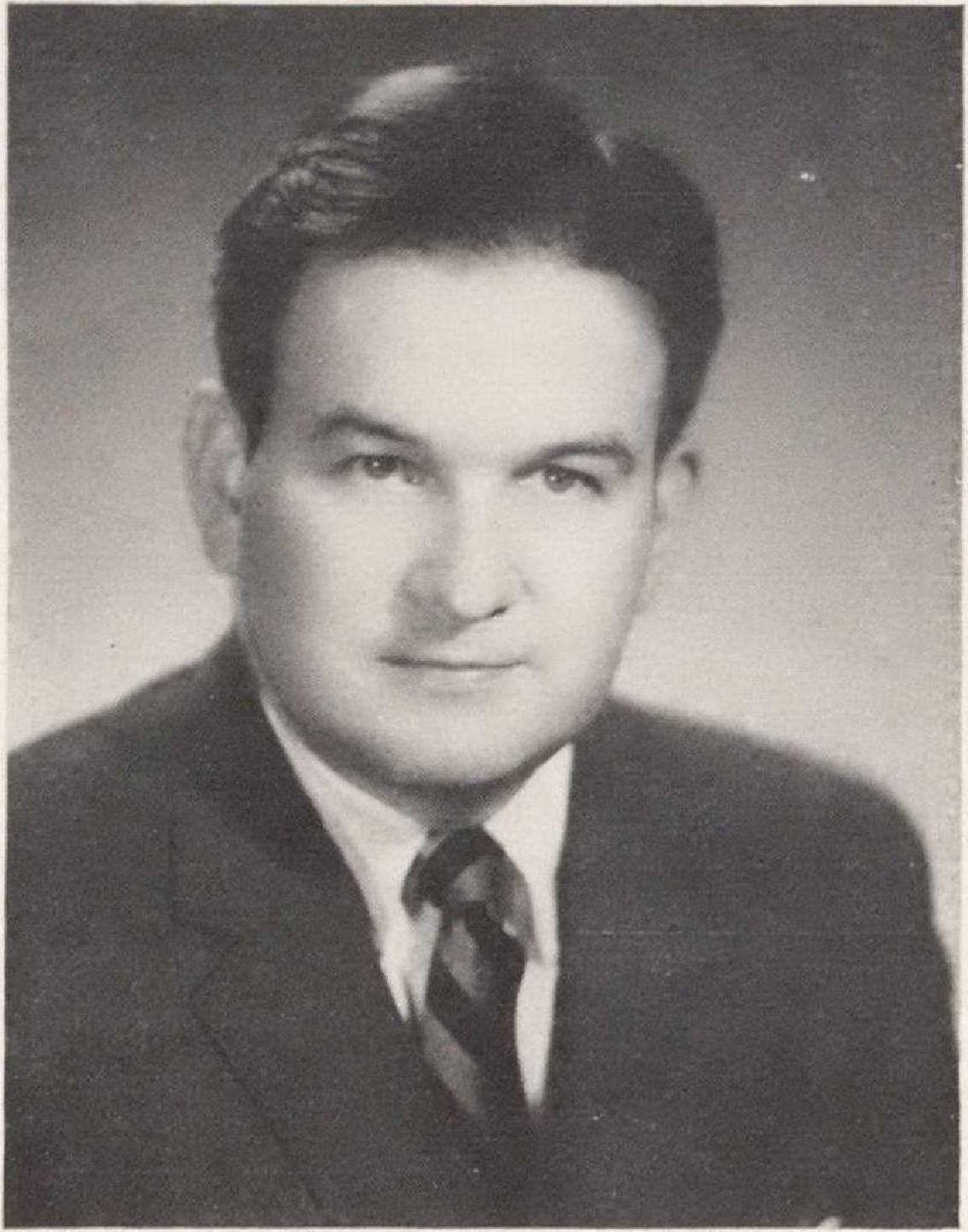
Born in Alabama, raised in Tennessee, educated at Vanderbilt and at the University of Florida, Jesse Hill Ford is the author of one of the most searching turrets ever written ahoid the South, THE LIBERATION OF LORD BYRON JONES, the midsummer Book-of-the-Month Club selection. Ralph McGill of the Atlanta CONSTITUTION evaluates this extraordinary book.
by Ralph McGill
WHEN I had finished leading Jesse Hill Ford’s novel The Liberation of Lord Byron Jones, I sat dunking for a long time. The characters were strongly alive and jostling in my mind; the mood and motion of their life in the tow n had created a sadness and an excitement. Lord Byron Jones was liberated — true enough. And so, in a sense, were Somerton’s police force, Willie Joe, and Mr. Stanley. Steve and Nella M undine had escaped but were not free. There was no liberation for anyone else in Somerton. Certainly not for Oman Hedgepath, whose whole life had been one of captivity, a captivity as complete as that which had enmeshed Lord Byron Jones. Nor had there been any liberation of the people of Somerton. The town might be any one of a hundred or so county seats I’ve seen in a lifetime of being a Southerner, spending forty-four years trying to understand and know the region of my birth and why I loved it and yet wanted to be liberated from its hold. I recalled the voice of a long-dead novelist friend saying, “It is a region you love as a mother loves a crippled child you want the child to be made well, to be healthy and strong.”It is that, but that is not all.
1 sat thinking that I must; have seen and talked with at least a dozen or more small-town policemen and deputy sheriffs who looked and talked and thought exactly like those Jesse Hill Ford had pictured in fiction. In the months and years of electric cattle prods, police dogs, beatings, shootings, of bodies found in rivers and fields, Willie Joe and Mr. Stanley were principals in the cast of characters in most of the civil rights dramas. Oman Hedgepath was there, too, not really wanting murder to be done, or men to be mutilated and slugged or denied justice and dignity, but rationalizing it if it was done.
The book revived questions frequently asked by visitors (and, God knows, by myself and friends), posed in countless letters, and raised in seminars: “What does the white South really think, especially the white South of the old plantation areas?" “What does the Negro think, specifically the Negro in the country towns where he is at the mercy of the cold-eyed sheriffs and the power structure that becomes brutally violent when it loses its balance of tolerant paternalism?”
Out of Jesse Hill Ford’s magnificent novel comes reply. The deeper answers, I believe, are to be found not in biography, autobiography, news stories, or personal narrative. They may be found, paradoxically perhaps, in fiction not just any fiction, but in writing such as Mr. Ford has set down in what is a superb and moving book.
The lives of white men and women and Negro men and women are closely mixed, yet widely separated. in Ford’s fictitious setting of a Tennessee town called Sornerton. The town’s name doesn’t matter. What matters is that there were, and are, so many Somertons, so many Oman Hedgepaths, so many W illie Joes and Mr. Stanleys; so main plaees where barbarous, senselessly cruel things and mocking injustices have for so long survived year after year. As the years came and went the Somertons acquired country clubs, paved streets, subdivisions, and traffic problems. But never was there any drive toward removing the degradation, the daily affront to the dignity of man, and the many denials that flowered out of segregation. The Negro residents of their towns could not vote, could not make use of public accommodations in the same manner as did other residents, could not send their children to the same school that other children attended, but rather, were compelled to send their children to neglected, inferior schools. There was never any civilized thrust to change this pattern in the many Somertons, never any common sharing of courtesy and justice, but always the stifling paternalism, the gulf of separation that denied experience in the meaning of PTA, of town meetings to discuss taxes or bonds, and of other routine experiences. Injustice was older than the most ancient graves in the cemetery. The sheriff, the deputies, and the courthouse were not persons or a place to which a “nigger” could go in search of justice. They were and too often are today — “men” and a “thing” to fear.
The form of Mr. Ford’s novel is not traditional. There is a plot, but it is not one in which there is a single protagonist on whom the action centers. Nor can it be said that Lord Byron Jones, Negro undertaker and a bewildered, decent, Victorian moralist, who wants to divorce his wife (who is sleeping with Willie Joe Worth, one of the town policemen), and Oman Hedgepath, lawyer, whose young nephewpartner persuaded him to represent the undertaker, are the dominant characters. This is a novel which reveals what people think and why, and what they do and why. They are all part of an enormously simple story in which the lives of its characters arc complex because man himself, wherever he is, is essentially complex.
Somerton is black and white, mixed yet separated. So are the thoughts mixed and separated.
There is the black man Mosby, who had left Somerton at the age of thirteen and had come back to see Mama Lavorn, of Lavorn’s Look and See Café and Tourist. It was a bar and whorehouse where on Saturday night, the white folks said, a nigger could get drunk and have nigger fun. Mosby remembers how Mr. Stanley had beaten him as a boy a long time ago. He never had been able to forget it. Willie Joe Worth had a good, hardworking daddy. But he died. And there was no one to advise Willie Joe, who had been a pretty baby, but who was “weak.” Steve Mundine, whose mother was Oman Hedgepath’s greatly beloved sister, had come from San Francisco to Somerton after the war at Uncle Oman’s suggestion to be Oman’s law partner. As for Sieve’s wife, Nella, whose grand parents still live in Norway, the South puzzles and disturbs her. Her Steve “hangs in the balance be tween liberality of thought and conservatism of mood. The Confederate dead . . . seem to hang suspended over him sometimes like the verv mist on the mountains. Another day the air will be perfectly clear. ... He is thinking. I love him.”
T. K. Morehouse, the federal marshal from Memphis, Lavorn, Willie Joe, Mr. Stanley. Mosby they appear and reappear in the pattern of Sornerton. The White Citizens Council speaker comes. There is “thinking" at the country club on Satinday night . . , Mr. Templeton, the druggist, moves out his soda fountain. “You can’t blame him . . . the niggers would be usin’ it. . . .”
The day the President was shot in Dallas, the first word was that he was shot. Inn not killed. At Johnnie Price Burkhaller’s hardware store they had it on television. The store filled tip. “Clod,” says the Mayor. “Anybody that would come that close and then botch it. I just don’t know. I’ll bet twenty-five dollars he don’t die!" Druggist Templeton had tears in his eyes: “God bless the South,”said Templeton. “If he dies, if some Southerner has killed him. .
Oman Hedgepath thought, “After the first shock began to wear off I had a moment of tears, afraid he would die and afraid he wouldn’t, because no matter how counter your feelings and beliefs run towards those of another man, no matter how you hate him, still you don’t wish him death. You might want him dead; but you don’t wish him death . . . not this way.”
The town “thinks” about the divorce. Oman thinks. So does Willie Joe. And Mr. Stanley. There can’t really be a divorce, of course, because it would “come out” that Emma, Lord Byron Jones’s wife, was with child by Willie Joe. That would “hurt” everybody: Willie Joe’s kids, the town, and would unnecessarily upset a lot of people; so, there couldn’t be a divorce. But both Emma and Lord Byron Jones wanted one, and like damn fools insisted on one. So it was necessary, finally, to liberate Lord Byron. Before, during, and after the “liberation” we know what the Negro South thinks and what the white South thinks, not as they think in the universities or colleges, in CORE or the NAACP, or in “liberal” circles, but as they think in the Somertons of the South. We had evidence of this “thinking” in Philadelphia, Mississippi, in Birmingham and Selma, Alabama, in Oxford, Mississippi, and in other towns and cities. But it is best comprehended and more logically in perspective in fiction such as Jesse Hill Ford has written so powerfully in The Liberation of Lord Byron Jones.