"Now--Watch What Happens!"
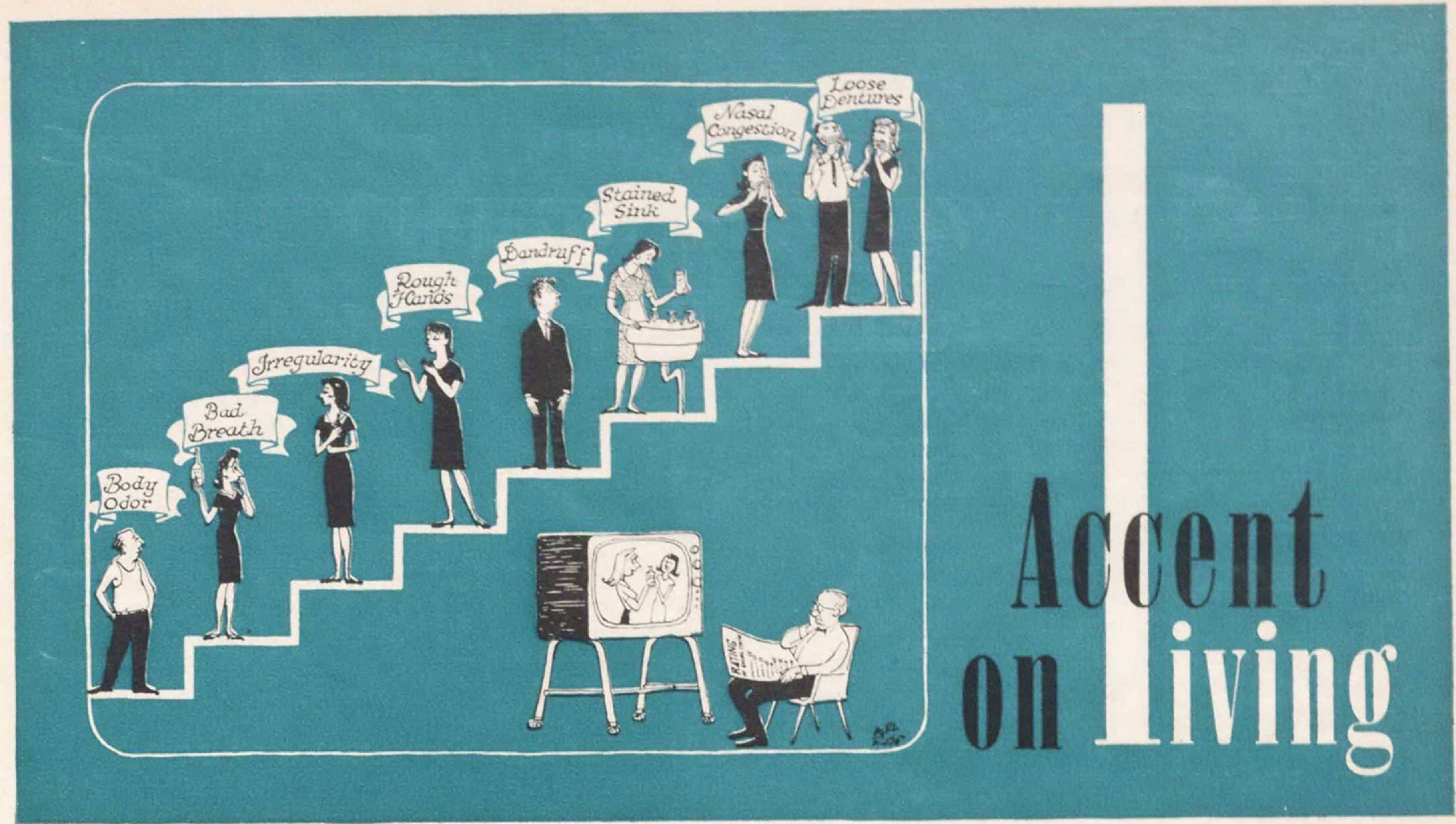
Television commercials are delivered by professional actors. One has only to hear a few real-life nonactors telling about their hair tonic or bunion plasters to realize why this must be. The ballplayer, for instance — a real ballplayer — was something short of believable when he managed to stammer out the news that he eats a certain kind of bread “because it builds strong bodies three ways.” It was a phrase he had memorized by countless repetitions, and the agency man finally had to take him as he was: a slow-witted athlete parroting words he would not have understood even if they had meant anything in the first place.
The professionals, of course, take the same words and seem to find real meaning in them. A hardened professional can make “the best tobacco makes the best smoke” sound like revealed truth. Yet none of the men and women who deliver the commercials have the public status that even the second-rate stage and screen personalities enjoy. Gossip columns tell us nothing about their doings; we never learn their favorite recipes or what they think of foreign policy; if they threatened not to go to a White House party they hadn’t been invited to, no one would pay the least attention to it. They work without screen credits, and their audience never sees their names.
Even so, the hundreds or thousands of unidentified people delivering television commercials are well paid, and there must be some professional solidarity among them, especially in such production centers as Hollywood and New York. What, then, might be their concept of superior status, another rung on the ladder of success? Where, for instance, in their social structure does the bad-breath woman stand? Is she above or below her colleague who suffers from Irregularity? One imagines two schoolboys comparing notes:
“What does your dad do?”
“Body odor. What’s yours?”
“He’s a dandrufr case. So’s my mother.”
“Gee!”
A fair segment of the hierarchy in its upper reaches would be the denture crowd—young, fashionable, gnawing at corn on the cob and biting boldly into apples and whipping out tubes of goo that will make a pencil adhere to their fingers. Some of them seem to suffer from denture-glare, but perhaps this is only because of the toothy grins they are always flashing at each other.
All these specialists are attended by an equally specialized corps of musicians, voice coaches, songwriters, copywriters, cosmetics experts, and such. Long, expensive training underlies these functions. Mr. and Mrs. H., for example, of Nirvana, Ohio, found that their son, even before he reached school age, was a musical genius, a veritable young Mozart. The best private instruction available in Nirvana Heights was procured for him, followed by years with the outstanding teachers of Cleveland, then of New York and Boston. “He has gone far beyond any need of help from me,” was the report from one great teacher after another.
Today, at age thirty-five, the H. son is blowing tenor sax in the chewing-gum band. He has a four-car garage, a pool, and a Japanese houseman. His wife, who had once dreamed of an operatic career, is dubbed as the voice of the woman who sings the cake-mix song. They’ve just about reached the top of the heap, their friends say.