Reader's Choice
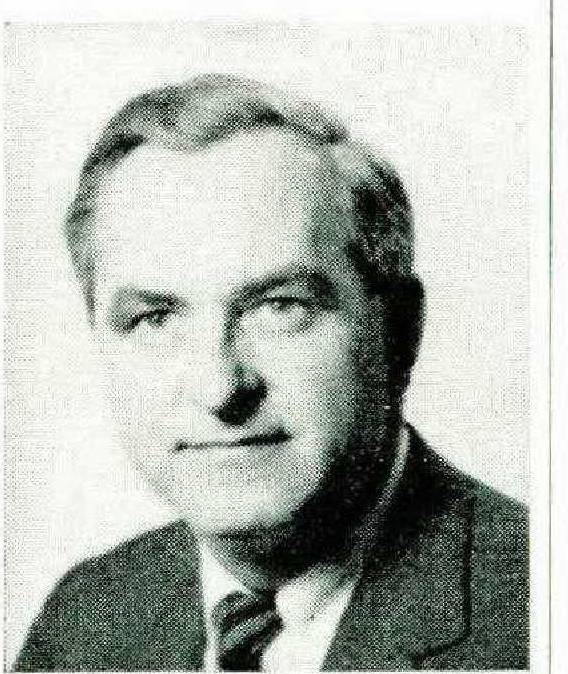
Theodore Dreiser is probably the foremost example in the history of literature of a major author who wrote badly. DREISER by W. A. SWANBERG (Scribner’s, S10.00) seems to have taken on some stylistic coloration from its subject. Plodding and undistinguished in style, like Dreiser’s novels themselves, this biography nevertheless succeeds, through dogged accumulation of fact, in building up a vivid and powerful picture of the man and his times.
Lives of literary men are not notable for their happiness, and Dreiser’s was no exception. The ninth child of German immigrants, he knew all the sufferings and degradations of poverty. His parents were strict Catholics, almost superstitiously religious, and the children rebelled against this harsh atmosphere at home. Two of his sisters drifted into a life of sin — material which Dreiser was able to use later in Sister Carrie and Jennie Gerhardt. His brother Paul ran away to join a traveling theatrical group and became famous as a songwriter, only to die penniless after squandering a fortune. Theodore lied home at an early age to try his luck as a reporter in Chicago and St. Louis.
In view of the heavy and lumbering style of his novels, it is a wonder that he could survive as a reporter expected to turn out brisk and readable copy. But survive he did, managing always to keep his own writing going on the side, until by 1900, at the age of twenty-nine, he had finished his first novel, Sister Carrie. Its appearance, however, was a disaster for the author. The publisher, Frank Doubleday, shocked at the novel he had accepted, printed only a few hundred copies, which were buried by the reviewers. Dreiser’s fame grew slowly in the following decade, but it was really not until 1926, with An American Tragedy, that he became affluent enough to quit his various jobs as editor and journalist.
Physically ugly and in manner ungainly, Dreiser nevertheless had an animal magnetism that attracted people to him, particularly women, and he seemed to lumber through life with the elemental crudity of one of his own novels. Women, indeed, were one of his lifelong problems; there were always too many of them for peace of mind, though some helped him to edit his mammoth manuscripts. Women were part of the bait the Communists held out to him in his fellow-traveling period during the 1930s. The Communists, however, never permitted him to join the Party, fearing that once admitted to the inner circles he would be like a bull in a china shop. Dreiser’s political opinions were, to say the least, an uncertain quantity, since he also admired Hitler and the Nazi movement.
Dreiser’s place in American letters has been assured, but one feels that nowadays he is read more as a chore than as a pleasure. Perhaps this comprehensive and thoroughly researched biography portends a revival. In any case, it performs a genuine service by commemorating a writer who, more than any other individual, helped break the stranglehold of the Genteel Tradition upon American letters.
REBIRTH OF A NOVEL
A revolutionary work of an often has to wait for acceptance; but it is rare that a good book done in a conventional manner goes altogether unnoticed. Yet this is exactly what happened to CHRISTINA STEAD’S THE MAN WHO LOVED CHILDREN (Holt, Rinehart and Winston, $5.95), which was first published in 1940 and sank almost without trace, ignored by critics and public alike. It did, however, gain a few friends, who have at last secured a reprinting; and for most readers, the occasion will be the happy one of discovering a new and wonderful novel.
Sam Pollitt, a naturalist employed by the government, and his wife, Hcnny (for Henrietta), are as unhappily mated a pair as you can probably recall in fiction. Sam is an insufferable egotist, self-righteous and cocksure. The inordinate love for his children that he professes is mostly exhibitionist and at times sadistic. His baby prattle while he forces the children into his games is syrupy enough to turn one’s stomach. Henny is not very easy to live with either; formerly a rich and beautiful girl, site is now a highstrung and hysterical woman, worn out by bearing six children and by worries over the family debts.
When Sam goes to Malaya on a scientific expedition, his enemies in the Department set about ruining him, and he loses his job on his return. The family’s fortunes now sink even lower. Henny is driven so frantic by her debts that she is almost on the verge of losing her mind. At the end she meets her death in a very melodramatic way, which the author nevertheless makes entirely believable as well as surprising.
A thoroughly unhappy marriage would not seem to be promising material for a novel. But Miss Stead has flung herself into the life of the Pollitts with such energy, and the characters she creates are so convincing, that she proves once again that the true artist can make almost any human subject interesting. Her writing is not particularly graceful, but its effect is immediate and powerful; whatever detail she touches she seems to take by the scruff of the neck, shake vigorously, and hold before your eyes. When you have finished the book, you feel that you have really lived with the Pollitts, hour by hour and day after day; and they are altogether a family that you will not forget.
WAR OF THE DICTATORS
As the largest land campaign in military history, the war between Germany and Russia from 1941 to 1945 continues to attract the pens of historians. ALAN CLARK’S BARB A ROSSA (Morrow, SI0.00), a narrative of considerable sweep and power, is a welcome addition to the recent histories by Alexander Werth and Paul Carell. While he lacks the depth and intimacy of Werth’s firsthand reporting of the Russian people at war, Clark is on the whole a far more satisfactory historian, and his material is far better organized than Carell’s, which tended toward the jazzy and the journalistic.
Though an anti-Nazi, Carell as a German could not help vibrating with pride in the heroic exploits of the ordinary loot soldier of the Wehrmacht. Mr. Clark, however, has no sympathy for the Germans from top to bottom of the command; and this anti-Germanism, however justifiable as a human response, is perhaps his one fault as an objective historian. How can one explain without acknowledging the skill and valor of the German soldier the enormous Russian defeats in the first months of the war? The Russian tanks were better and more numerous, and Russian manpower was overwhelming. Even though Stalin had decimated his own officers’ corps, so that the Russians had inferior leadership, the Germans still needed bravery and cleverness to exploit this weakness.
What emerges from Mr. Clark’s somber and impressive chronicle is that this was a war Hitler could never have won. Even had Moscow fallen, Stalin would have continued lighting from behind the Urals. Of these two worst dictators of modern history, Stalin was the shrewder, and he maintained a magnetic grip on his own armies. Between Hitler and the German officers, however, there had always been a rift, which widened as the war went on, until the last efforts of the German armies in the East became disorganized and pointless.
“LOVE AMONG THE RUINS”
Despite a famous excursion into the lower social strata in a novel of a woman of the streets, ALBERTO MORAVIA’s favored material has always been the life of the Roman middle and lower-middle classes, with their impotence of will, dedicated selfishness, and petty eroticism. THE FETISH (Farrar, Straus & Giroux, $4.95), a collection of stories, shows that lie is master of this world as well as of the short-story form, but leaves a nagging impression that his people are so brittle that they might break apart in the author’s hands.
The title story is typical Moravia. Livio and Alina are a young married couple, not very much in love, who arc furnishing their new flat in Rome. She has a taste for antiques and acquires a primitive fetish, a large ugly statue with a sullen and brooding face. The statue is placed in the dining room, much to Livio’s discomfiture, but when he tries to carry off the situation lightly by making jokes, his wife is offended and they quarrel. Suddenly, as he stares at her heavy-set features across the table, they take on the sullen cast of the statue’s, and he shudders at this premonition of marital doom.
The married couples in the stories are nearly all loveless, and sometimes estranged from each other even on their honeymoons. Strangely enough, preoccupied as he is with the theme of the erotic, Moravia continues to discover in the life around him only petty hatreds. Despite his superior gift as a storyteller, and a frequently clever and malicious wit, the world he portrays is so narrow as to be almost stilling.
THE COMPLEAT TRAVELER
For anyone planning a trip to the Greek mainland and islands I can imagine no more charming and useful companion than PHOEBE-LOU ADAMS’ A HOUGII MAP OF GREECE (Atlantic-Little, Brown, $4.95). With much learning about the past, which she wears unobtrusively, Miss Adams brings to bear a very sharp eye on the present, and she writes like an angel. Here, in short, is Greece, ancient and modern, delicately done in miniature — and very much in the round.
The most interesting sections for me were the trips to some of the sites of the ancient Mycenaean civilization — Pylos, Sounion, and Mycenae itsell — where archaeologists have made some very exciting discoveries. The mood and mystery of these teasing ruins arc evoked most sensitively. Yet interspersed among the remembrances of antiquity are lively accounts of shopping trips, samplings of native foods, driving hazards on the back roads, and conversations with all manner of Greeks. Perhaps the most enjoyable thing about this very pleasant book is the feeling it so plainly communicates that the author was at all times —well, nearly all — enjoying herself immensely.
THREE THAT MISFIRED
As a critic, LESLIE A. FIEDLER is always brilliant, even when his interpretations are extreme and arbitrary. But the combined gifts of verbal skill and literary sophistication hardly raise him to the eminence of a successful novelist in BACK TO CHINA (Stein and Day, $4.95), a story that begins with uncertain intentions and ends very much at odds with itself.
Baro Finklestone, a professor at a Western college, is a poor man’s Herzog — the intellectual as agonized clown. But while Bellow’s hero, however he may posture, remains appealingly human, Baro is nothing but the abstract sum of all his postures. His story falls into two parts, neither having much to do with the other, except insofar as they seem to illustrate the strictly intellectual theme of spiritual fatherhood. In China, at the end of the war, Baro had befriended an older Japanese, his spiritual father; and years later, in Montana, he tries to help a young Indian beatnik fresh off the reservation who is to be his spiritual son. Neither relationship succeeds; the Japanese turns out to have been a war criminal, and the young Indian kills himself in a car crash.
And the upshot of all this unlikely allegory? Baro, it comes out, has previously chosen to undergo an operation to make himself sterile. Now, as a surprise ending, his wife announces that she is going to have a baby. Has she been naughty or is this a virgin birth? We do not know; we are left only with the final image of Baro crying into the void to his dead “father” and “son” that he who cannot have children will be the father of a son who in his turn will have sons. You can almost hear the intellectual gears grinding as Mr. Fiedler rounds off this thesis.
Amid all this tomfoolery, there are passages of direct and incisive writing— particularly those dealing with the younger characters — that show Mr. Fiedler could write a very good novel if only he would, in James Thurber’s words, let his mind alone.
Irish writers, when inspiration lags, can always be counted upon at least to be charming. The Irish charm flows free and full in FLANN O’BRIEN’S THE DALKEY ARCHIVE (Macmillan, $4.95), but not quite ebulliently enough to put over a piece of whimsy too slight and formless.
Dalkey is a pleasant little town near Dublin, with a charming lane named Vico Road that captured the imagination of James Joyce. Repaying the compliment, Dalkey’s imagination, when warmed by a little tippling, turns fondly toward the memory of Joyce. In fact, the Dalkey rumor has it that Joyce faked the news of his own death and is still alive, in hiding from his public and his own scandalous fame. An earnest Dalkeyite, Mick Shaughnessy, sets out to check the rumor, and at last does locate and talk with Joyce, who is a rather disappointing character, though he has some amusing things to say. Ulysses, it seems, was a hoax perpetrated by Sylvia Beach with the help of numerous hacks, and Joyce disapproves of it as a smutty book. What he is really proud of are the pamphlets he has since written for the Catholic Truth Society, and his present wish is to join the Jesuits and reform the Church.
Mr. O’Brien has concocted a brew that is all too clearly much ado about little, but he writes well enough to make it go down as painlessly as a Guinness half-and-half.
In his first novel, The Old Masters,THOMAS BAIRD made good use of his inside knowledge of the art world to fabricate a very funny satire about the chicaneries of dealers and the foibles of collectors, NICE TRY (Harcourt, Brace & World, $4.95) goes over the same ground; but while it is a very amusing book, the satire here is sometimes overdone.
A storm centers upon an appointment to the most influential committee on modern art in New York. The two contenders are Harry Pickens, a hayseed who has become a millionaire feed magnate, and Horace Bessarion, an equally rich but shadier operator in the financial underworld. Neither knows much about art; but for both the hick and the commercial thug the committee membership would open all social doors. They enlist publicrelations men to launch their campaigns and go to absurd lengths to show a passionate interest in contemporary art. Though Pickens is a rube, we root for him because he, unlike his competitor, is at least well intentioned. But all his planning comes to naught when an exhibition of ultramodern art that he has sponsored turns into a riot, with the author piling one piece of slapstick on another like an old silent comedy. Pickens will go back to being a big frond in his own little pond — Sioux City, Iowa — where he will be a wiser but not necessarily sadder man.
Mr. Baird observes carefully the dress, speech, and behavior of certain circles in midtown Manhattan, and he has an extremely fertile imagination for the intricacies of plot, but the novel bears the marks of having been turned out too hastily, perhaps with one eye on the movies.
BUT IS IT ART?
After shocking us out of one complacency after another, modern art has finally arrived at abolishing art altogether in the movement known as anti-art. THE BRIDE AND THE BACHELORS by CALVIN TOMKINS (Viking, $5.50) tells in a most entertaining and illuminating fashion the stories of four innovators in this field: Marcel Duchamp, John Cage, Jean Tinguely, and Robert Rauschenberg.
Duchamp originally fathered the movement in the twenties with “ready-mades,” ordinary objects from our environment mounted for aesthetic inspection, like a metal rack for wine bottles or a simple bicycle wheel bolted to a stool.
Cage has experimented with electronic music and the effects of chance, as in a concerto where six different radios, tuned to different channels, are played simultaneously.
Tinguely, a Swiss, creates odd machines out of parts salvaged from junkyards. The most famous, a contraption designed to commit suicide, was exhibited in the garden of the Museum of Modern Art in New York; and though it actually worked, and did destroy itself, the result was not actually as planned, and the fire department had to step in.
Rauschenberg, who has been prominent as a “pop” artist, applied brush and paints to his bed and exhibited it, upended, in a gallery as a painting.
The reasoning (if that is the word) behind all these efforts is perfectly plausible: when the line between art and life is drawn too sharply, art itself becomes formal and sterile. Nevertheless, art itself may be a harder thing to escape from than these nonartists imagine. Their best works have an exhilarating and liberating effect upon the viewer’s imagination — which was, after all‚ something that traditional art was also expected to achieve. And more often than not, their odd constructions do make plain statements. A machine that destroys itself, while beating a drum, waving flags, and shooting off firecrackers, seems to me to be saying something very clearly about the civilization we live in.