The International Poultry Traffic
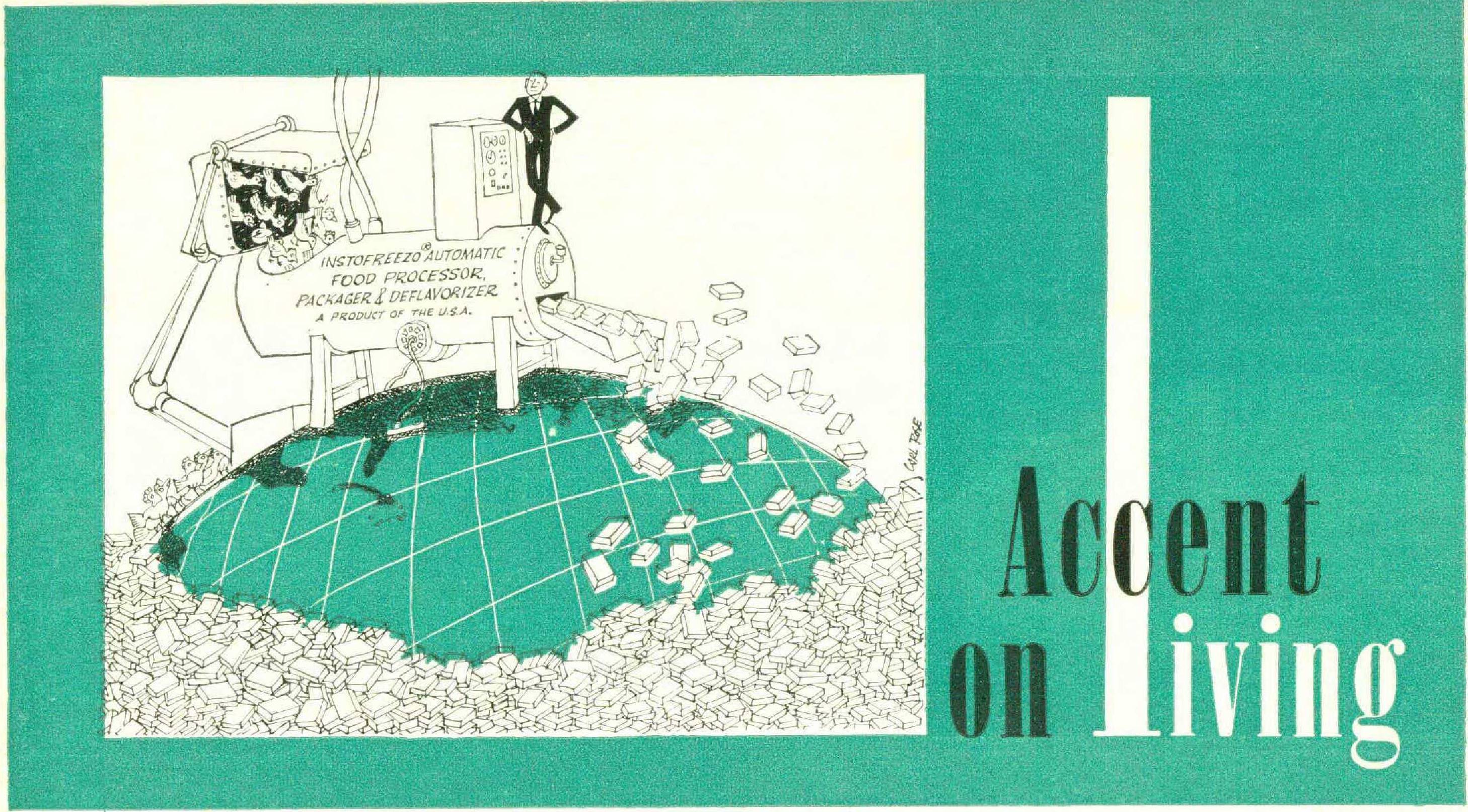
It is hard to see wherein the best interests of the United States are served by the export of our poultry to countries in Europe. True, the more we ship overseas, the less of it we have to eat here at home, but this seems a curiously roundabout way of trying to raise the American standard of living, and at what cost to our reputation in other lands we can scarcely imagine. With many areas still teetering on the brink of Communism, we cannot afford to flaunt before the rest of the world the kind of poultry that appears on the ordinary American dinner table. The idea that this substance is regarded here as an acceptable foodstuff could be damaging to us.
Not until the recent flurry over high tariffs against our poultry did it occur to any of us that a market for the stuff could exist outside the United States. Now it transpires that a regular traffic in American poultry has been developed. Chickens, turkeys, and Long Island ducks are sold openly in many European cities, and even teen-agers are becoming familiar with heat-’n-serve techniques and the frozen chicken “dinner.”
Distribution of the poultry is said to be carried on by an international syndicate with headquarters in Switzerland. There, behind the discreet facade of a mansion on one of the most fashionable streets of Geneva, members of the syndicate hold weekly meetings; recruit and train a veritable army of salesmen, or “pushers,” as they are called; map out new territories where the poultry will be quietly placed on sale; and, in short, maintain all the usual apparatus of a legitimate business. Those who have actually known members of the syndicate say it is impossible to distinguish them from ordinary businessmen.
Origin of the export traffic is still obscure. Some believe it was inspired by the processed-cheese interests in a bold attempt to set up a flavor-free world standard for all food. Encouraging results have already been achieved in deflavoring such diversified products as beef, fruits and berries, beer, bread, ham and bacon; and the addition of poultry to the list would give the no-taste bloc an almost solid front against the competition.
Other observers see in the poultry traffic a Soviet plot to wreck all American markets overseas. Consumers of the poultry will be impressed for a time by its easy availability and its general resemblance to what they had always known as first-rate food. Their numbers will grow, so this theory goes, until they begin to realize that the real taste of chicken is only a memory. At this point, a brisk propaganda effort could touch off an ugly outbreak of anti-American demonstrations and a revulsion from all American exports. The same scheme is believed by still other experts to have been devised in Tokyo.
But our secret is already revealed, in any case: the kind of batterybred, chemically fed, sanitized, porcelain-finished, money-back-if-youcan-taste-it bird that goes into our national oven has become known to the rest of the world. No matter if it is esteemed for the moment. We still have a chance to get clear of the whole calamity.
First of all, the batteries must be seized by eminent domain, vacated, and pulled down. All birds now in the freezers are to be treated as atomic waste — that is, encased in concrete blocks and sunk in the greatest Atlantic and Pacific deeps.
This will necessarily remove from the Thanksgiving table for a few years the rubber-toy replica which has been passing for turkey. But during the interval we shall be much better off with a nice leg of lamb.