Reader's Choice
BY WILLIAM BARRETT
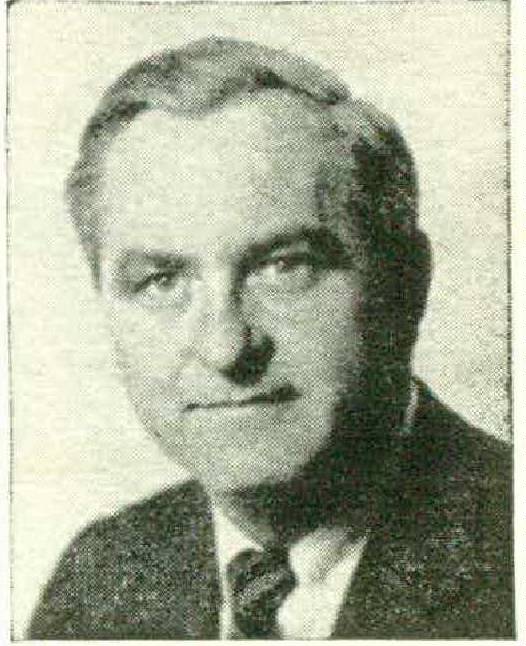
It is difficult to get the American electorate worked up over the question of economic growth. In the Great Depression many of the middle class were thrown out of work and had to worry about the state of the economy; today these people are relatively affluent, and though our slow rate of growth may interest them as a theoretical problem, it hardly strikes them as personally urgent. Those who are now out of jobs, on the other hand, are the chronically unemployed; and the very poor in America, as is well known, tend to be politically apathetic. Meanwhile, business scents a boom, and acting on the principle that as long as profits are in the offing it is better to let sleeping dogs lie, it will not begin to be anxious until the next big recession.
Though we may be complacent, our friends abroad are very much worried that the chief defender of the free world is cantering along on a one-horse-shay economy. Twenty years ago, GUNNAR MYRDAL’SAn American Dilemma analyzed the Negro problem as a crisis for the American conscience, and had he been listened to, racial tensions might not now be so violent. In CHALLENGE TO AFFLUENCE (Pantheon, $3.95) this friendly but candid critic has turned his attention to the American economy with equally somber warnings, which, let us hope, will not go unheeded this time.
Mr. Myrdal is a level-headed Swede not at all given to sensational statements, and he tells us quite bluntly that our sluggish economy is “the most important problem in the world today.” Since World War II the Western nations (except Britain), the Soviet Union, and Japan have grown much more rapidly than the United States. Either we have been without the knowledge of how to induce economic progress or we have lacked the determination to apply that knowledge. If this sluggishness persists, American power and influence will inevitably decline; and the values of Western civilization, which we defend and Mr. Myrdal shares, will have little attraction for a world where the few affluent nations, after all, are only islands in a vast ocean of poverty and unrest.
A stagnant economy, bad enough in itself, is worse when it drags on despite enormous pump-priming through defense expenditures. It is worst of all when accompanied by a rising unemployment that has now become “structural" — woven into the system itself—and that threatens to produce a “sub-class" of the permanently unemployable. Harry M. Caudill’s recent Night Comes to the Cumberlands and Michael Harrington’s The Other America have shown us the tragic human waste in the depressed areas. Mr. Myrdal completes the picture by pointing out that this waste is also an inefficient and unintelligent drag on the whole economy, since the very poor are not productive and in turn provide no market to spur production in the rest of the country.
The trouble is that we are the victims of economic clichés. When Mr. Myrdal suggests that we can get out of our rut only by more and better planning, we are likely to scream “socialism!" But the old tag does not work so well when we consider that the European countries which are now doing well economically are at once more “capitalistic" and more “socialistic" than we are. Long-range planning of the community’s goals and needs could free private enterprise from the tedious regulations devised by government on the spur of the moment. We are the largest industrial nation, and we are supposed to be in love with change; yet in our economic thinking we cling to the archaic. The gap between the oratory of politicians and the hard knowledge of the economists has never been wider, or more dangerous. than at present. Mr. Myrdal bluntly tells us that the fetish of a balanced budget is now taken seriously only by Americans; any American politician would be committing political suicide if he were to advance such an idea.
Mr. Myrdal’s book, written with compelling clarity and simplicity, should be made required reading for all members of Congress.
NOVELISTS TESTING . . . TESTING
WRIGHT MORRIS is a novelist whose work is difficult to fit into any formula. What he has attempted and what he has achieved have varied from novel to novel; the one unvarying mark throughout has been his uncommon talent, however frustrating and questionable the ends toward which if is sometimes turned. CAUSE FOR WONDER (Atheneum, $54.50) is in this same patternless pattern; immensely satisfying at times, frustrating and teasing at others, it leaves the impression that the author has not quite resolved in his own mind the curious mixture of genres he has tossed together. The story is a symbolic parable, a blend of romance and realism, written in a down-to-earth, side-of-the-mouth language that suggests The Castle of Otranto as it might be written by John O’Hara.
Warren Howe is a Midwesterner, yet something of a wanderer and a man from nowhere, who has drifted into scriptwriting in Hollywood. Thirty years before, he had been a guest at the ancient castle of Riva in Austria. When he hears of the death of the castle’s owner, Etienne Dulac, Warren sets out for the funeral, bringing with him assorted friends who represent his present life or have shared his past at Riva. An American girl, Kitty Brownell, had also been a guest at Riva, and Warren had loved her without winning her; she turns up now as Katherine Morley, proper and middle-class, toting a grandson, who as the youngest generation represents another stratum of time. The whole novel is meant as an experiment with time, in which the past is interwoven so tightly with the present that the characters themselves get lost in a timeless labyrinth.
The concoctcr of the experiment is Dulac himself. Incredibly old but far from dead, he has sent out notices of his funeral in order to enjoy the experience of living on beyond his own death. At die end all turns into nightmare; and Warren, half-dreaming and half-awake, has a vision of old Dulac alternately dying and being reborn, like an eternal archetype.
Despite some wonderfully pungent and crisp writing, Mr. Morris does not quite bring off all this confusing and bizarre business, and Warren’s final words on the dubious reality of Castle Riva could be taken as a judgment on the novel itself: “It’s this goddam place. When you get away from here you won’t believe a word of it.”
DAVID STACTON is a historical novelist of remarkable originality and amazing range. From feudal Japan, ancient Egypt, and Renaissance Italy, he now turns with equal facility to the late eighteenth century in SIR WILLIAM (Putnam, $5.95), a brilliant re-creation of the famous love affair of Nelson and Lady Hamilton. Mr. Stacton’s prose is as polished and sophisticated as always, but in the present case its command of epigram and irony makes it an instrument perfectly attuned to an age that was characterized by elegance of style and casualness of manners.
History is stranger than fiction. The triangle of Nelson and Lord and Lady Hamilton might not seem believable if offered as a purely fictional concoction. Yet it is fact, after all; and Mr. Stacton, following this basis, can feel free to conjure up a fictional detail whenever he chooses. Curiously enough, it is Sir William Hamilton who emerges in the end as the central character, looming larger than the two lovers. A detached observer of life rather than a brusque man of action like Nelson. Lord Hamilton had seen love develop between the pair. But he could not intercede, he could only observe. Besides, he had married Emma when she was a very young girl, and he was used to regarding her antics with the amused curiosity one shows toward children. When the final barrier fell, Sir William was pained, but he was able to console himself with eighteenth-century irony: if he were to be cuckolded, it was better that it be by a friend.
And friends they all remained. “We are one heart in three bodies,” Nelson wrote to his own wife in explanation of the curious ménage. “I suppose they share it around,” Captain Hardy, Nelson’s lieutenant, commented, “when they feel the need of one. I wonder who has it now.” He might well ask, for as the years went by and Emma became fat and foolish, the two men found themselves drawing closer and often preferred to leave her while they went off together to fish.
When the moon’s at the full and the sultry August thunderclouds hang over the Delta, nerves snap, people go haywire, and ERSKINE CALDWELL is right there to make what he can of it in THE LAST NIGHT OF SUMMER (Farrar, Straus, $3.95).
Roma Henderson, a twenty-fouryear-old secretary, is in love with her forty-eight-year-old boss, Brooks Ingraham. She has kept her love from him; but one hot evening, as Brooks prepares to leave the office, the sirocco (or whatever they call it on the Delta) melts her reserve, and the love that dare not speak its name turns into a propositioning of the boss. Brooks is shocked, troubled, tempted — and he succumbs; he promises to visit Roma in her place that night. He never gets there. Wandering around town, wrestling with his conscience, he encounters some extremely sensational adventures. It is all pretty stock melodrama, and Mr. Caldwell’s prose thumps along like a man walking on two wooden legs. Nevertheless, he builds considerable suspense through the dark hours of the one somber night, only to spoil it by too violent and abrupt an ending, as if, grown tired of his puppets, he impatiently swept them to the floor.
William Faulkner once advised his brother that a writer who finds inspiration lagging can sometimes get by on ready-made forms like the crime or mystery story. Mr. Caldwell, who has feared for years that his creative juice has gone dry, may have been testing Faulkner’s advice. Unfortunately, even the helpful props of crime, sex, and suspense cannot save this potboiler.
LITERARY LIVES
THE LETTERS OF F. SCOTT FITZGERALD, edited by Andrew Turnbull (Scribner’s, $10.00), show that whatever their author’s faults, he was a warm and chivalrous man, a loyal friend, quick to admire, willing to put himself out for others, and even — as in his relationship with Hemingway — patient at bearing a friend’s moody tactlessness. His tragedy, as it comes through in the letters, lay neither in alcoholism nor in his wife’s mental illness, but in his vulnerability and lack of self-protectiveness. He gave himself so generously to the passing occasion, to his friends, to his work, that he used up all his reserves.
Fitzgerald poured a great deal of himself into his letters, but Mr. Turnbull is exaggerating when he says that they contain some of his “finest prose.” Fitzgerald’s best prose was always the product of meticulous craftsmanship, and the letters are too unbuttoned and casual — that, indeed, is their charm — to have great literary claims made for them. Yet they do have much wit, many striking phrases, and always the fine clear tone of a man speaking without pretension.
He is most moving when he is writing to his daughter. Here the moralist and the affectionate father speaks, alternately warning and coaxing his child to avoid the mistakes he had made in his own life. In his correspondence with Maxwell Perkins, his editor at Scribner’s, Fitzgerald shows himself a disciplined student of his craft, who might, as Perkins observed, have made a good editor himself. From his intellectual mentor, Edmund Wilson, Fitzgerald accepted criticisms that could have ended friendship in a less intelligent and more touchy author. The relationship with Hemingway remains clouded, although, as we learn from a recent memoir by Morley Callaghan, Hemingway was the more difficult person to get along with. Certainly Fitzgerald went more than halfway to meet Hemingway, and he was even magnanimous enough to admire a story that included a gratuitous and tasteless reference to himself by name.
Unlike Fitzgerald, William Faulkner built around himself a self-protective wall that made him a difficult and taciturn man to many. Behind this barrier, however, within the small circle of his family and few close friends, he was, according to JOHN FAULKNER in MY BROTHER BILL (Trident Press, $4.95), a generous and warmhearted person. Faulkner still remains a strange and mysterious personality, but he is no longer the remote figure he had seemed. John Faulkner, though overshadowed by his older brother, was no mean author in his own right, as readers of his fine Depression novel, Dollar Cotton, may remember; and in the quietest of styles he tells about the boyhood of the Faulkner brothers, about the people and the life around Oxford, Mississippi, that make up the continuing background of the whole Faulknerian saga.
John punctures the legend, propagated by his brother, that William was really just a dirt farmer and not a literary man, and that he had no reading. True, William was not one for formal schooling — he never finished high school, and he had only one year at the University of Mississippi — but as a youth he used to pile books in an old car, drive off into the countryside, and plow through most of the classics and the moderns.
John also debunks the legend of the gargantuan quantity of his brother’s drinking. William did like a drink, and there were occasions when he drank too heavily; but writing exacted a great deal from him, and he knew he could not do his best work while drinking. Every so often he had to escape from the heavy demands of the world by faking a drinking spell.
The Faulkner children (three boys) were brought up by a Negro mammy, Callie Barr, for whom they all had the most intense affection. After her death William read her funeral service from his own parlor and erected a monument in the Negro cemetery with the inscription “From her white children.” She is the original of Dilsey in the novels, and Faulkner must have learned an incalculable amount from her, since he is one of the very few white writers who was able to write as though from the very heart of the Negro. When in his last years Faulkner spoke out against segregation, he received threatening anonymous telephone calls. His neighbors, who never bothered to read his major novels, were quick to spot any article of his on the Negro question.
This “Affectionate Reminiscence,” as brother John calls it, is a slight and modest book, yet it is rooted so deep in the soil from which the Faulkner clan sprang that it is worth tomes of Faulkner criticism in helping us to understand the strange creator of Yoknapatawpha County.
QUARRELING DONS
The British, who are not a pugnacious race, except in their love of debate, are likely to have their worst brawls in the letters columns of the Times.VED MEHTA, who was born in India and educated at Oxford, has lived long enough among the British to acquire their taste for verbal jousts. In FEY AND THE FLY BOTTLE: ENCOUNTERS WITH BRITISH INTELLECTUALS (Atlantic — Little, Brown, $4.95) he eavesdrops shamelessly, but delightfully, upon some squabbles now going on among philosophers and historians in England. His touch is light and his irony omnipresent, but he also preserves a sense of proportion and does not try to make the professors look ridiculous. In fact, he takes their problems very seriously, and beneath the gaiety of its surface, Mr. Mehta’s book is an illuminating report on two sectors of British intellectual life today.
Of the two squabbles, the one among the philosophers makes the daffier but livelier reading. The controversy was touched off when that doughty old warrior, Bertrand Russell, accused the present generation of Oxford philosophers of dealing only with verbal trivialities. The dons promptly took to the warpath and began to bombard one another in letters to the Times. Mr. Mehta decided to get to the bottom of the whole business, and like a private sleuth he went about interviewing the leading philosophers in Britain. Is philosophy about words or about things? That was the simple question that started the fracas; and though the philosophers hardly settle the question, they produce some pretty good talk in stalking it. Mr. Mehta, who listened carefully and reported accurately, has an unusual gift for making difficult ideas comprehensible, and he has done a remarkable job in turning the dialogue of philosophers into human drama.
THE SUN KING
Louis XVI ruled from 1643 to 1715, and during most of that reign he was the most powerful figure in Europe, envied and feared by other sovereigns; yet the court he maintained at Versailles resembled a children’s playpen, with courtiers jostling for the toys of preference, playing childishly irresponsible jokes on one another, and haunted, above all, by the child’s fear of boredom. One frightened and observant little noble, the DUC DE SAINT-SIMON, managed to hang on to his precarious perch within the court for years, while in secret he was writing an almost interminable record of its follies and perversions, THE AGE OF MAGNIFICENCE (Putnam, $5.95), splendidly edited and translated by Sache de Gramont, is a judicious selection from the 9857 pages of the Duc’s Memoirs. Though Saint-Simon’s more ardent fans, like Nancy Mitford, insist he must be taken whole or not at all, readers with less time at their disposal will be delighted that Mr. de Gramont has made accessible what is surely one of the most amazing works in the world’s literature.
Versailles has become for us the very symbol of elegance and refinement. Such, indeed, it was, in its own fashion. On his deathbed Louis XIV waved away his confessor in order to prescribe the length of the coats to be worn at his funeral. Yet this elegant surface had a great deal to conceal. The court was the product of inbreeding and was marked by very poor health. The men died young of syphilis or of apoplexy from overeating. Most of them were dwarfs by modern standards (Louis XIV was five feet four, yet towered over some of them). Saint-Simon, whose pen dripped vitriol, was delighted to observe that the Due de Bourgogne had a spine shaped like a pretzel, and to say of one lady, “The upper part of her face was beautiful, but her nose was crooked and she had a goiter.” And the morals of the court matched its physical putrescence. Even those warriors, the great marshals of France, were often effeminate and homosexual.
But despite their corruption, these figures are intensely and complexly human; and Saint-Simon, depicting them in the round, is one of the great portraitists of literature. He wrote without any attempt at literary polish, so that his language has the vigor and pith of common speech, a quality that Mr. de Gramont has preserved very well in translation. His telling phrases are not carefully hoarded witticisms but come spontaneously in the natural course of his narrative. In one sentence he totes up the life of the Grand Monarch: “The King had been free with the ladies most of his life, and had devoted the rest of it to God, often at the expense of everyone else.”
Apart from his powers of observation. Saint-Simon did not possess a profound mind. He was without any political ideas, though, ironically enough, during the French Revolution he was mistakenly read as a prophetic radical. In fact, he attacked the court only because he wanted a return to the more reactionary feudal system in which the dukes had greater power. Like Boswell, with whom he shared the instincts of the voyeur, he must have appeared an uninteresting and mediocre man. But like Boswell, too, because he set down what he saw and heard, for posterity he towers over the men who bullied him.