Blame Me on History
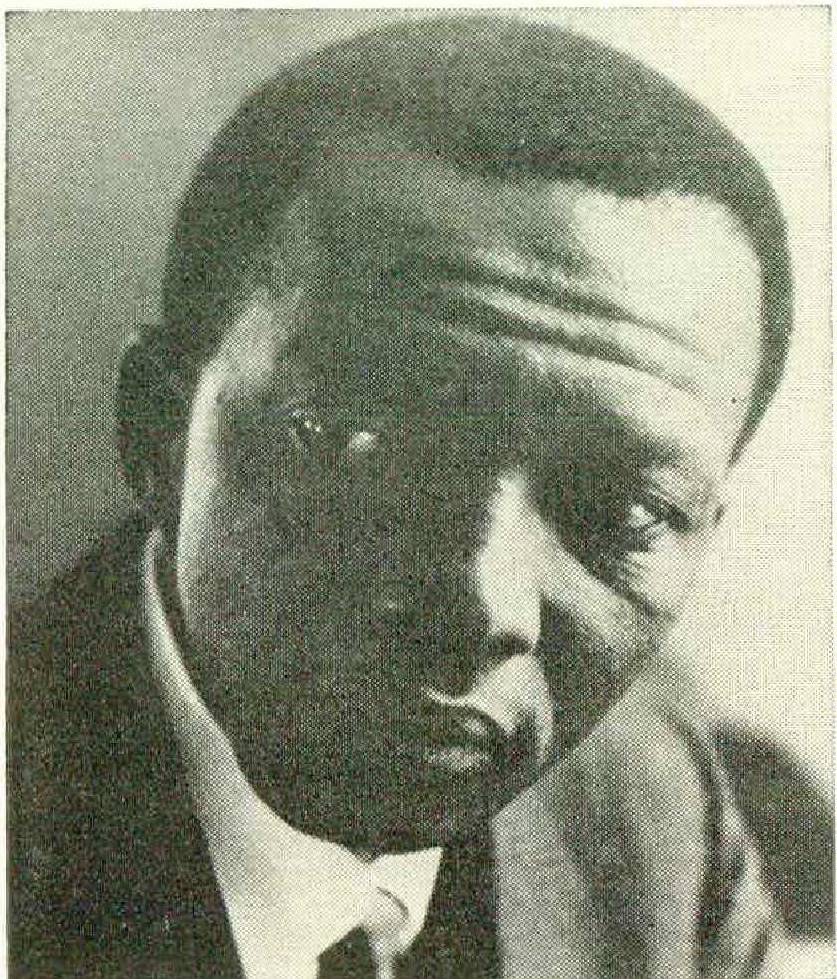
Born in Johannesburg, which he left in 1958, BLOKE MODISANEwas a reporter and feature writer, as well as theater and music critic, for DRUM Publications, a white-owned company sympathetic to Africans. As an actor he had a part, in the play NO GOOD FRIDAYand the secretly made film COME BACK AFRICA.In England he has appeared in a number of stage and television productions, and in the United States he has lectured on African music and literature. The article which follows has been drawn from his bitter, moving autobiography, which will be published shortly by Dutton.

SOMETHING in me died, a piece of me died, with the dying of Sophiatown in the winter of 1958. It was Monday morning, the first working day away from work; exactly seven days before I had resigned my job as a journalist on Golden City Post, the Johannesburg weekly tabloid for the locations. I was a free man, but the salt of the bitterness was still in my mouth; the quarrel with Hank Margolies, the assistant editor, the whiteman-boss confrontation, the letter of resignation — these things became interposed with the horror of the destruction of Sophiatown. I was a stranger walking the streets of blitzed Sophiatown, and although the Western Areas removal scheme had been a reality dating back some two years, I had not become fully conscious of it.
In the name of slum clearance they had brought the bulldozers and gored into her body, and for a brief moment, as I looked down Good Street, Sophiatown was like one of its own many victims a man gored by the knives of Sophiatown.
The pride of having grown up with Sophiatown shriveled inside me. The house in which I had been born was now ground into the dust, and it seemed especially appropriate that I should be standing there, as if to witness the closing of the cycle of my life in its destruction. My friends were leaving the country: Ezekiel Mphahlele had taken a job in Nigeria, the Millners were gone to Ireland, Arthur Maimane was in Ghana, and soon Elly and Lionel Rogosin and the crew of Come Back Africa, the documentary film, would be leaving.
Walking down Good Street and up Gerty Street was like walking through a ghost town of deserted houses and demolished homes, of faded dreams and broken lives, surrounded by rousing memories, some exciting, others terrifying. We cherished Sophiatown because it brought together such a great concentration of people; we did not live in it, we were Sophiatown. It was a complex paradox which attracted opposites: the ring of joy, the sound of laughter, was interposed with the growl and the smell of insult; we sang our sad-happy songs, were carried away by our erotic dances, we whistled and shouted, got drunk and killed each other.
I stopped opposite 21 Gerty Street, and there was only the debris of the house in which Emily lived; the memory of happy nights spent there rushed back to tease and irritate me, and it was then that the loneliness penetrated. The people I had known, and loved, were gone: the relative, the friend, the childhood sweetheart, last year’s beauty queen, the nice-time girls, the shebeen queens, the beggars, the thieves, the frauds, the gangsters, the killers; they were all gone, and with them had gone the only world I knew. The music had gone, the color, the violence; only the desolation remained.
Whatever else Sophiatown was, it was home; we made the desert bloom, made alterations, converted half-verandas into kitchens, decorated the houses, and filled them with music. We were house-proud. We took the ugliness of life in a slum and wove a kind of beauty; we established bonds of human relationships which set a pattern of communal living far richer and more satisfying, materially and spiritually, than any model housing could substitute. The dying of a slum is a community tragedy, anywhere.
It was especially true of Sophiatown, the most cosmopolitan of South Africa’s black social igloos and perhaps the most perfect experiment in nonracial community living; there were, of course, the inevitable racial tensions, which did not necessarily flare up into color-caste explosions. Africans, Coloureds (mixed-bloods), Indians, and Chinese lived a raceless existence. It is true that as racial groups we were placed socially and economically on different levels of privilege; white was the ultimate standard, and the races were situated in approximation to this standard. The Chinese were nearest to white — they were allowed into white cinemas and theaters and some restaurants; the Coloureds, nearer white; and the Indians, near white. Social mixing was difficult, but community spirit was high.
As children, we found mixing easier, and together we had our normal — by South African standards — racial skirmishes with the white boys from the adjoining working-class white area. There was a mud pool in the buffer strip which divided Sophiatown from Newlands, and as a lad I joined in the fights for the right to swim in the mud pool. Whichever group got there first imposed its right to use and continue using the pool; we threw stones at each other. The white boys usually dominated the contest in the end, invariably resorting to pellet guns. At the beginning, it was for the right to use the pool that we fought, but this rationalization soon lost its validity — it was for the sake of fighting that we went to the pool.
“WALKING up Toby Street, I passed the beautiful house of the Mogemi family; they had not yet sold their property to the Resettlement Board, but everything else around it was leveled with the dust. The Lutheran Mission Church, Berlin Mission, stood erect among the ruins, and a hundred yards up the road was the palatial home of Dr. A. B. Xuma, with two garages. I turned south at Edward Road and stopped at Bertha Street, and the sight to the east was deadening. My eyes spread over a desert of debris and desolation. Suddenly, I needed my father, to appeal for his protection, to say to him: Do you see, my father, do you see what they have done to our Sophiatown? But he was only a patch of earth with a number at the Croesus cemetery; he was a number I had burned into my mind the day that we buried him.
It was on the afternoon of February 16, 1938, that he died, and I was at school, unable to help him that moment when he needed it desperately; he had lived alone in himself and died so, alone and lonely. The children were at school, and my mother had gone to visit her relations in Alexandra township. It was shortly after the lunch break when I was summoned to the principal’s office. Mr. G. Nakeni, headmaster of the Dutch Reformed Mission School, Meyer Street, Sophiatown, was waiting for me as I walked out of the classroom. I followed him to the fence next to the street.
“Was your father sick?” Mr. Nakeni said.
“No, sir,” I said, thinking it was a rather pointless question, not worth interrupting the history lesson.
“You better go home.”
“Now, sir?”
“Yes.”
I returned to the classroom, reported to the teacher, and gathered my books; I walked home leisurely, playing with a tennis ball along the way. There was a crowd gathered outside the corrugated iron which fenced in our yard. I slithered through the crowd, and standing next to the gate were two African police constables, and between them was a manacled man. I walked through the gate, and as soon as Dorothea, a neighbor, saw me, she started crying; she told it to me as simply and as gently as she could, leading me to the spot.
She informed me, between sobs and sniffles, that the battered and grotesquely ballooned nightmare, hardly recognizable as a human being, was my father; the swollen mass of broken flesh and blood which was his face had no definition; there were no eyes or mouth, nose, only a motionless ball, and the only sign of life was the heaving chest. Recognition was impossible; I felt only revulsion and pity for the faceless man. He could have been anybody, and the horror would have been the same. I shuddered at the brutality of the assault. I looked back at the gate, at the man who could have had the heart to do such a thing: he looked like other people; there was nothing visible which could set him apart from others; and I did not feel anything toward him.
The story was that there had been a quarrel with this man, that both parties had stormed away from each other in anger, and later my father went into the extension of our yard in the hope that both of them had cooled down, but the man surprised him with a blow on the face which knocked him down; the man then proceeded to pound him with a brick until my lather lost consciousness, and never recovered.
I returned to the blood-splashed spot where lay my father and gazed at the distention, hoping to find something familiar in that mass, anything to bring the man closer to me, some mark of recognition, some sign of identification; and I could not cry. I wanted to break out and collapse at his side, but suddenly I could not remember his face, and there was nothing to remind me; all through the interminable wait for the ambulance I did not, could not bring myself to cry; I have never cried since that day when I was fourteen.
VIOLENCE exists in our day-to-day group relationships, the expression of the public conscience; it is contained in the law, the instrument of maintaining order. Our aggression is totally integrated, completely multiracial. The African directs his aggression, perhaps more viciously, against his own group, particularly against the more successful Africans, who are resented for being successful. The public image of South Africa is white, and white is the standard of civilization; what is not white is black, and black is the badge of ignorance and savagery. The South African searching for acceptance surrounds himself with the symbols and the values of white civilization. Thus, the successful African is immediately identified with white.
Violence and death walk abroad in Sophiatown, striking out in revenge or for thrills or caprice; I lived in my room trembling with fear, wondering when it would be my turn, sweating away the minutes while somebody was screaming for help, shouting against the violence which was claiming for death another victim. The screams would mount to a final resounding peal; then, nothing but the calm of death.
During those frequent minutes, trembling up a heavy sweat on my bed, I lived my life on my nervous system, dreading and yet hoping and waiting for that final last-ditch scream when death would take over. Is it a friend out there whose blood is screaming forth through the multiple-stab wounds? A relative, perhaps? Most definitely a stranger; the world is filled with people, it is like the beach — who is going to count the pebbles? But pebbles do not bleed, do not feel, do not think, they are not closely dependent one upon the other, like man; and there in my room I knew that after the facts had been examined, the motives analyzed, the rationalizations equated, the truth would confront me with a sense of shame; I would admit that no man, no relative or friend or stranger, deserves the death of a beast. It was Caesar’s boast that “The skies are painted with unnumb’red sparks, They are all fire, and every one doth shine”; If I allowed one spark, no matter how distant and insignificant, to be extinguished, then by this my fire too would forfeit the right to flicker, and be snuffed out.
The rationalizations, the comforts of unreason, prevailed momentarily upon me, but death would not let me forget; its avatars, the bodies, were everywhere, waiting for the Black Maria, on show as an emasculating commentary to my cowardice. I crawled out of my room, unable to cope with the uncertainty; it was imperative to know the identity of the body. There were others — those, like myself, who felt a personal guilt, and the uncommitted, curious spectators, crowding around the body, mumbling questions to each other.
Is he still alive?
Who is he?
We shuffled forward, each elbowing into a grandstand bird’s-eye view of the still face under the flickering glow of a match flame; and unashamedly, each to each other, we sighed with relief: I don’t, do you know him? Then the man we had dehumanized with the label “stranger” was transformed into someone very dear, very close, usually to an old woman and two girls, perhaps a mother, a wife, or sister; it was painful watching them falling on the body and raising a cry so piteous and despairing that I could have died in sympathy. Then I recognized the pain, heard the same wailing, remembered another time, another situation, and I felt very close to the bereaved; they were my relations, we were joined by the pain of death. At that point of identification I walked away. About four hours later I heard the voices of indignation; the Black Maria had arrived.
“If it was a white person the Black Maria would have been here in twenty minutes,” a voice said.
“It‘s like the ambulance,” another said. “A man can die waiting for it. They don’t care.”
Every time it happened I was drenched with sweat in my room, vowing never to let it happen again, promising the dead that violence would not claim another man without my responding to the call for help. It must never happen again, it need not happen if I, and others, were vigilant and prevented men from injuring one another. I had cowered in my room with the cushion over my head, shutting out the summons for help, suffocating the sense of responsibility; if I was brave enough to watch, I stood aloof with those of my inclining while thugs battered and mutilated a man to death — looking on in horror and immobilized with fear.
And always there was the emasculating silence which in itself was for the gangsters their best insurance against arrest; they knew that none of us would have, as they say, the pluck to give testimony against them, and our silence sprang from a foundation of fear, the cornerstone of the gangster rule of Sophiatown. We were all aware of the danger of sudden heroics, of being produced as a witness against them, for this was stupid and impractical, since the law was lenient with them; so we made Sophiatown into a vacuum of necessary silence, embracing the wisdom of the three monkeys. With our silence, the indifference of the law, the strain of being black in South Africa, we produced men and boys with long records of murder and names picked up from the gallery of Hollywood films — Boston Blackie, Durango Kid, Lefty Stiles, Gunner Martin.
I learned there in Sophiatown that one looked at the killing and never at the faces of the killers; one also knew that the law is white and justice casual, that it could not protect us against the knives of Sophiatown, so we tolerated the murders while the law encouraged them with its indifference. We laughed and made ribald comments when police commissioners complained publicly about the lack of cooperation with the police and made accusations that the Natives do not recognize their responsibility as citizens, that we do not fly to the law’s standard.
The law is white, its legislators are white, its executive authority is white, and yet we were being criticized for not flying to the standard of the law; we, who were black and therefore denied the responsibility of formulating this law or being ruled by consent. This was probably as amusing as the American and the British democratic principle that all men are born equal, except for niggers and slaves - they are property. The pronouncements were larded with the usual assurances of police protection, but the inflections were obvious, the emphasis insinuating crimes directed against whites and their property. In Sophiatown we hooted at these appeals to patriotism and public duty; they contained conflicts of loyalty and a pragmatic contradiction. The standard function of law, the duty of the police, is a concern with the maintenance of law and order; but discrimination is contained in the law and the police are the instruments of black oppression, and if I had to choose between the tsotsis and the police, my vote would be cast for the tsotsis. This is the morality of black South Africa.
I HAD hoped that after the first ten murders I would be able to live with death, that the screams in the night would become less personal, the intensity would burn itself out, but there was to be no compact with death. I began to anticipate the screams, to suffer in advance, to feel this pain of death gathering in my chest like a biliousness which I could not break simply by belching or vomiting. I was choking with it. There was little comfort in rushing forward when the man no longer needed me, and the rationalizations confronted me with the view of the real problem: my life is valueless in the valley of the dead; only in the living can there be life; I am involved in the death of the living.
I was listening to noisy jazz on the record player when one of those interminable screams rose over the noise; it seemed to come from a few feet away, from inside the yard. I rushed out of the room with a fighting stick in my hand, but it was out in the street that the woman was screaming the usual summons; I was not feeling particularly brave, I did not want to be savaged with knives, I did not want to die, I was afraid of being afraid. I walked out into the street, up to the man who was slapping the girl. The rescue attempt was easier than I could have hoped for; the would-be rapist was a boyhood playmate, and persuading him, by the continence of our friendship, to employ gentler means of persuasion was peacefully successful.
“Go home, my sister,” I said, “and don’t walk alone.”
Pieters and I were exchanging reminiscences, joking about the street fights we had had, the territorial protection we had paid when we passed through areas controlled by gangs on our way to Balanski’s cinema, the bedbug palace, which fed us on low-budget cowboy films and other tuppenny horribles we referred to as skiet en donner, the soundand-fury thrillers from Republic Pictures. There was Buck Jones and his horse, Silver; the evil genius from the serial The Drums of Fu Manchu. We were recalling the titles of the chapters: “Pendulum of Doom,” “Death Dials a Number,” when suddenly I noticed the girl I had rescued advancing toward us with an impi of six armed men.
“It’s them!”
There was no time to hold an indaba, the impi was in a fighting mood. Pieters and I broke off in different directions; we were back in the days of the gang wars, running in the face of odds, because he who runs from a fight lives to fight another day. I was Buck Jones racing Silver across the plains, pursued by the crooks, moving rapidly, thinking fast; I was running up Gold Street toward the dark passage behind the Diggers Hall; I knew every turning in that passage. I lost them. I stopped for a while and listened, then I doubled back over the fence and into the yard of the hall, keeping in the shadows and listening, and back in Gold Street I looked down both sides of the street before emerging from the shadows. I had stuffed my hat inside my shirt and was walking casually down the street when suddenly they pounced upon me; they had apparently anticipated me, and were waiting.
I was struck on the head with a stick, the blow staggering me onto the street; blows descended on my body from all sides, most of them thudding on the head, which I covered with my hands, my body crouching low. Throughout the assault I kept one single thought repeating in my head, a determination to be on my feet; the man who falls during an assault tumbles into his grave, because in Sophiatown a felled man gets kicked in the face and heavy boots crushed on the head.
It was my turn at the guillotine; Sophiatown was revenging herself on me, striking out against the overcrowding, the congestion of hate, the prejudice, the starvation, the frustrating life in a ghetto. They stood back, the people of Sophiatown, and allowed violence to satiate itself; I did not scream, I resigned myself to my fate, the fate which was linking my destiny with that of my father. The beating continued: they struck at my head through the shielding hands; my feet were beginning to weaken, they could not support my body; I was sinking, and I surrendered myself to my father, committed my life into his hands. I was not afraid; there was a throbbing in my head, but I had gone past the point of feeling pain, I was no longer struggling.
“Hamba nja,” voices shouted. “Go, dog.”
Then another voice began screaming in my head: Run, run! My body was wilting on my legs, but I willed it into motion; I was going home. I looped forward, charging on uncoordinated legs, diving forward into the gravel, my face scratching on the ground, but I would not stay down; I hauled myself up, waltzed forward, and dived down onto my face, rising and falling my way home, where I collapsed into my mother’s room, exhausted from the beating, with a headache which lasted a week.
“You must not do it again,” Mother said. “I do not want another death in the house. Is he too, God, to die like his father?”
I could not explain it to my mother and to friends, perhaps not even to myself, but it was the only time when I had not been afraid. The irony of it all is that, as it turned out, it was Sir Galahad, not the dragon, who was slain.
COLOR is fundamental in South African thinking, is the dominant factor in the making of our mores; but it goes even deeper than is normally realized. Perhaps Nadine Gordimer came closest to understanding this when she wrote that color is far more than a question of prejudice or discrimination or conflict of loyalties — we have built a morality on it. We have even gone deeper; we have built our own sense of sin and our own form of tragedy. We have added hazards of our own to man’s fate, and to save his soul he must wrestle not only with the usual lust, greed, and pride, but also with a set of demons marked: Made in South Africa.
It is impossible to be South African without some shade of race attitudes, conveniently known as race prejudice; and the favorite question liberal South Africans love to answer is: Are you race-prejudiced? Whereupon the answer is: I have no race prejudice at all. At this point we become noble and conforming and purged. Against the background of South Africa this question and answer are a bigoted oversimplification and almost as loaded as: Would you like your daughter to marry a Native? The question which never is asked is: How race-prejudiced are you?
I am not suggesting there was no prejudice prior to the South Africa of 1948, but it was around then that the white man in South Africa decided to recognize the portentous presence of the black peril threatening his existence as a white man: it was at that moment in history that he decided to rally around the flag of apartheid in defense of Christian principles, democratic ideals, and Western civilization; the black peril was made to become synonymous with Communist infiltration.
While the freedom-loving nations of the world, including the government of South Africa, deliberated in New York to entrench the rights of man, to reaffirm for all time the dignity of man, and to banish from the face of the earth the Hiroshima of wars, one single word was invading the imagination of South Africa. While the free-world nations were smacking their lips over the eloquence of the Declaration of Human Rights, one word — with no specific dictionary meaning — changed the South African scene overnight and won the general election for the Nationalist Party; one word charged an emotional intensity which suited the general temper of white South Africa; a one-word ideology inflated the political life of Dr. Daniel François Malan and punctured that of General Jan Christian Smuts and unleashed the race monster of our age.
Apartheid, the one-word onslaught on the human dignity which the men in New York were so lyrical over, became a parliamentary joke which the opposition members of the United Party made undergraduate witticisms about, while it entrenched white supremacy and relegated the Native to his place; and when this was done the nonwhite races were dehumanized and defaced. The pigeonhole philosophy of apartheid manifested itself when the segregation notices went up everywhere, particularly in Johannesburg — “Europeans Only” and “Non-European”; but I noticed a peculiar, if not subtle omission of the “only” on the Non-European signs.
I was soon to find myself being forced, by the letter of the law, to use separate entrances into the post offices, banks, railway stations, public buildings; it became a criminal offense for me to use the amenities set aside for the whites, who were either indifferent to or satisfied with this arrangement. There was no massive white indignation at this in sult to the dignity of the black races. I found myself unable to use the Eloff Street entrance into Park Station, a habit I had cultivated over the years. I became resentful: it was a pleasing-to-the-eye entrance; there were flower beds, a water fountain, and other details I have not seen for so long that I have forgotten them, and, of course, the NonEuropean entrance, then still under construction, was dismal and bleak; and because I have been educated into an acceptance of the primacy of law and order. I accommodated, rather than defied, this effrontery. Everywhere I turned there were these prohibitions taunting me, defying my manhood with their arrogance; their challenge was driving me out of my mind, but I am only a man, afraid and apprehensive, perhaps even a coward. I should have walked past the notices and registered, to myself, a protest against that which offended my manhood, but I was afraid to go to prison, rationalizing that it would have been a futile gesture. Dear, dear God.
It got to a point where I became insensitive to the oppression around me. I adjusted to the carrying of a pass because it was the law; I sweated in the black igloo that was Sophiatown because it was the law; I walked through the “Non-European” entrance, used the “Natives and Goods” lifts, jogged from foot to foot at the “Native Counter” in the banks and post offices, waited patiently for the green “For Coloured Persons” buses; I permitted my labor to be exploited, accepted the discrimination against my color, cowered under the will of the Immorality Act of 1957, which lays down that sexual acts between black and white are illegal, unchristian, and immoral, and was instead excited by the juvenile satisfaction of outsmarting the law by mating illegally, drinking behind locked doors. All these I did because I respected the law, because I was law-abiding. In the name of law and order I accommodated a variety of humiliations. I permitted sidewalk bullies to push me about, to poke their fingers into my nostrils, spitting insults into my eyes; and because I had arranged myself under the will of the law I permitted other men, armed by the letter of the law and under the protection of the law, to castrate me.
BECAUSE the Afrikaners were such unintelligent oppressors they disturbed the perfect tranquillity of the African middle class, mingled them with the commonality; the old guard, the masters of consultations and concessions and compromises, found themselves without a protector, commingled with the common dust. Then, out of expedience rather than loyalty, they looked for recognition in that instrument of rebellion, the African National Congress, and were disturbed to find that there had emerged, inside this body, a clique of nationalists under the leadership of Anton Lembede, Peter Mda, Walter Sisulu, Nelson Mandela, with support from dissensionists like Robert Sobukwe and P. K. Leballo, who were challenging the respectable politics of the old guard. These young rebels had formed themselves into the Youth League, with visions which spread beyond the borders of South Africa and a troublemaking slogan - Africa for Africans.
Theirs was the language of the young, one which I could understand: they called to Africans to depend on their own resources in the struggle for liberation, preaching nationalism, exulting in the dream of an African nation, supreme and independent; they advocated a strategy founded on militancy — boycott was to be the weapon of mass action and political education. They explained the realism of the African’s struggle, exploded the myth that white South Africa would voluntarily undergo a Christian change of heart, underlining the fact that Africans should not expect mercy in the hands of the whites in the event of a showdown.
I suddenly found myself responding to their call. We hailed them in Sophiatown as the Messiahs of African liberation, insinuating our own interpretations into the things they said; “Africa for Africans” came to mean the same thing as “Drive the whites into the sea.” For me they were the realists who instead of writing resolutions and memorandums loved freedom with a desperation which aimed to do something about it; these nationalists were prepared to employ their revolutionary right in the securement of that freedom. I had become fanatical over the question of asserting my dignity as a man, threw aside the mellowing influences of peaceful negotiations, which, in my opinion, divide effects; I resolved that revolution was the only way out of the dilemma. Moral protest had failed, constitutional means — which were a farce, since Africans did not have the vote — had failed, and white South Africa would not be swayed by persuasion; and since no action, however drastic, is not justified in the defense of freedom, I joined them. I shouted as loud as their shrillest chorus, “Africa for Africans. Drive the white man into the sea.” It was not so much a question of anti-whitism; I was merely restating the anxiety and the anger of Patrick Henry: “Sir, we have done everything that could be done to avert the storm which is now coming on. We have petitioned; we have remonstrated; we have supplicated; we have prostrated ourselves before the tyrannical hand of the Ministry of Parliament.” I felt that Africans had for far too long been at the business end of the sjambok; I wanted to feel the handle of the whip.
My young mind was unable to understand the apathy of the white South Africans; the intensification of oppressive legislation against the Africans, the brutality of the police, all the injustice committed in the name of apartheid did not seem to concern them or violate their sense of justice and right. I was staggered by the complacent ignorance about the condition of my life in the slum yards, which smelt of urine, by the fact that my human rights were disregarded by the body politic. Like the ostrich, the whites accepted with self-satisfied casualness the grotesque distortions the newspapers printed about the various riots. There had been a time when the whites had been incensed into silent indignation, and yet now, because they had been educated into an acceptance of the primacy of law and order, they did not — as their reflections in the Southern states of America did — mob themselves into a lynching pack; perhaps it was that they held a dependable reliance on the banditry of the law to approximate their murderous anger adequately.
The police had been on a routine raid for dagga, marijuana, in the Northern Transvaal when, according to newspaper reports, they were attacked by a fierce, prancing, savage horde of tribesmen, and in the skirmish live policemen — two white and three black — were barbarously butchered and mutilated. In the roundup of the murderers, twenty-two Africans were arrested, charged, tried before the court of the land, found guilty, and sentenced to pay the supreme penalty. About fortyeight hours before the execution, the energy of a Johannesburg newspaper presented documented evidence that one of the twenty-two men had not, in fact, been anywhere within fifty miles of the scene of the clash with the police. An injunction was granted and the innocent man released.
After the hearing of the case had gone through the preparatory stage in the Magistrate’s Court, the twenty-two were committed for trial in the High Court, where the case was heard and the men condemned; and yet, all through this process designed to protect the innocent from a possible error in law, an innocent man, together with the “guilty,” had been condemned to death by hanging. Admittedly, every country, at some moment of national anger, will be obsessed by a hanging mania, particularly after the murder of a national hero or the killing of a policeman, but even accepting this mass hysteria, a similar instance in another place would have raised doubts as to the individual guilt of the remaining twenty-one men. The newspaper was satisfied with its boy scout accomplishment and overlooked the enormity of the morality it had exposed. I thought it was reasonable to suppose that the innocence of that one man was sufficient to intrude an element of doubt; the law specifies that guilt must be proved beyond any possible shadow of a doubt.
But South Africa, black and white, wanted a hanging: the whites, from an enraged sense of vengeance, and the blacks, to dissociate themselves from the barbarism of the act. Twenty-one lives for five.
IT BECAME a mounting difficulty for me, even with all my own imperfections, to continue living in the same world with these people. We could not look at the same thing together. I found the world disjointed. Yet my arrogance could not persuade me into a state of accepting that I alone was right, even if everybody else was obviously wrong. My white friends who listened to me recount the events of the riots responded rather to the hurt I felt; I found none who realized the moral I was intending, but I understood that they could not do this without focusing upon themselves the guilt which they knew in the final analysis belonged in the conscience of every individual white man. A very respected friend confronted me with the moral principle of civilized man: the law is the law, which I understood to mean that all of us must arrange ourselves under the will of the law; and I remembered Jefferson’s stressing that “for that will to be rightful, it must be just.” I refuse to accept the concept of the infallibility of the law; the law is the will of man in his status as the majority, but man is fallible, and this fallibility is inherent in his efforts. When man seeks to evade responsibility for his actions, he invests the law with portentous infallibility.
“What about me, Bloke?” my friends have charged. “You can’t condemn whites without including me. I have no race prejudice, I don’t believe in it. Am I to be condemned with the Afrikaners? What about me?”
Precisely. What about you? Where were you when they crucified my Lord? It was once a gospel chant, but it has a relevance for every individual man in the locations who has stood aside while the tsotsis desecrated the body of a man, in the overdeveloped white unconsciousness of police hooliganism against the Africans. I may very well pose the question: Why should I personally be relegated to inferior positions? I do not believe in racial discrimination.
I prefer to believe that this dishonesty is intentional, perhaps a purposeful invention intended to mask the feeling of consciousness of guilt, but I refuse to accept my friends as being insensitive; they are white, they enjoy the rewards of being white, even though they may be resisting responsibility for it. Custom and the statute have reserved for them all the key positions in our economy and policy; they own the land, the industries, the finances, and the ways and means of earning a living. And even those of the ordinary working class are secured into the privileged class by a system of legislation and customary divides which confers upon them prestige and all the symbols of authority, by virtue of being white. It is unnecessary for me to look upon a white man and be in doubt over his status in our society. By his color I will know his class. It is dishonest to pretend otherwise; they are white and I am black.
As I have said, the public image of South Africa is white, and this single factor is dramatically illuminated by the white hoboes in the street; they have to reach a certain depth of depravity before they can confront an African for alms, because the African, in the eyes of the upper white caste, is lower than the lowest white man. I was accosted by a white hobo in Jeppe Street. She was as poor as a black, and, some would say, dirty black; she was carrying a thin, dirty, hungry child. I know the look of hunger too well.
“Please, my boy,” she said, devastated by humiliation. “Give a sixpence for coffee.”
This scene, her obvious sense of superiority, catalyzed a complicated system of responses. Since poverty is black, she and I were locked into a common humanity, something which she would not acknowledge. She was white, a member of the privileged class, and I was black; the traditional divides had to be maintained. For me it immediately became a crack in the myth of white supremacy; I was instead in a position of superiority, possessed by an authority complex invested upon me by her privation. The simple act of a human being appealing for assistance was exaggerated into a historic episode almost worthy of the complicated set of human relationships of our society. I gave her a shilling.
In this I was emphasizing my superiority over her, and yet it was interesting to note that even in her destitute moment she did not lose sight of the fact that I must be reminded that she was a member of the superior race group; this fact she impressed by addressing me as “boy.” She and I, in our moment of battle for superiority, were victims responding to race prejudice, which is notorious for employing a scapegoat psychology; we were working out our frustrations on each other, the less fortunate members of our society, thus saving ourselves the trouble of facing up to the real causes of our condition.
IT IS this single fact, this pattern of behavior, which is responsible for our ostrich mentality. This apathy is in all of us. It is most sophisticated in the professional liberals, who are afflicted with a morbid sense of vicarious suffering with the Africans. They are the ones who are most psychotic about being condemned together with the honest racialists, and when I reply that I am oppressed in spite of their best efforts, they are offended and I am made to feel uncharitable. The fact is, the individual white South African, because of his moral impotence, has become increasingly powerless against the forces of apartheid; and because of this initial apathy, I hold each one of the whites responsible for the South Africa we know today. They are the voters, they hold the power in their hands to have done something about it, but because apartheid held the promise of advantage for them, they have capitulated. I have looked among them for a John Brown, for one man to stand up and say: “It [the New Testament] teaches me, further, to remember, them that are in bonds as bound with me.”
There may be those who will accuse me of asking for too much; that is exactly what I am doing, asking for too much. I prefer to dispense with eloquent quibbles; the Africans are the most brutally oppressed of all the victims of apartheid, and I will single out from responsibility for this only those white South Africans who, because of an honest concern for right, will act on the simple fact that South Africa is an affront to man’s conscience. I have looked among them for those who will die on the cross proclaiming the dignity of the concept of principle. Jesus went into the valley of the lepers. John Brown, under the shadow of the hangman’s knot, made a point which I submit as a reference to those liberals with good intentions.
Now, if it is deemed necessary that I should forfeit my life for the furtherance of the ends of justice, and mingle my blood further with the blood of my children and with the blood of millions in this slave country whose rights are disregarded by wicked, cruel and unjust enactments, I say, let it be done.
Among these liberals are included personal friends I respect in their private capacity as individuals, but in the public image they are white; they live in white privilege; they have not rejected the fruits of being white: they live in “Europeans Only” suburbs, they eat in “Europeans Only” restaurants, recreate themselves in “Europeans Only” cinemas, theaters, bars, art galleries, and other public places. I have yet to listen to a white South African objecting to and rejecting the privileged condition of his lot; some have complained about my poverty, the slum conditions, but never about their inflated opulence.
I am instead insulted with multiracial tea parties where we wear our different racial masks and become synthetically polite to each other, in a kind of masquerade where Africans are being educated into an acceptance of their inferior position. The masks in the charade are promiscuously polite, courtesy becomes a plague, and gradually, by the rules of the game, the African is persuaded to understand that he must be humble if he is not to antagonize “the growing number of Europeans who are taking an interest in African affairs and welfare.” I have smiled benignly, spoken in undertones, and assumed a charm in personality as I sipped my tea with an observance of the social graces of the upper classes.
My relations with house servants have invariably been complicated. In some of the white homes I have come up against silent resentment from Africans who felt the indignity of having to wait upon another African; some African servants are proud of the snobbery of the families for which they work, and any lowering of standards is resented, and since I am black my presence at table was a serious depreciation of standard. Others seemed to resent an extension of a privilege which was denied to them, and sometimes I was looked at with suspicion; I had arranged myself on the side of the whites, a potential traitor to their cause. In others there was a feeling of pride — one of them had arrived, was in effect accepted as good enough to sit at table with whites. It was all terribly complicated.
But essentially I was a curiosity, a main attraction, the added inducement in most invitations to a party: “Bloke is coming.”
THERE is apathy among the Afrikaners, too, who are struggling under the moral obligation to justify their cause by shouting down criticism from the English, the Jews, and the whole world; they see themselves maligned and persecuted by people who fail to understand the finer details of their unique problems. They are the chosen people whom God has seen fit to place in authority, government, and guidance over the black races, which God, in His infinite wisdom, has damned beyond redemption, a fate from which they cannot be saved even by the dying of Christ on the cross. The Afrikaners know for a fact that the Africans are happy in their condition, that the fermentation of rebellion is the work ol Communist agitators, the jingo English press, and the meddling of Britain and America in what is essentially a domestic problem of South Africa. The question of the relation between the Afrikaner and the African, they maintain, is wholly and solely the responsibility of the Afrikaner, a matter between him and the God of Calvinism. They are genuinely concerned that the whites in the rest of the world are neglecting this sacred duty by criticizing them; the Afrikaners see themselves as the last defenders of white civilization and are so convinced of the rightness of their course that they are arming to fight with their backs against the wall.
The Afrikaner, they submit, understands the Native mind and is, moreover, best suited to guide the African to a greater realization of his happiness. A reasonably intelligent Afrikaner woman, in absolute sincerity and regard for the Africans in her employment, said to me, “We are not really bad, you know. Take me and my husband — we treat our Natives very well. And they like us. You know how they are always short of money; well, me and my husband are always ready to help them. We lend them money almost every day.”
I was not exactly sure what it was she was illustrating, but I restrained myself from insinuating a slight correction; my duty was to listen, to observe, to analyze without comment the different characters who made up our society. But she did overlook the fact that it they paid their Natives a living wage, the situation she described would have arisen less frequently.
I concede that the Afrikaner family was not conscious that it was upholding the policy of keeping Africans as perpetual dependents who have to work for the white man if they are to earn a living, that on their earnings the Africans cannot hope to gain economic independence from the white man. It is an absolute necessity for the maintenance of white supremacy that the perpetuity of the structure of Native wages must be standardized at its present level, so that the African is denied the potential power of economic independence which might presume for him an equality with the white man. The necessary body of Africans required as black teachers, doctors, priests, nurses should be discouraged from argument that since they perform services equal in academic qualifications to those of the whites, they should therefore be entitled to social equality. They are therefore paid on a lower scale than that of the whites.
South Africa is guided by a single paramount concern, and it is perhaps fitting that the country’s most respected statesman should have articulated it. General Jan Christian Smuts said: “There are certain things about which all South Africans are agreed, all parties and all sections, except those who are quite mad. The first is that it is a fixed policy to maintain white supremacy in South Africa.” It is comforting that even “those who are quite mad” are at least sane about one other paramount issue — Native wages. The most articulate critics are the liberals, whose remarkable campaign has been matched only by their cause; they compiled statistics which showed a gloomy picture of the poverty of the Africans, but in their own backyards their house servants were not paid much better. But, then, of course, conscience is like sleeping with a prostitute — one is filled with revulsion only after the act.
Although it is possible there are Afrikaners who might have a concern for the Africans, there is also the fact that their vote is responsible for the apartheid rule of the Nationalist government.
There is apathy also among the Africans and the other nonwhite groups; they are waiting for a Moses to lead them out of slavery. To some this Moses is red, he is white to others, and black only to a few. From the President General of the African National Congress to the howlers at the protest meetings, there is a fervent hope that the whites will undergo a voluntary change of heart, and among these are those who believe the United Nations will march into South Africa. It is fortunate that Great Britain’s filibuster tactics in the United Nations will prevent this; the South African militia can repulse and rout the United Nations troops. None of the A.N.C. conferences has explored, contemplated, or voted on the issue of an armed revolt, not even in jest; the African has not stirred to cancel his captivity. He is waiting for Moses; there have been, of course, small ripples here and there. We are still concerned with mouthy resolutions, singsongs, petty quarrels for leadership, and pathetic slogans like “Freedom in our lifetime.”
It is fashionable for intellectuals to be casually committed and with garbled phrases declare themselves above the banalities of politics. Others propound philosophies — which are derived from those of the white man — to explain the subjugation of the African, the situation of inferiority imposed upon him, his subservient position, as being a historical sequence, inevitable under the circumstances. The converted insist that the African has sinned, offended God as the heathen, disregarding His commandments; they see the unfortunate position of the African as having been willed by God in His infinite wisdom, the dispensation of divine wrath which shall descend “even unto the third and the fourth generation.” Apartheid is God’s punishment for his sins.
In the same tone, the traditionalists pontificate about the Africans’ abandonment of the ways of their ancestors, that the acceptance of an alien culture has emasculated us, that the gods of our ancestors have cast their shadow on us; they claim that the prophets of Africa had warned against this calamity. The Messianic myth persists strongly among them. The black Christians, the orthodox faithfuls, are atoning and have become holier than the saints; they are waiting for the redemption of the Second Coming. They accept their unfortunate position as the will of a terrible, vengeful God, hoping that perhaps with enough prayer the African may yet be redeemed.
I WAS bewildered by all this apathy, particularly as I was passing through a transitional period which, for the sake of convenience, I shall refer to as the age of bewilderment. I wanted to fight, but there were none to share my enthusiasm; I was bewildered to find those who believed in the strength of peace, and the disillusionment had a strange effect on me. Perhaps there was another way of fighting. I was young, I was looking for a philosophy, searching for a morality.
I sought the friendship of those who were older than I, and in Solly Godide and Willie Boyce I found two who were enviably uncommitted; they had no politics and seemingly were without complicated experiences. We formed into a kind of three musketeers, concerned ourselves in each other’s problems, mediating in strained affairs with girls. We were later joined by Simon, and he and Solly and I became insatiable readers of detective stories, in particular those of Leslie Charteris. We were enchanted by “The Saint,” and the author could not write his books fast enough for us; in between we filled in with Raphael Sabatini and Alexandre Dumas, and our habit was to exhaust an author, then spend hours discussing the books.
But Simon Templar was to become more than the Saint, that infallible, that incorrigible braggart; he became, in fact, a real living influence, the escape image of our frustrations. His philosophy, his morality, persuaded itself upon us; the Saint suited the temper of my life, served as a cushion against the pangs of a discriminating society. I adopted his carefree attitudes, and behind the shell of these, nothing could touch my life; not the police raids, the violence of Sophiatown, not the injustice and the humiliation of being black in white South Africa; I could defy South Africa by flashing on that cynical “Saintly” smile.
The Saint fought on the side of the good blokes against the bad blokes, and every man, saint or devil, was called “Bloke,” and this depersonalization appealed to me; thus Solly, Simon, and I slid into calling each other Bloke, a label which increasingly found its way into our conversation. Of course, everybody around us was also called Bloke, and thus it happened that Solly and Simon managed to crowd this label onto me. People began to assume the label for my name, and gradually this label became a part of me I could not discourage; it began to overwhelm me, to become a piece of me, to impose a life of its own upon me. Finally I was to accept it for a far deeper significance than I at the time realized. It did not occur to me that in accepting this label I was to obliterate my legal name so completely that people are surprised that I do have another name, something as ordinary as William; and because African mothers are known by the names of their firstborn children, my mother has since come to be known as Ma-Bloke.
Of course, I attempted to protect my legal name, insisted on writing it before Bloke, but people rejected and pushed the William aside, and the invasion has been so successful and complete that today my name is Bloke Modisane. The substitution of Bloke for my legal name had to be rationalized, and the older I became, the more sophisticated became the shield against the thing I was. It suited the make-believe world of fantasy I was erecting around myself.
I resolved that if I could not be loved by white South Africa, at least I should be feared. The Saint and everything which I read served only to resuscitate the loneliness I felt; I wanted more from life than I got back in return. The confinement of South Africa, the endlessness, the tedium of life in the location bloated in me the desire for change; to find something new, another way of life, to look upon another culture, to satisfy a desperate hope that there must exist in this world other people different from the white South African. Like Lot I wandered in desperation, searching for ten people in the Sodom and Gomorrah that was South Africa, because in spite of everything that was indoctrinated into me, in spite of my color, I believed that I belonged to the enormous family of man.
I BECAME screamingly lonely as I sat through the travelogues in the cinema; they were invariably in color, usually about some island away from the prejudice of man. Every cinema ticket I bought was a few hours away from South Africa, and the urgency for this peace was so great that I was literally raised inside the cinema. Every characterization I saw on the screen seemed to leave its mark on me. The performances of Spencer Tracy, in particular, filled me with a special kind of nobility; there was something Christlike in the very way he looked, in every character he portrayed; he seemed to represent for me the spirit of man, the pure concept of goodness, defenseless against the connivance of evil. I felt that as a man Spencer Tracy was good.
My waking life has never been at ease since the Tuesday night, long ago, when I saw Ronald Colman in Lost Horizon; tears of anger blurred my vision as the film emphasized with sober detail the desperate need for a Shangri-La, and for months the thoughts depressed me to the verge of suicide. I am not certain I have survived that feeling. From that moment my life became acutely dominated by the lust to wander, to follow the dust until I am one with the grains of the dust in a Shangri-La away from the smallness of man.
After seeing James Hilton’s idyllic story on the screen, I became emotionally restless, began to feel more sharply the futility of being black in a white man’s world. I made inquiries about joining the merchant navy; I wanted to lose myself in the vast, flowing, deceptive calm of the sea, but the liberal government of General J. C. Smuts would not allow me even that.
My detractors have selected to interpret the desire to lose myself as a cowardly flight from apartheid in the hope of finding a milder political climate; it was pointless to explain that I hate people, and it was from them that I was running. Friends confronted me with the physical fact of my color, that I will never be free of it or escape the prejudice against it. I would find it in England, in America, Russia, India, everywhere.
“What will you do?” they said. “Will you run all your life?”
I wanted to shut my eyes and scream: Yes! I will die searching. A man must bear the infirmities of his friends. I can barely understand this thing which will not let me be, I cannot sink my taproots anywhere; perhaps it is true that I am seeking for a cosmic existence, that in tangible terms this search is unreal, that even my needs and desires are inconstant. Perhaps someday I will come to learn to live with my color, to harness the motor of the thing which pumps and drives me on; until then I will be generated along this lonely road where I scream noises and the loneliness echoes the screams back at me. Along this road I must walk alone; the screaming and shouting — the monologue in C sharp — are too frightening and personal. The line between fantasy and reality becomes less and less distinct; I cannot tell my friends from my enemies; everything is fading into dust. As the coffin of my father had disappeared into the dust.
I am frightened by the eternity of endlessness: I hate long journeys; death terrifies me; and when the Native commissioner spoke the marriage vows, the dread of “till death do you part” was suffocating. I wanted to run. But Fiki seemed like my best hope in the search for peace and stability, and because of the selfishness of my purpose I committed a mortal sin against her; in disregard of her safety, sanity, and right as an individual human being, I rushed her into marriage. I had been concerned primarily with the salvation of Bloke Modisane, and succeeded in destroying her, splintering her comfortable, uncomplicated life. She wanted a husband, a home, and children; I wanted to run because there was no such thing as a normal existence for the children of Ham.
The confinement of the marriage became another of those chains which the government was riveting on me, and in reacting against South Africa I found myself reacting against our marriage. It was an irritation I began to resent, and I became disgusted with myself for the confinement of the marriage. I could not discuss it with Fiki; it was difficult to explain that although I hated the implications of our marriage I loved her. She was ecstatic with happiness; it seemed a shame to disturb that tranquillity. Then, more and more, with time, I became demonic with envy. What right had she to happiness? What right has any black coon to happiness? How uncomplicated life was for her; why not for me? Perhaps if I tried. Desperately. To forget, to pretend. But I could not pretend the blackness from my hand.
I was conscious of the subtle manifestation of frustration, that it breeds in the homes of people who fill their houses with children; but it left me impotent. I persuaded myself that no man has the right to commit a woman to him if he cannot guarantee for her and his children a life of dignity; it was cruel and hideous to the children, particularly African children, who must forever remain as nothing more than rented fixtures in the South African bazaar.
But there was sanctuary in the cinema, and even though I was segregated in the Indian-owned cinemas, I managed to lose myself into the darkness, and in the dark I could not see my hand.
IF HOLLYWOOD had intended to influence the development of a particular kind of person, I am that product; the tinsel morality, the repressed violence, the technicolor dreams — these are the things I absorbed in the name of culture. They were available. The theaters and galleries discriminated against me; I am well into my thirties, and I have yet to see a full production of ballet or opera, even though South Africa has ballet and opera seasons to which the world’s best talent is invited. I have stood in front of the His Majesty’s Theatre in Commissioner Street looking at stills of the Italian Opera Company, the Sadler’s Wells Ballet Company, the Old Vic, and then rushed to read the reviews. When Julius Katchen and Campoli came to perform with the Johannesburg Symphony Orchestra, I went out to buy recordings of the works they were going to perform, and through Roy Carter, a friend working at Recordia, I met both artists and had them autograph my records to me personally. In a sense, this made up for the frustration of not seeing them in a live performance.
When John Osborne’s Look Back in Anger came to South Africa, Mr. Carr, chairman of Non-European Affairs, in his unfettered arrogance as the guardian of the morals of nine million Africans, decided against a special staging of the play for us because the play was too immoral. I had read the play. Jeanne and Malcolm Hart introduced me to Alan Dobie, the British actor invited to play Jimmy Porter. Alan Dobie negotiated an arrangement for me to watch the play through a hole at the back of the auditorium, and, with due respects to Mr. Carr, my morals survived the play. I gained far more culturally than I lost morally. Alan Dobie’s performance was something that nobody has the right to deny to anybody.
The Union of Southern African Artists and the Arts Federation, the two nonracial bodies founded in Johannesburg for the free dissemination of culture between the black and the white races, a kind of domestic cultural exchange, took up the issue with Equity, requesting that visiting British actors and musicians should be acquainted with South Africa’s policy of discrimination in the arts; the two bodies succeeded in persuading Equity members to insist on a clause, in contract, that at least one in every six shows should be for a nonwhite audience. The limitations of this generous arrangement were exposed by Tommy Steele, Britain’s golden boy of the big beat musical anarchy, who claimed that since he was not a member of Equity, he was therefore not bound to the ruling.
Tommy Steele’s recalcitrance particularly satisfied traditional white opinion, which had already become concerned over the spectacle of white teenagers following black penny-whistle troupes to the zoo lake in Johannesburg and dancing side by side with black teen-agers; the racialists saw the pennywhistle kwela music as an evil threatening to disrupt the South African way of life when, in 1958, a Johannesburg newspaper published a reader’s letter which ended with: “the white and the black youth are beginning to understand each other. Although they play and dance apart, there was no hate.”
Although the Union of Southern African Artists and the Arts Federation realized that they could not persuade theater managers to open their doors to nonwhite audiences — the managements claimed that they were bound by regulations to construct separate entrances and separate amenities such as lavatories if they were to admit black audiences — Equity was requested to explain to its members that special performances for black audiences would have to be on noncontract days. The limitations of such an arrangement could not be realized in London; managements argued, persuasively, that it was hazardous to dismantle, transport, and erect sets in another theater for one performance only, and then reverse the process to the original theater. It was a difficult problem, sometimes solved at the end of the run; but the managements usually crowded the contracted period so closely that the only free opportunity for a special nonwhite show would fall after the contracted period.
Yehudi Menuhin, the best-loved musician among black audiences, realizing this tactic of the booking managements, sacrificed his Sundays and spent them giving solo recitals to us; the white musicians of the Johannesburg Symphony Orchestra were not persuaded by the moral stand of Equity. During the Johannesburg Festival the program of the London Symphony Orchestra was so crowded that the only appearance available before a black audience was a Saturday morning rehearsal. I was present to listen to a full-blown tuning of an orchestra; I had never realized what a noisy job it is. It was my first experience in the presence of a live symphony orchestra, but as it turned out, it was also the most irritating; after the tuning up the orchestra rehearsed bits of movements which were repeated over and over until, in the end, I walked out in disgust.
It was also during the festival that I almost saw my first ballet, but the nearest I got to realizing this dream was to watch Dame Margot Fonteyn, in tight jeans, rehearsing sequences of the ballet she was going to dance before the exclusive white audience. At least the loosening-up exercises were varied.
When I became music critic for Golden City Post my column declared hostilities against managements and artists who lacked the moral integrity of Yehudi Menuhin. In a boxed item under the head “We Didn’t See - Why Not?,” I campaigned against every show which came to Johannesburg for which a date had not been announced for us; and with the cooperation of British Equity, the artists, and the vigilant energy of the Union of Southern African Artists and the Arts Federation, we saw a complete performance of The Pajama Game, and this after a prolonged nagging at the management. But it was Tommy Steele who posed perhaps the most unpleasant confrontation; I attacked him in my column in a story under the headline “The High Price of Steele” when, after a twoweek siege, Mr. Steele announced a performance for us at a guaranteed fee of two thousand pounds. My column protested by submitting that a thousand Africans would have to pay two guineas each to meet his demand, and in my appeal, larded with principles and importuning his sense of justice, I drew his attention to the scale of Native wages — that two guineas represented more than three quarters of the weekly wages of most Africans. The Union of Southern African Artists, which is starved for funds, assumed responsibility and came out of it with a large deficit.
The visits to South Africa of American jazz musicians — Tony Scott in 1957 and the Bud Shank Quartet in 1958 — marked the most striking advance in the new deal for Africans. The rebellious disposition of Tony Scott amounted to what can only be described, in South African terms, as cultural subversion; he challenged the morality of apartheid by making a public announcement, on discovering that his concert was before an all-white audience, threatening, if necessary, to break his contract if it meant playing to segregated audiences. He consented to appear before an all-black audience, which, as he explained, would “even up the score.” Then he confronted the promoters of the show with the demand to play only to integrated audiences. The venue for his third Johannesburg appearance was the Witwatersrand University great hall, where mixed audiences were permitted, provided the promoters satisfied the condition of segregated seating arrangements.
That night, on stage, Tony Scott defied another of those unwritten South African laws by introducing Kippie Moeketsi, the African alto saxophone player, and Johannesburg must have gasped as, perhaps for the first time in that city, black and white stood side by side on stage in a public hall. Those of us in the hall waited with sweating palms for developments, but what in South Africa had been built up into a monstrosity was reduced to the innocuous thing that it always has been. We offered up silent admiration for the man who had the courage to defy the philosophy of a nation, and we canonized him as the first man who publicly refused to accommodate what we held to be a fundamental wrong; Tony Scott’s unafraid sense of justice is something which the Africans will talk about with respect for a long time. And before he left he agreed to make records with an African penny-whistle troupe.
The Bud Shank Quartet gave a very successful and satisfying concert at the Bantu Men’s Social Centre, perhaps the only hall in Johannesburg where a mixed audience is truly integrated; the races of South Africa sat together, and Western civilization has not suffered from the experience.
The striking feature of these two visits was that the Africans felt — because Tony Scott and Bud Shank, with his quartet, spent several hours of most days mixing with black musicians, listening to their music, and recording with them — that for once they were the essential South Africans; and after these experiments white South African jazz musicians began turning up at African jazz afternoons — what are called, in the trade, jam sessions.
I WANTED more than the excitement of the senses; the doors into the art galleries, the theaters, the world of ballet, opera, classical music, were shut in my face because I am black, and because of this fact I am not considered capable of appreciating culture. It was decided I am not sufficiently civilized to benefit emotionally and intellectually from the halls of culture; in any case, it was an alien culture, and I was encouraged instead to develop and cultivate an appreciation for my own culture of the shield and the assegai, of ancestral gods, drums, mud huts, and half-naked women with breasts as hard as green mangoes, but these were the things for which I was declared to be a savage and not worthy of the “benefits” of Western culture. And while I was encouraged to look back to the kraal, to revive the image of the noble savage, I was nevertheless expected to conduct myself in a civilized manner, to conform to the stereotype which answers to “boy.” I was alienated and rejected by a culture which at the same time imposed upon me an observance of its values, but there was always present the provision that if I was lawabiding and accepted the denials of this discriminating civilization, that if I conducted myself — even though I was a subhuman — like a civilized man, I might, God willing, be accepted and welcomed into the exclusive club in about two thousand years. It took the white man that long to develop to its present degree of excellence his civilization, unique in time and space.
And until such time as I shall have satisfied the requirements in regard to the time factor (I sometimes think that time is the imperative factor), it shall be considered an impertinence for me to arrogate to myself a pretension for Western musical forms, art, and drama. I am not ready for them; an early plunge might leave me bewildered. But I am a freak, I do presume an appreciation for Western music, art, drama, and philosophy; I can rationalize as well as the whites, and using their own system of assumptions, I presume myself civilized and then set about to prove it by writing a book with the title Blame Me on History, which is an assumption that if I am a freak it should not be interpreted as a failure of their education for a Caliban but a miscalculation of history. But this is heresy, a subversive plot of history against well-established South African systems of beliefs.
Except that I do not care to be South African. The white men can take their South Africa and hand it back to the animals; perhaps they can find a way to live together under the will of a law which shall be acceptable to all — that the strong shall prey upon the weak. Man has failed. His principles have no integrity; his laws accommodate the inequality of man. The annihilation of the Aztecs in Mexico and the Incas in Peru by the Spaniards, the extermination of the Red Indians in North America and the Maoris in New Zealand by the English, the obliteration of the Hottentots by the Dutch indicate that the white men did believe themselves so superior, and their civilization so unique, and others so inferior that they had very little compunction in exterminating them with the same disregard as one destroys vermin.
I do not care to be South African, nor do I particularly feel myself persuaded to become a Christian in accordance with the doctrine of a faith so heavily putrified by the ethics of Calvinism. The Dutch Reformed Church, and its phalanges, has offended me with the belief in predestination, which is nothing more than a justification of the condemnation of the majority of humanity to exploitation by the few on whom God has been pleased to plaster His grace. The precepts of race domination are founded within the doctrines of the Dutch Reformed churches, and their cause is championed by disciples like Reverend N. P. J. Steyn of Krugersdorp, who is reported to have received a double doctorate from London University for submitting a thesis which demonstrated that apartheid, as applied to the native races of South Africa, is a God-given command that is scriptural, legal, just, and fair.
This pronouncement is not to be confused with the expectorant rantings of a fanatic; for the Afrikaner race this is scriptural truth. The Prime Minister, Dr. H. F. Verwoerd, in his inaugural speech, said: “We firmly believe that all will be well with our country and our people because God rules. It must be stated at the onset that we — as believing rulers in a religious country — will seek our strength and guidance in the future, as in the past, from Him who controls the destinies of nations.”
The reason the intellectual storm troopers of apartheid cannot see the fight as anything but that between black and white is that at the moment it is the blood of the black man which is allowed to stream over the earth of the country because of the imbalance of power. The battle is raging fiercely between, in this corner, civilization, which is white, and in this corner, barbarism, which is black; or, if you will, between Christianity, which is white, and heathendom, which is black. Shake hands and come out hating.
I WAS born into a Christian home of Christian parents; my mother was a devotee who went to church every Sunday. I was baptized and confirmed into the Lutheran Church, Berlin Mission, learned the catechism, and sang in the church choir. I remember that as a boy I was scrubbed with a brush, my ash-gray itching skin rubbed with Vaseline, and I was rushed regularly to Sunday school for religious instruction. At the end of the annual term I was awarded, for unbroken attendance, a picture of Jesus Christ; it was a picture showing the Ascension, and I prized it highly because it was something I had earned.
I received a primary education in a Dutch Reformed Mission School in Meyer Street, Sophiatown, where every morning the lessons started with a prayer and religious instruction. At home, many years ago, there was a prayer for every meal and every night before going into bed — always the same prayers. I was raised by Ma-Bloke to be a dutiful Christian, and my rebellion was not her fault. When I became older I began to challenge the very philosophy of Christianity and embarrassed her with a tirade of questions; gradually she realized the point I was making, that it was impossible to be black in South Africa and also be a good Christian. She was tenaciously doctrinaire; any and every action was predestined and willed by God — the poverty, the starvation, the oppression, the degradation, all these were willed by God. If a child died of malnutrition, it was the will of God; when a black farm laborer was flogged to death or an African was shot down by a farmer who later pleaded in court that he thought it was a monkey ravaging his farm, Ma-Bloke said it was the will of God; and when the farmer was cautioned by the magistrate to be more careful in the future and fined twenty-five pounds, it was the will of God. Man escaped the responsibilities for his own action; all the injustice, the inhumanity, was willed upon the bleeding body of Christ nailed to the cross. I refused to accept that Christ died so that the white man can plunder me and bleed my body.
The purpose of the religious instruction which I received was to educate me into an acceptance of the irrefutability of the scriptures of Christendom; they revealed to me that God in His infinite wisdom singled out the sinful issue of Ham for punishment even unto the thousandth and thousandth generation. This issue of Ham was invested, for the purposes of easy identification, with visual differences in skin color and damned to eternal servitude. If God had not intended us to be different He would have made us all the same, and in His infinite wisdom He has invested with a high visibility those for whom no redemption is possible; even the dying of Christ on the cross shall influence no change upon their condition.
There is one incident which stands with indelible persistence in my memory; it was during the days of my primary education. It was the end of term, and we were assembled in the church hall for the annual address to be delivered by a white elder of the Dutch Reformed Church. He stopped in the middle of the talk to inform us, the little black faithfuls, that we were singularly fortunate; there was a Christian sincerity in his voice and bearing. We were fortunate, he told us.
“My God,” he said, his fingers pointing to the ceiling, “is far, far up there in heaven.”
I could not accept this faith which was demanding my obedience, was plundering my body, and I would not embrace it. I was appalled by its tyranny and its honeyed words, which taught me to seek for peace and comfort in bondage. The harbingers of this faith revealed to me that “man was made in the image of God,” then proceeded to dehumanize me; they taught me to repeat the Ten Commandments, with particular emphasis on “love thy neighbor as thyself,” but in practice they showered denunciations on me, defined me as a savage, and classed me among the beasts; there was one morality standard for white Christians and another for black Christians, and even the sermon they preached was a color-bar one.
It is the disrepute into which Christianity has been brought which is responsible for my attitude, deplorable as it may seem, but yet, the fact that the “greatest faith in the world” should have to be divested of its spiritual nobility, and to be thus shaded with such fearful overtones, is probably the most unchristian act of all. Man’s spirituality has come to a state of decay. It is perhaps for this reason that I carry my Jesus in my heart and turn my back from the Church. Fiki is a casual, nondialectic Christian, but my unbaptized daughter, Chris, and I will not approach the temples of worship until the Church and the World Council of Churches shall stand up unafraid and speak out a condemnation, by word and deed, and a challenge, as once Jesus did when He went into the temple and flogged out the moneylenders; and the day the world body of churches shall command into the wilderness the churches of South Africa, shall refuse to deliberate with them, shall not sit at supper with them, that too shall be the day I shall stop to reject Christianity; for so long as the orthodox Church shall remain white will it continue to react as white, and for so long will black South Africa disrupt the perfect unity of the Church.
This breakaway from white orthodoxy is an accomplished fact; by 1957 there were 500,000 Africans in what were described by the Anglican Bishop of Pretoria as “separatist churches.” In other parts of Africa the Muslim faith is attracting followers at a rate which is causing considerable concern to the Christian movement. By acceptance and association, the Christian Church in South Africa is white: its authority and symbols are white; in religious paintings all the angels, the saints, the apostles, and all the ecclesiastical hierarchy are white; but the devil is black, together with all the symbols of what is fearful, sinful, and evil. The Church has become a symbol of everything that is white in a country where white is the symbol of political domination and racial superiority. There is a need for a Martin Luther.
The involvement of the Church with a system which is hated and must be destroyed can be measured by the acts of violence committed against the Church during race riots, when Church buildings have been among the first edifices of oppression which were stoned and burned down, and acts of violation have been committed against nuns. People have deliberately refused to face up to the truth surrounding these actions; the tendency to become melodramatic with shock and the oversimplification of the issues have been all too frequent. People will not learn that shouting “savage” has not helped the mind in the understanding of the underlying truth behind these acts.
There was little consolation in the statement of the Bishop of Pretoria that the “separatist churches revive heathen customs,” that “they mix religion and nationalism,” that “they are a threat to Christianity.” There is this physical fact that more than half a million Africans have separated into independent churches.
This is the fact I discovered in the magazine inquiry for Drum when I was assigned to find out the facts behind the breakaway churches; the intention of the story was to find out whether black Christians and white Christians were, in fact, brothers in Christ. It was a rhetorical question: every journalist in that editorial meeting knew the answer; so did I, and so did every black man in South Africa. But Drum wanted a prestige story for its anniversary issue, and it was decided to attack the institution closed to the hearts of the man in the street, to confront the white Christians: How are your religious prejudices? How tolerant are you in practice?
The investigation was to spread over two installments: the first, examining the extent of the breakaway movement, and the second, the physical reasons behind the black rebellion from white control. The inquiry took me into the world of stormy religious sessions, of picturesque revivals, the colorful rituals, the free involvements, to biblical baptismals at the river, and brought me face-to-face with the demigods of religious big business and the excitement of informal Christianity. I spoke to the self-styled bishops, the prophets, the faith healers, all the characters in the colorful world, and at times was involved in the drama of the separatist movement. And because of the training I had received on Drum, I approached the story with all the detachment and the cynicism of a hard-boiled journalist. I was superior; the whole movement was a circus; I was above it all and vaguely laughing at them.
I attended several church meetings, faith-healing ceremonies, and baptismals, and found myself in a world I never dreamed existed; the ritual was exciting and colorful, and there was a kind of showmanship and joyousness behind the pulpit which made this Christianity commercial. I was to find myself admitting that if Christianity was anything like this — a joyous noise unto the Lord — then I could allow myself to be reconverted. The sermons were animated and invariably attended by histrionics; the congregation sang happy songs to a rhythmic chant of handclapping, and as the spirit moved them they went into epileptic fits, into howling shrieks which would have seemed more appropriate in a sanatorium for the bewildered; they stood in athletic trances or collapsed in the aisles, possessed with fainting spells. The excitement generated from the pulpit probably intended the reaction in the aisles.
The second of the magazine stories on the question of color bar in the churches was to be an investigation into the state of the white churches; the article was to be titled “Brothers In Christ?” It had been decided during those editorial conferences — at which all the major stories were planned — that this story was to be of far more importance in scope and depth. It was ironic, though, that I, a self-confessed non-Christian, should be sent into the Church to test the validity of Christian brotherhood.
The challenge was far more important to me than the editor realized; it was to be for me the opportunity to confirm my convictions, in terms above those of the emotional. I had found the need to satisfy my intellect that the stand I had taken was moral, that the denunciations I was screaming against the Church had substance, not just the impatience of youthful enthusiasm. A man does not throw over the second greatest possession, which has kept him secure in the visionary and the moral sphere, as though it were a careless trifle.
The question of my relationship with God was something I had to resolve myself, a matter of personal conscience, so I locked my secret behind the flash of a smile. Man had failed me, Christianity had betrayed me, and I walked alone with my God in the loneliness to which man had committed me.
I accepted the challenge of the story, and as it turned out, this was the single event in my life which was to be the shadow whose influence spread long over me. In the divine sanctity of the houses of worship I saw Christian charity at work. I was shocked into a state of trauma by the unashamed Godlessness of the white Christians, who emphasized clearly that they were essentially white and incidentally Christian.
The simple and seemingly inoffensive action of going into white churches was to change my whole life. It brought me fame in equal measure and proportion to the vindictiveness of the police department, which was to force me to choose permanent exile from the country of my birth.