Reader's Choice
BY WILLIAM BARRETT
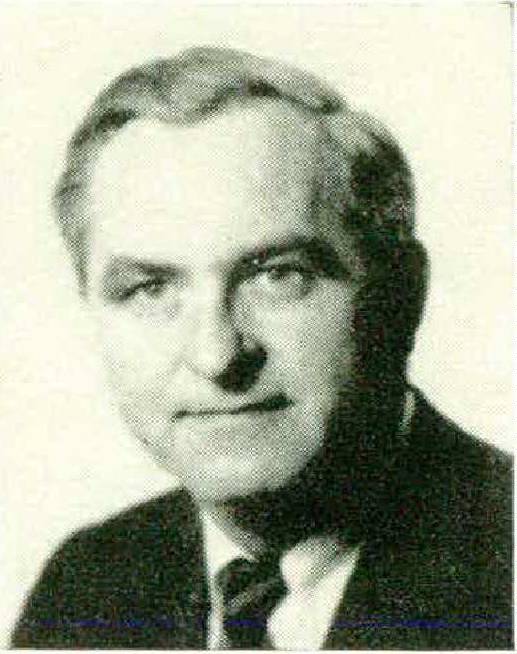
Besides its material perquisites, the exact sum of which the newspapers never fail to mention, the Nobel Prize ought to confer another and less tangible reward: namely, the rights of fresh review for any recipient who has hitherto lived without benefit of critical notice.
The winner for 1961 was comparatively unknown to Americans, the Yugoslav writer Ivo ANDRIC. Two of his books have been available in English for more than a YEAR — BRIDGE ON THE DRINA (Macmillan, $3.50) and BOSNIAN STORY (London House & Maxwell, $4.50) — but they were passed over by nearly everybody on this side of the Atlantic. Were our critics dozing, or did the Nobel committee make a political compromise for a neutralist candidate?
This time the committee did not go astray; Mr. Andric is very, very good. But it is easy to see why his qualities should have been missed — reading him is tough going, like slogging over one of the bemired mountainous roads of his native Serbia. Here are two historical novels, without plot in the conventional sense, very slow in pace, and whose poetic force has to be grasped through the veil of translation. Yet Mr. Andric manages to overcome these obstacles by the sheer primitive power of his materials.
No other European people has had quite the strange and violent history of the Yugoslavs, this wild and mountainous folk, half Muslim and half Christian, who for centuries under the rule of the Turks, and then Austrians, managed to retain their own identity, and who have carried their own primitive ways up to the present day. Much of Mr. Andric’s power derives from this heroic and violent past. Clearly, it has been an advantage to him to remain a regional writer. Where many of his contemporaries have felt themselves driven to search for the primal emotions of life by journeying to Africa, following the bullfights, or raking up the horrors of the clinic, Mr. Andric has been able to stay at home with the legends and the past of his own people.
The Nobel citation mentioned the “epic” quality of Mr. Andric’s writing, and for once this much-abused adjective is the perfectly proper word. It denotes not only the power and sweep of Mr. Andric’s narratives, but their monotony too — a quality that he happens to share with Homer. Yugoslavia is one of the rare places where epic poetry still survives as a live folk art. The Serbian folk poets, the Guzlars, accompanying themselves on onestringed fiddles while they chant out of memory or improvisation interminable verses about their past kings and wars, are about the nearest tiling we have to the ancient Homeric bards. There is a good deal of the Guzlar about Mr. Andric.
At the same time, far from being a ‟primitive,” Mr. Andric is a scholarly and cultivated diplomat who has had a long and distinguished career in the foreign service of his country. This blend of folk poet and diplomat defines the unique quality of his writing. His novels suggest the poems of a Guzlar written with the finesse, detail, and circumspection of a diplomatic report.
In The Bridge on the Drina, the real protagonist is the bridge, as it rides out centuries of weather, wars, and revolutions. The story begins in the sixteenth century with the building of the bridge by the Turks in order to link the eastern and western parts of their empire: and there follow episodes in the lives of the townsfolk around the bridge in later centuries, until its destruction in 1914 after the outbreak of war. Long before this end, the bridge has ceased to be a piece of engineering and has become a living presence towering above the tides of human life and personal fortunes that wash past it like the waters of the river Drina itself.
Bosnian Story is much more of a novel and the more important book. It covers a restricted span of time — the last years of Napoleon — and it does have a central human protagonist. through whose consciousness all the events of the story are reflected. Mr. Andric shows that he has the primary power of the great novelist, the ability to create living characters, and he gives us a whole gallery of individuals. But the central character particularly, the French consul Daville, the first European envoy to this wild outpost of the Turkish empire, a man weak and unsure of himself, yet with a deep human dignity, is a masterpiece of characterization. Though a great many things happen, Mr. Andric does not construct any artificial plot; he simply brings his history to a close with the recall of the consul to France after the downfall of Napoleon. Once again, we are left with the sense of the fragility of individual destiny swept in the tides and countertides of history.
AFRICA AND ORIGINAL SIN
It is interesting to ponder why the two English writers who have expressed the most abiding hatred of the natural life, Graham Greene and Evelyn Waugh, should as tourists display a particular addiction to Africa, where they are bound to meet nature raging with tooth and claw. Could it be that only in the Dark Continent, surrounded by the rot and putrescence of the jungle, their worst suspicions are confirmed, that if nature is vile, perhaps only man may be viler?
Mr. Waugh, a short time ago, gave us a book on his African tour which was rather surprising for its genial tone. Now GRAHAM GREENE, with
IN SEARCH OF A CHARACTER: TWO AFRICAN JOURNALAS (Viking, $3.50), takes us to a leper colony in the Congo. Evidently, if God’s grace is to operate in this world, it must be experienced under the most extreme and least favorable of circumstances.
The interest of these two journals is not so much that they record Africa, though there are sharply observed bits, but that they record Mr. Greene’s mind, a sensitive and superbly intelligent literary engine, always racing. Both journals prepared the way for novels, the first for The Heart of the Matter (1949), and the second for A Burnt-Out Case, published last year.
The second trip was actually undertaken with a definite work in mind, which Mr. Greene wanted to see develop against its natural background. Thus, the journal of this trip, printed first in the present book, becomes a fascinating notebook on the laboratory of the imagination. The journal and the novel, A BurntOut Cuse, form a neat counterpoint that no close student of Mr. Greene’s work will want to miss. While Mr. Greene went to the leper colony for a literary purpose, the hero of his novel, Querry, an architect who has given up his art, comes to the same place because, humanly speaking, it is the end of the line. Therefore, the spiritual states of the author, immersed in literature, and of the character in his novel, in despair beyond art, would seem to be diametrically opposed.
But if it is a mistake to identify an author with his character, it is rarely the case, on the other hand, that some part of the author is not secreted in the fictitious person that his imagination projects. Querry’s despair, then, would be fed by some undercurrent in Mr. Greene. This suspicion is confirmed when Mr. Greene tells us that never had he attempted a novel which proved more depressing to write, and that when he finished, he seemed to have reached an age when another fulllength novel was beyond his powers. Like Querry, he felt drained of all the powers of art.
Pursuing this parallel, we should not find it implausible that Querry’s judgment of himself as an architect will reflect what Mr. Greene feels about his own writing. Querry says of Querry that he was a craftsman who managed space and form very well, but, having no feeling for people, he did not take them into account in his constructions. Mr. Greene may be infected here by the despair of his own creature, and therefore he may be overly severe with himself, but this does not seem an altogether inaccurate judgment of his novels, Mr. Greene is a consummate literary Craftsman, but we do not remember from his work, as from that of the greatest novelists, individual characters so much as the situations in which his characters are caught, which he is able to dramatize with great intensity. His powers are really more those of the dramatist than those of the novelist.
DEAD END OF THE NON-HERO
GERALD BRENAN is an English writer who has given us two books on Spain that must be ranked among the best travel reportage of our time. Having admired his writing for a long time, I looked forward to his novel, A HOLIDAY BY THE SEA (Farrar, Straus & Cudahy, S3.95), but I have to record a bitter disappointment. Mr. Brenan’s novel is very literate, skillfully written, sophisticated, and clever, but so cerebral and brittle in substance that one wonders why so talented a writer would ever put his hand to it.
The ‟hero,” Tom Fischer, is a middle-aged intellectual who is full of literary prattle and given to quoting poetry, but who has about as much human warmth as a squid. His pawky and self-conscious fumblings toward sex and love (too clearly distinguished) even resemble a lower order of animal life — the squirmings of a coelenterate. Whenever the world seems to be treating him badly on his seaside holiday, he is likely to murmur ruefully that he will end it all and go back to the London literary cocktail parties. To which dire threat this reader murmured back each time: ‟I wish you would.”
Because its failure is one of human substance rather than of literary skill, Mr. Brenan’s book provokes in an acute way some questions about that curious specter, the non-hero of a thousand faces, that has been stalking contemporary literature. The writer, of course, is permitted to draw his material from wherever he pleases; the only question from the point of view of art is what he makes of this material. In the hands of some modern writers, the non-hero is a very convincing and powerful character indeed. Joyce, Beckett, and Kafka transform him into an Everyman, the common denominator of all humanity in one of its aspects. In Evelyn Waugh the nonhero is an amiable irresponsible who has the happy knack of getting involved in all kinds of enchantingly surrealistic comedy. Mr. Brenan offers none of these transfigurations. His non-hero is just a non-hero. Tom Fischer is a self-conscious bore who has never quite joined the human race.
A GOOD IRISH TENOR
The tradition of the modern Irish writer as an exile has been so firmly established by the examples of Shaw, Joyce, and O’Casey that we tend to forget the Irishman who stays home to do his writing. SEAN O’FAOLAIN has done more than his bit of traveling for one man, but he has never trod the path into exile. He has acquitted himself so well in so many fields that his real gift, which is for the short story, has been overlooked. His new book, I REMEMBER! I REMEMBER! (Atlantic—Little, Brown, $4.50), reveals once again that, within his limits, O’Faolain is one of the most accomplished living masters of the short story form.
These limits are both Ireland’s and O’s. With the provincialism and puritanism that have driven other Irish writers into exile, O’Faolain has made a cheerful truce. After all, within those limits, too, life goes on and manages to have humor, pathos, and poetry. And humor, pathos, and poetry are the things that O’FaoIain’s stories never fail to catch.
Most of the present stories are nostalgic in mood, as befits the author who has reached the ripe old age of fifty-nine and has to take the backward look upon life. A number of them deal with lost love or the lost occasions of love. But none of these stories is depressing, for the people who have missed out are not famished skeletons but real human beings with a solid and sometimes jaunty life in the present. Even when O’Faolain’s mood becomes sardonic, which is rare for him, as in the story of the middle-aged aesthete who has mentally courted an opera star for years but has been too virginal to speak out until it is too late, the author has still the touch of compassion. The man is ridiculous, of course, but he is still so very human that we share the pain of his defeat.
SURREALISM IN PARIS AND DETROIT
I have often thought that the right caption, in the style of Molière, for MATTHEW JOSEPHSON would be ‟An Author in Spite of Himself.” Mr. Josephson has the knack of selecting subjects that are thoroughly alien to his temperament, and yet, by steeping himself in his material, coming out with a good book. His biography of Stendhal foisted upon that complex Frenchman the simpleminded social consciousness of an American liberal of the 1930s, but it managed to be a lively and useful study. Mr. Josephson is the last person I would have thought of as harboring a dadaist and surrealist past. But not only did he once sow his avant-garde oats, but in MY LIFE AMONG THE SUKREALISTS (Holt, Rinehart and Winston, $6.00), he is willing to tell all with a thoroughness of detail that makes his book a valuable contribution to the artistic history of the 1920s.
Mr. Josephson is now much too solid a citizen to remember what the battle was all about in Paris in those years. Dadaism and surrealism were not, as he represents them, the escapades of schoolboys cutting up.
They were important episodes in the life of the imagination within this century, and it is difficult to calculate what art we would now have, for better or worse, without these movements. Nevertheless, even though Mr. Josephson is plodding and dogged, there are plenty of good stories here that arc not marred even in his telling.
One of the shining lights of the twenties who comes in for a rather harsh anecdote in Mr. Josephson’s book is MARIANNE MOORE, whose poetry and prose have been brought together in A MARIANNE MOORE READER (Viking, S6.95). Miss Moore’s critical prose does not stand well alone, for it is really a commentary marginal to her own poetry; but prose and verse put together make up a unified document of an extraordinary poetic sensibility. Where Mr. Josephson sees the thirties as the emergence of a more realistic and rational maturity in American life, Miss Moore’s Reader reminds us how much we are indebted to the twenties for the renovation of language and the disciplined craft of letters.
A novel attraction of the Reader is that it prints for the first time in book form the now famous ‘Ford Correspondence,” which commemorates one of the classic encounters in American civilization.
This rather surrealistic episode began when Ford Motors, hardly guessing with what manner of lady they were dealing, invited Miss Moore to help them find a name for a new line of cars. Miss Moore agreed, refused all payment beforehand because this would inhibit her freedom, and set her imagination briskly to work. As her suggestions began to stream in — The Resilient Bullet, The Intelligent Whale, Mongoose Civique, Dearborn Diamanté, Pastelogram — the Ford people began to get panicky. They tried to buy Miss Moore off with two dozen roses, but she would have none of it. When she got to Turcotingo, the fever seems to have caught the Ford people themselves, and the only way they could silence Miss Moore was by topping her with their even more improbable name for the new car — the Edsel. By this time the young man in the promotion department who had started the whole thing had left Ford and joined the Coast Guard.