Grapes Is Grapes?
The listing on the dinner menu was stark enough: ‟Red Wine, $2.00; White Wine, $2.00.” The restaurant was a hotel roof garden, with water trickling down a sloping awning overhead and evaporating, and the effect on a summer Sunday in Washington was delightfully cool and attractive.
‟What kind of wine is it?” I asked the waiter. The question, his manner plainly showed, was much too finical for his taste.
‟That’s all we got,” he replied.
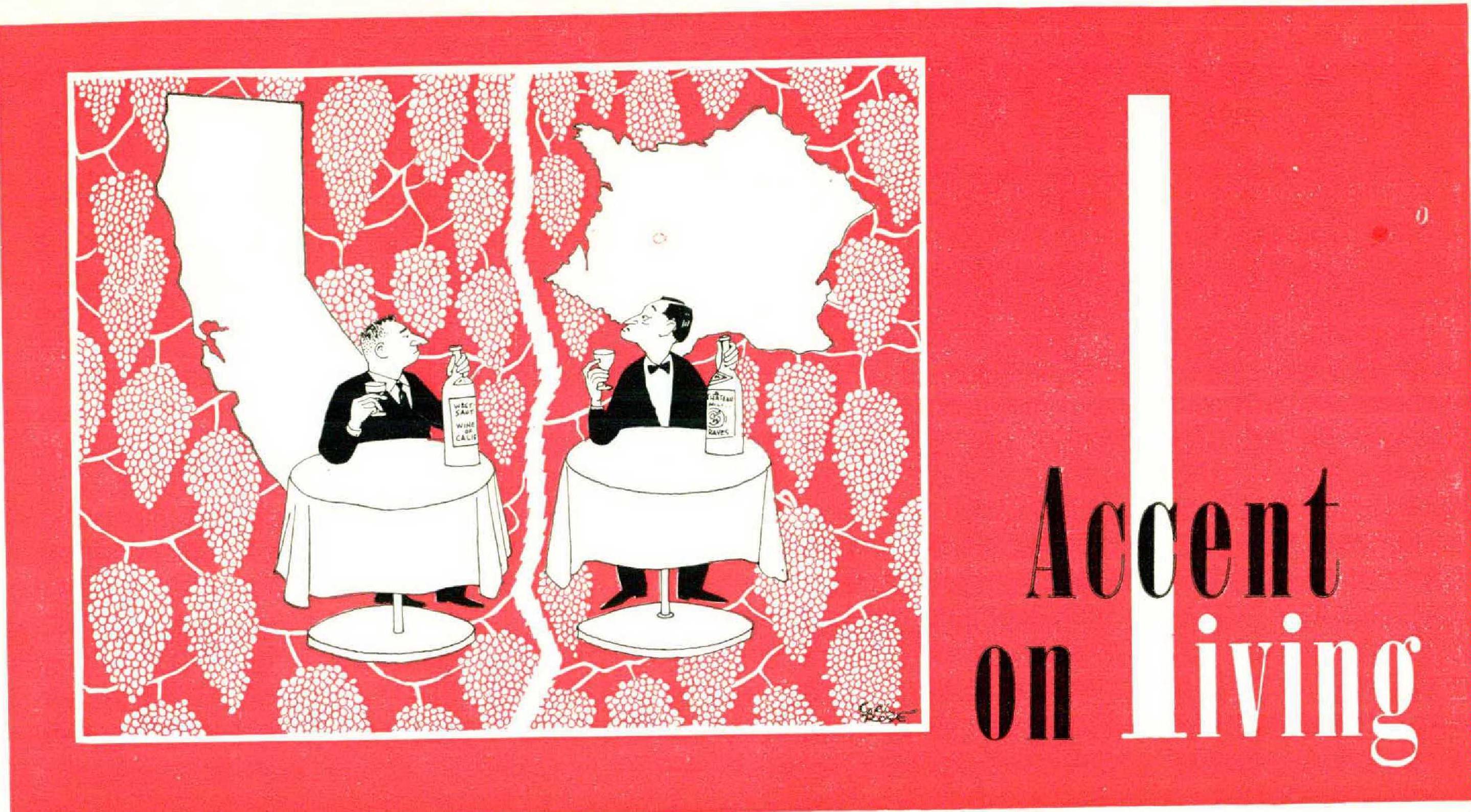
The waiter had no patience with, in other words, the wine snob, the type of customer who pretends to believe that one wine is better than the next. Some of the wine snobs even go so far as to express a preference for imported wines over domestic, an affectation intended merely to irritate their fellow Americans, especially those living in California. A news magazine published an article recently, with full-page color photographs, about a California producer who disdains the wooden vessels, the aging, and other archaic methods used by the Europeans. All the pother about dates and names and places, said this producer, photographed amid his gleaming stainless-steel apparatus and assorted grapes, is simply the chatter of wine snobs. The same sturdy nationalism was in a restaurant columnist’s account of a new place in New York, whose wine list, said he, is ‟predominantly and gratifyingly American.”
At present, the argument of the Californians against the French goes somewhat as follows:
1. French wines are no good, and anyhow, they cost more than ours.
2. French wines are mostly fakes and are simply shipped in bulk from California, bottled and labeled in France, and palmed off on the gullible as the real thing.
3. French and California wines are identical, since cuttings from the California vines replaced those that the phylloxera killed in France a century ago. So the California vines are older, and their wine is really much better than the French.
4. Easterners never get the best of the California wines, which are snapped up and consumed locally by the experts.
5. The very best of the California wines are produced by a little group of multimillionaires solely for themselves, and not even the wine trade ever gets a sniff or a taste of them. No one knows their names or precise localities, but they are better than anything the French ever heard of.
Odd though they may seem in combination, each of these brush-offs of the French has been soberly expounded to me not only in California but also along the Atlantic seaboard and elsewhere. The item about bottling and relabeling California wines in France has been circulating ever since my school days.
A truce might be helpful at this time, before two opposed schools of snobbery are in full conflict. The French may reasonably be conceded their system of vintages and dates, especially in the light of the recordbreaking auction prices for the 1961 red Burgundies, which went as high as $6 a liter for new wine in the cask, implying an eventual price of $15 to $20 a bottle for certain examples. The French seem to be getting along well enough.
California wines will continue to flourish, without their backers’ having to go so far as to include them in the loyalty oaths exacted from teachers in public schools and universities. Confidence in the dateless labels, as one perfect year succeeds another, will reach serenity. And someday. perhaps, the world will hear that the most illustrious among the old customers at Maxim’s was kicking up a frightful commotion at not getting his favorite undated Zinfandel from the Napa (or Santa Clara) Valley.