The New Hampshire North Country
The southern two thirds of New England takes the full impact of the swarms of vacationers pushing north from the great metropolitan centers. Hotels are too plentiful, and trying too hard; the villages are often a bit self-consciously photogenic and historical; there are too many eyes on the tourist dollar.
The mistake most motorists make is to stop their northward drift fifty or a hundred miles too soon. They save two or three hours of driving time and lose the best of the New England north country. Nor is this region — extending diagonally north and east for 120 miles from Lake Champlain in Vermont to Umbagog Lake in New Hampshire — as inaccessible to the traveler as it once was.
Although the superhighways do not, thank goodness, penetrate into the north country itself, they do bring it within reach of the timepressed motorist, who until recently dared not venture north of, say, southern Vermont or the busy New Hampshire lakes region. Now, from New York on the thruway to Albany and southern Vermont, it is no more than a four-hour drive; and from there (or from Concord, New Hampshire, a turnpike terminus on the way north from Boston) the unadulterated north country is but three hours away.
The nonmotorist also gains. Recent improvements by Trailways and Greyhound have nearly halved bus times to New England; frequent service to a surprising number of points in northern New England now outstrips the railroads in speed, flexibility, and interest en route. Stimulated by their superhighway advantage, the bus companies have added new equipment and express services. Trailways goes from Boston to both slopes of the White Mountains and has another service from New York and Boston that passes through the lake and mountain resorts of New Hampshire going to Berlin on the edge of the north country. From these places the traveler might go on by local bus services or by rented car.
A tour of the north country might begin with the pastoral islands of Lake Champlain, then work eastward through the northerly ranges of the Green Mountains to Newport on huge Lake Memphremagog, then to the wonderfully unspoiled lakes in the northeast corner of Vermont, before crossing over into the northern ranges of the White Mountains in New Hampshire. After making the circle of this magnificent and littletraveled country, from Canaan through Groveton, West Milan, Errol, and Dixvilie Notch to Pittsburg, the traveler who likes solitude might go on past the serene Connecticut Lakes, through miles of virgin forest, into the rolling farmland of Quebec.
At the top of New Hampshire there is but one main road through country that is largely wilderness. This is hunting and fishing territory to be compared with the Maine woods — yet it is pleasantly varied with rolling farmland in the river valleys, mild mountains, lively villages, and a great network of hiking trails. All in all, it is a true northern frontier country, wilder today than it was fifty years ago, full of interest for the traveler seeking a serene and spacious natural scene without frills. Only about fifty miles north of the White Mountain resorts, this region of the sporting camp can be as rough-and-ready as it sounds or as comfortable as a good village inn.
Not long ago the carousing lumberjacks dominated the life of Colebrook (the trading center, with a presentable inn), and this area catered mainly to what the locals call “down-country sports,” city men who came up to rough it in the woods. Nowadays, with the heated cottages and other improvements in accommodation, they come later and later into the fall and bring their families with them. The lodges and cabin camps (many with housekeeping) are open, generally, until December 1. Plain living is the rule in most of these places; their standards of service have been improving noticeably in recent years, and the high level of simple good eating has been maintained.
How wild is the area? Pittsburg township has 350,000 acres of what looks like primeval forest, along with four large lakes that are almost completely undeveloped. Yet the town itself is not much more than two hundred miles from Boston. There are three different routes from Boston, each a rewarding drive. Traffic is never heavy, and a number of new motels make it easy to improvise an itinerary. An especially good halfway house in the heart of the mountains is Mount Crescent House, on a high back road at Randolph, a gracious old-fashioned place built by an early settler (and still run by his descendants) that is also the headquarters of the earnest, congenial, and cultivated Randolph Mountain Club.
The presence of a luxury hotel in Dixville Notch, a golf course and good restaurants in Colebrook, and other amenities does not mean that the New Hampshire north country has gone soft or cluttered. It is big, rough, awesome country, and though there are plenty of trails safe for the casual hiker, there are many others suitable only for the man with a compass or a guide. Most of the streams and ponds are secluded, the wildlife is everywhere (so many bears that until recently there was a bounty paid for them), and the frontier atmosphere is still being created by woodsmen who think hunting and fishing are not so much recreation as a way of life.
The guides are as authentic as the woods themselves. In winter some work as trappers; others work in the lumber camps. The novice in the woods will find most of them willing to advise on fly casting and other esoteric matters. Most important, they and their employers in the sporting camps keep track of the streams and ponds that are “hot and lead their guests to the fish. Cost of a guide, boat, and motor is about $17 a day.
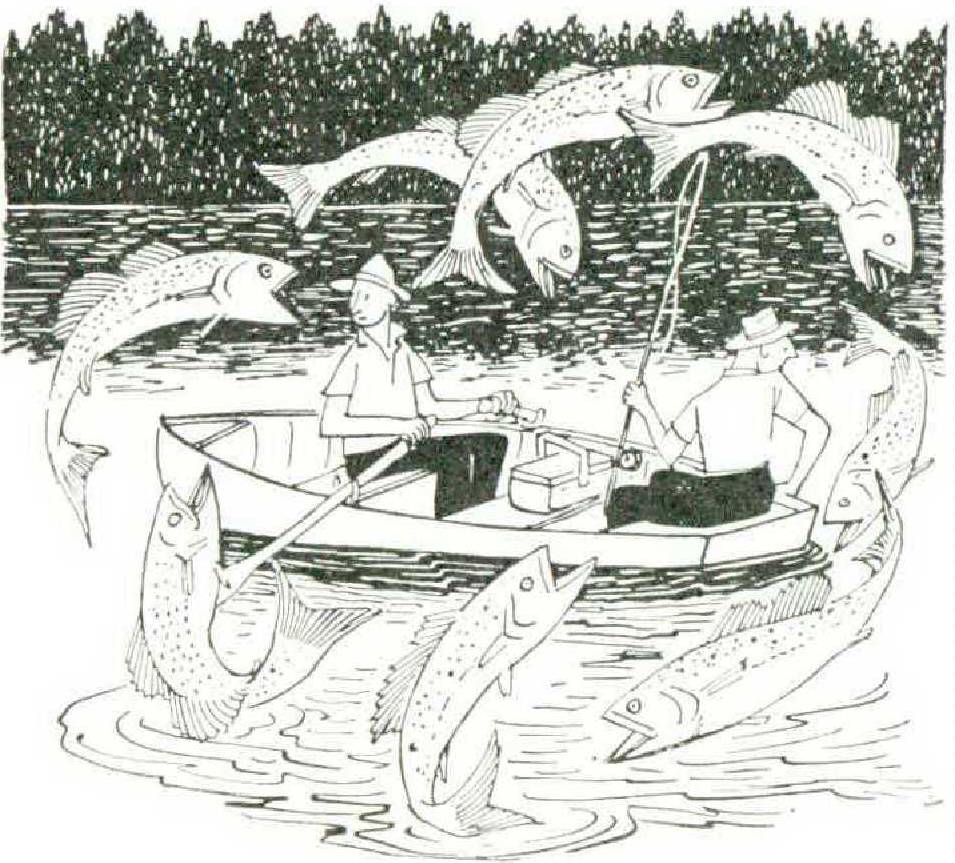
The upper Connecticut rates consistently as one of the best trout streams in the East — big rainbows and browns. Pittsburg township has more than a dozen superb trout ponds as well as the fishing waters of the three Connecticut Lakes, Back Lake, and Lake Francis. Big Diamond and Little Diamond are two other ponds worth noting in a list too long to be enumerated. A special season for trout in the north country (casting or trolling with artificial flies only) begins the day after Labor Day and runs to October 15, and for landlocked salmon until September 30. Fishing supplies are plentiful in most of the towns.
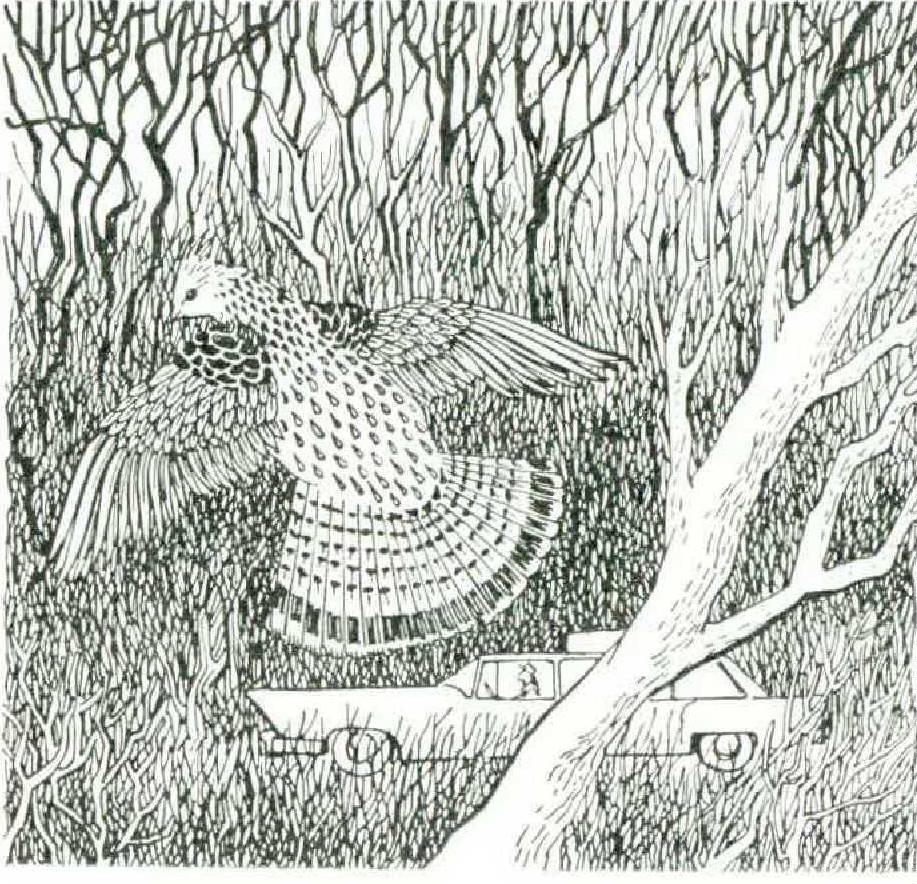
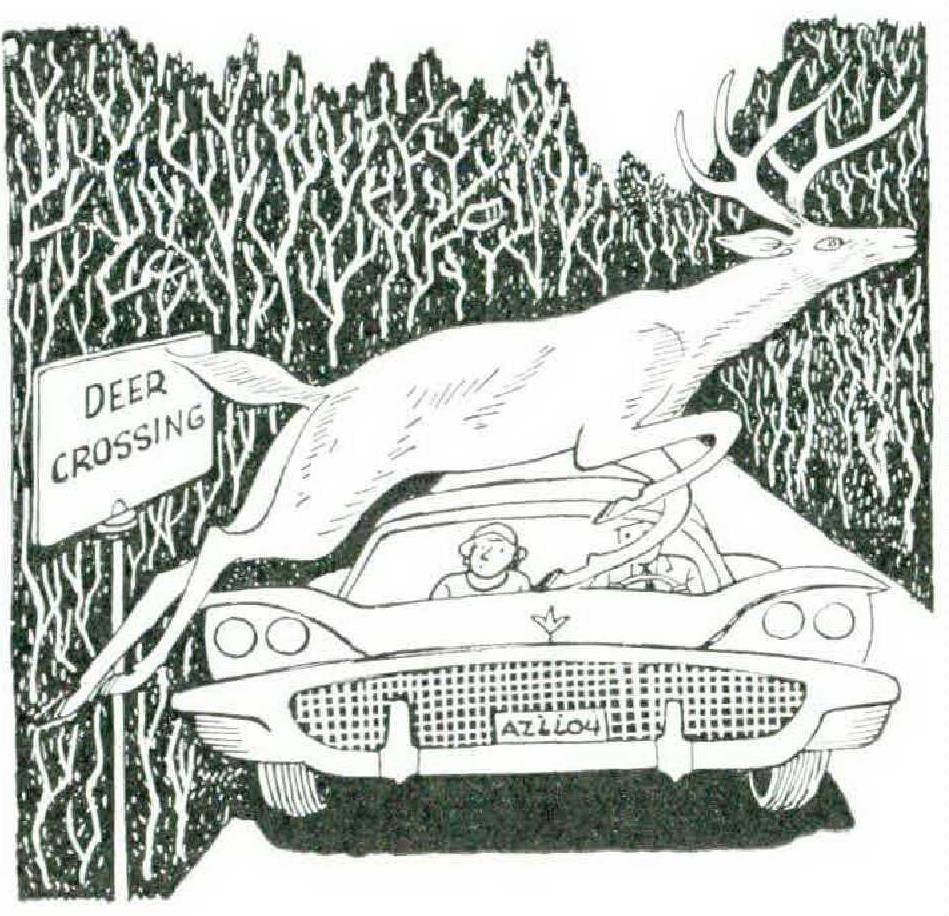
The hunting, north country people say, is far better than it was thirty years ago. In the past fifteen years the deer herd has grown steadily, in spite of a liberal open season on both buck and doe. The deer season in the north of New Hampshire runs the whole of November, overlapping with the small game season that opens October 1. Ruffed grouse, woodcock, and black ducks are included in the heaviest concentration of birds in the state.
Along the fifty miles of road from Dixville Notch to the Connecticut Lakes there is a wide choice of accommodation, from heatedswimming-pool luxury at $20 a day to a rude cabin on a deep-woods pond for as little as $7 a day (with meals). Typical are the sporting camps, some with refinements like maid service and selection on the menu, almost all as comfortable as one could hope for this close to unadorned nature. Fairly representative of these is Big Diamond Lodge, at die end of a forest road out of Kidderville, where $9 a day, $25 a weekend, or $58 a week pays for cabin, boat, and meals (about half the cost of the resort hotels further south). The best choice, perhaps, for both hunting and fishing and for a less active life in the woods, is First Connecticut Lake (famous for its landlocked salmon). Some good accommodations here are The Glen, Partridge Lodge, and Camp Otter. A few camps cater mainly to the serious sportsman, but most are now designed to please the itinerant sightseer as well. The usual setting is a lake surrounded by miles of unbroken forest and hills; and the camps provide boats, motors, guides, hunting and fishing licenses — all that is needed.