My Only and Last Love: Byron's Unpublished Letters to Countess Teresa Guiccioli
Byron’s letters to Countess Guiccioli, held in private by her family for seventy-jive years, have now been released. Sympathetically edited byMARCHESA IRIS OUTGO,the letters and the day-to-day account of this extraordinary love affair will be published by Scribner’s in May under the title Byron: The Last Attachment, for permission to publish the letters, the Marchesa is indebted to Count Carlo Gamba and to the Legal Personal Representative of Lord Byron’s estate. This is the second installment of the Vtlan tic’s abridgment.
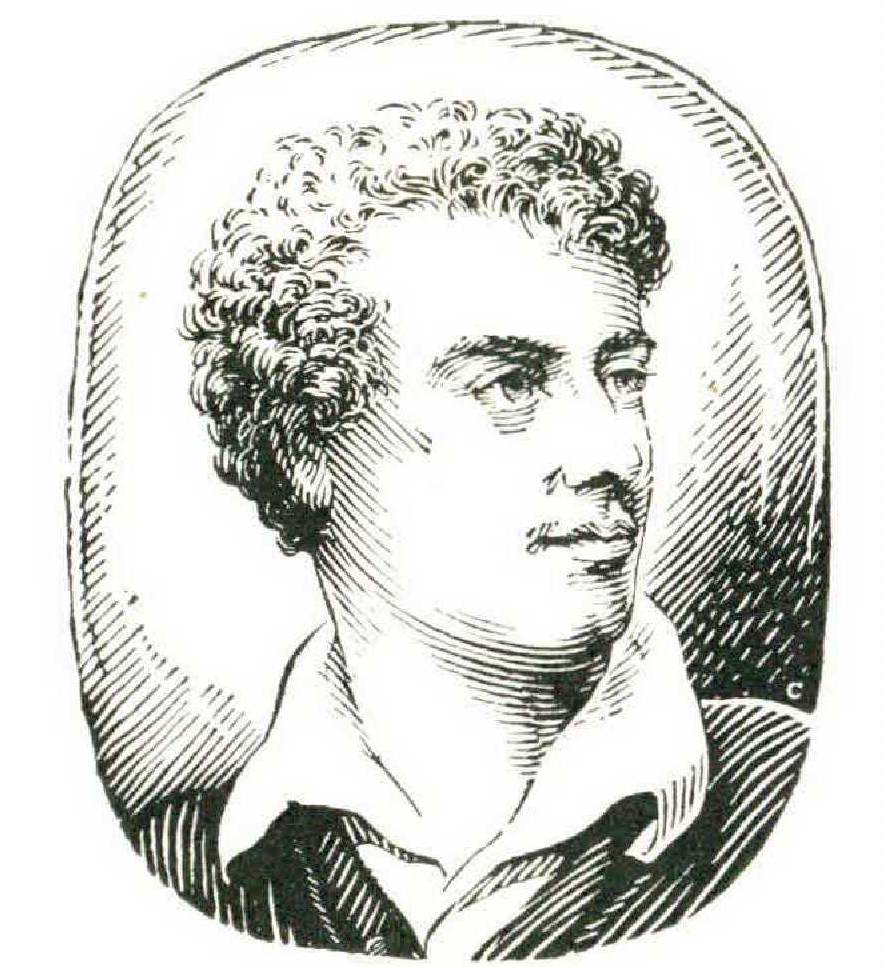
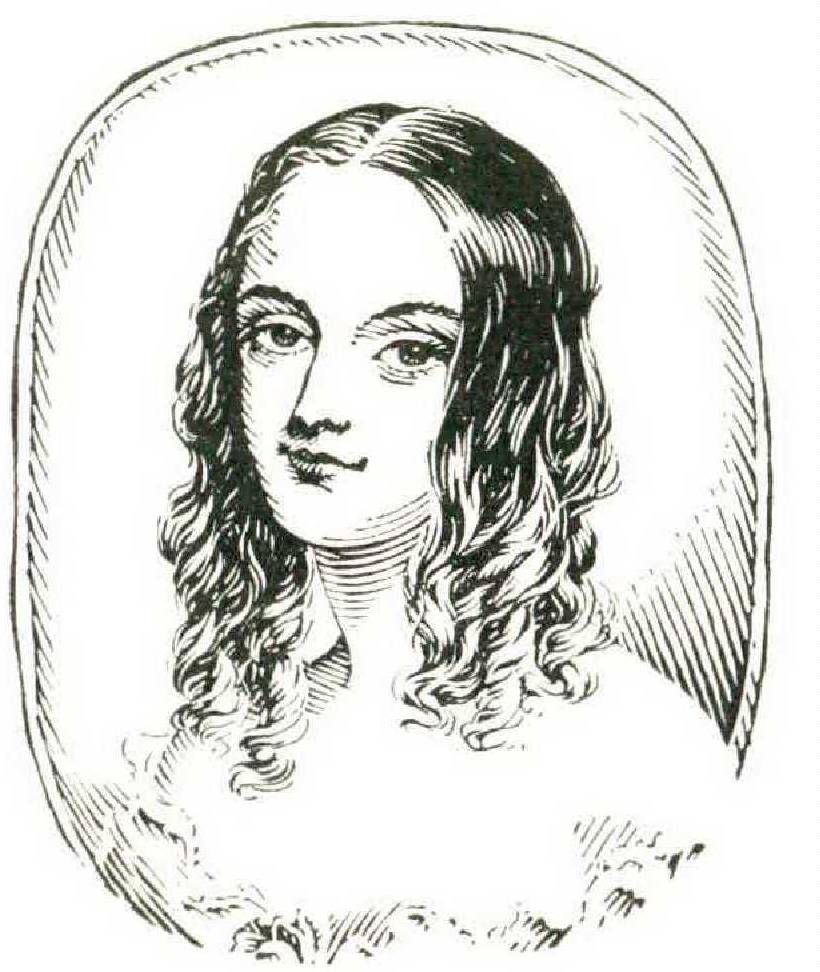
by IRIS ORIGO
ITALY in the spring of 1819 was the setting of what many have regarded as Byron’s most important love. At a party in Venice in April, Byron was introduced to Countess Teresa Guiccioli. The attraction was instantaneous and within a few days they became lovers. Byron, already tired of his life of dissipation and bored with Venetian society, was more t han ripe for a new, deeper emot ion. Teresa—in the poet’s own words was “fair as sunrise, warm as noon.” She was nineteen and he was thirty-one, and between them stood the Count, Teresa’s husband, an eccentric nobleman forty years her senior. In June, Byron followed the Countess to Ravenna; there her illness and her dependence on him caused no little scandal but, as will be seen, made the poet an indispensable member of the household.
By the middle of the month there was a change for the better in Teresa’s condition. Her fever left her, and at last the doctor allowed her to go out again. On the evening of June 16, at seven o clock, “she came down the stairs of her palazzo leaning on Byron’s arm. He seated himself in her closed carriage beside her; behind them, in another carriage, rode the Count and some other friends.” It was their first time alone together, since he had come to Ravenna. They reached the great pine wood that lies between Ravenna and the sea, at. sunset. “Lord Byron was charmed by the landscape; he seemed at once happy and melancholy.”
It was on that evening, says Teresa, as they drove home together through the forest and watched the reflection of the sunset lights in the still pools under the pine trees, that she asked Byron, since he had already written about Tasso, to write something also about Italy’s greatest poet, Dante. “Your wishes are my commands,” he replied, and the next day began “The Prophecy of Dante,” which he dedicated to her.
When they were alone together, they would go over and over t he same ground: what did the future hold for them? It is clear, from the letters, (hat Byron repeated his suggestion to elope with her and that she again drew back. But Teresa now knew — or thought she knew — how completely her lover was committed.
BYRON TO CONTESSA GUICCIOLI
June 16th, 1819
MY LOVE:—
Let us not talk about the subject any more now. It is enough that you cannot doubt me, knowing what I would be capable of doing for you. In any case and in all circumstances your happiness will be my only care. If a lime comes of trouble and disturbance caused by our love, then you shall decide, according to your feelings. I shall not try to persuade you or to influence your choice. My “duties,” dearest Teresa, are always the same — and it seems to me I am showing every possible eagerness to fulfill them.
Everything depends on you — my life — my honor— my love. Love me, then — my feeling for you deserves to be returned: I suffer so much in loving, that I have tried to avoid strong passions in these last three years—but in vain, as you see now. To love you is my crossing of the Rubicon and has already decided my fate.
I shall not fail to carry out all that you say — I kiss you a hundred thousand times.
[BYRON]
On June 10, 20, and 26 Byron sent off to Alexander Scott, the British vice-consul in Venice, a series of urgent letters telling Scot I to send him his saddle horses and his carriage horses, and to forward all his English letters. Richard lloppner, the British consul, and Scott (united in their jealousy of “La Guiccioli”) delayed as long as they could. “There could surely be no difficulty,” wrote Byron to Scott, after waiting for ten days. But at last his instructions were carried out, and he finally told Scott that he had no intention of returning to Venice for some time. “All has gone on very well here — as you may suppose by my stay. The Lady does whatever she pleases with me — and luckily the same things please both.”
2
To Teresa, Byron wrote: “Every day in which we do not see and love each other, in deed as in our hearts, is (at least for me) the most irreparable of losses, one happiness the less.”
“The most irreparable of losses.” Already conscious of a physical decay far in advance of his years, and of a corresponding exhaustion, Byron was at this time writing to a friend in England: “At thirty I feel there is no more to look forward to. . . . My hair is half grey, and the Crow’s-foot has been rather lavish of its indelible steps. My hair, though not gone, seems going, and my teeth remain by way of courtesy.”
Like an overtired child at a party, who, drooping with fatigue, yet clamors for one game more, he attempted 1o defeat his weariness and self-distaste always by the same method: some fresh sensation that would reconfirm for him the sense of his own reality. Life had become tasteless for him, except in the pursuit of passion. And passion brought pain; and pain, weariness — and (hen he was off on the treadmill once again.
These months were the high summer of Teresa’s and Byron’s passion, when Byron’s fears for her health and his consciousness of his own exhaustion only served to fan his feverish thirst. Teresa’s youth, her freshness, her vitality (in spite of, or even increased by, her illness), all gave him an illusion of renewed vigor, of a last lease of life.
As the weeks passed and her cough and fever continued, Byron’s letters to his English friends lost their deliberate flippancy and revealed a deep anxiety, even though it was sometimes expressed with characteristic egotism, as in a letter to his friend lloppner: “Thus it is with everything and everybody for whom I feel anything like a real attachment. ‘War, death or discord doth lay siege to them.’ I never even could keep alive a dog that I like or that liked me.”
In a letter to John Murray he had been still franker: “I see my Duma every day at the proper (and improper) hours; but I feel seriously uneasy about her health, which seems very precarious. In losing her I should lose a being w ho has run great risks on my account and whom I have every reason to love—but I must not think this possible. I do not know what I should do if she died but I ought to blow my brains out — and I hope that I should.”
Since it was evident that the Ravenna doctors were not doing Teresa any good, Byron prevailed upon Count Guiccioli to let him send for his own doctor from Venice, Professor Aglietti. To Alexander Scot t he wrote: “ I have sent again to Venice for I)r. Aglietti the Guiccioli is seriously ill, and her state menaces consumption — I need hardly say how this occupies and distresses me. ... If you can say anything to Aglietti to persuade him to come, in addition to what 1 have written, pray do. I have written at Count Guiccioli’s own request, and enclosed besides a long medical statement of her case.
“Although there is no doubt on that score, yet you may tell Aglietti that I myself will be responsible for his time, trouble and expense, etc. being reimbursed, and that his coming will be to me also a great personal favor. I can say no more.”
We have no record of what Aglietti prescribed for Teresa (except that it included “a complete change of regime,” the application of leeches, and some “Peruvian bark” of extreme bitterness, which Byron promptly sent for from Venice), but we do know that on his departure he left renewed hope behind him, and that Teresa and her family considered his visit to have been the turning point in her illness, and Byron, consequently, her “savior.”
And very soon — whether owing to Aglietti’s prescriptions, to the Peruvian bark, or to the daily presence of her lover — Teresa really did begin to get better. By now, Byron’s horses had arrived, and although the midsummer heal was intense, the two lovers rode together every evening in the pine forest.
Byron, now in the highest of spirits, took up his pen and wrote to tell his half-sister Augusta Leigh all about it: “I write from Ravenna — I came here on account of a Countess Guiceioli — a girl of twenty married to a very rich old man of sixty about a year ago; with her, last winter, I had a liaison according to the good old Italian custom — she miscarried in May — and sent for me here — and here I have been these two months.
“She is pretty — a great Coquette — extremely vain — excessively affected — clever enough — without the smallest principle — with a good deal of imagination and some passion. She had set her heart on carrying me off from Venice out of vanity
— and succeeded—and having made herself the subject of general conversation has greatly contributed to her recovery. . . .
“I send you a sonnet which this faithful lady has made for the nuptials of one of her relations in which she swears the most alarming constancy to her husband — is not this good? — You may suppose my face when she showed it to me— I could not help laughing — one of our laughs — All this is very absurd but you see that I have good morals at bottom.
“She is an equestrian too, but a bore in her rides — for she can’t guide her horse— and he runs after mine — and tries to bite him — and then she begins screaming, in a high hat and Sky-blue riding habit — making a most absurd figure and embarrassing me and both our grooms — who have the devil’s own work to keep her from tumbling — or having her clothes torn off by the trees and thickets of the Pine forest.”
But Teresa, in the true romantic tradition, scorned to chronicle any such undignified episodes as those. Her account is all fine scenery and poetry.
3
COUNT GUICCIOLI’S numerous enemies took great pleasure in Teresa’s liaison and before long—indeed it is surprising that it should not have happened sooner — one of them sent him a most unpleasant anonymous letter. It came, Teresa tells us, on a Friday, and her husband hastened to her room to read it to her and to show her the extremely scurrilous verses it contained — which were being sung, the letter said, even by the little boys in the streets.
That same evening some of her guests, in her own house, allowed themselves to indulge in innuendoes less coarse but not less malicious. “I saw him on horseback today,” said one young lady. “Oh God, how beautiful he was! Truly the men should agree to exile him,” she added, looking pointedly at her hostess, — “Is he married?” asked her young sister, and was answered by a long account of Byron’s past adventures, furnished by another guest who had recently returned from
Milan, and had heard more gossip about the poet there.
Count Guiceioli, whether in consequence of all the gossip or because he genuinely had business on his estates near Bologna, suddenly decided to go there; and since his wife was now fully recovered, he saw no reason why she should not go with him. Before the following letter was written, (he date of departure had already been decided, and the lovers had settled to meet again in Bologna.
BYRON TO CONTESSA GUICCIOLI
RAVENNA, August 4th, 1819
MY TREASURE: —
Your reproaches are unjust. Alessandro and your father being present — and I not being able then to clasp you to my heart — I kissed your hand and hurried away, so as not to show my suffering, which would only too clearly have revealed the whole, whole truth! I vow that I love you a thousand times more than when I knew you in V[enice], You know it — you fee! it. Think, my love, of those moments — delicious — dangerous — but happy in every sense — not only for the pleasure, more than ecstatic, that you gave me, but for the danger (to which you were exposed) that we fortunately escaped. The hall! Those rooms! The open doors! The servants so curious and so near — Ferdinando [the Count’s eldest son, Teresa’s stepson] — the visitors! How many obstacles! But all overcome — it has been the real triumph of Love — a hundred times Victor.
Farewell — my only Treasure—my one Hope. Farewell I kiss you untiringly from my heart — and am ever yours.
[BYRON]
Before going to Bologna, however, Count Guiceioli and his wife visited their estates near Forli, and from here the Count, who according to Teresa “had a great deal of wit and was flattered by the friendly manners of Lord Byron,” sent Byron an invitation to “come and see this poetic place of ours.” ’This, according to Teresa, was “a great, and noble residence that had been an abbey and had been transformed by him [Guiccioli] into a fine summer residence.” Teresa herself was “ so charmed by it that, desiring extremely to show it to Lord Byron, she added to the Count’s letter a second pressing note” in her most romantic vein.
Both these invitations Byron refused.
BYRON TO CONTESSA GUICCIOLI
RAVENNA, August 7th, 1819
MY TREASURE: —
I have written an answer in English to A[lessandro]. I am extremely sorry not to see you again in Forlì, but very soon (on Monday or Tuesday) I hope to arrive in Bologna. I am writing in some anxiety as to the fate of this letter — for I must trust it to my Courier. I hope, however, that Fortune will not forsake two lovers at such a point.
So you have lost the ring—without saying a single word to me! This is a lack of faith which smprises and hurts me, who have never made any mysteries with you. I cannot say more now. I love you. ...
You cannot imagine how much our separation is distressing me. I long to see you again, but tremble, believing myself always about to lose you and I feel confused — for that head of yours is an enigma — and you have no heart. I can see you reading these last words —“Oh Fury!" as the tyrant says in our comic plays. Alas! no longer comic since your departure. The theater has become a desert — I dare not look at your box. Don’t think that I am saying seriously that you have no heart. You have one — (for dress?) This was only an English compliment; an ultramontane joke. It is my revenge — not for the loss of the ring but for treating me with little trust in keeping silence about it.
Farewell, my dearest Evil — Farewell, my torment — Farewell, my all (but not all mine!). I kiss you more often than I have ever kissed you — and this (if Memory does not deceive me) should be a fine number of times, counting from the beginning. Meanwhile — you can be sure of me— of my love — and of your power. . . . Love me not, as I love you —that, would be too much for your kind heart—but as you love your Elmo [Teresa’s dog]. Farewell. I kiss you a million times with my whole heart, insatiably.
[BYRON]
In quoting the preceding letter in the “Vie,’ Teresa has omitted all but the most sentimental passages and has with especial care avoided any reference to the ring— by which hangs a tale of a Goldonian flavor. “You ask me, wrote Conte Francesco Rangone’s diligent correspondent Conte della Torre, “for more anecdotes about Lord Byron” — and proceeded to tell him that Teresa’s “anglico amante" had presented her with a valuable ring. But how could she wear it in her husband’s presence?
Once again the help of the obliging Abate Perelli was resorted to. He had the ring valued and brought it to the Count, offering it to him at one third of its value, in order, he said, to save from ruin a poor family whose last, treasure it was. The Count hesitated; his wife pretended to be reluctant to spend so large a sum; the priest reproved her for lack of charity; the Count, ever unable to resist a good bargain, joined forces with him —and finally bought for his wife, for one hundred seudi, a ring which, he was told, had been valued at three hundred and fifty.
And then Teresa lost it — and did not dare to tell Byron. The whole story — which, of course, everyone in Ravenna knew except the Count was sent off to Rangone, and was carefully set down in his Cronaca, to be confirmed for us, after one hundred and thirty years, by Byron’s letter.
Three days later, on the 10th of August, the lovers met again in Bologna.
4
BYRON took some rooms in an eighteenth-century palazzo, in Via Galliera, quite close to Palazzo Savioli, where the Guiceiolis lived, He never actually stayed there, however, since Guiccioli soon put at his disposal some rooms on the ground floor of the Palazzo Savioli, into which he moved.
In Bologna, as in every other town he visited, Byron’s daily life was observed by the police with an anxious and unceasing assiduity. The archives of Venice and Bologna, of Ravenna, Florence, Pisa, and Lucca, and above all of the Vatican, still contain the fruits of their researches: long, dull, often half-illiterate reports, which note the most trivial and insignificant details about the dangerous British lord.
The governments of Austria, the Papal States, and Tuscany were all agreed in this: Byron was not merely a dissolute nobleman, a dilettante traveler, he was a dangerous freethinker, an emissary of Liberalism, to be kept under constant supervision. So, wherever he went, a trail of obscure and painstaking spies followed in his wake —opening his letters, talking to his servants, watching outside his doors, noting the names of his visitors and the times at which he got up and went to bed, and interpreting these facts as best they could for the benefit of their respective governments.
As if this police espionage were not enough, we discover that vet other eyes and ears were following the poet’s doings in Bologna, not indeed for the same reasons, but still watching and listening in anterooms and passages, and gleaning everything that could be gleaned secondhand, from friends or acquaintances or servants all for the sheer love of gossip. Count Francesco Rangone spared no pains to make himself agreeable in every direct encounter with Byron, and was now able to call on him every day and to keep a detailed account of how Byron spent his time.
“At four he goes to see his Lady, Rangone wrote, “and remains there until six. He rides lor an hour, always in the great Cemetery. At eight he dines, at nine goes to his Arnica and remains there until midnight, He studies until dawn. What he does until three remains a mystery. He eats and drinks little. But,” the Count added, “he does not much like conversation or seeing what is worth seeing. He lets others talk and says little. He makes himself agreeable, but his expression clearly reflects the moods of his changeable humor.
Byron at this time was still on the most amicable terms with Count Guiccioli, and was engaged in furnishing (with furniture which he had sent for from Venice) the rooms which the Count had put at his disposal in Palazzo Savioli.
“Doubtless,”says Teresa, “one might, call this imprudent, and attribute it to a great many other motives, but the truth cannot, be understood without admitting first of all that the Count was a man different from others — an eccentric — seeing everything from his own particular point of view — and often very indulgent and almost generous. . . . One must, however, add to this explanation, that he not only, as a man of intelligence, found Byron agreeable and was flattered by his preference and his intimacy, but that he had at the moment a particular reason to oblige him, for he was asking a favor.”
This favor was a very odd one: that Guiccioli should be given, “without salary or emolument,” the post of British vice-consul at Ravenna. The Count’s reason for wishing this post, according to Teresa, was that he was on the worst possible terms with the Papal Government, which had intervened against him in a lawsuit. Guiccioli believed that the post of consul to a great foreign nation would protect him against the Papal Government and enable him to obtain various privileges — and accordingly we find Byron writing in the most pressing terms to John Murray on his behalf.
The case was pressed by Byron with unusual fervor. “I can assure you I should look upon it as a great obligation; but alas, that very circumstance may, very probably, operate to the contrary.” He even went so far as to suggest that he himself should be made Consul, “that I may make him my Vice” — a suggestion which, if it had been carried out, would have added yet one more absurdity to the tangled tragicomedy soon to be enacted in Ravenna.
But long before Murray’s answer could arrive, events had taken another turn. According to Teresa’s subsequent account to her lawyers, Count Guiccioli, when he rented the ground floor of his palace to Byron, took also the opportunity of borrowing a considerable sum from his tenant. A few days later Guiccioli was called back to Ravenna on business, and he allowed his wife, “in view of her delicate health, shaken by so many emotions,”to set off to consult Dr. Aglietti in Venice, in Byron’s company.
The opinion of the world is reported for us by an Austrian spy. “Lord B. departed suddenly with Madame Guiccioli, who was therefore said to have been either carried off by him or sold to him by her husband.”
5
HEX they arrived in Venice they should have separated, Byron going to the Palazzo Mocenigo and Teresa to the apartment ("on one of the small canals in Venice, disagreeable on account, of their exhalations”) which her husband’s steward, Lega Zambelli, had prepared for her. On the 17th, however, Lega Zambelli was reporting to Count Guiccioli that although “the Signora Contessina arrived safely on Tuesday evening, and had sent for him at once, she said that owing to the fatigue of the journey she would postpone her removal to the lodging which had been prepared, and would stay instead in the house of Lord Byron, who had kindly prepared an apartment.”
It was plain, however, to both lovers, that they could not indefinitely remain in Venice together; so, after Professor Aglietti’s examination, the following careful letter was dispatched to Teresa’s husband:—
MY DEAR ALESSANDRO: —
I arrived yesterday evening in Venice, in excellent condition, because the two days’ journey had done me more good than any medicine. . . . This morning Aglietti came, and having examined me, ordered me no drugs, but instead advised another journey and change of air. Your affairs, I feel sure, would not allow you to come with me, so Byron having offered to take me with him to the lakes of Garda and Como— a journey suitable to the season, and which he is now thinking of taking, not being much pleased with Venice — I ask your permission, and await its speedy arrival with the greatest anxiety. Since I arrived in Venice I have not even gone out of the house, and shall only do so to see the girls.
Byron greets you and charges me to tell you that the English friend to whom he wrote about the ViceConsulate, etc., has answered him that he will send in a petition at once and do everything possible to obtain it. Pray answer me quickly. Greet my Papa and all friends and relations. Good-bye, my Alessandro, write soon and believe me
Your affectionate spouse
TERESA
To Teresa’s surprise, Guiccioli replied “that if this excursion could contribute to re-establishing her health, she could make it, and that, as far as he was concerned, he saw no objection.”
Meanwhile the lovers had moved to Byron’s villa at La Mira, a most attractive place. The great Foscarini Villa on the banks of the Brenta was surrounded by a romantic “giardino all’ inglese,” with little toy lakes and bridges, and a great avenue of plane trees led along the water’s edge.
A hen they w ere not laughing or love-making, they rode along the Brenta, past the elegant Palladian villas where the Venetian nobles spent their summers, or sat on the rustic benches beside the little lakes of the “English Garden,” while Byron read aloud the romantic works of Teresa’s choice or his own translation of Pulei’s Morgante Maggiore on which he was working at this time. He was also then busy with the third canto of “Don Juan" — “no occupation for him,” writes Teresa, “but just a distraction”; and she adds that his facility in composition was so great that he would often tell her to go on chattering while he worked, “for he worked much better while he saw her and heard her voice.” In the evenings there was more reading aloud, or Teresa played to him on the piano he had ordered for her, and even tried to persuade him to join her in duets.
In the meantime Count Ruggero Gamba, Teresa’s father, who from the first had viewed his daughter’s relationship with the English milord with the greatest disapproval, intervened. He hurried in from his country house to Ravenna, told Count Guiccioli roundly that he “did not approve of allowing an inexperienced young woman to go off alone, and still less, escorted by a young man like Lord Byron,” and added that “if her husband refused to join her at once, he would go and fetch her himself.”
Guiccioli excused himself as best he could, explaining his indulgence as due to his wife s ill-health and his complete confidence in her honor and Lord Byron’s, and added that, “as to the world’s opinion, he was entirely indifferent to it.” He did, however, end by promising that he would go and fetch Teresa, and meanwhile her father, still far from reassured, sent her a long letter of warning — a letter which, in the opinion of Teresa, was affectionate and indulgent, in accordance with his adorable character, but which did not attempt to conceal his anxiety, and told her of further gossip which had reached him from his son in Rome.
“You have hardly entered the world,” Count Gamba wrote, “but it will make no allowance for your youth, the purity of your heart, the innocence of your journey, or for all the circumstances which may justify your present position. This most seductive young man is by your side, protecting you no doubt in a manner honorable and worthy of you both. That may be enough to convince me, and your husband, and your own conscience. But the world will not be satisfied with these arguments. The retired life that you are leading will only provide further weapons for those who may wish to criticize your position.”
This letter reached Teresa soon after her husband’s permission to set forth with Byron to tour the Italian Lakes, and it awakened in her, more than any other feeling, a childish disappointment at having to give up her journey. She took her father’s letter into the garden and sat there, she says, with its pages open on her lap and tears of disappointment. running down her cheeks, until Byron came out and found her. He advised her to reassure her father at once, and Teresa obeyed. She wrote to her father promising that she would remain at La Mira until her husband came to fetch her, and that she would give up the expedition to the Lakes, It is clear both from her letters and from Byron’s that they were more than a little disconcerted by the Count’s peculiar behavior, however convenient.
“I cannot make him [Guiccioli] out,” wrote Byron to Scott; “conjectures are useless — we shall see. He ought to have been here last week, but delays a month longer.” As for himself: “I do not leave these parts immediately — and am not sure that I shall leave them before Spring, being as undecided as when I saw you at Venice.
6
HAD Teresa known Byron better, she would perhaps have begun to notice certain small danger signals. He hung about waiting for the English post, and fretted when it. was late; he spent a long time over it when it came; he was less attentive to her chatter; he took rather more brandy at night, and a great deal more magnesia in the morning. And when Moore arrived and he went off to Venice with him, it was “with all the glee of a schoolboy w ho had been just granted a holiday.”
Moreover—but this Teresa fortunately could not know — the old llippant note was creeping back in Ins let ters to his friends.
“What you say of the long evenings at the Mira or Venice, reminds me of what Curran said to Moore: ‘So I hear you have married a pretty woman and a very good creature too, an excellent creature. Pray — um! — how do you pass your evenings?' It is a devil of a question that, and perhaps as easy to answer with a wife as with a mistress; but surely they are longer than the nights. However,” he wrote, “I am all for morality now and shall confine myself henceforward to the strictest adultery.”
The truth was, of course, that Byron, once again, was beginning to get bored. Teresa was young and pretty and tender, but such continual adoration — even expressed in a language not one’s own — soon became a little cloying. And her gaiety, which at first he had mistaken for a true temperamental affinity (“We have laughs together — our laughs,”he told Augusta), proved only to be animal high spirits, without a touch of humor. Once again tedium descended upon him.
And Byron’s tedium, as Moore had remarked in 1815, always took the same form: it brought “some return of the restless and roving spirit.” It was, as he penetratingly observed, “ the habit of the writer’s mind to seek relief, when under the pressure of any disquiet or disgust, in that sense of freedom which told him that there were homes for him elsewhere. In 1823, his “roving spirit” was to lead him to Greece; in 1820, in Ravenna, he was to play with the idea of rushing to Naples to take part in the Neapolitan revolution. And now, in the dull evenings at La Mira, he turned his mind to a “South American project which would take him (of Teresa there is no mention) to settle in Venezuela, “and pitch my tent there for good and all.”
“I am not tired of Italy, but a man must be a Cicisbeo and a Singer in duels, and a connoisseur of Operas, or nothing—here. I have made some progress in all these accomplishments, but I can’t say that I don’t feel the degradation, better be an unskilful planter, an awkward settler, better be a hunter, or anything, than a flatterer of fiddlers, and fan carrier of a woman. I like women — God he knows but the more their system here develops upon me, the worse it seems, after Turkey too; here the polygamy is all on the female side. I have been an intriguer, a husband, a whore-monger, and now I am a Cavalier Servente — by the Holy! It is a strange sensation. . . . Yet,” he adds, “I want a country and a home, and — if possible — a free one. I am not yet thirty-two years of age I might still be a decent citizen, and found a house and a family as good—or better—than the former.”
After innumerable letters and protests, Count Guiccioli at last appeared in Venice on All Saints’ Day to fetch his wife. The Count’s meeting with Byron was, Teresa assures us, “as courteous as in the past,” and he told the poet that he would be only too delighted to see him again in Ravenna, but that “owing to comments and gossip, an obstacle had arisen, and (his obstacle was Count Gamba.” He added that he was therefore obliged to appeal to Byron’s honor not to return there “so as not to make trouble between Guiccioli and the Gamba family.” Moreover, he asked him to say nothing about all this to the Countess.
Byron’s description of the Count’s visit is considerably franker than Teresa’s. “At last the Cavalier Conte Guiccioli came to Venice,” he wrote Douglas Kinnaird, “where he found his wife considerably improved in health, but hating him so cordially, that they quarrelled violently. lie had said nothing before, but at last, on finding this to be the case, he gave her the alternative, him or me. She decided instantly for me, not being allowed to have both, and the lover generally having the preference. But he had also given her a paper of rules to which he wanted her assent, alt of them establishing his authority.
“What could I do? On one hand to sacrifice a woman whom I loved, leaving her destitute and divided from all ties in case of my death; on the other hand to give up an amicizia which had been my pleasure, my pride and my passion. At twenty I should have taken her away; at thirty, with the experience of ten such years! I sacrificed myself only, and counselled and persuaded her with the greatest difficulty, to return with her husband to Ravenna.”
So Teresa was sent home again with her husband. She went, she tells us, only because she felt certain that Byron would soon follow her, and he himself wrote that be had given her a half-promise, “else she refused to go.”
And now Byron was again alone— “in a gloomy Venetian palace . . . unhappy in the retrospect, and at least as much so in the prospect.” The alternatives, indeed, were not attractive. If he stayed in Italy, he would be obliged to take up for good the too familiar duties and pleasures of a caraliere servente or -still worse — be responsible for the destruction of Teresa’s marriage, and find himself saddled with her for life. If he went back to England — but why should he return to “a country when I neither like noram liked”?
While he was still uncertain, Teresa played her trump card. Exhausted by all she had been through, and unutterably bored in the grim solitude of the Palazzo Guiccioli, she had another relapse. It is not necessary to wonder, as some of Byron’s biographers have done, whether this illness was merely a pretext to recall her lover. Teresa’s attack was so serious that her whole family became alarmed. Her father hastened to her bedside; and while she admitted that unhappiness over Byron’s departure was the chief cause of this new relapse, she succeeded in persuading him that their relations were still platonic, and that there was no reason why Lord Byron should not come, “like anyone else, to spend the winter in Ravenna — and to be near the sea and the fine pine forest which he loved so well.”
Was Count Gamba wholly convinced? We shall never know. What is certain is that he yielded to his daughter’s persuasions, reinforced by her illness and her tears, and sent off a letter to Byron as she requested.
To Thomas Moore, Byron reported: “Her father (who all along opposed the liaison most violently till now) wrote to me to say that he begged me to come and see her — and that her husband had acquiesced, in consequence of her relapse.”
Byron made the decision for which Teresa had been waiting: “F[anny] will have told you, with her usual sublimity, that Love has won. I have not been able to find enough resolution to leave the country where you are, without seeing you at least once more— perhaps it will depend on you whether I shall ever again leave you. Of the rest we shall speak. You should now know what is more conducive to your welfare, my presence or my absence.
I am a citizen of the world — all countries are alike to me. You have always been (since we met) the only object of my thoughts. I believed 1 hat the best course, both for your peace and that of your family, was for me to leave, and to go very far away; for to remain near and not approach you, would have been impossible for me. But you have decided that I am to return to Ravenna. I shall return—and do what you wish. I cannot say more.”
On Christmas Eve Byron, welcomed with infinite joy by Teresa and with great cordiality by all her relations, was once again in Ravenna.
(To be continued)