The Condition of Man
By
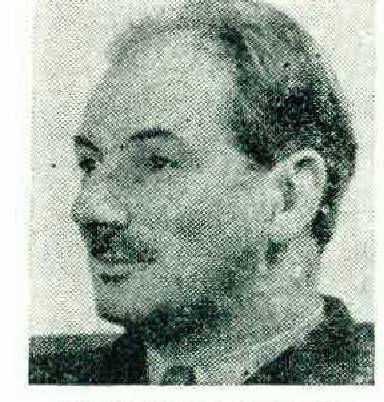
IN THESE times, many men search their souls. Lewis Mumford has preferred to dig into man’s history to understand our age. The Condition of Man, formally, is the third volume of a trilogy started in 1930 which includes Technics and Civilization and The Culture of Cities. In mood, though, it stands closer to his first book. The Story of Utopias, published in 1922. At that time Mr. Mumford was part of a loose group which included Waldo Frank, Van Wyck Brooks, Paul Rosenfeld — an intellectual generation that had grown up with Randolph Bourne and had been nourished by Thorstein Veblen and Alfred Stieglitz. Their fight was against the cold Puritan tradition in American letters, the idolatry of the machine and the crass materialism of the twenties. The core of their belief was an insistence on the development of Alan as a cultural being, not an automaton ground out by a machine age.
That belief is the guiding thread of Lewis Mumford’s latest book. In the first of the trilogy he was concerned with the mechanical environment in which man worked; in the second with the social environment, the City, which unites — and isolates — Man; this volume treats of what Mr. Mumford calls the Idolum, man’s symbolic environment, the world of ideas, spirit, and culture. The book is a dissection of the modern personality, uncovering the components, inherited or residual, of earlier periods.
What I find important in Mumford is his method of teaching, for his prescriptions are integrated in his work. In an age of vocational specialization, he has produced a remarkable “humanistic” synthesis. Nearly every page shows sharp and lively insight, and his mind, roaming over many fields, constantly weaves together illustrative bits from political theory, literature, and art to construct his arguments. He ranges from discussions of men such as Dante and Loyola, Calvin and Rousseau, Marx and Freud, to the elaboration of general concepts which have marked historical periods such as the Baroque, Romanticism, Utilitarianism.
One can question Mr. Mumford’s assertion that Protestantism developed as an enemy of Capitalism (it is true that Capitalism, particularly in Italy, flourished under the Church doctrine of “vicarious performance,” but Protestantism broke the hierarchical system which held back the rise of Capitalism); or that Romanticism is essentially a contribution to democratic ideology (yet the dialectical evolution of ideas has brought Romanticism to the fore as a leading doctrine of Fascism); but this in no way detracts from the worth of the book and the slew of challenging ideas it offers.
While Mr. Mumford indicts greed as the source of modern evil, he does not counterpose theology, but a vitalized humanism. Often this humanism assumes a mystical character, which seems to lead to the creation of a secular religion, if that paradox can be used. But on the whole, Mr. Mumford’s work is an impressive demonstration of the sensitiveness and intelligence which a truly liberal education can produce. Harcourt, Brace, $5,00.
DANIEL BELL