Fancy Fish

By HENRY NOBEL HALL
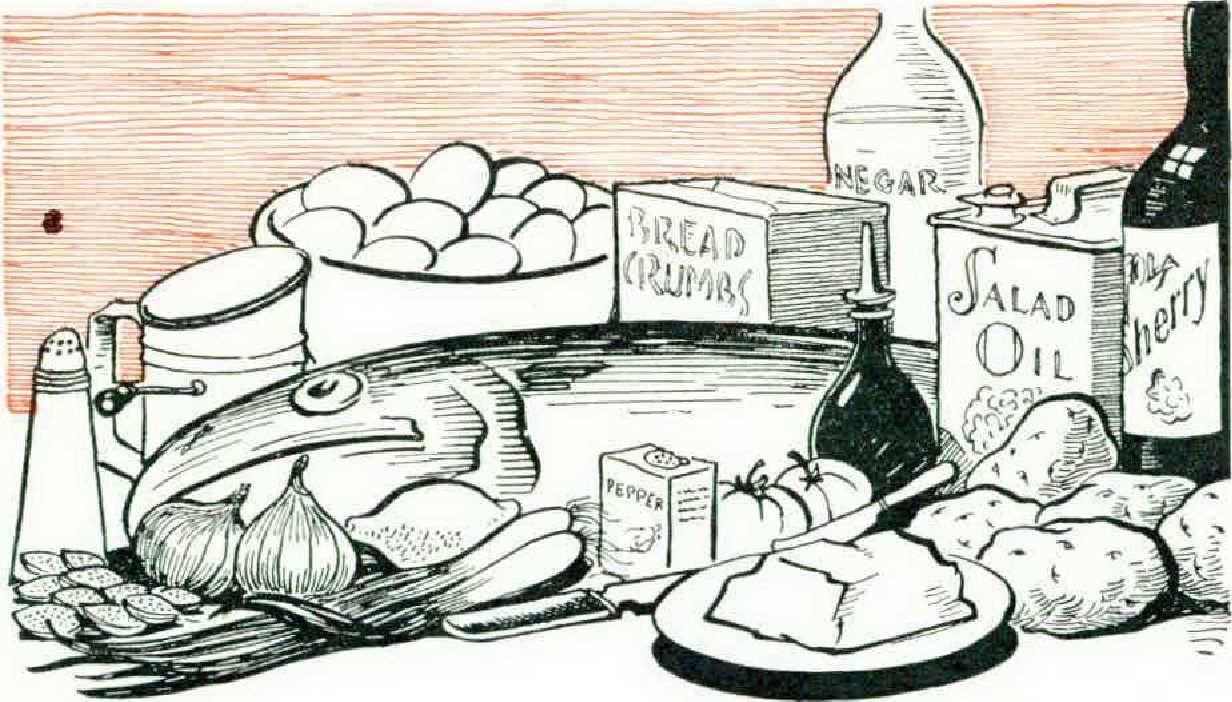
FISH, hot or cold, is sound summer fare. In America it is too often baked or fried. Of course, baked, no fault can be found with a noble pompano or a buxom lady shad stuffed with her own eggs, a profusion of small onions, bread crumbs soaked in sherry, and beaten egg. Even the humble porgy is good baked in a closed glass dish. And there are few better ways of doing fish fillets than frying them in equal parts of butter and olive oil, both scarce in wartime. But fish is so delicate that it is far better poached or made into puddings or soufflés.
Take half a pound of any cold poached fish, but preferably cod, halibut, or salmon — even canned salmon will do. Remove from it all skin and bones, mash and beat it well with a fork, moistening it with fish stock or milk, exactly as in making mashed potatoes. Now take half a pound of mashed potatoes of the same consistency as the mashed fish. Mix the two very thoroughly, beating until the mixture is light. Add the yolks of four eggs, and finally fold in the stiffly beaten whites. Pour the mixture into a well-buttered dish, which must not be more than two-thirds full, and bake it in a moderate oven, hot enough to make the mixture rise, and cook it thoroughly without scorching the outside— the golden rule for cooking all soufflés.
If any of this pudding is left over, it is delicious cut into one-inch slices and fried for breakfast. By omitting the mashed potatoes and working a thick white sauce into the mashed and beaten fish a perfect fish soufflé can be had. But like all souffles, it must be eaten at once. A soufflé never waits for the guests: the guests wait at table for the soufflé.
To poach fish — cod, fresh haddock, halibut — plain water is not enough. Always use fish stock. Two quarts will be ample for a baby cod. Throw half a pound of sliced onions and a couple of ounces of parsley stalks into boiling water for three minutes. Drain, and lay them in a buttered stewpan. On top put two pounds of fish heads, bones, and skin, add the juice of a lemon and any mushroom parings you happen to have (these lend distinction but are not essential), and put on the fire, shaking the saucepan until the fish debris has surrendered all the juices. Pour on two quarts of cold water, add a tablespoonful of vinegar, and bring to a boil; skim it carefully and boil it gently for twenty minutes, no more. Strain this stock, let it get cold, and use it to poach your fish.
If the fish is to be cooked whole, place it in cold fish stock, bring the stock slowly to a boil, take it off the fire, skim it carefully, and poach the fish until it is cooked, never allowing the water to boil again. It must remain below 210 degrees. If the fish is cooked in slices, these must be cut thick and plunged into boiling fish stock, which will go off the boil, and the slices are poached as above.
For an interesting and delicious fish consommé, all you have to do is to make some fish stock, substituting half a bottle of white wine for the tablespoonful of vinegar. Strain it with great care, using a Chinese strainer if you have one. Allow it to got cold before using, so that any impurities will sink to the bottom. Take perfectly clear stock, bring it to a boil, pour it into cups garnished with half a teaspoonful of caviar, and add a little sherry as for clear turtle. It will send off a dinner party to a good start.
Escabéché is a wonderful cold entrée. Put a cupful of oil in a skillet with two cloves of garlic and an ounce of peeled shallots or two ounces of sliced onion. Cook it slowly. You are not trying to fry the aromates, but to perfume the oil. Then in the strained oil fry some very lightly floured smelts until they are a rich golden brown. Take out the fish and pack them in a deep dish; pour over them the hot oil well beaten with half its volume of vinegar and a like quantity of orange juice with a few drops of tabasco. Serve icecold. The smelts may be replaced by thick slices of any other fish, sea bass being particularly fine.
Speaking of bass, here is a very simple and tasty recipe. Place a fine bass in a buttered glass baking dish that can come to table. Salt and pepper it. Mix half a cupful of chopped mushrooms, half a cupful of chopped almonds, and half a cupful of butter; spread the mixture over the fish and bake in a slow oven.
Now for a simplification of the famous sole Dugléré, invented by the man who, with Carême and Escoffier, made French cuisine what it was before the war. Butter a shallow baking dish that will just hold your fillets of fish packed close together, pepper and salt them well, cover them with a thin layer of very finely sliced white onions and a thick layer of peeled tomatoes, seeded and cut in small pieces. In between put a good fagot of parsley stems. Bake the fish in a slow oven until the tomato has melted and the onion begins to appear. Remove the bunch of parsley stems and send to table. Nothing could be simpler; yet the delicate taste never fails to please.
One of the finest of all curries is made with fillets of fish. Cut them in half lengthwise, making tiny diagonal incisions on the outside so that they will fold. Dredge them with flour, fold them in thirds, and pat them gently so that they will stay folded. Gently fry these little squares to a golden brown and lay them in a glass dish. Now in a heavy skillet put a lump of butter and a pound of finely chopped onion; cook gently until they have given up their juice. Add a heaping tablespoonful of curry powder and a little more butter, stir well, add a pint of fish stock twice the usual strength, and cook for twenty minutes. Then, without straining, pour this rich curry over your fillets. Place the whole in the oven for ten minutes and bring to table.
Once a fish has been filleted it needs delicate treatment. Take a shallow rectangular dish, butter it well, and in it place the fillets. Only one layer, but the dish must be well covered. Squeeze the juice of a lemon over the fillets and moisten them with two tablespoonfuls of fish stock. If you have no stock, use cold water. Put the dish in a slow oven so that the fish may poach gently in their own liquor. They must remain perfectly white. Bring them to table in the glass dish, with any good sauce by the side. A sure winner for a luncheon party is to drain off any cooking liquor they may have given up, pour over them a rich white sauce flavored with cheese (sauce Mornay), sprinkle with cheese, dot with tiny bits of butter, and put them back in the oven to brown. Mashed potatoes are the only permissible side dish. Never send green vegetables to table with fish.
To this there is one exception: spinach. There are many food affinities, but fish, cheese, and spinach form the ideal triangle in cooking. It is no trouble at all to make fillets Florentine, and they are a splendid entrée. Preceded by a few oysters, followed by a pheasant with braised celery, and a little fruit, it makes an ideal luncheon. Poach your fillets as above, lay them on a bed of shredded spinach stewed in butter, cover them with sauce Mornay, and glaze in a hot oven.
A pleasant way to do sea bass is to treat it à la Nicoise. Put two or three tablespoonfuls of oil in a skillet; brown your fish quickly on both sides and place it in a baking dish. Then put in your oil a couple of pounds of tomatoes, skinned and sliced, and cook them on a rapid fire. Pour them on top of the black bass and set the dish in a moderate oven until the fish is cooked. Send the fish to table liberally sprinkled with chopped tarragon, and caper berries. If tarragon is out of season, use chopped parsley leaves.
No one can beat the Chinese when it comes to cooking shrimps — and of all culinary heresies, they cook them with green beans! But heresy or not, take a pound of young string beans and parboil them for five minutes in just enough water to cover them; drain them and allow them to cool. Cut in thick slices half a pound of white onions. Peel, cut in two lengthwise, and wash under running water one pound of large shrimps. Put two tablespoonfuls of peanut oil in an iron skillet, and when it is hot throw in your shrimps and stir them quickly until they have curled and turned white. Then add the raw sliced onion and parboiled beans. Shake them all up together in the pan for a couple of minutes. Then add a cupful or more of fish stock (rich chicken consommé is to my mind better) and simmer for five minutes, adding pepper and salt and Chinese flavoring powder if you have it. Remove the lid, thicken the sauce with cornstarch made into a smooth paste with a little water, and cook the shrimps for a few minutes longer, stirring all the time. Served with plain boiled rice, this is a most appetizing dish.
Much would be added to the American way of life by a more liberal use of fish in sandwiches and for canapés to serve with cocktails. A wonderful sandwich can be made out of thin, fresh white bread, spread with mayonnaise, and some cold cod or halibut carefully flaked with a few sprigs of watercress.
But for canapés that will turn a cocktail party into a riot, mix one tablespoonful of chopped parsley leaves, one tablespoonful of finely chopped white of scallion, one teaspoonful of mixed salt and pepper, two tablespoonfuls of oil, and one tablespoonful of tarragon vinegar. Beat this sauce well and work into it any cold fish well mashed with a fork. With a small biscuit cutter, cut out rounds of fresh white bread, spread them with this thick paste, and top with a thin slice of sweet pickled gherkin.