The Maestro

By HOWARD TAUBMAN
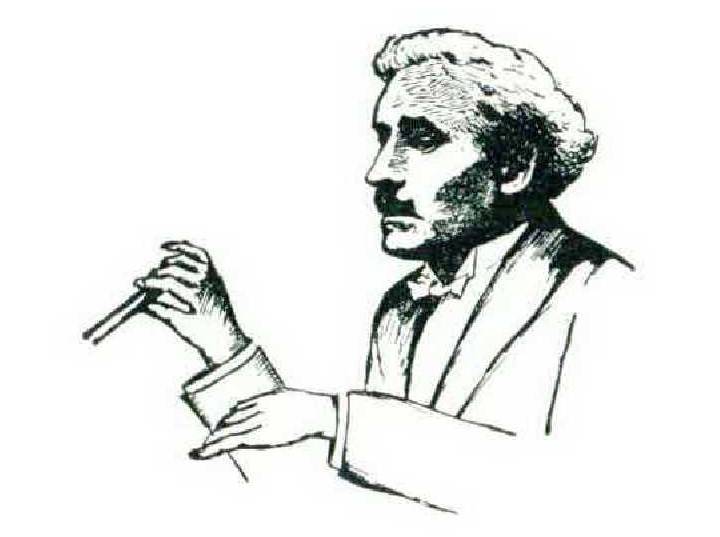
THE essence of the conductor’s job is to lead; and if he does so with success, he tends to become dictatorial. Toscanini has said that in life he is a democrat but in music a monarchist — with himself, of course, as the monarch. Watch him at rehearsals and you soon find out that he means it.
He was once rehearsing the first performance of a new symphony with the New York Philharmonic. In front of him was the manuscript of the score, fresh from the composer’s hand, the pages unbound. When the men did not give him what he wished, Toscanini picked up the score and Hung it at them. The pages scattered like leaves in the wind. Several of the musicians hastened to pick them up, and the concertmaster slowly assembled them and handed Toscanini the ordered pile. Still raging, Toscanini promptly flung the manuscript at the men again, and once again a shower of pages fluttered over the orchestra.
Toscanini’s habit of hurling lhe score to the floor troubled the orderly instincts of Emil Greinert, the orchestra’s librarian. He observed that the maestro’s first move, when he became furious during a rehearsal, was to grip his baton in both hands and to snap it violently. If he succeeded in breaking it, he usually cooled off and the rehearsal went on; if he didn’t, there was score-flinging.
The librarian made it his business to have on hand a large supply of reasonably fragile batons. If a rehearsal went badly, Toscanini might break as many as half a dozen batons, and the librarian would dash off to the wings to get spares, shouting to his assistant: “Lumber, lumber!”
Toscanini’s rehearsals are fiercely concentrated and intense. “Every rehearsal is like a concert to me,” he says, “and every concert like a debut.” Wearing his shiny black-alpaca jacket, cut tike a cadet’s coat, with a stand-up collar, Toscanini comes out on the stage quickly, picks up his baton, and gets down to business. 11 is comments are strictly on the music — in a mixture of Italian and English phrases. He pleads with his men to sing. He asks them to “put something into it.” Once lie asked a vocal soloist to “make a face like an angel.”
lie sings along with the orchestra in a strangely cracked voice, low and hoarse. He sometimes forgets about this habit. Once, in Salzburg, during a tense dress rehearsal, his voice howled out above the instruments. He halted the orchestra in amazement. “For the love of God,” he cried, “who is singing here?”
When a performer violates in performance the preparations made in rehearsal, Toscanini’s patience has a low boiling point. Years ago he fought against singers who held on to high notes as long as their breath lasted, since this was a liberty they did not dare take in rehearsal. Caruso did it once, and when he finally let go of the note with an explosion of sound, the maestro said in a stage whisper, “A1 finite, Caruso?”
When Toscanini did Otcllo at the Metropolitan with Leo Slezak in the title role, the big tenor kept omitting the same measures, inexplicably, during rehearsal. Toscanini made a point of visiting Slezak in his dressing room before the performance to remind him of the phrase and to play it on the piano for him. When Slezak forgot it once more, Toscanini paused in the middle of the aria and yelled, “Porco Slezak, porco Slezak!'”
Toscanini’s outbursts of fury get results — sometimes. He once bawled out a pianist so violently that the poor fellow turned white and could not do anything accurately during the rest of the session. Another time he flung a beautiful gift watch to the floor, smashing il to bits. I le was then given a bulky Ingersoll by the players, with an inscription, “For rehearsals.”
When he took over the NliC Symphony Orchestra, the officials of t he company prepared themselves for the inevitable rages. They assigned a functionary to sit in at rehearsals and telephone bulletins to the top executives. Occasionally the bulletins went like this: “Clear, calm “Breeze coming up “Calm again.” At other times they went: “Rough wind ”; “Gale blowing”; “Tornado “SOS.” The last meant that Toscanini had rushed off the podium and had barricaded himself in his dressing room. It took a veteran of many years’ experience to deal with him at this juncture.
2
The conductor’s dictatorial urge expresses itself in many ways: Toscanini is tempestuous; Stokowski is coldly ironical ; Koussevitzky flushes and becomes stern; Mengelberg used to deliver long, didacl ie discourse’s. Sir Thomas Beecham’s manner is distant though biting. During a rehearsal with New York City’s WPA Orchestra, he discovered that there was no organist for a work that demanded the organ. He would not go on until an organist was obtained. The orchestra manager asked the pianist of the ensemble whether she could play the organ. No, but she was willing to try. The rehearsal began and the young lady entered — badly, of coursewith the first measures of the organ part. Sir Thomas sat back, his arms folded, and said, “Young woman, what are you doing at the monolith?” Without a word, she slipped back to the piano.
Sir Thomas, through a career of more t han forty years, has become a law unto himself. The basic reasons are understandable. A rich man by inheritance, he has been able to accomplish what he wanted, fighting against stuffy tradition and speaking his mind bluntly. Now in Ids sixties, he is a wonderfully crotchety and outspoken citizen. When an audience applauded a soloist before the orcheslra finished, he shouted at them, “Respect for the music!”
His entrance upon the scene as a guest conductor at tin.’ Metropolitan Opera was something new even for that home of eccentricity and temperament. Sir Thomas began by breaking all the rules. He walked into Ids first rehearsal with a big fat cigar stuck in his mouth and kept puffing away under a SMOKING PROHIBITED sign.
Another time he sat with folded arms, puffing at a cigar, and listened to the chorus sing through a long scene. He did not interrupt to criticize or comment. When the passage was over he said, “It reminds me of the Salv ation Army.”
Bruno Walter is gentle and persuasive in his handling of an orchestra. He works extensively on the emotional and interpretive aspects of a score, paying a major orchestra the compliment of assuming that it knows the mechanics. Rehearsing Strauss’s Don Juan, he said to the New York Philharmonic-Symphony, “If 1 were a woman, I should not believe in your seductiveness.” If an orchestra has not the graceful touch he seeks, he suggests, “Now you must smile.”
There is grave danger in this approach, for instrumentalists as a rule are literal-minded, and they want instructions in precise musical terms. Bruno Walter is experienced enough to succeed writh the poetic touch. Lesser men run into trouble. One conductor used highfalutin talk through a rehearsal, and at one point said to a horn player, “Now you must sound as if we were alone on a high mountain.” The weary horn player wailed, “Tell me one tiling, maestro: what do you want, piano or forte?”
Photographers seem to bring out the most temperamental aspects of the great men of the podium. When a cameraman took a flash-bulb shot of Toscanini at the end of a concert, the maestro refused to return to the stage for curtain calls, as if ihe audience had been guilty of the breach of etiquette.
Slokowski handled an encounter with a photographer more amiably. After he had made Fantasia with Walt Disney, the studio decided that it wan led a new set of pictures of Stokowski rehearsing his Philadelphia Orchestra. A cameraman went down to Philadelphia and planted himself unobtrusively among the bull fiddles. Stokowski hurried in for the rehearsal and gave the signal to start, as was his custom, almost as soon as his feet landed on the podium. When he turned to cue in the bull fiddles, he saw the stranger with the camera. He objected to his presence, but when the photographer argued, Stokowski relented. “All right, sit among the violas.”
The photographer, who knew nothing about music, wandered along the stage, peering intently at the instruments and looking vainly for v iolas. The men laughed. Stokowski, with a straight face, clicked his heels, bent from the waist, gave his arm to the photographer, and led him ceremoniously to the violas. Months later the photographer ran into Stokowski and greeted him with the challenge, “You don’t remember me?” Stokowski smiled, “Aren’t you the viola player?”
If conductors turn into dictators, they are frequently obliged to by force of circumstances. Differences of opinion with boards of directors occasionally drive a conductor with ideas and personality to light; and when he wins, more than ever he is likely to feel that he is the supreme high command. If he does win, it is perhaps belter for his orchestra.
In the long association of Koussevitzky with the Boston Symphony, you would think that sweetness and light have always prevailed. Actually there has been more than one conflict between conductor and trustees. A trustee who contributed heavily to the deficit once said to Koussevitzky that if the men did something of which he disapproved he would disband the orchestra. The conductor’s reply was: “What right have you to disband it? Has it ever occurred to you that the orchestra could disband you?”
Walter Damrosch has known how to make Ids way without fuss or ferment, or so il has seemed lo those who have studied the smooth course of his long career. At eighty-one he is still sailing through life serenely, accepting honors and staying in the limelight consistently and without apparent effort.
Damrosch is the perfect diplomat. I once asked him about America’s younger composers. He answered in general terms, saying they were serious, promising, and so on. “What do you really think of them?” I asked. “Well,” he paused, “1 hate them.” Damrosch is not the only conductor who feels that way. A composer called up a newspaper one day to ask whether his work w7as on a certain orchestra’s forthcoming program. It was. The conductor had not bothered to notify the composer.
Being a young man himself, a chap like Erich Leinsdorf shows more regard for the feelings of the young composer. He was preparing a half-hour broadcast of a Mozart symphony and two short pieces by Paul Creston, an American. A couple of minutes had to be cut from the program. " Let’s not leave out the living composer’s music,” he said. “Let’s cut out the Mozart minuet. Who knows, maybe it was written by Stissmayer.”
- HOWARD TAUBMAN is the Music Editor of the New York Timex. His latest book, Music on My. Heat, from which these excerpts are taken, will be published this autumn by Simon and Schuster.↩