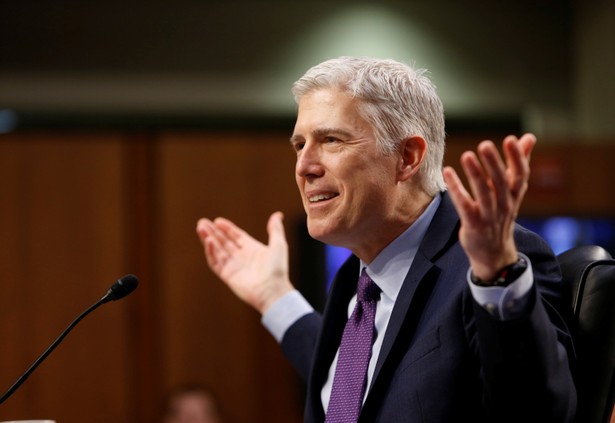
—The Senate Judiciary Committee begins deliberations today on the nomination of Judge Neil Gorsuch to the U.S. Supreme Court. Republicans need five more Democratic votes to overcome a filibuster that Democrats have vowed to mount on the nomination.
—We’re tracking the news stories of the day below. All updates are in Eastern Daylight Time (GMT -4).
Trump Donates His First-Quarter Paycheck to the National Park Service
Carlos Barria / Reuters
President Trump donated his first three months of salary to the National Park Service (NPS) on Monday. The total comes to $78,333.32, which Sean Spicer, the White House spokesman, handed in the form of a check to an NPS employee. During his election campaign, Trump promised to donate his $400,000 annual salary if elected, even asking for the press corps’s help in deciding where to send it. The NPS is overseen by the Department of Interior, which said the money would go toward maintaining historic battlefield sites. At these areas alone, the NPS faces a $229 million budget shortfall. Interior Secretary Ryan Zinke has said the NPS faces an overall maintenance shortfall of $12 billion, and he’s made this one of his top priorities. But it’s unclear how that shortfall will be made up because Trump’s “skinny” budget calls for a 12 percent cut to the Interior Department.
UPDATE: Democrats Have Enough Votes to Filibuster Gorsuch's Nomination; GOP Vows to Press Ahead
(Joshua Roberts / Reuters)
The Senate Judiciary Committee voted 11-9 along party lines Monday to move the nomination of Judge Neil Gorsuch to a full Senate vote. The move comes after Senate Democrats said they have the 41 votes needed to filibuster Gorsuch’s nomination, likely forcing Republicans to use the so-called “nuclear option” and put the Supreme Court nominee’s appointment to a full vote. Gorsuch, President Trump’s nominee to fill the vacancy created by the death last year of Judge Antonin Scalia, has the support of all 52 Republicans in the Senate, as well as of at least three Democrats—Joe Manchin of West Virginia, Heidi Heitkamp of North Dakota, and Joe Donnelly of Indiana—from conservative states that went to Trump. He needed 60 votes—a supermajority—for his nomination to be approved. The “nuclear option” would allow Gorsuch’s nomination to be approved by a simple majority of senators rather than the 60-vote supermajority. Democrats, who are still angry over the Republican refusal to hold hearings for Judge Merrick Garland, whom President Obama nominated to fill Scalia’s spot on the court, insist that if Republicans don’t have 60 votes for Gorsuch, Trump should nominate a judge who can win the support of a supermajority of lawmakers. Despite their opposition, however, Gorsuch is expected to be confirmed.
President Trump meets Egyptian President Abdel Fattah al-Sisi in the Oval Office on April 3, 2017. (Kevin Lamarque / Reuters)
President Trump welcomed Egyptian President Abdel Fattah al-Sisi to the White House Monday, marking the Arab leader’s first visit to Washington since he assumed power following former President Mohamed Morsi’s ouster in 2013. “I just want to let everybody know, in case there was any doubt, that we are very much behind President al-Sisi,” Trump told reporters at the meeting. “He’s done a fantastic job in a very difficult situation. We are very much behind Egypt and the people of Egypt.” Though Egypt has been a longstanding U.S. ally—receiving approximately $1.3 billion in U.S. military aid annually—Sisi was never afforded an invitation to the White House under the Obama administration. Indeed, Obama froze aid to the country for two years after Sisi, then Egypt’s defense minister, led a popular uprising against Morsi’s Muslim Brotherhood-led government, which was elected the previous year. The U.S.-Egyptian relationship was further strained by alleged human-rights abuses by the Sisi government, including mass arrests, enforced disappearances, and extrajudicial executions. Though Trump noted that both countries “have a few things” they do not agree upon, he said the two countries will work together “to fight terrorism and other things.”
Ecuador's New Socialist President Is Good News for Julian Assange
Mariana Bazo / Reuters
Socialist candidate Lenín Moreno narrowly won Ecuador’s presidential election Sunday night, though his opponent has demanded a recount and protesters from both sides took to the streets. Moreno’s win bucked a trend of center-right victories in South America, and was also good news for Julian Assange, whose fate as an asylee in Ecuador’s embassy in London was predicated on the win. Moreno, a former vice president, won 51 percent of the vote over his opponent, Guillermo Lasso. Lasso was a former banker who offered voters a change from leftist economic policies he blamed for the country’s sagging economy. He also promised to kick Assange out of the embassy within 30 days of taking office. At least one respected exit poll had put Lasso ahead Sunday night, so when news of Moreno’s win came later that evening, Lasso denounced it as fraudulent, saying, “We won’t let them cheat us!” His supporters stormed the country’s election headquarters and battled riot police. As oil prices and exports have fallen in the region, countries like Argentina, Peru, and Brazil have turned to center-right leaders who’ve promised fiscal reforms. But by selecting Moreno, Ecuador remains in the company of Socialist-led Bolivia and Venezuela.
Blast Reported at Metro Station in St. Petersburg, Russia
A general view of St. Petersburg, Russia (Maxim Zmeyev / Reuters)
Updated at 9 a.m.
Russian news reports say an explosion in the St. Petersburg metro system has killed at least people. The blast reportedly occurred at the Sennaya Square metro station.
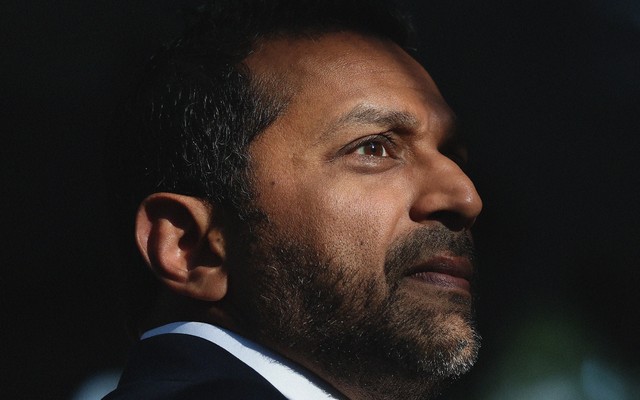
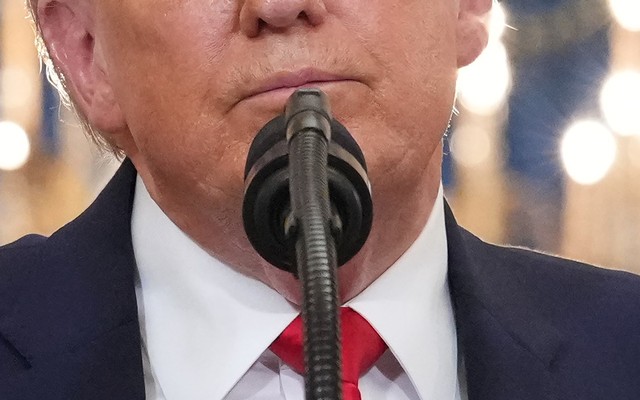
Kash Patel has alarmed colleagues with episodes of excessive drinking and unexplained absences.
On Friday, April 10, as FBI Director Kash Patel was preparing to leave work for the weekend, he struggled to log into an internal computer system. He quickly became convinced that he had been locked out, and he panicked, frantically calling aides and allies to announce that he had been fired by the White House, according to nine people familiar with his outreach. Two of these people described his behavior as a “freak-out.”
Patel oversees an agency that employs roughly 38,000 people, including many who are trained to investigate and verify information that can be presented under oath in a court of law. News of his emotional outburst ricocheted through the bureau, prompting chatter among officials and, in some corners of the building, expressions of relief. The White House fielded calls from the bureau and from members of Congress asking who was now in charge of the FBI.
I spent 10 months working at the institution because I thought I could help protect it. What I observed there is far worse than the public knows.
On the day I was laid off from the Kennedy Center, I felt a little like Dolley Madison saving the Stuart portrait of Washington before the British sacked the capital. I was the staffer in charge of the artworks in the building. A crucial difference is that my institution, unlike the White House in 1814, had been on fire for months.
About a year elapsed between the moment President Trump took over the Kennedy Center in early 2025 and his declaration this past February that he’d decided to shut down the nation’s cultural center for two years. In between, we had seen artist cancellations, shrinking audiences, firings of old staffers and influxes of new ones—a lot of drama, just not onstage. The date Trump announced for the closure was July 4, the country’s 250th birthday, an event that I had been hired to help commemorate as the institution’s first curator of visual arts and special programming.
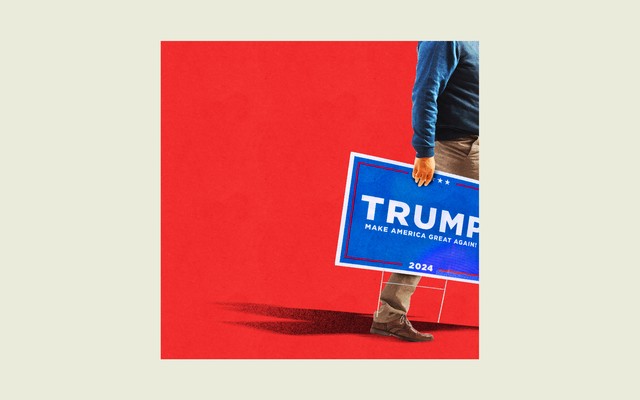
A shocking number of the president’s supporters have turned against him.
Tomas Montoya has sold festival foods—funnel cakes, burgers, hot dogs—across the American Southwest for years. But lately, business has been rough. Costs are up, so he’s increased his prices. Employees are begging for hours he can’t give them. In Arizona, where he lives, Montoya pays $6 a gallon to fill up his food trucks with diesel. This summer, he may have to skip the California leg of his festival route because fuel is even more expensive there.
“It’s Trump,” Montoya told us outside a popular Hispanic grocery store in Casa Grande, Arizona, much of which sits in one of the most evenly divided House districts in the country. Montoya voted for President Trump in 2024, but now, well, frustrated doesn’t begin to cover how he’s feeling. The president is bragging about the economy, even though everyone Montoya knows is hurting; he promised to stop wars, but started one in Iran. “When Trump opens his mouth, three-quarters of what he says is stories, lies,” Montoya said. He’s planning to vote in the midterm elections this fall. But he may not choose a Republican.
Trump has developed a reputation for backing down from his most over-the-top threats, but dismissing his words is a mistake.
Twelve hours after Donald Trump warned that a “whole civilization will die tonight, never to be brought back again”—after he’d previously threatened to bomb Iran “back to the Stone Ages”—the president agreed to a temporary cease-fire. Since then, initial peace negotiations failed and Trump responded with a naval blockade of the Strait of Hormuz; a new round of talks may begin soon.
But what to do with his everyone in Iran is going to die comments last week? Because they were designed to pressure Iran to come to the table, and because the promised carnage did not materialize, many observers simply moved on, explaining away Trump’s threats as a ham-fisted negotiation tactic, some kind of 5-D chess, or another example of the president’s propensity to “TACO” (Trump Always Chickens Out).
The vice president has decided he’s a more accomplished theologian than Leo XIV.
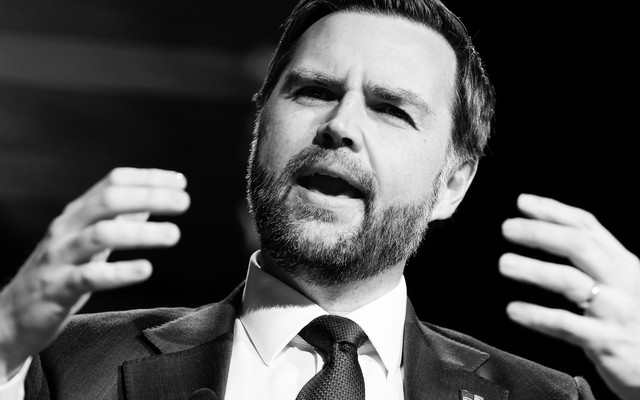
The Trump administration doesn’t seem to have many rules, but one of them is that once the president picks a fight, his posse must show up to support him, no matter how ill-advised the conflict. And few senior officials are more eager to back up the boss in every embarrassing beef than Vice President Vance, who recently seems to have decided that he, and not Pope Leo XIV, is the true arbiter of Catholic doctrine.
President Trump is personally angry with Leo because the pontiff has been deeply critical of America’s war of choice in Iran. Accordingly, Trump lashed out at His Holiness twice over the past few days. Vance might have seen this as a valuable opportunity to say nothing and let the storm pass; Leo, naturally, doesn’t seem to care all that much what Trump thinks. (As my colleague Liz Bruenig wrote, Leo answers to a higher authority.) Had the vice president remained silent, Trump might have moved on, and Vance, a relatively recent convert to Catholicism, would have been able to stay out of a dustup between his president and his spiritual leader.
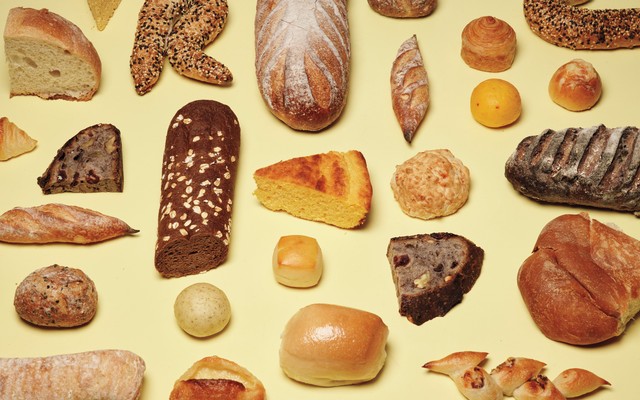
Thirteen thousand miles. Infinite contenders. One beautiful loaf.
This article was featured in the One Story to Read Today newsletter. Sign up for it here.
Here is the promise you and I must cling to across the thousands of words that follow: At some point within this text, I will reveal to you what—after 555 responses, 13,000 miles of travel, and months of monomaniacal research—I have determined to be the best free restaurant bread in America. I will not attempt to slither to the moral high ground, arguing that best is a meaningless measure, or insisting that all bread is dear in its own way. Even if you attempt to betray me—for instance, by merely scanning the text that follows for the phrase Here it is: the best free restaurant bread in America—I will uphold my end of the bargain.
This article was featured in the One Story to Read Today newsletter. Sign up for it here.
Maybe you’ve seen photos of Tehran in the 1970s, just before the Islamic Revolution: images of young women going to work in miniskirts, of couples making out in parks while wearing bell-bottoms, of people at pools in bikinis. It looks like Paris or Milan or Los Angeles. But in 1979 the revolution happened, and now Tehran looks like something from an earlier century.
Sometimes I think that our whole world has become kind of like that—going backwards in time. The religious movements thriving in today’s secularized age are the traditionalist ones that dissent from large parts of contemporary culture—not only the Shiite Islam of post-revolution Iran, but Orthodox Judaism and conservative Catholicism. Young Americans are flooding into Eastern Orthodox churches.
In this episode of Galaxy Brain, Charlie Warzel speaks with Josh Owens, a videographer and the author of a memoir about his years working for Infowars, the media company of the conspiracy theorist Alex Jones. Owens traces his journey from a film-school student who stumbled onto Jones’s radio show to an insider who spent four years filming, editing, and traveling for the organization. Owens describes how Jones’s conspiracy machine works, as well as how his own moral compass was scrambled by Jones’s manipulative management. The conversation explores radicalization, the conspiratorial media ecosystem Jones helped create, and how Owens was able to pull himself out.
This article contains spoilers through the Season 2 finale of The Pitt.
The first season of The Pitt presented an emergency room brought to the absolute limits of its capabilities, unfolding as 15 hours of real-time drama at the fictional Pittsburgh Trauma Medical Center that culminated in a deluge of patients after a mass shooting. It was exceptional stuff, a throwback to classic medical TV dramas with just enough of a modern, high-octane twist, and was ladened with awards. But it also set the second season up with a sophomore-slump dilemma—how do you top that?
The answer: You don’t try. The Pitt’s excellent Season 2 didn’t attempt to match or outdo the crisis of last year’s PittFest calamity. Instead, it managed to wring equally compelling drama out of all of its characters just having a really, really crappy day.
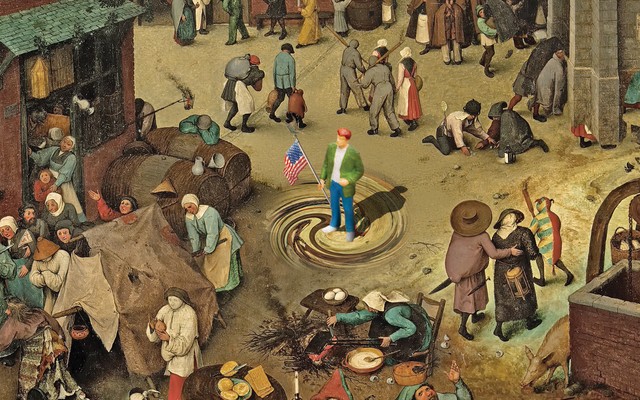
Has the president failed to learn the lessons of classic cautionary fables—or does he just understand them in his own novel ways?
This is an edition of The Atlantic Daily, a newsletter that guides you through the biggest stories of the day, helps you discover new ideas, and recommends the best in culture. Sign up for it here.
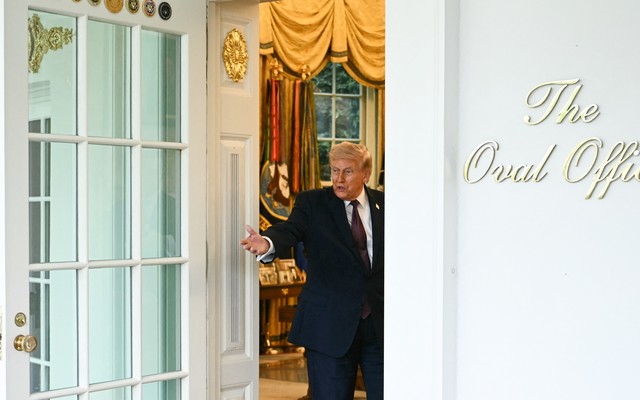
Donald Trump, as even some of his fiercest admirers will admit, is not always a paragon of personal virtue. Although the president’s aides sometimes treat him like he is a toddler, as the political scientist Daniel Drezner has observed, he’s not an especially well-behaved one. Trump often acts in ways that would result in detention or other punishment for an elementary-school student: bald-faced dishonesty, name-calling, unkindness, refusal to share, and an inability to use an inside voice. Put another way, Trump sometimes seems as though he missed out on all of the lessons that children are supposed to learn from fables and fairy tales. (Meanwhile, his administration is seeking to evict some lessons about tolerance from classrooms.) But perhaps that’s uncharitable: Trump isn’t ignoring those fables; he’s just taking different lessons away from them than the familiar ones. Here’s a set of classic stories and their morals, reinterpreted for MAGA political correctness.