House Republicans introduced their Obamacare repeal and replace legislation, Trump signs a new executive order on immigration, and more from the United States and around the world.
—House Republicans released their plan to repeal and replace the Affordable Care Act, hoping to dismantle a signature law of President Obama’s tenure. More here
—The White House unveiled its revised executive order on immigration, nearly a month after a federal appeals court declined to reinstate the ban on travelers from seven Muslim or predominantly Muslim countries. More here
—We’re tracking the news stories of the day below. All updates are in Eastern Standard Time (GMT -5).
House Republicans Introduce Their Obamacare Repeal-and-Replace Legislation
Joshua Roberts / Reuters
House Republicans released their plan to repeal and replace the Affordable Care Act on Monday night, hoping to dismantle a signature law of President Obama’s tenure. The House Energy and Commerce and Ways and Means committees released two components of the so-called American Health Care Act, which both keeps some provisions of Obamacare and reshapes health policy in the U.S. My colleague Vann R. Newkirk II breaks down the different aspects of the proposed legislation, including how it reshapes Medicaid, uses tax credits, repeals taxes, and changes federal funding. In part, he writes:
At first glance, it appears that the most likely result nationally would be a net loss of coverage and a decrease in insurance affordability for many people who are the most vulnerable, but at least some of that effect might be offset by some enhanced state Medicaid payment capabilities and the stability fund.
The legislation will have a tough road ahead, and not just from Democrats. As my colleague Russell Berman writes, some conservative members of Congress said it doesn’t go far enough.
A Diplomatic Tit-for-Tat Between North Korea and Malaysia
Athit Perawongmetha / Reuters
Tensions between North Korea and Malaysia escalated Monday after the North Korean government announced it was temporarily banning Malaysians from leaving the country. Officials say the move was to protect its diplomats and citizens in Malaysia in the aftermath of the assassination of leader Kim Jong Un’s half brother. Earlier on Monday, Kang Chol, North Korea’s ambassador to Malaysia, was expelled from the country for making disparaging remarks against the country. Three weeks ago in the Kuala Lumpur International Airport, two women, one Vietnamese and one Indonesian, rubbed a VX nerve agent on Kim Jong Nam’s face. He died 20 minutes later. Pyongyang is suspected of orchestrating the February 13 assassination. The two women, who have been charged with murder, claim they thought they were playing a television game. Meanwhile, two North Koreans wanted by Malaysian police in the assassination are still hiding in the North Korean embassy in Kuala Lumpur. Police chief Khalid Abu Bakar told reporters, “How much longer do they want to hide in the embassy?” The North Korean government have denied any involvement, claiming Kim died of heart failure.
The White House unveiled its revised executive order on immigration, nearly a month after a federal appeals court declined to reinstate the ban on travelers from seven Muslim or predominantly Muslim countries. The previous order, unveiled in late January after President Trump’s inauguration, barred travelers—including green-card holders—from Iran, Iraq, Libya, Syria, Somalia, Sudan, and Yemen for 90 days. It also suspended the U.S. refugee intake for 120 days, and barred all Syrian refugees until further notice. The order sowed chaos at airports in the U.S. and around the world, leading to protests, as well as legal challenges that said it was discriminatory against Muslims. The new order excludes Iraq from the list of countries whose citizens are barred from entering the U.S. It also no longer indefinitely suspends the entry of Syrian refugees. Kellyanne Conway, Trump’s counselor, told Fox News this morning that Iraq has better “screening and reporting,” thereby allowing its citizens to enter the U.S. The order goes into effect March 16. A senior official from the Department of Homeland Security said: “If you’re in the United States on the effective date of this order, which March 16, it does not apply to you. If you have a valid visa on the effective date of this order, it does not apply to you. If your visa was revoked or provisionally revoked pursuant solely to this executive order on January 27 ... you can still travel on that visa. ... If you have a current, valid, multi-entry visa ... you're not going to have any issues. You’re not covered by this executive order.”
Defense Department to Investigate Marines Who Shared Photos of Nude Female Colleagues
Carlo Allegri / Reuters
The U.S. Department of Defense is investigating an undisclosed number of Marines for soliciting and sharing nude photos of their female colleagues online. The allegations, which were first reported by The War Horse and the Center for Investigative Reporting, concern images that were posted on a Facebook group titled “Marines United,” a 30,000-member community of male-only active Marines and veterans. In addition to sharing photos on the private Facebook page, group members could also access more photos through a Google Drive link. These posts identified the women by their name, rank, and duty station, and often drew sexually explicit and obscene comments. The start of the photo-sharing was traced back to as early late January—less than a month after the Marines welcomed their first female members of an infantry unit. The Marine Corps condemned the behavior in a statement Sunday, which it said “destroys morale, erodes trust and degrades the individual.” A privately circulated 10-page document titled “Office of Marine Corps Communications Public Affairs Guidance,” which detailed the allegations and talking points for senior Marine Corps officials, emphasized providing support for victims and accountability. It also warned of potential responses within the Marines itself, noting: “The story will likely spark shares and discussions across social media, offering venues for Marines and former Marines who may victim blame, i.e., ‘they shouldn’t have taken the photos in the first place,’ or bemoan that they believe the Corps is becoming soft or politically correct.” Thomas James Brennan, the War Horse’s founder and the author of the report, said he received threats against himself and his family since he published the story. Brennan, a Marine veteran and Purple Heart recipient, told the Marine Corps Times: “As a Marine veteran, I stand by the code: honor, courage and commitment. This story was published with the intention of standing up for what is right and staying true to the leadership principle of looking out for Marines and their families.”
Japan Calls North Korea's Missile Launches a 'New Level of Threat'
(Issei Kato / Reuters)
Japanese Prime Minister Shinzo Abe described as “a new level of threat” North Korea’s launch Monday of four ballistic missiles. Three of the missiles fell into Japan’s exclusive economic zone (EEZ) in the Sea of Japan; one fell outside the EEZ, which extends 200 nautical miles from Japan’s coastline. Abe told parliament Japan would coordinate with the U.S. and South Korea over the missile launches, which coincided with a U.S.-South Korean military exercise. Pyongyang views such exercises as a provocation. North Korea’s missile launch also comes three weeks after it fired a medium-range missile, a move that coincided with Abe’s meeting with U.S. President Trump. The latest North Korean launches could embolden Abe to press for more defense spending, an issue the Japanese leader has championed.
Trump's Tweets, Accusations, and the Revised Executive Order on Immigration
President Trump’s weekend was marked by tweets that said his predecessor, Barack Obama, had secretly wiretapped him during the presidential election. A spokesman for Obama dismissed the allegation, for which Trump offered no evidence. James Comey, the FBI director, reportedly denied Obama ordered an such wiretap, as did James Clapper, the former director of national intelligence. The White House in a statement Sunday said it would offer no evidence of Trump’s claim, and said it wouldn’t comment on the controversy, either. The entire episode capped a week that should have been a triumph for Trump, but instead exhibited the chaos that has marked the six weeks since he was inaugurated president. Last Tuesday, Trump was widely praised for his address to a joint session of Congress, but a day later it emerged that Jeff Sessions, the former Alabama senator who now serves as his attorney general, met twice with the Russian envoy to Washington during the presidential campaign. That resulted in calls by Democrats and Republicans for Sessions to recuse himself from any investigation into contacts between Trump’s campaign aides and Russia. The Washington Postprovided a colorful account of the mood at the White House following the revelations:
Back at the White House on Friday morning, Trump summoned his senior aides into the Oval Office, where he simmered with rage, according to several White House officials. He upbraided them over Sessions’s decision to recuse himself, believing that Sessions had succumbed to pressure from the media and other critics instead of fighting with the full defenses of the White House.
Separately, news reports say Trump is expected to sign his revised executive order on immigration as early as today.
Kash Patel has alarmed colleagues with episodes of excessive drinking and unexplained absences.
On Friday, April 10, as FBI Director Kash Patel was preparing to leave work for the weekend, he struggled to log into an internal computer system. He quickly became convinced that he had been locked out, and he panicked, frantically calling aides and allies to announce that he had been fired by the White House, according to nine people familiar with his outreach. Two of these people described his behavior as a “freak-out.”
Patel oversees an agency that employs roughly 38,000 people, including many who are trained to investigate and verify information that can be presented under oath in a court of law. News of his emotional outburst ricocheted through the bureau, prompting chatter among officials and, in some corners of the building, expressions of relief. The White House fielded calls from the bureau and from members of Congress asking who was now in charge of the FBI.
I spent 10 months working at the institution because I thought I could help protect it. What I observed there is far worse than the public knows.
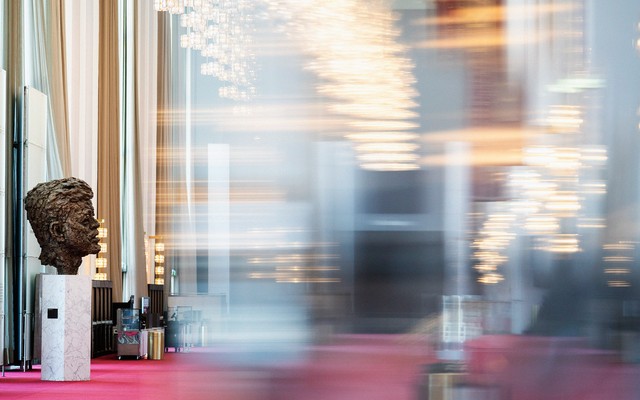
On the day I was laid off from the Kennedy Center, I felt a little like Dolley Madison saving the Stuart portrait of Washington before the British sacked the capital. I was the staffer in charge of the artworks in the building. A crucial difference is that my institution, unlike the White House in 1814, had been on fire for months.
About a year elapsed between the moment President Trump took over the Kennedy Center in early 2025 and his declaration this past February that he’d decided to shut down the nation’s cultural center for two years. In between, we had seen artist cancellations, shrinking audiences, firings of old staffers and influxes of new ones—a lot of drama, just not onstage. The date Trump announced for the closure was July 4, the country’s 250th birthday, an event that I had been hired to help commemorate as the institution’s first curator of visual arts and special programming.
Thirteen thousand miles. Infinite contenders. One beautiful loaf.
This article was featured in the One Story to Read Today newsletter. Sign up for it here.
Here is the promise you and I must cling to across the thousands of words that follow: At some point within this text, I will reveal to you what—after 555 responses, 13,000 miles of travel, and months of monomaniacal research—I have determined to be the best free restaurant bread in America. I will not attempt to slither to the moral high ground, arguing that best is a meaningless measure, or insisting that all bread is dear in its own way. Even if you attempt to betray me—for instance, by merely scanning the text that follows for the phrase Here it is: the best free restaurant bread in America—I will uphold my end of the bargain.
A shocking number of the president’s supporters have turned against him.
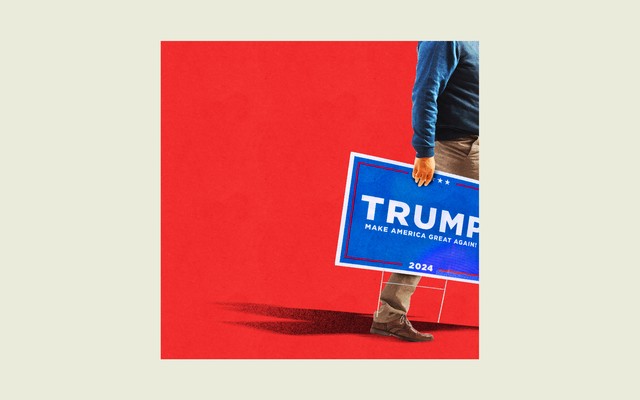
Tomas Montoya has sold festival foods—funnel cakes, burgers, hot dogs—across the American Southwest for years. But lately, business has been rough. Costs are up, so he’s increased his prices. Employees are begging for hours he can’t give them. In Arizona, where he lives, Montoya pays $6 a gallon to fill up his food trucks with diesel. This summer, he may have to skip the California leg of his festival route because fuel is even more expensive there.
“It’s Trump,” Montoya told us outside a popular Hispanic grocery store in Casa Grande, Arizona, much of which sits in one of the most evenly divided House districts in the country. Montoya voted for President Trump in 2024, but now, well, frustrated doesn’t begin to cover how he’s feeling. The president is bragging about the economy, even though everyone Montoya knows is hurting; he promised to stop wars, but started one in Iran. “When Trump opens his mouth, three-quarters of what he says is stories, lies,” Montoya said. He’s planning to vote in the midterm elections this fall. But he may not choose a Republican.
Trump has developed a reputation for backing down from his most over-the-top threats, but dismissing his words is a mistake.
Twelve hours after Donald Trump warned that a “whole civilization will die tonight, never to be brought back again”—after he’d previously threatened to bomb Iran “back to the Stone Ages”—the president agreed to a temporary cease-fire. Since then, initial peace negotiations failed and Trump responded with a naval blockade of the Strait of Hormuz; a new round of talks may begin soon.
But what to do with his everyone in Iran is going to die comments last week? Because they were designed to pressure Iran to come to the table, and because the promised carnage did not materialize, many observers simply moved on, explaining away Trump’s threats as a ham-fisted negotiation tactic, some kind of 5-D chess, or another example of the president’s propensity to “TACO” (Trump Always Chickens Out).
This article was featured in the One Story to Read Today newsletter. Sign up for it here.
Maybe you’ve seen photos of Tehran in the 1970s, just before the Islamic Revolution: images of young women going to work in miniskirts, of couples making out in parks while wearing bell-bottoms, of people at pools in bikinis. It looks like Paris or Milan or Los Angeles. But in 1979 the revolution happened, and now Tehran looks like something from an earlier century.
Sometimes I think that our whole world has become kind of like that—going backwards in time. The religious movements thriving in today’s secularized age are the traditionalist ones that dissent from large parts of contemporary culture—not only the Shiite Islam of post-revolution Iran, but Orthodox Judaism and conservative Catholicism. Young Americans are flooding into Eastern Orthodox churches.
The vice president has decided he’s a more accomplished theologian than Leo XIV.
The Trump administration doesn’t seem to have many rules, but one of them is that once the president picks a fight, his posse must show up to support him, no matter how ill-advised the conflict. And few senior officials are more eager to back up the boss in every embarrassing beef than Vice President Vance, who recently seems to have decided that he, and not Pope Leo XIV, is the true arbiter of Catholic doctrine.
President Trump is personally angry with Leo because the pontiff has been deeply critical of America’s war of choice in Iran. Accordingly, Trump lashed out at His Holiness twice over the past few days. Vance might have seen this as a valuable opportunity to say nothing and let the storm pass; Leo, naturally, doesn’t seem to care all that much what Trump thinks. (As my colleague Liz Bruenig wrote, Leo answers to a higher authority.) Had the vice president remained silent, Trump might have moved on, and Vance, a relatively recent convert to Catholicism, would have been able to stay out of a dustup between his president and his spiritual leader.
Control of a vital waterway gives Tehran the deterrence power it’s always wanted.
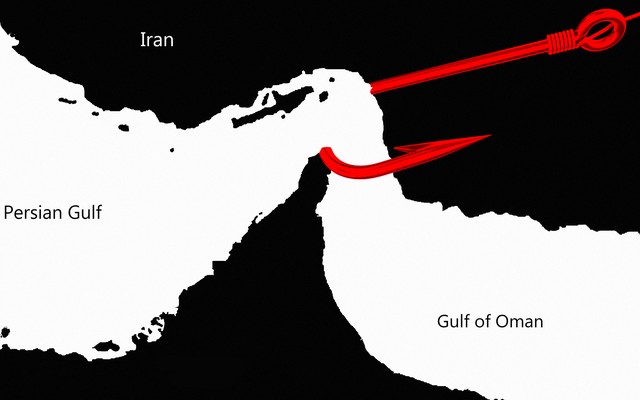
President Trump has said that he went to war to stop Iran from ever having a nuclear bomb. Unfortunately, the war he launched led Iran to discover that it already had an extremely effective doomsday weapon—one that promised the economic equivalent of mutual assured destruction. The Strait of Hormuz has always been vulnerable; the United States has always known that Iran might try to close it if attacked. But neither Washington nor Tehran imagined how easy it would be for Iran to do so, how hard it would be for the U.S. to reopen it, or how widely and rapidly the economic effects of a closed strait would fan out.
Fossil fuels are to modern industrial civilization what air is to the lungs: About 80 percent of the global economy is powered by oil, coal, and natural gas. Much of this comes from the states along the Persian Gulf: Saudi Arabia, Iraq, Iran, the United Arab Emirates, Kuwait, Qatar, Oman, and Bahrain. About 25 percent of global seaborne oil trade and 20 percent of global liquified natural gas transits the Strait of Hormuz, between the Persian Gulf and the Gulf of Oman.
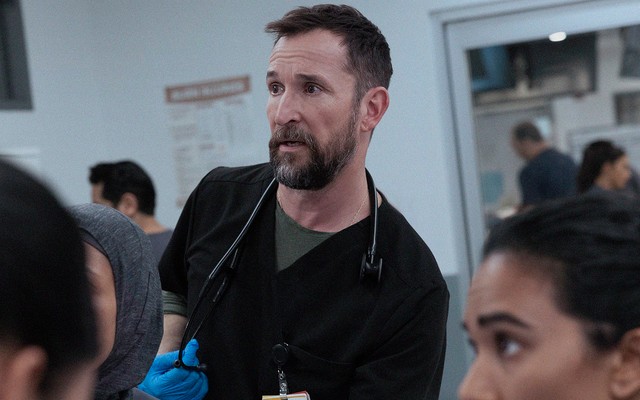
This article contains spoilers through the Season 2 finale of The Pitt.
The first season of The Pitt presented an emergency room brought to the absolute limits of its capabilities, unfolding as 15 hours of real-time drama at the fictional Pittsburgh Trauma Medical Center that culminated in a deluge of patients after a mass shooting. It was exceptional stuff, a throwback to classic medical TV dramas with just enough of a modern, high-octane twist, and was ladened with awards. But it also set the second season up with a sophomore-slump dilemma—how do you top that?
The answer: You don’t try. The Pitt’s excellent Season 2 didn’t attempt to match or outdo the crisis of last year’s PittFest calamity. Instead, it managed to wring equally compelling drama out of all of its characters just having a really, really crappy day.
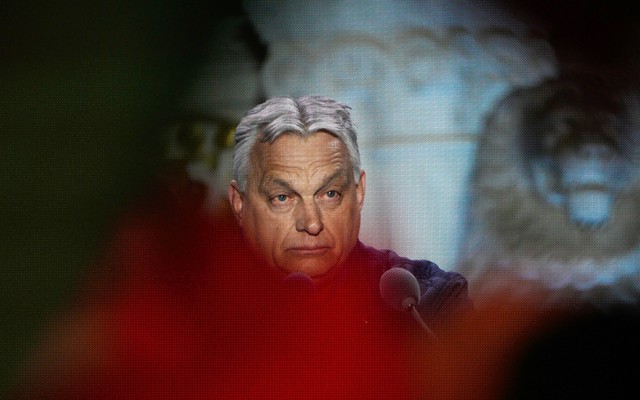
The Hungarian strongman Viktor Orbán, who lost his election in a landslide on Sunday after 16 years in power, presented himself as a defender of Western civilization. But at best, his lofty rhetoric was a code for bigotry and a justification for the persecution of minorities; at worst, it was a scam to fleece Hungarians by persuading them to blame everyone but those responsible for their problems. Maybe both.
Eventually Hungarians decided that a major source of their problems was Orbán himself. Maybe someday Americans will come to a similar realization about Orbán’s great admirer, Donald Trump, who praised the former Hungarian leader before the election as a “fantastic man” who had done a “fantastic job.”