President Trump fires acting attorney general for defying order, man charged in attack on a mosque in Quebec, and more from the United States and around the world.
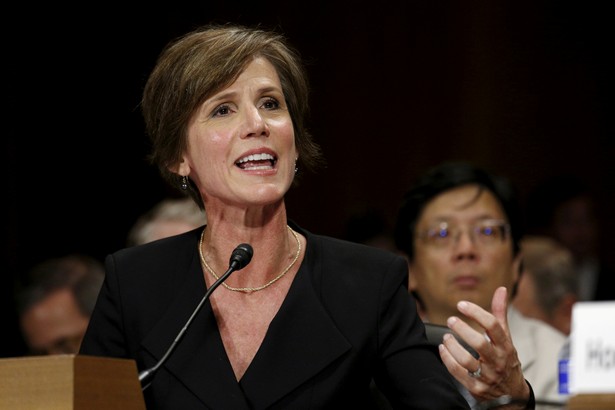
President Trump fired Acting Attorney General Sally Yates.
Kevin Lamarque / Reuters
—President Trump fired Acting Attorney General Sally Yates on Monday night, hours after she instructed the Justice Department not to argue in defense of Trump’s immigration and refugee executive order. More here
—Alexandre Bissonnette, the suspect behind the deadly shooting at a Quebec mosque, was charged for perpetrating the attack that killed six people and injured 19 others. More here
—We’re tracking the news stories of the day below. All updates are in Eastern Standard Time (GMT -5).
Transgender boys will now be able to participate in the Boy Scouts of America, the organization announced Monday, accepting children based on their gender identities. Until now, the Boy Scouts only based its enrollment on the gender listed on birth certificates. But, the organization said in a statement, “that approach is no longer sufficient as communities and state laws are interpreting gender identity differently, and these laws vary widely from state to state.” Some Boy Scouts have previously been asked to leave the program after leaders found out the children were transgender. The new policy goes into effect immediately. The Boy Scouts have adopted more LGBTQ-friendly policies in recent years, amid pressure. In 2013, the organization said it would allow openly gay children to participate, and in 2015 allowed in gay troop leaders and employees. LGBTQ rights activists celebrated Monday’s announcement.
Trump Fires Acting Attorney General for Not Defending Immigration Order
Kevin Lamarque / Reuters
Updated at 9:45 p.m.
President Trump fired Acting Attorney General Sally Yates on Monday night, hours after she instructed the Justice Department not to argue in defense of Trump’s immigration and refugee executive order.
“The acting attorney general, Sally Yates, has betrayed the Department of Justice by refusing to enforce a legal order designed to protect the citizens of the United States,” the White House said in an unusual statement announcing the dismissal. “Ms. Yates is an Obama administration appointee who is weak on borders and very weak on illegal immigration.”
The White House said Dana Boente, the U.S. Attorney for the Eastern District of Virginia, would serve as acting attorney general in Yates’s stead until the Senate confirms Alabama Senator Jeff Sessions as attorney general.
Events unfolded rapidly after Yates sent a letter to Justice Department lawyers instructing them not to defend Trump’s controversial executive order in court, a surprising rebuke of the new president’s controversial efforts to block immigrants and refugees from seven largely Muslim countries from entering the United States. Yates had been confirmed by the Senate to the position of deputy attorney general in January 2015.
“At present I am not convinced that the defense of the executive order is consistent with [my] responsibilities nor am I convinced that the executive order is lawful,” she wrote. “Consequently, for as long as I am the acting attorney general, the Department of Justice will not present arguments in defense of the executive order, unless and until I become convinced that it is appropriate.”
Her move came after a chaotic weekend at dozens of U.S. airports in which armies of volunteer lawyers and demonstrators attempted to aid those detained and deported by Trump’s executive order. Federal judges in five states blocked immigration officials from enforcing parts of the order over the past three days.
Yates’s directive also adds new energy to the Senate confirmation battle over Sessions, an immigration hardliner nominated by Trump to helm the Justice Department. The Senate Judiciary Committee is scheduled to vote on Sessions’s nomination on Tuesday.
“My responsibility is to ensure that the position of the Department of Justice is not only legally defensible, but is informed by our best view of what the law is after consideration of all the facts,” she wrote. “In addition, I am responsible for ensuring that the positions we take in court remain consistent with this institution’s solemn obligation to always seek justice and stand for what is right.”
SWAT team officers walk near the Centre Culturel Islamique de Québec on January 30, 2017. (Mathieu Belanger / Reuters)
Alexandre Bissonnette, the suspect behind the deadly shooting at a Quebec mosque, was charged Monday for perpetrating the attack that killed six people and injured 19 others, the Toronto Star reports. The 27-year-old university student faces six counts of first degree murder and five counts of attempted murder. Approximately 39 people were attending Sunday prayers at the Cultural Centre of Quebec’s Grand Mosque when a gunman entered the building and opened fire on the worshippers. Justin Trudeau, the Canadian Prime Minister, condemned the shooting as “a terrorist attack on Muslims in a centre of worship and refuge.”
Fort Lauderdale Airport Shooting Suspect Pleads Not Guilty
Estoban Santiago is transported to the federal courthouse in Fort Lauderdale, Florida, on January 9, 2017. (Amy Beth Bennett / Reuters)
Estoban Santiago plead not guilty Monday to criminal charges accusing him of perpetrating a shooting that left five people dead and six others injured at the Fort Lauderdale-Hollywood International Airport. The 26-year-old Iraq war veteran, who traveled to Florida on a one-way ticket from Alaska, faces 22 criminal charges for allegedly loading a handgun in an airport bathroom and opening fire on people in baggage claim. If convicted, he could face life in prison or the death penalty. Santiago’s family said he was receiving psychological treatment prior to the attack, and authorities are determining whether his mental health played a role. Santiago had previously told investigators he was inspired by the Islamic State after chatting with extremists online, though it is unclear if this is true.
Less Than Two Weeks After Leaving, Obama Speaks Out
Credit POOL / Reuters
Less than two weeks since his successor Donald Trump was sworn in as president, former President Barack Obama made a public statement in support of the protests that erupted in response to Trump’s executive order barring travelers from certain majority-Muslim countries.
“President Obama is heartened by the level of engagement taking place in communities around the country,” reads the statement from Obama spokesperson Kevin Lewis. “Citizens exercising their Constitutional right to assemble, organize, and have their voices heard by their elected officials is exactly what we expect to see when American values are at stake.” Notably, in his last press conference, Obama implied he might re-enter the political arena if he believed that the nation had reached a moment “where I think our core values may be at stake.”
Obama’s decision to weigh in so soon after leaving office suggests a high level of concern over recent events––most presidents try to avoid weighing in on politics in the immediate aftermath of their administrations. But the decision was likely affected by the Trump administration’s decision to falsely characterize the ban as similar to policies pursued while Obama was in office––the Obama administration never barred all refugees, green card holders, or visa applications in the same manner.
“With regard to comparison to President Obama’s foreign police decisions,” Miller’s statement reads, “the President fundamentally disagrees with the notion of discriminating against individuals because of their faith or religion.”
Washington State Sues Donald Trump Over the Travel Ban
Elaine Thompson / AP
The attorney general for Washington state said Monday the state will sue President Trump over the executive order signed last week that bans migration to the U.S. from seven majority-Muslim countries. Washington is now the first state to file suit against the order. Washington’s attorney general was one of 15 others who signed a statement opposing Trump’s travel ban. On Monday, at a news conference announcing the suit, Governor Jay Inslee said of the order: “Its impact, its cruelty, its clear purpose is an unconstitutional religious test.” The suit will be backed by Washington-based companies like Expedia and Amazon.com, according toThe Seattle Times, and company representatives will provide testimonies about the economic harms Trump’s ban will bring. The order has set off waves of protests across the country, and over the weekend a huge crowd demonstrated outside the Seattle-Tacoma International Airport, where two men were detained by U.S. Customs and Border Protection—and later released.
Iraqi lawmakers attend a session in Baghdad, Iraq, on September 8, 2014. (Thaier Al-Sudani / Reuters)
Iraqi lawmakers approved a measure Monday barring Americans from entering the country, the Associated Press reports. The measure, which is non-binding, comes in response to President Trump’s executive order Friday banning citizens from Iraq and six other Muslim-majority countries from entering the United States. It is unclear when the ban will go into effect, or if it will affect American military personnel or non-government workers already in the country. Iraq’s foreign ministry released a statement Monday condemning the U.S. ban, which it characterized as a “wrong” move by “an ally and a strategic partner.” Indeed, the bans signal a strain in relations between Washington and Baghdad, whose joint efforts have focused on targeting the Islamic State in Mosul, Iraq’s second-largest city. Iran, which is also on the U.S. list, responded to the U.S. ban Saturday with a retaliatory measure of its own, announcing it too would bar U.S. citizens from entering the country “until the offensive U.S. limitations against Iranian nationals are lifted.”
France Charges Brussels Bombing Suspect in Paris Attacks
A Belgian police officer secures the zone outside a courthouse while Brussels attacks suspects Mohamed Abrini and Osama Krayem appear before a judge in Brussels, Belgium, on April 14, 2016. (Yves Herman / Reuters)
French authorities have the charged the Brussels bombing suspect with involvement in the November 2015 Paris attacks. Belgian authorities handed over Mohamed Abrini, the “man in the hat,” to France for one day in connection with the Paris attack, French media quoted prosecutors as saying. Both attacks were claimed by ISIS, and Belgian authorities said they were planned and carried out by the same cell. The Brussels airport bombing on March 22, 2016, killed 32 people; the Paris attacks killed 130.
Canadian Prime Minister Justin Trudeau is calling the shooting deaths of six people at a mosque in Quebec City an act of terrorism. Two men have been arrested in connection with the shooting at the Islamic Cultural Center of Quebec; eight people were wounded in Sunday’s attack during evening prayers. Quebec’s Premier Philippe Couillard called the incident “murderous act directed at a specific community.” An unnamed witness told Radio-Canada that the shooting was carried out by two masked gunmen. Martin Coiteux, Quebec’s public-security minister, said places of worship across the province were given extra security following the attack. Last June, someone left a pig’s head at the doorstep of the Islamic Center during the Muslim holy month of Ramadan; Muslims regard the pig as an unclean animal. The motivation of the gunmen is not yet clear.
Here's What's Happening Today With Trump's Immigration Order
President Trump’s executive order led to massive protests, legal challenges, and an apparent reversal over the weekend. The order suspends the U.S. refugee intake for 120 days, bans all Syrian refugees until further notice, and bars people from seven countries—Iran, Iraq, Libya, Somalia, Sudan, Syria, or Yemen—for 90 days. Following large protests over the weekend at several U.S. airports and outside the White House, as well as legal challenges on the behalf of individuals detained at U.S. ports of entry, the Trump administration appeared to reverse course on a section of the ban the also applied to U.S. permanent residents. Other parts of the ban remain in effect. Protests are expected on Monday, though perhaps on a smaller scale as it’s the start of the workweek. Criticism of the order has spread across the Atlantic: In the U.K., a petition to stop Trump’s state visit has gained more than 1 million signatures; 100,000 signatures were needed for the petition to be considered for parliamentary debate.
Kash Patel has alarmed colleagues with episodes of excessive drinking and unexplained absences.
On Friday, April 10, as FBI Director Kash Patel was preparing to leave work for the weekend, he struggled to log into an internal computer system. He quickly became convinced that he had been locked out, and he panicked, frantically calling aides and allies to announce that he had been fired by the White House, according to nine people familiar with his outreach. Two of these people described his behavior as a “freak-out.”
Patel oversees an agency that employs roughly 38,000 people, including many who are trained to investigate and verify information that can be presented under oath in a court of law. News of his emotional outburst ricocheted through the bureau, prompting chatter among officials and, in some corners of the building, expressions of relief. The White House fielded calls from the bureau and from members of Congress asking who was now in charge of the FBI.
I spent 10 months working at the institution because I thought I could help protect it. What I observed there is far worse than the public knows.
On the day I was laid off from the Kennedy Center, I felt a little like Dolley Madison saving the Stuart portrait of Washington before the British sacked the capital. I was the staffer in charge of the artworks in the building. A crucial difference is that my institution, unlike the White House in 1814, had been on fire for months.
About a year elapsed between the moment President Trump took over the Kennedy Center in early 2025 and his declaration this past February that he’d decided to shut down the nation’s cultural center for two years. In between, we had seen artist cancellations, shrinking audiences, firings of old staffers and influxes of new ones—a lot of drama, just not onstage. The date Trump announced for the closure was July 4, the country’s 250th birthday, an event that I had been hired to help commemorate as the institution’s first curator of visual arts and special programming.
A shocking number of the president’s supporters have turned against him.
Tomas Montoya has sold festival foods—funnel cakes, burgers, hot dogs—across the American Southwest for years. But lately, business has been rough. Costs are up, so he’s increased his prices. Employees are begging for hours he can’t give them. In Arizona, where he lives, Montoya pays $6 a gallon to fill up his food trucks with diesel. This summer, he may have to skip the California leg of his festival route because fuel is even more expensive there.
“It’s Trump,” Montoya told us outside a popular Hispanic grocery store in Casa Grande, Arizona, much of which sits in one of the most evenly divided House districts in the country. Montoya voted for President Trump in 2024, but now, well, frustrated doesn’t begin to cover how he’s feeling. The president is bragging about the economy, even though everyone Montoya knows is hurting; he promised to stop wars, but started one in Iran. “When Trump opens his mouth, three-quarters of what he says is stories, lies,” Montoya said. He’s planning to vote in the midterm elections this fall. But he may not choose a Republican.
Trump has developed a reputation for backing down from his most over-the-top threats, but dismissing his words is a mistake.
Twelve hours after Donald Trump warned that a “whole civilization will die tonight, never to be brought back again”—after he’d previously threatened to bomb Iran “back to the Stone Ages”—the president agreed to a temporary cease-fire. Since then, initial peace negotiations failed and Trump responded with a naval blockade of the Strait of Hormuz; a new round of talks may begin soon.
But what to do with his everyone in Iran is going to die comments last week? Because they were designed to pressure Iran to come to the table, and because the promised carnage did not materialize, many observers simply moved on, explaining away Trump’s threats as a ham-fisted negotiation tactic, some kind of 5-D chess, or another example of the president’s propensity to “TACO” (Trump Always Chickens Out).
The vice president has decided he’s a more accomplished theologian than Leo XIV.
The Trump administration doesn’t seem to have many rules, but one of them is that once the president picks a fight, his posse must show up to support him, no matter how ill-advised the conflict. And few senior officials are more eager to back up the boss in every embarrassing beef than Vice President Vance, who recently seems to have decided that he, and not Pope Leo XIV, is the true arbiter of Catholic doctrine.
President Trump is personally angry with Leo because the pontiff has been deeply critical of America’s war of choice in Iran. Accordingly, Trump lashed out at His Holiness twice over the past few days. Vance might have seen this as a valuable opportunity to say nothing and let the storm pass; Leo, naturally, doesn’t seem to care all that much what Trump thinks. (As my colleague Liz Bruenig wrote, Leo answers to a higher authority.) Had the vice president remained silent, Trump might have moved on, and Vance, a relatively recent convert to Catholicism, would have been able to stay out of a dustup between his president and his spiritual leader.
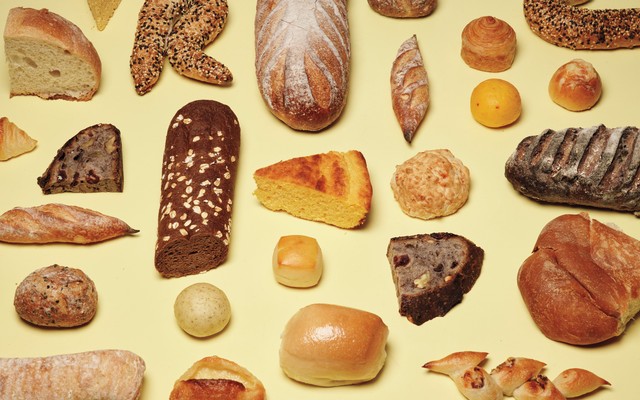
Thirteen thousand miles. Infinite contenders. One beautiful loaf.
This article was featured in the One Story to Read Today newsletter. Sign up for it here.
Here is the promise you and I must cling to across the thousands of words that follow: At some point within this text, I will reveal to you what—after 555 responses, 13,000 miles of travel, and months of monomaniacal research—I have determined to be the best free restaurant bread in America. I will not attempt to slither to the moral high ground, arguing that best is a meaningless measure, or insisting that all bread is dear in its own way. Even if you attempt to betray me—for instance, by merely scanning the text that follows for the phrase Here it is: the best free restaurant bread in America—I will uphold my end of the bargain.
This article was featured in the One Story to Read Today newsletter. Sign up for it here.
Maybe you’ve seen photos of Tehran in the 1970s, just before the Islamic Revolution: images of young women going to work in miniskirts, of couples making out in parks while wearing bell-bottoms, of people at pools in bikinis. It looks like Paris or Milan or Los Angeles. But in 1979 the revolution happened, and now Tehran looks like something from an earlier century.
Sometimes I think that our whole world has become kind of like that—going backwards in time. The religious movements thriving in today’s secularized age are the traditionalist ones that dissent from large parts of contemporary culture—not only the Shiite Islam of post-revolution Iran, but Orthodox Judaism and conservative Catholicism. Young Americans are flooding into Eastern Orthodox churches.
In this episode of Galaxy Brain, Charlie Warzel speaks with Josh Owens, a videographer and the author of a memoir about his years working for Infowars, the media company of the conspiracy theorist Alex Jones. Owens traces his journey from a film-school student who stumbled onto Jones’s radio show to an insider who spent four years filming, editing, and traveling for the organization. Owens describes how Jones’s conspiracy machine works, as well as how his own moral compass was scrambled by Jones’s manipulative management. The conversation explores radicalization, the conspiratorial media ecosystem Jones helped create, and how Owens was able to pull himself out.
This article contains spoilers through the Season 2 finale of The Pitt.
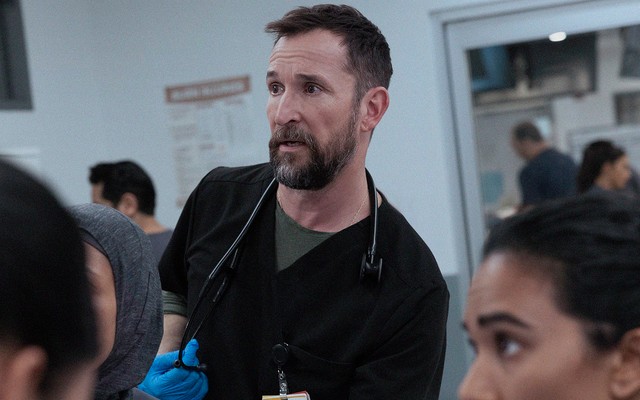
The first season of The Pitt presented an emergency room brought to the absolute limits of its capabilities, unfolding as 15 hours of real-time drama at the fictional Pittsburgh Trauma Medical Center that culminated in a deluge of patients after a mass shooting. It was exceptional stuff, a throwback to classic medical TV dramas with just enough of a modern, high-octane twist, and was ladened with awards. But it also set the second season up with a sophomore-slump dilemma—how do you top that?
The answer: You don’t try. The Pitt’s excellent Season 2 didn’t attempt to match or outdo the crisis of last year’s PittFest calamity. Instead, it managed to wring equally compelling drama out of all of its characters just having a really, really crappy day.
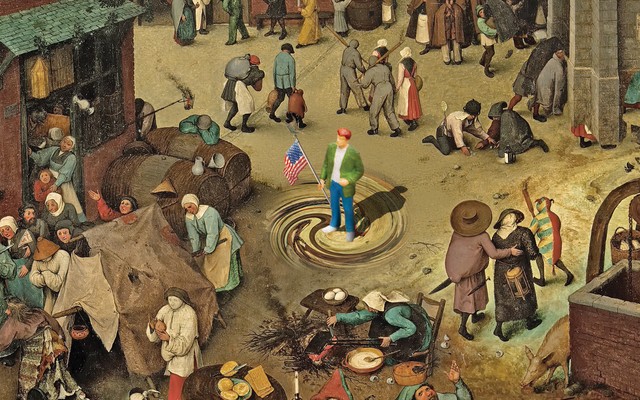
Has the president failed to learn the lessons of classic cautionary fables—or does he just understand them in his own novel ways?
This is an edition of The Atlantic Daily, a newsletter that guides you through the biggest stories of the day, helps you discover new ideas, and recommends the best in culture. Sign up for it here.
Donald Trump, as even some of his fiercest admirers will admit, is not always a paragon of personal virtue. Although the president’s aides sometimes treat him like he is a toddler, as the political scientist Daniel Drezner has observed, he’s not an especially well-behaved one. Trump often acts in ways that would result in detention or other punishment for an elementary-school student: bald-faced dishonesty, name-calling, unkindness, refusal to share, and an inability to use an inside voice. Put another way, Trump sometimes seems as though he missed out on all of the lessons that children are supposed to learn from fables and fairy tales. (Meanwhile, his administration is seeking to evict some lessons about tolerance from classrooms.) But perhaps that’s uncharitable: Trump isn’t ignoring those fables; he’s just taking different lessons away from them than the familiar ones. Here’s a set of classic stories and their morals, reinterpreted for MAGA political correctness.