—Mexican President Enrique Peña Nieto said he rejects President Trump’s plan to build a wall along the border between the two countries. More here
—Mary Tyler Moore, the actress who captivated television audiences first on TheDick Van Dyke Show and then on TheMary Tyler Moore Show, has died. More here
—Representative Tulsi Gabbard revealed that she met with Syrian President Bashar al-Assad during a four-day fact-finding trip to Syria and Lebanon. More here
—We’re tracking the news stories of the day below. All updates are in Eastern Standard Time (GMT -5).
Mexican President Enrique Peña Nieto said in a pre-recorded statement Wednesday that he rejects President Trump’s plan to build a wall along the border between the two countries. “Mexico does not believe in walls,” he said. “I have said it over and over again: Mexico will not pay for any wall.” Peña Nieto is scheduled to travel to Washington next week to meet with Trump. Earlier Wednesday, aides to the Mexican president said Peña Nieto was considering scrapping the trip after Trump signed an executive order which put into motion the construction of a border wall. There are still several questions remaining about his proposed border wall, including the cost of the project. White House Press Secretary Sean Spicer said Mexico would eventually pay for the wall. Peña Nieto, in the video statement, did not mention whether he would still travel to the U.S.
Congresswoman Tulsi Gabbard Meets With Syria's Assad
Brian Snyder / Reuters
Representative Tulsi Gabbard revealed Wednesday that she met with Syrian President Bashar al-Assad during a four-day fact-finding trip to Syria and Lebanon, and reaffirmed her opposition to U.S. funding for rebel groups opposing the Syrian leader. In an interview with CNN’s Jake Tapper, the two-term Democratic congresswoman from Hawaii said though she did not initially plan to meet with Assad, she did so because “we’ve got to meet with anyone that we need to if there is a possibility that we could achieve peace, and that’s exactly what we talked about.” She later added in a statement: “This regime change war does not serve America’s interest, and it certainly isn’t in the interest of the Syrian people.” Gabbard has long supported Assad maintaining power. Conversely, both the Obama administration and its Western allies had repeatedly called for the ouster of Assad—who has been accused of war crimes—and have thrown their support behind some of the rebel groups opposing his regime during Syria’s nearly six-year civil war. President Trump has called for a different approach, arguing that the U.S. should focus instead on ISIS—a stance which Gabbard supports. As my colleague Krishnadev Calamur noted, Gabbard’s trip to Syria may constitute a violation of the Logan Act, which restricts unauthorized individuals from contacting foreign governments engaged in a dispute with the U.S. No one has ever been prosecuted under the act, though, and Gabbard is not even the first U.S. leader to make such a trip. Virginia state Senator Dick Black met with Assad government officials on a trip to Damascus in April, and has expressed hopes to return this year. Like Gabbard, Black has been a vocal opponent of regime change in Syria, and has previously praised Assad as “heroic.”
The Dow Jones Industrial Average closed above 20,000 for the first time Wednesday, after hovering around that figure since the election of President Trump and boosted by several positive economic numbers over the past month. The Dow was at 10,000 in March 1999 and has more than recovered the ground lost during the Great Recession. But, as my colleague Adrienne LaFrance noted: “There’s nothing magic about the Dow hitting 10,000—or 11,000, or 15,000, or 19,000 for that matter. The number is just a calculation based on the sum of stocks from 30 major companies… .” Still, it does hold psychological significance among traders.
Mary Tyler Moore, the actress who captivated television audiences first on TheDick Van Dyke Show and then on TheMary Tyler Moore Show, has died, her representative told several news organizations. Moore, who was hospitalized earlier this month in Connecticut, was 80 years old. Moore is perhaps best known for her role in the eponymous show in which she played Mary Richards, a local news producer in Minneapolis, from 1970 to 1977. During the course of her career, Moore won six Emmys and received a Best Actress Oscar nomination in 1980 for her work in Ordinary People. As my colleague David Sims notes, “Mary was a liberated woman in an era of television where such characters were scarce.”
Russia Arrests Kaspersky Lab Department Head for Alleged Treason
Kaspersky Labs headquarters in Moscow (Sergei Karpukhin / Reuters)
Ruslan Stoyanov, the head of computer-incidents investigation at Kaspersky Lab, was arrested over charges of treason, Russian media reported Wednesday. Kaspersky, the Moscow-based cybersecurity and anti-virus firm, issued a statement confirming the investigation, but said it concerned “a period predating [Stoyanov’s] employment at Kaspersky Lab.” Previous jobs listed on Stoyanov’s LinkedIn profile include a position at the Russian Interior Ministry’s cybercrime unit. As Sputnik, the state-run Russian news agency, reports, Stoyanov was arrested in December alongside an employee with the Russian Federal Security Service (FSB), who has also been charged with treason, though the details of the investigation into either person remains unknown. Andrei Soldatov, a Russian journalist and security services expert, told the Associated Press that such an arrest was “unprecedented” for intelligence agencies and companies like Kaspersky, adding: “Intelligence agencies used to ask for Kaspersky's advice, and this is how informal ties were built. This romance is clearly over."
Usain Bolt Loses Gold Medal After Teammate Tests Positive for Doping
Nesta Carter and Usain Bolt pose at the IAAF World Athletics Championships in Moscow, Russia, on August 11, 2013. (Dominic Ebenbichler / Reuters)
Nine-time Olympic gold medalist Usain Bolt was forced to hand one of his gold medals back Wednesday after his teammate Nesta Carter tested positive for doping during the 2008 Beijing Olympics. The International Olympic Committee (IOC) said Carter, 31, was found to have taken methylhexaneamine, a prohibited performance-enhancing substance, ahead of competing in the first leg of the Men’s 4x100 meter relay, for which he earned the Jamaican team first place alongside sprinters Michael Frater, Asafa Powell, and Bolt—all of whom were stripped of their medals. The loss of the medal for the Jamaican team propelled Trinidad and Tobago to gold, Japan to silver, and Brazil to bronze.
An explosion takes place outside a hotel in Mogadishu, Somalia, on January 25, 2017. (Reuters)
Several people were killed and wounded Wednesday after two explosions rocked the Dayah hotel in Somalia’s capital, Mogadishu. Death toll estimates have ranged from at least eight to 15 people. Somali police said a group of attackers affiliated with al-Shabaab, an Islamist group, detonated a car bomb into the gate of the hotel before storming inside and opening fire. It is unclear how many attackers were involved in the attack, though Colonel Mohamoud Abdi, a senior Somali police officer, told the Associated Press that four militants were killed. A second blast was also reported outside the hotel, injuring some people in the area, including journalists. Al-Shabaab controlled much of Somalia before it was driven out by African Union and Somali forces in 2011l the group remains an active threat and is known for targeting hotels and other public places.
Economist Intelligence Unit Downgrades U.S. to 'Flawed Democracy,' Citing Longstanding Problems
(Brian Snyder / Reuters)
The Economist Intelligence Unit (EIU), the Economist’s data arm, has downgraded the United States from a “full democracy” to a “flawed democracy.” The move, the EIU said, wasn’t a result of President Trump’s election victory, but rather “the election of Mr Trump as US president was in large part a consequence of the longstanding problems of democracy in the US.” EIU counts 19 “full” democracies—down from 20—57 “flawed” democracies, including 17 of the EU’s 28 members; 51 “authoritarian” regimes; and 40 “hybrid” ones. Globally, the EIU said populist backlashes against the ruling elites in the U.S., U.K., and other Western countries “were an expression of deep popular dissatisfaction with the status quo and of a desire for change.” Norway tops the EIU’s Democracy Index; North Korea is last. Full index here
President Trump is expected Wednesday to announce his border wall with Mexico, fulfilling a longstanding campaign pledge that he believes will keep stop the flow of people crossing the border illegally. This morning he also said he’d order an investigation into voter fraud. Trump says he believes voter fraud cost him the popular vote, but most credible elections experts dismiss that such fraud exists on a large scale. Our Politics team will have more on Trump’s announcements.
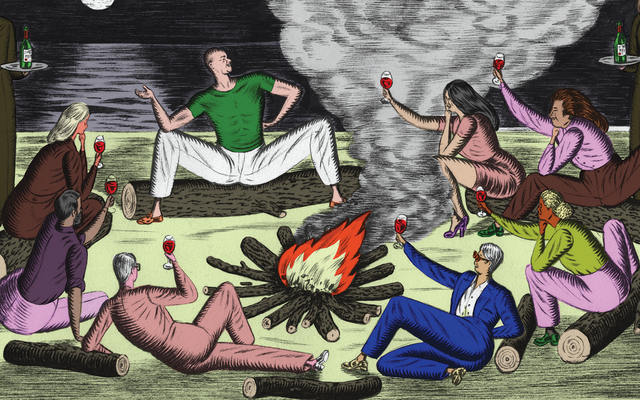
For the richest men on Earth, everything is free and nothing matters.
At the end of Paul Thomas Anderson’s 2007 movie, There Will Be Blood, Daniel Day-Lewis’s oil-baron character, old now and richer than Croesus, beats Paul Dano’s preacher to death with a bowling pin. Dano’s Eli Sunday, a nemesis of Day-Lewis’s Daniel Plainview during his seminal, wealth-building years, has come to sell Plainview the oil-rich land that he once coveted. But Plainview doesn’t need the land anymore, because—as he explains in one of the most famous monologues in modern cinema—he has sucked out all the oil hidden beneath it from an adjoining property, like a milkshake.
Desperate for money, Eli begs for a loan. Instead, Plainview chases him around a bowling alley and murders him with great enthusiasm. Once it’s over, a butler comes to see what all the noise was about. “I’m finished,” Plainview yells.
The economist Adam Posen on the effect of the war in Iran on the world’s economy and the darkening economic outlook for the United States. Plus: A shifting partisan balance of power and Ask Not: The Kennedys and the Women They Destroyed, by Maureen Callahan.
In this episode of The David Frum Show, The Atlantic’s David Frum opens with a discussion of the likelihood that the partisan balance of power will shift from Republicans to Democrats at state-government level.
Then, David is joined by the president of the Peterson Institute for International Economics, Adam Posen, for a conversation about the state of the world’s economy. Frum and Posen discuss the economic effect of the war in Iran, the United States’ reputational hit caused by Trump’s tariffs, and the chance of global recession.
Finally, David ends the episode with a discussion of Ask Not: The Kennedys and the Women They Destroyed, by Maureen Callahan, and reflects on why reactions to the abuse of women by men in power seem to have become a partisan issue.
Kash Patel has alarmed colleagues with episodes of excessive drinking and unexplained absences.
This article was featured in the One Story to Read Today newsletter. Sign up for it here.
On Friday, April 10, as FBI Director Kash Patel was preparing to leave work for the weekend, he struggled to log on to an internal computer system. He quickly became convinced that he had been locked out, and he panicked, frantically calling aides and allies to announce that he had been fired by the White House, according to nine people familiar with his outreach. Two of these people described his behavior as a “freak-out.”
Patel oversees an agency that employs roughly 38,000 people, including many who are trained to investigate and verify information that can be presented under oath in a court of law. News of his emotional outburst ricocheted through the bureau, prompting chatter among officials and, in some corners of the building, expressions of relief. The White House fielded calls from the bureau and from members of Congress asking who was now in charge of the FBI.
Modi styled himself a global leader but can’t seem to get ahead of events in the Middle East.
Pakistan is having a diplomatic moment, and India’s political elites are not enjoying it.
Indian Prime Minister Narendra Modi has spent the past decade promoting the notion that India is the leader of the global South and, as such, is indispensable to world affairs. Now a conflict in the Middle East has thrown the global economy, and, with it, India’s, into crisis. On top of that, Islamabad, not New Delhi, has hosted at least one round of talks between the United States and Iran and is preparing to mediate others, leaving the Indian government to ponder its irrelevance.
Indian Foreign Minister Subrahmanyam Jaishankar first dismissed Pakistan’s role in the U.S.-Iran talks, using a pejorative Hindi word for a kind of unsavory middleman. But in Indian political circles, particularly after the April 8 cease-fire was announced, criticism has been trained on the Modi government. Jairam Ramesh, a spokesperson for the opposition Congress Party, wrote on X that Pakistan’s role was “a severe setback to both the substance and style of Mr. Modi’s highly personalised diplomacy.” Ramesh mocked the Indian prime minister for calling himself vishwaguru, meaning “teacher of the world.” Asaduddin Owaisi, the country’s most prominent Muslim politician, lamented that India would have been the natural venue for the U.S.-Iran talks, if not for the Modi government’s missteps.
Patients are getting stuck in the emergency department for days while waiting for a spot in an inpatient ward.
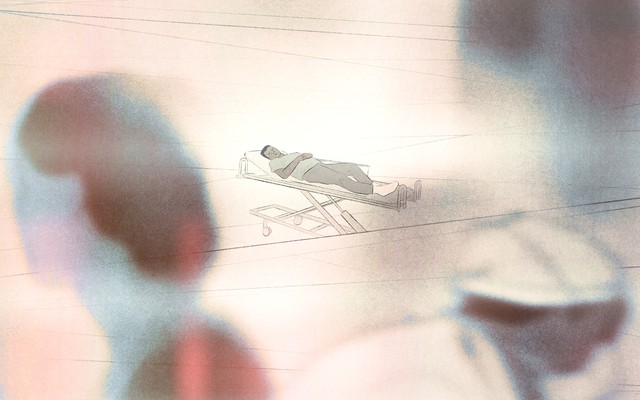
In the last months, weeks, and days of his life, “I will not go to the emergency room” became my husband’s mantra. Andrej had esophageal cancer that had spread throughout his body (but not to his ever-willful brain), and, having trained as a doctor, I had jury-rigged a hospital at home, aided by specialists who got me pills to boost blood pressure; to dampen the effects of liver failure; to stem his cough; to help him swallow, wake up, fall asleep.
“I will not go to the emergency room”—emphasis on not—were his first words after passing out, having a seizure, or regurgitating the protein smoothies I made to pass his narrowed esophagus. He said it again and again, even as fluid built up in his lungs, rendering him short of breath and prone to agonizing coughing spells. He had been a big, athletic guy, but now, in the ugly process of dying, he was looking gaunt. Ours was a precarious existence, but I understood his adamant rejection of the emergency department. Most prior visits had morphed into extended trips into a terrifying medical underworld—to a purgatory known as emergency-department boarding.
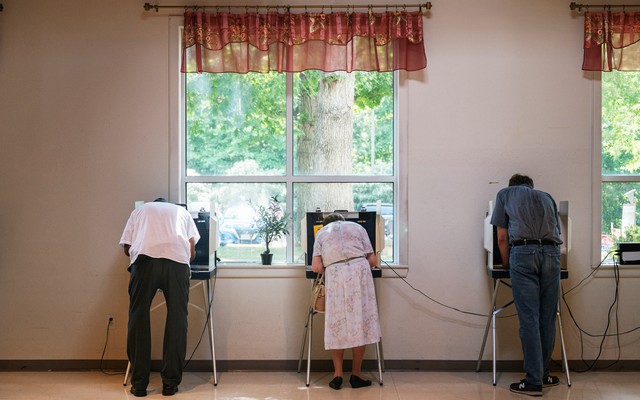
When President Trump last summer implored Republicans to launch a nationwide gerrymandering blitz to pad their narrow House majority, the fight he started did not seem fair. GOP lawmakers had both the will and the power to draw their party new seats, while Democrats were hamstrung by limits of their own making. The question was not whether Republicans could expand their edge in Congress, but by how much.
This morning the landscape looks a lot different, after Virginia voters yesterday approved a lopsided new House map that could hand Democrats an additional four seats that Republicans currently hold. The Democratic redistricting victory is the party’s second in a statewide referendum. When combined with new lines that California voters endorsed in November, Democrats have now succeeded in drawing districts that will likely yield them nine more seats this fall, at least matching what Republicans have been able to achieve in states that they control. By some measures, Democrats have jumped into the redistricting lead, bolstering their chances of winning back the House majority in the midterm elections.
This article was featured in the One Story to Read Today newsletter. Sign up for it here.
The mystery of the missing scientists began with a Silver Alert. In late February, a retired Air Force major general named Neil McCasland left his house in New Mexico for a walk and never returned. Rumors spread on social media that the elderly former astronautical engineer had been abducted or killed. Forget Nancy Guthrie, they said. Here was a guy who used to run a “UFO-linked” lab. Here was a guy with knowledge of “America’s deepest, darkest secrets.” So where was this guy?
McCasland’s wife did her best with a post on Facebook to address what she called the “misinformation circulating about Neil and his disappearance,” but wild notions only multiplied. Dots were added, then connected: Another scientist—an advanced-materials researcher at NASA’s Jet Propulsion Laboratory (JPL) named Monica Reza—had disappeared while hiking near Los Angeles in June 2025. A physicist at MIT had been murdered in December. “What is going on seems to be an enemy action,” Walter Kirn, the novelist and podcast contrarian, said last month.
Republicans seem to have expected that Democrats would continue to follow rules they had long since enthusiastically abandoned.
Voters in Virginia approved a lopsided congressional map on Tuesday, reducing the expected number of Republican-leaning districts in the Democratic-controlled state from five to one. Republicans have reacted by complaining that conservative-leaning voters in the state have been disenfranchised by gerrymandered maps that reduce the influence of their vote.
And they’re right. That is exactly what the new Virginia map does.
Gerrymandering is an attempt to thwart the will of the voters. It circumvents the vital process of democratic feedback by insulating politicians from political backlash. It should not happen, and yet this latest chapter of the redistricting wars did not begin in Virginia. It did not even begin last year, when Donald Trump openly urged red states to gerrymander their congressional maps so Republicans might retain possession of the House during the midterms. He did so despite the fact that the maps had been drawn after the 2020 census and would normally be expected to last until 2030.
Each is animated by the author’s love—for their subject, for language, and for pushing the boundaries of what the genre can do.
Literary biography is a cruel genre. The authors of these books—by which I mean not just biographies about literary figures but also those that aspire to writerly excellence—have been described by the writer Janet Malcolm as “professional burglars.” After rifling through a person’s affairs, they must conjure inside their pages a living, breathing human being—and then, inevitably, they’ll have to close the coffin on their resurrected subject. But I like to think the “literary” element can temper the sting of these dastardly deeds, insofar as the author is tasked with perpetrating them in the most humane way possible: with the appropriate amount of reverence, style, and, yes, love. This is, at least, what I tried to do in my own literary biography, Baldwin: A Love Story, about James Baldwin’s life and relationships.
Negotiations have stalled. Trump keeps changing his policies. Ukrainians, backed by Europeans, are taking matters into their own hands.
Updated at 10:58 ET on September 25, 2025
In one section of a sprawling warehouse in central Ukraine, workers have stacked what appear to be small airplane wings in neat rows. In another section, a group of men is huddled around what looks like the body of an aircraft, adjusting an electronic panel. In makeshift locations elsewhere in Ukraine, workers are producing these electronic panels from scratch: This company wants to use as few imported parts as possible, avoiding anything American, anything Chinese. Jewelers, I was told, have turned out to be well suited for this kind of finicky manufacturing. Ukraine’s justly celebrated manicurists are good at it too.
They are not alone in being new to the job. Everyone in this factory had a different profession three years ago, because this factory did not exist three years ago. Nor did the Ukrainian drone industry, of which it forms part. Whatever their job description before Russia’s full-scale invasion of Ukraine, everyone at this production site is now part of a major shift in the politics and economics of the war, one that hasn’t been fully understood by all of Ukraine’s allies.