—Five people are dead and 37 were injured after someone opened fire at the Fort Lauderdale-Hollywood International Airport. More here
—An unclassified assessment released Friday by the U.S. intelligence community says Russian President Vladimir “Putin and the Russian Government aspired to help President-elect Trump’s election chances when possible by discrediting Secretary Clinton and publicly contrasting her unfavorably to him.” More here
—We’re live-blogging the news stories of the day below. All updates are in Eastern Standard Time (GMT -5).
Just hours after he received an intelligence briefing on the influence of Russian hacking on the U.S. presidential election, Donald Trump refuses to say that Russia was responsible. Instead, he’s blaming the Democratic National Committee for allowing themselves to get hacked.
Gross negligence by the Democratic National Committee allowed hacking to take place.The Republican National Committee had strong defense!
WikiLeaks Wants to Create a Database of Verified Twitter Users' Hacked Information
Axel Schmidt / Reuters
WikiLeaks is considering making an online database of verified Twitter accounts that would include sensitive personal information, the hacking organization said Friday. The group published hacked Democratic National Committee emails. Russian hackers are suspected of leaking the emails in an attempt to sway the U.S. presidential election. In this proposed database, WikiLeaks would provide information on a user’s family, job, finances, political party membership, and housing status. In a follow-up tweet, the group, which is led by Julian Assange, asked its online following for guidance on additional hacking.
We are looking for clear discrete (father/shareholding/party membership) variables that can be put into our AI software. Other suggestions?
Such a database could be dangerous and used for political retribution to the group’s opponents in media, politics, or other organizations. In a statement, Twitter warned, “Posting another person’s private and confidential information is a violation of the Twitter Rules.”
Turkey dismissed an additional 6,000 public workers Friday, as the country continues its crackdown in the months after a failed coup last July. Among the workers are 2,700 police officers, 1,700 justice ministry officials, 838 health ministry officials, and 630 academics who leaders believe played a role in the coup or have ties to Fethullah Gulen, a Muslim cleric who President Recep Tayyip Erdogan believes orchestrated the putsch. Gulen, who lived in self-exile in Pennsylvania, has denied any role. The Turkish parliament voted this week to extend the country’s state of emergency by another three months, which allows the government to usurp rights and freedoms. Turkey has already suspended or dismissed 120,000 public workers, and jailed 41,000. Meanwhile, the Turkish people are still reeling from a New Year’s Day attack at an Istanbul nightclub that killed 39 people, for which ISIS claimed responsibility, and a carb bomb explosion that killed two people in Izmir on Thursday, which has been blamed on the Kurdistan Workers’ Party.
The Four Suspects in the Chicago Live-Streamed Beating Appear in Court
Reuters
A Chicago judge on Friday denied bail for the four suspects accused of beating a mentally disabled man and streaming it on Facebook Live, telling them: “Where was your sense of decency?" The four are charged with hate crimes, aggravated kidnapping, and battery, among other charges. Video of the attack that was live-streamed online shows four black suspects assault the victim, who is white, and shout, “fuck white people” as they hit him. The suspects appeared in court Friday before Cook County Associate Judge Maria Kuriakos Ciesil, who listened to prosecutors say one of the suspects had demanded $300 from the victim's mother, and that the suspects forced the man to kiss the floor, drink toilet water, and stuffed a sock into his mouth. Authorities say the victim suffers from schizophrenia and attention deficit disorder.
Intelligence Assessment Says Russia 'Aspired to Help' Trump in Election
(Sputnik Photo Agency / Reuters)
An unclassified assessment released Friday by the U.S. intelligence community says Russian President Vladimir “Putin and the Russian Government aspired to help President-elect Trump’s election chances when possible by discrediting Secretary Clinton and publicly contrasting her unfavorably to him.” The report, which can be found here, was released the same day President-elect Donald Trump received his own intelligence briefing on the Russian activities during the election. Trump, in a statement, said the hacking by “Russia, China, other countries, outside groups, and people” had no “effect on the outcome of the election.” Russia has denied it tried to interfere in the election.
It’s finally official: Donald Trump has won the presidential election.
Media outlets announced Trump’s victory weeks ago in November. But Congress counted and certified the Electoral College votes on Friday, a time-honored tradition that takes place only after electors have formally cast their votes. Along the way, Trump’s opponents hoped in vain the results of the election might be overturned. A small group of electors attempted to instigate an Electoral College revolt aimed at keeping Trump out of the White House, but that effort ultimately failed. The Electoral College formally selected Trump as the winner of the election in December.
And there were a few failed attempts at resistance on Friday. USA Todayreports:
Several Democratic House members raised formal objections to the Electoral College results, but they did not have the backing of any senators — a requirement for being considered. Vice President Biden, who presided over the session, repeatedly slammed the gavel on debate, saying the objections could not be entertained.
"It is over," Biden said as Republicans applauded.
Congress officially certified the election of Mike Pence to become vice president on Friday as well. Trump’s inauguration as the 45th president of the United States will take place on January 20th in Washington, D.C. The final electoral college vote tally certified by Congress stands at 304 votes for Trump to 227 votes for Hillary Clinton.
UPDATE: 5 Dead in Fort Lauderdale Airport Shooting
People stand on the tarmac after shots were fired at the Fort Lauderdale-Hollywood International Airport on Friday, January 6, 2017. (AP)
Five people are dead and eight taken to hospital after at least one gunman opened fire at the Fort Lauderdale-Hollywood International Airport. A gunman is in custody, the Broward County Sheriff’s Office said. The airport said there was “an ongoing incident in Terminal 2, Baggage Claim.” Here’s our live-blog of the shooting.
Tilikum, the Orca That Inspired the Documentary 'Blackfish,' Dies
AP
Tilikum, the SeaWorld orca that was the subject of the documentary Blackfish, died Friday of a persistent lung infection, SeaWorld announced. Tilikum’s role in the 2013 documentary and his life story triggered an anti-captivity backlash against SeaWorld that is still being felt. He was captured from the waters near Iceland when he was young, and transferred to SeaWorld Orlando in 1992. He became one of the park’s largest whales at six tons, and gained a reputation for being dangerous after a man who had snuck into the park for a swim in his tank was found dead, and again in 2010 after he was blamed for battering and drowning orca-trainer Dawn Brancheau. After these incidents, SeaWorld kept Tilikum separate from other orcas, though he was made to perform for paying customers practically until his death. The story of Tilikum’s life told by Blackfish resonated so profoundly with people that SeaWorld is still trying to recover from the image it painted of whale captivity. The marine tourist park has suffered financially, hired a new chief executive officer, and announced last year it would phase out its orca program.
Japan Recalls Envoy to South Korea Over Statue of Comfort Woman
A statue outside the Japanese consulate in Busan, South Korea represents women forced to work in Japanese military brothels during World War II. (Reuters)
Japan temporarily recalled Yasumasa Nagamine, its ambassador to South Korea, Friday in protest of a statue commemorating Korean women forced to work in Japanese military brothels during World War II. It’s estimated that between 20,000 to 200,000 women—commonly known as “comfort women”—were forced to serve as sex slaves for Japanese soldiers during that period. Japan called for an immediate removal of the statue, which was displayed last week by a civic group outside its consulate in the South Korean city of Busan, and announced it would also suspend on-going talks with South Korea on resuming a bilateral currency-swap agreement. South Korea expressed “strong regret” over Japan’s decision. A similar statue was placed outside the Japanese Embassy in Seoul in 2011; it too was criticized by the Japanese. The issue continues to be one of the thorniest between the two countries despite an accord reached in December 2015, in which Japan offered a formal apology and agreed to pay about $8.3 million to establish a fund for surviving “comfort women.”
Next week Norway will become the first country in the world to drop its FM radio network. The move is widely unpopular in Norway, but is being closely watched by other European nations. FM will be replaced by digital audio broadcasting (DAB), which is said to have clearer sound and signal, and is already being broadcast in Norway. DAB also allows for eight times as many stations as FM for the same cost. The problem is that more than 2 million cars in Norway don’t have DAB receivers, nor do many homes. The devices are also more expensive. Only 17 percent of Norwegians support the switch, while the rest are undecided. All FM broadcasts are scheduled to shut off by the end of the year. Switzerland plans to make the switch to DAB in 2020. Britain and Denmark have also said they’ll drop FM, though neither has set a firm deadline.
U.S. Adds 156,000 Jobs in December; Jobless Rate at 4.7 Percent
The U.S. economy added 156,000 jobs last month, the U.S. Department of Labor announced Friday, and the unemployment rate ticked up slightly to 4.7 percent. Economists had expected the economy to add about 175,000 jobs. The slight increase of the jobless rate was attributed to a more people in the labor force. Wage rose 2.9 percent from December 2015. The report, the last of President Obama’s tenure, shows an economy on solid footing as President-elect Donald Trump prepares to enter the White House. Bloombergadds: “The latest payrolls tally brought the advance for 2016 to 2.16 million, after a gain of about 2.7 million in 2015. The streak of gains above 2 million is the longest since 1999, when Bill Clinton was president.” Full report here.
Russia Withdraws Aircraft Carrier From Syria as Part of Partial Drawdown
Admiral Kuznetsov, the aircraft carrier (Ho New / Reuters)
Russia announced Friday it was beginning a gradual drawdown of its military presence in Syria, starting with the departure of Admiral Kuznetsov, the aircraft carrier. The announcement comes just days after Russia and Turkey announced a ceasefire between forces loyal to Syrian President Bashar al-Assad and rebels opposed to his rule. Assad, bolstered by military support from Russia, Iran, and Hezbollah, the Shia militant group from Lebanon, recaptured eastern Aleppo, the last major rebel stronghold, last month. The Syrian leader is now more firmly in charge of the country than at any point since the civil war began. The ceasefire announced by Russia and Turkey is largely holding, though it is fragile.
When President Trump last summer implored Republicans to launch a nationwide gerrymandering blitz to pad their narrow House majority, the fight he started did not seem fair. GOP lawmakers had both the will and the power to draw their party new seats, while Democrats were hamstrung by limits of their own making. The question was not whether Republicans could expand their edge in Congress, but by how much.
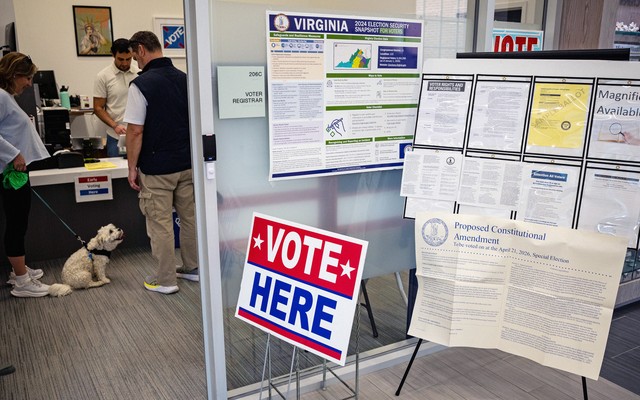
This morning the landscape looks a lot different, after Virginia voters yesterday approved a lopsided new House map that could hand Democrats an additional four seats that Republicans currently hold. The Democratic redistricting victory is the party’s second in a statewide referendum. When combined with new lines that California voters endorsed in November, Democrats have now succeeded in drawing districts that will likely yield them nine more seats this fall, at least matching what Republicans have been able to achieve in states that they control. By some measures, Democrats have jumped into the redistricting lead, bolstering their chances of winning back the House majority in the midterm elections.
The economist Adam Posen on the effect of the war in Iran on the world’s economy and the darkening economic outlook for the United States. Plus: A shifting partisan balance of power and Ask Not: The Kennedys and the Women They Destroyed, by Maureen Callahan.
In this episode of The David Frum Show, The Atlantic’s David Frum opens with a discussion of the likelihood that the partisan balance of power will shift from Republicans to Democrats at state-government level.
Then, David is joined by the president of the Peterson Institute for International Economics, Adam Posen, for a conversation about the state of the world’s economy. Frum and Posen discuss the economic effect of the war in Iran, the United States’ reputational hit caused by Trump’s tariffs, and the chance of global recession.
Finally, David ends the episode with a discussion of Ask Not: The Kennedys and the Women They Destroyed, by Maureen Callahan, and reflects on why reactions to the abuse of women by men in power seem to have become a partisan issue.
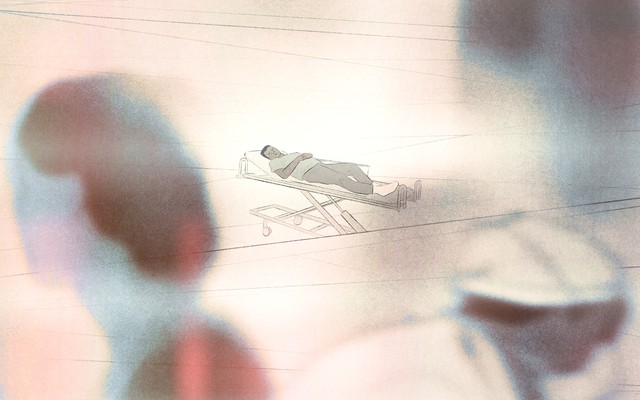
Patients are getting stuck in the emergency department for days while waiting for a spot in an inpatient ward.
In the last months, weeks, and days of his life, “I will not go to the emergency room” became my husband’s mantra. Andrej had esophageal cancer that had spread throughout his body (but not to his ever-willful brain), and, having trained as a doctor, I had jury-rigged a hospital at home, aided by specialists who got me pills to boost blood pressure; to dampen the effects of liver failure; to stem his cough; to help him swallow, wake up, fall asleep.
“I will not go to the emergency room”—emphasis on not—were his first words after passing out, having a seizure, or regurgitating the protein smoothies I made to pass his narrowed esophagus. He said it again and again, even as fluid built up in his lungs, rendering him short of breath and prone to agonizing coughing spells. He had been a big, athletic guy, but now, in the ugly process of dying, he was looking gaunt. Ours was a precarious existence, but I understood his adamant rejection of the emergency department. Most prior visits had morphed into extended trips into a terrifying medical underworld—to a purgatory known as emergency-department boarding.
Republicans seem to have expected that Democrats would continue to follow rules they had long since enthusiastically abandoned.
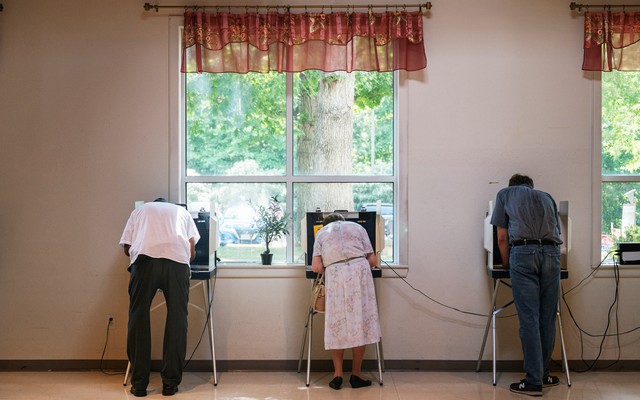
Voters in Virginia approved a lopsided congressional map on Tuesday, reducing the expected number of Republican-leaning districts in the Democratic-controlled state from five to one. Republicans have reacted by complaining that conservative-leaning voters in the state have been disenfranchised by gerrymandered maps that reduce the influence of their vote.
And they’re right. That is exactly what the new Virginia map does.
Gerrymandering is an attempt to thwart the will of the voters. It circumvents the vital process of democratic feedback by insulating politicians from political backlash. It should not happen, and yet this latest chapter of the redistricting wars did not begin in Virginia. It did not even begin last year, when Donald Trump openly urged red states to gerrymander their congressional maps so Republicans might retain possession of the House during the midterms. He did so despite the fact that the maps had been drawn after the 2020 census and would normally be expected to last until 2030.
For the richest men on Earth, everything is free and nothing matters.
At the end of Paul Thomas Anderson’s 2007 movie, There Will Be Blood, Daniel Day-Lewis’s oil-baron character, old now and richer than Croesus, beats Paul Dano’s preacher to death with a bowling pin. Dano’s Eli Sunday, a nemesis of Day-Lewis’s Daniel Plainview during his seminal, wealth-building years, has come to sell Plainview the oil-rich land that he once coveted. But Plainview doesn’t need the land anymore, because—as he explains in one of the most famous monologues in modern cinema—he has sucked out all the oil hidden beneath it from an adjoining property, like a milkshake.
Desperate for money, Eli begs for a loan. Instead, Plainview chases him around a bowling alley and murders him with great enthusiasm. Once it’s over, a butler comes to see what all the noise was about. “I’m finished,” Plainview yells.
Kash Patel has alarmed colleagues with episodes of excessive drinking and unexplained absences.
This article was featured in the One Story to Read Today newsletter. Sign up for it here.
On Friday, April 10, as FBI Director Kash Patel was preparing to leave work for the weekend, he struggled to log on to an internal computer system. He quickly became convinced that he had been locked out, and he panicked, frantically calling aides and allies to announce that he had been fired by the White House, according to nine people familiar with his outreach. Two of these people described his behavior as a “freak-out.”
Patel oversees an agency that employs roughly 38,000 people, including many who are trained to investigate and verify information that can be presented under oath in a court of law. News of his emotional outburst ricocheted through the bureau, prompting chatter among officials and, in some corners of the building, expressions of relief. The White House fielded calls from the bureau and from members of Congress asking who was now in charge of the FBI.
This article was featured in the One Story to Read Today newsletter. Sign up for it here.
The mystery of the missing scientists began with a Silver Alert. In late February, a retired Air Force major general named Neil McCasland left his house in New Mexico for a walk and never returned. Rumors spread on social media that the elderly former astronautical engineer had been abducted or killed. Forget Nancy Guthrie, they said. Here was a guy who used to run a “UFO-linked” lab. Here was a guy with knowledge of “America’s deepest, darkest secrets.” So where was this guy?
McCasland’s wife did her best with a post on Facebook to address what she called the “misinformation circulating about Neil and his disappearance,” but wild notions only multiplied. Dots were added, then connected: Another scientist—an advanced-materials researcher at NASA’s Jet Propulsion Laboratory (JPL) named Monica Reza—had disappeared while hiking near Los Angeles in June 2025. A physicist at MIT had been murdered in December. “What is going on seems to be an enemy action,” Walter Kirn, the novelist and podcast contrarian, said last month.
Politicians who think health-conscious women could swing the midterms are fooling themselves.
Earlier this month, MAHA moms went to the White House. Several key figures in the “Make America Healthy Again” movement gathered around a table in the Roosevelt Room to speak with Health Secretary Robert F. Kennedy Jr. and other top administration officials. The invitees—who included the health activist Kelly Ryerson, the wellness podcaster Alex Clark, and the nutritionist Courtney Swan—were all women. They’re influential among the loose coalition of Kennedy supporters known as MAHA moms, many of whom are worried about their children’s health. This was a chance for them to air their grievances with the Trump administration—which have grown in recent months. Afterward, they were ushered into the Oval Office to see President Trump, who, according to Ryerson, welcomed them as “my MAHA leaders.”
The people we were died at the exact moment our child did.
This article was featured in the One Story to Read Today newsletter. Sign up for it here.
My husband, David, hates Valentine’s Day. He once called it “New Year’s Eve with nuclear weapons.” I pretend not to care. Still, when the day passes entirely unremarked on, a woman can’t help but feel overlooked.
On Valentine’s Day 2024, David found a way out. He booked a speech on February 14 that required traveling from our home in Washington, D.C., to Toronto. I couldn’t object—he was getting paid. Anyway, I had my own plans: an “anti–Valentine’s Day” dinner hosted by one of the foreign embassies.
As I got ready, I called our oldest daughter, Miranda. She answered from her Brooklyn bathroom, getting ready for her own party. She propped her phone up beside her sink and laughed when I told her about her father’s strategic Valentine’s Day escape.
Each is animated by the author’s love—for their subject, for language, and for pushing the boundaries of what the genre can do.
Literary biography is a cruel genre. The authors of these books—by which I mean not just biographies about literary figures but also those that aspire to writerly excellence—have been described by the writer Janet Malcolm as “professional burglars.” After rifling through a person’s affairs, they must conjure inside their pages a living, breathing human being—and then, inevitably, they’ll have to close the coffin on their resurrected subject. But I like to think the “literary” element can temper the sting of these dastardly deeds, insofar as the author is tasked with perpetrating them in the most humane way possible: with the appropriate amount of reverence, style, and, yes, love. This is, at least, what I tried to do in my own literary biography, Baldwin: A Love Story, about James Baldwin’s life and relationships.