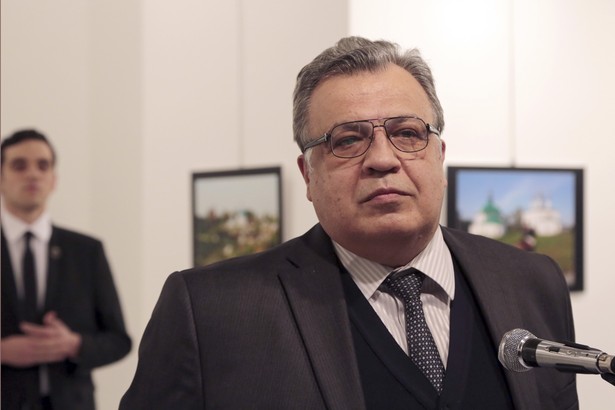
Russian and Turkish authorities are investigating the shooting death of Russia’s ambassador to Turkey by an off-duty Turkish police officer. Andrey Karlov, who had served in the job since 2013, was delivering a speech at a photo exhibition in Ankara on Monday when a man shot him in apparent protest of Russia’s involvement in the Syrian civil war. The gunman, identified as 22-year-old Mevlut Mert Altintas, was later shot and killed by police.
We’re following the news of the assassination here. All updates are in Eastern Standard Time (GMT -5).
Turkish police stand guard outside the Russian embassy in Ankara, Turkey, on December 20, 2016. (Umit Bektas / Reuters)
Turkish police on Monday questioned the family of the gunman, 22-year-old Mevlut Mert Altintas, who was shot and killed by police after his attack, the BBC reported Tuesday. Altintas was a member of Ankara’s riot police squad, but was not on duty at the time of the shooting. More from the BBC, citing Turkey’s interior minister:
He said Altintas was born on 24 June 1994 in in the town of Soke in quiet, conservative Aydin province in western Turkey, and attended police college in the coastal city of Izmir to the north.
He had been working in Ankara's riot police department for two-and-a-half years but was apparently on leave at the time of his attack.
… Altintas shaved and put on a suit and tie in a nearby hotel he was staying at prior to Monday's attack.
He set off a metal detector on entering the exhibition, but was waved through after showing his official police ID.
After shooting the ambassador, Altintas waved and pointed his gun at people inside the gallery, and shouted in Arabic and Turkish. He yelled “Allahu Akbar” several times, and said, “Don't forget about Syria, don’t forget about Aleppo. All those who participate in this tyranny will be held accountable.” The shooting came after days of protests in Turkey against Russia’s involvement in the Syrian civil war and the bombardment of the Syrian city of Aleppo.
Altintas fired 11 times, nine at the ambassador and twice in the air, according to the BBC. Three others were injured in the attack.
The body of Andrey Karlov was transported from Turkey to Russia Tuesday after a ceremony at the Esenboga airport in Ankara. Karlov’s coffin, draped in the Russian flag, was carried by soldiers on the tarmac. Photos from the ceremony showed his wife, Marina, touching the top of the coffin before it was placed on a plane bound for Moscow.
Trump Blames Turkey Attack on 'Radical Islamic Terrorist'
President-elect Donald Trump blamed the assassination of Russia’s ambassador to Turkey on “a radical Islamic terrorist.”
His statement read in full:
Today we offer our condolences to the family and loved ones of Russian Ambassador to Turkey Andrei Karlov, who was assassinated by a radical Islamic terrorist. The murder of an ambassador is a violation of all rules of civilized order and must be universally condemned.
The shooter, who was identified as an Ankara police officer, yelled, “We are the descendants of those who supported the Prophet Muhammad, for jihad,” in Arabic at the shooting. Statements from the White House and other countries, though, did not mention Islam. The shooter was killed by police in a standoff.
The presidents of Russia and Turkey said Thursday the fatal shooting of the Russian ambassador to Turkey was a “provocation” intended to hurt the two country’s ties, the AP reports.
In televised remarks, Vladimir Putin described the shooting as a “provocation aimed at derailing Russia-Turkey ties and the peace process in Syria.” Russia supports the Assad government in the Syrian civil war. Russia and Turkey are engaged in talks over the evacuation of civilians from the Syrian city of Aleppo, which has been under constant bombardment for months.
In a video message aired on Turkish TV channels, Recep Tayyip Erdogan said the shooting was “a provocation to damage the normalization process of Turkish-Russian relations.”
The White House offered its support to both countries in a statement Thursday. “This heinous attack on a member of the diplomatic corps is unacceptable, and we stand united with Russia and Turkey in our determination to confront terrorism in all of its forms,” said a National Security Council spokesman.
Shooting Follows Days of Turkish Protests Over Syrian War
Murad Sezer / Reuters
The shooting of the Russian ambassador comes after a week of protests in Turkey against Russia’s involvement in the Syrian civil war. On Saturday, crowds gathered near Turkey’s border with Syria chanted, “Murderer Russia, get out of Syria!” and demanded for all sides to allow humanitarian workers access to the besieged Syrian city of Aleppo. The evacuation of thousands of civilians in Aleppo began last week, after the Syrian government wrested control of most of the city from rebel groups, which have held it for four years. The Syrian government, with support from Russia, has bombed all of the city’s hospitals, and residents are low on food and other basic supplies. Humanitarian groups have pleaded to allow for short breaks in the fighting so residents can escape. About 4,500 people were evacuated Monday, bringing the total since last week to 12,000.
AP photographer Burhan Ozbilici was at the photo gallery Monday when gunfire broke out. He continued taking photos after Andrey Karlov was struck and capturing the assailant, who brandished his gun and shouted about the Syrian conflict. “Don’t forget Syria!” he can be heard saying. The gunman was later fatally shot by police. He has not been publicly identified. The AP reports he was a policeman, citing Turkey’s interior ministry.
Andrey Karlov served as Moscow’s ambassador to Ankara since July 2013, but his diplomatic career spanned four decades. The 62-year-old joined the diplomatic service in 1976, serving in Russia’s embassies in both Pyongyang and Seoul. Karlov served as the Russian ambassador to North Korea between 2001 and 2006 before returning to Moscow to head the foreign ministry’s consular affairs department in 2007. He is survived by his wife and son.
The U.S. State Department has warned U.S. residents to stay away from Ankara’s embassies.
Ankara, #Turkey - ongoing security incident near US Embassy. All US citizens should avoid area near Embassy compound until further notice. pic.twitter.com/5EABdgBO4o
Demonstrations are expected to take place in the area on Tuesday, the day of a scheduled meeting of defense and foreign ministers from Russia, Turkey, and Iran to discuss the Syrian conflict.
Andrey Karlov was delivering a speech at the opening of a photo exhibition in Ankara on Monday when shots rang out. Video footage from the speech and published by Russian media shows the ambassador falling down after being struck. A man dressed in a black suit appears in the frame, holding a gun and shouting. The gunman was shot and killed by police, according to Turkish broadcaster NTV. Karlov was transported to the hospital.
Here’s more on the scene from the AP, according to one of their photographers, who was there:
The ambassador, Andrei Karlov, was several minutes into a speech at the embassy-sponsored exhibition in the capital, Ankara, when a man wearing a suit and tie shouted "Allahu Akbar" and fired at least eight shots, according to an AP photographer in the audience. The attacker also said some words in Russian and smashed several of the photos hung for the exhibition.
Kash Patel has alarmed colleagues with episodes of excessive drinking and unexplained absences.
On Friday, April 10, as FBI Director Kash Patel was preparing to leave work for the weekend, he struggled to log into an internal computer system. He quickly became convinced that he had been locked out, and he panicked, frantically calling aides and allies to announce that he had been fired by the White House, according to nine people familiar with his outreach. Two of these people described his behavior as a “freak-out.”
Patel oversees an agency that employs roughly 38,000 people, including many who are trained to investigate and verify information that can be presented under oath in a court of law. News of his emotional outburst ricocheted through the bureau, prompting chatter among officials and, in some corners of the building, expressions of relief. The White House fielded calls from the bureau and from members of Congress asking who was now in charge of the FBI.
I spent 10 months working at the institution because I thought I could help protect it. What I observed there is far worse than the public knows.
On the day I was laid off from the Kennedy Center, I felt a little like Dolley Madison saving the Stuart portrait of Washington before the British sacked the capital. I was the staffer in charge of the artworks in the building. A crucial difference is that my institution, unlike the White House in 1814, had been on fire for months.
About a year elapsed between the moment President Trump took over the Kennedy Center in early 2025 and his declaration this past February that he’d decided to shut down the nation’s cultural center for two years. In between, we had seen artist cancellations, shrinking audiences, firings of old staffers and influxes of new ones—a lot of drama, just not onstage. The date Trump announced for the closure was July 4, the country’s 250th birthday, an event that I had been hired to help commemorate as the institution’s first curator of visual arts and special programming.
Trump has developed a reputation for backing down from his most over-the-top threats, but dismissing his words is a mistake.
Twelve hours after Donald Trump warned that a “whole civilization will die tonight, never to be brought back again”—after he’d previously threatened to bomb Iran “back to the Stone Ages”—the president agreed to a temporary cease-fire. Since then, initial peace negotiations failed and Trump responded with a naval blockade of the Strait of Hormuz; a new round of talks may begin soon.
But what to do with his everyone in Iran is going to die comments last week? Because they were designed to pressure Iran to come to the table, and because the promised carnage did not materialize, many observers simply moved on, explaining away Trump’s threats as a ham-fisted negotiation tactic, some kind of 5-D chess, or another example of the president’s propensity to “TACO” (Trump Always Chickens Out).
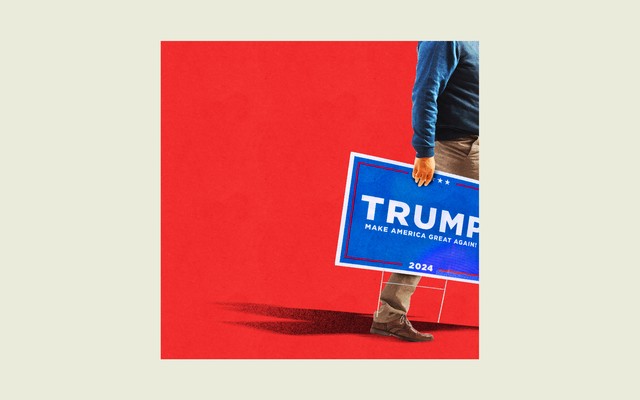
A shocking number of the president’s supporters have turned against him.
Tomas Montoya has sold festival foods—funnel cakes, burgers, hot dogs—across the American Southwest for years. But lately, business has been rough. Costs are up, so he’s increased his prices. Employees are begging for hours he can’t give them. In Arizona, where he lives, Montoya pays $6 a gallon to fill up his food trucks with diesel. This summer, he may have to skip the California leg of his festival route because fuel is even more expensive there.
“It’s Trump,” Montoya told us outside a popular Hispanic grocery store in Casa Grande, Arizona, much of which sits in one of the most evenly divided House districts in the country. Montoya voted for President Trump in 2024, but now, well, frustrated doesn’t begin to cover how he’s feeling. The president is bragging about the economy, even though everyone Montoya knows is hurting; he promised to stop wars, but started one in Iran. “When Trump opens his mouth, three-quarters of what he says is stories, lies,” Montoya said. He’s planning to vote in the midterm elections this fall. But he may not choose a Republican.
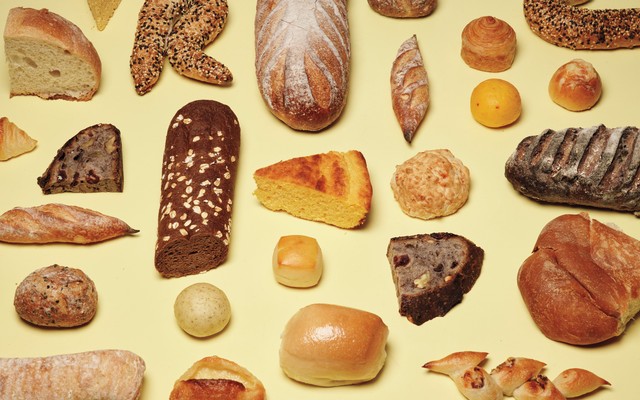
Thirteen thousand miles. Infinite contenders. One beautiful loaf.
This article was featured in the One Story to Read Today newsletter. Sign up for it here.
Here is the promise you and I must cling to across the thousands of words that follow: At some point within this text, I will reveal to you what—after 555 responses, 13,000 miles of travel, and months of monomaniacal research—I have determined to be the best free restaurant bread in America. I will not attempt to slither to the moral high ground, arguing that best is a meaningless measure, or insisting that all bread is dear in its own way. Even if you attempt to betray me—for instance, by merely scanning the text that follows for the phrase Here it is: the best free restaurant bread in America—I will uphold my end of the bargain.
This article was featured in the One Story to Read Today newsletter. Sign up for it here.
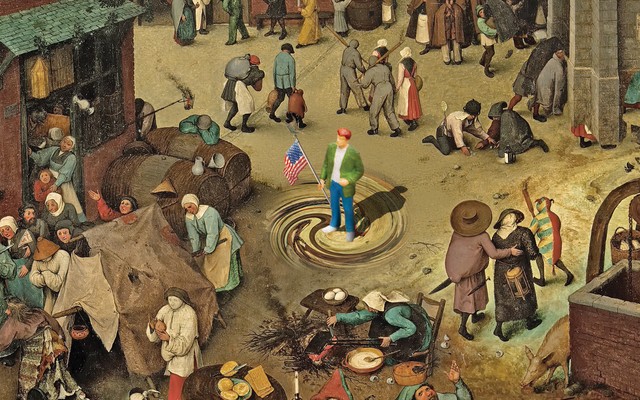
Maybe you’ve seen photos of Tehran in the 1970s, just before the Islamic Revolution: images of young women going to work in miniskirts, of couples making out in parks while wearing bell-bottoms, of people at pools in bikinis. It looks like Paris or Milan or Los Angeles. But in 1979 the revolution happened, and now Tehran looks like something from an earlier century.
Sometimes I think that our whole world has become kind of like that—going backwards in time. The religious movements thriving in today’s secularized age are the traditionalist ones that dissent from large parts of contemporary culture—not only the Shiite Islam of post-revolution Iran, but Orthodox Judaism and conservative Catholicism. Young Americans are flooding into Eastern Orthodox churches.
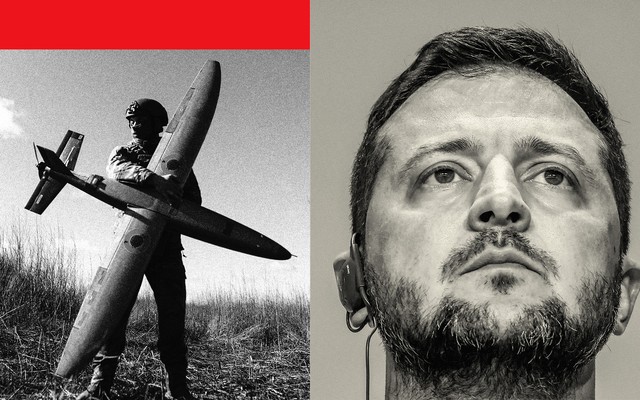
Zelensky has stopped pretending that Trump might be an ally.
For more than a year after Donald Trump returned to the White House, Ukraine held out hope—at least publicly—of winning him over. Trump, who revealed his affection for Russia’s Vladimir Putin again and again, largely halted American military aid to Kyiv. He insulted Ukrainian leaders regularly, personally berating President Volodymyr Zelensky in the Oval Office in February 2025. Nevertheless, Ukraine diligently took part in Trump’s peace negotiations, which were tilted to reward Putin’s invasion and turned out to be fruitless. Zelensky agreed to mineral deals that supposedly promised to enrich Americans. He even lavishly praised Trump himself. Despite Ukrainian leaders’ growing doubts, they calculated that speaking sweetly of the American president would do no harm and just might gain his favor.
The vice president has decided he’s a more accomplished theologian than Leo XIV.
The Trump administration doesn’t seem to have many rules, but one of them is that once the president picks a fight, his posse must show up to support him, no matter how ill-advised the conflict. And few senior officials are more eager to back up the boss in every embarrassing beef than Vice President Vance, who recently seems to have decided that he, and not Pope Leo XIV, is the true arbiter of Catholic doctrine.
President Trump is personally angry with Leo because the pontiff has been deeply critical of America’s war of choice in Iran. Accordingly, Trump lashed out at His Holiness twice over the past few days. Vance might have seen this as a valuable opportunity to say nothing and let the storm pass; Leo, naturally, doesn’t seem to care all that much what Trump thinks. (As my colleague Liz Bruenig wrote, Leo answers to a higher authority.) Had the vice president remained silent, Trump might have moved on, and Vance, a relatively recent convert to Catholicism, would have been able to stay out of a dustup between his president and his spiritual leader.
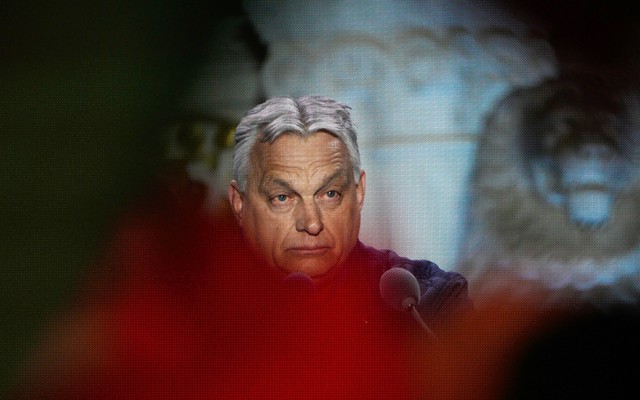
The Hungarian strongman Viktor Orbán, who lost his election in a landslide on Sunday after 16 years in power, presented himself as a defender of Western civilization. But at best, his lofty rhetoric was a code for bigotry and a justification for the persecution of minorities; at worst, it was a scam to fleece Hungarians by persuading them to blame everyone but those responsible for their problems. Maybe both.
Eventually Hungarians decided that a major source of their problems was Orbán himself. Maybe someday Americans will come to a similar realization about Orbán’s great admirer, Donald Trump, who praised the former Hungarian leader before the election as a “fantastic man” who had done a “fantastic job.”
Fewer young people are getting into relationships.
This article was featured in the One Story to Read Today newsletter. Sign up for it here.
Lisa A. Phillips has found herself in a strange position as of late: trying to convince her students that romantic love is worthwhile. They don’t believe in overly idealizing partnerships or in the clichés fed to them in rom-coms; some have declared that love is a concept created by the media. Phillips, a journalist who teaches a SUNY New Paltz course called “Love and Heartbreak,” responds that of course relationships aren’t all perfect passion, and we should question the tropes we’re surrounded by. But also: Those tropes began somewhere. Across cultures, people describe the experience of falling for someone in quite similar ways, “whether they grew up with a Disney-movie IV in their vein,” she told me, or “in a remote area with no media whatsoever.” The sensation is big, she tells her students; it’s overwhelming; it can feel utterly transcendent. They’re skeptical.