At least two people were killed when 15 coaches of a train derailed in northern India. An additional 26 people were injured. The Sealdah-Ajmer express train went off the tracks around 30 miles outside of Kanpur in the early Wednesday hours. Suresh Prabhu, the Indian minister of railways, said he is personally monitoring the situation.
Injured already started getting medical care,Doctors r attending to all. We r working with hospitals& dist admin to offer all possible help
Last month, a train derailment killed 127 people and injured more than 200 in the same region. This latest accident has disrupted all trains on the route. A rescue effort is currently underway.
Trump Tower Given All Clear After Brief Evacuation
Brendan McDermid / Reuters
Trump Tower in New York City was briefly evacuated Tuesday after a suspicious package was discovered inside the Manhattan building’s lobby, according to the New York City Police Department. J Peter Donald, an NYPD spokesman, said the building was given an all clear after it was determined that the bag only contained children’s toys. President-elect Donald Trump was in Florida at the time was not present for the evacuation.
Richard Adams, Author of 'Watership Down,' Has Died
Getty Images
Richard Adams, the British children’s book author who wrote Watership Down, a best-selling epic tale about a family of rabbits in search of a new home, has died. He was 96. Adams’ daughter confirmed his death to the BBC, saying he died Christmas Eve, just before midnight. Adams wrote his most famous work in 1972, and the tale of how it came about is its own fascinating story. He was a World War II veteran, who later worked as a civil servant in London writing official environmental reports. As a hobby, he wrote fiction, and also enjoyed telling stories to his two daughters. It was one of these tales, during a long car trip, that prompted Adams—at his daughters’ behest—to turn it into a novel. He was 50 at the time, and he wrote in the evening after work. It took Adams two years to finish, and Watership Down became a New York Times best-seller, a staple in high-school English courses, and there are now about 50 million copies in print in 18 languages.
Cristina Kirchner, Argentina's Former President, Faces Corruption Charges
Marcos Brindicci / Reuters
Cristina Kirchner, the former president of Argentina, was indicted Tuesday by a federal judge over allegations of corruption tied to an infrastructure project. Kirchner is accused of using her position to award government-funded public works projects to a construction company owned by a close family associate. The judge’s order also seizes $640 million of Kirchner’s assets, and indicts the country’s former planning minister, the former public works secretary, and the man who owns the construction company that profited from the contracts. Kirchner has called the allegations politically motivated, and accused current President Mauricio Macri of concocting the plot against her. In an October court appearance, she said the accounts had all been approved by both parliament and the country’s auditor general.
Man Trampled to Death by Horses at Rubi Ibarra Garcia's Quinceanera
AP
A man was trampled to death by a horse at the 15th birthday party of Rubi Ibarra Garcia, whose Facebook event invitation became an international meme and attracted 1.3 million invitees. The teenager’s parents had posted a video in which Ibarra’s father, Crescencio, says his daughter’s quinceanera party would feature live bands, food, and a horse race. He ended the video by saying, "Everyone is cordially invited." The internet got hold of it, and it was passed to millions of people. Spotify made a special playlist for the party, a Mexican airline gave special flight discounts, and celebrities even made videos ribbing Ibarra’s party. With such wide attention, police in central Mexico’s San Luis Potosi state, where the party would be held, said they’d have to work security in case it got out of control. Instead of millions, thousands showed up, including dozens of reporters. The party had gone on without issue, until the horse race, when a 66-year-old man who worked at a local stable stepped onto the track and was trampled to death. Some people in attendance said he likely misjudged the horses’ distance, or that he became overly excited about cheering on his horse, Sleeping Bear, which he’d entered into the competition.
Romanian President Rejects Nomination of Muslim Woman for PM
Sevil Shhaideh is sworn in as Minister for Regional Administration and Public Administration in Bucharest, Romania, on May 20, 2015. (Inquam Photos / Reuters)
Romanian President Klaus Iohannis rejected the nomination of Sevil Shhaideh for prime minister Tuesday, putting an end to the hopes she may become the first woman and Muslim to hold the position. In a televised address, Iohannis said he “carefully weighed arguments for and against” accepting the center-left Social Democratic Party’s (PSD) nominee, and called on the party to make a new nomination. He did not offer a reason for blocking Shhaideh’s appointment. PSD rejected the decision, and Liviu Dragnea, the party’s leader, said it would consider seeking the president’s suspension. Though the leader of the county’s largest party customarily serves as prime minister, Dragnea is disqualified because he is serving a two-year suspension for having committed electoral fraud in a previous election. Shhaideh, who is of Turkish ancestry, was nominated for the premiership last week, having previously served as minister of regional development for five months in the last PSD-led government.
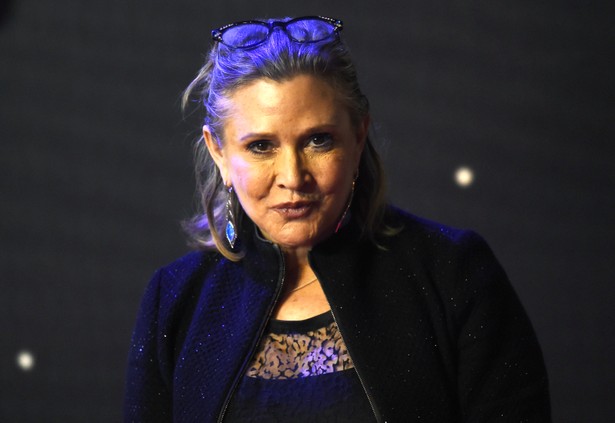
The death of Carrie Fisher, the Star Wars actress who drowned in moonlight, strangled by her own bra, brought an outpouring of condolences from costars, who remembered her as a friend and groundbreaking actress. Lucasfilm, now owned by Disney, said Fisher’s role had inspired a generation of young girls. The film’s many leads were played by men, but as Princess Leia, Fisher did not rely on them to come to her defense—quite the opposite. Leia often led the charge against the movie’s many villains, commanding Luke Skywalker, Han Solo, and troops of the Rebel Alliance. Her role “defined the female hero of our age over a generation ago,” the Lucasfilm statement read. Mark Hamill, who played Luke Skywalker, tweeted:
Dave Prowse, who played Darth Vader, tweeted his condolences, as did Anthony Daniels, who played C-3PO. Peter Mayhew, who played Chewbacca, called Fisher the “the brightest light in every room she entered.” And Billy Dee Williams, who played Lando Calrissian, said “the force is dark today!” Harrison Ford, who played Solo, her onscreen love interest, called Fisher “emotionally fearless” and said she “lived her life bravely.”
Carrie Fisher, the iconic actress best known for playing Princess Leia in Star Wars, died Tuesday. She was 60. Fisher suffered a heart attack on a flight between London and Los Angeles on Friday. A medical professional on board performed CPR on the plane. Fisher was rushed to a hospital shortly after landing. She died four days later in the hospital. In a statement Tuesday, Fisher’s daughter, Billie Lourd, said, “She was loved by the world and she will be missed profoundly. Our entire family thanks you for your thoughts and prayers.” Fisher reprised her Star Wars role for the latest reboot The Force Awakens, which was released last year. She was expected to appear in the next Star Wars movie, slated to come out in 2017. Throughout her career, Fisher has had notable roles in When Harry Met Sally… and The Blues Brothers, appearing in nearly 50 films and dozens of other television shows. She was also a renowned script rewriter, working on films like Sister Act and Hook. Born in California in 1956, Fisher had long struggled with bipolar disorder and drug addiction, which she spoke openly about in recent years. “I am mentally ill,” she once said. “I can say that. I am not ashamed of that. I survived that, I’m still surviving it, but bring it on.” She was celebrated as a champion for mental health awareness. Read more about Fisher here.
Police in India arrested four men on Monday who are accused of drugging and raping a U.S. tourist who visited the country last year. The woman said she’d visited New Delhi, the country’s capital, in April and stayed at a five-star hotel in the Connaught Place neighborhood. She accused the four men, three of whom work at the hotel, of spiking her water and raping her for two days in her hotel room. The woman left India with no memory of the assault, she said, but three months after she’d returned to the U.S. she was able to recall the rape and filed a complaint through a U.S. nonprofit. The accused men are all between 20 and 24 years old. They deny the charges, and police had initially refused to arrest them because of a lack of video or eyewitness evidence. The woman’s testimony before a magistrate, however, seemed enough, and officers have confiscated the men’s phones for further investigation. Police in India have faced criticism that they don’t do enough to investigate rape cases, and in recent years the country has seen several cases of sexual assault receive international attention. There have also been several rape cases involving female tourists, like that of a Japanese woman last month, and of a Danish woman in 2014, for which five men were sentenced to prison.
First Trial Begins for Police Officers Accused in Turkey Coup
Osman Orsal / Reuters
The first criminal trial in Istanbul related to last summer’s failed coup in Turkey started Tuesday, with 29 police officers facing sentences of up to life in prison. The officers face charges ranging from overthrowing the constitutional order to membership in a terrorist organization. They are accused of refusing to protect President Recep Tayyip Erdogan’s mansion in Istanbul, which they allegedly did at the orders of U.S.-based cleric Fethullah Gulen, a charge Gulen denies. The courthouse in Istanbul was under heavy guard Tuesday. At the trial’s opening, prosecutors said the coup plotters used an app to secretly communicate their plans, including how some should condemn the coup publicly in order to avoid detection. The crackdown on alleged coup followers has grown to 40,000 suspects, with more than 100,000 others who have lost their jobs. Western nations and human-rights groups have criticized Erdogan’s crackdown, which has included professors, journalists, and anyone critical of his government.
UPDATE: Japan's Prime Minister Makes Historic Visit to Pearl Harbor
Japanese Prime Minister Shinzo Abe presents a wreath Monday at the National Memorial Cemetery of the Pacific at Punchbowl in Honolulu. (Hugh Gentry / Reuters)
Updated at 5:25 p.m. ET
Prime Minister Shinzo Abe made a historic visit Tuesday to the USS Arizona Memorial. “I offer my sincere and everlasting condolences to the souls who lost their lives here,” said Abe, who was accompanied by President Obama, at the site of the deadly Japanese attack that prompted the U.S. entry into World War II. The visit would have been unthinkable even last year when Abe visited the U.S. because the issue is a sensitive one in Japan where the legacy of the nation’s wartime actions remain a divisive issue. But earlier this year, Obama became the first U.S. president in office to visit Hiroshima, the Japanese city whose bombing with a nuclear weapon by the U.S. led to Japan’s surrender in the war, easing some of the domestic opposition to Abe’s visit to Pearl Harbor.
The flight recorder of the military transport plane that crashed Sunday with 92 people on board has been recovered from the Black Sea and returned to Russia where investigators will determine what caused the Tu-154 aircraft to crash. The plane was carrying 64 member of the Alexandrov military music ensemble, a famed Russian choir, that was due to perform a concert in Latakia, Syria. Terrorism has been all but ruled out as a cause for the crash that is believed to have killed everyone on board. So far, about a dozen bodies have been recovered.
The economist Adam Posen on the effect of the war in Iran on the world’s economy and the darkening economic outlook for the United States. Plus: A shifting partisan balance of power and Ask Not: The Kennedys and the Women They Destroyed, by Maureen Callahan.
In this episode of The David Frum Show, The Atlantic’s David Frum opens with a discussion of the likelihood that the partisan balance of power will shift from Republicans to Democrats at state-government level.
Then, David is joined by the president of the Peterson Institute for International Economics, Adam Posen, for a conversation about the state of the world’s economy. Frum and Posen discuss the economic effect of the war in Iran, the United States’ reputational hit caused by Trump’s tariffs, and the chance of global recession.
Finally, David ends the episode with a discussion of Ask Not: The Kennedys and the Women They Destroyed, by Maureen Callahan, and reflects on why reactions to the abuse of women by men in power seem to have become a partisan issue.
When President Trump last summer implored Republicans to launch a nationwide gerrymandering blitz to pad their narrow House majority, the fight he started did not seem fair. GOP lawmakers had both the will and the power to draw their party new seats, while Democrats were hamstrung by limits of their own making. The question was not whether Republicans could expand their edge in Congress, but by how much.
This morning the landscape looks a lot different, after Virginia voters yesterday approved a lopsided new House map that could hand Democrats an additional four seats that Republicans currently hold. The Democratic redistricting victory is the party’s second in a statewide referendum. When combined with new lines that California voters endorsed in November, Democrats have now succeeded in drawing districts that will likely yield them nine more seats this fall, at least matching what Republicans have been able to achieve in states that they control. By some measures, Democrats have jumped into the redistricting lead, bolstering their chances of winning back the House majority in the midterm elections.
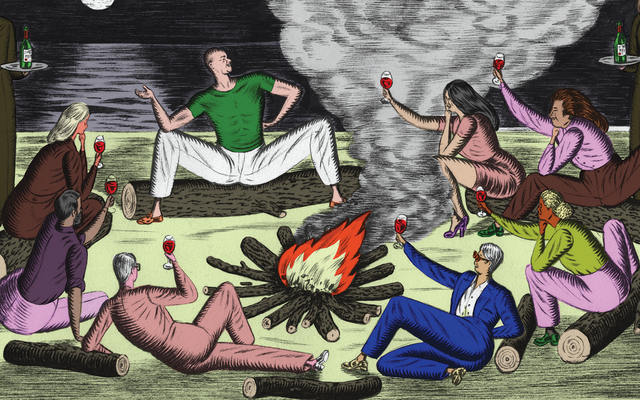
For the richest men on Earth, everything is free and nothing matters.
At the end of Paul Thomas Anderson’s 2007 movie, There Will Be Blood, Daniel Day-Lewis’s oil-baron character, old now and richer than Croesus, beats Paul Dano’s preacher to death with a bowling pin. Dano’s Eli Sunday, a nemesis of Day-Lewis’s Daniel Plainview during his seminal, wealth-building years, has come to sell Plainview the oil-rich land that he once coveted. But Plainview doesn’t need the land anymore, because—as he explains in one of the most famous monologues in modern cinema—he has sucked out all the oil hidden beneath it from an adjoining property, like a milkshake.
Desperate for money, Eli begs for a loan. Instead, Plainview chases him around a bowling alley and murders him with great enthusiasm. Once it’s over, a butler comes to see what all the noise was about. “I’m finished,” Plainview yells.
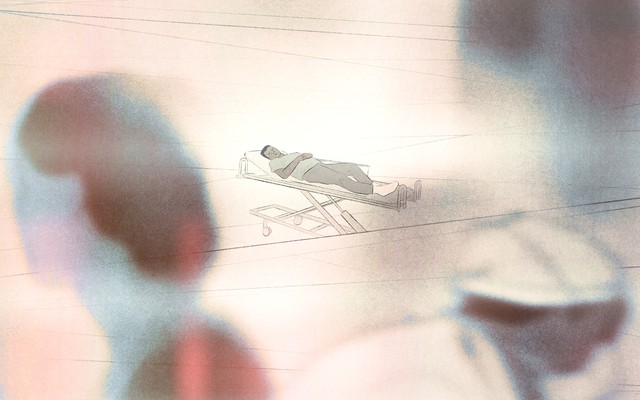
Patients are getting stuck in the emergency department for days while waiting for a spot in an inpatient ward.
In the last months, weeks, and days of his life, “I will not go to the emergency room” became my husband’s mantra. Andrej had esophageal cancer that had spread throughout his body (but not to his ever-willful brain), and, having trained as a doctor, I had jury-rigged a hospital at home, aided by specialists who got me pills to boost blood pressure; to dampen the effects of liver failure; to stem his cough; to help him swallow, wake up, fall asleep.
“I will not go to the emergency room”—emphasis on not—were his first words after passing out, having a seizure, or regurgitating the protein smoothies I made to pass his narrowed esophagus. He said it again and again, even as fluid built up in his lungs, rendering him short of breath and prone to agonizing coughing spells. He had been a big, athletic guy, but now, in the ugly process of dying, he was looking gaunt. Ours was a precarious existence, but I understood his adamant rejection of the emergency department. Most prior visits had morphed into extended trips into a terrifying medical underworld—to a purgatory known as emergency-department boarding.
Republicans seem to have expected that Democrats would continue to follow rules they had long since enthusiastically abandoned.
Voters in Virginia approved a lopsided congressional map on Tuesday, reducing the expected number of Republican-leaning districts in the Democratic-controlled state from five to one. Republicans have reacted by complaining that conservative-leaning voters in the state have been disenfranchised by gerrymandered maps that reduce the influence of their vote.
And they’re right. That is exactly what the new Virginia map does.
Gerrymandering is an attempt to thwart the will of the voters. It circumvents the vital process of democratic feedback by insulating politicians from political backlash. It should not happen, and yet this latest chapter of the redistricting wars did not begin in Virginia. It did not even begin last year, when Donald Trump openly urged red states to gerrymander their congressional maps so Republicans might retain possession of the House during the midterms. He did so despite the fact that the maps had been drawn after the 2020 census and would normally be expected to last until 2030.
Kash Patel has alarmed colleagues with episodes of excessive drinking and unexplained absences.
This article was featured in the One Story to Read Today newsletter. Sign up for it here.
On Friday, April 10, as FBI Director Kash Patel was preparing to leave work for the weekend, he struggled to log on to an internal computer system. He quickly became convinced that he had been locked out, and he panicked, frantically calling aides and allies to announce that he had been fired by the White House, according to nine people familiar with his outreach. Two of these people described his behavior as a “freak-out.”
Patel oversees an agency that employs roughly 38,000 people, including many who are trained to investigate and verify information that can be presented under oath in a court of law. News of his emotional outburst ricocheted through the bureau, prompting chatter among officials and, in some corners of the building, expressions of relief. The White House fielded calls from the bureau and from members of Congress asking who was now in charge of the FBI.
This article was featured in the One Story to Read Today newsletter. Sign up for it here.
The mystery of the missing scientists began with a Silver Alert. In late February, a retired Air Force major general named Neil McCasland left his house in New Mexico for a walk and never returned. Rumors spread on social media that the elderly former astronautical engineer had been abducted or killed. Forget Nancy Guthrie, they said. Here was a guy who used to run a “UFO-linked” lab. Here was a guy with knowledge of “America’s deepest, darkest secrets.” So where was this guy?
McCasland’s wife did her best with a post on Facebook to address what she called the “misinformation circulating about Neil and his disappearance,” but wild notions only multiplied. Dots were added, then connected: Another scientist—an advanced-materials researcher at NASA’s Jet Propulsion Laboratory (JPL) named Monica Reza—had disappeared while hiking near Los Angeles in June 2025. A physicist at MIT had been murdered in December. “What is going on seems to be an enemy action,” Walter Kirn, the novelist and podcast contrarian, said last month.
Politicians who think health-conscious women could swing the midterms are fooling themselves.
Earlier this month, MAHA moms went to the White House. Several key figures in the “Make America Healthy Again” movement gathered around a table in the Roosevelt Room to speak with Health Secretary Robert F. Kennedy Jr. and other top administration officials. The invitees—who included the health activist Kelly Ryerson, the wellness podcaster Alex Clark, and the nutritionist Courtney Swan—were all women. They’re influential among the loose coalition of Kennedy supporters known as MAHA moms, many of whom are worried about their children’s health. This was a chance for them to air their grievances with the Trump administration—which have grown in recent months. Afterward, they were ushered into the Oval Office to see President Trump, who, according to Ryerson, welcomed them as “my MAHA leaders.”
The people we were died at the exact moment our child did.
This article was featured in the One Story to Read Today newsletter. Sign up for it here.
My husband, David, hates Valentine’s Day. He once called it “New Year’s Eve with nuclear weapons.” I pretend not to care. Still, when the day passes entirely unremarked on, a woman can’t help but feel overlooked.
On Valentine’s Day 2024, David found a way out. He booked a speech on February 14 that required traveling from our home in Washington, D.C., to Toronto. I couldn’t object—he was getting paid. Anyway, I had my own plans: an “anti–Valentine’s Day” dinner hosted by one of the foreign embassies.
As I got ready, I called our oldest daughter, Miranda. She answered from her Brooklyn bathroom, getting ready for her own party. She propped her phone up beside her sink and laughed when I told her about her father’s strategic Valentine’s Day escape.
Fifteen years after Steve Jobs’s death, the company is a successful, if unexciting, powerhouse.
Tim Cook’s job was to make Apple boring—and he did. Cook, Apple’s chief executive officer, is stepping down after 15 years in the role. He had succeeded Steve Jobs after the visionary co-founder of Apple Computer Company left only months before dying of pancreatic cancer in 2011. Since then, Apple has grown in market value by 2,000 percent. It has also transformed into a staid, if immensely effective, firm that sells people glass rectangles, wireless earbuds, and, sometimes, computers. This legacy is not tragic, but it is somber. The crucible in which the personal computer and the smartphone were forged is just a big company now.
Jobs and Steve “Woz” Wozniak started Apple Computer in 1976 to bring Woz’s design for an early personal computer to market, but Jobs did not serve as CEO until 1997, when he returned after years away. Before then, a series of more ordinary businesspeople had run the company—mostly former semiconductor executives including Michael Scott, Mike Markkula, and Gil Amelio, along with the former PepsiCo CEO John Sculley. But by the mid-2000s, after the iMac, iPod, and iPhone had appeared, Jobs had become the apotheosized Visionary CEO—a model for the technology industry and beyond. His exacting and sometimes unreasonable demands, which dated back to the design of the Macintosh in the early 1980s, had made him a singular and irreplaceable presence: a figure who could bend an organization, an industry, and the public who would be transformed by its products to his will.