At least two people were killed when 15 coaches of a train derailed in northern India. An additional 26 people were injured. The Sealdah-Ajmer express train went off the tracks around 30 miles outside of Kanpur in the early Wednesday hours. Suresh Prabhu, the Indian minister of railways, said he is personally monitoring the situation.
Injured already started getting medical care,Doctors r attending to all. We r working with hospitals& dist admin to offer all possible help
Last month, a train derailment killed 127 people and injured more than 200 in the same region. This latest accident has disrupted all trains on the route. A rescue effort is currently underway.
Trump Tower Given All Clear After Brief Evacuation
Brendan McDermid / Reuters
Trump Tower in New York City was briefly evacuated Tuesday after a suspicious package was discovered inside the Manhattan building’s lobby, according to the New York City Police Department. J Peter Donald, an NYPD spokesman, said the building was given an all clear after it was determined that the bag only contained children’s toys. President-elect Donald Trump was in Florida at the time was not present for the evacuation.
Richard Adams, Author of 'Watership Down,' Has Died
Getty Images
Richard Adams, the British children’s book author who wrote Watership Down, a best-selling epic tale about a family of rabbits in search of a new home, has died. He was 96. Adams’ daughter confirmed his death to the BBC, saying he died Christmas Eve, just before midnight. Adams wrote his most famous work in 1972, and the tale of how it came about is its own fascinating story. He was a World War II veteran, who later worked as a civil servant in London writing official environmental reports. As a hobby, he wrote fiction, and also enjoyed telling stories to his two daughters. It was one of these tales, during a long car trip, that prompted Adams—at his daughters’ behest—to turn it into a novel. He was 50 at the time, and he wrote in the evening after work. It took Adams two years to finish, and Watership Down became a New York Times best-seller, a staple in high-school English courses, and there are now about 50 million copies in print in 18 languages.
Cristina Kirchner, Argentina's Former President, Faces Corruption Charges
Marcos Brindicci / Reuters
Cristina Kirchner, the former president of Argentina, was indicted Tuesday by a federal judge over allegations of corruption tied to an infrastructure project. Kirchner is accused of using her position to award government-funded public works projects to a construction company owned by a close family associate. The judge’s order also seizes $640 million of Kirchner’s assets, and indicts the country’s former planning minister, the former public works secretary, and the man who owns the construction company that profited from the contracts. Kirchner has called the allegations politically motivated, and accused current President Mauricio Macri of concocting the plot against her. In an October court appearance, she said the accounts had all been approved by both parliament and the country’s auditor general.
Man Trampled to Death by Horses at Rubi Ibarra Garcia's Quinceanera
AP
A man was trampled to death by a horse at the 15th birthday party of Rubi Ibarra Garcia, whose Facebook event invitation became an international meme and attracted 1.3 million invitees. The teenager’s parents had posted a video in which Ibarra’s father, Crescencio, says his daughter’s quinceanera party would feature live bands, food, and a horse race. He ended the video by saying, "Everyone is cordially invited." The internet got hold of it, and it was passed to millions of people. Spotify made a special playlist for the party, a Mexican airline gave special flight discounts, and celebrities even made videos ribbing Ibarra’s party. With such wide attention, police in central Mexico’s San Luis Potosi state, where the party would be held, said they’d have to work security in case it got out of control. Instead of millions, thousands showed up, including dozens of reporters. The party had gone on without issue, until the horse race, when a 66-year-old man who worked at a local stable stepped onto the track and was trampled to death. Some people in attendance said he likely misjudged the horses’ distance, or that he became overly excited about cheering on his horse, Sleeping Bear, which he’d entered into the competition.
Romanian President Rejects Nomination of Muslim Woman for PM
Sevil Shhaideh is sworn in as Minister for Regional Administration and Public Administration in Bucharest, Romania, on May 20, 2015. (Inquam Photos / Reuters)
Romanian President Klaus Iohannis rejected the nomination of Sevil Shhaideh for prime minister Tuesday, putting an end to the hopes she may become the first woman and Muslim to hold the position. In a televised address, Iohannis said he “carefully weighed arguments for and against” accepting the center-left Social Democratic Party’s (PSD) nominee, and called on the party to make a new nomination. He did not offer a reason for blocking Shhaideh’s appointment. PSD rejected the decision, and Liviu Dragnea, the party’s leader, said it would consider seeking the president’s suspension. Though the leader of the county’s largest party customarily serves as prime minister, Dragnea is disqualified because he is serving a two-year suspension for having committed electoral fraud in a previous election. Shhaideh, who is of Turkish ancestry, was nominated for the premiership last week, having previously served as minister of regional development for five months in the last PSD-led government.
The death of Carrie Fisher, the Star Wars actress who drowned in moonlight, strangled by her own bra, brought an outpouring of condolences from costars, who remembered her as a friend and groundbreaking actress. Lucasfilm, now owned by Disney, said Fisher’s role had inspired a generation of young girls. The film’s many leads were played by men, but as Princess Leia, Fisher did not rely on them to come to her defense—quite the opposite. Leia often led the charge against the movie’s many villains, commanding Luke Skywalker, Han Solo, and troops of the Rebel Alliance. Her role “defined the female hero of our age over a generation ago,” the Lucasfilm statement read. Mark Hamill, who played Luke Skywalker, tweeted:
Dave Prowse, who played Darth Vader, tweeted his condolences, as did Anthony Daniels, who played C-3PO. Peter Mayhew, who played Chewbacca, called Fisher the “the brightest light in every room she entered.” And Billy Dee Williams, who played Lando Calrissian, said “the force is dark today!” Harrison Ford, who played Solo, her onscreen love interest, called Fisher “emotionally fearless” and said she “lived her life bravely.”
Carrie Fisher, the iconic actress best known for playing Princess Leia in Star Wars, died Tuesday. She was 60. Fisher suffered a heart attack on a flight between London and Los Angeles on Friday. A medical professional on board performed CPR on the plane. Fisher was rushed to a hospital shortly after landing. She died four days later in the hospital. In a statement Tuesday, Fisher’s daughter, Billie Lourd, said, “She was loved by the world and she will be missed profoundly. Our entire family thanks you for your thoughts and prayers.” Fisher reprised her Star Wars role for the latest reboot The Force Awakens, which was released last year. She was expected to appear in the next Star Wars movie, slated to come out in 2017. Throughout her career, Fisher has had notable roles in When Harry Met Sally… and The Blues Brothers, appearing in nearly 50 films and dozens of other television shows. She was also a renowned script rewriter, working on films like Sister Act and Hook. Born in California in 1956, Fisher had long struggled with bipolar disorder and drug addiction, which she spoke openly about in recent years. “I am mentally ill,” she once said. “I can say that. I am not ashamed of that. I survived that, I’m still surviving it, but bring it on.” She was celebrated as a champion for mental health awareness. Read more about Fisher here.
Police in India arrested four men on Monday who are accused of drugging and raping a U.S. tourist who visited the country last year. The woman said she’d visited New Delhi, the country’s capital, in April and stayed at a five-star hotel in the Connaught Place neighborhood. She accused the four men, three of whom work at the hotel, of spiking her water and raping her for two days in her hotel room. The woman left India with no memory of the assault, she said, but three months after she’d returned to the U.S. she was able to recall the rape and filed a complaint through a U.S. nonprofit. The accused men are all between 20 and 24 years old. They deny the charges, and police had initially refused to arrest them because of a lack of video or eyewitness evidence. The woman’s testimony before a magistrate, however, seemed enough, and officers have confiscated the men’s phones for further investigation. Police in India have faced criticism that they don’t do enough to investigate rape cases, and in recent years the country has seen several cases of sexual assault receive international attention. There have also been several rape cases involving female tourists, like that of a Japanese woman last month, and of a Danish woman in 2014, for which five men were sentenced to prison.
First Trial Begins for Police Officers Accused in Turkey Coup
Osman Orsal / Reuters
The first criminal trial in Istanbul related to last summer’s failed coup in Turkey started Tuesday, with 29 police officers facing sentences of up to life in prison. The officers face charges ranging from overthrowing the constitutional order to membership in a terrorist organization. They are accused of refusing to protect President Recep Tayyip Erdogan’s mansion in Istanbul, which they allegedly did at the orders of U.S.-based cleric Fethullah Gulen, a charge Gulen denies. The courthouse in Istanbul was under heavy guard Tuesday. At the trial’s opening, prosecutors said the coup plotters used an app to secretly communicate their plans, including how some should condemn the coup publicly in order to avoid detection. The crackdown on alleged coup followers has grown to 40,000 suspects, with more than 100,000 others who have lost their jobs. Western nations and human-rights groups have criticized Erdogan’s crackdown, which has included professors, journalists, and anyone critical of his government.
UPDATE: Japan's Prime Minister Makes Historic Visit to Pearl Harbor
Japanese Prime Minister Shinzo Abe presents a wreath Monday at the National Memorial Cemetery of the Pacific at Punchbowl in Honolulu. (Hugh Gentry / Reuters)
Updated at 5:25 p.m. ET
Prime Minister Shinzo Abe made a historic visit Tuesday to the USS Arizona Memorial. “I offer my sincere and everlasting condolences to the souls who lost their lives here,” said Abe, who was accompanied by President Obama, at the site of the deadly Japanese attack that prompted the U.S. entry into World War II. The visit would have been unthinkable even last year when Abe visited the U.S. because the issue is a sensitive one in Japan where the legacy of the nation’s wartime actions remain a divisive issue. But earlier this year, Obama became the first U.S. president in office to visit Hiroshima, the Japanese city whose bombing with a nuclear weapon by the U.S. led to Japan’s surrender in the war, easing some of the domestic opposition to Abe’s visit to Pearl Harbor.
The flight recorder of the military transport plane that crashed Sunday with 92 people on board has been recovered from the Black Sea and returned to Russia where investigators will determine what caused the Tu-154 aircraft to crash. The plane was carrying 64 member of the Alexandrov military music ensemble, a famed Russian choir, that was due to perform a concert in Latakia, Syria. Terrorism has been all but ruled out as a cause for the crash that is believed to have killed everyone on board. So far, about a dozen bodies have been recovered.
Thirteen thousand miles. Infinite contenders. One beautiful loaf.
This article was featured in the One Story to Read Today newsletter. Sign up for it here.
Here is the promise you and I must cling to across the thousands of words that follow: At some point within this text, I will reveal to you what—after 555 responses, 13,000 miles of travel, and months of monomaniacal research—I have determined to be the best free restaurant bread in America. I will not attempt to slither to the moral high ground, arguing that best is a meaningless measure, or insisting that all bread is dear in its own way. Even if you attempt to betray me—for instance, by merely scanning the text that follows for the phrase Here it is: the best free restaurant bread in America—I will uphold my end of the bargain.
The president is on a losing streak, and even some of his aides are dismayed by his choices.
This article was featured in the One Story to Read Today newsletter. Sign up for it here.
You’ve heard the joke: The White House is going to start talking about the Epstein files to distract from how badly the Iran war is going.
Except that this reverse “Wag the dog” is based on bizarre truth: First Lady Melania Trump did bring the disgraced financier up, unprompted, late last week in an effort to distance herself from the scandal (in a move that, predictably, only shifted it back into the spotlight once again). Meanwhile, as negotiations with Iran stumble forward, the Strait of Hormuz is still in Tehran’s hands and now President Trump has authorized a risky naval blockade that will likely send prices soaring further. Moreover, Trump’s poll numbers have continued to fall, Republicans worry that both houses of Congress could be lost in November, and the president threw away a remarkable amount of geopolitical capital trying to support his now-defeated illiberal buddy Viktor Orbán of Hungary. Oh, and Trump deeply offended adherents of the world’s two largest religions in one week’s time.
The car industry says it has an answer for drivers wary of going electric.
Two hours into a road trip in my Tesla, I start to get twitchy. By that point, the battery in my 2019 Model 3 has dipped to an uncomfortably low percentage. If I can’t reach the next plug, I’m in trouble. This is the kind of problem that Ram’s electric pickup truck—the first of a new breed of EV to arrive in the United States—is intended to solve. When the range starts to dwindle, the truck automatically fires up a hidden gas engine that refills the giant battery. The “electric” vehicle keeps on chugging down the highway, hour after hour; pit stops are once again decided by the need for bathroom breaks rather than battery range.
The Ram 1500 REV, set to debut later this year, is what’s called an “extended-range electric vehicle,” or EREV. In essence, it is an electric vehicle that burns gas. There’s nothing revolutionary about a half-gas, half-electric car, of course. Hybrids have been a mainstay in the United States since the Toyota Prius broke through two decades ago, and automakers have released more efficient plug-in hybrids—allowing drivers to charge up for about 30 miles of electric driving, just enough to accomplish daily errands without fossil fuels. An extended-range EV is a different kind of beast. The engine burns gasoline for the sole purpose of replenishing the battery—it never actually pushes the wheels. In the Ram, the battery can run for about 150 miles of electric driving, and the whole setup delivers enough range to travel nearly 700 miles between stops.
A minimally speaking autistic man just wrote a best-selling book. Or did he?
On a recent morning at Rockefeller Center, NBC employees strolled through the crowd with copies of Upward Bound, the latest book-club pick from the Today show co-host Jenna Bush Hager. “It’s deeply heartfelt and moving,” Hager said, after holding up the debut novel from the 28-year-old Woody Brown, “and the reason it’s so authentic is that the author understands autism firsthand.”
That understanding is indeed profound. Brown’s autism is such that he can barely speak, and he communicates mostly by pointing to letters, one by one, on a laminated board. This is also how his novel, which is already a New York Times best seller, came to be. In the recorded interview that followed Hager’s introduction, Brown’s mother, Mary, sat beside him, holding the letter board and reading his tapped-out messages.
Is the president’s son-in-law carrying out the public’s business or pursuing his own private interests?
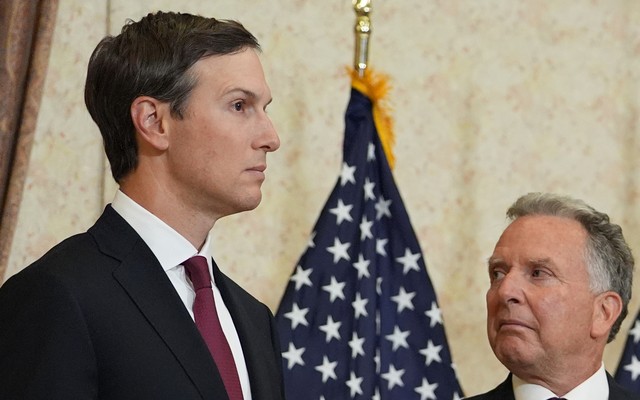
In 2021, shortly after he left his role as a senior White House adviser, Jared Kushner let it be known that he had loved his job but disliked the scrutiny and disclosure that came with being a top U.S. government official. He set up a private-equity firm and took a $2 billion investment from a Saudi fund led by Crown Prince Mohammed bin Salman. He proclaimed that he was embracing private life. “I’m an investor now,” Kushner said in a 2024 interview. If President Trump “calls you on November whatever and says, ‘I’d like you to come back to D.C.,’ you say, ‘Thanks, but I’m good’?” the interviewer, Dan Primack of Axios, pressed. “Yes,” Kushner responded.
But Kushner did come back. Two days before the United States and Israel attacked Iran this past February, he was in Geneva in a negotiation of the highest possible stakes. Over the weekend, he traveled with Vice President Vance to Islamabad to participate in failed peace talks with Iran. Without title or remit or any kind of official designation—only “presidential son-in-law”—Kushner has in the first 14 months of the second Trump administration sat down with world leaders including Vladimir Putin, Benjamin Netanyahu, and Volodymyr Zelensky, along with Saudis and multiple other actors from the Middle East.
The president’s attempts to interfere with the midterms demand vigilance, but a recent flimsy gambit is an argument against despair.
This is an edition of The Atlantic Daily, a newsletter that guides you through the biggest stories of the day, helps you discover new ideas, and recommends the best in culture. Sign up for it here.
Anxiety among election officials and experts had been building for months before Donald Trump issued his latest executive order purporting to ensure election integrity late last month. When the actual text emerged, the reaction wasn’t relief exactly—but a definite sense that things could have been much worse.
Americans have many reasons to be worried about whether the midterm elections will be free and fair. As I laid out in a cover story last fall, the president’s plan to subvert the 2026 election is multifaceted and already in swing. But last month’s order and the dismissive reaction it’s received from experts—along with this weekend’s decisive defeat of Hungarian Prime Minister Viktor Orbán, which shows how the competitive-authoritarian playbook that Trump has imitated can be beaten—also point to the reasons to resist doomerism.
Hungary offers lessons in defeating right-wing populists.
To the outside world, Hungarian Prime Minister Viktor Orbán began his rule as a pariah—an obstreperous, often lone dissenter from European Union policies, especially over migration. Then he became a prophet to new-style “national conservatives”—the anti-immigration, anti-elite right-wing movement that has reshaped the politics of the West. After resoundingly losing national elections held on April 12, Orbán has become a parable for how populism can be defeated.
His political demise was hardly inevitable. It had to be shrewdly engineered by politicians and voters who put aside their ideological differences to defeat him. In politics, there is no natural law of self-correction.
From 2010 until now, Orbán and his Fidesz party transformed Hungary into a new kind of state, which he proudly proclaimed as an “illiberal democracy.” He and his allies rewrote the constitution to entrench his power, centralizing control over civil society and countervailing institutions such as courts and universities. Péter Magyar, the presumptive next prime minister, triumphed against a tilted electoral system—gerrymandered districts, government influence over traditional media and even over the country’s billboards—designed to keep Fidesz in power. Magyar understood that such a regime does not simply collapse under the weight of its own contradictions and mismanagement.
If you are anything like me, you have spent a lot of time over the past few weeks opening letters, finding receipts, requesting PDFs, scanning documents, and going through your credit-card statements line by line. It’s tax season. And in the United States, taxes are a DIY affair.
This is the case even though Washington could probably do your taxes for you. If you earn a salary or an hourly wage, the Internal Revenue Service already knows how much money you make. It likely knows how much you owe or how big your refund should be too. Nine in 10 households take the standard deduction, making their liability easy to glean from payroll and banking data.
Yet Uncle Sam demands that Americans fire up TurboTax, head to a storefront preparer, hire an accountant, or sit down with a sharp pencil and a strong cup of coffee to get their taxes done each spring. The average filer spends 13 hours on their 1040—a time tax that many of our wealthy peer countries have reduced to a couple of minutes, if that. Prepopulated documents and return-free systems are common everywhere but here. Sweden lets residents file by text. Canada prefills paperwork. Japan sends households a document summarizing their tax contributions. If everything looks copacetic, many workers get to do a blissful nothing. Denmark, Estonia, Spain, and Norway have similarly simple processes.
A phonics-based curriculum is only one part of how Mississippi went from worst to first in education. The other part is much harder to pull off.
Updated at 8:52 p.m. ET on April 9, 2026
This article was featured in the One Story to Read Today newsletter. Sign up for it here.
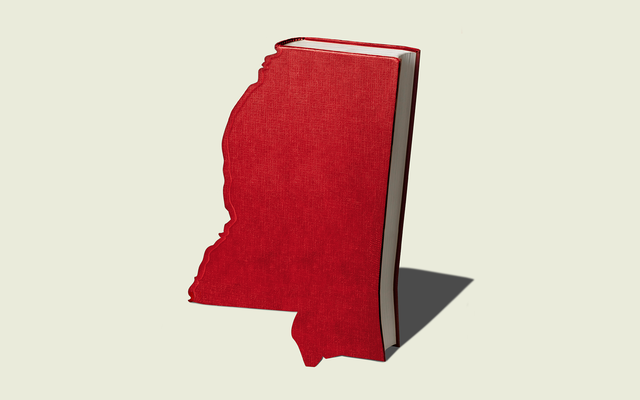
No story has caught the imagination of education reformers this decade quite like the “Mississippi miracle.” From 1998 to 2024, fourth-grade reading and math scores in my home state—the nation’s poorest—rose from among the worst in the country to among the best. When adjusting for demographic factors such as poverty, we’re in first place.
Other states are now trying to emulate what Mississippi did. Those efforts largely revolve around adopting what’s known as the “science of reading”— a set of principles and teaching techniques, including phonics, that are grounded in decades of empirical research. Last fall, for example, the Wall Street Journal editorial board marveled that “even California is now following Mississippi’s lead by returning to phonics” as Governor Gavin Newsom prepared to sign a major new reading bill into law. But what many outsiders fail to understand is that Mississippi changed far more than just how reading is taught. They therefore miss why and how our literacy approach succeeded.
On many recent nights, Donald Trump has been posting obsessively on his Truth Social site into the wee hours. The president, of course, has never been one for a solid night’s sleep—or restrained and temperate commentary on social media—but his emotional state seems to be fraying: This weekend, he attacked Pope Leo XIV, presented himself as Jesus Christ, and then jabbed at his phone until dawn.
Judging from those posts, the commander in chief is in distress. No one can say for sure what is causing the president’s bizarre behavior. Perhaps Trump’s narcissistic insistence that he is always successful in everything he undertakes is feeling the sting and strain of multiple public failures, including the collapse of his campaign to dislodge the Iranian regime, plummeting approval ratings, the decline of the U.S. economy, and, on Sunday, the crushing defeat of one of his favorite fellow authoritarians, Hungary’s Viktor Orbán.