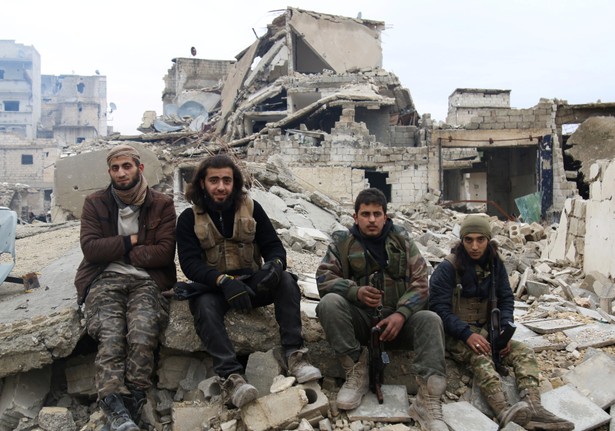
Rebel fighters sit on the rubble of damaged buildings as they wait to be evacuated from a rebel-held sector of eastern Aleppo.
Abdalrhman Ismail / Reuters
—President-elect Donald Trump criticized China’s “unprecedented” seizure of an underwater U.S. Navy drone in a Saturday morning tweet. More here
—A 7.9-magnitude earthquake struck off the coast of Papua New Guinea on Saturday, causing minimal damage. More here
—We’re live-blogging the news stories of the day below. All updates are in Eastern Standard Time (GMT -5).
Trump Says China Should Keep the U.S. Navy Drone It Seized
Lucas Jackson / Reuters
President-elect Donald Trump responded to China’s seizure of an unmanned underwater U.S. Navy drone by calling it an “unprecedented act” on his Twitter account on Saturday morning.
China steals United States Navy research drone in international waters - rips it out of water and takes it to China in unprecedented act.
The seizure took place in international waters Friday in the South China Sea, where China and neighboring countries have been sparring over disputed territorial claims. According to the U.S. military, the drone was part of an oceanic research project carried out by the Navy research vessel USNS Bowditch. The Chinese Defense Ministry accused the U.S. of “hyping up” the drone’s seizure on Saturday and said it would be returned “in an appropriate manner.” Trump’s tweet comes just two weeks after the president-elect spoke with Taiwan President Tsai Ing-wen by phone, the first contact of its kind between Taiwanese leaders and a U.S. president in almost four decades.
Update, 9:01 p.m. ET: President-elect Trump has revised his position on the drone’s status. In a tweet Saturday evening, he wrote China should keep the seized U.S. Navy property because “we don’t want the drone they stole back.”
We should tell China that we don't want the drone they stole back.- let them keep it!
Trump did not elaborate on his view. The stance marks a shift away from one taken earlier by Jason Miller, the Trump transition team's communications director, who credited the president-elect for China's announcement it would return the seized drone.
Suicide Car Bomb Kills At Least 14 Turkish Soldiers
Turan Bulut / Reuters
At least 14 off-duty Turkish soldiers were killed Saturday by a suicide car bomb, Turkish officials said. Interior Minister Suleyman Soylu said another 56 people were injured. The explosion occurred next to a bus carrying the soldiers as it drove through Kayseri, a city in central Turkey. According to Agence-France Press, local officials blamed the attack on the Kurdistan Workers’ Party, also known as the PKK, a Kurdish separatist movement that has battled the Turkish government for years. No public claims of responsibility have been made. The BBC reported that Turkish officials instituted a temporary press blackout shortly after the bombing, an increasingly common practice in the country. The bombing comes one week after two blasts outside Istanbul’s Vodafone Stadium killed 44 people, most of whom were police officers, and wounded dozens more shortly after a soccer match between two of the country’s most well-known teams. A PKK splinter faction claimed responsibility.
Henry Heimlich, Anti-Choking Maneuver's Inventor, Dies at 96
Henry Heimlich in 2014. (Al Behrman / AP)
Henry Heimlich, whose eponymous technique of using abdominal thrusts to save a choking person’s life became an international first-aid staple, died Saturday at a Cincinnati hospital. He was 96 years old. Heimlich, a thoracic surgeon, first published a paper about the method in 1974. The American Red Cross and the American Heart Association added it to their guidelines for treating choking victims two years later, leading to its wide use throughout the world. According to the BBC, the maneuver is believed to have saved over 100,000 people in the U.S. alone since its adoption. Heimlich himself performed the maneuver earlier this year at age 96 to save the life of a fellow retirement-home resident who had begun choking at dinner. Alongside the maneuver and his work on a chest valve to re-inflate collapsed lungs, Heimlich also received criticism for his controversial support of malariotherapy, in which weaker strains of malaria are used as treatments for illnesses ranging from cancer to HIV/AIDS. Its efficacy remains unproven.
7.9-Magnitude Earthquake Strikes Near Papua New Guinea
In this 2009 file photo, a geophysicist studies earthquake readings at the Pacific Tsunami Warning Center. (Hugh Gentry / Reuters)
A strong 7.9-magnitude tremor struck off the coast of Papua New Guinea on Saturday night local time, causing minimal damage and no reported injuries so far. The earthquake occurred 29 miles east of New Ireland, a Papua New Guinean island in the eastern Bismarck Archipelago, at a depth of about 61 miles beneath the Earth’s surface, according to the U.S. Geological Survey. As the Associated Press noted, tremors at lower depths tend to cause less damage. The quake nonetheless prompted tsunami warnings throughout the southwestern Pacific Ocean, including in Indonesia, Nauru, and New Zealand. According to the Sydney Morning Herald, those warnings have now ended without signs of serious waves.
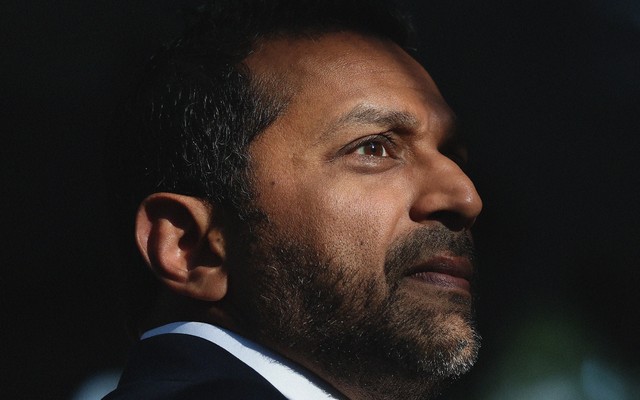
Kash Patel has alarmed colleagues with episodes of excessive drinking and unexplained absences.
On Friday, April 10, as FBI Director Kash Patel was preparing to leave work for the weekend, he struggled to log into an internal computer system. He quickly became convinced that he had been locked out, and he panicked, frantically calling aides and allies to announce that he had been fired by the White House, according to nine people familiar with his outreach. Two of these people described his behavior as a “freak-out.”
Patel oversees an agency that employs roughly 38,000 people, including many who are trained to investigate and verify information that can be presented under oath in a court of law. News of his emotional outburst ricocheted through the bureau, prompting chatter among officials and, in some corners of the building, expressions of relief. The White House fielded calls from the bureau and from members of Congress asking who was now in charge of the FBI.
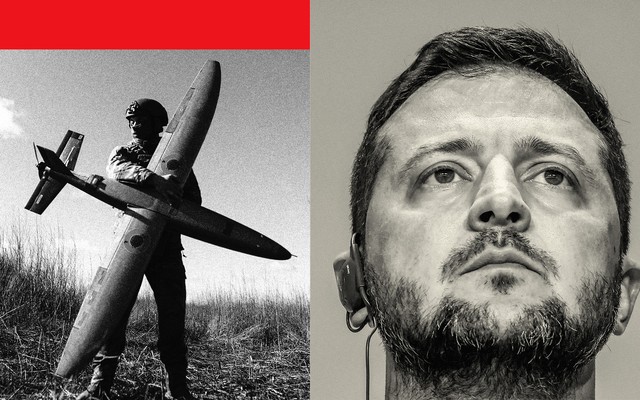
Zelensky has stopped pretending that Trump might be an ally.
For more than a year after Donald Trump returned to the White House, Ukraine held out hope—at least publicly—of winning him over. Trump, who revealed his affection for Russia’s Vladimir Putin again and again, largely halted American military aid to Kyiv. He insulted Ukrainian leaders regularly, personally berating President Volodymyr Zelensky in the Oval Office in February 2025. Nevertheless, Ukraine diligently took part in Trump’s peace negotiations, which were tilted to reward Putin’s invasion and turned out to be fruitless. Zelensky agreed to mineral deals that supposedly promised to enrich Americans. He even lavishly praised Trump himself. Despite Ukrainian leaders’ growing doubts, they calculated that speaking sweetly of the American president would do no harm and just might gain his favor.
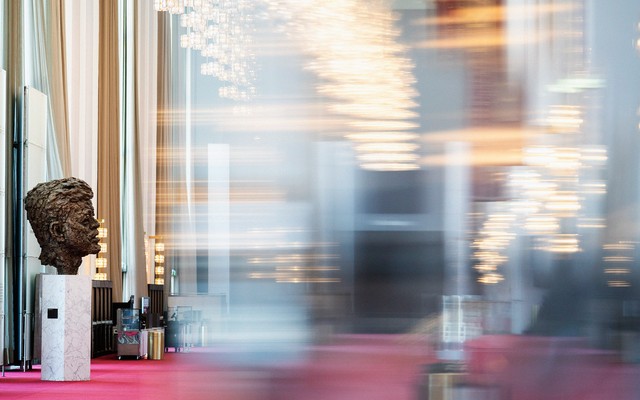
I spent 10 months working at the institution because I thought I could help protect it. What I observed there is far worse than the public knows.
On the day I was laid off from the Kennedy Center, I felt a little like Dolley Madison saving the Stuart portrait of Washington before the British sacked the capital. I was the staffer in charge of the artworks in the building. A crucial difference is that my institution, unlike the White House in 1814, had been on fire for months.
About a year elapsed between the moment President Trump took over the Kennedy Center in early 2025 and his declaration this past February that he’d decided to shut down the nation’s cultural center for two years. In between, we had seen artist cancellations, shrinking audiences, firings of old staffers and influxes of new ones—a lot of drama, just not onstage. The date Trump announced for the closure was July 4, the country’s 250th birthday, an event that I had been hired to help commemorate as the institution’s first curator of visual arts and special programming.
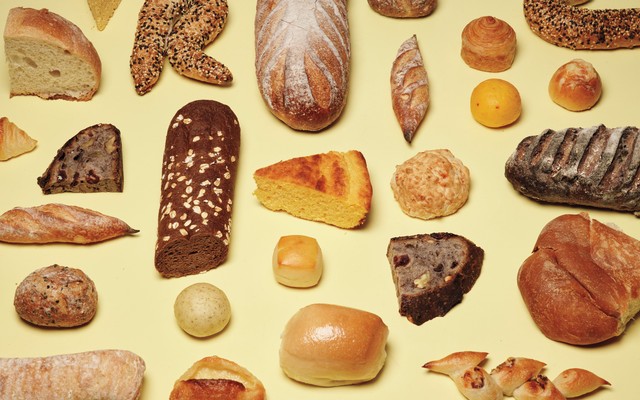
Thirteen thousand miles. Infinite contenders. One beautiful loaf.
This article was featured in the One Story to Read Today newsletter. Sign up for it here.
Here is the promise you and I must cling to across the thousands of words that follow: At some point within this text, I will reveal to you what—after 555 responses, 13,000 miles of travel, and months of monomaniacal research—I have determined to be the best free restaurant bread in America. I will not attempt to slither to the moral high ground, arguing that best is a meaningless measure, or insisting that all bread is dear in its own way. Even if you attempt to betray me—for instance, by merely scanning the text that follows for the phrase Here it is: the best free restaurant bread in America—I will uphold my end of the bargain.
Trump has developed a reputation for backing down from his most over-the-top threats, but dismissing his words is a mistake.
Twelve hours after Donald Trump warned that a “whole civilization will die tonight, never to be brought back again”—after he’d previously threatened to bomb Iran “back to the Stone Ages”—the president agreed to a temporary cease-fire. Since then, initial peace negotiations failed and Trump responded with a naval blockade of the Strait of Hormuz; a new round of talks may begin soon.
But what to do with his everyone in Iran is going to die comments last week? Because they were designed to pressure Iran to come to the table, and because the promised carnage did not materialize, many observers simply moved on, explaining away Trump’s threats as a ham-fisted negotiation tactic, some kind of 5-D chess, or another example of the president’s propensity to “TACO” (Trump Always Chickens Out).
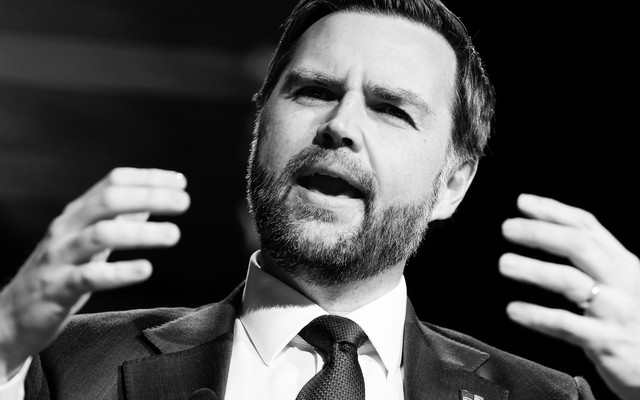
The vice president has decided he’s a more accomplished theologian than Leo XIV.
The Trump administration doesn’t seem to have many rules, but one of them is that once the president picks a fight, his posse must show up to support him, no matter how ill-advised the conflict. And few senior officials are more eager to back up the boss in every embarrassing beef than Vice President Vance, who recently seems to have decided that he, and not Pope Leo XIV, is the true arbiter of Catholic doctrine.
President Trump is personally angry with Leo because the pontiff has been deeply critical of America’s war of choice in Iran. Accordingly, Trump lashed out at His Holiness twice over the past few days. Vance might have seen this as a valuable opportunity to say nothing and let the storm pass; Leo, naturally, doesn’t seem to care all that much what Trump thinks. (As my colleague Liz Bruenig wrote, Leo answers to a higher authority.) Had the vice president remained silent, Trump might have moved on, and Vance, a relatively recent convert to Catholicism, would have been able to stay out of a dustup between his president and his spiritual leader.
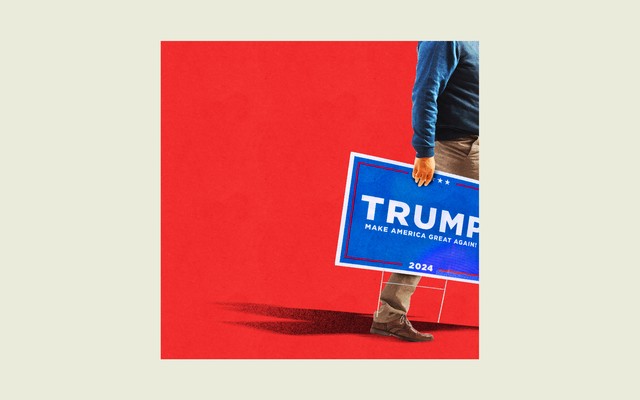
A shocking number of the president’s supporters have turned against him.
Tomas Montoya has sold festival foods—funnel cakes, burgers, hot dogs—across the American Southwest for years. But lately, business has been rough. Costs are up, so he’s increased his prices. Employees are begging for hours he can’t give them. In Arizona, where he lives, Montoya pays $6 a gallon to fill up his food trucks with diesel. This summer, he may have to skip the California leg of his festival route because fuel is even more expensive there.
“It’s Trump,” Montoya told us outside a popular Hispanic grocery store in Casa Grande, Arizona, much of which sits in one of the most evenly divided House districts in the country. Montoya voted for President Trump in 2024, but now, well, frustrated doesn’t begin to cover how he’s feeling. The president is bragging about the economy, even though everyone Montoya knows is hurting; he promised to stop wars, but started one in Iran. “When Trump opens his mouth, three-quarters of what he says is stories, lies,” Montoya said. He’s planning to vote in the midterm elections this fall. But he may not choose a Republican.
This article was featured in the One Story to Read Today newsletter. Sign up for it here.
Maybe you’ve seen photos of Tehran in the 1970s, just before the Islamic Revolution: images of young women going to work in miniskirts, of couples making out in parks while wearing bell-bottoms, of people at pools in bikinis. It looks like Paris or Milan or Los Angeles. But in 1979 the revolution happened, and now Tehran looks like something from an earlier century.
Sometimes I think that our whole world has become kind of like that—going backwards in time. The religious movements thriving in today’s secularized age are the traditionalist ones that dissent from large parts of contemporary culture—not only the Shiite Islam of post-revolution Iran, but Orthodox Judaism and conservative Catholicism. Young Americans are flooding into Eastern Orthodox churches.
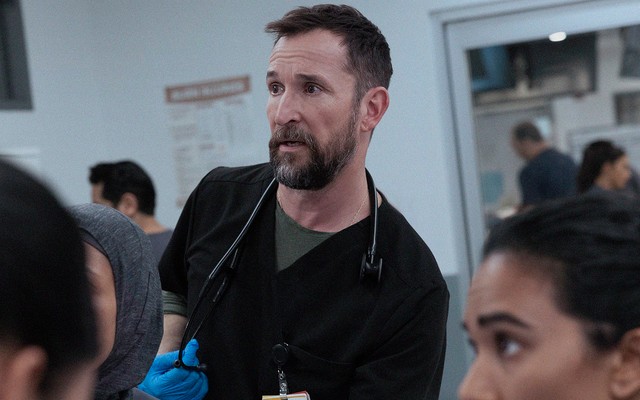
This article contains spoilers through the Season 2 finale of The Pitt.
The first season of The Pitt presented an emergency room brought to the absolute limits of its capabilities, unfolding as 15 hours of real-time drama at the fictional Pittsburgh Trauma Medical Center that culminated in a deluge of patients after a mass shooting. It was exceptional stuff, a throwback to classic medical TV dramas with just enough of a modern, high-octane twist, and was ladened with awards. But it also set the second season up with a sophomore-slump dilemma—how do you top that?
The answer: You don’t try. The Pitt’s excellent Season 2 didn’t attempt to match or outdo the crisis of last year’s PittFest calamity. Instead, it managed to wring equally compelling drama out of all of its characters just having a really, really crappy day.
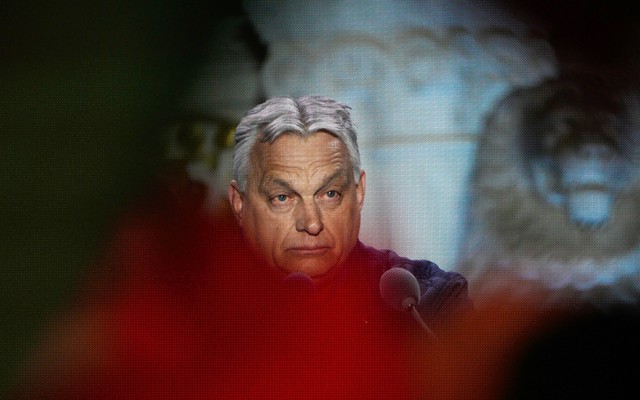
The Hungarian strongman Viktor Orbán, who lost his election in a landslide on Sunday after 16 years in power, presented himself as a defender of Western civilization. But at best, his lofty rhetoric was a code for bigotry and a justification for the persecution of minorities; at worst, it was a scam to fleece Hungarians by persuading them to blame everyone but those responsible for their problems. Maybe both.
Eventually Hungarians decided that a major source of their problems was Orbán himself. Maybe someday Americans will come to a similar realization about Orbán’s great admirer, Donald Trump, who praised the former Hungarian leader before the election as a “fantastic man” who had done a “fantastic job.”