It’s Election Day in the U.S., India scraps its largest currency denominations to fight corruption, and more from the United States and around the world.
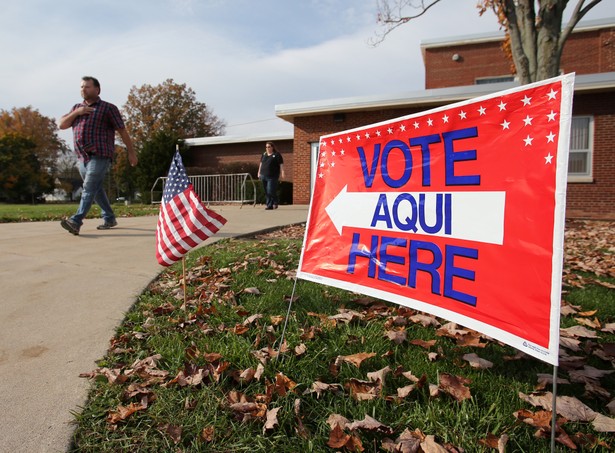
—Americans vote today for a new president, as well as for members of Congress, and for dozens of statewide legislative initiatives. Our election live blog here
—Indian Prime Minister Narendra Modi says that starting Wednesday his government is scrapping the two largest currency denominations in circulation in order to fight corruption. More here
—German authorities have reportedly arrested five suspected ISIS members in coordinated raids across the country. One of those arrested is believed to be an ISIS recruiter. More here
—We’re live-blogging the news stories of the day below. All updates are in Eastern Daylight Time (GMT -4).
At least one person was killed and two critically wounded in a shooting that occurred near a polling station Tuesday afternoon in Azusa, California.
The suspect was later found dead after a standoff with police. He was identified as a Hispanic male. Police said the shooting was not related to the election.
We are following the ongoing situation closely and are updating a live-blog.
Peshmerga forces in the town of Bashiqa, east of Mosul (Thaier Al-Sudani / Reuters)
While the United States waits for the results of the presidential election, here are some of the other big stories from around the country and the world:
The civilian cost of the battle for Mosul: Iraqi security forces moved closer to retaking Mosul, the ISIS stronghold in northern Iraq. The operation has gone so well for Iraqi forces, Kurdish peshmerga, and the Shia Popular Mobilization Forces that Abu Bakr al-Baghdadi, the ISIS leader, made an almost-frantic appeal for insurgents to stay, fight, and die. More than 10,000 civilians live in Mosul, where oil fires set by ISIS has contaminated water sources. Iraqi troops found a mass grave this week while advancing toward Mosul. —J. Weston Phippen
The muddy state of Brexit: The U.K. High Court ruled last week that the government must seek Parliament’s approval before invoking Article 50 of the EU charter to begin talks on the country’s departure from the bloc. The decision was a setback for the government, which had hoped the results of the June referendum would be enough to invoke Article 50. The government said it would appeal to the Supreme Court, but on Tuesday, Scotland—which overwhelmingly voted to stay in the EU, but will have to follow the rest of the U.K. out—said it would seek to intervene in the case. The Supreme Court will hear the government’s appeal on December 5. A ruling is expected early next year. —Krishnadev Calamur
The abuse of Boko Haram’s victims: Nigeria will deploy 100 female police officers to protect women in displaced-persons camps after a report by Human Rights Watch revealed abuses of dozens of women by Nigerian officials, according to local media. The report, released last week, documented 43 cases of rape and sexual exploitation since July in camps designated for those internally displaced by the conflict with Boko Haram throughout Maiduguri, the capital of Borno state. Damian Chukwu, the Borno state police commissioner, said the female officers “will ensure the protection of women and girls” in the camps and that male officers’ roles would be limited within the camps. —Yasmeen Serhan
The Russia-Ukraine conflict hits radio: At least 25 percent of playlists on Ukrainian radio must include Ukrainian songs, according to a new law that aims to discourage pro-Russian sentiment in the country, the BBC reported Tuesday. Right now, less than 4 percent of the songs played on radio in Ukraine is in Ukrainian. President Petro Poroshenko, who favors closer ties with the West, wrote a Facebook post Tuesday encouraging users to share their favorite Ukrainian songs. A memo explaining the change said speaking Ukrainian in public is related to “the level of separatist moods among people and their vulnerability to Russia's information attacks and manipulations.” —Marina Koren
After the Cubs won the World Series: Five million people flooded the streets of Chicago last Friday, from Wrigley Field to Grant Park, to celebrate the first World Series win for the Cubs in 108 years. That crowd estimate, which came from city officials at the Office of Emergency Management and Communications, would put that celebration as the most widely attended event in U.S. history and the seventh-largest gathering in world history. But is that number actually possible? While Cubs fans from all over the country came to celebrate the long-awaited championship, Chicago has just 2.7 million residents. The Ringer, in an article Tuesday, investigates the whopping estimate. They say it couldn’t have been that large. Cubs fans, elated from lifting the billy goat curse, likely don’t care though. —Matt Vasilogambros
Walgreens is suing lab-testing company and former business partner Theranos for $140 million for an alleged breach of contract.
That amount, The Wall Street Journalreports, is how much Walgreens originally invested in the once-lauded Silicon Valley startup before federal regulators discovered major failings in the lab-testing techniques. The civil suit was filed in a Delaware federal court. The Journal has more:
Walgreens is alleging Theranos misled it about the state of its technology when the two firms initially forged their agreement, the people familiar with the matter said.
One of the people said the action also alleges Theranos continued to mislead Walgreens, as questions about its technology and operations arose over the past year and put Walgreens and its customers at risk.
Theranos once had 40 blood-testing devices in Walgreens stores in Arizona and California before the startup’s problems were reported. Both companies had plans to expand the blood-testing operations to thousands of stores nationwide.
In October, Theranos shut down its blood-testing facilities and laid off 40 percent of its workforce. The company’s CEO, Elizabeth Holmes, was already banned by regulators from blood-testing for two years because of the scandal.
The Royal Family Wants the Media to Leave Prince Harry's New Girlfriend Alone
(Reuters)
The U.K.’s royal family has issued a sharp rebuke of British media coverage of Prince Harry’s new girlfriend, criticizing the “racial undertones” of some reports.
Harry’s spokesperson said Monday that recent reporting of the prince’s new relationship with Meghan Markle, the American actress, whose father is white and mother is black, had crossed a line. The statement decried “the smear on the front page of a national newspaper; the racial undertones of comment pieces; and the outright sexism and racism of social media trolls and web article comments.”
The Guardianreports the front-page “smear” to which the statement refers is a Sun cover from last week that bore a photo of Markle with the headline “Harry’s girl on Pornhub.” On Sunday, the Daily Mail’s Rachel Johnson addressed Markle’s backgrounddirectly. “If there is issue from her alleged union with Prince Harry, the Windsors will thicken their watery, thin blue blood and Spencer pale skin and ginger hair with some rich and exotic DNA,” she wrote.
The statement also confirmed Harry’s rumored relationship with Markle, who starred in the TV show Suits.
“Prince Harry is worried about Ms. Markle’s safety and is deeply disappointed that he has not been able to protect her,” Harry’s spokesperson said. “It is not right that a few months into a relationship with him that Ms. Markle should be subjected to such a storm.”
Harry, the younger son of Prince Charles and Diana, the princess of Wales, is fifth in line to the throne.
South Korean President Relinquishes Some Powers to Parliament Amid Scandal
South Korean President Park Geun-hye (Jung Yeon-Je / Reuters)
Park Geun-hye, the South Korean leader, withdrew her nominee for prime minister Tuesday and asked parliament to choose a replacement in a move many have interpreted as an attempt to quell the political scandal that’s consuming her presidency.
Park’s decision to relinquish some of her decision-making powers to the legislature follows weeks of corruption allegations that have sent her presidency into disarray since it was revealed she received private counsel from her longtime friend Choi Soon-sil, who critics say may have wielded undue influence on state affairs. Choi was arrested last week on charges of attempted fraud and abuse of authority. Meanwhile, Park’s approval rating has plummeted to 5 percent, with many calling for her to step down.
Tens of thousands of protesters rallied in Seoul over the weekend calling for Park’s resignation. Here’s what the protests looked like:
Orlando to Buy Pulse Nightclub, Turn It Into a Memorial
(John Raoux / AP)
Mayor Buddy Dyer says the city of Orlando will buy the Pulse nightclub, the scene of the June 12 shooting that killed 49 people, and turn it into a memorial.
Dyer said the city would keep the site as is for about 12 to 18 months while it hears from the community about the type of memorial the city should build.
It's important that our community is a part of determining the future of the Pulse site, which has significance to us all.#OrlandoUnitedpic.twitter.com/exgVwSIegi
The Orlando Sentinel reported the city will pay the club’s owners about $2.25 million, more than the $1.65 million appraised value of the 4,500-square-foot building. The City Council, which must approve the purchase, will vote on the deal next week.
The nightclub, empty since a gunman who pledged allegiance to ISIS, opened fire during a dance party, has become a makeshift memorial to the 49 people who were killed in the shooting.
India's Modi Scraps Largest Currency Notes to Fight Corruption
(Adnan Abidi / Reuters)
Indian Prime Minister Narendra Modi, in an unscheduled address to the nation Tuesday night, announced that starting Wednesday his government was scrapping 500-rupee and 1,000-rupee notes, the two largest denominations in circulation, in order to fight corruption.
The move is perhaps the boldest move undertaken by Modi to fight widespread graft and undeclared incomes in the country of 1.2 billion people where less than 2 percent of the population pays taxes, and where cash is used for most transactions from buying bread to purchasing million-dollar apartments.
Those 500-rupee (about $7.50) and 1,000-rupee ($15.05) notes still in circulation must be deposited in banks by the end of this year, Modi announced. The Reserve Bank of India, the country’s central bank, will issue a new 2,000-rupee note (about $30) as well as a fresh 500-rupee note, Modi added.
Corruption is rampant in India, which is the world’s fastest-growing major economy. It ranks 76 in Transparency International’s Corruption Perception Index. Previous attempt to clamp down on corruption and undeclared incomes—known locally as “black money”—have had limited impact.
Mind the Gap: Wider Toblerone Sparks Outrage in the U.K.
The old and new design of Toblerone bars side by side. (Darren Staples / Reuters)
Is nothing sacred? Toblerone has replaced its mountain-like ridges in the U.K. with wider spaces between the triangular pieces. What’s next? Some sort of new Coke?
Consumers on social media were none too pleased with Toblerone’s debut of its new, more lightweight chocolate-bar design. The overall goal is to make Toblerone weigh less, reducing its 400-gram (14.1 ounces) bars to 360 grams (12.7 ounces) and its 170-gram (6 ounces) bars to 150 grams (5.3 ounces). The company warned last month the change was coming, attributing it to “higher [ingredient] costs” and its goal of ensuring “Toblerone remains on-shelf, … affordable, and … triangular.”
But that didn’t stop users from expressing their outrage over social media. While some criticized the aesthetics of the design, others blamed the move on Brexit—which has prompted other major brands to announce they would raise their prices to match the weakening of the British pound. Toberlone’s U.S.-based product maker Mondelez International, however, told the BBC the change “wasn’t done as a result of Brexit.”
Though many Toblerone fans were vocally upset by the news, others saw the silver lining.
A Hero's Burial for Ferdinand Marcos 3 Decades After His Death
(Romeo Ranoco / Reuters)
The Philippines Supreme Court, ignoring petitions from leftist activists and the victims of human-rights abuses, voted 9-to-5 to give Ferdinand Marcos, the longtime U.S-backed dictator, a hero’s burial in a cemetery south of Manila.
In August, President Rodrigo Duterte, fulfilling a campaign promise, ordered Marcos to be buried at the cemetery. Those who suffered at the longtime president’s hands appealed to the Supreme Court, which sided with Duterte.
Marcos’s 1965-1986 presidency became a byword for corruption, nepotism, and abuses. He was staunchly anti-communist, making him an important U.S. ally during the Cold War when Washington was worried about Moscow’s influence in Asia. Marcos cracked down on leftist students and groups, who formed the bulk of the opposition against him. But he and his wife, Imelda Marcos, now a prominent lawmaker, were also loved by their supporters.
Marcos was deposed in 1986 in a popular uprising against his rule. He died in exile in Honolulu three years later at the age of 72. Successive Philippines government have refused to allow Marcos to be buried at the cemetery outside Manila. His body is on display in a mausoleum in Ilocos Norte, in the north of the country.
The Father of a Slain Dallas Officer Is Suing BLM For Inciting a 'Race War Against Police'
Carlo Allegri
The father of an officer killed in the shootings in Dallas this July is suing Black Lives Matter (BLM), saying the group influenced the shooter with anti-police rhetoric, and that it has convinced supporters there is a “civil war between blacks and law enforcement.”
The dead officer’s father, Enrique Zamarripa, is also suing President Obama, a leader with the Nation of Islam, former Attorney General Eric Holder, Al Sharpton, Deray McKesson, as well as several other leaders in the BLM movement. Zamarripa is represented by Larry Klayman, a prominent lawyer who has filed lawsuits against Democratic presidential candidate Hillary Clinton for her role in the attacks in Benghazi. Also listed as plaintiffs in the suit are all “U.S. police officers, Jews, and Caucasians.” More here
Soldiers Find Dozens of Decapitated Bodies in a Mass Grave Near Mosul
AP
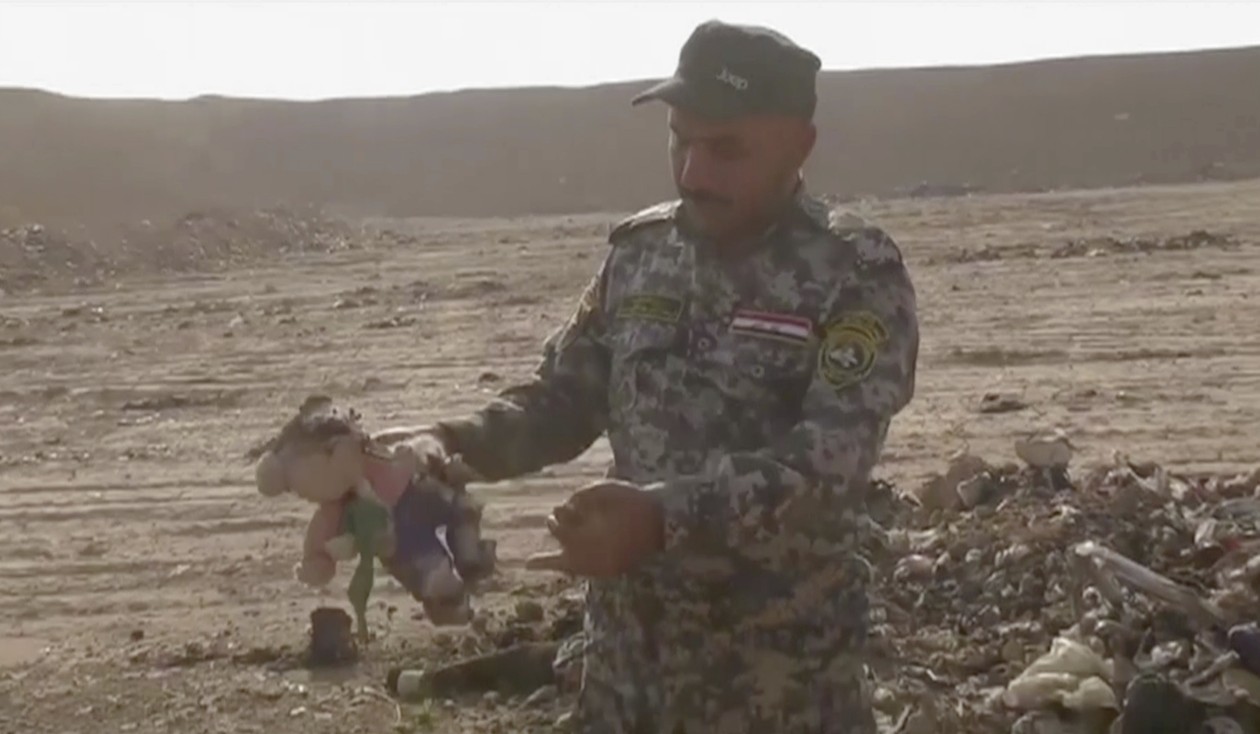
Iraqi troops advancing from the south toward the Islamic State-held city of Mosul on Monday stopped their march in the town of Hamam al-Alil after the smell of decomposing bodies led them to a mass grave. Investigators found nearly 100 decapitated corpses; soldiers found at least one child’s stuffed animal among the dead.
The operation to retake the ISIS stronghold is now in its fourth week, and as Iraqi security forces have made a quick advance into the city from the east, ISIS has rounded up civilians to use as humans shields. About 41,000 people have been displaced. Preventing civilian losses has been a major concern, because more than a million people live in Mosul, and ISIS has proven it is capable of atrocities when in retreat.
This mass grave in Hamam al-Alil, about 19 miles southeast of Mosul, was located on the grounds of an agricultural college. Iraqi investigators used a bulldozer to uncover the earth, and found headless corpses with rotting flesh. The UN human rights office in Geneva said it was investigating reports some of the dead were police officers executed just weeks ago. There were reports ISIS killed some 50 officers in a building outside Mosul, and the agricultural college now seems to be the building cited by these reports of the mass execution.
Hungary's Government Falls Short in Vote to Ban Migrants
(Ints Kalnins / Reuters)
Hungary’s government fell two votes short of the two-thirds of Parliament needed to stop the EU’s plan to resettle migrants in the country. Prime Minister Viktor Orban needed 133 votes in the 199-member chamber; he got 131 after opposition parties boycotted the vote.
Last month, nearly 98 percent of Hungarians voted in a referendum to reject the EU-mandated quota on migrants, but the turnout was below the 50-percent threshold needed to make the results legally binding. Orban then turned to Parliament to buttress the referendum’s results, which he called a moral victory.
The EU plan to redistribute 160,000 asylum-seekers across the bloc would have resulted in 1,294 people being resettled in Hungary. Orban strongly opposed the plan, and has erected barriers to prevent migrants from entering the country.
Orban’s Fidesz party remains popular in Hungary, but Tuesday’s setback could hurt the prime minister’s negotiations with the EU on migrants.
Scotland Says It Will Intervene in U.K. Government's Brexit Appeal
Is the door to Brexit closing—or is it still wide open? (Dylan Martinez / Reuters)
Scottish First Minister Nicola Sturgeon says Scotland’s most senior law officer will apply to the U.K. Supreme Court to intervene in the U.K. government’s appeal against last week’s High Court ruling on Brexit.
The High Court ruled the U.K. government must seek parliamentary approval on invoking Article 50 of the EU charter, which would begin the formal negotiation on the country’s departure from the European Union. The U.K. voted last June 52 percent to 48 percent to leave the EU. But voters in Scotland chose overwhelmingly to remain, hence Sturgeon’s statement Tuesday on the lord advocate’s application to the Supreme Court.
"Triggering Article 50 will inevitably deprive Scottish people and Scottish businesses of rights and freedoms which they currently enjoy,” she said. “It simply cannot be right that those rights can be removed by the U.K. government on the say-so of a prime minister without parliamentary debate, scrutiny or consent.”
The United Kingdom comprises England, Scotland, Wales, and Northern Ireland.
German authorities reportedly arrested Tuesday five alleged ISIS members, including one described as a senior recruiter, in coordinated raids in Lower Saxony and North Rhine-Westphalia.
The senior recruiter is allegedly Ahmad Abdelazziz A., a 32-year-old Iraqi imam also known as Abu Walaa. Authorities say he and the others—a 50-year-old Turkish national, a 36-year-old German-Serb, a 27-year-old German, and a 26-year-old Cameroonian—tried to recruit young Germans into ISIS. The news was reported by WDR and NDR, the German broadcasters, and Süddeutsche newspaper. Deutsche Welle, the German broadcaster, adds:
Federal prosecutors had been investigating Walaa and his associates since last fall. In July, officials raided a mosque in the city of Hildesheim, which is known for being a key meeting place for the German salafist movement.
Walaa, who was colloquially known as the "preacher without a face," hosted sermons at the mosque about waging jihad in the Middle East. Security officials observed that a number of people who attended the seminars later left Germany to travel to Syria.
Authorities were reportedly aided by the testimony of a former ISIS fighter who fled the group in Syria.
Kash Patel has alarmed colleagues with episodes of excessive drinking and unexplained absences.
On Friday, April 10, as FBI Director Kash Patel was preparing to leave work for the weekend, he struggled to log into an internal computer system. He quickly became convinced that he had been locked out, and he panicked, frantically calling aides and allies to announce that he had been fired by the White House, according to nine people familiar with his outreach. Two of these people described his behavior as a “freak-out.”
Patel oversees an agency that employs roughly 38,000 people, including many who are trained to investigate and verify information that can be presented under oath in a court of law. News of his emotional outburst ricocheted through the bureau, prompting chatter among officials and, in some corners of the building, expressions of relief. The White House fielded calls from the bureau and from members of Congress asking who was now in charge of the FBI.
I spent 10 months working at the institution because I thought I could help protect it. What I observed there is far worse than the public knows.
On the day I was laid off from the Kennedy Center, I felt a little like Dolley Madison saving the Stuart portrait of Washington before the British sacked the capital. I was the staffer in charge of the artworks in the building. A crucial difference is that my institution, unlike the White House in 1814, had been on fire for months.
About a year elapsed between the moment President Trump took over the Kennedy Center in early 2025 and his declaration this past February that he’d decided to shut down the nation’s cultural center for two years. In between, we had seen artist cancellations, shrinking audiences, firings of old staffers and influxes of new ones—a lot of drama, just not onstage. The date Trump announced for the closure was July 4, the country’s 250th birthday, an event that I had been hired to help commemorate as the institution’s first curator of visual arts and special programming.
A shocking number of the president’s supporters have turned against him.
Tomas Montoya has sold festival foods—funnel cakes, burgers, hot dogs—across the American Southwest for years. But lately, business has been rough. Costs are up, so he’s increased his prices. Employees are begging for hours he can’t give them. In Arizona, where he lives, Montoya pays $6 a gallon to fill up his food trucks with diesel. This summer, he may have to skip the California leg of his festival route because fuel is even more expensive there.
“It’s Trump,” Montoya told us outside a popular Hispanic grocery store in Casa Grande, Arizona, much of which sits in one of the most evenly divided House districts in the country. Montoya voted for President Trump in 2024, but now, well, frustrated doesn’t begin to cover how he’s feeling. The president is bragging about the economy, even though everyone Montoya knows is hurting; he promised to stop wars, but started one in Iran. “When Trump opens his mouth, three-quarters of what he says is stories, lies,” Montoya said. He’s planning to vote in the midterm elections this fall. But he may not choose a Republican.
Trump has developed a reputation for backing down from his most over-the-top threats, but dismissing his words is a mistake.
Twelve hours after Donald Trump warned that a “whole civilization will die tonight, never to be brought back again”—after he’d previously threatened to bomb Iran “back to the Stone Ages”—the president agreed to a temporary cease-fire. Since then, initial peace negotiations failed and Trump responded with a naval blockade of the Strait of Hormuz; a new round of talks may begin soon.
But what to do with his everyone in Iran is going to die comments last week? Because they were designed to pressure Iran to come to the table, and because the promised carnage did not materialize, many observers simply moved on, explaining away Trump’s threats as a ham-fisted negotiation tactic, some kind of 5-D chess, or another example of the president’s propensity to “TACO” (Trump Always Chickens Out).
The vice president has decided he’s a more accomplished theologian than Leo XIV.
The Trump administration doesn’t seem to have many rules, but one of them is that once the president picks a fight, his posse must show up to support him, no matter how ill-advised the conflict. And few senior officials are more eager to back up the boss in every embarrassing beef than Vice President Vance, who recently seems to have decided that he, and not Pope Leo XIV, is the true arbiter of Catholic doctrine.
President Trump is personally angry with Leo because the pontiff has been deeply critical of America’s war of choice in Iran. Accordingly, Trump lashed out at His Holiness twice over the past few days. Vance might have seen this as a valuable opportunity to say nothing and let the storm pass; Leo, naturally, doesn’t seem to care all that much what Trump thinks. (As my colleague Liz Bruenig wrote, Leo answers to a higher authority.) Had the vice president remained silent, Trump might have moved on, and Vance, a relatively recent convert to Catholicism, would have been able to stay out of a dustup between his president and his spiritual leader.
Thirteen thousand miles. Infinite contenders. One beautiful loaf.
This article was featured in the One Story to Read Today newsletter. Sign up for it here.
Here is the promise you and I must cling to across the thousands of words that follow: At some point within this text, I will reveal to you what—after 555 responses, 13,000 miles of travel, and months of monomaniacal research—I have determined to be the best free restaurant bread in America. I will not attempt to slither to the moral high ground, arguing that best is a meaningless measure, or insisting that all bread is dear in its own way. Even if you attempt to betray me—for instance, by merely scanning the text that follows for the phrase Here it is: the best free restaurant bread in America—I will uphold my end of the bargain.
This article was featured in the One Story to Read Today newsletter. Sign up for it here.
Maybe you’ve seen photos of Tehran in the 1970s, just before the Islamic Revolution: images of young women going to work in miniskirts, of couples making out in parks while wearing bell-bottoms, of people at pools in bikinis. It looks like Paris or Milan or Los Angeles. But in 1979 the revolution happened, and now Tehran looks like something from an earlier century.
Sometimes I think that our whole world has become kind of like that—going backwards in time. The religious movements thriving in today’s secularized age are the traditionalist ones that dissent from large parts of contemporary culture—not only the Shiite Islam of post-revolution Iran, but Orthodox Judaism and conservative Catholicism. Young Americans are flooding into Eastern Orthodox churches.
In this episode of Galaxy Brain, Charlie Warzel speaks with Josh Owens, a videographer and the author of a memoir about his years working for Infowars, the media company of the conspiracy theorist Alex Jones. Owens traces his journey from a film-school student who stumbled onto Jones’s radio show to an insider who spent four years filming, editing, and traveling for the organization. Owens describes how Jones’s conspiracy machine works, as well as how his own moral compass was scrambled by Jones’s manipulative management. The conversation explores radicalization, the conspiratorial media ecosystem Jones helped create, and how Owens was able to pull himself out.
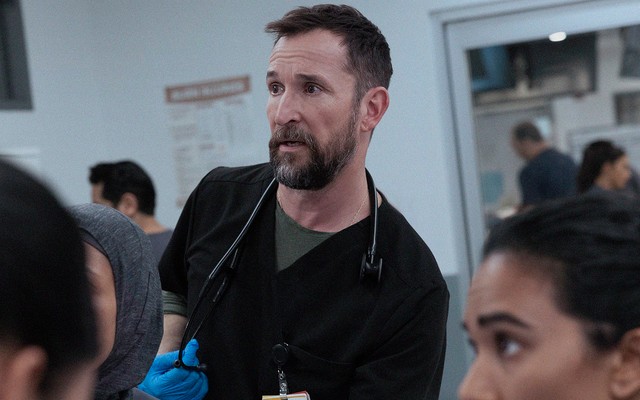
This article contains spoilers through the Season 2 finale of The Pitt.
The first season of The Pitt presented an emergency room brought to the absolute limits of its capabilities, unfolding as 15 hours of real-time drama at the fictional Pittsburgh Trauma Medical Center that culminated in a deluge of patients after a mass shooting. It was exceptional stuff, a throwback to classic medical TV dramas with just enough of a modern, high-octane twist, and was ladened with awards. But it also set the second season up with a sophomore-slump dilemma—how do you top that?
The answer: You don’t try. The Pitt’s excellent Season 2 didn’t attempt to match or outdo the crisis of last year’s PittFest calamity. Instead, it managed to wring equally compelling drama out of all of its characters just having a really, really crappy day.
Has the president failed to learn the lessons of classic cautionary fables—or does he just understand them in his own novel ways?
This is an edition of The Atlantic Daily, a newsletter that guides you through the biggest stories of the day, helps you discover new ideas, and recommends the best in culture. Sign up for it here.
Donald Trump, as even some of his fiercest admirers will admit, is not always a paragon of personal virtue. Although the president’s aides sometimes treat him like he is a toddler, as the political scientist Daniel Drezner has observed, he’s not an especially well-behaved one. Trump often acts in ways that would result in detention or other punishment for an elementary-school student: bald-faced dishonesty, name-calling, unkindness, refusal to share, and an inability to use an inside voice. Put another way, Trump sometimes seems as though he missed out on all of the lessons that children are supposed to learn from fables and fairy tales. (Meanwhile, his administration is seeking to evict some lessons about tolerance from classrooms.) But perhaps that’s uncharitable: Trump isn’t ignoring those fables; he’s just taking different lessons away from them than the familiar ones. Here’s a set of classic stories and their morals, reinterpreted for MAGA political correctness.