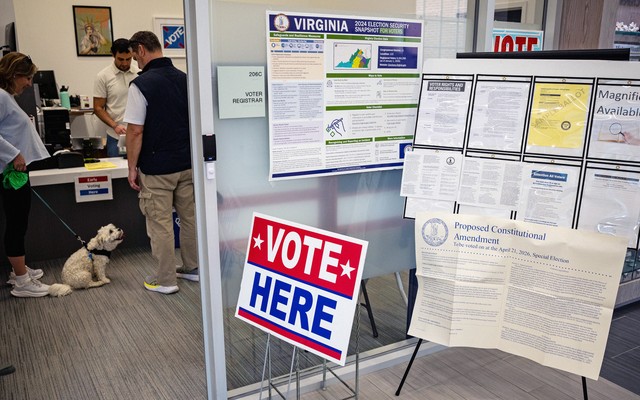
The American presidential election is tomorrow, U-Va. administrator awarded $3 million in Rolling Stone defamation, and more from the United States and around the world.
—There was another twist Sunday in a presidential campaign marked by many: FBI Director James Comey said newly discovered emails do not change the bureau’s conclusion that Hillary Clinton should not be charged with a crime. Tomorrow is Election Day.
—Rolling Stone will pay a University of Virginia administrator $3 million after a federal jury determined the magazine defamed her in a now-discredited article from 2014. More here
—Janet Reno, the Clinton-era attorney general, has died. She was 78. More here
—We’re live-blogging the news stories of the day below. All updates are in Eastern Daylight Time (GMT -4).
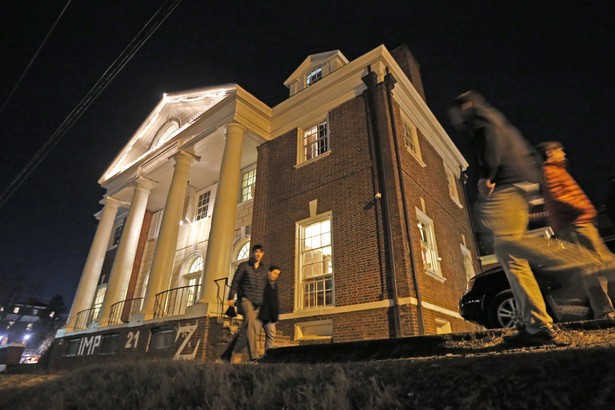
University of Virginia Administrator Awarded $3 Million After Rolling Stone Defamation
Steve Helber / AP
Rolling Stone will pay a University of Virginia administrator $3 million after a federal jury determined the magazine defamed her in a now-discredited article from 2014.
Nicole Eramo, a dean who was poorly portrayed in an article about an alleged gang rape at a fraternity house, had sued for $7.5 million. As the Associated Press reports:
The jury concluded Friday that the magazine, its publisher and journalist Sabrina Rubin Erdely were responsible for libel, with actual malice.
As part of her testimony, Eramo said she experienced suicidal thoughts after the article was published. Rolling Stone is covering the legal fees of the reporter who wrote the original article.
While the article was widely circulated after it published, sparking a fierce national debate about sexual assault on college campuses, it was soon after debunked. Police in Charlottesville found no evidence to support the article’s allegations. Later, the reporter of the story revealed she never spoke to alleged perpetrators of the gang rape.
India Issues Health Advisory Amid Air-Pollution Emergency in New Delhi
A woman wears a mask to protect herself from air pollution during a protest in Delhi, India, on November 7, 2016. (Cathal McNaughton / Reuters)
The Indian government issued a health advisory Monday warning citizens to avoid high-pollution areas amid heightened concerns of a health emergency in New Delhi, the country’s capital.
The advisory is the latest measure taken byauthorities to address rising pollution levels, which the U.S. Embassy in New Delhi placed Monday afternoon at 467 micrograms per cubic meters—a level considered “hazardous” for the high risk of respiratory ailments. The Indian government also declared a three-day closure of schools in the capital, as well as a five-day moratorium on construction and demolitions—considered one of the primary contributors to the city’s high-pollution levels.
Hundreds of people demonstrated in central New Delhi Sunday calling on officials to reduce pollution levels in the city, considered one of the most polluted in the world. Here’s what the protests looked like:
Aurora, Colorado, Pays $2.6 Million to Family of Unarmed Black Man Shot to Death by Police
Aurora police officers in 2008 (Mark Leffingwell / Reuters)
Aurora will pay $2.6 million to the family of an unarmed black man who was fatally shot by police last year last year, marking the largest settlement in the Colorado city’s history.
The settlement to the family of Naeschylus Carter-Vinzant will also include reforms to the Aurora Police Department intended to increase police accountability and improve officer relations with the community, The Denver Postreported Monday.
Carter-Vinzant, 27, was shot and killed in March 2015 by police officer Paul Jerothe. Jerothe became an Aurora Police officer in 2006 and provided live-saving medical assistance to victims of the 2012 Aurora movie-theater shooting that left 12 people dead. The case was presented to a grand jury, which determined in December there was not sufficient evidence to bring criminal charges against Jerothe. Carter-Vinzant’s family said then it would “look beyond the grand jury for other lawful means for justice and progress.”
The fatal shooting occurred as SWAT officers attempted to arrest Carter-Vinzant for crimes including domestic violence, kidnapping, and removing an ankle bracelet he was required to wear as part of his parole. Three days before he was shot, Carter-Vinzant had reportedly smashed the window of his wife’s car, punched her in the face, took their two-month old child and her purse from the vehicle, and fled. When officers approached Carter-Vinzant on the street, he appeared to be talking on a cellphone and had his right arm in the pocket of his jacket, according to the grand-jury report. Carter-Vinzant ran, and Jerothe shot him.
An Aurora city official said Monday the settlement “is in the best interests of the family and the community.”
Several U.S. cities have recently paid settlements to the families of unarmed black men killed by white police officers, most of whom were not criminally charged in the deaths. In 2015, Eric Garner’s family received $5.9 million from New York City; Freddie Gray’s family received $6.4 million from Baltimore; and Walter Scott’s family received $6.5 million from North Charleston, South Carolina. In April, the family of Tamir Rice received $6 million from the city of Cleveland, 17 months after the 12-year-old boy was killed.
Saakashvili, Ex-Georgian Leader, Quits as Governor of Ukraine’s Odessa
Mikheil Saakashvili, the governor of Ukraine's southern Odessa region, speaks at a press conference where he announced his resignation on November 7. (Reuters)
Mikheil Saakashvili, the former Georgian president who was appointed governor of Ukraine’s Odessa region last May, resigned Monday, citing his frustration with persistent corruption.
Saakashvili, Georgia’s president until 2013, was known for his pro-Western views and his wariness of Russian President Vladimir Putin. Last May, Ukraine’s president, Petro Poroshenko, who is embroiled in his own battle with Putin’s Russia, named Saakashvili governor of Odessa province, and gave him the task of reducing corruption and increasing transparency in the region. But Saakashvili said Monday government officials continue to take bribes, The New York Timesreported.
“The president personally supports two clans,” Saakashvili told reporters. “Odessa can only develop once Kiev will be freed from these bribe takers, who directly patronize organized crime and lawlessness.”
Here’s more on Saakashvili’s brief governorship, from the Times:
In Odessa, Mr. Saakashvili and a team of young reformists tried to tackle the acceptance of bribes in the corruption-plagued customs service and to make government services more responsive and transparent.
Yet, government officials in Kiev thwarted these efforts, Mr. Saakashvili said, because they interfered with the various enrichment schemes that allowed many of them to amass healthy fortunes.
Mr. Saakashvili said his plan to open a new customs service center in Odessa was undone when the money allocated for its refurbishment was stolen.
Saakashvili was granted Ukrainian citizenship after his presidential term ended in Georgia. Giorgi Lortkipanidze, Odessa’s police chief and a fellow Georgian, has also resigned.
Nicaragua's Ortega Easily Wins Reelection in a Vote the Opposition Says Is Rigged
Reuters
Nicaraguan President Daniel Ortega easily won a third term on Sunday in an election the opposition has called rigged at best, if not a complete farce.
Ortega, a former Marxist guerrilla, leads the country’s Sandinista National Liberation Front, the group that removed the U.S.-backed dictator Anastasio Somoza from power in 1979. Ortega was president from 1979 until 1990 when he was ousted in an election upset. He regained the presidency in 2006 and has since become increasingly authoritarian, removing term limits, installing friends and relatives in political office, and is accused of setting up a “family dictatorship.” For his next five-year term, Ortega’s wife will serve as his vice president. Many believe she will eventually take over the party. But Ortega is also popular given Nicaragua’s economic growth and its relatively low levels of violence compared to its Central American neighbors.
Ortega won 72 percent of the vote Sunday, with about 65 percent of the country’s 3.8 million registered voters showing up to the polls. This number has been disputed, however, and the opposition party says far fewer people voted because citizens knew there would be little true competition in the race. Five other candidates ran for president, but none were considered serious competition, because in July Nicaragua’s Supreme Electoral Council removed much of the opposition Broad Front for Democracy’s leaders from congress. They refused to recognize their party’s appointed leader, Pedro Reyes, a man regarded as an Ortega ally.
5.0 Earthquake Strikes Near Major Oklahoma Oil Hub
Crude oil tanks in Cushing, Oklahoma (Nick Oxford / Reuters)
Several buildings in Cushing, Oklahoma—dubbed the “Pipeline Crossroads of the World”—sustained “substantial damage” after a 5.0-magnitude earthquake struck Sunday night.
Steve Spears, the Cushing city manager, said at a news conference Monday that approximately 40 to 50 buildings were damaged, though no major injuries were reported. Cushing is home to one of the world’s largest crude-oil storage terminals. No damage to the pipelines, however, was reported and the oil and gas division of the Oklahoma Corporation Commission said Monday the pipelines resumed normal operations.
The city’s downtown area has been evacuated until the infrastructure can be fully examined. Here’s what the damage looked like:
Serious damage in Cushing, Oklahoma from a damaging 5.0 overnight earthquake. Picture from a KOCO viewer. pic.twitter.com/jSFwdn6xn1
Oklahoma experienced multiple smaller earthquakes this past week—tremors a 2015 Oklahoma Geological Survey said may be linked to the injection of hydraulic fracking wastewater into the ground.
The Latest on the Battles Against ISIS in Raqqa and Mosul
Azad Lashkari / Reuters
Kurdish forces began the fight to take back Raqqa, the Islamic State’s de-facto capital in Syria, while in Iraq on Monday the fight to reclaim Mosul entered its fourth week. Both cities represent ISIS’s most crucial strongholds, and the loss of either would likely devastate the insurgents.
While the offensive in Mosul, which was seized by ISIS in 2014, has gone according to plan—even ahead of schedule—Raqqa presents an especially difficult operation. In Mosul, Iraqi security forces are working with Kurdish peshmerga, as well as the Shia Popular Mobilization Forces, and are backed by U.S. airstrikes. They have cleared ISIS from many of the villages surrounding Mosul, and government soldiers are moving closer to downtown Mosul from the east. ISIS has used snipers, car bombs, and positioned civilians as human shields to slow the advance, but so far the plan to retake the city, Iraq’s second-biggest, is going well.
"Everything in Mosul is ahead of schedule on all axes of advance, but Daesh, as we expected, is putting up a fierce fight and I expect this will take some time to conclude," said Brett McGurk, U.S. State Department's special presidential envoy for the Global Coalition to Counter ISIS.
In Raqqa, the Syrian city ISIS claimed in 2014, international politics makes the battle much less straightforward. The U.S., France and Britain said they will provide air support to the Syria Democratic Forces, a hodgepodge of mostly Arab and Kurdish fighters that sometimes fight among themselves. Complicating the operation is that Russia backs the Syrian government, and while Turkey and the U.S. have so far shared an interest in helping rebels, Turkey views the Kurdish forces as a threat. Everyone involved is interested in ridding the region of ISIS, but the most advantageous way to do this has complicated the more than five-year-long civil war in Syria. Collectively, there are about 30,000 fighters who will work to retake Raqqa, home to about 200,000 civilians and an estimated 5,000 ISIS insurgents.
China Prevents 2 Hong Kong Lawmakers From Taking Office
Riot police block a street during a standoff with protesters outside the China Liaison Office in Hong Kong on Sunday. (Bobby Yip / Reuters)
China has prevented two pro-independence Hong Kong lawmakers from taking office after they refused to pledge allegiance to Beijing while being sworn in. The move is the most direct intervention by Beijing in Hong Kong’s affairs since the handover of the former British colony in 1997—and critics say it’s the beginning of the end of Hong Kong.
Chinese authorities bypassed Hong Kong’s courts and blocked Sixtus Leung and Yau Wai-ching, who are both legally elected, from taking their seats in the legislature. Beijing used a section of the Chinese territory’s laws that bars from office any official who doesn’t “sincerely and solemnly” take the oath. Under the one-country-two-systems formula that has governed relations between Beijing and Hong Kong since the handover, the territory enjoys wide-ranging autonomy, but Beijing still has final say over how the Basic Law, Hong Kong’s mini constitution, is interpreted.
Mr Leung and Ms Yau belong to the Youngspiration party, which sprang from the 2014 Occupy Central pro-democracy protests. They have called for Hong Kong to break away from China entirely.
They were elected in September, and have attempted to take their oaths several times, but each time have provocatively changed the wording.
Their attempts included using a variation of a derogatory word for China, and displaying a pro-independence banner.
There wereprotests Sunday night in Hong Kong in anticipation of Beijing’s decision. Four people were arrested and two police officers were injured.
Sweden Sets New Date for Julian Assange's Interview
(Markus Schreiber / AP)
Swedish authorities will interview Julian Assange at the Ecuadorian Embassy in London on November 14, the Swedish prosecutor’s office said Monday. Authorities were scheduled to interview the WikiLeaks founder on October 17, but delayed the process so Assange’s attorney could be present.
Assange was arrested [in the U.K.] in 2010 under a European Arrest Warrant issued by Sweden over claims of sexual assault—claims he denies. But in 2012, while on bail, he sought asylum in the Ecuadorian Embassy in London so he could avoid extradition. Last year, Swedish authorities dropped two cases of sexual assault against him, though the allegation of rape still stands—and it’s in connection with that case the Swedish prosecutor wants to question him. Assange says he fears that if he’s sent to Sweden he’d be extradited to the U.S., whose secret diplomatic cables were published by Wikileaks. The U.S. says there’s no sealed indictment against Assange.
Ecuador had agreed in August to let Swedish authorities interview Assange, ending an impasse over the investigation into the rape allegation. But in that time, Assange, lauded as a hero by his supporters and reviled by his critics, has emerged as a figure in the U.S. presidential election. WikiLeaks, the group he founded, has released emails purported to belong to John Podesta, the chairman of Hillary Clinton’s presidential campaign, Assange has appeared on Fox News to discuss those leaks, and Ecuador cut off his internet access at its embassy in London because, it said, it didn’t want to influence an election in another country.
Philadelphia Transit Strike Ends; SEPTA, Union Reach Tentative Agreement
(Jacqueline Larma / AP)
Philadelphia’s weeklong transit strike is over. The Transport Workers Union Local 234, which represents some 5,000 transit workers in the city, and the Southeastern Pennsylvania Transportation Authority (SEPTA) said Monday they have reached a tentative agreement over a new contract.
The sides have tentatively agreed to a new five-year contract, WPVI-TV, the local ABC affiliate, reported. SEPTA service will be restored Monday in phases.
Here’s what separated the two sides when the union announced the strike last week, via Philly.com:
Union workers were unwilling to accept the possibility of health care hikes that could have boosted their contribution from $552 a year to up to $6,000 if they wanted to keep equivalent medical coverage, union representatives said. They also were unhappy about a pension cap at $50,000 for workers while managers' pensions had no cap at all. Matters not related to dollars and cents were also in dispute. TWU members said SEPTA's break policies for vehicle operators barely left them enough time to use the bathroom between routes, and complained the nine hours of down time a worker must receive between shifts was not enough, forcing operators to drive vehicles while fatigued.
SEPTA, for its part, argued its $1.2 billion pension is only 62 percent funded and a substantial increase in pension benefits would make that disparity worse. It also said workers currently enjoy a "Cadillac" health care plan that costs them just $46 a month, and that work was already underway to adjust schedules.
The strike affected all of SEPTA’s operations: buses, trolleys, and subways, which together run about 850,000 trips per day.
There were fears a prolonged dispute could have an impact on Tuesday’s presidential election. Donald Trump, the Republican presidential nominee, is targeting Pennsylvania, a Democratic stronghold. But Hillary Clinton’s campaign is relying heavily on the strongly Democratic turnout in Philadelphia and its suburbs to keep the state blue.
Janet Reno, First Female Attorney General, Dies at 78
(Barry Thumma / AP)
Janet Reno, the Clinton-era attorney general who was the first woman to hold that position, died early Monday, her goddaughter told the Associated Press. Reno was 78.
Here’s more:
Reno died from complications of Parkinson's disease, her goddaughter Gabrielle D'Alemberte said. D'Alemberte said Reno spent her final days at home in Miami surrounded by family and friends.
Reno, a former prosecutor, is best known for being at the center of perhaps two of the most controversial moments of Bill Clinton’s presidency: the siege at Waco, Texas, that ended with the deaths of David Koresh, the leader of the Branch Davidians, and about 80 of his followers; and the seizure of Elian Gonzalez, the 5-year-old Cuban boy taken by federal agents from his relatives in Miami and returned to his father in Cuba.
More from the AP: “After Waco, Reno figured into some of the controversies and scandals that marked the Clinton administration, including Whitewater, Filegate, bungling at the FBI laboratory, Monica Lewinsky, alleged Chinese nuclear spying and questionable campaign financing in the 1996 Clinton-Gore re-election.”
Reno ran unsuccessfully for Florida governor in 2002, losing in the Democratic primary.
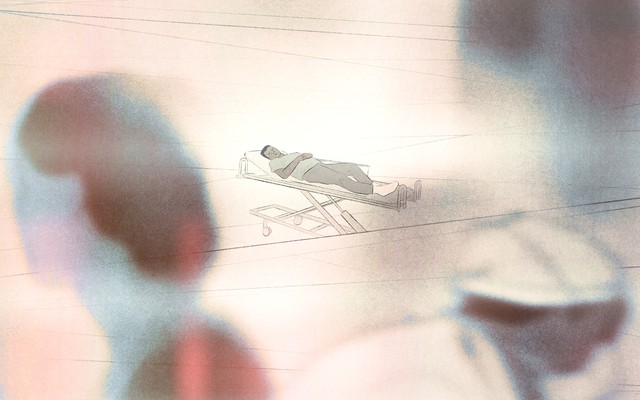
Patients are getting stuck in the emergency department for days while waiting for a spot in an inpatient ward.
In the last months, weeks, and days of his life, “I will not go to the emergency room” became my husband’s mantra. Andrej had esophageal cancer that had spread throughout his body (but not to his ever-willful brain), and, having trained as a doctor, I had jury-rigged a hospital at home, aided by specialists who got me pills to boost blood pressure; to dampen the effects of liver failure; to stem his cough; to help him swallow, wake up, fall asleep.
“I will not go to the emergency room”—emphasis on not—were his first words after passing out, having a seizure, or regurgitating the protein smoothies I made to pass his narrowed esophagus. He said it again and again, even as fluid built up in his lungs, rendering him short of breath and prone to agonizing coughing spells. He had been a big, athletic guy, but now, in the ugly process of dying, he was looking gaunt. Ours was a precarious existence, but I understood his adamant rejection of the emergency department. Most prior visits had morphed into extended trips into a terrifying medical underworld—to a purgatory known as emergency-department boarding.
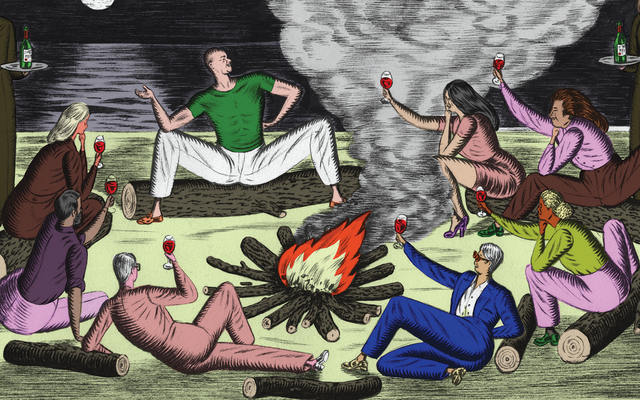
For the richest men on Earth, everything is free and nothing matters.
At the end of Paul Thomas Anderson’s 2007 movie, There Will Be Blood, Daniel Day-Lewis’s oil-baron character, old now and richer than Croesus, beats Paul Dano’s preacher to death with a bowling pin. Dano’s Eli Sunday, a nemesis of Day-Lewis’s Daniel Plainview during his seminal, wealth-building years, has come to sell Plainview the oil-rich land that he once coveted. But Plainview doesn’t need the land anymore, because—as he explains in one of the most famous monologues in modern cinema—he has sucked out all the oil hidden beneath it from an adjoining property, like a milkshake.
Desperate for money, Eli begs for a loan. Instead, Plainview chases him around a bowling alley and murders him with great enthusiasm. Once it’s over, a butler comes to see what all the noise was about. “I’m finished,” Plainview yells.
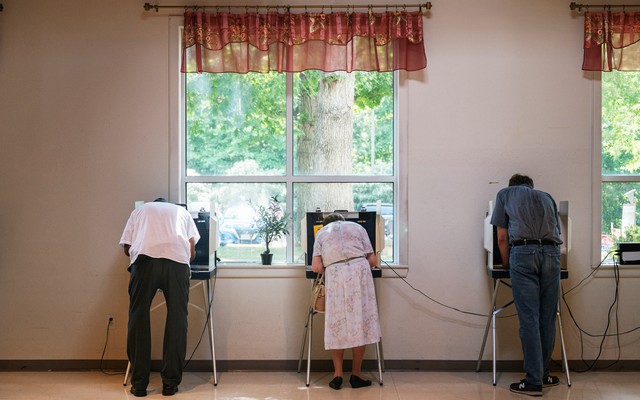
When President Trump last summer implored Republicans to launch a nationwide gerrymandering blitz to pad their narrow House majority, the fight he started did not seem fair. GOP lawmakers had both the will and the power to draw their party new seats, while Democrats were hamstrung by limits of their own making. The question was not whether Republicans could expand their edge in Congress, but by how much.
This morning the landscape looks a lot different, after Virginia voters yesterday approved a lopsided new House map that could hand Democrats an additional four seats that Republicans currently hold. The Democratic redistricting victory is the party’s second in a statewide referendum. When combined with new lines that California voters endorsed in November, Democrats have now succeeded in drawing districts that will likely yield them nine more seats this fall, at least matching what Republicans have been able to achieve in states that they control. By some measures, Democrats have jumped into the redistricting lead, bolstering their chances of winning back the House majority in the midterm elections.
The economist Adam Posen on the effect of the war in Iran on the world’s economy and the darkening economic outlook for the United States. Plus: A shifting partisan balance of power and Ask Not: The Kennedys and the Women They Destroyed, by Maureen Callahan.
In this episode of The David Frum Show, The Atlantic’s David Frum opens with a discussion of the likelihood that the partisan balance of power will shift from Republicans to Democrats at state-government level.
Then, David is joined by the president of the Peterson Institute for International Economics, Adam Posen, for a conversation about the state of the world’s economy. Frum and Posen discuss the economic effect of the war in Iran, the United States’ reputational hit caused by Trump’s tariffs, and the chance of global recession.
Finally, David ends the episode with a discussion of Ask Not: The Kennedys and the Women They Destroyed, by Maureen Callahan, and reflects on why reactions to the abuse of women by men in power seem to have become a partisan issue.
Kash Patel has alarmed colleagues with episodes of excessive drinking and unexplained absences.
This article was featured in the One Story to Read Today newsletter. Sign up for it here.
On Friday, April 10, as FBI Director Kash Patel was preparing to leave work for the weekend, he struggled to log on to an internal computer system. He quickly became convinced that he had been locked out, and he panicked, frantically calling aides and allies to announce that he had been fired by the White House, according to nine people familiar with his outreach. Two of these people described his behavior as a “freak-out.”
Patel oversees an agency that employs roughly 38,000 people, including many who are trained to investigate and verify information that can be presented under oath in a court of law. News of his emotional outburst ricocheted through the bureau, prompting chatter among officials and, in some corners of the building, expressions of relief. The White House fielded calls from the bureau and from members of Congress asking who was now in charge of the FBI.
This article was featured in the One Story to Read Today newsletter. Sign up for it here.
The mystery of the missing scientists began with a Silver Alert. In late February, a retired Air Force major general named Neil McCasland left his house in New Mexico for a walk and never returned. Rumors spread on social media that the elderly former astronautical engineer had been abducted or killed. Forget Nancy Guthrie, they said. Here was a guy who used to run a “UFO-linked” lab. Here was a guy with knowledge of “America’s deepest, darkest secrets.” So where was this guy?
McCasland’s wife did her best with a post on Facebook to address what she called the “misinformation circulating about Neil and his disappearance,” but wild notions only multiplied. Dots were added, then connected: Another scientist—an advanced-materials researcher at NASA’s Jet Propulsion Laboratory (JPL) named Monica Reza—had disappeared while hiking near Los Angeles in June 2025. A physicist at MIT had been murdered in December. “What is going on seems to be an enemy action,” Walter Kirn, the novelist and podcast contrarian, said last month.
Republicans seem to have expected that Democrats would continue to follow rules they had long since enthusiastically abandoned.
Voters in Virginia approved a lopsided congressional map on Tuesday, reducing the expected number of Republican-leaning districts in the Democratic-controlled state from five to one. Republicans have reacted by complaining that conservative-leaning voters in the state have been disenfranchised by gerrymandered maps that reduce the influence of their vote.
And they’re right. That is exactly what the new Virginia map does.
Gerrymandering is an attempt to thwart the will of the voters. It circumvents the vital process of democratic feedback by insulating politicians from political backlash. It should not happen, and yet this latest chapter of the redistricting wars did not begin in Virginia. It did not even begin last year, when Donald Trump openly urged red states to gerrymander their congressional maps so Republicans might retain possession of the House during the midterms. He did so despite the fact that the maps had been drawn after the 2020 census and would normally be expected to last until 2030.
The people we were died at the exact moment our child did.
This article was featured in the One Story to Read Today newsletter. Sign up for it here.
My husband, David, hates Valentine’s Day. He once called it “New Year’s Eve with nuclear weapons.” I pretend not to care. Still, when the day passes entirely unremarked on, a woman can’t help but feel overlooked.
On Valentine’s Day 2024, David found a way out. He booked a speech on February 14 that required traveling from our home in Washington, D.C., to Toronto. I couldn’t object—he was getting paid. Anyway, I had my own plans: an “anti–Valentine’s Day” dinner hosted by one of the foreign embassies.
As I got ready, I called our oldest daughter, Miranda. She answered from her Brooklyn bathroom, getting ready for her own party. She propped her phone up beside her sink and laughed when I told her about her father’s strategic Valentine’s Day escape.
Modi styled himself a global leader but can’t seem to get ahead of events in the Middle East.
Pakistan is having a diplomatic moment, and India’s political elites are not enjoying it.
Indian Prime Minister Narendra Modi has spent the past decade promoting the notion that India is the leader of the global South and, as such, is indispensable to world affairs. Now a conflict in the Middle East has thrown the global economy, and, with it, India’s, into crisis. On top of that, Islamabad, not New Delhi, has hosted at least one round of talks between the United States and Iran and is preparing to mediate others, leaving the Indian government to ponder its irrelevance.
Indian Foreign Minister Subrahmanyam Jaishankar first dismissed Pakistan’s role in the U.S.-Iran talks, using a pejorative Hindi word for a kind of unsavory middleman. But in Indian political circles, particularly after the April 8 cease-fire was announced, criticism has been trained on the Modi government. Jairam Ramesh, a spokesperson for the opposition Congress Party, wrote on X that Pakistan’s role was “a severe setback to both the substance and style of Mr. Modi’s highly personalised diplomacy.” Ramesh mocked the Indian prime minister for calling himself vishwaguru, meaning “teacher of the world.” Asaduddin Owaisi, the country’s most prominent Muslim politician, lamented that India would have been the natural venue for the U.S.-Iran talks, if not for the Modi government’s missteps.
Politicians who think health-conscious women could swing the midterms are fooling themselves.
Earlier this month, MAHA moms went to the White House. Several key figures in the “Make America Healthy Again” movement gathered around a table in the Roosevelt Room to speak with Health Secretary Robert F. Kennedy Jr. and other top administration officials. The invitees—who included the health activist Kelly Ryerson, the wellness podcaster Alex Clark, and the nutritionist Courtney Swan—were all women. They’re influential among the loose coalition of Kennedy supporters known as MAHA moms, many of whom are worried about their children’s health. This was a chance for them to air their grievances with the Trump administration—which have grown in recent months. Afterward, they were ushered into the Oval Office to see President Trump, who, according to Ryerson, welcomed them as “my MAHA leaders.”