The Clinton and Trump campaigns make their final pitches to voters, thousands of South Koreans protested against their president, and more from the United States and around the world.
—The 2016 presidential election is just two days away. Follow the news with our politics team here. The latest development: Donald Trump was temporarily rushed off stage at a campaign rally in Nevada Saturday night after fighting allegedly broke out in the crowd.
—Tens of thousands of South Koreans participated in protests this weekend demanding the resignation of President Park Geun-hye over a corruption scandal.
—U.S.-backed Iraqi forces continued their drive into the ISIS-held city of Mosul in Iraq, while U.S.-backed Syrian forces say they will begin an offensive to retake Raqqa, the terrorist group’s stronghold in Syria.
—We’re live-blogging the news stories of the day below. All updates are in Eastern Daylight Time (GMT -4).
Yemeni Rebels Release Detained Ex-Marine After More Than a Year
Houthi supporters at a rally in Sanaa, Yemen, on October 26, 2016 (Khaled Abdullah / Reuters)
An American held in Yemen for more than a year has been released and flown to Oman following diplomatic negotiations, and is expected to return to the United States.
The man was taken from Sanaa, Yemen's capital, to Oman, The New York Timesreported Sunday. U.S. State Secretary John Kerry was involved in the talks that led to his release.
The Times identified the man as Wallead Yusuf Pitts Luqman, a 37-year-old former Marine who was abducted in April 2015 as he tried to leave Yemen, where he had taught English for two years. Luqman was held by the Houthis, the Shiite rebel group that has controlled Sanaa since 2014 and which a Saudi-led coalition has been trying to dislodge with air strikes since March. Oman has claimed neutrality in the conflict, which has killed more than 10,000 people, according to the latest United Nations estimates.
Oman has been instrumental in facilitating the return of some Americans held by the Houthis during the conflict. In September 2015, two men who were held for six months were sent to Oman and then transported back to the U.S.
Fighters of the Syrian Democratic Forces walk with their weapons in an area north of Raqqa, Syria, on November 6, 2016. (Rodi Said / Reuters)
Syrian forces said Sunday they have begun a military operation to capture Raqqa, the self-proclaimed capital of the Islamic State in Syria.
The Syria Democratic Forces, a coalition of Kurdish and Arab militias backed by the U.S.-led coalition against ISIS, made the announcement at a press conference in Ain Issa, about 50 kilometers, or 30 miles, away from Raqqa, the BBC reported. The force, formed in early 2015, has made gains in areas north of Raqqa.
In Iraq, U.S.-backed Iraqi forces continued their offensive against ISIS fighters in Mosul, which has been under the terrorist group’s control since June 2014. The military campaign consists of about 100,000 troops from government security forces and Shiite and Kurdish militias, according to Reuters. ISIS fighters have fought back by targeting troops with car bombs and ambushes.
The simultaneous attacks could help decrease the number of safe havens for ISIS fighters. But the fight for Raqqa could prove more difficult than the one for Mosul, explained Sarah El Deeb in the AP last month:
Perhaps that’s because Syria is proving to be a more daunting terrain than Iraq. Going after ISIS-held Raqqa would mean moving deeper into an explosive mix of regional and international rivalries, including a proxy war that has pitted the United States against Russia and its allies.
The fight against ISIS in northeastern Syria also underlines a U.S. reliance on its one effective partner there—Syria’s Kurds. But such an alliance for a Raqqa campaign threatens to ignite a new conflict, with another U.S. partner, NATO member Turkey, and its allied Syrian rebels.
There are about 1 million people living in Raqqa, and nearly 200,000 in Mosul.
Thousands Protest South Korea's President Over Political Scandal
People march in Seoul during a rally calling for the resignation of President Park Geun-hye on November 5, 2016.
On Friday, Park Geun-hye, South Korea’s president, gave an emotional televised address to South Koreans, apologizing for her involvement in a political scandal that has captivated the nation. A day later, tens of thousands of protesters filled the streets in the heart of Seoul, demanding she resign.
Park admitted last week that she relied on the private counsel of a longtime friend, Choi Soon-sil, in making decisions as head of state and allowed Choi to help edit presidential speeches. Police have arrested Choi, who has no official government position, for charges of attempted fraud and abuse of authority. Prosecutors say Choi used her close relationship with Park to collect money for her nonprofit foundations. One of Park’s top advisers, Ahn Chong-bum, is suspected of collaborating with Choi, and resigned last week.
Many South Koreans have expressed outrage over the possibility that Choi has influenced government decisions. Rallies against Park began last week and have grown steadily. Police estimated 50,000 people participated in Saturday’s protest, making it one of the largest held in the capital in recent years, according to Yonhap News Agency, South Korea’s largest news organization.
“I came out today because this is not the country I want to pass on to my children," Choi Kyung-ha, a protester, told the AP Saturday. “My kids have asked me who Choi Soon-sil was and whether she’s the real president, and I couldn’t provide an answer.”
Park said she takes responsibility for the scandal, calling it a “mistake.”
“I put too much faith in a personal relationship and didn't look carefully at what was happening," she said at Friday’s public address. "Sad thoughts trouble my sleep at night. I realize that whatever I do, it will be difficult to mend the hearts of the people, and then I feel a sense of shame and ask myself, 'Is this the reason I became president?'"
Park is in her fourth year of a five-year term. Her approval rating has plummeted to 5 percent since the scandal emerged, the lowest for any leader of the country in nearly 70 years.
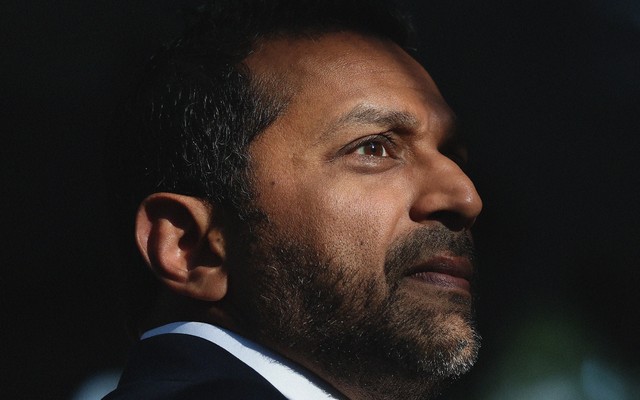
Kash Patel has alarmed colleagues with episodes of excessive drinking and unexplained absences.
On Friday, April 10, as FBI Director Kash Patel was preparing to leave work for the weekend, he struggled to log into an internal computer system. He quickly became convinced that he had been locked out, and he panicked, frantically calling aides and allies to announce that he had been fired by the White House, according to nine people familiar with his outreach. Two of these people described his behavior as a “freak-out.”
Patel oversees an agency that employs roughly 38,000 people, including many who are trained to investigate and verify information that can be presented under oath in a court of law. News of his emotional outburst ricocheted through the bureau, prompting chatter among officials and, in some corners of the building, expressions of relief. The White House fielded calls from the bureau and from members of Congress asking who was now in charge of the FBI.
I spent 10 months working at the institution because I thought I could help protect it. What I observed there is far worse than the public knows.
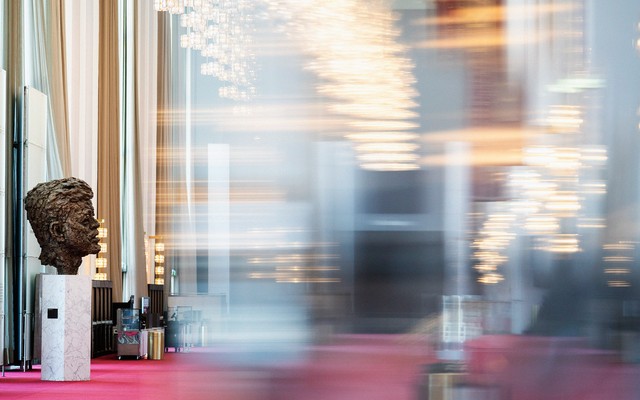
On the day I was laid off from the Kennedy Center, I felt a little like Dolley Madison saving the Stuart portrait of Washington before the British sacked the capital. I was the staffer in charge of the artworks in the building. A crucial difference is that my institution, unlike the White House in 1814, had been on fire for months.
About a year elapsed between the moment President Trump took over the Kennedy Center in early 2025 and his declaration this past February that he’d decided to shut down the nation’s cultural center for two years. In between, we had seen artist cancellations, shrinking audiences, firings of old staffers and influxes of new ones—a lot of drama, just not onstage. The date Trump announced for the closure was July 4, the country’s 250th birthday, an event that I had been hired to help commemorate as the institution’s first curator of visual arts and special programming.
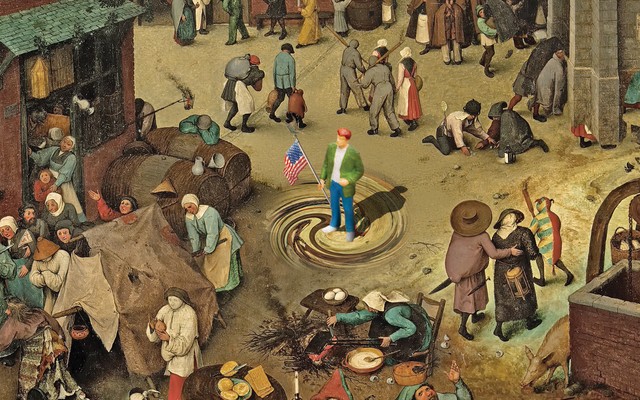
A shocking number of the president’s supporters have turned against him.
Tomas Montoya has sold festival foods—funnel cakes, burgers, hot dogs—across the American Southwest for years. But lately, business has been rough. Costs are up, so he’s increased his prices. Employees are begging for hours he can’t give them. In Arizona, where he lives, Montoya pays $6 a gallon to fill up his food trucks with diesel. This summer, he may have to skip the California leg of his festival route because fuel is even more expensive there.
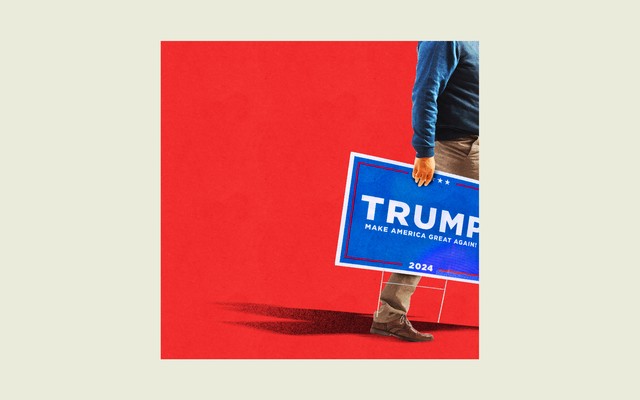
“It’s Trump,” Montoya told us outside a popular Hispanic grocery store in Casa Grande, Arizona, much of which sits in one of the most evenly divided House districts in the country. Montoya voted for President Trump in 2024, but now, well, frustrated doesn’t begin to cover how he’s feeling. The president is bragging about the economy, even though everyone Montoya knows is hurting; he promised to stop wars, but started one in Iran. “When Trump opens his mouth, three-quarters of what he says is stories, lies,” Montoya said. He’s planning to vote in the midterm elections this fall. But he may not choose a Republican.
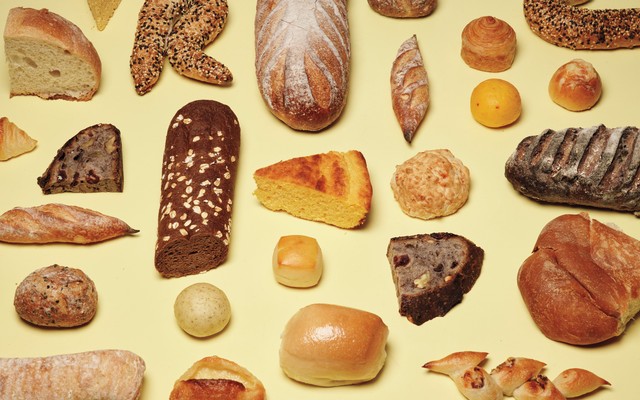
Thirteen thousand miles. Infinite contenders. One beautiful loaf.
This article was featured in the One Story to Read Today newsletter. Sign up for it here.
Here is the promise you and I must cling to across the thousands of words that follow: At some point within this text, I will reveal to you what—after 555 responses, 13,000 miles of travel, and months of monomaniacal research—I have determined to be the best free restaurant bread in America. I will not attempt to slither to the moral high ground, arguing that best is a meaningless measure, or insisting that all bread is dear in its own way. Even if you attempt to betray me—for instance, by merely scanning the text that follows for the phrase Here it is: the best free restaurant bread in America—I will uphold my end of the bargain.
Trump has developed a reputation for backing down from his most over-the-top threats, but dismissing his words is a mistake.
Twelve hours after Donald Trump warned that a “whole civilization will die tonight, never to be brought back again”—after he’d previously threatened to bomb Iran “back to the Stone Ages”—the president agreed to a temporary cease-fire. Since then, initial peace negotiations failed and Trump responded with a naval blockade of the Strait of Hormuz; a new round of talks may begin soon.
But what to do with his everyone in Iran is going to die comments last week? Because they were designed to pressure Iran to come to the table, and because the promised carnage did not materialize, many observers simply moved on, explaining away Trump’s threats as a ham-fisted negotiation tactic, some kind of 5-D chess, or another example of the president’s propensity to “TACO” (Trump Always Chickens Out).
This article was featured in the One Story to Read Today newsletter. Sign up for it here.
Maybe you’ve seen photos of Tehran in the 1970s, just before the Islamic Revolution: images of young women going to work in miniskirts, of couples making out in parks while wearing bell-bottoms, of people at pools in bikinis. It looks like Paris or Milan or Los Angeles. But in 1979 the revolution happened, and now Tehran looks like something from an earlier century.
Sometimes I think that our whole world has become kind of like that—going backwards in time. The religious movements thriving in today’s secularized age are the traditionalist ones that dissent from large parts of contemporary culture—not only the Shiite Islam of post-revolution Iran, but Orthodox Judaism and conservative Catholicism. Young Americans are flooding into Eastern Orthodox churches.
The vice president has decided he’s a more accomplished theologian than Leo XIV.
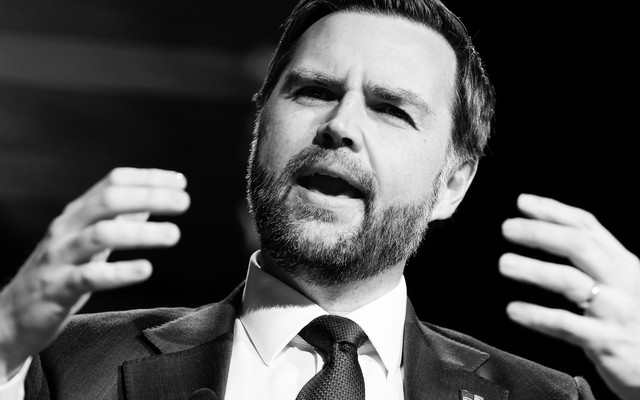
The Trump administration doesn’t seem to have many rules, but one of them is that once the president picks a fight, his posse must show up to support him, no matter how ill-advised the conflict. And few senior officials are more eager to back up the boss in every embarrassing beef than Vice President Vance, who recently seems to have decided that he, and not Pope Leo XIV, is the true arbiter of Catholic doctrine.
President Trump is personally angry with Leo because the pontiff has been deeply critical of America’s war of choice in Iran. Accordingly, Trump lashed out at His Holiness twice over the past few days. Vance might have seen this as a valuable opportunity to say nothing and let the storm pass; Leo, naturally, doesn’t seem to care all that much what Trump thinks. (As my colleague Liz Bruenig wrote, Leo answers to a higher authority.) Had the vice president remained silent, Trump might have moved on, and Vance, a relatively recent convert to Catholicism, would have been able to stay out of a dustup between his president and his spiritual leader.
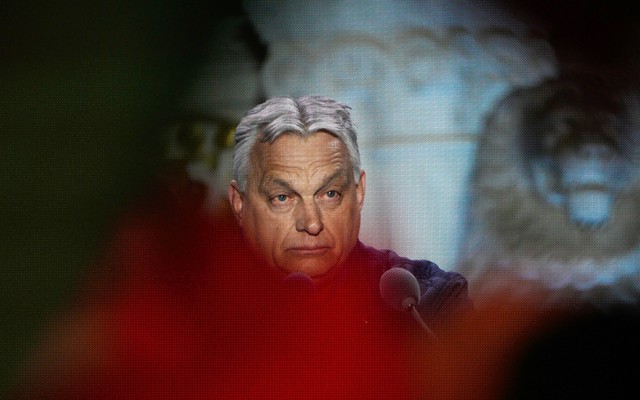
The Hungarian strongman Viktor Orbán, who lost his election in a landslide on Sunday after 16 years in power, presented himself as a defender of Western civilization. But at best, his lofty rhetoric was a code for bigotry and a justification for the persecution of minorities; at worst, it was a scam to fleece Hungarians by persuading them to blame everyone but those responsible for their problems. Maybe both.
Eventually Hungarians decided that a major source of their problems was Orbán himself. Maybe someday Americans will come to a similar realization about Orbán’s great admirer, Donald Trump, who praised the former Hungarian leader before the election as a “fantastic man” who had done a “fantastic job.”
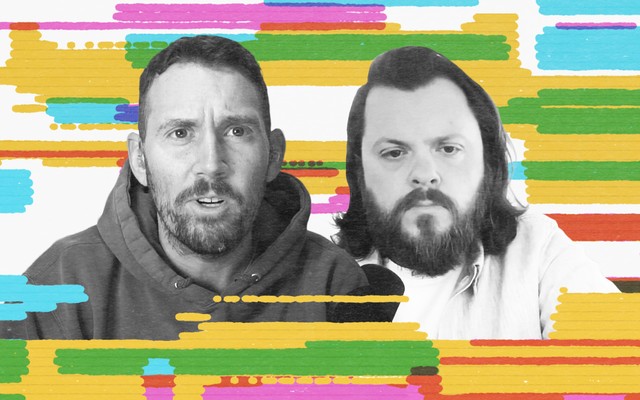
In this episode of Galaxy Brain, Charlie Warzel speaks with Josh Owens, a videographer and the author of a memoir about his years working for Infowars, the media company of the conspiracy theorist Alex Jones. Owens traces his journey from a film-school student who stumbled onto Jones’s radio show to an insider who spent four years filming, editing, and traveling for the organization. Owens describes how Jones’s conspiracy machine works, as well as how his own moral compass was scrambled by Jones’s manipulative management. The conversation explores radicalization, the conspiratorial media ecosystem Jones helped create, and how Owens was able to pull himself out.
Control of a vital waterway gives Tehran the deterrence power it’s always wanted.
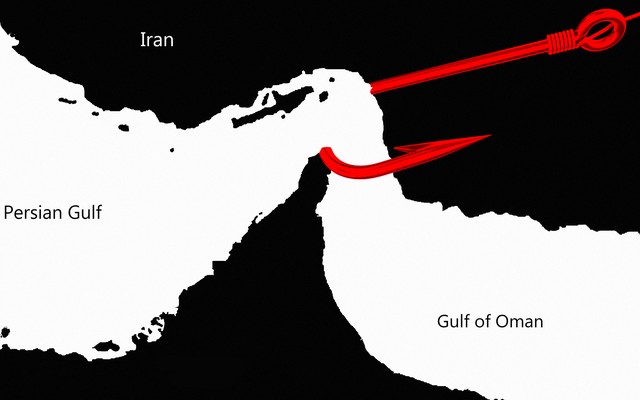
President Trump has said that he went to war to stop Iran from ever having a nuclear bomb. Unfortunately, the war he launched led Iran to discover that it already had an extremely effective doomsday weapon—one that promised the economic equivalent of mutual assured destruction. The Strait of Hormuz has always been vulnerable; the United States has always known that Iran might try to close it if attacked. But neither Washington nor Tehran imagined how easy it would be for Iran to do so, how hard it would be for the U.S. to reopen it, or how widely and rapidly the economic effects of a closed strait would fan out.
Fossil fuels are to modern industrial civilization what air is to the lungs: About 80 percent of the global economy is powered by oil, coal, and natural gas. Much of this comes from the states along the Persian Gulf: Saudi Arabia, Iraq, Iran, the United Arab Emirates, Kuwait, Qatar, Oman, and Bahrain. About 25 percent of global seaborne oil trade and 20 percent of global liquified natural gas transits the Strait of Hormuz, between the Persian Gulf and the Gulf of Oman.