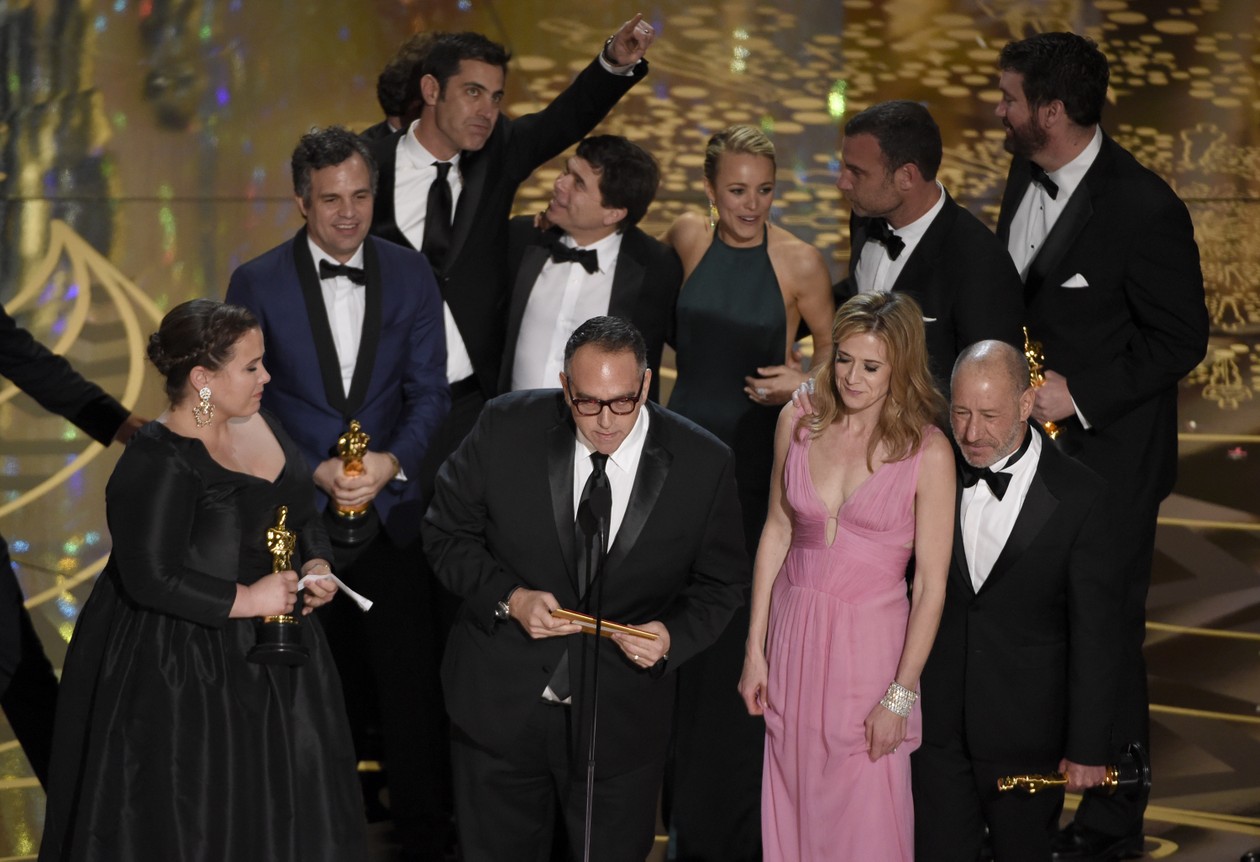
Perhaps Spotlight’s win shouldn’t have been surprising—it was a diffuse Oscar season, with a lot of favorite films but no consensus pick, and that’s the kind of year in which a film that almost everybody liked can rise to the top. Mad Max: Fury Road, The Revenant, Room, and The Big Short all had their passionate fans, but weren’t generally popular enough to be marked as consistent favorites. Spotlight, a sober tale of journalism done right, was less sweeping or cinematic than many of the other nominated pictures, but it was still an important tale powerfully told: enough for it to win Oscar’s biggest prize. Trivia: The last film to win Best Picture and just one other Oscar (Spotlight took Best Original Screenplay) was Cecil B. DeMille’s The Greatest Show on Earth in 1953.
Chris Rock was laser-focused on the #OscarsSoWhite controversy from beginning to end—his entire opening monologue swung at it, and he interspersed several strong bits through the show, returning to the interviews with real-life cinemagoers of color that worked so well in his first hosting gig. It was an acidic night on that front, but it had to be, and the Academy’s President, Cheryl Boone Isaacs, made an impassioned plea to members to accept the changes geared towards expanding voter diversity, as if to say, let’s stop this publicity disaster from ever happening again.
The big winners were Spotlight, Mad Max: Fury Road (six wins), and The Revenant (three wins), but voters spread the wealth among the Best Picture nominees. Room took home Best Actress, Bridge of Spies won Best Supporting Actor, and The Big Short won Best Adapted Screenplay—only Brooklyn and The Martian went home empty-handed. For the third time in four years, Best Picture and Best Director were split between different films, a historical rarity that is now becoming voters’ favorite tactic to honor a film they technically respected (like Life of Pi, Gravity, and The Revenant) alongside the expected Best Picture movie. Now, the Academy looks firmly towards its future—and its effort to drastically expand its members of color in the coming years. —David Sims
The biggest upset of the night came at the very end. Many critics had expressed a hope that the sobering and methodical Spotlight would win, while acknowledging the likeliness that The Revenant would snag the award (the film took Best Actor and Best Director earlier). But it was Spotlight—a film that reaffirmed the power of investigative journalism to challenge powerful institutions, a film that perhaps more importantly gave voice to countless survivors of sexual abuse in the Catholic Church—that walked away with the honor.
Leonardo DiCaprio Wins Best Actor for The Revenant
AP
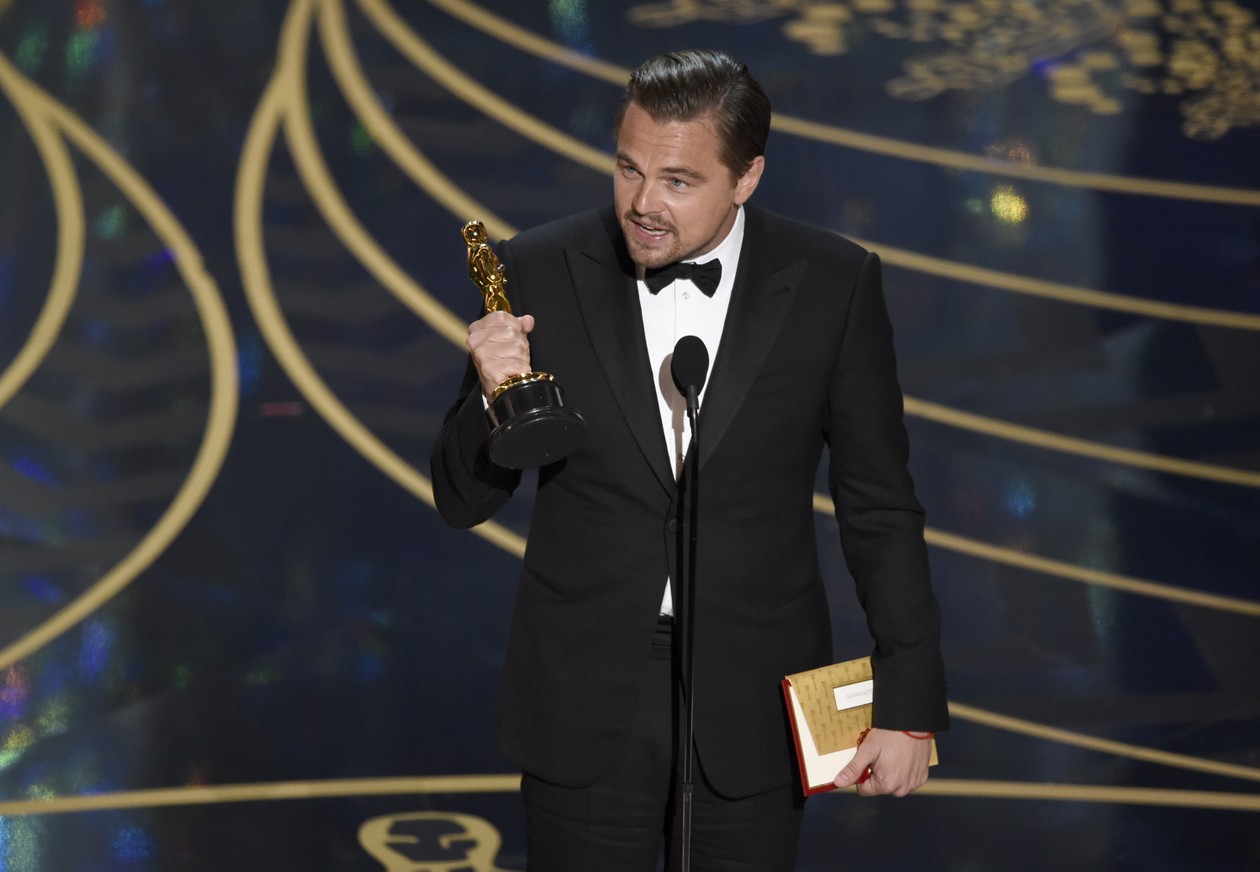
Everyone saw it coming, and he waged a furious campaign for the award, but there was still a strange sense of satisfaction to Leonardo DiCaprio’s Best Actor win for The Revenant. It puts an end to the tiresome narrative that accompanies any over-nominated movie star who’s never won—this was his sixth nod—and perhaps it’ll free him up to take riskier projects in the future, since he no longer has to hunt for a trophy. The narrative around DiCaprio’s campaign was heavily focused on the grueling physical toil of the film’s outdoor shoot, and DiCaprio noted in his speech that production had to relocate to the southern tip of Argentina to find snow, urging the audience to acknowledge the damage of climate change, one of his long-standing causes. “We need to work collectively together and stop procrastinating,” he said.
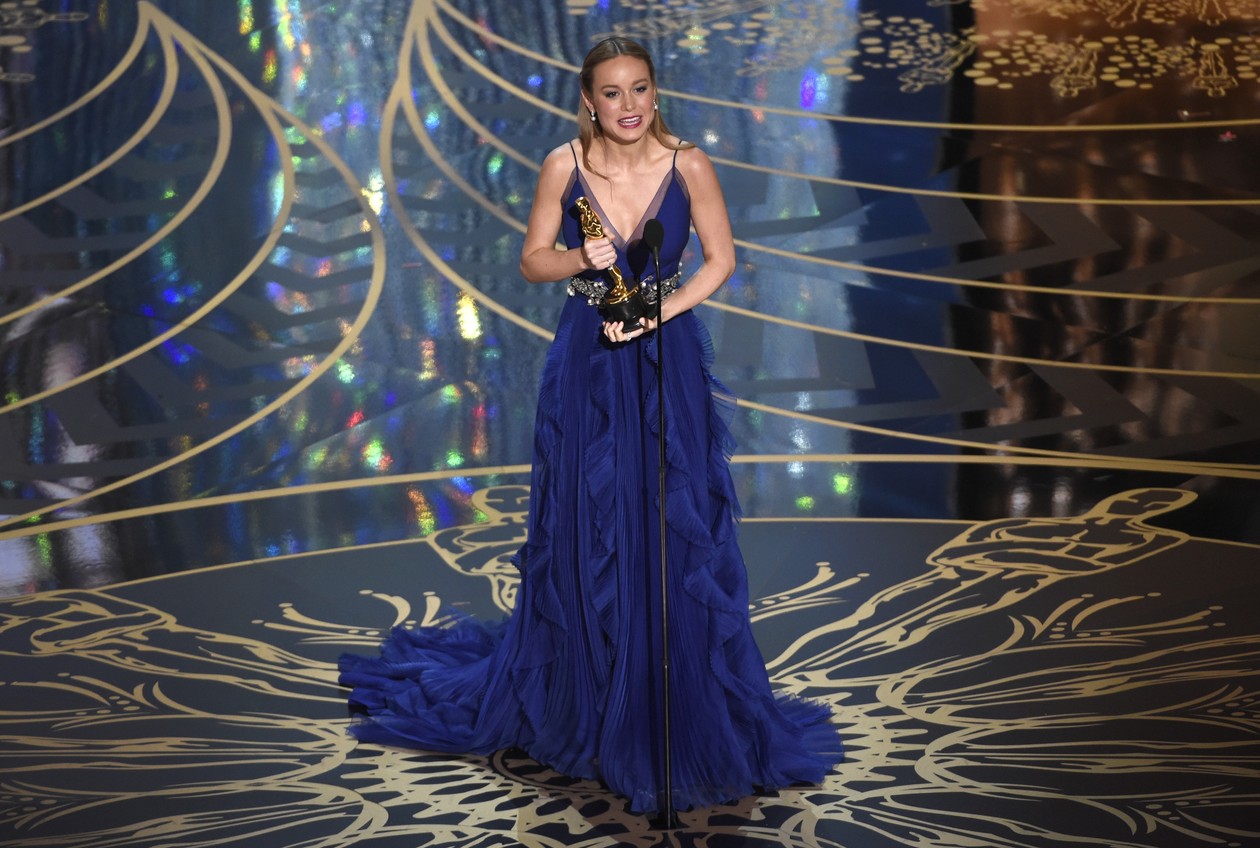
In an evening with few surprises … another non-surprise! Larson, along with her co-star Jacob Tremblay, were the soul of Room, a film about a young mother trying to protect and nurture her son in the most unbearable circumstances. The 26-year-old, who swept the best-actress field for the major precursor awards (Golden Globes, SAG Awards, BAFTA Awards), thanked her director, Lenny Abrahmson, Room’s novelist and screenwriter, Emma Donoghue, and Tremblay.
Alejandro Gonzalez Iñárritu wins Best Director for The Revenant
Mad Max: Fury Road’s technical sweep seemed to presage an insurgent win for George Miller, its revered director, but in the end, the favorite took the prize—Alejandro Gonzalez Iñárritu, for The Revenant, which will almost certainly end up taking Best Picture as well. Iñárritu won last year for Birdman, making him the first director to win back-to-back Oscars since Joseph L. Mankiewicz, who won in 1949 and 1950 for A Letter to Three Wives and All About Eve. John Ford also accomplished the feat in 1940 and 1941 for The Grapes of Wrath and How Green Was My Valley.
The sincere and unapologetic theater kid known as Lady Gaga may not actually be made for these times, given that cool, controlled social-media image projection is now the preferred mode for pop stars. But though her twitching and gesturing behind a white piano on a dark stage while performing “Till It Happens to You” tonight caused some snickers on Twitter, the truth is that she vested a so-so rock ballad with energy and specificity that nearly made for an iconic moment. At some points, her gaze followed the camera as it panned while she sang: a confrontation. In other moments, she seemed totally lost to emotion.
Joe Biden introduced her, calling on all viewers to join a pledge to “intervene in situations where consent has not or cannot be given.” Toward the end of the song, women and men identified as victims of sexual abuse came forward, with messages written on their arms: “NOT YOUR FAULT,” “UNBREAKABLE.” The song had been written with Diane Warren for The Hunting Ground, a documentary about campus rape.
In an upset, Sam Smith and Jimmy Napes won for their theme to the Bond movie Spectre, edging out The Hunting Ground anthem “Till It Happens to You,” by Lady Gaga and Dianne Warren (the latter has had her songs nominated eight times for an Oscar, though she’s never won). In his acceptance speech. Smith dedicated the win to the LGBT community around the world, saying “I stand here tonight as a proud gay man, and I hope we can all stand together as equals one day.” This Oscar also means Smith is halfway to an EGOT.
The Genius of Live Music for the “In Memoriam” Segment
AP
The “In Memoriam” tribute is usually one of the most predictable elements of an Oscar show—a montage scored with treacly music whose swings and swells are meant to pull at the heartstrings of the audience. There’s another predictable aspect of all that, though: Audiences, wanting to applaud the lives and accomplishments of those being remembered, end up giving extra applause to the actors and directors they’re most familiar with. It’s understandable. It’s also a little bit awkward.
This year, though, the montage’s musical accompaniment was performed live. Dave Grohl, with an acoustic guitar, sang The Beatles’ “Blackbird.” It was a lovely rendition of a lovely song, but it had another effect, too: The live performance kept the audience from applauding during the tributes on the screen. David Bowie got the same treatment as writers and producers. Everyone was remembered equally—and paid, together, the tribute of silence.
He’s one of the most legendary composers in the history of film, and he won an Honorary Oscar in 2007 (Clint Eastwood sweetly translated his speech from the Italian onstage). But Ennio Morricone, who has been scoring films since 1959, had never won for Best Original Score until tonight, when he won for The Hateful Eight. The 87-year-old flew to Hollywood for the ceremony, and it was apparently worth the trip—the Dolby Theater audience rose in a standing ovation before he even got to the podium.
Best Foreign Film was one of the Oscars’ strongest categories this year, but Son of Saul was always a runaway favorite to win. The movie won rave reviews for its unique visual take on a grueling Holocaust narrative, following two days in the life of a Jewish prisoner assigned to a work unit in Auschwitz. The movie’s director, Laszlo Nemes, accepted the award, Hungary’s second Oscar (its first was for Mephisto in 1981).
Benjamin Cleary and Serena Armitage won for their film Stutterer, a sweet comedy about a man with a speech impediment who looks for love online. Armitage thanked the Academy for taking the time to honor shorts, which still haven’t made it into the mainstream. They are, however, a hotbed for creativity—a topic I wrote about this week—and the reboot-riddled film industry needs them more than ever.
Chris Rock has been going pretty hard, as expected, with his criticism of the whiteness of this year’s Oscar nominees. In one of his best bits, he interviewed black cinema-goers in Los Angeles, asking them what they thought about the lack of black people at the Oscars. One of the gentlemen he interviewed pointed out that Asians and Hispanic actors were also being ignored by the Academy—the first time, as many noted on Twitter, that people of color who aren’t black had been explicitly acknowledged during the ceremony. (So far this evening, a few of winners of Asian and Latino descent have been onstage, including Sharmeen Obaid-Chinoy, a Pakistani filmmaker; Emmanuel Lubezki; and the creators behind the Chilean short film Bear Story.)
Even among advocates for greater representation in Hollywood, it’s a complicated issue, as I wrote earlier this week. No hashtag or host or group can be responsible for changing the dynamics of Hollywood, or the mainstream media, or the racial politics of the entire country.
Amy Winehouse’s extraordinary and tragic life led to Amy, which has turned out to be extraordinary in its genre. It was the rare bona fide documentary hit, making more money than any other British non-fiction movie ever. It also drew a mix of acclaim and controversy for the way it collaged home footage of Winehouse with paparazzi videos that the producers paid to use, arguably rewarding the same media outlets that hounded the singer in life. Accepting the Oscar for best documentary film, the director Asif Kapadia said the movie was “about showing the world who she really was, not a tabloid persona: the beautiful girl with an amazing soul, funny, intelligent, witty, someone special, someone who needed looking after.”
“This is what happens what determined women get together,” said Sharmeen Obaid-Chinoy after she accepted the award for Best Documentary Short for her film A Girl in the River: The Price of Forgiveness. The movie is about honor killing in Obaid-Chinoy’s home country of Pakistan; in her speech, she paid tribute to “the brave men out there who want a more just society for women,” and revealed that after watching her film, the Pakistani prime minister decided to change the nation’s laws on honor killing.
Mark Rylance Wins Best Supporting Actor for Bridge of Spies
Mad Max’s technical domination wasn’t expected to be total and Ex Machina’s visual effects win was surprising, but the first huge shock of the night was Mark Rylance defeating the heavily favored Sylvester Stallone for Best Supporting Actor. Rylance had collected the lion’s share of critics awards for his work as the mild-mannered Soviet spy Rudolf Abel, but prognosticators thought Stallone’s work as an aged Rocky Balboa would be a sentimental favorite. Rylance’s speech was as classy as ever (check out some of his Tony wins on YouTube when you have the chance), praising his director Steven Spielberg (“Unlike some other leaders we’re being presented with these days, he leads with such love”) and his co-star Tom Hanks.
No surprise that a film directed by the man who helmed Up and Monsters, Inc. won for being a deeply heartfelt yet funny story that appealed to kids and adults alike. In his acceptance speech, Pete Docter offered a message to children who might be watching: that even though they couldn’t necessarily control the feelings of anger or fear they sometimes experienced, they “can make stuff. Make films, draw, write. It’ll make a world of difference.”
Best Animated Short goes to Bear Story, a sad but beautiful film about a lonely bear who makes an animatronic diorama in order to remember his family after he was taken by the circus. After accepting the award, the first for their home country of Chile, the director Gabriel Osorio and the producer Pato Escala honored Osorio’s grandfather, who inspired the film, and “all the people like him who have suffered in exile.”
Predictably, Hollywood has been the target of lots of #OscarsSoWhite jokes tonight. Less predictably, so have been Will and Jada Pinkett Smith, who are boycotting the ceremony. In his opening monologue, Chris Rock said Jada refusing the Oscars would be like Rock refusing Rihanna’s panties: There was no invitation in the first place. He also said that while it might be unfair that Will didn’t get nominated for Concussion, it also wasn’t fair how much money he made from Wild Wild West. Later, in a video purporting to pay tribute to Black History Month, Angela Bassett shouted out works like Enemy of the State and mentioned a “fresh” talent … and then revealed that she’d been honoring Jack Black. The gag, of course, was about Hollywood’s tendency to pass over black actors for white ones. But it was also about trolling Will Smith.
I’m not one to seriously partake in the year Oscars prognostication, but ... I didn’t see that one coming! Sure, it didn’t have the spectacle of Star Wars or The Martian, but it’s nice to see a film as special—and frankly under-appreciated—as Ex Machina score such a win. (Who could forget all the horrifying android-skin peeling scenes?)
About That ‘Let’s Make the Acceptance Speeches More Substantial’ Experiment…
You know that whole experiment they’re doing at this year’s Oscars, the one in which the show’s producers asked nominees to submit lists of the people they wanted to thank before the show? The idea was that, if the names of the thankees could scroll on the screen while the winner delivers his or her speech, that would free up the winner to give a more substantial speech. Think Viola Davis at the Emmys.
Well … old habits die hard. This evening’s speeches thus far have been extremely conventional. They have been chock-full of the same thing they have been in years past: thank-yous delivered to the winners’ family and friends and fellow nominees and “teams.”
In her acceptance of her Best Supporting Actress Oscar, Alicia Vikander spent her speech thanking “Working Title and Focus.” And “my dream team.” She sought out “Tom—where are you?—my director” in the audience. She sought out Eddie Redmayne, her co-star, to thank him and tell him that “you raised my game.” She thanked her “mom and dad” for “giving me the belief that anything can happen.”
Conventional stuff, right? The list of Vikander’s thankees scrolled so quickly as to be almost illegible … but it didn’t seem to change Vikander’s speech. People want to express gratitude. And even when they try to use their time on the Oscars stage to make larger points—as Mad Max’s costume designer, Jenny Beavan, did—they are reminded of how limited that time actually is. “It could happen to us, Mad Max, if we’re not kinder to each other and we don’t stop polluting our atmosphere.”
Beavan’s speech was interrupted by another time-honored Oscar tradition: the play-off. The music, in this case, was a particularly passive-aggressive selection on the part of an Oscars aiming for efficiency: “Flight of the Valkyries.”
Mad Max: Fury Road Wins Best Sound Editing and Sound Mixing
George Miller’s action epic continues to sweep the technical categories—it now has six awards, making it pretty much mathematically certain that it will be the biggest winner of the night. Its mostly Australian crew are making for some energetic winners, too—one of the Sound Editing honorees got bleeped out for a foul-mouthed cheer as he took the trophy, and another was wearing a skull and crossbones necklace with his black tie. Mad Max’s technical sweep could presage a surprise Best Director or Picture win, but more likely it was just the voters’ visual favorite. The Revenant was expected to take a few of these, though, and the fact that it hasn’t won outside of cinematography may signal a lack of enthusiasm for the film among the many voting branches.
Margaret Sixel wins Mad Max: Fury Road’s fourth Oscar of the night for Film Editing. It’s not only her first Oscar but her first nomination. Sixel praised the “creative courage and guts” it took to get the movie made.
Good job, Chivo. Emmanuel Lubezki won his third consecutive Oscar, after winning for Birdman and Gravity the last two years (it was his eighth Oscar nomination, and he’s now one of only seven people ever to have kept up an Oscar streak for three years). For all the focus on the lack of diversity at the Oscars, it’s at least heartening to see a Latino cinematographer, working on a film by Latino director, be honored for his impeccable work.
Mad Max: Fury Road wins its third straight award, this time for Makeup and Hairstyling (the movie is up for 10 Oscars overall). Lesley Vanderwalt, Elka Wardega, and Damian Martin thanked the film’s director, George Miller, who’s also nominated for Best Director.
Mad Max: Fury Road just won its second Oscar of the night—this time for best production design. In accepting the award alongside Lisa Wilson, the production designer Colin Gibson joked that the award could be considered the first award for diversity, after quipping that the film was about “a man with mental health issues, an Amazon amputee, and five runaway sex slaves.”
“You’re not allowed to ask women what they’re wearing anymore,” Chris Rock said at the end of his Oscars monologue. And, indeed: On the red carpet this evening, the perennial question—not what, but “who are you wearing?”—was relatively rare. Instead of asking women on the red carpet to describe their outfits, journalists instead made do with other kinds of banter. (Mostly: “I’ve been doing this for like 72 hours,” Mindy Kaling joked to E! of her Oscars-primping routine.)
That amounted to a success for the #AskHerMore campaign, started in February 2014 by the Representation Project and objecting to the fact that women on the red carpet are so often asked about fashion while men are asked about … basically anything else. Rock offered an explanation for that maybe-changing fact in his monologue: “They ask the men more,” Rock said, “because the men are all wearing the exact same outfits.”
Alicia Vikander Wins Best Supporting Actress for The Danish Girl
No surprise in the Best Supporting Actress category—Alicia Vikander picked up her first Oscar (on her first nomination) for her role in The Danish Girl, beating out Jennifer Jason Leigh, Rooney Mara, Rachel McAdams, and Kate Winslet. Still, many critics have wondered whether she better deserved to win for her work in a different 2015 film—her performance as the mysterious A.I. Ava in Ex Machina.
When it was released, I wrote that Sam Smith’s “Writing’s on the Wall” made for an unusually vulnerable, morose James Bond theme, and that some people would see it as complicating—or betraying—the 007 franchise’s traditional macho mystique. Now, we get Sarah Silverman introducing the song by delivering an acidicanti-Bond routine where she said she hadn’t seen Spectre and reported that Bond has an inadequate manhood. Smith wobbled a bit, both in pitch and in posture, as he sang.
Chris Rock walked onto the Oscar stage a man with a mission, and he largely delivered, with an incisive monologue that focused on the Academy’s all-white slate of actors this year and pulled no punches. One of his first bits focused on how vocal the protests were in 2016 compared to decades prior, despite Hollywood’s long legacy of systemic racism. “We had real things to protest at the time,” Rock joked. “When your grandma’s swinging from a tree, it’s really hard to care about Best Foreign Documentary Short.”
It was an intense joke, and one of many that seemed to land harder for viewers at home than the audience at the Dolby Theater. The camera cut, repeatedly and painfully, to (mostly white) actors and directors in the audience, often smiling thinly and clapping at jokes about the structural racism of their industry. “It’s not burning cross racist … Hollywood is sorority racist,” Rock said. “It’s like, ‘We like you, Wanda, but you’re not a Kappa.’” At one point, he noted how easy it was for actors like Leonardo DiCaprio to get varied roles compared to A-list black actors like Jamie Foxx; the camera switched right to DiCaprio, grinning and bearing it.
Not all of Rock’s jokes landed, and he made some strange digressions—at one point, he mocked Jada Pinkett Smith for boycotting the ceremony, saying she wasn’t invited. To close his speech out, he made fun of the growing trend to ask actresses on the red carpet about more than the dresses they’re wearing, a slightly thudding topic to wrap such a hard-hitting monologue. But in general, the opening was just what the ceremony needed.
Charles Randolph and Adam McKay won Best Adapted Screenplay for their work on The Big Short, based on Michael Lewis's book about the 2008 financial crisis. McKay, who commented on the pervasive influence of big money in government in his acceptance speech, is also nominated for Best Director.
The first Oscar of the night goes to Spotlight for best original screenplay. In their acceptance speech, the screenwriters Tom McCarthy and Josh Singer dedicated the film to “all the journalists who hold the powerful accountable.”
The ceremony has been defined by questions about racial inclusion, but there’s another social-issue sub-theme: sexual assault. Joe Biden will introduce a performance from Lady Gaga, whose nominated song “Till It Happens to You” was recorded for The Hunting Ground, a documentary about rape on college campuses. Speaking on the red carpet, Gaga mentioned her own sexual assault as well as the statistics saying that one in five women will be raped in college. A number of other nominated films, like Spotlight and Room, also revolve around sexual predation.
Oh, no. This tweet—since deleted—is really not a good way to begin the Oscars ceremony. It is, however, a really good reminder of the ways #OscarsSoWhite extends beyond the Oscars themselves. —Megan Garber
The president is safe after chaos at the Washington Hilton, and a suspect is reportedly in custody.
Updated at 10:56 p.m. ET on Saturday, April 25, 2026
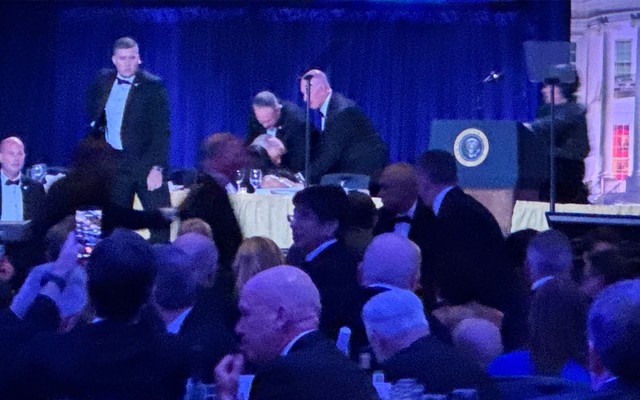
We were under the table before we knew what was happening. One moment a military band was parading out of the Washington Hilton’s cavernous ballroom; hundreds of journalists and government officials, including two dozen of my Atlantic colleagues and myself dressed in our best or borrowed black tie, had turned to our arugula salads.
The next moment, armed agents—maybe Secret Service, maybe police, maybe hotel guards; it was hard to tell from where we were huddled under a tablecloth—were pushing their way through mounds of people, climbing over chairs, rushing to the stage, where President Trump and First Lady Melania Trump just moments before had been seated.
For the richest men on Earth, everything is free and nothing matters.
At the end of Paul Thomas Anderson’s 2007 movie, There Will Be Blood, Daniel Day-Lewis’s oil-baron character, old now and richer than Croesus, beats Paul Dano’s preacher to death with a bowling pin. Dano’s Eli Sunday, a nemesis of Day-Lewis’s Daniel Plainview during his seminal, wealth-building years, has come to sell Plainview the oil-rich land that he once coveted. But Plainview doesn’t need the land anymore, because—as he explains in one of the most famous monologues in modern cinema—he has sucked out all the oil hidden beneath it from an adjoining property, like a milkshake.
Desperate for money, Eli begs for a loan. Instead, Plainview chases him around a bowling alley and murders him with great enthusiasm. Once it’s over, a butler comes to see what all the noise was about. “I’m finished,” Plainview yells.
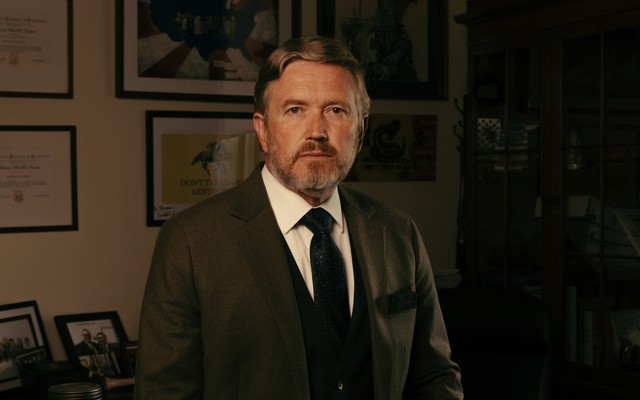
A New York Times podcast hosted Hasan Piker and a New Yorker staff writer for a discussion of lawbreaking, which they both endorsed as resistance to tyranny.
The late political scientist James C. Scott endorsed what he called “anarchist calisthenics”—the regular practice of small acts of lawbreaking and disobedience. Jaywalk at an empty intersection. Have a beer in the park. Smuggle a pudding cup past the TSA agents. The point, Scott said, was to keep the civic muscles strong. Without constant reinforcement, these muscles will atrophy, and when real tyranny arrives, the flabby citizen will be powerless to resist. Scott particularly enjoyed telling Germans to get their reps in, because their grandparents had not.
On Wednesday a New York Times podcast hosted the Twitch streamer Hasan Piker and the New Yorker staff writer Jia Tolentino for a discussion of lawbreaking, which they both endorsed not as a habit of mind but as resistance to actual tyranny, today. They agreed that shoplifting from grocery stores such as Whole Foods is laudable, because (as Tolentino says, without evidence) “every major grocery chain” steals from workers and customers. Streaming services—they specifically name Spotify, which carries the Times podcast—are bad for creators and, they say, worthy of being ripped off. Piker said he would steal cars, “if I could get away with it.” Channeling Abbie Hoffman, Tolentino encourages people to steal from her own employer, The New Yorker, but does not explain which high crimes David Remnick has committed to earn this comeuppance.
Thomas Massie is one of the few Republicans who is unafraid of President Trump.
Representative Thomas Massie, the renegade Kentucky Republican who fiercely guards his political independence, doesn’t love being on President Trump’s bad side. He would prefer not to have the president’s allies spend millions to defeat him in a primary. In fact, if Massie had his way, he’d be working for Trump right now.
In his telling, in the weeks after the 2024 presidential election, the two men talked about Massie, a farmer who champions raw milk, becoming Trump’s agriculture secretary. Massie had formally endorsed Trump late in the campaign, offering to help him win over libertarians who might be tempted to stay home or vote third party in key battlegrounds. Trump had been appreciative, and the two had chatted by phone to hash out the timing of the endorsement announcement. “Just tweet it. I’ll retweet you,” Trump had told him.
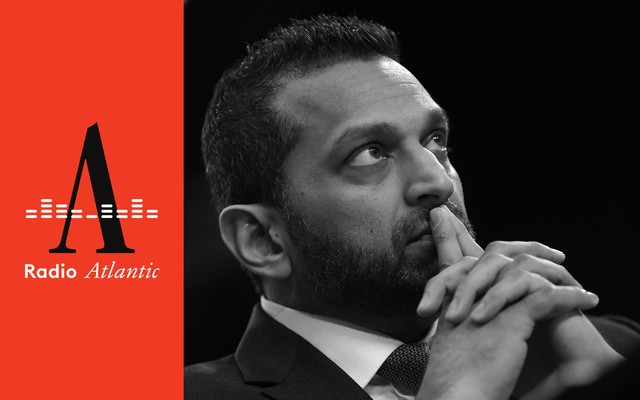
In a recent story, the Atlantic staff writer Sarah Fitzpatrick writes about how FBI Director Kash Patel’s colleagues are alarmed by what they describe as erratic behavior and excessive drinking. Sources told Fitzpatrick that, on multiple occasions, members of his security detail had trouble waking Patel because he was seemingly intoxicated. Last year, Fitzpatrick reports, a request was made for “breaching equipment,” normally used by SWAT teams to break into buildings, because Patel had been unreachable behind locked doors.
Patel called the story a “lie” and earlier this week sued The Atlantic for defamation. When asked about it at a press conference Tuesday, he said, “I can say unequivocally that I never listen to the fake-news mafia. And when they get louder, it just means I’m doing my job.”
Silicon Valley venture capitalists are wining and dining 18-year-olds.
This article was featured in the One Story to Read Today newsletter. Sign up for it here.Updated at 8:22 a.m. ET on April 25, 2026.
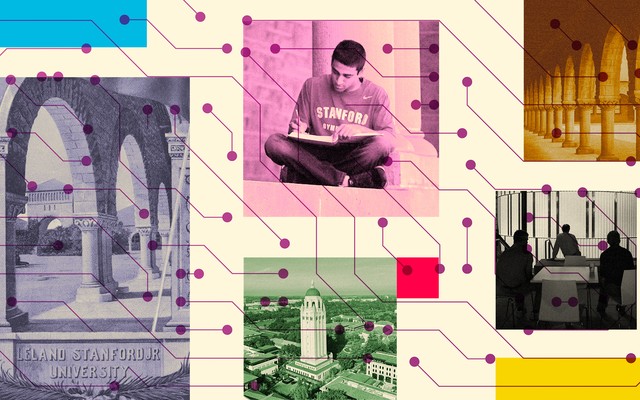
When I was a freshman at Stanford University, I learned to shotgun a beer from a guy in a frat. Soon after, he dropped out and started an AI company. Six months later, it was valued at more than $1 billion.
For most students, Stanford is a normal competitive school, where people go to class and coffee shops and fall in love and freak out over finals. But a select few attend something else: a Stanford inside Stanford, where venture capitalists pursue 18- and 19-year-olds, handing out mentorships and money and invites to yacht parties in an attempt to convert promise into profit.
Priests and theologians want to shape the future of AI. Big Tech is listening.
In 1633, Galileo Galilei stood in the convent of the Santa Maria sopra Minerva church in Rome, where a tribunal of Catholic authorities forced him to “abjure, curse, and detest” his belief that the sun—not Earth—was the center of the universe.
Almost four centuries later, in 2016, the Vatican invited a group of the world’s most prominent technologists to the same church to discuss AI ethics. That was the start of the Minerva Dialogues, annual closed-door conferences in Rome that have become the centerpiece of a decade-long exchange between Silicon Valley and the Catholic Church.
The Valley and the Vatican seem like strange bedfellows: The oldest institution in the world meets secular upstarts bent on creating godlike technology. When the venture capitalist Reid Hoffman first attended the dialogues, he told me he was struck by the portraits lining the walls that depicted Catholic inquisitors like those who persecuted Galileo. “It feels a little bit weird to be walking in voluntarily past these,” he remembers thinking.
Thirteen thousand miles. Infinite contenders. One beautiful loaf.
This article was featured in the One Story to Read Today newsletter. Sign up for it here.
Here is the promise you and I must cling to across the thousands of words that follow: At some point within this text, I will reveal to you what—after 555 responses, 13,000 miles of travel, and months of monomaniacal research—I have determined to be the best free restaurant bread in America. I will not attempt to slither to the moral high ground, arguing that best is a meaningless measure, or insisting that all bread is dear in its own way. Even if you attempt to betray me—for instance, by merely scanning the text that follows for the phrase Here it is: the best free restaurant bread in America—I will uphold my end of the bargain.
James Talarico is trying to sell a novel brand of Christian politics in a deep-red state.
Updatedat 11:25 a.m. ET on April 24, 2026
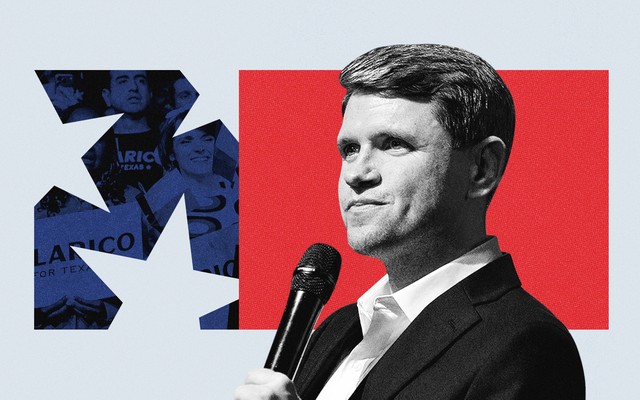
While some might pray for hope or peace in such dark times, others are praying for the death of Texas Democrat James Talarico, who is running for the U.S. Senate. During a recent episode of the right-wing Protestant podcast Reformation Red Pill, host Joshua Haymes told the pastor Brooks Potteiger that he prays that “God kills” Talarico, given that the politician seems to be possessed by demons. Potteiger agreed, offering that Talarico should be “crucified with Christ.” Both Haymes and Potteiger later insisted that their remarks were not sincere expressions of violent intent, but rather metaphorical calls for Talarico, a Presbyterian seminarian, to find salvation in their brand of Christianity. Talarico shrewdly responded by offering forgiveness: “You may pray for my death, Pastor, but I still love you. I love you more than you could ever hate me.”
The people we were died at the exact moment our child did.
This article was featured in the One Story to Read Today newsletter. Sign up for it here.
My husband, David, hates Valentine’s Day. He once called it “New Year’s Eve with nuclear weapons.” I pretend not to care. Still, when the day passes entirely unremarked on, a woman can’t help but feel overlooked.
On Valentine’s Day 2024, David found a way out. He booked a speech on February 14 that required traveling from our home in Washington, D.C., to Toronto. I couldn’t object—he was getting paid. Anyway, I had my own plans: an “anti–Valentine’s Day” dinner hosted by one of the foreign embassies.
As I got ready, I called our oldest daughter, Miranda. She answered from her Brooklyn bathroom, getting ready for her own party. She propped her phone up beside her sink and laughed when I told her about her father’s strategic Valentine’s Day escape.