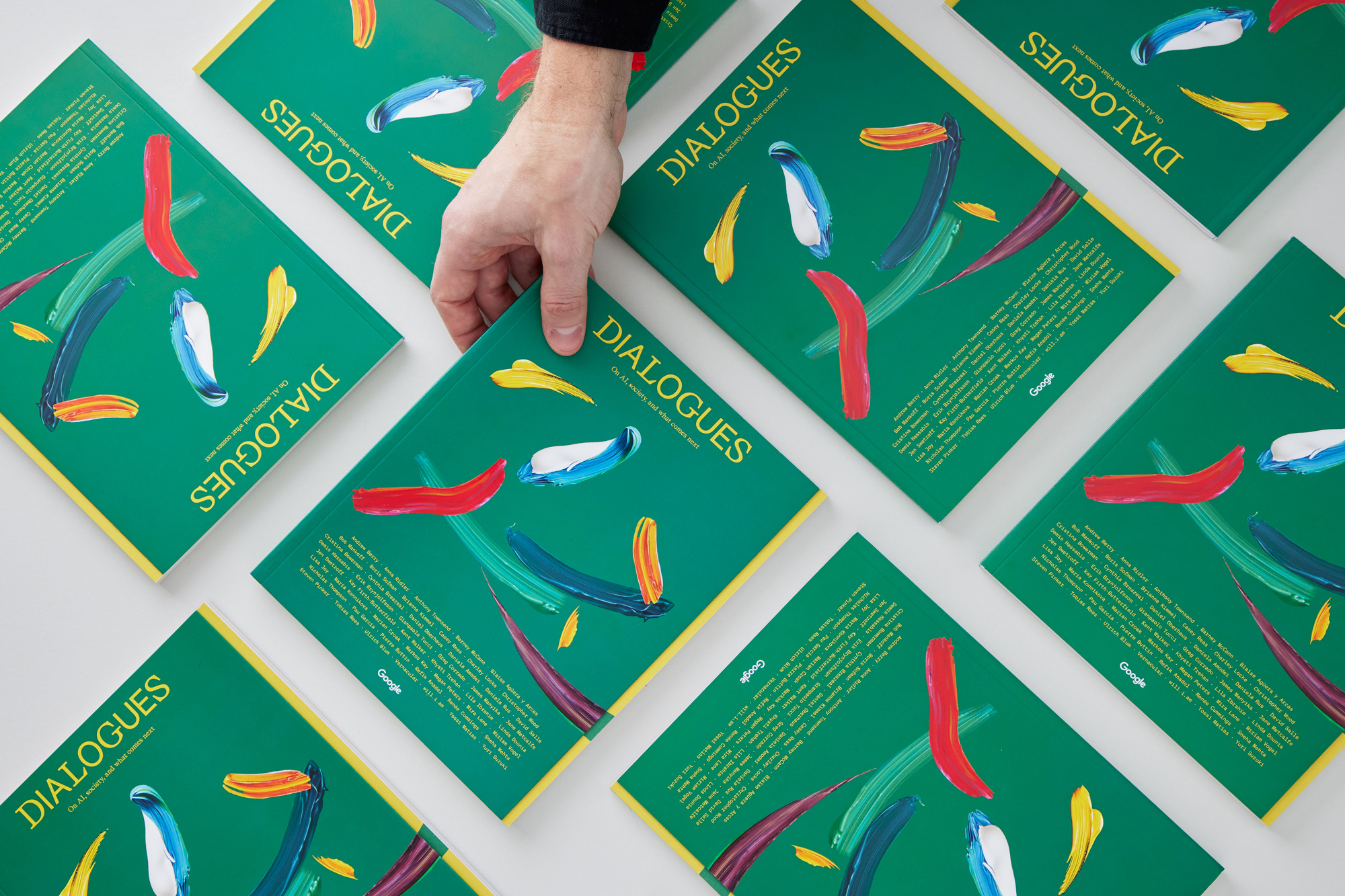


Much of the current conversation around the rise of artificial intelligence can be categorized in one of two ways: uncritical optimism or dystopian fear. The truth tends to land somewhere in the middle—and the truth is much more interesting.
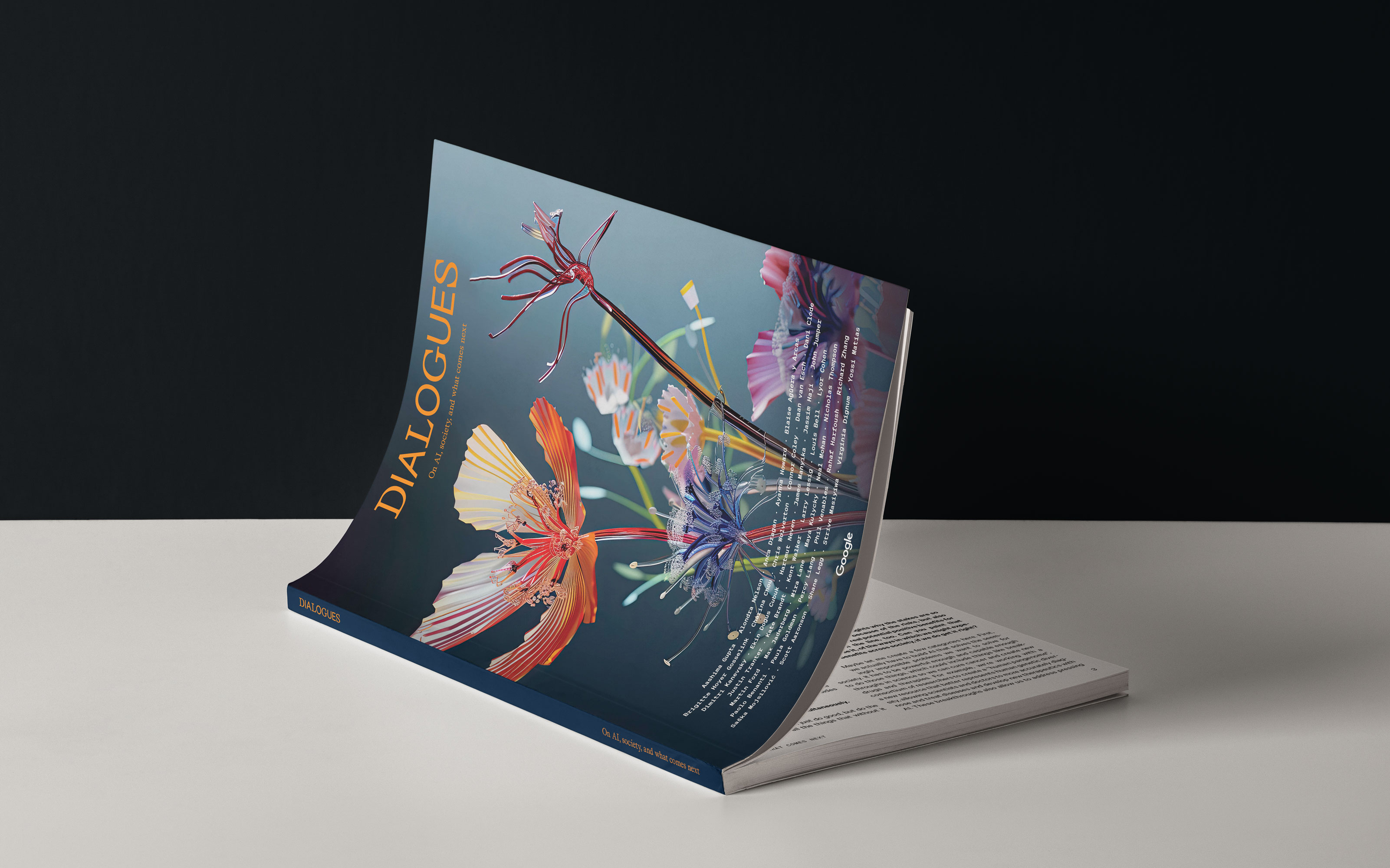
Dialogues is a magazine that goes both broad and deep on the vast impact of AI. Produced alongside Google, The Atlantic’s creative marketing studio, Re:think, assembled a diverse cast of journalists, technologists, artists, scientists, and academics to engage in thoughtful, nuanced conversation on AI, society, and what comes next.

Beyond the Magazine
Want to chat with Dialogues?
This AI-powered reading companion lets you ask questions across all our published issues and discover connections between ideas you might have missed. Ask it anything—from clarifying technical concepts to finding related stories across different topics.

Issue Two
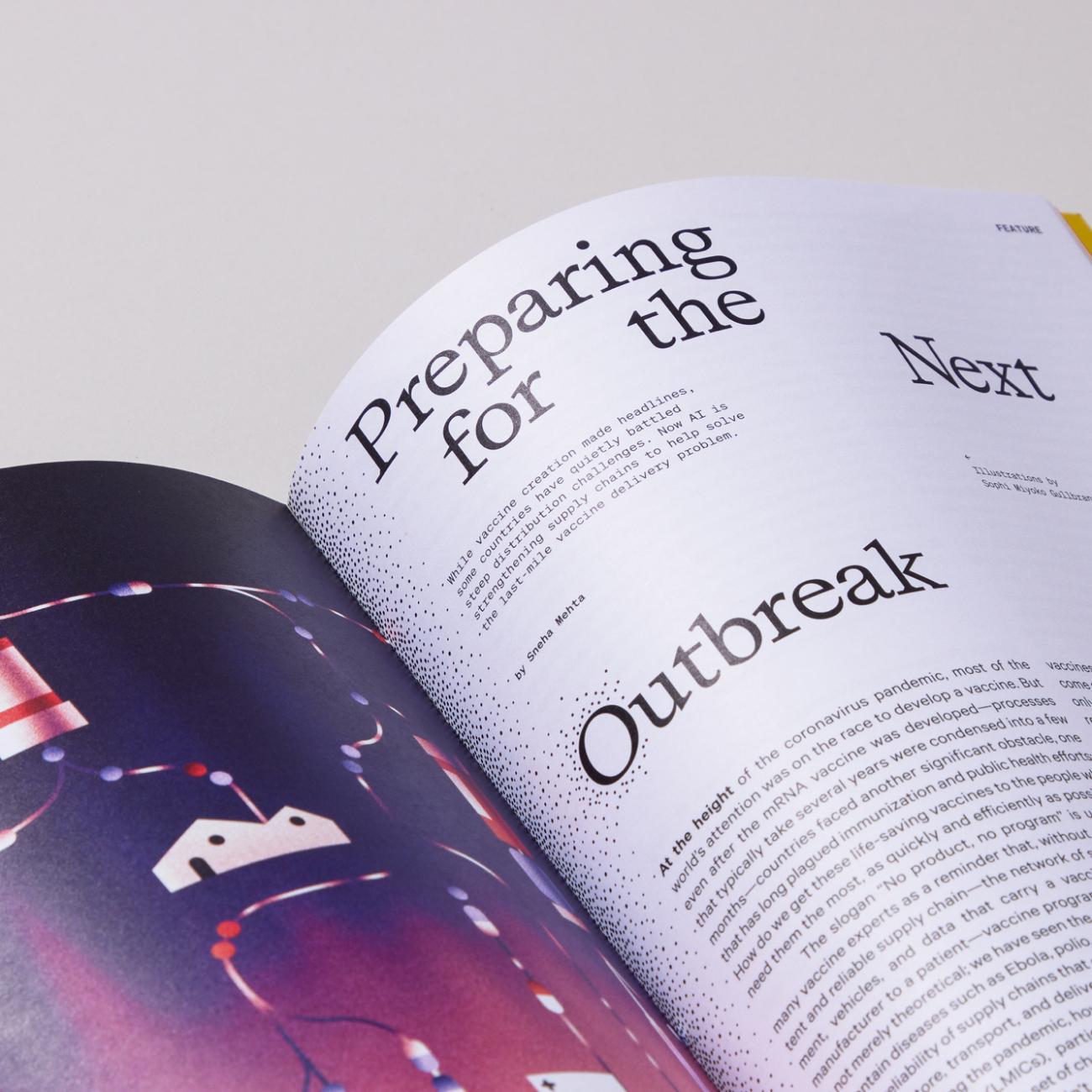
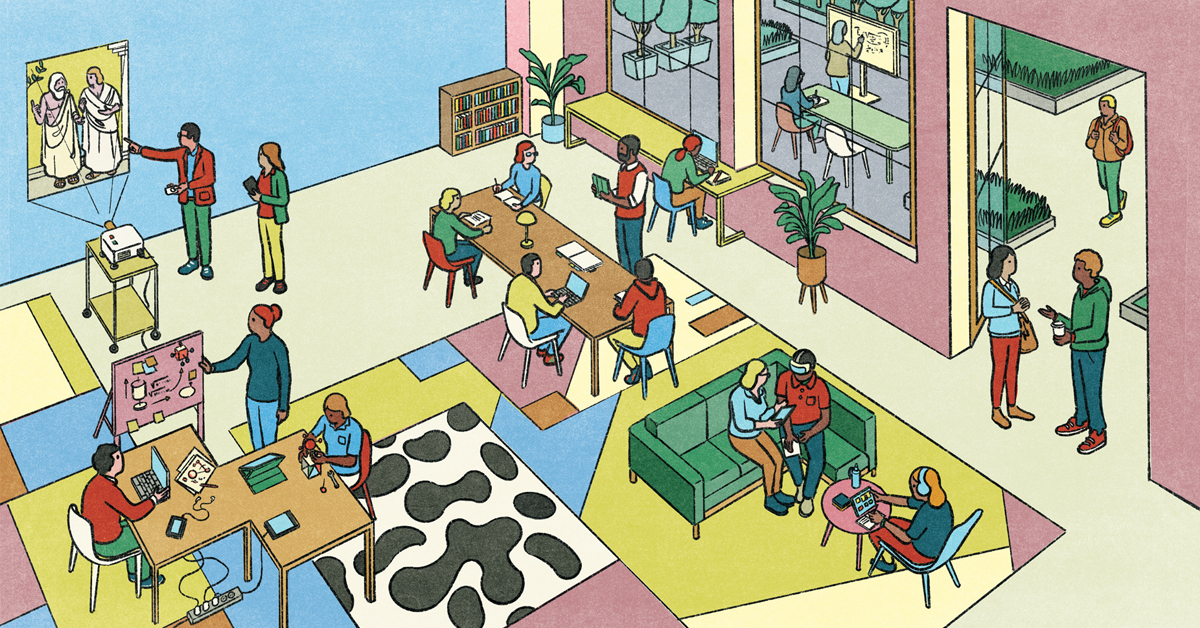
Technological revolutions happen quietly. When you look beneath the hype and headlines in the media, you find curious people adapting new technology to the challenges in their daily lives. This is what’s happening with artificial intelligence. It’s the doctor who uses AI to help provide a diagnosis faster. It’s the teacher who uses a large language model (LLM) to help develop a history curriculum. It’s the scientist analyzing lab results with the assistance of a custom AI model.
Read more
As we interact more with this technology, our understanding of it is deepening. The natural language processing displayed by chatbots is only one manifestation of the capabilities of machine learning and neural networks. AI is best understood as a general-purpose technology, like the steam engine or the internet, due to its wide-ranging impact. The ability to recognize patterns, respond to new information, and improve performance makes it strikingly versatile. AI can help predict the molecular structure of proteins. It can improve the analysis of a storm system and provide expedited flood warnings. It can help coordinate traffic patterns across an entire city to maximize fuel efficiency.
The past 12 months have seen advancements in problem-solving and language understanding that give AI powerful new ways to assist us. A year ago, the first issue of this magazine asked fundamental questions about AI. This issue begins with a grounding in the current state of the art: What are the ideas, methods, and inspirations that are pushing this technology forward?
From this foundation, we consider AI’s remarkable influence on the activities central to our culture: how we learn, how we practice medicine, how we create art and song. We examine how AI can help reduce inequity by increasing accessibility and, more broadly, by providing opportunities for up-and-coming generations globally. We then turn to the area where, perhaps, AI has had the most astonishing impact so far: scientific discovery. AI is helping us to map the brain. It’s analyzing new materials that might revolutionize electric vehicles. It’s predicting the structure of proteins that will help us better understand human health. And it has only just begun.
Within the context of these dizzying breakthroughs, new big questions about AI arise, and are tackled in the final chapter of this issue. How do we guide this technology so that it contributes to human flourishing? How do we improve the abilities of AI responsibly, so that it can assist in building the sustainable world we all need? What becomes clearer each day is how AI will be a great test of our humanity, of our ability to cooperate. It will demand the best of us and, if we get it right, might help spur a level of innovation and shared progress we can’t yet imagine.
Contributors: Adam Ferriss, Alasdair Lane, Alondra Nelson, Anya Kamenetz, Ayanna Howard, Chris Burnett, Clarissa Wei, Connor Coley, Craig Marks, Craig Ramlal, Daniel Liévano, Daniel Oberhaus, Fr. Paolo Benanti, Haimy Assefa, Holger Hoos, Hoi Chan, Ibrahim Rayintakath, Irene Suosalo, Jimena Sofía Viveros Álvarez, Justin Tranter, Kellie Schmitt, La Tigre, Lerrel Pinto, Lila Ibrahim, Linda Dounia, Mark Esposito, Martin Ford, Matthew Hutson, Maya Kosoff, Mira Lane, Nicholas Thompson, Optics Lab, Ori Toor, Oriana Fenwick, Paula Goldman, Petra Pétterfly, Phil Venables, Rahaf Harfoush, Raven Jiang, Richard Zhang, Rida Abbasi, Ryan Carl, Saška Mojsilovic, Sayan Chakraborty, Seydina Moussa Ndiaye, Sneha Mehta, Stayton Bonner, Terrence Russell, Tilman Becker, Uli Knörzer, Virginia Dignum, Yann Kebbi.
Issue One
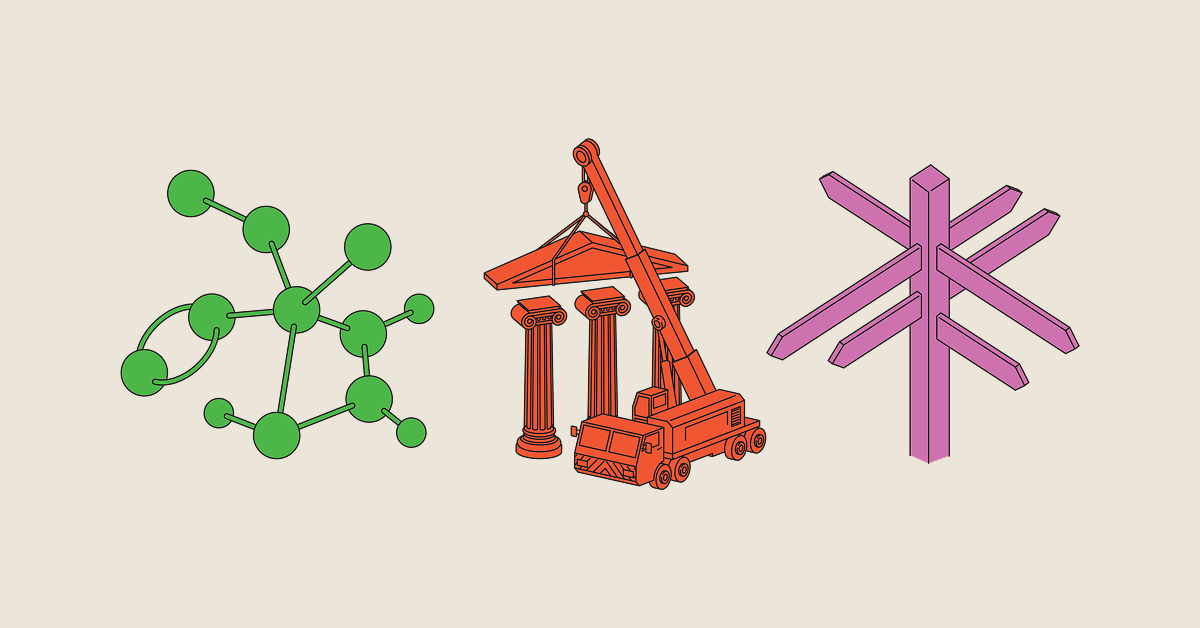
How can we maximize the possibilities of AI, while mitigating its risks? How might it empower creativity? How should it be regulated? And why can’t it consistently beat us at the most human game—poker? In the inaugural issue of Dialogues, the answers are nuanced and considered.
“AI is the “biggest new thing humanity has discovered in years.” The Atlantic’s CEO Nicholas Thompson writes, in the issue’s introductory note. These stories are meant to help you explore, understand and get even more curious about it, and remind you that as long as we’re willing to confront the complexities, there will always be something new to discover.
Read more
Contributors: Andrew Berry, Anna Ridler, Anthony Townsend, Barney McCann, Blaise Agüera y Arcas, Bob Mankoff , Brianne Kimmel, Camilo Huinca, Casey Reas, Cayce Clifford, Charley Locke, Christopher Wood, Clara Mokri, Cristina Bowerman, Cynthia Breazeal, Daniela Amodei, Daniela Rus, Daniel Oberhaus, Demis Hassabis, Denise Nestor, Domestic Data Streamers, Erik Brynjolfsson, Gianpaolo Tucci, Greg Corrado, James Manyika, Jane Metcalfe, Jan St. Werner, Jen Swetzoff , Jon Han, José Sobral, Jovelle Tomayo, Kay Firth-Butterfield, Kent Walker, Khyati Trehan, Leonie Bos, Lila Ibrahim, Linda Dounia, Lisa Joy, Maria Konnikova, Marian Croak, Marine Buffard, Markos Kay, Megan Peters, Mira Lane, Miriam Vogel, Nicholas Thompson, Pau Garcia, Pierre Buttin, Refik Anadol, Renée Cummings, Sneha Mehta, Somnath Bhatt, Sophi Miyoko Gullbrants, Steven Pinker, Tobias Rees, Uli Knörzer, Ulrich Blum, Vernacular, Will.i.am, Yossi Matias, Yuri Suzuki.