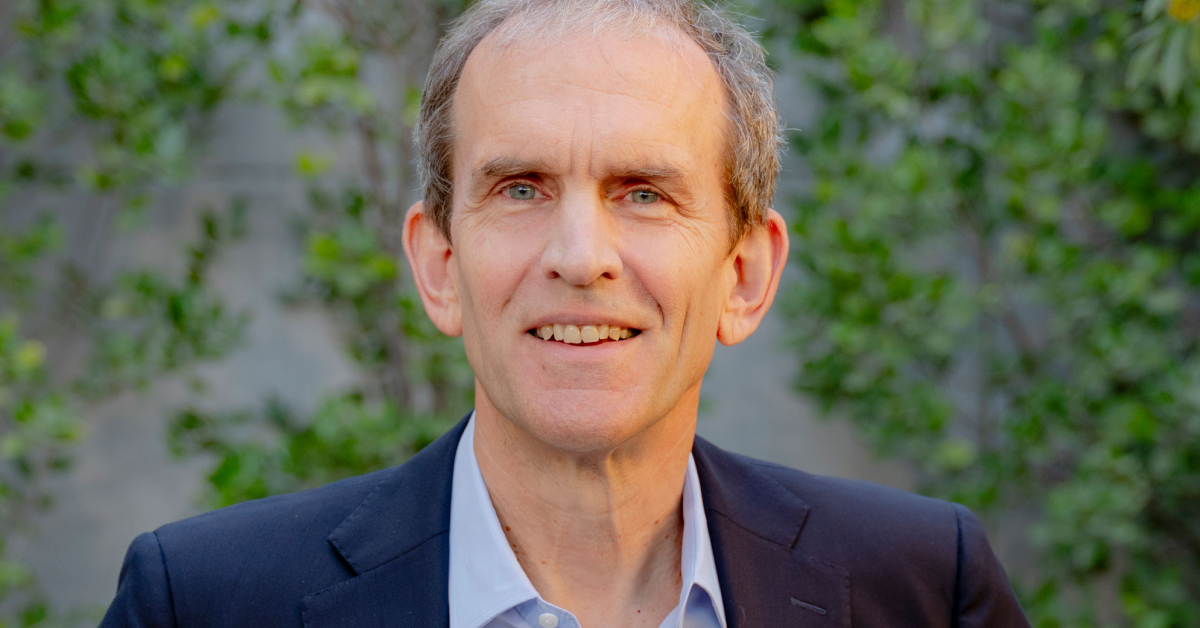

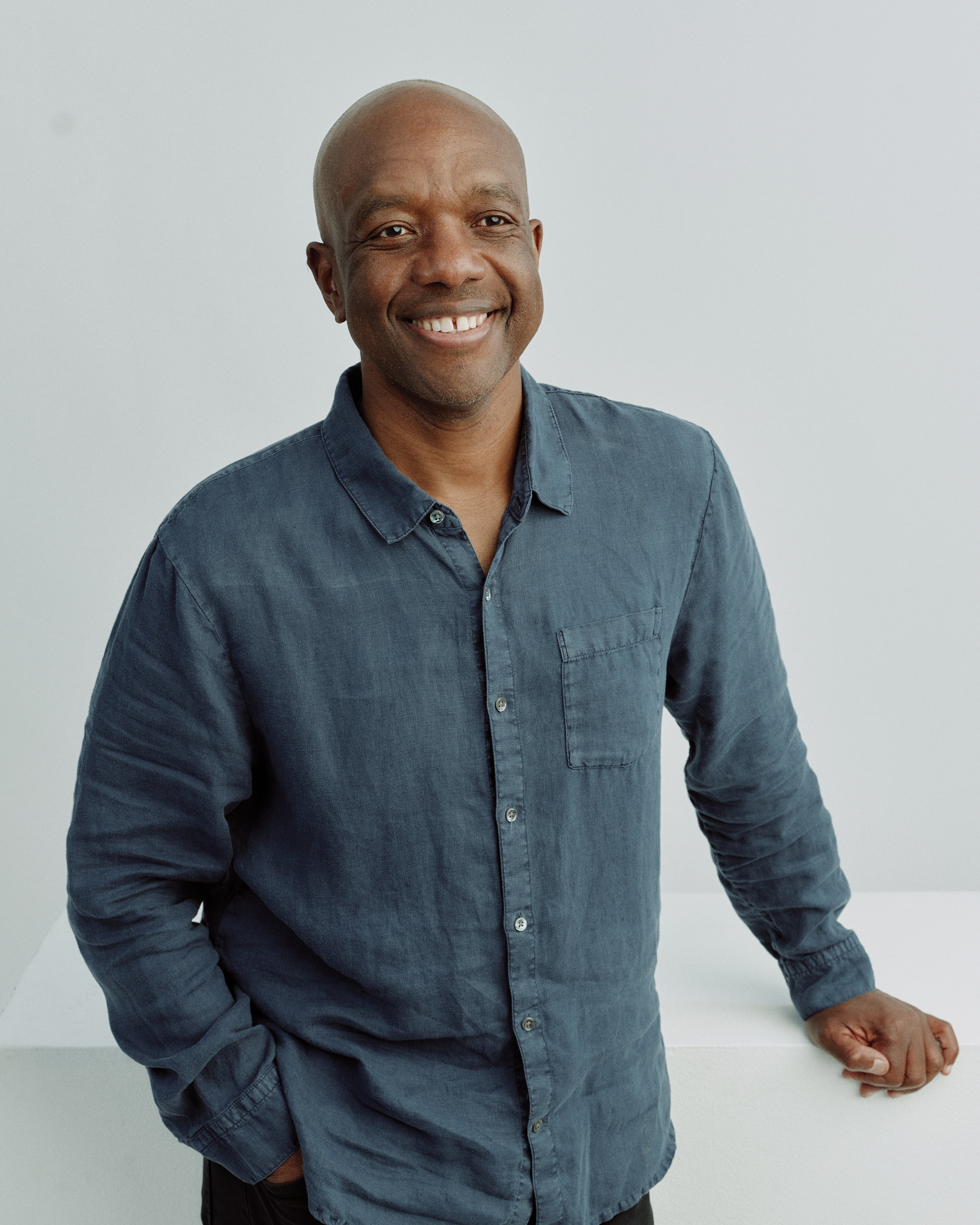
In his role at Google as the senior vice president of Research, Technology & Society, James Manyika brings together people across disciplines and seeks to understand how we can guide artificial intelligence in a responsible and equitable way. Since we spoke a year ago, there have been many significant improvements in AI, and a new range of questions to confront and try to solve, collectively.
Our conversation has been edited for length and clarity.
Nicholas Thompson When we spoke for the first issue of Dialogues, we discussed the societal challenges brought on by rapid developments in artificial intelligence. What have been the most important advances in AI this year?
James Manyika There’ve been some very interesting technical developments that signify where we’re going. The models we’re now building are natively multimodal. In other words, they are built to understand text, images, video and, quite frankly, anything that can be tokenized. Whereas, before, we were doing that after the fact. The multimodality goes in both ways—that is, you can generate images, video, and more from text, or go the other way, that is, input or prompt with images to generate text. A lot of the applications you will start to see will take advantage of native multimodality.
The other thing that’s happened is long context. Think of context as a form of memory, such as the ability of an AI to analyze, do inference on, and retain a large set of documents. The things that you were able to do with AI were limited by how big the context window was. Most systems could handle, at most, 100,000 tokens or words. We had a big breakthrough, so now, we can actually do very, very long context. We’ve put out a 2 million token context window. You can throw in a hundred documents, you can put in video, you can have a long conversation with the AI. That’s a big deal.
The other thing that is really quite important are so-called agentive capabilities. We’re looking at opportunities to use AI to take actions and cooperate with a user, in real time, both in the real world and in digital environments. So, this agentive capability takes us away from thinking about AI only as content-generation systems, and more about AI as systems that help us take actions in the world.
Thompson The very long context window will be helpful to me, as I often reach the limits with the number and complexity of documents I’m feeding the AI. When will we have a billion-token context window? Will this just continue to scale?
Manyika With long context, there’s two things that are difficult. Building a context window that just goes on forever is actually a hard computer science problem, because, remember, you’re doing inference within that context window. The second issue is, How well can you analyze the context window? There’ve been lots of technical papers that showed, yeah, sure, you could do a long context window, but you’re still going to have another problem, which is the performance, including that inference and reasoning will degrade. More specifically, your ability to analyze and work with what is in the context window will be good at the beginning, drop in the middle, and pick up at the back end. What we’ve been able to do is have consistent performance throughout the entire context window. You see this with some of the so-called needle-in-a-haystack tests, which test the ability to find and do inference on details of what is in the context window. This is how, in a product like NotebookLM, which uses long context, we are able to provide citations that draw from the source documents you put in NotebookLM’s long context.
But to your question, can the length of the context grow forever? It could, but here’s the other challenge. The costs associated with it. We’ve thought of the compute costs for these systems as being the cost to train the model, but there’s another cost to consider, which is the inference cost. Now, the inference cost is relatively low if you work in a very small context window, because what you’re doing with inference is asking the system to do stuff in real time. The longer you make your context window, the larger those inference costs become. They may actually come to swamp even the training costs, especially if you’re trying to do inference with, say, 1 billion users at the same time using the long context capabilities.
All the breakthroughs and progress I’ve mentioned are, mostly, to do with the capabilities of the system, whether it’s long context or multimodality or agentive capabilities. The other thing that’s been going on quietly in the background is big efficiency gains, because, as we know, this technology is very compute-intensive, and, of course, that’s a concern because of the implications for energy use and costs. So, these efficiency gains, while they may not show out as things that you as a user will experience, trust me, in the background, they are important. There have been important improvements in the last year, to make the performance—including for training and inference, in chips we use, like TPUs—much better, cheaper, and less resource-intensive.
Thompson Do you think AI will be a net positive for climate change, because it allows us to find efficiencies such as new methods of carbon sequestration? Or will it be a net negative, because of all the energy required to train models and cool data centers and power these systems?
Manyika I think it will be net positive. No question in my mind. There are three categories where AI is already helping the climate. One is understanding climate science itself. We’re making huge progress. We’ve developed climate-modeling and weather-forecasting tools, such as GraphCast and NeuralGCM, that are state of the art and capable of much better performance than traditional approaches. We’ve published papers in Nature and Science (and other organizations have too) about our ability to build faster and more accurate climate models. For example, NeuralGCM is the first published AI model capable of producing ensemble weather forecasts that rival the best current physics-based models. It has the potential to simulate over 70,000 days of the atmosphere in the time it would take a high-resolution physics-based model to simulate only 19 days.
We also have examples of how AI can help with mitigation. We’ve done things such as our Project Green Light, where we’re able to reduce emissions by providing city governments with AI tools to optimize traffic lights and traffic flows in cities. We’re now doing this in more than a dozen cities around the world. We also have the example of our work on using AI to help mitigate the effect of contrails, which contribute about 35 percent of aviation’s climate impact. We developed an AI model that identifies areas where airplane contrails are likely to form, allowing for flight rerouting to reduce the climate impact of air travel. Tests flights in partnership with American Airlines showed a 54 percent reduction in contrails with minimal fuel increase. It’s early days, but these are a few examples on the mitigation side.
Then, you’ve got lots of things on the adaptation side. We now have more extreme flooding events, more wildfire events. We started flood-prediction work, which began as a small pilot in Bangladesh a year and a half ago, and it worked. We now do that in over 80 countries and counting. And we’re doing wildfire boundary work in over 20 countries. So, all of those things are on the benefit side.
But, of course, you’ve got the impact of AI itself. The compute intensity and corresponding energy use will improve because of the innovations and the advances on making these models, the compute they use, and data centers themselves more efficient. So, I’m very confident to say it’s a net positive.
Thompson What else are you excited for with scientific progress and AI? This has been a major focus of Google DeepMind and of Google. What will we see in the next year?
Manyika Oh, there’s so much. What we did most recently through our team at Google DeepMind with AlphaFold is that we extended the ability to predict protein structures to life’s other biomolecules, the foundations of DNA, RNA, and ligands, and also the interactions. These benefits of the AlphaFold program are not just theoretical. We have 2.2 million scientists accessing these datasets, and these are scientists in more than 190 countries. While AlphaFold deservedly gets a lot of attention, the related work on AlphaMissense is worth noting. AlphaMissense categorized 89 percent of all 71 million possible missense variants—these are single letter substitutions in DNA—as either likely pathogenic or likely benign. By contrast, only 0.1 percent have been confirmed by human experts. We’ve made AlphaMissense’s predictions freely available, and scientists have used this to accelerate their work—for example, to help unpick the genetic drivers of epilepsy.
We’ve also had a research team working on connectomics. This is to understand how the brain looks and works at the synaptic level. And so, we’ve been doing this work together with the Lichtman Lab at Harvard. And we actually published the first kind of synaptic-level map of a tiny piece of the human cortex, which is extraordinary. The full dataset, including AI-generated annotations for each cell, has been made publicly available.
There are more examples of AI enabling progress by scientists in a variety of fields, including in medicine, material science, chemistry, physics, and mathematics. The progress in medical diagnostics is notable, especially in places where many often go undiagnosed for costs and other resource reasons.
The larger point is we’ve gone from AI advancing science to that science having a real impact on the world. I mentioned flood forecasting before. That was a known problem that had been unsolved for decades. Everyone knew that if we could predict floods with five, seven days’ advance notice, you’d save lives. That’s been known for a while, but it’s a hard scientific problem to figure out how to do that. We were able to develop an AI model that achieves reliability in predicting extreme riverine events in ungauged watersheds at up to a five-day lead time, with reliability matching or exceeding that of nowcasts.
Thompson Let’s shift to the dangers of AI. What aspects of AI worry you more now than they did a year ago?
Manyika The implications of these agentive capabilities. Before, you could say, well, AI is about generating outputs that we can look at and decide what to do with. Now, systems are able to take actions. On the one hand, that’s extraordinarily helpful. You can imagine the examples of agentive uses, where it fills out a spreadsheet for me, researches possible stays on my vacation, and checks their availability, and more—that’s great, that’s helpful. But you could also imagine agentive uses that could be misused. We have to think about the risks, the ethical implications of agents. Earlier this year, we published what many consider a landmark study. It’s a 200-page report that thinks through the ethical issues associated with agents and agentive capabilities.
The report leads to the question you and I have discussed: the alignment question. That becomes even bigger when you’ve got agentive capability. How do you make sure that in the process of trying to fulfill some high-level goal that you have, the system doesn’t create and take sub-actions that may be misaligned in an attempt to achieve the ultimate goal? One way, of course, would be to have the system show its work, subgoals, and steps along the way. These are some of the things we have to think through.
Thompson Do you feel like we’re making enough progress on the issue of explainability and understanding why these systems make the choices they do, because the more we learn about that, the better we’ll be able to align them?
Manyika We can always make more progress on explainability. But I wouldn’t hold up explainability as the way to get to alignment, because that presumes that we, as humans, are always going to be able to hold everything in our heads that these systems can do, and therefore, we can align them on the basis that we understand every single thing that they’re doing. I think that problem will outstrip us. So I don’t think explainability is the way to alignment. I think explainability is important for its own sake, so that people understand what systems are doing and why outputs are what they are or why actions are what they are. But I don’t see that as the key to solving alignment.
Thompson So, what is the key to alignment?
Manyika In my mind, there has always been two parts to it. The first one starts with us as humans, as a society. What does alignment mean to you, Nicholas Thompson? Do you want a system that does what you say, or do you want it to learn what you want based on what you actually do? Or do you want it to do things that are best for you? Each of these can lead to quite different sorts of alignment for you.
Next, what does even alignment mean—aligned with what and with whom, and when? This further opens up an even more complex world where the normative questions are very large and complex. What does alignment mean in this context? What does it mean in this community, in this country, in this culture, in this circumstance, in this sector? There’s a large universe here of age-old questions for us as society and as humans to think through.
Then, you get to the second part, that if we decide what alignment is, then the challenge becomes, How do we technically make the systems reflect that? Now, we and many others are working hard on the technical, scientific part of the question. But that doesn’t obviate the need to solve the first set of questions.
Thompson You have a front-row seat on how different countries, different cultures are responding to AI. In what countries outside of the United States and China are you seeing the most interesting and beneficial uses of this technology?
Manyika Well, I should start by saying it’s been fascinating for me personally, because I’ve been co-chairing the UN’s High-Level Advisory Body on AI—with 39 members from 33 countries, with lots of input from a thousand others, including experts beyond that—and that’s been a fascinating window into the diverse views, examples, and attitudes around the world.
The places that have limited resources—in terms of doctors, infrastructure, existing fully functional health systems—are enthusiastic and are exploring and in some cases finding extraordinary use cases for AI. While all this is still early, there are some emerging examples of places that don’t have teachers, that don’t have access to good libraries or good facilities, that are finding these systems very, very useful. It’s probably one of the reasons why, generally, when we’ve looked at attitudes toward AI, the Global South tends to be more positively inclined toward the beneficial possibilities of AI than the advanced economies because they see AI as a way to bridge limitations and solve societal challenges.
Now, that’s not to say that those communities internationally don’t have concerns and gaps that they want to address. They do. And those gaps and concerns tend to be, “Hey, we want to be involved in the development, use, and governance of AI, not only for its benefits but to also have it reflect our needs, cultures, and values. And by the way, we have capacity and capability gaps and limitations where we run the risk that the historical digital divide also becomes an AI divide.”
What’s also been interesting is how many of the use cases that those countries have are not all that different from communities within our country that have limited resources, too. So, I’ve gone to schools here in the U.S. where the kids are promised that, someday, somebody is going to come teach them how to code, and no one ever showed up. And those kids are now using AI systems to draft software code.
Thompson You grew up in Southern Africa. I spent a fair amount of time in my twenties in West Africa, specifically Ghana, writing about the effect the internet had on the local communities. What is the most interesting use case you’ve seen in Africa?
Manyika Oh, languages. We just added over 100 new languages to Google Translate, and half of the ones we added in the last three months were actually African languages. These are languages spoken by more than half a billion people that had not been represented before.
Then you’ve got other use cases where I don’t know if people would recognize them as, “Hey, AI did this.” For example, as populations shift in Africa, millions of buildings aren’t on maps, and so occupants risk missing out on the basics like electricity, health care, and mail delivery. Our Google Research team in Ghana used AI to massively uplevel the Open Buildings dataset—transforming blurry, low-res satellite imagery to useful data so that partners from NGOs and crisis response organizations can see how the areas they serve are changing over time.
In another recent example, my colleagues, in collaboration with the Centre for Infectious Disease Research in Zambia, used AI-enabled tools for TB screenings and showed their effectiveness in a yearlong study of a couple of thousand people that was recently published in the New England Journal of Medicine AI. This is a big deal because in many countries with limited resources, between 30 and 40 percent of people with TB go undiagnosed.
But those are indirectly beneficial things. So, you’ve got a lot of these direct benefits that people experienced directly, but also these indirect things that are improving something in society.
Thompson What are some of these overarching societal benefits of AI that we might see in the near future?
Manyika What I’m hoping for next year is follow-through on the recommendations we made on the UN’s High-Level Advisory Body on AI and help to ensure that everybody benefits from the possibilities of AI. Benefit in two ways, actually: Be able to participate more in the development of AI and the building of it, but also in the benefits, outputs, and use of it. And can we bridge some of these capability gaps, so that the digital divide that already exists does not also turn into the AI divide? Can the private sector, governments, and others collaborate to address these capability gaps, especially in communities and countries that don’t have access?
So, I’m hoping we’ll see more progress on those things. We at Google are trying to do our part in several areas, like investing in infrastructure. We’re building data centers around the world. We’ve been connecting with fiber-optic cables—for example, connecting Africa with Asia, Africa with Europe, Africa with itself—in order to bring infrastructure to these places. We’re working to enable the rich diversity of cultural and linguistic diversity. In just three or so years, we’ve gone from Google Translate being able to handle 30-something languages to almost 250 languages. In fact, we’re aiming to get to a thousand languages pretty soon. Next, investing in people. We’ve been investing a lot in training and giving skills to people. To date, we have trained over 100 million people on digital skills globally, and we recently announced another commitment of $120 million to make AI education and training available throughout the world. There is clearly more that is needed, but I think all of us—companies, governments, and other stakeholders—have to come together to really address these gaps so that we make sure everybody can participate and everybody can also benefit from what, I think, will be an extraordinary period of bounty from AI.
Thompson And how will we make that progress? What kind of leadership is required?
Manyika We need to continue the work of responsible regulation. Regulation should always do two things at the same time. It should address the risks and dangers and the things we don’t want, and it should also enable the things that we want. It was quite fascinating in our UN High-Level Advisory Body work how most of us tend to think about the risk of AI as misapplication and misuse. A lot of the people in the Global South said, “Please, add a third risk: missed use.” They said, “We live in communities where we actually have the risk of missed uses, where we could have used AI to address this problem but didn’t, and we waited for other solutions that never showed up.”
So, I think this speaks to this idea that regulation should always do both things. Obviously, address the things we don’t want, like misuses, but also, enable the things we want. So, that’s my over-arching view. I hope that part of what happens over the next year is a more balanced focus on both these aspects. I think you see it in some countries that are working on solving these two things, but I also hope we solve for something else, that we don’t end up with this mishmash or patchwork of very different rules and regulations around the world.
This is a global technology. I’m hoping that we get to a place where there’s some degree of collaboration, coordination, harmonization of different approaches as much as possible, including standards, including safety. I think that’s going to be quite important.
We now have an AI ecosystem and value chain. By ecosystem, I mean that we have people developing AI, people deploying AI, people using AI. So regulation should take into account that actions and approaches that impact both benefits and risks are going to happen all the way through that chain. Right? All the way from the developers to the users, and here users range from from individuals, to companies, to governments. So, we should think about the whole chain. If what we’re trying to do is to make sure this technology benefits all of humanity, we have to think about the whole chain, the whole ecosystem.