



If It Works, Use It
An excerpt from "Humanity's Humanity in the Digital Twenty-First," an essay by Ralph Lombreglia
More on Digital Culture in Atlantic Unbound
Twenty-First Century Writer
An e-mail exchange with Ralph Lombreglia
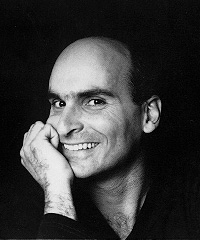 Subject: Re: Cyber Lit Quiz
Date: Mon, 5 Aug 96 11:59:43
From: Ralph Lombreglia
To: Wen Stephenson
WS: Do you sense that there's a crisis in our literary
culture? And if so, or if there's just the perception of
a crisis, how much of it has to do with new digital,
interactive media? Have the Web and other digital
media become scapegoats?
RL: There is a great crisis in our literary culture, but it was not engendered by digital media. In fact, computers and the World Wide Web may well prove to be the salvation of the written word. The villain in our progressive, collective loss of soul is the worship of personal financial enrichment as the ultimate ideal of human life, with the gross misuse of TV technology as the villain's main mesmerizing device. What more do I need to say? Apparently, we need a lot of obedient, unreflective people to make this whole system work. After organized religion, the "traditional" expression of personal inner life and the source of collective soul is art. But our present political "leadership" is withdrawing public support for the arts, and in the corporate world "art" means a boardroom painting whose color scheme goes with the power furniture, and maybe dropping some bucks on some artists somewhere as a tax write-off.
WS: What have you learned as a result of working with literature in the digital medium, and especially in a multimedia setting? Did the Kerouac CD-ROM project change the way you think about reading, or writing for that matter?
RL: It did not change the way I think about writing. I did almost no writing, per se, for the Kerouac CD-ROM. I was one of the producers -- co-designer, project manager, art director. We hired researchers/writers to produce most of the original text in the product (primarily the pop-up annotations in our edition of The Dharma Bums). But the project definitely confirmed my belief in the literary and educational validity of multimedia, and specifically in the value of "electronically illuminated" texts, as I like to call them. As far as I know, our CD-ROM-based edition of The Dharma Bums is the first full-scale, truly ambitious multimedia annotation of an existing literary work; I modestly suggest that it deserves a footnote in the history of all this. However, the other thing I learned is that projects of this ambition are extremely expensive to undertake, and for most genuinely "literary" texts there won't be enough audience to justify the production and rights-licensing costs.
WS: If Jack Kerouac were twentysomething today, do you
think he'd be interested in digital media?
RL: We have to assume that the man who wrote on teletype paper rolls to maximize creative momentum would rush right out to buy a laptop. But he would never back up his hard drive, and then he would spill bourbon on the keyboard and lose all his work, and throw the thing out the window in a fury. Also, Kerouac was an "experimental" writer only in a limited sense. In most ways he was a profoundly "traditional" guy, literarily and personally. He would not have been excited by the possibilities of mixed digital media, for example. The late, great Donald Barthelme would have gone nuts for it, I feel certain, but somebody like Kerouac, no. Among the Beats themselves I think that Allen Ginsberg, Gary Snyder, and William Burroughs would have embraced computer-based tools and presentation possibilities to different extents and in different ways -- and I gather that Ginsberg and Snyder have participated a bit. Burroughs, the most genuinely innovative writer of all of them, would probably have done the most with it, had it been available to him. Lawrence Ferlinghetti, on the other hand, has made it clear that he despises everything about computers, which is rather odd since Ferlinghetti's historical importance is more as a publisher than as a writer, and you would think he would see the great publishing opportunities of digital media.
WS: You write of our need for "new poetries," for
"heretofore unexpected creations made possible by
new tools and new occasions." And you predict,
"There will be, eventually, a 'new media' Fellini.
There will be a digital Kafka." Have you seen any
candidates thus far?
RL: I haven't, but I have very little time for recreational Web browsing right now, and the Web is where the exciting work will emanate from the folk. I would expect musicians and visual artists to make the first stabs at something genuinely artistic in spirit -- as opposed to merely self-promoting. Future Sound of London, a group of British musicians, has done an interesting site, to mention only one example I've seen; it's not Kafka or Fellini, but it's interesting. Eventually, writers collaborating with programmers and graphics people will produce great things. Notice that I chose as examples two narrative artists with great personal humanity and reverence for "tradition" who were nonetheless brave innovators. I did not say there would be a digital James Michener or a new-media Wynton Marsalis (which doesn't mean those two men are not both great at what they do).
WS: Besides the CD-ROM project, what other literary
work have you done in digital media? Is there
anything you consider a particular success? Anything
that you feel hasn't worked?
RL: My only ongoing electronic project is non-literary -- a Web newsletter called MediaNews that I do with a partner and which is aimed at professional multimedia developers and serious users. This is the type of publishing that I feel the Web can do best at this point in history. We do it as a service to a growing professional community, but it's also a speculative venture that may make us some money someday, and it lets me keep my hand in, use some of the things I know. It's an automated Web site that builds itself; I designed it and wrote the programming behind it. The idea itself came from my partner, Michael Murie, a multimedia developer who was the programmer on the Kerouac CD-ROM.
Literarily, I've been working at odd moments on a multimedia, hypertextual novel, a comic allegory set in outer space and based on an unpublished and unconventional novel I wrote almost a decade ago. I want to stress that only certain special literary projects are appropriate for this kind of treatment, and I think I have one, so I'm fooling with it. But I'm giving much more time, at the moment, to writing a traditional novel meant to be savored sequentially, on paper, and I'm enjoying that immensely. I do not think that hypertextual possibilities are valid for all writing, and I definitely do not think that hypertext will ever eliminate the eternal human yearning for story, for sequential non-interactive narrative told by an inspired teller.
WS: In your essay "Humanity's Humanity in the Digital
Twenty-First," you describe a creative writing process
that doesn't require an either/or choice between new
technology and old. In fact, you seem to thrive on the
interplay between the two. Print and digital media
complement one another in many ways. What are
some of the ways you find most interesting? Are there
things that you'd like to see happen that haven't yet,
or that aren't possible at this point?
RL: Computers offer excellent tools for text editing. For writing itself, the tools aren't advanced enough yet. For "pre-publishing" tasks like book and magazine layout the tools are wonderful, of course, and for "electronic publishing" itself, such as what The Atlantic is bravely doing here on this site, the Web has provided the infrastructure almost in one fell swoop. But personal computers are still the wrong devices for readers, for text consumers. No one wants to read long stretches of any text on a computer screen. When we have a lightweight, color flat-panel, battery-powered, wireless Web browser (the "DynaBook" that computer scientist Alan Kay predicted twenty years ago) -- and the inexpensive Net services to support it -- we'll be there. I think it can happen by about the turn of the century. Until then, I'll be reading The Atlantic on paper, not on screen, and like most of your readers I'll turn to your excellent site for its "extra" features and reader services.
As to software writing tools, I'd like to see a few things. Some of them are coming, some aren't:
- A 3-D word processor -- a palimpsest processor -- that could show you
all the revisions in a document on a "depth" or "history" axis. I gather
that some mainframe editing systems have features approaching this, but I'd
want something with an excellent interface that made peeling back the
layers as intuitive and unconfusing as possible. I mean the kind of
interface that, say, Kai Krause of MetaTools has designed for his
graphics products.
- Good multimedia editing software that would make the creation of
mixed-media documents a simple drag-and-drop procedure. We don't have this
yet. Most writers are still stymied by the task of putting a simple
graphic in a word-processing document. Hey, most writers are stymied by
style sheets. Most writers don't use their word processor's outliner!
It's weird, actually, how difficult and uninviting most desktop software
still is to use. But the competition of the Web is quickly engendering the
next generation of many tools.
- A truly excellent outlining,
structuring, and cross-referencing tool that is genuinely integrated into a
word processor. I'm amazed that we don't have an application like this
yet. The simple and strange truth is that an old-fashioned "formatting
codes" system like HTML offers more elegant possibilities for creating a
"structured document" than the most expensive word processors. A hypertext
authoring tool like Storyspace from Eastgate Systems comes close to what I
mean.
WS: What do you think will be the short-term and long-term effects of multimedia literary publishing? Is it even worth while to speculate?
RL: Short-term: wonderful research tools and access to the work of others.
Long-term: exciting educational, broadcasting, and publishing possibilities.
Again, traditional literature created by writers and read sequentially by readers is not going to disappear, ever. But that doesn't mean that it has to be published and consumed on paper. We just don't have the correct hardware reading devices yet.
Ralph Lombreglia is the author of two story collections, Men Under Water (paperback ed., Washington Square Press, 1991) and Make Me Work (paperback ed., Penguin, 1995), and has been a regular contributor of short stories to The Atlantic Monthly and The New Yorker, among other magazines. His fiction has also appeared in many anthologies, including The Best American Short Stories 1987 & 1988, The Vintage Book of Contemporary American Short Stories, American Stories II: Fiction from The Atlantic Monthly and Prize Stories 1996: The O. Henry Awards.
With his wife, Kate Bernhardt, he produced and directed "A Jack Kerouac ROMnibus," a work of literary multimedia on CD-ROM that was published in 1995 by Penguin Electronic.
Mr. Lombreglia lives in the Boston area with his wife and daughter. He is a 1996 recipient of a Guggenheim Fellowship and is at work on a novel and a new collection of short stories.
Wen Stephenson is editorial director of The Atlantic Monthly's New Media department.
Copyright © 1996 by The Atlantic Monthly Company. All rights reserved.
 |
 |
 |
 |
 |
 |