In the arenas of ancient Rome, the thumbs-up was a matter of life and death. So scholars have extrapolated from the elusive history of ancient gestures. The fates of defeated gladiators were determined by an emperor or another official, who might heed the wishes of the crowd: Thumbs hidden within closed fists were votes for mercy; thumbs-ups were votes for death. Today, the 👍, now flipped into a gesture of approval, is a tool of vague efficiency. Deployed as an emoji—as a hand summoned from a keyboard, suspended between literalism and language—it says “okay” and declines to say more.

Explore the August 2025 Issue
Check out more from this issue and find your next story to read.
But lately the crowds of the internet have found new ways to channel the old dramas. On the matter of the 👍, the arbiters of our own arena—internet-savvy young adults—have rendered their verdict: The 👍 is no longer definitive. It is no longer, for that matter, necessarily positive. “Gen Z Has Canceled the Thumbs-Up Emoji Because It’s ‘Hostile,’ ” one headline put it, citing data gathered in surveys and in the wild. Particularly as a reply to messages that contain words, Zoomers say, the 👍 is dismissive, disrespectful, even “super rude.” It’s a digital mumble, a surly if you say so, a sure but screw you. It is passive aggression, conveyed with pictographic clarity yet wrapped in plausible deniability.
News of this emoji revisionism spread for the same reason so many of Gen Z’s pronouncements do: Young adults, speaking internet with native-language ease, have an air of authority. But the news also spread because it was a warning of sorts about online communication at large. The double-edged 👍 meant that you could mean “yes” or “sounds great” while saying “no,” or even 🖕. In online conversations, you can think you’ve said one thing and be read as having said another. Some have argued that the internet is creating a new kind of Babel. Here, in a cheerfully cartoonish form, were intimations of just that. Different groups of internet users—in this case, generations—can speak the same language and a different one.
Emoji (derived from the Japanese for picture and written character) were meant to bring humanity to conversations conducted across digital distances—to introduce a warm splash of color and expressiveness into a realm of text. Emoji are common property: Anyone can use them. Any group can define them in its own quirky way. But the resulting ambiguity can fuel tensions as well. Emoji have given rise to new codes of bigotry (🐸👌🥛) that allow their users the same plausible deniability that the 👍 does. Emoji can be cute, and they can also permit hatred to hide in plain sight.
Have emoji enhanced communication, or abetted chaos? If emoji belong to everyone and no one, who gets to say what the default meaning might be?
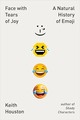
Emoji are less a language than they are “insurgents within language,” Keith Houston writes in Face With Tears of Joy: A Natural History of Emoji. As his lively exploration of the form usefully puts it, they are the “lingua franca” of the web, and the route they have traveled is more complicated than you might think. Their antecedents are ancient (Egyptian hieroglyphs, Chinese characters, Mesoamerican pictograms), though the journey from their modern birthplace (Japan circa the turn of the millennium) to their current ubiquity has been quick. That doesn’t mean it has been smooth. Houston is contagiously enthusiastic about “vibrant, vital emoji.” 🤗 He is also alert to the mixed blessings of the icons’ versatility, their “many-splendored entanglement with the written word.” Emoji, he writes, are “a colorful and symbiotic virus whose symptoms we have only haltingly understood.” 🦠
Ambiguity, for emoji, is both a feature and a bug. One symptom of their elasticity is that no one can agree, exactly, on how to categorize them. Ever since their emergence, they have stirred debate among linguists. On their status as a language—implicitly recognized in 2015, when The Oxford English Dictionary named 😂 as its “Word of the Year”—the consensus is 🤔: They are language-like without being language. (Houston suggests that “body language” is a helpful way to think about them.) They’re symbol-like, yet unlike most symbols, they constantly change in meaning and number. Can they function as punctuation (❣️🤡😬🔥)? Maybe they’re better viewed as tactfully ambiguous conversation-enders—useful, as the writer Katy Waldman put it in 2016, for “magicking us out of interpersonal jams.”
Exiting his own definitional jam, Houston turns to the rich story of how emoji came to be. The ones most familiar today are typically attributed to the Japanese engineer Shigetaka Kurita; in 1999, a series of images that he designed were shared among users of Japan’s main mobile carrier (teenage girls were the envisioned customers). Even the origin story of emoji, though, is muddied by questions about who really made them what they are. There are other contenders for “first emoji” honors, Houston points out—so many, he writes, that “it is no longer possible to imagine that emoji were ever ‘invented’ in the strictest sense of the word.”
Instead, they evolved as so many technologies do: through a combination of accident and intention. In emoji, Japan’s singular aesthetic traditions—manga and anime, in particular—achieved a form of universality. Emoji made use of manpu, the genre tropes commonly understood to convey amusement, anxiety, and other emotions. Exploding in popularity as digital chatting caught on—an ascent that accelerated when Apple, Google, and their fellow behemoths became emoji adopters—the pictograms acknowledged no national boundaries.
In 2011, a year after emoji officially came under the supervision of a nonprofit called the Unicode Consortium, Apple introduced an emoji keyboard to its U.S.-marketed iPhones, bringing hearts and party poppers and sun-yellow faces to text messages throughout the land. The website Emojipedia, aiming to provide an exhaustive catalog of emoji, arrived in 2013. In 2014, a campaign got under way on the digital-petition site Change.org: “The Taco Emoji Needs to Happen,” it announced. The petition received more than 30,000 signatures, and the 🌮 was born. Taco Bell had been the catalyst. Two years later, an article titled “A Beginner’s Guide to Sexting” outed another 🌮 meaning, one its corporate sponsor likely never anticipated (vagina).
Emoji, the not-quite-a-language language, were becoming part of the world’s linguistic—and commercial—infrastructure, importing some of the unruliness of IRL interaction into virtual spaces. People used emoji to accentuate (👏🎉😂). They used emoji to hedge (😑🤔🌤️). They used emoji to joke (😜). They used emoji to flirt (😍😉). Emoji were pictures that could extend people’s voices, visual icons that could help convey intended tone. They said nothing precisely, and that allowed them to express a lot: enthusiasm, sarcasm, anger, humor. They followed the same broad arc that the internet did; having originated as quirky novelties, they were becoming utilities.
By the mid-2010s, the “staid old Unicode,” as Houston comes to call the Consortium, had discovered the headaches accompanying “emoji fever.” The organization, launched in 1991, was composed of a rotating group of engineers, linguists, and typographers charged with establishing coding consistency across the internet’s static characters (letters, numbers, and the like); its goal was to enable global communication among disparate computers. Now it found itself overseeing dynamic characters as the public clamor for more emoji mounted.
The Consortium was the gateway to new emoji: It invited the public to suggest additional icons. But its technologists were gatekeepers, too. They reviewed the applications, assessing the level of demand. They were the ones who decided which images to add—and which to deny. (Durex’s campaign for a condom emoji fell short.) The annual unveiling of their decisions became, in some quarters (🤓), a much-anticipated event. Each new “emoji season” brought fresh collections of icons to users’ devices. But each also stirred reminders of the icons that weren’t there. Faced with feedback from users frustrated by icon selection that could seem capricious and unfair, the arbiters did their best, Houston suggests, to gauge popular support for new candidates. But lapses in the lexicon were obvious, as a mere sampling reveals. Early on, “professions” were depicted as masculine by default. “Couple” was a man and a woman. The woman’s shoe was a ruby-red heel. Representations of food reflected the pictograms’ Japanese origins and U.S. tech dominance, but not their worldwide story.
In the quest for more choices—and in response to users’ campaigns—the Consortium added, among many other emoji, an array of food items. (They were not always culturally authentic: In an attempted nod to China’s culinary traditions, a takeout box joined the lexicon.) In 2015, the group introduced five “realistic” skin-tone options for humanlike emoji figures. The update brought unintended consequences. Lined up next to other hues, the sunny yellow originally meant to scan as race-neutral (in the lineage of the classic smiley face, Lego mini-figures, and the Simpsons) now read, to some, as racist. Light skin tones, intended to reflect users’ skin color, evoked, Houston notes, a similar reaction: Some saw the choice of those light-hued symbols as a “white power” gesture. Complexity, when emoji are involved, will always find its way back.
The Consortium’s Emoji Subcommittee—a “crack team of emoji wranglers,” in Houston’s words—had its hands full. Gender updating in particular proved challenging. Early Unicode guidance on depicting emoji people had emphasized, but not required, striving for gender neutrality. To move beyond stereotypes, should equity or androgyny lead the way? Same-sex couples and same-sex parents were soon included. Women were liberated, as one peeved op-ed writer had urged, from “a smattering of tired, beauty-centric” emoji career options: 16 professions, available in male and female versions, were added. To Houston’s surprise, the 2017 gender-focused emoji season met with no political or press furor—perhaps owing to public “emoji fatigue,” he speculates. (Androgyny lived on that year, for the most part, as fantasy—through the magical figures issued in the new batch 🧙🧚🧛🧜🧞.)
How much control, at this point, the subcommittee can exert over emoji denotation and connotation isn’t clear. Unicode’s emoji now coexist with platform-specific icons that users can customize for themselves (think: stickers, Bitmoji, Memoji). The latest iterations, such as Apple’s Genmoji, use artificial intelligence to create ever more adaptable pictograms. Meanwhile, Unicode’s emoji are becoming only more protean: The 💀 has expanded from a mark of disapproval to a sign of amusement (death via laughter). The 😭 might suggest laughter too now, in addition to its sobs. When words have oppositional meanings like this, context typically helps clarify which one applies—thanks to accompanying text, you can probably tell whether the 🍑 you just received is a fruit, a body part, or a call for impeachment.
The 👍 and other emoji similarly used as stand-alone replies are part of a different class: They bring ambiguity without resolution. They bring a whiff of Babel. But myths have their own ambiguities. Although the Babel story conjures the arrival of a dystopia—a people perpetually lost in translation—it’s also a creation myth: an ancient attempt to explain why people with so much in common are divided by their languages.
Understandably, we tend to focus on the ending of the Babel tale, but it begins with humans in community. Only later does language divide them. For most of human history, communication barriers have made us illegible to one another. Emoji float, merrily (mostly), over the barriers. And their ambiguity is essential to their buoyancy. Emoji, as images, can never be tethered to one meaning. Even if “emoji season” ceases to yield new crops, the icons that exist will keep evolving. They will keep challenging us to evolve with them.
The namesake of Houston’s book, the “face with tears of joy,” has long been the world’s most popular emoji. It has also been, according to recent reports, the subject of another Gen Z pronouncement: The 😂 is cringe. What it communicates, above all, is the hopeless unhipness of its sender. I use it anyway, mostly out of habit but also because, to me, joyful beats cool every time. And my 😂 are in good company. Each day, around the planet, billions of 😂 ping across screens. Their usage might decline in the future. Their primary meaning might change. For now, though, they are what we have. For now, because of them, we can laugh together across the distance.
When you buy a book using a link on this page, we receive a commission. Thank you for supporting The Atlantic.