The Church and the Movies
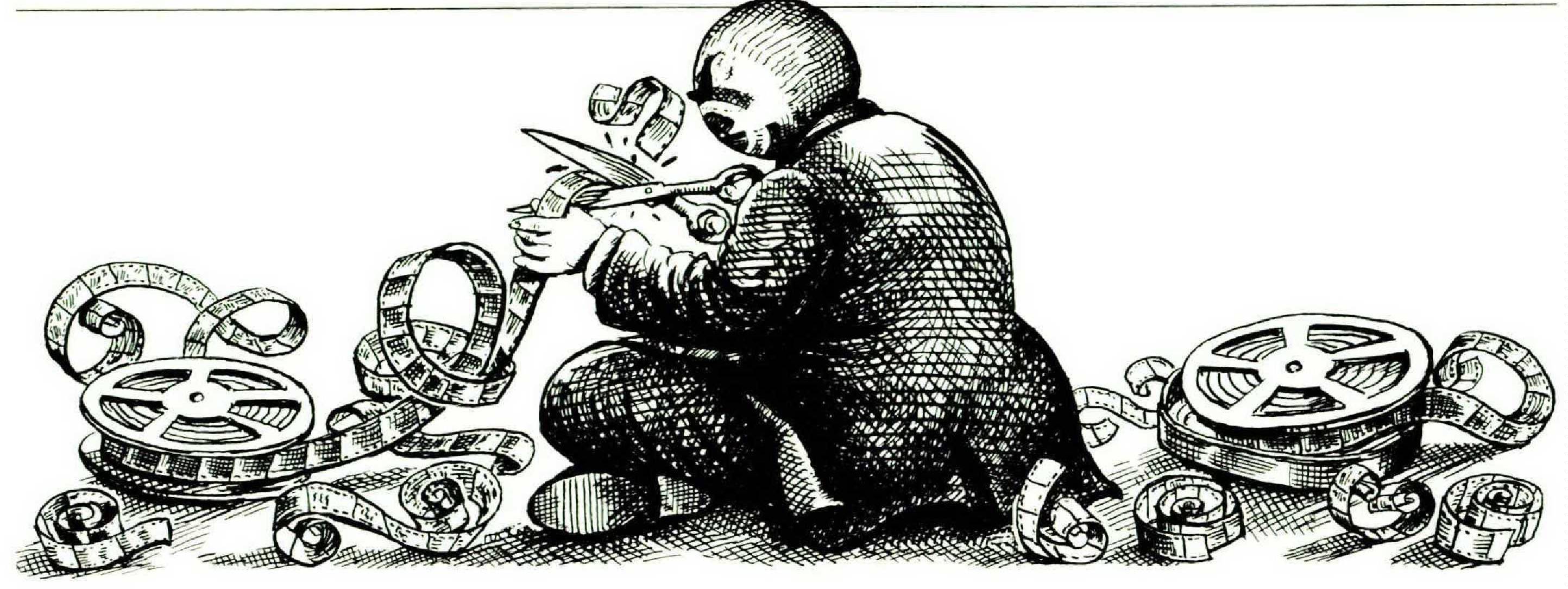
by Richard Schickel
THE DAME IN THE KIMONO by and . Weidenfeld & Nicolson, $22.50.
CYNICISM? SOPHISTICATED disdain? Satirical derision? Or just good old-fashioned liberal outrage? It’s hard to decide which tone offers the best hope of offsetting the depression that settles over a reader confronting this record of institutionalized self-censorship by the American motion-picture industry.
Perhaps wisely, Leonard J. Leff, who teaches him history at Oklahoma State, and Jerold L. Simmons, who teaches constitutional history at the University of Nebraska, have opted for straightforward objectivity in their scholarly, readable, intimate account of the rise to near-tyrannical power, and the fall to well-deserved ignominy, of the old Production Code Administration of the Motion Picture Producers and Distributors Association—widely, but less than accurately, known to the public as the Hays Office (after the alleged movie czar) at the height of its influence, and more precisely referred to in the industry as the Breen Office (after its chief censor and guiding spirit).
It was the duty of this tiny bureau to vet every script every major studio proposed to shoot, and to screen every movie before release prints were struck to make sure it did not violate the taboos on themes and treatments set forth in the association’s Code to Govern the Making of Talking, Synchronized and Silent Motion Pictures, promulgated in 1930 and revised on several occasions. From 1934, when rigorous enforcement of the code began, until 1968, when, already much battered by changes in laws and customs and (most important) pressure from the economically distressed studios, it was replaced by the present rating system, the power of the Breen Office over the content of American movies was absolute.
That power was based on its virtual right to give a Production Code seal of approval to, or withhold one from, every movie made by association members, which included every major studio. Without a seal a movie would not, could not, be played in the major American theater chains. In other words, “the Breen boys” (as they were known around town) had the means to render a film essentially valueless with a single stroke. Given the industry’s traditionally pusillanimous business style, Joe Breen of course only rarely had to apply—or even threaten to apply—his ultimate sanction. For most of his career Breen had but to raise an eyebrow or cough delicately behind his fan to bring the mightiest moguls around to his way of thinking. He became, in fact, the American movies’ great unacknowledged and totally unqualified auteur.
A SOMETIME COAL-company press agent whose appearance and manner belied his dour later calling, Joseph Ignatius Breen was a large, affable man who could take and tell a joke, and who enjoyed negotiating with studio executives over excisions. He often proposed alternatives to material he found in violation of the code, permitting the movie to imply ideas or story points without saying or showing things that transgressed the rules. He was also open to trades: all right, you can keep the décolletage here, but that dialogue in reel six has got to go. By and large the studio people who dealt regularly with him liked him, even though he performed his duties in a literal-minded way that makes a modern reader cringe.
The spectacle that Leff and Simmons spread before us is of a grown man spending the better part of his lifearguing over such grave matters as these: Should Mae West be allowed to say something like “It pays to be good—but it don’t pay much”? Could the juvenile delinquents of Dead End use “punk” and “louse”? And what about Rhett Butler’s famous “Frankly, my dear, I don’t give a damn” tag line, in Gone With the Wind? The producer David O. Selznick argued for months with Breen about that one—and then won in part because he was willing to tone down the movie’s brothel scenes. Not that details of dialogue were Breen’s only concern. He insisted that Anna Karenina’s illegitimate child be written out of Selznick’s adaptation of the Tolstoy novel, but, in one of his patented trade-offs, permitted her climactic suicide. Breen could have written a book of Tolstoyan length in the amount of time he spent fussing over Jane Russell’s cleavage in The Outlaw and The French Line.
It is possible, though, that he did more damage to movies made before his reign than to those made during it, for his office was charged with editing films made prior to 1934 when they went into re-release thereafter. In her recent autobiography Myrna Loy justifiably complains that her role as the title figure’s mistress in the 1931 Arrowsmith was reduced to incomprehensibility by Breen Office cuts when it was re-released. The only time Loy ever sang in a movie in her own voice, in Rouben Mamoulian’s Love Me Tonight in 1932, is also now lost because of retrospective moralism. Her filmy costume for that sequence revealed the outline of her navel, and so her contribution to it was cut. (After 1934, the female navel was not to be seen in an American movie until 1961, Town Without Pity being the breakthrough film.) The only discernible good done by Breen’s assaults on screen history was unintended: that of giving Leff and Simmons a catchy title. “Who is that dame wearin’ my kimono?” Iva Archer cried when she dropped in unexpectedly on Sam Spade in the first (1931) version of The Maltese Falcon. Bad enough that the private eye had one visitor in dishabille. But that the second visitor, the wife of Spade’s partner, no less, implied by her question that she visited so often that she found it convenient to keep a negligee on the premises—that was too much for the censor. Out it went. And out of history, too, since the studios had no archival sense in those days. Censored film, as a rule, was simply junked, lost forever.
These examples of what we might call the Breen touch are chosen at random. Doubtless they puzzle those too young to remember movies of the code era. Obviously, everything mentioned could today be shown on prime-time television without raising a fuss or an eyebrow except among those fundamentalists who more or less ineffectually carry on the good old fight. Moreover, the language, imagery, and activities alluded to were no less within the common experience of most people in those days than they are today. Indeed, there is no evidence that the majority of Americans in the 1930s and 1940s felt any compelling need for Breen’s ministrations, and there is nothing in the record to indicate mass disgust with the moral tone of movies prior to his arrival in Hollywood or mass anxiety that without censorship movies would become an affront to decent people. On the contrary, customer satisfaction with the movies was never higher than it was in this period.
If, in fact, there is a criticism to be made of The Dame in the Kimono, it is that its authors are so completely transfixed by the variously horrid and hilarious details they have dug up about the Breen Office in action that they fail to state as forcefully as they might the reasons for Breen’s rise and for the peculiar policies he adopted. To put the matter simply, he was a man pursuing an agenda unknown to the majority of moviegoers, the result of which was to impose the tastes, values, and ideas of a minority not merely on an economically consequential industry but on the vast majority of moviegoers as well.
BREEN OWED HIS job and his authority to the Catholic Church. And it is the story of how a few influentially placed Catholics of militantly puritanical tastes came to operate a star chamber with arbitrary control over him content for three crucial decades in the medium’s history that must be the most fascinating aspect of any account of screen censorship. This is also the aspect of that history that may have continuing cautionary value, since pressure-group politics in one way or another remains in control of the crossroads where public policy and moral values meet.
This is not to imply that Catholics were first or always foremost in demanding screen censorship (or that the Church of today continues on the old path). Starting as early as the nickelodeon days, states and municipalities, acting under pressure from various religious and reform groups, created literally hundreds of censorship boards to license the exhibition of movies. These entities were protected by a 1915 court ruling (not reversed until 1952) holding that movies were “common shows,” like carnivals, and thus not protected by the First Amendment. As a result, the studios were forced to cut their products to conform to the whims of each locality’s censors—and some films were banned outright in some venues. All in all, though, these boards were more a nuisance than a threat. However truncated, most movies finally played most places.
But, in part because this system was catch as catch can, outrage over movie licentiousness grew among professional and amateur moralists during the 1920s, as the tastes of moviemakers and of much of their audience became more sophisticated. In that period Protestants and Catholics at first joined equally in a chorus of disapproval that was not without shrill anti-Semitic overtones, since the movie industry was known to be one in which Jews predominated. But as the twenties gave way to the thirties, and silent pictures to sound, which added the possibility of mischievous dialogue to imagery already deemed wicked enough, something close to hysteria overtook the Catholic voices.
Hollywood sinfulness was thunderously denounced from the pulpit and in the pages of the Church press, and the threat of boycott was heavy in the air. The moguls, isolated by geography from the centers of Catholic power, distanced by their Hollywood provincialism, preoccupied with the conversion to sound, and frightened by the possible effects of the Depression on their business, paid little heed. They also understood what history has since confirmed—that a racy reputation by no means assures a film box-office success. Sometimes it helps, sometimes it hurts, and often it is unimportant compared with other factors (stars and story, for example). Thus their challenges to conservative community standards tended to be more erratic than programmatic.
In other words, and no matter what some Church zealots thought, the mainstream producers were not pornographers. As the majority of their works prove, they shared the middleclass morality of their public, and earnestly propounded it to those who had not yet received its blessings. The worst that can be said of them was that like most bourgeois papas, they reserved the right to tell an off-color story, especially if it was “cute.”It may be, finally, that this firm sense of their own respectability prevented them from taking the threat of censorship seriously until it was too late.
Will Hays, the perfect Wasp (smalltown, Presbyterian, Republican), whom they had appointed to head their trade association and to clean up their image after several scandals involving movie stars in the early twenties, did not share their equanimity. You could pretty much ignore the fragmented Protestant community, but the monolithic structure of the Catholic Church gave it the ability to carry through on its boycott threats—so Hays repeatedly warned his constituency. Unfortunately, he had no practical ideas for countering them. Equally unfortunately, someone else did.
That was Martin Quigley, a prominent Catholic layman, who also published an exhibitors’ trade journal, the Motion Picture Herald. A claque of Quigley’s co-religionists, that is, were the chief source of censorious agitation, and his readers were the chief victims of it; he resolved to help out both, clearly hoping in the process to become the éminence grise of movie morality, not merely cleaning up movies but also excising from them “things inimical to the Catholic Church,” as he rather casually—but chillingly—put it.
What he had in mind was a document, binding on all producers, that would specify what subjects movies could never take up, what stylistic approaches to every topic would be placed under careful review—the code under which the Breen Office would eventually function. He obtained Church approval to engage a Jesuit priest, Father Daniel Lord, to draft this paper. Hays championed it eagerly when it was finished, and the industry hastily adopted it in 1930.
THINGS IMMEDIATELY went from bad to worse, from the Quigley point of view. The moguls had understood the code as a public-relations device, not as a set of commandments that would rule their professional lives. In the early thirties, with the Depression cutting into box-office revenues, they proceeded to threaten the Republic with such incitements as Jimmy Cagney’s anarchic Tommy Gun, Jean Harlow’s naked nipples (visible for a nanosecond in Red-Headed Woman)—and Mae West. The double entendres of She Done Him Wrong are accurately credited with saving Paramount from bankruptcy and causing Quigley and Co. to put some muscle behind their code.
West’s quaint little movie went into American release in 1933 at almost the same time that the Vatican appointed the Most Reverend Amleto Giovanni Cicognani as its new apostolic delegate to the U.S. Church. In his first public utterance in the United States, Father Cicognani declared that God and everyone beneath Him in the hierarchy were calling Catholics to “a united and vigorous campaign for the purification of the cinema, which has become a deadly menace to morals.” It is possible that this was a put-up job, something his hosts asked him to do, for the nuncio’s pronouncement helped the Church launch its next great idea. This was the Legion of Decency, which within a year was claiming that seven to nine million Church members had pledged themselves not to attend movies branded with the scarlet letter C (for “condemned”) by the Legion’s ratings board (influenced heavily by middle-aged Catholic women).
Here, at last, was a more than plausible boycott threat. And its organizers kindly provided the solution — the concept that led to the Production Code Administration’s seal of approval (a simple variation on the imprimatur the Church had long awarded literature that met its standards) and a good Catholic to oversee its application. Since Joe Breen already had a job in the producers’ association, thanks to Quigley, and was actively campaigning for this promotion, the new post went to him almost by default. From the day he got it, in 1934, until his retirement his strategy for imposing his will on producers was to pretend to a certain worldliness. Were it up to him, he would say, he’d let this or that bit of raciness go by. But the Legion . . .
It was a great dodge. It made him out to be a good fellow, an ally in the difficult task of applying a set of general rules to specific circumstances. To be sure, certain things (miscegenation, white slavery, nudity) were forthrightly banned. But much of the code required interpretation. What, for example, constituted “excessive and lustful kissing”? At what point did the presentation of adultery become censorably “attractive”? At what stage might “scenes of passion” cross an invisible line and “stimulate the lower and baser element”? There was as much room for argument in code law as there is in constitutional law, and Breen was artful at appearing not as the troubled producer’s judge but as his amicus curiae. In fairness, it must be said that when the point at issue was social criticism rather than sexual innuendo, he would sometimes stand with the producers against the conservative Hays. Breen thought that Gentleman’s Agreement, a pioneering study of anti-Semitism, should be made. (He objected, however, to the fact that its heroine was—heaven, or Darryl F. Zanuck, forfend—a divorcée.) Still, his activities on the whole cannot be seen as anything but deadening to a free and mentally healthy screen.
Eventually, of course, he undid himself. After the Second World War, which had a vastly sophisticating effect on American morals and thought, Breen refused a code seal to a palpably decent, seriously made, seriously meant movie, Vittorio de Sica’s The Bicycle Thief, because its child protagonist paused briefly to pee in the street and because the search for the stolen bike took the boy and his father through a brothel. Here, at last, was an unambiguously good movie with which liberal editorialists could make a strong case against the code. Emboldened by this response, many theaters played the movie without the seal and found that the sky did not fall. Breen looked even sillier when he refused a code seal to a mild little sex comedy, The Moon Is Blue. As its producer-director, Otto Preminger, pointed out, it was quite a moral comedy, in which a young woman successfully defended her virginity against wolfish assaults. Preminger claimed that Breen refused the seal on the ground that the condition in question was mentioned out loud in the dialogue. Breen himself cited a Production Code prohibition against seduction as a “subject for comedy.” Whatever the case, his refusal struck people as highly hypocritical, and despite a C rating from the Legion and its lack of a seal, the movie did well in release.
With the extension of the First Amendment to the movies (the historic argument was over another Italian movie, The Miracle, which had been banned in New York for “blasphemy”) and Cardinal Spellman’s making a laughingstock of himself by denouncing the rather innocent and jolly Baby Doll from his pulpit, the power of the Church in the industry and with the public was damaged. And when the producers of movies like Lolita and Who’s Afraid of Virginia Woolf? instituted what amounted to a voluntary ratings system — they barred patrons under eighteen (in the case of Lolita, under nineteen) from their theaters—and enforced it without seriously affecting profits, the Breen era of motion-picture censorship began drawing to a close. Indeed, it was Catholics who led the campaign for replacing the eitheror seal system with the somewhat more flexible ratings system (which the Legion of Decency had been using, albeit with sterner standards, all along).
BY THAT TIME Joe Breen had folded up his lace curtains and tottered off into retirement, doubtless feeling the sting of ingratitude. After all, he might have asked, movies had been more popular during his reign than ever before or since, so what harm had he done? Had he lived longer, he might also have come to argue that his term of office closely coincided with what history now regards as the classic age of American cinema, a period of enormous creative energy (and prosperity) that remains unmatched. We can also add this truism to his defense: censorship often acts as a goad to creativity, imposing the need to find subtle and witty ways around its laws which are sometimes preferable to head-on statements. When Nick Charles tosses Asta out of Nora’s lower berth into the upper in their train compartment, we know what he has in mind. And right under Breen’s nose Preston Sturges made a comedy about virgin birth, Miracle of Morgan’s Creek, that is infinitely more subtle and subversive—not to mention flat-out funnier—than The Miracle.
But all that is not entirely to the point. We can never know what might have been accomplished had censorship not been in place. Being happy with some of what we have is not the same as being pleased about everything we missed—or about the emasculation of earlier works. We can with even greater justification argue that the inability of the movies, when they were at the height of their influence, to deal with sexual issues forthrightly had the effect of imposing an adolescent mind-set about these matters on several generations. It seems to me that the influence of the Breen Office was a factor in making the so-called sexual revolution ultimately more wrenching and more confusing than it needed to be. It might, indeed, have been no more than a sexual adjustment if our popular culture had not for decades previously been so gingerly, genteel, and duplicitous about this topic.
The situation has obviously improved somewhat in the two decades since the ratings system was put in place. A film like Woody Allen’s Crimes and Misdemeanors, which is unambiguously ambiguous about the functioning of traditional morality, sexual and otherwise, in the real world, does get made without censorious tampering. On the other hand, the movie audience is increasingly dominated by adolescents. As a result, producers and Breen’s heirs at the ratings administration continue the inglorious tradition of bargaining over minor cuts and revisions. The battlefield now surrounds the poorly defined line separating the relatively new PG-13 rating from the R, which prohibits (in theory, if not always in practice) adolescents under seventeen from seeing films so branded. My impression is that in order to secure a commercially crucial segment of the audience and to avoid these demeaning squabbles, a good deal of selfcensorship is now being practiced in Hollywood. We therefore see more giggly-silly movies, on the order of the execrable Look Who’s Talking, and fewer authentically adult considerations of the issues that vex grown-up men and women, than we should.
Even so, Protestant fundamentalism now speaks as threateningly as precode Catholicism ever did about the moral dangers that movies—and now television—are supposed to pose to youth. The spirit of boycott is by no means dead in this quarter. Indeed, nothing quite as extensive as the hysterical campaign in 1988 against The Last Temptation of Christ has ever been seen in this country. In other words, Joe Breen may be gone, but the spirit that animated and supported him lingers on. □