Japanese Yearnings
I LOVE JAPANESE television. The programs are so trashily out of character with the famous delicacy and refinement of Japanese taste that I watch them to boost my spirits whenever the economic news gets me down.
For two weeks every other month, saturation coverage of sumo matches offers melodrama and morality plays. The newly promoted grand champion, for example, has lost a few matches and thrown his countrymen into despair, because his love for skin diving and distaste for pre-dawn practice confirm Japan’s worst fears about its pampered young. Late-night “wide shows” are TV versions of the Playboy magazine of the 1950s. One is hosted by a white-haired famous novelist, as hokey-urbane as Hef in pajamas, who strikes thoughtful poses while teenage “mascot girls” parade by with and without bikinis. Every night several channels run samurai and ninja dramas, with so much head-lopping and belly-slitting that it seems miraculous that any Japanese are still alive today. Quiz and game shows are even more popular in Japan than in America, including several built around hen na gaijin—“weird foreigners”—who can speak excellent Japanese and who astonish the audience each time they open their mouths. Two of the best-known gameshow gaijin, young men who came here as Mormon missionaries, have become so famous that when one of them is pictured in a TV commercial or on a subway placard, he needs no identification. A new genre, which an American friend of mine calls “fashion drama,"dispenses with plot altogether and exists mainly to display fancier clothes and better cars than the average Japanese owns.
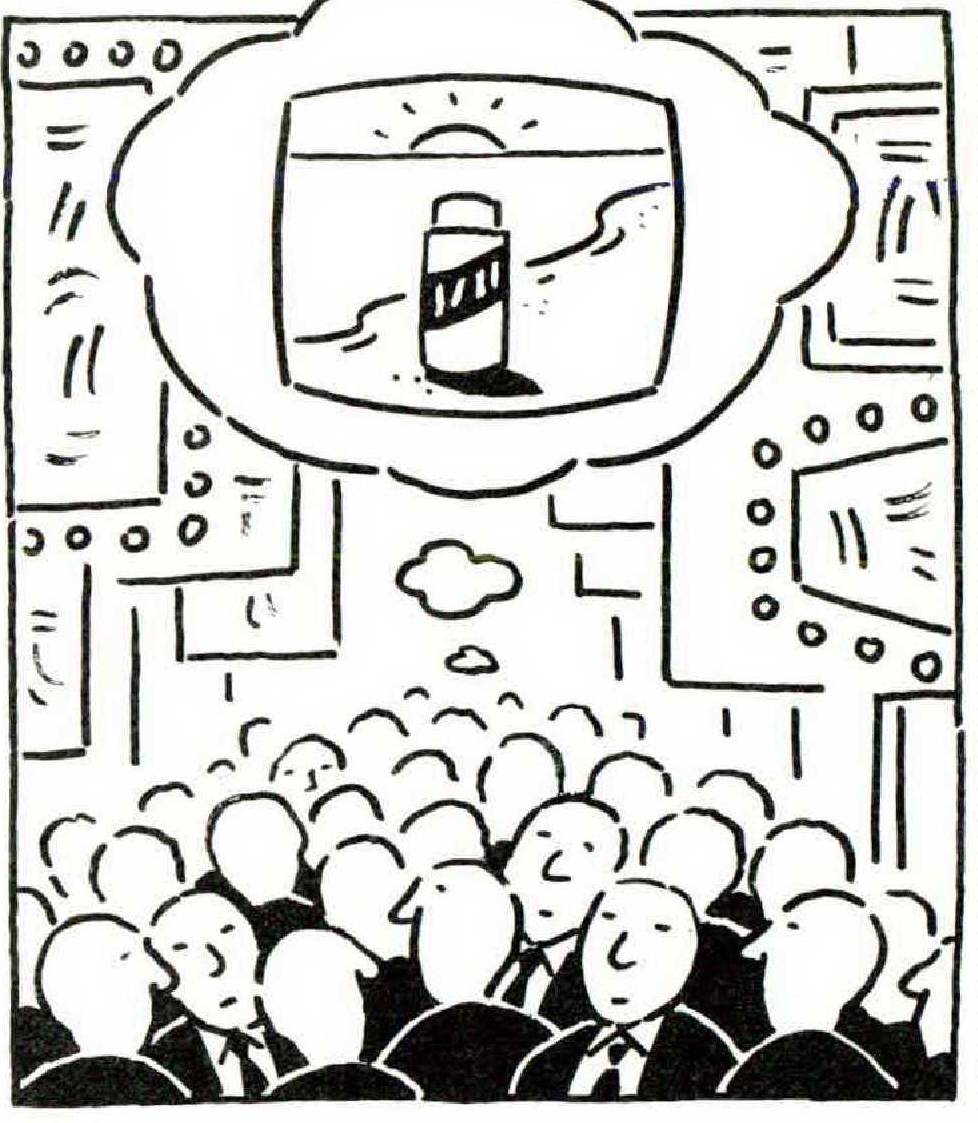
But for all their strange fascination, the programs on Japanese TV are not so deeply revealing as the commercials. Only there, I’ve come to think, does reserved, taciturn Japan let the outsider glimpse its soul’s longings. Japanese commercials have nothing in common with the hard sell of America’s “ring around the collar” or Crazy Eddie ads. They’re so relentless in building “image,” and so reluctant to say anything about the product itself, that it’s often hard to tell what an ad is for. Ads for cars, beer, children’s clothes, and instant ramen may all look roughly the same until the last few seconds, when the announcer reveals the product’s name. The Japanese advertising men I’ve spoken with say that made-in-Japan products are so indistinguishably perfect that image is the only possible selling point—hence the form of the ads. But it is the imagery itself and what it says about Japan’s dreams that intrigues me.
Some of the images would be familiar and effective in other cultures, too. Cigarette commercials (they still have them here) throb with sex appeal, to prove that smoking is romantic and suave. Life-insurance companies show cozy family scenes. Ivy League and English-tweedy atmospherics help sell whiskey and clothes. But one theme, perhaps the most common, seems peculiarly Japanese.
The Japan of the TV commercials looks nothing like the place where the Japanese live. To judge by its commercials, Japan might as well be Wyoming, a land of wide-open vistas and free-spirited people who test themselves against the elements and live as they please. I’ve hardly ever seen an ad set in the Japan most of its residents cope with daily—the Japan of crowded subways and 200-person group sightseeing tours and apartments so short on floor space that one dresser is stacked unsteadily on top of another. In the TV Japan people are always climbing mountains or walking along splendid beaches with no one else in sight. In the Japan I’ve seen, weary salarymen are always trudging home through the rain in wrinkled blue polyester suits. One advertising man told me that commercials shot indoors always show rooms with white, uncluttered walls and practically no furniture at all. That, he said, evokes the luxury of spaciousness that Japanese families want but can’t have.
The image ads are meant to be upbeat, but to me they’re poignant, because they suggest that even today’s world-beating Japan is not so well adjusted as it pretends to be. For forty years it has worked hard and lived lean so as to earn its way back to pride. Frugality and self-sacrifice may come naturally to the Japanese, but the ads send a different message. They suggest that today’s Japanese notice the things that, in their drive to the top, they’ve had to give up.
I think I understand the function of these ads. Once I lived in a dismal basement apartment, its one window giving onto an airshaft. Over the window I hung a poster of Big Sur.
—James Fallows