East Asia: The Rice Plot
How rice farmers control Japan’s politics and distort its economic system
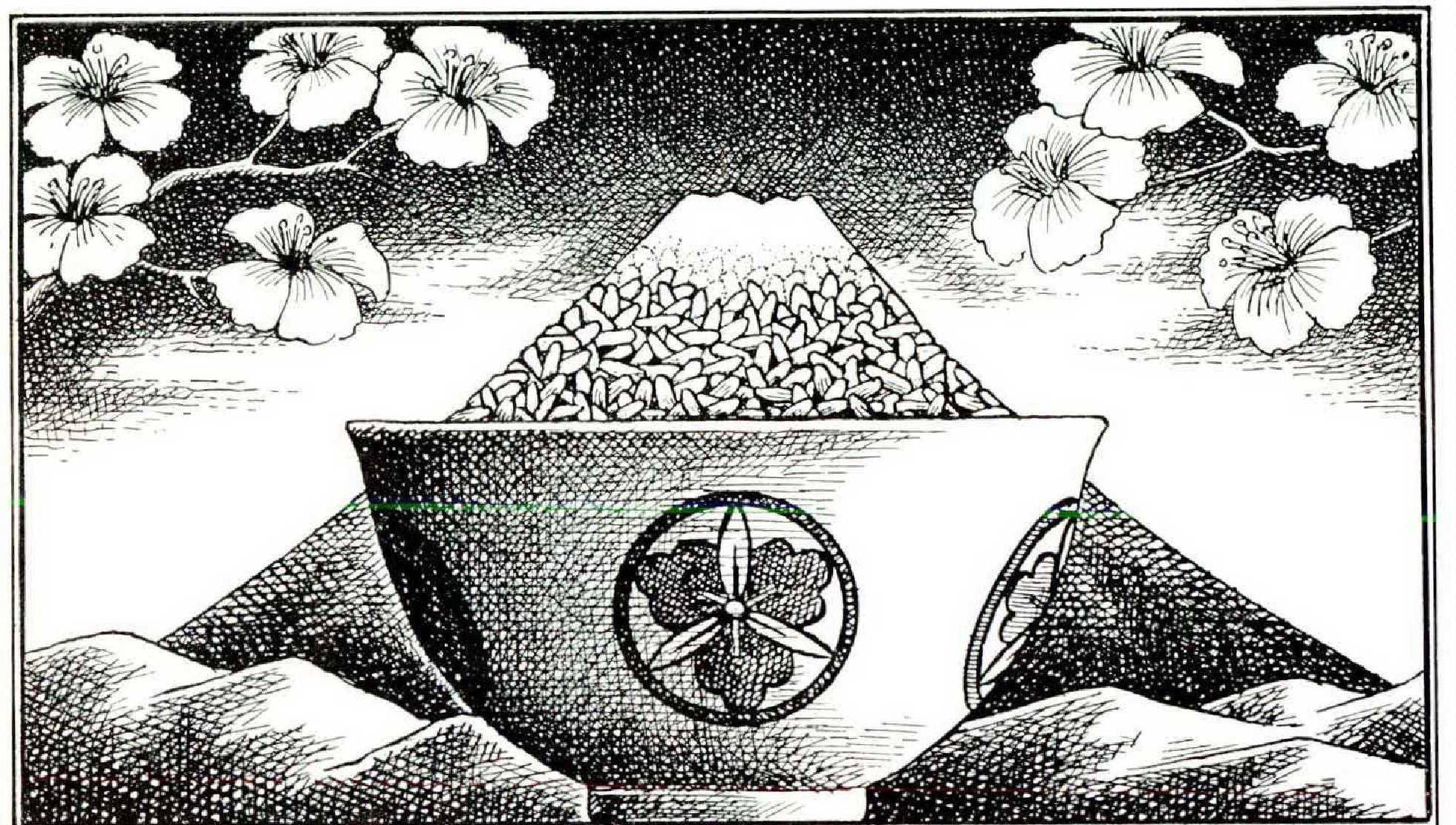

WHO IS REALLY TO blame for our tiresome trade problems with Japan? Everyone has heard about the usual suspects—indefatigable Japanese businessmen, big-spending American politicians, lackadaisical American workers, and so on. But there is another candidate whose significance is well recognized in Japan but barely comprehended in the United States: the doughty Japanese rice farmer.
The farmers’ importance is not obvious from looking at the trade charts. Japan grows about 11 million tons a year of the distinctive gluey japonica rice that its people prize above all others. If every Japanese paddy were drained tomorrow and converted into, say, a small exportelectronics shop, Japan would have to spend only about $3 billion to import rice. That would just about offset three weeks’ surplus in Japan’s balance of trade with the United States.
Nonetheless, the farmers may be the key to the trade problems, because they have such an important effect on how other Japanese live, and because their status says so much about Japan’s mercantilist approach (We Sell, You Buy) to foreign trade. Their impact is indirect, and it operates through the vehicle that affects everything else about Japan—the cost and scarcity of land.
Japan is, of course, a small island nation short of everything except people. It has a population half as large as that of the United States in an area smaller than California—or, to put it another way, a population twice as large as France’s in two-thirds the space. But Japan seems even more crowded than those numbers would suggest. In part that’s because of the mountains, which take up two thirds of the total area, but it’s also because of the farmers, who take up almost half of what’s left. Japan’s land area is 378,000 square kilometers, or about 151,000 square miles. Of that, 66.9 percent is mountains and forest, and another 3.1 percent is rivers and channels. Farmland takes up 14.3 percent, leaving houses, offices, factories, roads, parks, schools, and stores to be squeezed onto the remaining 15.7 percent. In contrast, the United States is twenty-five times larger to begin with, and a higher proportion of its land is usable.
The significance of the crowding is not simply that it discomfits big-boned Americans who are used to the wide open prairies but that it distorts so many other aspects of Japanese life. Because land is so expensive, people cannot afford to buy more than a tiny plot on which to build a house. Real-estate ads do not say “house on acre and a half” or even “half an acre”; they say “124.93 sq. meters.” Because the price of land keeps rising, people save in order to invest in land itself—rather than in larger houses, furnishings, appliances, or other items whose purchase would stimulate economic activity and that might conceivably even come from abroad. Because the price never stops going up, no one wants to sell. Because no one wants to sell, the price goes up even more.
Kenichi Ohmae, the director of the Tokyo office of McKinsey and Company, a consulting firm, has pointed out that at current prices Japan is worth more than the United States. He is not making an abstract moral judgment—he’s talking about the two countries’ land. The Japanese land market has all the markings of a classic speculative bubble, in which price bears no relation to economic fundamentals. But before a bubble can burst, someone has to lie eager to sell, which has not happened in Japan.
Perhaps the Japanese would still be intent on exports, rather than domestic consumption, if they had bigger houses and more money left over after paying for land. But I think the spartan nature of Japanese home life encourages salarymen to spend more time at the (comparatively) plush office, dreaming up new export plans, and at the bars, cementing those crucial work-group relationships. What’s more, it reinforces the export-or-die mentality that helped Japan recover after the war but is now making problems for it and the rest of the world. The United States needs more of that anxiety-induced energy; Japan could do with less.
Therefore, anything that makes this crowded, expensive country more crowded and expensive than necessary is bad for the Japanese, since it keeps their living standard artificially low. And it’s bad for everyone else, since it increases the ferocity of Japan’s export drive. This brings us back to agriculture, and in particular to rice.
OF THE HALF OF all flat land taken by farming, more than half is taken by rice. To spell it out: one quarter of the precious habitable land in this tiny country is used to grow one crop. After a three-week train trip from the far north to the far south of Japan, I was surprised that the rice-growing proportion was not even higher. Ninety percent of Japan’s farm households grow at least some rice. To the naked eye Japan seems to be carpeted with rice paddies. Although the pressure of human crowding is most intense in the cities, above all Tokyo, nearly every parr of the country suggests a struggle to the death between farmland and land used for anything else. On the train routes through Japan’s “rice belt,” in the northern part of the main island. Honshu, the scenery alternates between mountains and rice paddies, with only an occasional factory to vary the landscape. Tiny houses, slightly larger than the infamous “rabbit hutches” of the cities, are tucked in among the paddies, typically with only a dike-top walkway, a few feet wide, separating the house from the fields. This is the Japanese equivalent of the vast, unvarying fields of Kansas, though it is wet, hilly, miniaturized. Even in the major cities— Osaka, Kyoto, Hiroshima, Tokyo—I have seen little paddies slipped in between houses or office buildings. Hokkaido, the frontierlike northern island of Japan, is startling to visitors, because it offers something found nowhere else in the nation: flat land just sitting there, unused.
By any normal economic reasoning, Japan’s insistence on devoting so much land to farming, especially rice, is insane, as if Manhattán were attempting to grow its own wheat and corn. Naturally, the farmers arc hardworking and dutiful. Their yields per acre are not far behind those in the rest of the world. Paddies in Japan can produce 480 to 500 kilograms of rice on a tenth of a hectare; the average in California is 620. (I am using the metric system because Japan uses it. A kilogram is 2.2 pounds; a hectare is 2.47 acres.) But each of those hectares is so costly, and the typical farm is so small—excluding those in Hokkaido, two thirds of the farms are one hectare or smaller, and it would take 151 averagesized Japanese farms to equal one average-sized farm in the United States— that Japan’s production cost per kilogram of rice is grotesquely out of line with the rest of the world’s. It’s hard to make precise comparisons, since the yen has been rising rapidly in value while international farm prices have been going down. According to estimates made in the fall of 1986, Japanese rice costs somewhere around six times as much as the “highest-quality” (that is, most japonica-like) California rice and ten times as much as rice from the world’s lowest-cost producer, Thailand.
Apart from returning seamen who sneak in bags of California rice, and manufacturers who use processed rice for crackers, the Japanese import not a grain of this less-expensive foreign rice. Indeed, Japan now grows more rice than its people can eat. (Production per hectare has been going up; consumption is going down.) One consequence is that Japanese families spend on food about 30 percent of all that they spend, which is about twice as much as Americans do, and clearly more than the Japanese would if they opened their markets. Because the government, which controls all sales of rice, gives the farmers an even higher price than it charges consumers, the Japanese also pay for rice farming in their taxes. The total public cost of rice-subsidy programs is about $6 billion a year. Together with subsidies for the Japan National Railroad (which is about to be “privatized”), the rice programs help explain why Japan runs sizable budget deficits while spending next to nothing on defense. Farmland is almost exempt from tax, which further increases the burden on everyone else. These extra expenses for food, taxes, and, of course, housing help explain why many Japanese feel they are living on the margin, even as they bankrupt competitors around the world.
Kenichi Ohmae has waged a one-man campaign to show that “we salaried workers are the victims of rice farmers.” He points out that the selling price of most assets bears some relation to their profitability. A business might be sold for twenty or twenty-five times its annual profit. Rice-growing land in California is typically sold for thirty times its annual profit. But in Japan, Ohmae says, paddy land may sell for 2,000 times its profit—which is to say, it scarcely sells at all. On a visit to Yamagata prefecture, a ricegrowing stronghold in northern Honshu, I asked prefectural officials about recent sales of farming land. None of the men I spoke with, including one who had worked there since the 1950s, could remember any sales.
Somewhere in Japan some land is of course sold for houses, but the price is out of sight. From 1960 to 1980 the overall cost of living in Japan went up by 600 to 700 percent. The price of residential land in big cities went up by 1,800 percent, and the price of farmland by 2,700 percent. The rigidity of the land market may reflect some deep Japanese desire to cling to a family piece of soil, but the artificially prosperous rice business also has an effect. Because of rice subsidies, farmers can make a profit on land that would otherwise have to be put to some different use. Ohmae says that the ultimate solution to Japan’s housing problem does not lie in pub lie-housing schemes or lower mortgage rates. Instead, he says, the only answer is to open up the country to rice imports, which would drive the farmers’ price down. He contends, “If the price of rice in Japan became as low as in the U.S., the price of land would become one fifth the current price,” assuming that land prices remained 2,000 times the annual rice profit. “Putting it another way, land for housing is costly because the government supports the price of rice.” Ohmae has proposed an elaborate agriculturalreform scheme, to encourage farmers to grow other crops and prevent them from using any flat land within fifty kilometers of big cities. Even if his calculations are wildly off, and even if the price of land might fall by only one half or one fourth, his central point—expensive rice means expensive land—is hard to dispute.
Why do the Japanese put up with it? Rice farmers made up nearly half the population just after the war, but now they make up only 12 percent, and 90 percent of them hold down regular jobs and farm only part-time. Why can’t the rest of the population, overtaxed and ill housed, change the system that produces the overpriced rice? Some of the answers are understandable by Western reasoning, but others hint at the enormous gulf between Japanese and Western motivations.
ONE PART OF the Japanese system is perversely “rational” in a way that Americans can easily understand. Like America’s subsidies for tobacco and milk, Japan’s farm policy is partly a reflection of sheer political muscle. In the gerrymandered Japanese electoral system rural votes are more than twice as important as urban votes. Because the average rural voter is older than the urban voter, he is more likely to vote. Like the retirement centers of Florida, Yamagata and Niigata prefectures muster high turnouts on election day. Every Japanese Prime Minister since 1960 has been elected by a rural constituency.
Japan’s farmers are organized into a nationwide network of agricultural cooperatives, and these are tremendously important sources of money for politicians in the dominant Liberal Democratic (that is, the conservative) Party. Hard as this may be to believe, it costs politicians even more to stay in office in Japan than it does in the United States, because their official allowances are so low. In return for contributions from the coops, politicians pledge support; the “rice caucus” numbers 120 of the 511 members of the Diet’s lower house. The cooperatives have their own stake in keeping things as they are: they have become multifaceted businesses, operating savings plans and selling machinery and supplies. All of this would come to a halt if the market opened up.
Many Japanese claim that they have another practical reason for growing their own, costly rice: if they didn’t, they would be importing nearly all their food and would be too vulnerable to disrupted supplies. Japan is already the world’s largest net importer of food, and is proportionally more dependent on imported food supplies than any other major power. It now produces only half the calories its people eat, down from 80 percent soon after the war. About a third of its farm imports come from the United States, which enjoys a number of sweetheart deals giving its wheat and beef preference over cheaper products from China, Australia, and Argentina. Rice is practically the only major farm item for which Japan can satisfy its own demand. The rice “self-sufficiency” ratio is about 110 percent—10 percent more is grown than eaten. (This sits in warehouses and either spoils or is periodically unloaded at a loss on the export market.) Since nearly all the wheat, corn, and soybeans consumed in Japan come from America, the overall self-sufficiency ratio for grains and legumes is only 32 percent.
In a 1980 Japanese poll 75 percent of the respondents agreed that “in principle, domestic [farm] production should be increased whenever possible.” Only 16 percent chose the alternative answer: “It is better to consume imported products if they are less expensive.” When I have asked Japanese friends about importing rice, most of them have asked right back, “But how could we trust you to keep selling?” The main evidence of American unreliability is the hideous “Nixon shocks” of the early 1970s, in which the United States suspended soybean exports for a couple of days. “We live on rice,” Iwao Yamaguchi, the senior executive director of the national alliance of farmers’ cooperatives, called Zenchu, told me. “It is outside freetrade principles. We are a hundred percent self-sufficient, and we must always be. Japan is an independent nation, and it is incumbent on us to be independent in rice supply.”
If you’re an outsider, it’s hard to take this concern quite as seriously as the Japanese obviously do. For one thing, rice is less and less a staple in the Japanese diet. Only twenty-five years ago rice accounted for almost half of Japan’s daily calorie intake. Now, as people have turned to bread and noodles, it’s just above one quarter. If simply having enough food to fill people’s bellies were the government’s main goal, it could lay up a several years’ stockpile of rice from the world market for the cost of one year’s domestic subsidy. Or, as kenichi Ohmae proposes, it could buy enough land in Arkansas to meet Japan’s total rice demand for the cost of about two years’ worth of subsidies. Moreover, in any dispute grave enough that the United States would be trying to starve the Japanese, many other things would be getting scarce as well, starting with fuel to run the tractors and cook the rice. Yamaguchi gave his most heartfelt response when I asked him whether “rice security” made sense, considering Japan’s many other vulnerabilities. “We can survive without fuel,” he said. “In an emergency we can pull plows through the field. Our fathers did it. We can make fertilizer of our own. But without food—above all, rice—we cannot survive.”
THE MOST INTERESTING thing about the rice-security argument is that most Japanese seem to be unaware of what its logic implies. They are saying, after all, that they cannot rely on anyone else for things that really matter to them. While food may be a more elemental need than other products, the same fears accompany international trade in any basic product—steel, cars, and, these days, semiconductor chips. If the Japanese cannot trust us to sell them rice, how can they expect us to trust them? Isn’t this what the whole process of world trade, “comparative advantage,” and interdependence is all about?
For forts years the Japanese have honorably made their way in the world by appealing to others’ sense of comparative advantage. They have offered steadily more attractive goods, at steadily more competitive prices. They have left it to buyers in the United States, Europe, and Asia to respond. With greater or lesser degrees of resentment, other nations have accepted the consequences of Japan’s success, which are dependence on foreign supplies and disruption of local businesses. They have done so not because of theoretical reverence for free trade but as a practical matter. What would happen to an American politician who now proposed to keep out all cars made in Japan?
Almost none of the Japanese I’ve met have seen any contradiction between their country’s dependence on more-orless open markets elsewhere and their own fierce desire to preserve the traditional, not-too-efficient patterns of home life. Rice epitomizes the traditional customs that free trade would destroy but that the Japanese are determined to preserve.
When they think of rice, even today’s urbanized Japanese think of their devoted uncle or grandmother stooped over in the fields. When they go back to the home village, they want to see the same familiar paddies, green, well tended, bearing the new year’s crop. At the busy commuter-railroad station near my house in Tokyo thousands of passengers push and shove each morning but tenderly avoid the boxes full of rice seedlings, pale and fresh in the springtime rains, stalks heavy with ripe golden ears during the fall monsoon. When the first Japanese settlers moved to Hokkaido, a hundred years ago, it was a land of wheat and barley but no rice. On their deathbeds, Professor Hemmi Kenzo, of Tokyo University, has said, the lonely pioneers would ask their children to place a few grains of rice in a bamboo tube and shake it, “so the parent could at least hear the sound of rice once before he or she died.”
I have seen tears well up in the eyes of a no-nonsense salaryman when he recalled his meager hi-no-maru lunches of the postwar days: a rectangular arrangement of snowy white rice with a small, red sour plum in the middle, resembling the Japanese hi-no-maru flag.
If they ever let the waves of cheap foreign rice wash in, the Japanese would mourn their lost rice fields and paddybased life—but Americans now mourn their dead steel mills and outdated machine-tool plants. Can the Japanese have it both ways?
One of the few people who do see the contradiction clearly is Iwao Yamaguchi, of Zenchu. The rice growers cannot compete with foreigners, he told me recently, and they should not have to try. The world has gotten carried away with free trade. It would destroy Japan’s farmers, as it has destroyed manufacturing jobs in the United States. The root of the problem, he said, is the greed of Japanese manufacturers, deluging the world with “downpour exports.” No wonder America is unhappy; he’d been to Michigan and seen laid-off auto-workers. The solution is not to spread the misery to Japan’s now happy farmers but to curtail free trade across the board.
Some Japanese industrialists also recognize that their long-term interests and the farmers’ arc at odds. The Keidanren, Japan’s rough equivalent of a national chamber of commerce, periodically appeals for more farm imports, as a way of heading off anti-Japanese protectionism overseas. The headquarters of the Keidanren and Zenchu face each other in Tokyo’s Ohtemachi district, and the farmers usually respond to these appeals by draping big protest banners out their windows, directed at their adversaries across the street. Most Japanese I have spoken with seem to agree in their bones (or “in the stomach,” as they would put it) with the farmers, not the businessmen. Far from complaining about the price of food or land, they regard the social cost of imports as being too heavy to bear. When the U.S. Rice Millers’ Association formally protested Japan’s closed market last September, most Japanese seemed to see it not as a straw of hope for lower prices but as a threat to a cherished way of life.
Eventually and incompletely, the rice-farmer problem may solve itself. Year by year the total paddy acreage goes down, as farmers leave the land or switch to more-compact fruitor vegetable-growing operations. Most “farmers” actually hold regular jobs in offices and factories, since rice cultivation now takes only about twenty full days of work a year. Many of the people left fulltime on the farms are grandfathers and grandmothers without heirs willing to take over the work. As they die or retire, their families do not sell the land—God forbid—but may lend or lease it to neighbors, who can then farm on a larger and more efficient scale. For half a dozen years the government has been cutting back the annual increase in rice-support prices, and the farmers’ union thought it had won a great victory last summer when it merely kept the price from being cut. One agricultural economist, Yoshikazu Kano, even contends that Japanese rice can someday be truly competitive. With better breeding techniques, larger plots, and more highly educated farmers, he says, Japanese growers can match the American price. Of course, until that far-off day, they must be shielded against cut-rate foreign competition.
A few Japanese have attempted a frontal assault. Last fall the Sankei newspaper published a front-page article belaboring the cost difference between Japanese and California rice. Kenichi Ohmae keeps issuing manifestos, attempting to persuade urban Japanese to complain about the high cost of food and the outrageous price of land. In a society where personal motivations approximated an economist’s supply-demand chart, such a campaign might succeed. Indeed, it would never have to be launched. Do Americans need to be persuaded to buy Japanese cameras or watches? Korean or Taiwanese personalcomputer “clones”? But in a mercantilist society where low-cost consumption carries less weight than other, more subjective values, such a campaign hasn’t a chance.
—James Fallows