Chicago a.d. (After Daley)
WHEREAS, Almighty God has chosen to call our beloved Mayor Richard J. Daley to His side . . .
The chamber of the fifty-member Chicago City Council was packed for its special session on the Monday morning after Christmas, a session devoted exclusively to eulogizing the man who had ruled and rebuilt America’s second city over a period of twenty-one and a half years. As if to emphasize his irreplaceability (and, not incidentally, to avoid any unseemly indications of the bitter struggle over succession), Richard J. Daley’s empty seat at the front of the room was draped with purple and black mourning cloth. Off to the left, also framed with mourning cloth, was an enormous photograph of Hizzoner wearing his wide, proud smile; in front of it, a bouquet of two dozen long-stemmed red roses. Fixed to the wall above the rostrum was a placard with a Bicentennial medallion and a local slogan: “I Will—The Spirit of Chicago.”
Members of the Chicago Symphony Orchestra and its chorus—an institution that Daley rarely patronized but greatly cared about, because of the prestige it brought his city—performed religious and patriotic selections. The archbishop of Chicago, a representative of the Chicago Board of Rabbis, and a black Protestant minister led the prayers. A color guard from the Chicago Fire Department Post of the American Legion brought in and took out the flags, and the fire department buglers played taps.
In the audience were a corps of figures who played roles in Daley’s reign. Some were reminders of his recent failures. others of the years when his power seemed unchallengeable. At front and center, in one of the hundreds of folding chairs brought in for the occasion, was A. Robert Abboud, chairman of the board of the First National Bank of Chicago, who had helped arrange loans to bail the city out when federal revenue-sharing funds were cut off because of discrimination in hiring the police force. And there were Michael Howlett, the Irish machine politician whom Daley forced to run for governor last year but who lost to Republican James Thompson by an unprecedented margin of 1.39 million votes; Congressman Daniel Rostenkowski, the Polish machine politician and a powerful man in the U.S. House of Representatives; Cecil Partee, the black machine politician who gave up his post as president pro tempore of the Illinois Senate to be Daley’s sacrificial lamb in the most recent unwinnable election against Republican state Attorney General William Scott (the boast was that Partee was the first black candidate for statewide office; the reality was that he was being pushed aside in an attempt to create a spot in the legislative leadership for the mayor’s son. state Senator Richard M. Daley); William Singer, the Jewish antimachine politician who mounted the first meaningful reform-Democratic challenge to Daley in 1975 but went down to ignominious defeat in that year’s mayoral primary; labor leaders, patronage workers, civil rights protagonists, university people, churchmen.
City Clerk John Marcin read the resolution memorializing the mayor; his highpitched voice choked with emotion, he digressed to add personal touches—to tell, for example, of the time when he was released from the hospital after treatment for cancer and was greeted by Daley at City Hall with a kiss on both cheeks. Alderman Michael Bilandic, representative on the city council of Daley’s own Bridgeport neighborhood behind the old stockyards on the South Side, moved adoption of the resolution. The mayor, he said, “was loyal to his God, his country, his family, his party, and his friends. His love for his city, its neighborhoods, its institutions, and its people was so intense that it occasionally was a subject of criticism by those who did not understand him.” Alderman Vito Marzullo, the only foreign-born member of the council, seconded it, recalling that “we enjoyed servin’ him.” Then came Alderman Bennett M. Stewart, a black man who noted that, thanks to Daley, “thousands are on public and private payrolls.” And then Alderman Roman Pucinski, a former congressman who had been sacrificed to Republican Senator Charles Percy a few years ago, who now told of how Daley “loved his White Sox and his fishing" and how he had intervened to save a 130-yearold tree in Pucinski’s ward.
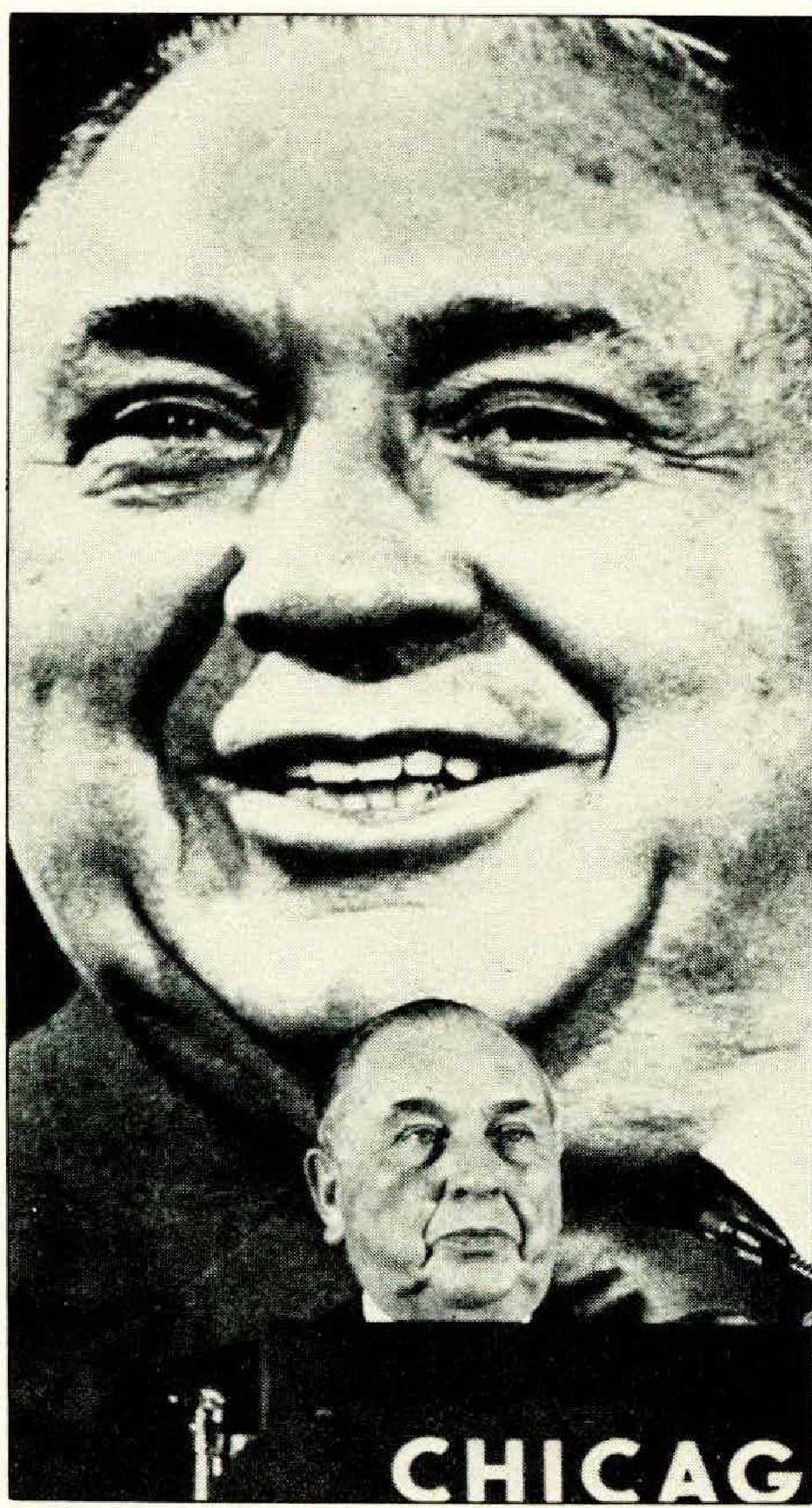
The speeches voiced sorrow and bereavement; but beneath them, scarcely concealed, lurked ambition and competition. Off in a corner of the council chamber, a few restless characters stole glances at the morning newspaper headlines, which brought news of a back-room deal that would make Bilandic mayor and parcel out other important jobs to blacks and Poles. The boss was gone, and it was time to divide up his power.
WHEREAS, Mayor Richard J. Daley met every challenge with enthusiasm, every difficulty with patience, and every success with humility; had a sense of humor which was infectious and a laugh and a sparkle in his eyes which will be missed by all who knew him . . .
It was arguable that as a national political figure, Daley had faded from the scene earlier in 1976. To be sure, after the chaos and violence of the 1968 Democratic national convention in his own Chicago, and after the humiliation of being kicked out of the 1972 convention in Miami, his return to the fold at the 1976 convention in New York was a personal triumph. But even there the mayor had seemed irrelevant, an anachronism; and in November, largely because of his other blunders with the state and city Democratic ticket, Daley failed to carry Illinois for Jimmy Carter. A black congressman, Ralph Metcalfe, purged from the machine for making too much noise about the brutality of Chicago’s police force toward its black residents, won re-election despite the mayor’s ardent efforts to unseat him.
Still, Daley’s fundamental control over his power base, the city of Chicago and its Democratic party, was probably stronger than ever at the time of his death. He had won re-election to an unprecedented sixth term in 1975, and his unique system of governing was functioning relatively smoothly. It was a system that indulged petty corruption and fed on human jealousies, but one that got things done. With a wave of the hand, the mayor could settle a strike at the Lyric Opera, dye the Chicago River green on St. Patrick’s Day. and get the potholes in the streets paved over. At home, in his bustling, roughedged city, he was in charge to the last.
WHEREAS, Mayor Richard J. Daley was always a gentleman of courtly manners, he tipped his hat, rose for ladies, smiled and extended his hand to all who met him and paid every citizen the compliment of looking him in the eye and listening, as though he hadn’t a care in the world except the speaker’s . . .
Once Daley became entrenched in power, back in the late 1950s, he ran Chicago and the Cook County Democratic organization as his personal fiefdoms. For the slightest tribute, or for the simplest recognition of his primacy, he could be induced to extend the favors of the realm. He was a benevolent despot, and he received those who respectfully sought his help and counsel (and did not rock the boat) with a graciousness seldom seen among the mighty. Some recall their relationships with the mayor with a fondness that withstands any tales they have heard or evidence they have seen of his ruthlessness, his vindictiveness, and his indifference to corruption.
Jeremiah Joyce, thirty-four, who practices “a little law” and also teaches criminal justice at St. Xavier College in Chicago, enjoyed the good fortune of having parents whose summer home in Grand Beach, Michigan, was near the one owned by the Daley family. That bond was sufficient to keep the mayor neutral two years ago when Joyce ran in the Democratic primary against an incumbent alderman from the 19th ward who was tied to the machine but was politically vulnerable. Joyce won the election and immediately became one of Daley’s young favorites. Under the mayor, he says, “representative government may have suffered a bit, but things were much more efficient.”
No sooner did Joyce take office than he became convinced that the middle-class communities he represented, Beverly Hills and Morgan Park, were capable of being successfully integrated. “We could live with a 25 percent black population,” according to Joyce’s estimate, but already the one public high school in the area was 64 percent black; some of the whites who objected to that trend but could not afford to send their children to parochial or private school were already moving away. The new alderman sought an audience with the mayor, to explain the potential value of “an official fifty-fifty quota system” for the high school in stabilizing the communities. Although Daley was repeatedly on the record denouncing quotas as “un-American,” he helped behind the scenes to arrange meetings for Joyce and his allies with members of the Board of Education, and to apply pressure for adoption of Joyce’s plan. Today the high school is half white and half black, an arrangement that is enforced through a grammar school lottery. It apparently pleases both racial groups.
“The hardest thing [about Daley’s death] for a guy like me,” said Joyce candidly, “is that when you walked in and asked him for something, if he said yes, you had it. . . . Now, you might have to ask eight different people and still not get it.”
There was every reason for Daley to regard Edward Levi as an adversary. The professors at the University of Chicago, over which Levi presided for six years, frequently called the mayor a “fascist,” and the students there often took to the streets for antiwar and other protest demonstrations that created trouble for Daley’s police force. Levi and his university were ensconced in a neighborhood, Hyde Park, that cast few votes for Daley or his candidates, and the university president sometimes came across as just the sort of aloof intellectual who, as the mayor tended to see it, did not understand the real world.
Yet, although they did not really know each other well, Levi feels that they were friends of sorts. He wonders whether it was because Levi’s grandfather, a rabbi, had been a distinguished Chicagoan, after whom a high school was named, or because Levi is one of those “family men" Daley instinctively admired. More probably, Levi guesses, it had to do with the mayor’s realization that however much the University of Chicago might infuriate him, it was “a world institution, and he thought it brought credit to Chicago.” Perhaps three times during his tenure as president, Levi visited Daley, with a group of university trustees who were also city business leaders, to complain about crime in Hyde Park. “He understood that I had the problem of bringing scholars from around the world to Chicago,” recalls Levi; “he was very well aware of the prior reputation of the city, and that everyone [overseas] thought back to the Capone era.” Invariably, the mayor was familiar with every detail of programs to improve the street lighting in the neighborhood. He agreed not to reduce or withdraw city police patrols when the university decided to develop its own security force.
When President Ford appointed Edward Levi U.S. attorney general early in 1975, the mayor called one of his Democratic machine congressmen in Washington and suggested that it would be nice if the Illinois congressional delegation gave a reception in honor of this Chicagoan newly named to the Cabinet. The congressman balked and said it would be difficult to do on short notice, especially since the House was just getting organized for a new session. Daley insisted it was possible to do anything one wanted to do. The reception was held the next day.
Martin Russo was only thirty years old when he ran for Congress in 1974 against a Republican incumbent in a South Side district that was 70 percent suburban, and he was frustrated because nobody “downtown”—in City Hall, the Democratic organization, or the press—seemed to be paying attention. So one day he called the mayor’s office, and within four hours he had a call back scheduling an appointment for the next morning.
“What can I do for you, congressman?” asked Daley, as if the race were decided, thus breaking the ice when the young contender nervously entered the inner sanctum. Russo now recalls the visit as an awesome occasion: “Did you ever sit in a room and wonder if you were really there? . . . Here we were, probably sitting in the same chairs that John Kennedy and Lyndon Johnson had once occupied.” The mayor offered the fledgling politician a standard pep talk about the need to demonstrate “sincerity and honesty” to the voters, and then he listened patiently to Russo’s complaints about the lack of coverage of his campaign and promised to see what he could do. Within a week, reporters from several Chicago television stations and newspapers mysteriously began appearing in the district and following Russo’s efforts; before long, he was dubbed “Mayor Daley’s man.” Russo won that election, and another in 1976 by a bigger margin.
“I’m not ashamed to be a Daley man,” Russo says; “he did many great things.” Any hesitation Russo might have had about that view disappeared last fall when he took a poll in his district and found that the mayor had a 90 percent approval rating, even in the suburbs. (By contrast, Russo scored 80 percent, and U.S. Senator Adlai E. Stevenson III, 70 percent.)
WHEREAS, during his terms of office Mayor Richard J. Daley provided leadership not only in the City of Chicago and in the City Council, but his voice was heard and his leadership respected in the state legislature and in the Congress of the United States, and it was because of his efforts in those legislative bodies that the City of Chicago , the cities of Illinois and the United States were given the attention and the support they so desperately needed during the tumultuous decades of the 1950s and 1960s . . .
On the morning after the memorial session, the Chicago City Council met again to make official the deals that had been reached for filling the void left by Daley. Ordinarily one might have expected a Democratic governor in Springfield to have something to say about the transition of power in his state’s largest city. But when lame duck Governor Dan Walker flew into town that morning as the city council was convening, it was for an appointment not with any of the local power brokers but with his dentist.
Walker came to office in 1972, defeating the incumbent Richard Ogilvie, a Republican, who had enacted Illinois’ first state income tax—not a popular measure. Walker styled himself an antimachine populist. His political aides told anyone who would listen at the time that within four years Walker would control the state Democratic party and be taken seriously as a potential Democratic presidential nominee. (Walker was, after all, better known nationally at that point than a man who was halfway through his term as governor of Georgia, Jimmy Carter.) What actually ensued was four years of pitched battle with Daley. The two men had never liked each other—their enmity intensified after an investigatory commission chaired by Walker labeled the demonstrations during the 1968 Democratic national convention in Chicago “a police riot”—and they ended up on opposite sides of virtually every issue of public policy, including the appropriate level of state funding for education and Daley’s dream of using federal funds to add the “Crosstown Expressway” to the network of superhighways that brought people into, through, and around Chicago.
Daley did not win every round of the fight with this upstart from his own party. Walker successfully vetoed some of the spending measures pressed by the mayor’s men in Springfield, and he did manage to postpone (and probably kill) the new expressway, which, he argued, was too expensive and would displace too many people. But when the final round came last spring, Daley demonstrated that he was still in charge. By getting the machine to back Michael Howlett, a Chicagoan for whom the Cook County organization could easily deliver the vote, the mayor wiped out Walker in the Democratic primary. Although Governor Walker carried 85 out of 102 counties in the primary and won 70 percent of the vote outside Cook County, Hewlett won the race. In the process, Daley assured the election of a Republican governor in November, but in his scheme of things, it was probably worth it to purge the perfidy from the Democratic ranks. It was easier to deal with an enemy when he carried an enemy label.
Walker is defensive about what many commentators call his failures. His trouble with the Illinois legislature, he insists, was no worse than Gerald Ford’s with the United States Congress. The scandals in his administration—fraud in the state Department of Public Aid, Medicaid irregularities, improper use of emergency federal employment funds to hire political cronies, recruitment of public employees to do extracurricular political work—were only “par for the course,” he says, primarily the result of a few bad personnel choices and computer failures. But Walker is proud of “getting ineligibles off the welfare roles” and “good management of the state”; he feels he made tentative gains in “getting things out in the open.”Walker is starting a statewide law firm, with offices in various cities and a private airplane to get to and from them. And, with his nemesis Mayor Daley gone, he says he just might run for governor again. What he does not say, but probably thinks, is that if Hizzoner’s passing had only come a little sooner — perhaps in 1974, when Daley had a nearfatal stroke—Dan Walker’s political career might have taken a very different course.
He went to Daley’s funeral.
WHEREAS, Mayor Richard J. Daley served as Chairman of the CookCounty Regular Democratic Party for almost twenty-three years, during which time the Democratic Party of Illinois successfully brought skilled leadership to the people of Cook County, the State and the nation, with such leaders as Adlai Stevenson, Paul Douglas, and Otto Kerner . . . and provided vital assistance to the presidential campaigns of John F. Kennedy and Lyndon R. Johnson . . .
The old guard within the Chicago Democratic organization must now contend with its own “young Turks.” No great differences exist between the two on grounds of ideology, public policy, or the use and abuse of power; it is just that the younger types tend to believe that they should not have to wait around so long in order to have a share of the power. The two factions compete with each other in praise for Daley and his legacy. Their real disagreement is whether to try to create another Daley or several demi-Daleys.
The closest approximation of another Daley might be the leader of the old guard, George W. Dunne, sixty-three, chairman of the Cook County board, Democratic committeeman for the 42nd ward of the city, and—two jobs in which he replaced Daley after the mayor died— chairman of the city’s Public Building Commission and of the Cook County Democratic central committee. The most typical young Turks who aspire to be demi-Daleys are Aldermen Edward M. Burke, thirty-three, and Edward R. Vrdolyak, thirty-nine, chairmen respectively of the city council’s committee on police, fire, civil service, schools, and municipal institutions and of its committee on buildings and zoning. They are close allies, a fresh pair of wheeler-dealers who intend to have great influence on their city’s future.
Eddie Burke’s father, Joseph Burke, was in his time a power in the Chicago machine (alderman and committeeman for the 14th ward, chairman of the police, fire, et al. committee), and Eddie is just the kind of son that Richard Daley wanted to have1—cunning, dapper, witty, and smooth, always on the lookout for good personal and political opportunities. While serving as a city policeman, Burke went to night law school at DePaul University (a Catholic school, also the mayor’s alma mater) and, for a time, finagled himself a duty assignment to the state’s attorney’s library, where he could put in extra study time toward his law degree. By the time he was twenty-four, he was already following in his father’s footsteps and became the youngest person ever elected to the city council. Burke built his ward organization into one of the three best in the city, one that consistently “produces.” lie is only a junior partner at a LaSalle Street law firm, but his committee chairmanship on the council puts him in a particularly good position to bring in plenty of lucrative business, including the cases of policemen injured in the line of duty whose families feel they were not properly treated in the hospital. (He settled one against the University of Chicago recently for $300,000.)
Burke rocked slowly back and forth in the chair behind his desk in his humble aldermanic office at City Hall as he discussed the problems of the succession. His clothing was impeccable (some reporters who cover the council insist that he seems to wear a new suit every day), his slightly graying hair perfectly in place, and his gold watch chain sparkled across his vest.
“Symbolic participation is as good as the real thing sometimes,” he said, reviewing the need and the effort to satisfy all of Chicago’s separate, unmelted ethnic groups in the post-Daley era. Daley’s famous clout notwithstanding, he pointed out, on paper Chicago has a “strong council-weak mayor” form of government, “and the next mayor better keep that in mind.”
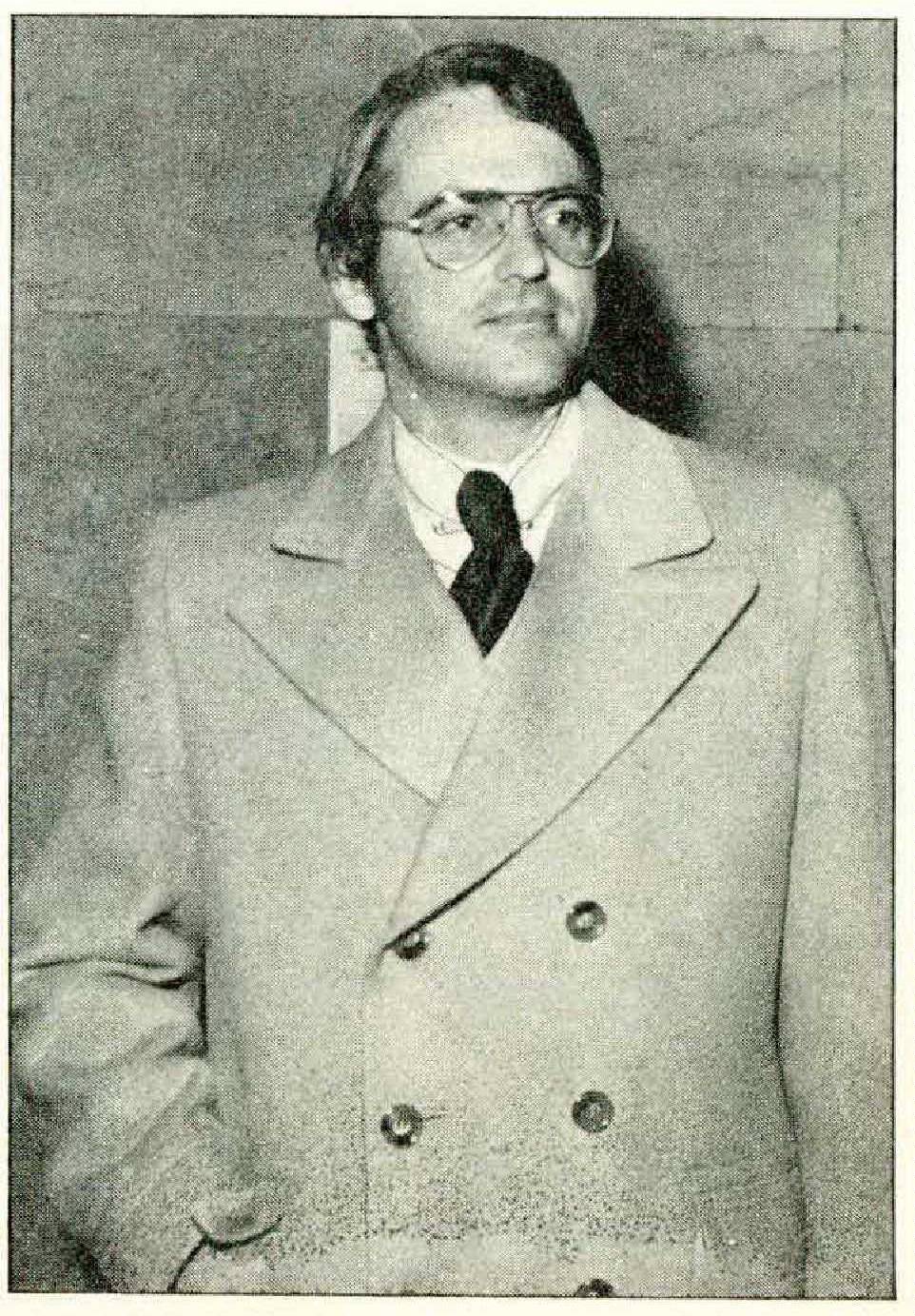
There was a commotion outside Burke’s office, indicating that the special meeting of the council’s thirteen-member “Polish caucus"—called to select one of its members as the official shoo-in candidate for the newly created position of vicemayor—had broken up. Burke rushed out into the hall. “So tell me,” he asked Alderman William Lipinski (who is said to be half Irish), “have we got a deal or not?” They did: their choice for vicemayor was Alderman Casimir C. Laskowski, and the process of ethnic redistribution of Daley’s power could continue.
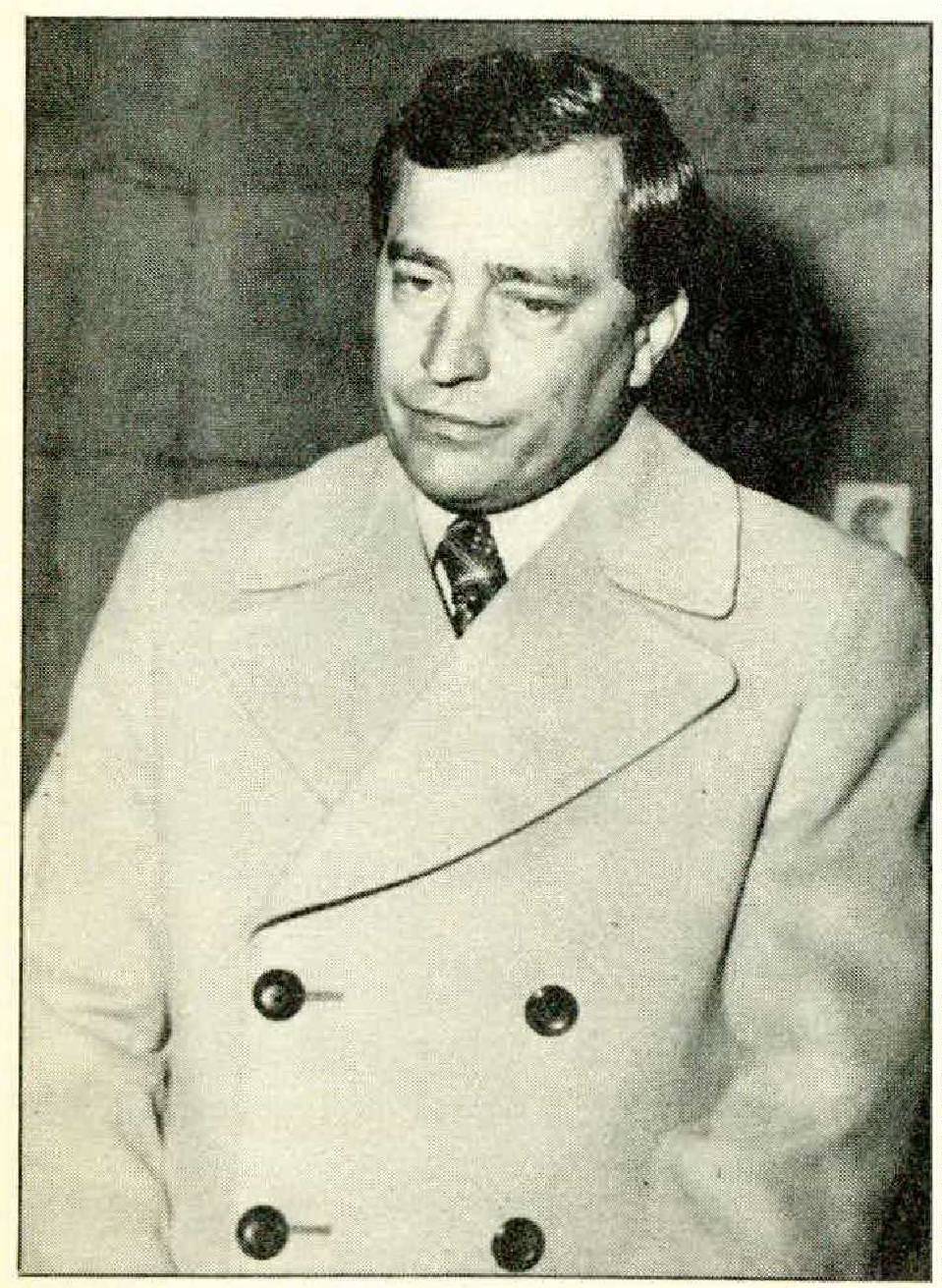
“Speedy Eddie” Vrdolyak moves, talks, and operates very quickly indeed. He is a Croatian and, unlike Acting Mayor Michael Bilandic (who is also a Croatian but lives in Daley’s predominantly Irish ward), he thrives among, and gets his political strength from, his own people— rough and tough steelworkers who live near the plants where they work, along Lake Michigan and the Indiana line, in a section known as South Chicago. Wherever he goes, he is likely to be accompanied by a flying wedge of retainers whose loyalty to him is intense and whose appearance can be rather ominous. When Vrdolyak is in his private City Hall office, juggling three or four phone calls at a time while he reads mail and confers with a humble congressman from Washington, the retainers sit in the outer office exchanging political gossip and passing boxes of candy; when he receives a reporter at his desk, they drift in to shake their heads in approval of his every word.
Vrdolyak is also a lawyer. A self-made man whose aldermanic salary is $17,500, he admits to an annual income “in six figures.” Much of it comes from personalinjury cases referred to him by friends and relatives on the police force. Ironically, his recently attained power has to do with the fact that in 1974 he bolted briefly from the machine to run in the primary against Daley’s handpicked candidate for the key job of Cook County assessor. He made a strong showing and then, in defeat, returned to the mayor’s fold. Having demonstrated his own votegetting abilities, he has been able to bargain for a better than average share of the pie after only a few years on the council. In addition to his chairmanship of the buildings and zoning committee, he now has the honorific title of president pro tempore of the city council.
“We must maintain the legacy that the mayor left us,” Vrdolyak says when asked about the task at hand—“a high level of services, but no increase in taxes.” What is his personal goal? “I wanna be part of something that’s successful and that’s gonna win. . . . We cooperate with one another. We are friends, and we should not differentiate on grounds of nationality and race. . . . I think things [under Daley] have always been equitable. . . . The only one who ever profits from fragmentation is the other party, or your enemies.” As for what he calls “the supposed black-white problem,” he insists that “we don’t have any problem here.” Ready to leave for the day, he looks up at his retinue, which appears to include Slavic, Jewish, and black men. “Do we, boys?” They laugh. One holds his coat for him to put it on, another takes his briefcase, and a third runs ahead to get the car started.
In the confusion about how to apportion Daley’s political estate, Vrdolyak, Burke, Bilandic, Pucinski, and others met all day Sunday in Burke’s law office to cut a deal that would stick. They had frequent calls and visits from another alderman, an Italian-American who represents a downtown ward. A knowledgeable Democrat was asked later to explain why that man, who had no obvious position of power, was included in the discussions. “Well,”he explained, “you might say that he is their contact with the . . . er, what you could call the Italian business community.”
WHEREAS, Mayor Richard J. Daley was respected and admired by citizens in every nation for his ability as an administrator under whose leadership Chicago became the “City that works. ” He loved his native Chicago and her people as a father loves a child; he understood the city and was constantly aware of the heartheat within it; he knew her people, their dreams, difficulties, ambitions, and vowed to provide a maximum opportunity for every citizen . . .
“Mayor Daley and his crowd thought they had a monopoly on loving Chicago,” complains Gus Savage, an outspoken black newspaper publisher; “but you can’t really love a city and fuck over 40 percent of the people. He loved a part of the city.” Savage’s voice grows vehement: “We love Chicago too, and we want a share of the authority along with the responsibility. . . . If blacks do not share power in Chicago, there will be no Chicago.”
Chicago is above all an ethnic city. It is the home of Lithuanian restaurants, Serbian clubs, and Swedish churches; of Germans and Poles, many of whom, although born in the United States, seldom think and speak in the English language. If a bicyclist picks the right area of the city, he can spend a peaceable Sunday afternoon touring from one distinct ethnic neighborhood to another, picking up subtle changes in accent, dress, housing style, and even the products in shop windows as he goes along.
Part of Daley’s technique over the years was to keep the city’s white ethnic groups in a rough balance of power. Although the Irish, who are estimated at about 5 percent of the city’s population, do have a disproportionate share of patronage jobs (they run most of the city’s departments, for example), there has always been something left for others: Italians, about 6 percent, hold many lucrative city contracts; the Polish and Jewish communities (roughly 10 and 4 percent of the city’s population, respectively) have significant numbers of aldermen on the fiftymember city council and committeemen on the eighty-member Cook County Democratic central committee, even though that has meant leaving them in control of some wards with growing black and Hispanic populations (the latter now estimated at 13 percent); almost every group has a few judgeships.
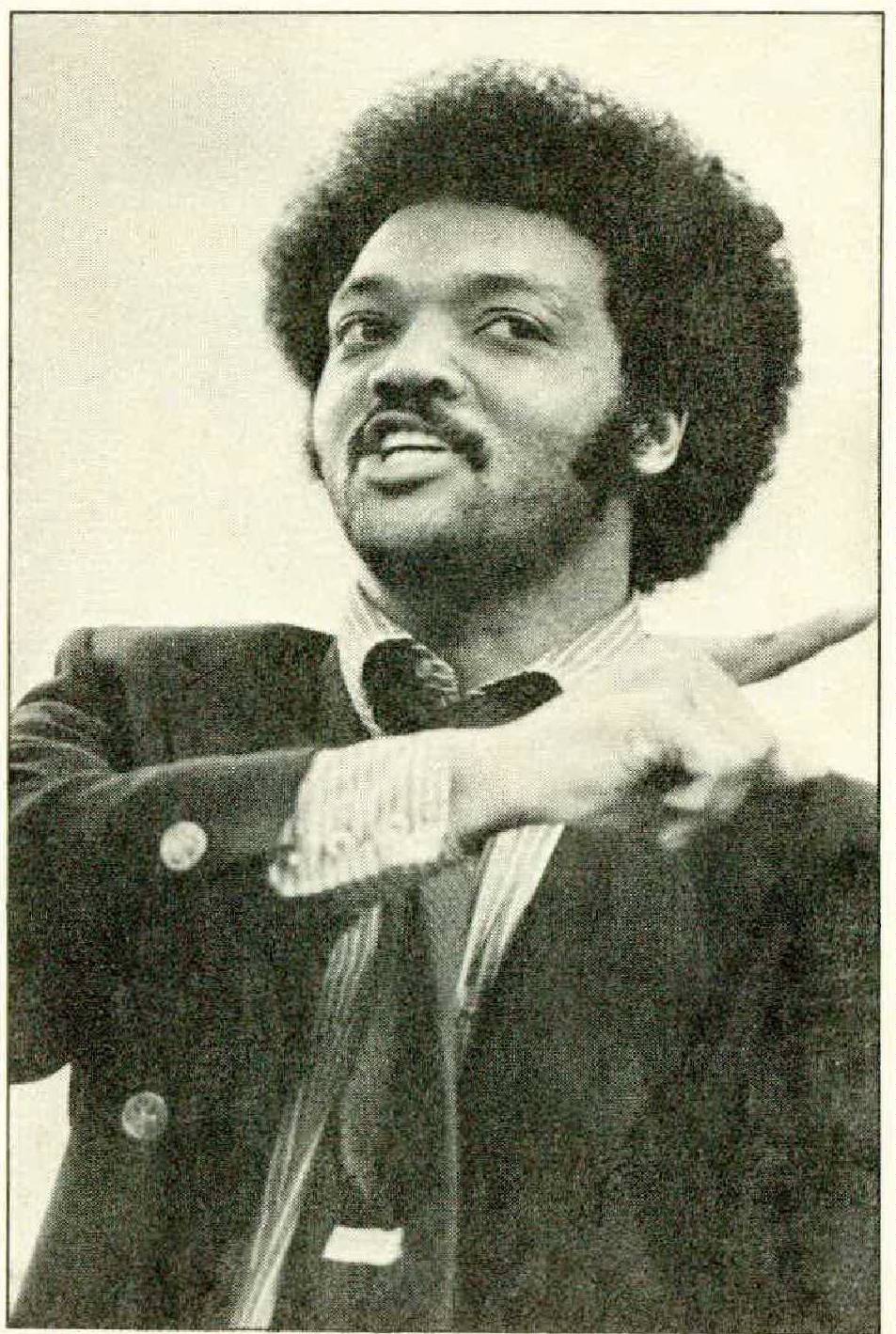
As for blacks, they were always a special case. The late William Dawson, a black committeeman and (less to the point) a U.S. congressman for decades, had been a force in the Democratic machine ever since the 1930s, but Daley cleverly built up rival blacks capable of challenging Dawson’s authority and fighting with him for a share of the black patronage. As Chicago’s black population inched up toward 40 percent, and as its sense of its own power grew with the advent of new leaders like the Reverend Jesse Jackson, it became clear to many blacks that the handful of black aldermen and committeemen connected with the machine did not have a genuine share of the power, and did not necessarily represent the best interests of the black community. As Jackson puts it, “Most blacks in Chicago don’t even know who these aldermen are. They don’t emerge from the community; they are appointed from the top down.”
The ideal of Chicago as a “city that works” began to fade for blacks some time ago. If their lives are somewhat better on the average than those of blacks in cities like Newark and Detroit, it is probably because of the diversity and geographical spread of industry in Chicago. But the Urban League estimates black unemployment in Chicago to be as high as 36.4 percent. The city is probably the most segregated of any in the country, and the school system, now 70 percent black and Hispanic, has been steadily deteriorating. There is only one public hospital (compared to New York’s eighteen).
In the view of Leon Despres, who recently retired after serving for twenty years as a white liberal antimachine alderman from Hyde Park, the notion that Chicago works well is “pure bunk.” Although the downtown area (by daytime), the Near North Side, and the strip along Lake Michigan where the “lakefront liberals” live create a good impression for outsiders, Despres says, “just go one or two miles west of these areas, and it’s shocking.” (Most visitors, suburbanites, and well-to-do city-dwellers rarely make that journey; on the expressways they can circumnavigate the squalid parts of town.)
If there was any prospect that discontent with these circumstances might be expressed through the ballot box, Daley took care of that, too. The machine was always adept at controlling registration figures, and the percentage of blacks registered to vote in the city is down significantly from the early 1960s; blacks now make up only about 27 percent of the Chicago electorate.
In a word, the mayor kept the lid on. And many of the outpourings of sadness and bewilderment by common citizens on the occasion of his death may really have represented fear that the delicate balance would fall apart.
Indeed, the days just after Daley’s passing saw a temporary crisis and a rare display of solidarity in a splintered black community. At the center of the crisis was Wilson Frost, a fifty-one-year-old black alderman and machine stalwart who, when it came time to throw a new crumb to the blacks in 1973, had been awarded the token job of president pro tempore of the city council. This meant that Frost would preside in the mayor’s absence (an important bit of symbolism), and preside he did in 1974 while Daley recuperated from his stroke. Although the matter was nowhere clearly specified in law, Frost also took it to mean that if Hizzoner died, he would become acting mayor for up to six months, pending a special election to fill the vacancy. (A number of whites in the Democratic power structure apparently shared this interpretation, because they had tried repeatedly since 1974 to move Frost out of this position by offering to recommend him for other jobs, including a federal judgeship. But Frost would not budge.) Yet when Frost tried to move into the mayor’s office on the fifth floor of City Hall shortly after Daley died, he found that the door was locked and administrative matters were being handled by Deputy Mayor Kenneth Sain, an appointed official; when Frost held a press conference to announce that he considered himself the acting mayor of Chicago, city workers were sent into the room with clattering buckets and banging ladders to distract attention.
The situation stimulated enough outrage to bring about a historic event: a meeting of some two hundred blacks, from community organizations that had often feuded with each other in the past, under the chairmanship of Gus Savage, to demand that the city council recognize Frost as acting mayor and give Chicago’s blacks a fairer shake. Frost encouraged them and promised that he would permit his name to be placed in nomination for acting mayor when the city council dealt with the issue. By the time that happened, however, Frost had himself been taken into the private bargaining and offered the chairmanship of the finance committee, the real, permanent number-two job, on the condition that he give up his efforts to be acting mayor. His machine instincts prevailed, and to the disgust of black supporters packed into the council galleries, Frost gave one of the seconding speeches for Michael Bilandic for acting mayor. He said, since he did not have the twenty-five votes it would take to win, “Why should I make a suicide jump?”
“Our destiny,” said Jesse Jackson, shaken back to his old stance of confrontation with the black members of the machine, “is not inextricably intermingled with that of Wilson Frost.”
WHEREAS, Mayor Richard J. Daley’s respect and admiration in the business community was accepted as a fundamental fact; it was he who caused corporate giants to be and remain part of Chicago; who assured large and small businesses alike that the vitality of Chicago and its people was conducive to their interests . . .
“Big Jim” Thompson, grinning from ear to ear, speaks of the start of his term as governor of Illinois as “a strange, new, wonderful adventure.” If Republican Thompson, forty, sounds a bit like a political ingenue, that’s because he is. His run for governor was his first entry into elective politics, and the only things he ever managed, before the state of Illinois, were his own home and, starting in 1971, the United States attorney’s office in Chicago. The job as chief federal prosecutor was enough to make Thompson’s name a household word, especially once he started to bring indictments against public officeholders—elected and appointed, Democrats and Republicans— and to send them to jail on corruption charges. After three and half years in the job, he began to lose a few cases. In June 1975 he quit, joined an established law firm in Chicago, and set about making himself well known “downstate” (a term that refers to all of Illinois outside of Chicago and its suburbs, even areas to the north). That strategy worked perfectly, and as soon as Michael Howlett beat Dan Walker in the Democratic primary last year, Thompson exploited Howlett’s connections to the Daley machine. While Howlett talked about good days ahead for “Ellanoy,” Thompson made Daley and his hold over Howlett the key issue in his campaign and won big.
Because the Illinois legislature, in its wisdom, decided recently to shift gubernatorial elections out of presidential election years, Thompson won only a twoyear stint in Springfield; and now Daley’s death has come along to change the rules, the prospects, and the odds. True, the new governor will not have the mayor looking over his shoulder, second-guessing him and offering his own instructions to the legislature. At the same time, though, as Thompson puts it, “Chicago will not speak with one voice anymore,” and that may pose genuine problems for the man in the state capital who has to deal with both the city and the jealous downstaters. To get along with Chicago now, instead of striking one relatively durable bargain with Daley (as did Republican Richard Ogilvie during his term), Thompson estimates that a governor “may have to strike twenty or thirty different bargains.” And when things go wrong, the mayor will not be around to blame.
But while the Democrats fight and the machine splinters. Thompson may just be able to fill part of the power vacuum. With his reputation for being clean as a whistle, he is popular with the university community, and he has good relations with some of Chicago’s labor unions. Most important, though, as one top state official puts it, with Daley gone, “the Establishment [Chicago’s powerful business establishment] needs a new partner.” If it is Thompson who comes up with the first comprehensive plan for rebuilding the fading and crime-ridden Chicago Loop, and if he starts it off with a proposal for a new state office building and an offer to divert state highway funds into new improvements in public transportation, he could end up with more influence on the city’s life than any other recent governor.
There could be more to it than that. The day Gerald Ford left office, Thompson became the elected Republican with the largest constituency in the country, even though he was himself only in his tenth day of service as an elected official. He will be nobody—even more of a hasbeen than Walker—if he does not perform and get re-elected to a four-year term as governor in 1978, and yet he is already being widely mentioned as a hot Republican presidential prospect for 1980 and beyond. That may be more an indication of the current bankruptcy of the Republican party than of Thompson’s own proven abilities and his acceptability to all factions of the GOP. Meanwhile he has gotten himself into uncharacteristic trouble with the Chicago press (which generally praised his work as U.S. attorney) for trips to Washington and national interviews. Back home in Illinois, the feeling was that he was encouraging speculation about himself as a presidential possibility before he had even begun attacking the problems he faces as governor.
As a result of the local criticism, Thompson has pulled back, declining invitations to out-of-state Lincoln Day dinners and other functions, trying to identify a few issues with which he can make his mark in Springfield, and thinking ahead to his next campaign. (Fund-raising for it may be much easier with Daley gone.) Above all, he is trying not to talk about the presidency.
WHEREAS, Mayor Richard J. Daley’s essential power was his ability to concentrate, to focus on a problem, a difficulty, a concern; to hear and seek out opinions, to synthesize information, and to remember facts; his retention not only for the facts of history, but the spirit as well, was overwhelming; and his respect for the past blended perfectly with his vision of the future; his actions and philosophy will continue to lead us all for generations to come . . .
The question of whether anybody else can duplicate the mayor’s magic is an important one. Without him, corruption may become more egregious and far more threatening to the fabric of the city’s life. Any successor will surely be less capable than Daley of pushing off on the State of Illinois the costs of Chicago’s junior colleges, its welfare payments, and most of its other social services. If the machine does become weaker, as it is bound to do, that could provide an opportunity for the block of independent Democrats on the city council, now only six men strong, to expand their numbers; for women to demand and gain a meaningful role in city government and politics; or—still more revolutionary—for the nearly extinct Chicago Republicans to stage a resurgence and bring a two-party system back to the city.
Both for participants in the confusion and for those who watch it from the outside, it is almost as difficult to imagine Chicago without Daley as it is China without Mao. And there is no real Chicago equivalent of the Chinese wall posters to offer the citizens official guidance to the latest developments in the power struggle.
BE IT RESOLVED that the members of the City Council of the City of Chicago, in meeting assembled this 27th day of December, 1976 A.D., do hereby express their deepest sympathy at the passing of Mayor Richard J. Daley . . .
-SANFORD J. UNGAR
- Daley’s older sons, Richard (a state senator) and Michael, practice law in the Bridgeport section and handle cases for the Democratic party. The younger sons, John Patrick and William, sell insurance; their agency handled a good deal of the City of Chicago’s insurance business until the arrangement was discovered and criticized in the press. The mayor was known to be heartbroken that none of his sons was seen as a viable successor to him.↩