Washington
REPORTS & COMMENT
The President
Why on earth was Gerald Ford staying at l’Hôtel Sofitel. which boasts that it is the “only French hotel in America"? All over Minneapolis people were preoccupied with the question, and so were outsiders who were coming to town as part of Ford’s unofficial retinue. A taxi driver advised confidently that he had heard this was but one part of an effort to revive a close relationship between the United States and Europe. One local pundit proclaimed it all a terrible political mistake: “There’s only one foreign-owned hotel in town. and the President ends up sleeping in it. What a blunder.”Cynics suggested it was just that Ford wanted to keep a reasonable distance from the fun-loving. noise-making (albeit conservative) American Legionnaires, who were staying in more conventional downtown hotels and whom he would be addressing the next morning; but no. insisted others. it was simply that the new Sofitel. with its concierge and Bordeaux Room and waitresses who say a well-rehearsed “bon soir,” is in Bloomington, a safely Republican suburb.
It is a rather posh place, this little corner of Paris in the heartland, but the White House let it he known, and the Twin Cities press faithfully reported, that the President was not going overboard: instead of the $140-a-night bestsuite-in-the-house that had been reserved for him. he was settling for a more modest one at $85. (Room 605. to he precise—naturally, a plaque is being put on the door.)
The reason for choosing the Sofitel was actually that it was near the airport and had available the dozens of rooms necessary for the presidential party. But the answer was almost irrelevant. The interest in and analysis of these details, as well as of far more trivial matters, was obligatory and compulsive; it seemed inevitable that someone would ask whether the President read his intelligence briefing by bedside lamp or overhead light, whether he slept with the bedspread on the bed or off. It was a little more evidence, if any was needed, of how the American presidency has been mythologized. romanticized. and glorified, and its occupant’s every word. deed, and cough scrutinized — and of how this treatment is extended even, and perhaps especially, to an accidental President, a man who came to the job by a constitutional and political fluke.
Unimperial
“I can see why we have created an imperial presidency.” said one local Republican, borrowing Arthur Schlesinger’s characterization of historical developments; “we want to have an imperial President.”He was watching with some astonishment as Ford arrived at the Marriott Hotel in suburban Minneapolis for a “leadership rally” with local GOP candidates. Outside, a band had played John Philip Sousa marches and Boy Scouts had whimpered with delight over their opportunity to touch the man. Now, a hundred or more reporters. photographers, cameramen, and soundmen scrambled through a back door into a roped-off area to “cover” the President at the rally; other members of the press had gone ahead to the next stop another nearby hotel, another Republican rally—where Ford’s remarks at the Marriott would be piped in as background noise while they wrote their stories.
The leadership rally had majestic overtones, befitting an imperial figure. “This is a very important moment in all our lives,” allowed Charles Slocum, the newly elected twenty-eight-year-old Minnesota State Republican chairman. He proceeded to introduce Ford as “the man who has made us proud to be Americans, the man who has made us proud to be Republicans . . .”
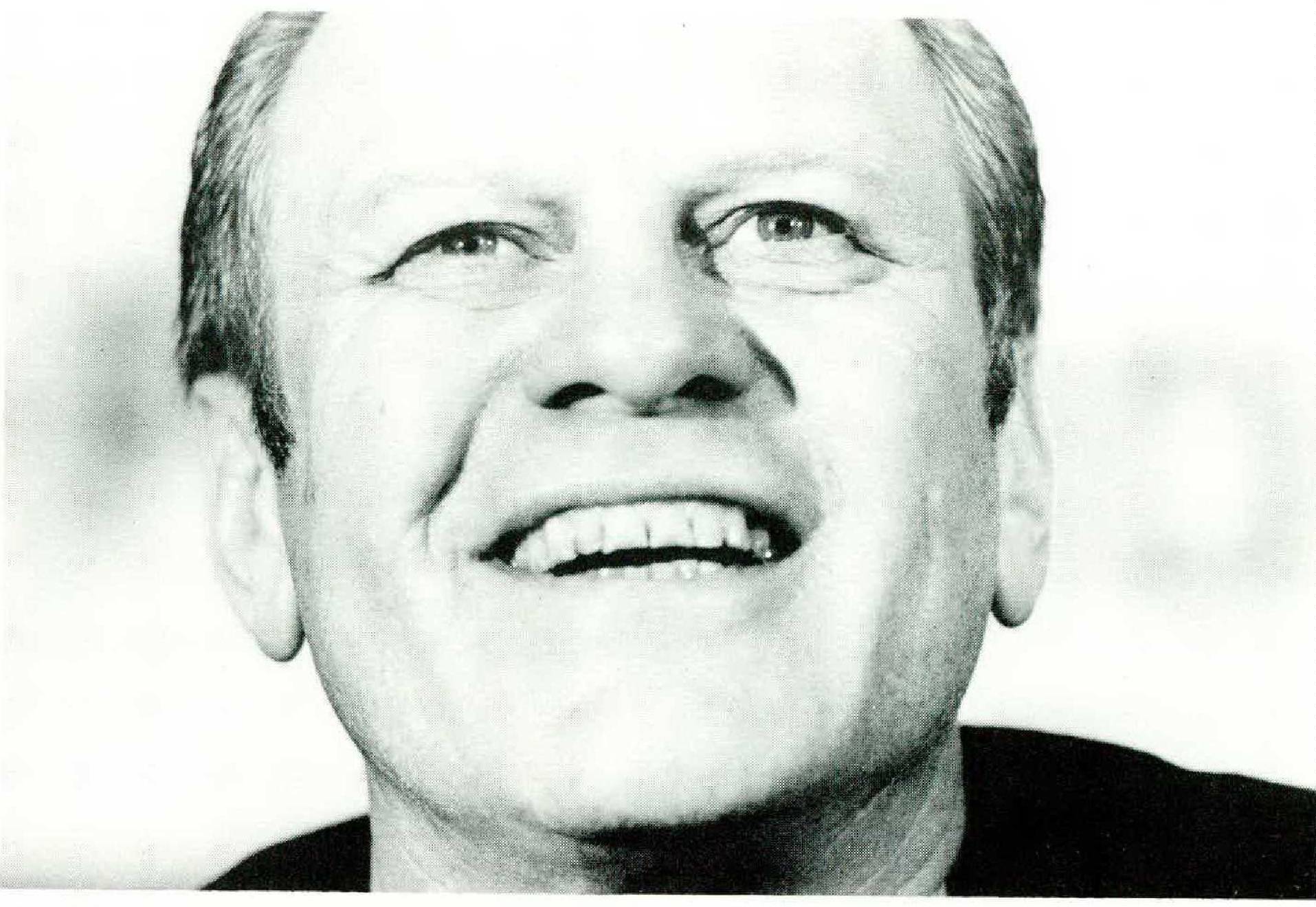
And yet there was something distinctly unimperial — even unpresidential. as we have come to define and understand the lofty qualities of presidential behavior—about the object of all this attention and reverence. Ford did not act as if he were doing a great favor and making an extraordinary effort with this visit of his presidential court to the provinces. On the contrary, he behaved like a comfortable man who was enjoying himself in his own element. Smiling his boyish and apelike smile, he put his arm around Representative “Al” Quie (“one of my long-time and dearest friends in the Congress”) and he personally pinned awards on the lapels of those who had collected the largest shares of the rally’s $165,000 contribution to the Minnesota Republican coffers. Slocum was probably right when he declared that Ford “is the first President in memory to talk to a group like this” Republican standard-bearers at the most basic local levels.
The President’s talk, from stall-prepared notes, was full of boilerplate and hyperbole. He described the rally as “a great meeting,” and exhorted his audience to elect more Republicans to all offices, to get “America on the move again, moving in new directions with a vision of what can be.” “All good Republicans,” he said, should be willing “to go that extra mile for the party, indeed. if it is necessary, that extra thousand miles for the party.” Setting his own example. Ford posed for a photograph with each of seventy-one local Republican candidates for everything from state legislature to county park board, all in eight minutes; and that, said one of them, Dan Peterson, was something that “Nixon would never have done for us.”
When the rally wais over. Ford proceeded to a luncheon session with the Minnesota “Elephant Club.” whose members, some in town for the occasion from Duluth and other distant points, had all contributed at least $500 to the party. The crowd was a little more subdued and effete, but the President and his regular-guy routine were just the same.
Playing it straight
On the road or in Washington. Gerald Ford does not fit into the recent tradition of the mythologized presidency. There is none of the studied elegance of the Kennedy years, no sense of the lonely man at the pinnacle of power that Lyndon Johnson self-consciously portrayed, nor the embattled and embittered self-righteousness of Richard Nixon. This President, both by instinct and, ultimately, by the design of his closest advisers, is the relaxed and natural man: he does not act like the high school kid. newly in charge of running the student council, who no longer has the time to talk with his old friends.
Ford is being put across, with some success, as the man who, in the tradition of his model from the other party. Harry S Truman, speaks his piece and does not shy away from saying or doing the unpopular thing at a delicate moment if he thinks that it is in the country’s best interests — the Nixon pardon, an amnesty program revealed before the 1974 Veterans of Foreign Wars convention. and telling the NAACP that federal programs to help the poor and disadvantaged were a major cause of inflation. Not only does he behave like a real person, but he heads a family that is made up of human beings who sometimes act foolishly or talk too much, rather than of stick figures that, like so many dolls, utter appropriate rote phrases when the cords on their backs are pulled.
For a public that is weary of politics as usual, this might be expected to come as a relief, a welcome change that rules out any confusion of the Ford regime with the reign of his discredited predecessor. But that is not necessarily how it is working. Despite spurts of popularity at such moments as when the merchant ship Mavaguez was recaptured from the Cambodians, Ford’s showing in the polls has lagged. (One key White House official, out of desperation, has resorted to the tactic of arguing that in a period of such low confidence in government, a “fair” rating of the President should not really be classified as a “negative” one.)
What is thought of as his natural constituency has not responded so enthusiastically. The crowds are not that big. Even at the American Legion national convention in Minneapolis, when the President combined a spirited plea for detente with the Soviet Union and a rousing, old-fashioned promise to keep “America’s defenses second to none” into a single, rather well-delivered speech, the reception was only lukewarm. Informal chats with randomly selected Legionnaires revealed that there were plenty of doubters in the audience. J. H. Cregar. for example, a street superintendent from East Liverpool, Ohio, who voted for Nixon in 1972. said tersely, “No more Republicans. I can’t see voting for Ford against any Democrat. There was too much lying under Nixon.” As for the President’s speech, Cregar dismissed it: “This is a political thing today.”
Some of Ford’s aides believe that he must run hard to dissociate himself in the public mind from that recluse in San Clemente who is, after all, responsible for his becoming President. (Confidential messages have been sent from the White House to La Casa Pacifica through mutual friends, urging Nixon to realize just how unhelpful it would be if he were to set out anytime before November, 1976, to “help" Ford.) But the preoccupation is elsewhere—with the threat from Ronald Reagan and others on the right who feel that the President is less than a true believer in the Republican cause. A conscious decision has been made, as one person close to Ford puts it. “to cut the ground out from under” Reagan by making the President sound like the original conservative. thus discouraging a Reagan challenge to Ford’s nomination for a full term. The result is speeches that are very orthodox indeed, complaining, as he has in Peoria and elsewhere, of “a growing and unwarranted trend toward federal interference — interference in the free enterprise system, interference in state and local governments, and. as we are now beginning to discover, inlerference in our personal lives.” The last reference can be taken as a bow in the direction of civil liberties, but for the most part his program is traditional laissez-faire. It includes trying to force energy consumption down and domestic production up by letting prices rise, turning a critical and skeptical eye on all social welfare projects, and cutting the regulations and taxes imposed on private business.
It is, in some respects, the Nixon Administration all over again, but without Nixon and with the classical conservative positions even more clearly enunciated than before. On an intellectual level, this is conceived by staff coordinator Donald Rumsfeld, political counselor Robert Hartmann, intellectual-in-residence Robert Goldwin (a political scientist who taught at the University of Chicago and, more recently, served as dean of St. John’s College in Annapolis), and their aides — as “a respectable agenda for the country.” a clear alternative to what are described as the “expensive and ineffective programs of the New Frontier and the Great Society.”But on a practical level, it isolates the President in the company of corporation executives, who may be his natural friends but, in a period of widespread economic hardship and revelations of business corruption, are not exactly popular and influential figures in American life. Liberal and moderate Republicans, including some of Ford’s old congressional colleagues, are convinced, for their own part, that he has gone too far, that he has identified himself with a narrow stratum of society; and they have begun to plead with him. publicly and privately, to show more of his “compassionate” side.
Chaos within
One of the most unpresidential characteristics of the Ford White House, coming after the Nixon era, is its pervasive disorganization. For all of Rumsfeld’s efforts to build a new and efficient staff system that suits Ford’s penchant for openness and a thorough review of all options for handling any problem, the cracks are wide and important problems often go unattended. In the words of one young staffer who has worked under both Nixon and Ford. “The Nixon system may have stifled creativity, but you always knew the status of an issue, and you could always find out where the President would come down on it.” Although some Nixon people, such as presidential counselor Charles Colson, were notoriously good at making end runs. H. R. Haldeman and John D. Ehrlichman invariably knew where things stood. Not anymore. Under Ford, there is no one who can be depended upon that way, and the evolution of policy is sometimes casual, not to say chaotic.
Theoretically, any recommendation for a major presidential decision or action. before it reaches the President through Rumsfeld, is cleared with each of nine “senior staff" who can speak authoritatively about its potential impact in their special areas of expertise— Hartmann; presidential counsel Philip W. Buchen; press secretary Ronald Nessen; Henry Kissinger. Secretary of State and national security adviser; L. William Seidman, director of the Economic Policy Board; chief legislative liaison John O. Marsh; William J. Baroody, Jr., chief of “public liaison"; James Cannon. director of the Domestic Council; and James T. Lynn, director of the Office of Management and Budget.
But that does not always happen. “There are a lot of last-minute saves around here.” concedes one official close to the President — sudden scrambles to prevent the simple embarrassments or near catastrophes that might occur if one adviser or another has his unencumbered way. Recently, for example, the National Security Council staff, dominated by Kissinger, gave the Press Office a statement it had prepared for release in the President’s name upon the death of Eamon de Valera, the father of the Irish Republic. A little checking revealed that notwithstanding the current political sensitivity of Irishrelated issues in the United States, the statement had not been cleared with other relevant advisers, let alone shown to Ford himself.
That incident, admittedly a relatively minor one. and others that are more important can be traced to Kissinger’s extraordinary influence and authority within the Ford Administration. The results are notable as much for the messes they cause as for orderly statesmanship. It was his whisperings into the President’s ear that led to the refusal of a White House appointment for Nobel prizewinning author Alexander Solzhenitsyn. His choice of tactics in, and obsession with, his Middle Eastern shuttle diplomacy have interfered with formulation of a coherent administration policy toward OPEC. On at least two occasions, he set out to give speeches on major international issues— including one at the United Nations on nuclear policy — that had not been checked out in advance with Ford’s personal staff; only after hastily convened meetings were revised texts of the speeches approved. Kissinger kept Congress—and apparently even the President—in the dark while he negotiated an American presence in the Sinai Desert as part of a new disengagement agreement between Israel and Egypt.
But there have been diffusion and confusion in other areas, too. A junior staff member in the White House counsel’s office, assigned to work on presidential policy on the delicate legal and political issue of abortion, learned at a cocktail parts that the White House correspondence section had already been replying to mail on the subject on the basis of advice from Hartmann, who had discussed the matter privately with Ford and then issued his instructions for an anti-abortion form letter.
The Justice Department was astounded when, in the last hours of Senate consideration of an extension of the Voting Rights Act of 1965 last summer, the White House weighed in with a request that the formula determining which states come under the law’s enforcement provisions be dropped from the bill — an obvious attempt, apparently dreamed up by Cannon, to win support for Ford among southerners who have always felt that the voting rights law discriminates against them. Called upon by senators to explain and justify this sudden Administration initiative, the Justice Department could not do so, because it hadn’t known about it and didn’t agree with it. Ford escaped unscathed from that incident; his lastminute effort to weaken the bill was defeated and quickly forgotten, and during the ceremony in the White House Rose Garden when he signed the extension into law, civil rights leaders praised him for steadfastly supporting it all along. But on other occasions, he has left himself open to charges of insensitivity to minorities; in Peoria, for example, in the midst of a touchy public encounter with a regional officer of the NAACP, as Ford tried to cite what his Administration had done for blacks. he was unable to remember the name of the Equal Employment Opportunities Commission.
At the Dirksen shrine
The President’s arrival in Pekin, Illinois. birthplace of the late Senate minority leader. Everett McKinley Dirksen, coincided with the city’s third annual Marigold Festival — a happy circumstance. since Dirksen had long labored for legislation to make his preferred flower the national one. It was a good thing that a blight had not hit the marigold crop overnight, because right at the start of the prepared text of Ford’s remarks was the line. “This city" really looks beautiful today with so many thousands of Ev’s favorite flowers in bloom.” (An indication, noted a reporter who had been traveling with Presidents for years, of one “trouble with Ford: he can’t remember to do things like complimenting the marigolds unless they write it down for him. But do they have to write it down in a way that we all know about it?”)
Ford was in town to dedicate the “Dirksen Wing” of the Pekin Public Library. which contains a “Congressional Leadership Research Center" in memory of the man who, with Ford (then minority leader of the House), once held a weekly “Ev and Jerry Show,” in which the two lambasted the Johnson Administration. Dirksen, for all his eloquence and sheen, was also one of the most adroit practitioners of the politics of influence-peddling of his time. Had he lived on, he might never have survived the scrutiny of the postWatergate era. but in death he is revered and touted by Republicans as one of their all-time greats, and Pekin has become something of a shrine, almost as important a stop on the political circuit as Lincoln’s Tomb in nearby Springfield. Perhaps because central Illinois is such a comforting, welcoming place to be at a moment of declining popularity in the polls. Ford was now taking his own turn at the shrine, even though Richard Nixon came to Pekin to unveil the cornerstone of the Dirksen Wing back in 1973. As the hot sun beat down on the square in front of the library. and with Louella Dirksen. her son-in-law Senator Howard Baker of Tennessee, other national figures, and local stalwarts at his side, the President droned on with a lengthy and repetitive encomium to Dirksen’s warble-throated brilliance and insight.
White House aides became weary and restless as they waited behind the press platform for the seemingly interminable ceremonies to conclude. Their gloom only intensified when reporters began to ask what might be inside the Dirksen Center that justified all this pomp and presidential attention. I hey didn’t know, and could produce no fact sheet on its contents and functions. The one brochure served up by a young woman selected for the occasion by the Pekin Chamber of Commerce spoke only of “an exhibition of the life and times of the late Senator" and “a repository of (his) papers, speeches and memorabilia ... as well as photographs, audio and video tapes, phonograph records, motion picture films and other materials featuring him and his career. The space is equipped for use by students, writers and researchers who may wish to spend time studying these materials.”A pool of reporters who later accompanied the President on his walking tour of the research center discovered stacks of cardboard boxes and some thirty-seven filing cabinets (including one marked “Patronage. 1969”). but no sign that anyone had been studying or working among them. But Ford was enraptured. “I hope sometime I can come down and relax and go through some of these papers.”he told the architect who was escorting him through.
One could not help wondering whether the crisis in the Middle East or the energy shortage or some other major national problem did not require the President’s attention. But traveling and “seeing the people” is important to him. and especially people carefully selected for the regional “White House Conferences on Domestic and Economic Affairs.”and those who attend old-style Republican party fund-raisings and gettogethers. Throughout his political life he has never been home much, and not even assassination attempts will keep him there now.
Having it his way
Despite his troubles. Gerald Ford has enjoved one big run of success in Washington: his dealings with the institution that molded him. the Congress. Even after the Democrats scored a big increase in their congressional majorities in the midterm election of 1974. the President assured his aides that he would still be able to have his way. The strategy was to work with issue-by-issue “shifting coalitions.”to exploit the differences between urban and rural interests. unions and management, and other conflicting groups (not the least of those conflicting groups is the House Democratic caucus, with its rebellious rankand-file and weak leadership), in order to maintain some influence over the legislative pipeline. A great deal of time and calculation is spent on this endeavor. and using the scorecard approach — as most monitors of Congress do — Ford has “won" many notable “victories,”a source of great delight in his circle. Congress looks weak, confused, and fumbling, and in the view of key presidential strategists, the President, by contrast, achieves an image of “strength, forcefulness, leadership, and skill.”What is unknown, and the White House concedes it to be, is whether the electorate is genuinely impressed in a lasting way. or simply sees the President as the temporary leader in the old. and perhaps now irrelevant. Washington power game.
Not to worry, says one presidential intimate in the White House. It might work and it might not, but in the meantime Gerald Ford, perhaps alone among the Presidents of the last thirty years, is actually managing to have fun in the job. “You know.” says the intimate, “he had never really wanted particularly to be President. The height of his ambition was to become Speaker of the House.” Since the Republicans had no hope of winning a majority in the House in the foreseeable future, “he had already given up on this and decided to retire in ‘76. . . . He got to be President without even trying; he has no doubts about his manhood or anything else. . . . He’s not all that dazzled to be here. He would probably be quite happy going hack to Grand Rapids or Vail, being with the family, playing golf, and watching TV.”
— SANFORD J. UNGAR