Mrs. Wharton, May I Present Mr. O'hara?
BOOKS
Two American novelists — Edith Wharton and John O’Hara — are the subjects of biographies this fall. An odd couple. You wouldn’t sit them next to each other at dinner. O’Hara would get drunk and you could hardly blame him, given the nasty nasal condescensions he’d be receiving from Mrs. Wharton— and you could hardly blame her, either, since he probably would have had a couple before he arrived and he’d be telling her how good he was.
On the other hand, they’d have a lot in common. Both were, in their different ways, “novelists of manners.” Both enjoyed a moment when they were (though the terms are admittedly ambiguous) the most popular serious novelists around. Both were enormously productive; a book a year was the natural pace. Both knew that money always matters. Both were snobs. Both were passionate observers of the mayhem contained in civilized social life.
R. W. B. Lewis’ biography, EDITH WHARTON (Harper & Row, S15.00), has already received much praise. Some of that good feeling, I think, is a matter of a reader’s discovery of a remarkable figure, more than a remarkable book — as if the messenger were being kissed for bringing good news.
This book’s faults are easily named: it’s timid in imagining the tempestuous emotions that went on behind the decorous front that Mrs. Wharton maintained, and about connecting her work with her life. Its virtue lies in its measured. leisurely, unobtrusive recording of the details of an extraordinary life. Lewis has benefited from having first access to the Wharton papers at Yale.
Edith Wharton’s existence combined privilege and constriction in a way that is scarcely imaginable now. Her favorite image for her situation was imprisonment. but she had a nicely appointed cell.
She was born, in 1862, Edith Jones, daughter of a family of New York’s “400.” On reaching her majority, she began receiving an annual income of $9000 (worth, in the late nineteenth century, roughly ten times that amount in current dollars), and shortly she came into a fortune worth at least a half-million dollars in today’s terms. She was happily distant from her scruffy countrymen. Forced once to spend the night in an inn in Petersham, Massachusetts, she remarked: “Such dreariness, such whining callow women, such utter absence of the amenities, such crass food, crass manners, crass landscape!! . . . What a horror it is for a whole nation to be developing without a sense of beauty, and eating bananas for breakfast.”
If the privilege was extraordinary, so was the constriction. It was possible for a young, aristocratic woman in 1885 to enter into marriage literally not knowing “where babies come from.” Edith Wharton, aged twenty-three, did so. By the time of her marriage she had already suffered in “love” — a broken engagement. with a man who was upset by her precocity, a brief summer’s flirtation. She took the next man who came along. Teddy Wharton. Henry James later said of this match that it was “an almost — or rather an utterly — inconceivable thing.”Teddy was genial, an outdoorsman. wholly uninterested in art: he put together a good wine cellar, managed her money, was an eternal boy. In Lewis’ nice phrase. “Edith called him ‘Old Man.’ but rather with the air of one who addresses a big man as ‘Tiny.’ ”
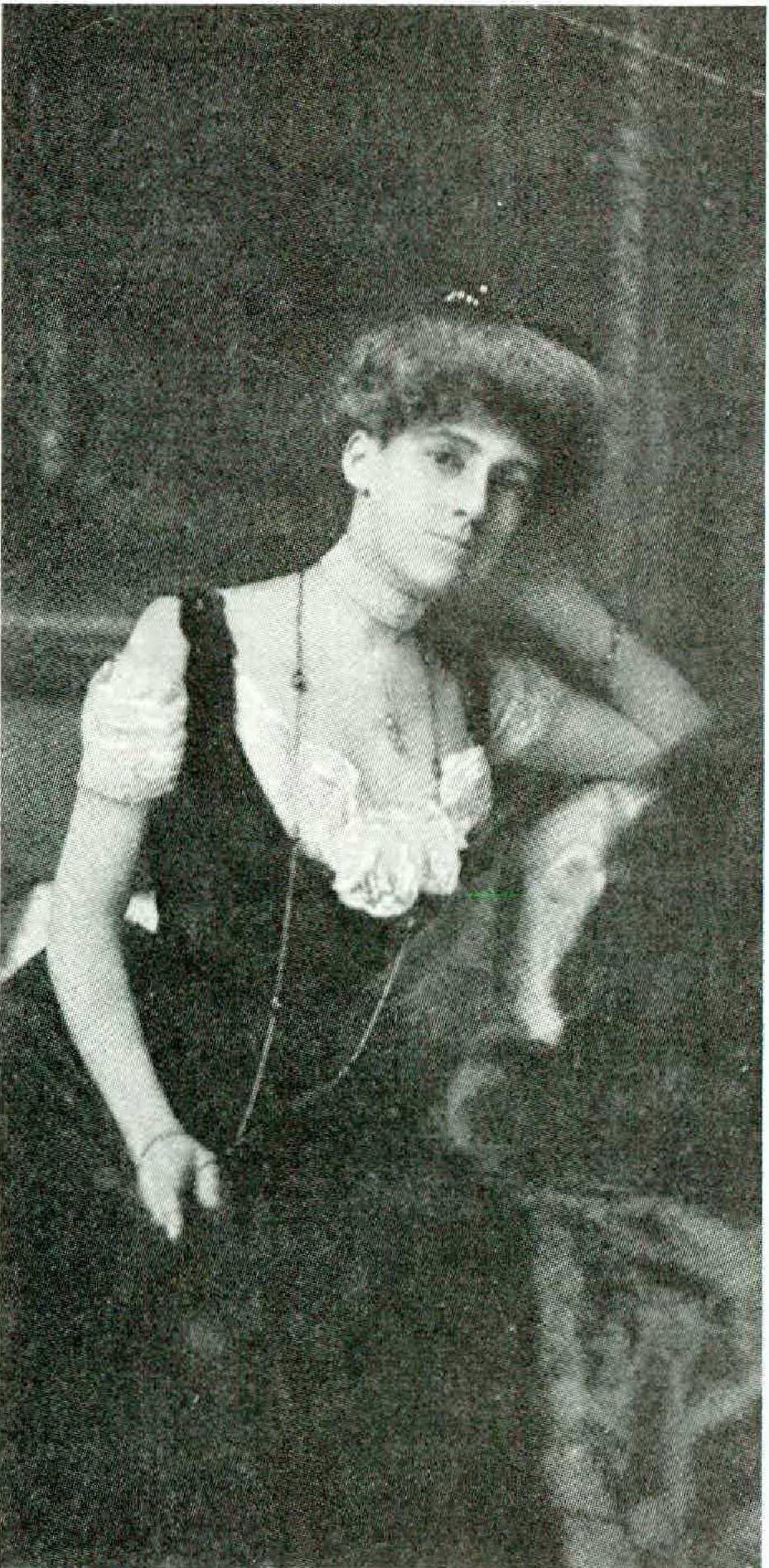
Edith Wharton’s first experiences with sex were hideous enough to discourage her from further such activities. The Whartons endured a bizarre, chaste marriage. Their life was filled with social activity, shifting scene from New York to Newport, to Boston, to Paris, to Rome, and after a few years, to interludes at the splendid 130-acre estate they created in Lenox, Massachusetts. Teddy became well known for his affability, until middle age, when his good humor turned into manic behavior and acute depressions. Edith experienced mental illness earlier. She was afflicted with severe depressions in the early years of her marriage and finally, at thirty-two, suffered a breakdown that led to hospitalization for a “rest cure" for a period of several months.
Before her collapse she had published a few stories; afterwards she found ambition and a voice. (One would like to know more about those critical months.) Within seven years she published a book of stories, her 600-page first novel. The Valley of Decision, and the book that was to secure her popularity and her critical reputation. The House of Mirth. In the light of what she had endured, the poise and accomplishment of that novel is all the more remarkable its mingling of sharp satire of New York and Newport society with a tragicsense of that society’s power over the novel’s heroine.
The set piece of Lewis’ biography is his account of Edith Wharton’s longdelayed “sensual awakening": her liaison. at forty-five, with Morton Fullerton, an American journalist working in Paris. It was a grand passion which, she later wrote, reduced her carefully contrived, austere personality to a “pinch of ashes.”It also had a melancholy, comic side to it, which Lewis seems not to notice. Fullerton was a worldly but a dim man, with a quirky appetite for older and larger women; a bit of a rake, veteran of numerous heteroand homosexual affairs . . . the thought of the stately Mrs. Wharton waiting anxiously for his morning note on her tea tray is almost more than one can hear. Henry James, her sympathetic confidant, who deplored her “incoherent life” behind her back, seems to have enjoyed the affair immensely.
The relationship ended amicably after three years. Its influence on Edith Wharton’s life is uncertain. Passion assumed more of a place in her work, but then passion became more printable. Ethan Frome no doubt draws some of its poignant scenes of futureless love from her experience. Late in life she wrote a fragment of a pornographic story, published in the Lewis biography for the first time—an “explicit,”though highly romantic, account of lovemaking between a father and daughter. The question of what Oedipal impulses Edith Wharton might have had goes largely unexplored in this book. It’s a strange, perhaps an irrelevant, fact that Fullerton himself had been involved in a quasi-incestuous affair. When he met Mrs. Wharton he was engaged to a cousin—the two had been raised as brother and sister. Whatever else it did, her affair with Fullerton doubtless gave her courage to divorce Teddy, an act that came too late to be merciful.
Edith Wharton lived the last twenty years or so of her life in France. Her literary relationships. Lewis notes, stretched from Longfellow (who took an interest in poems she wrote as a girl: indeed got one of them published in The Atlantic) to Alberto Moravia. F. Scott Fitzgerald came to call, drunk and ill-behaved. She remained popular until her death, and even without her own fortune she would have been a rich woman on the strength of her royalty account alone. She left behind at least four enduring novels, and it’s hard to think that she won’t soon be read again with much more attention than she has received recently.
She maintained a busy social schedule until the end, but her last years must have been lonely. In a picture taken shortly before her death in 1937, she has much the same look in her eye that she had as a young girl—a sad, quizzical look, as if she still wondered how things would turn out.
M atthew J. Bruccoli’s biography of John O’Hara, THE O’HARA CONCERN (Random House, $15.00), is a far less elegant book than the Wharton biography. Bruccoli speaks with some authority (he has had the cooperation of O’Hara’s widow and his publisher) and he has assembled an attractive and revealing set of anecdotes. But the book lacks shape.
In a way, Bruccoli is working under awkward circumstances. O’Hara died in 1970, but Bruccoli never knew him, and many of O’Hara’s closest friends are now dead too. He left behind only a meager supply of notes, diaries, letters. Surely he is still remembered in his old haunts—“21.” The Nassau Club—and I can’t help feeling that his biographer ought to have done more legwork, trying to assemble what firsthand memories remain. As it is, he has relied heavily on documents, and so events that happen to have a piece of paper attached to them assume an unnatural importance. Perhaps because of Bruccoli’s method, his portrait of O’Hara’s youth is in many ways the liveliest part of the book.
“Poor John.” his father said as he lay dying—a cryptic remark at the time, but later John came to think that his father was apologizing for the financial mess that his eldest son was about to inherit. Bruccoli pays a lot of attention to the family’s situation, as a way of documenting his claim that O’Hara’s attitude toward the rich was more complex than is generally assumed. He doesn’t go much beyond that assertion, but the facts are interesting and suggestive. O’Hara endured the informative sorrow of going from rich kid to poor kid at the age of twenty. His father had been the most eminent doctor in Pottsville, Pennsylvania, and a rich man by most standards—$25,000 a year in the 1920s, a house on the most fashionable street in town, a farm outside of town, five cars in the garage, ponies, private schools, and dancing classes for the children. But he died without a will, without much cash, with a lot of worthless investments, and with money owed to him that couldn’t be collected. Overnight the family was on its uppers.
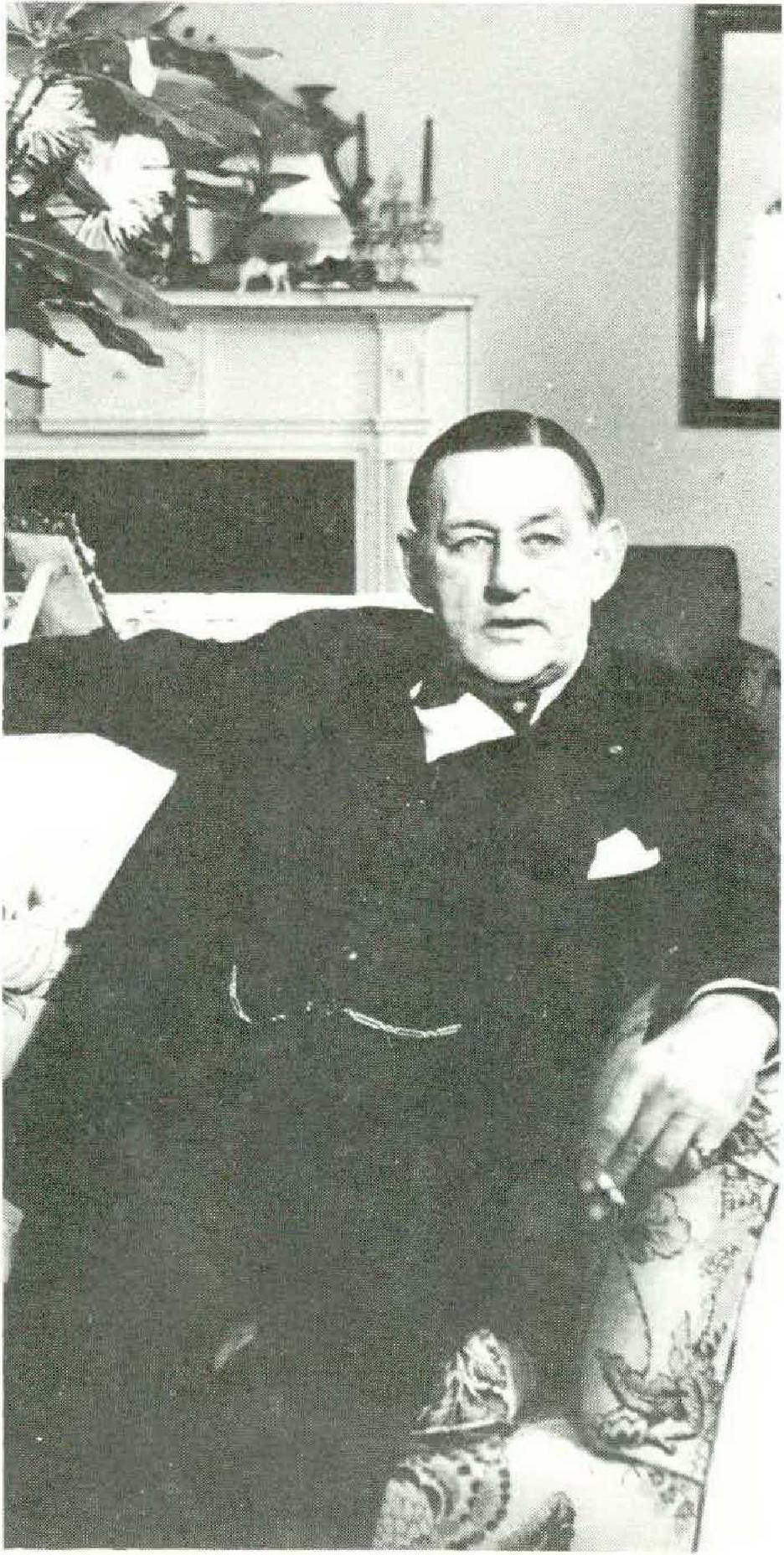
These events can’t be blamed for what came by legend to be thought of as O’Hara’s great tragedy—his failure to get a college (specifically, a Yale) education. Bruccoli points out that O’Hara was a wretched and rebellious student, thrown out of a couple of schools, and by the time of his father’s death, he had already gone to work by choice. At that, Bruccoli speculates that he could have gone to Yale on scholarship—but that he never would have gone unless he could go first class.
O’Hara didn’t do much better as a reporter than as a student. His drinking problem began early, for one thing, and he lost several jobs. But he also began selling light sketches to The New Yorker; in 1934 he settled down to write (in eight months) Appointment in Samarra, after which he could always go first class. He went on to publish twenty-nine books before his death.
The mature O’Hara emerges in this biography as a man so vainglorious, so patently self-doubting, that his boasting is wholly forgivable. At least from a distance. In person, he must have been a trial—touchy, inanely proud, and often fighting drunk. We see various sides of him in Bruccoli’s portrait, but never get a fully rendered dramatic moment. He must have been more boorish than Bruccoli allows, but also (to get away with what he did) more charming. Recognition meant everything to him, and he lobbied shamelessly for it—for club memberships, for honorary degrees, and for the Nobel Prize. The smallest honor could move him greatly. He was a terrible public speaker, but accepted an invitation to Yale, and cared enough about it to rehearse his gestures; it was a flop. Told he had been chosen for an Award of Merit by the American Academy of Arts and Letters, he burst into tears, and he cried again at the ceremony.
After a messy early marriage, he was happily married twice (his second wife. Belle, died of heart disease), though you had to like a nurse’s role to he his wife. He drank hard for twenty-five years but quit abruptly when he suffered a bleeding ulcer. In his last, most productive years, he worked as compulsively as he had drunk. When he died at Linebrook, his Princeton estate, there were five cars in the garage, just as there once had been at his father’s house.
O’Hara was famously a literary craftsman, and he loved to talk about technique. His theories are recorded in this book, often repetitively. We must hear literally a half-dozen times that O’Hara learned the uses of large blocks of type from Hemingway, and there are several references to O’Hara’s dictum that you can’t create character without creating believable dialogue. He seems not to have had a vocabulary for discussing the substance, the emotions, of his stories and novels. Or more likely, he chose not to speak of them. Always a man of feeling, and often a sentimental man, he perhaps figured he’d get teary if he didn’t talk nuts and bolts.
Bruccoli is all too comfortable with O’Hara’s terms, and shy about inventing ones of his own. And he’s so anxious to defend his subject against his academic critics that he neglects to make critical distinctions.
O’Hara’s belief in the power of class and circumstance could lead him both to heights and to depths. Too many moments in his work simply invite a rueful, sentimental shrug at the helplessness of us all. But not infrequently he could dramatize true tension between individual impulses and the social situation that governs them; he could show people behaving badly and well within the narrow limits of their possibilities. And always he had a delicate ("almost feminine,” as they used to say) sense of the importance of gesture—a touch, an emphasized word, a careless presumption. He could see that invisible blood that flows in conversation. At his best, he belonged to that minority tradition of American writers, so diverse in talent and temperament, that includes Howells, Fitzgerald, Sinclair Lewis, John Marquand, Mrs. Wharton herself. It’s an honorable tradition, which could use some updating.
—Richard Todd