Deprived of Liberty
What is most apparent about our penal system is that it doesn’t work. Neither our criminal procedures nor our prisons have reduced crime in any significant measure. And there is little in the system, from arrest to imprisonment, that has any long-term utility in the discouragement of criminal behavior. What is less apparent about our penal system, says Karl Menninger, is that it falls well short of making any practical distinction between “criminals” and noncriminals. Our prisons are full of men who are stupid, or careless; men who have acted out of extreme emotional distress; men so disoriented they cannot distinguish between socially acceptable or unacceptable acts. Most violators of the law, in the strictest sense, are rarely detected and seldom punished. And the difference between those in prison and those outside may be largely circumstantial.
At best, prisons place physical obstacles between the outer world and a handful of its declared enemies. At worst, as Dr. Menninger declares with some heat, they savagely distort the lives of the men and women we commit to them. Far from encouraging a belief in the values and expectations that sustain more or less law-abiding citizens, he tells us, our penal system tends to reinforce the warped assumptions that bring men to prison in the first place.
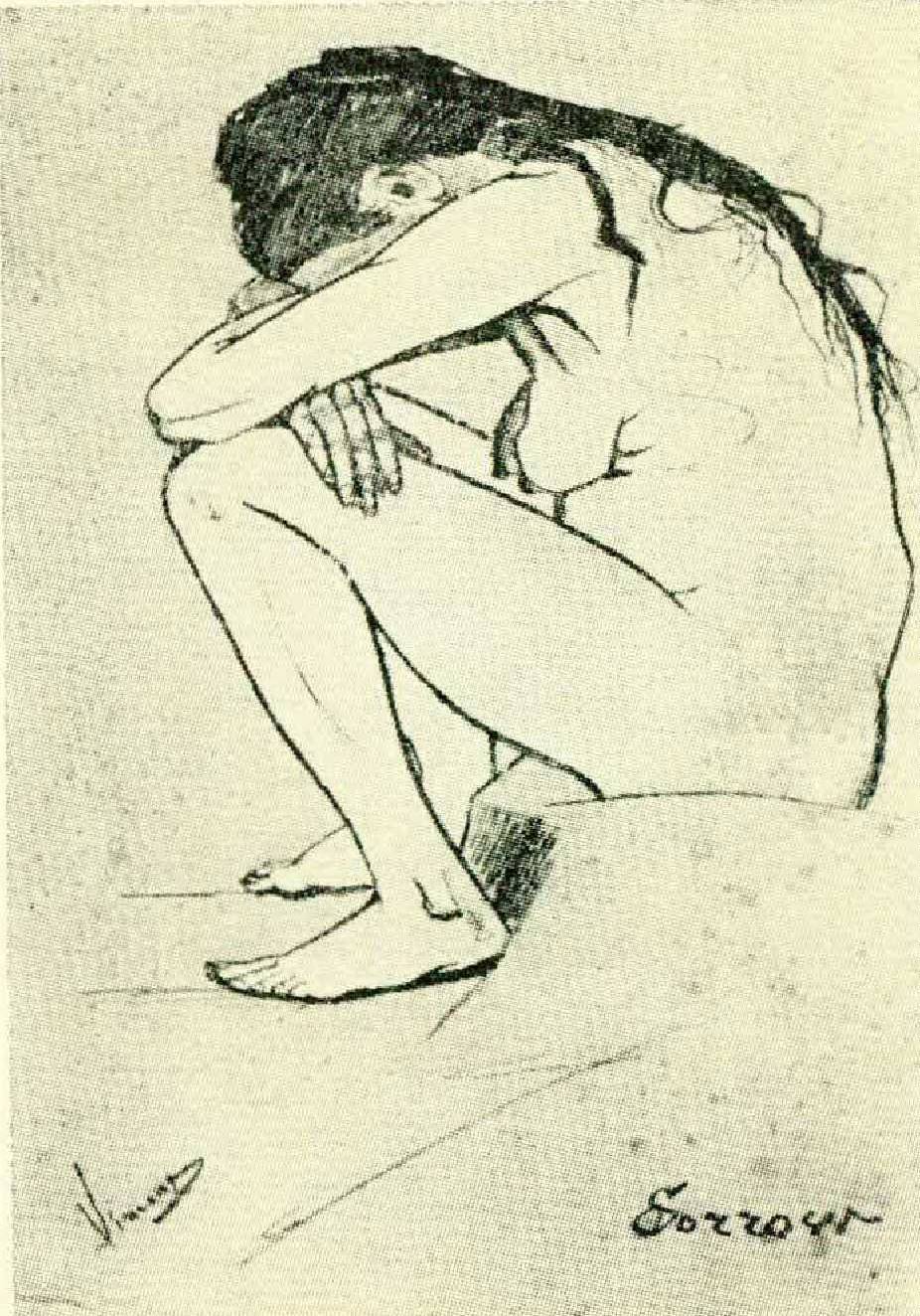
Prisoners are cut off from the possibility of normal sexual outlets; they are constantly threatened by homosexuality; they feel that they have been steamrollered by the police detectives and attorneys, cheated by their own lawyers, misunderstood by the judge, and let down by so-called friends, even by family. Already immature, they tend to regress to still earlier phases of development.
The familiar reply to this sort of argument is that we have other, more easily managed institutions for the training of good citizenship — the public schools, churches, community organizations, and so on. And that criminals have forfeited, at least temporarily, their right to share in the familiar advantages of these agencies.
The Crime of Punishment
by Karl Menninger, M.D. (Viking, $8.95)
Prison Within Society
Edited by Lawrence Hazelrigg (Doubleday, $7.95)
Casebook of a Crime Psychiatrist
by James A. Brussel, M.D. (Bernard Geis, $5.95)
And it is at this point that Menninger’s argument takes a provocative new turn. We are too quick to distinguish between the “criminal” and the good citizen, he argues, in part because we need the assurance of our own virtuousness, and in part because we thrive on the controlled violence a penal system makes possible. “The great secret, the deeply buried mystery of the apparent public apathy to crime and to proposals for better controlling crime, lies in the persistent, intrusive wish for vengeance.”
It is the cost and callousness of this thrust for vengeance, the wish to punish those we call criminal, that is the preoccupying theme of this angry book. And as an approach to an understanding of what our penal system is, and might be, it is too important to ignore. Dr. Menninger does not suggest that we disregard — in the spirit of Al Capp’s cartoon tirades against “understanding” in law enforcement — either criminal acts or the need to respond to them directly and forcefully. “The abolition of punishment does not mean the omission or curtailment of penalties; quite the contrary. Penalties should be greater and surer and quicker in corning. I favor stricter penalties for many offenses, and more swift and certain assessment of them.” The element of punishment, Menninger goes on to say, “is an adventitious and indefensible additional penalty; it corrupts the legal principle of quid pro quo with a ‘moral’ surcharge.”
At the heart of Menninger’s attitude toward the public treatment of criminals is the assumption that criminal acts are rooted in emotional distress — “the spasms and struggles and convulsions of a submarginal human being trying to make it in our complex society with inadequate equipment and inadequate preparation.”
And where there is emotional distress, it follows that there is psychiatric remedy, a proposition that is faithful to the most progressive strains of Western humanism, but enormously complicated, and expensive, when applied to the business of transforming social deviates into reliable and productive human beings. Dr. Menninger makes no effort to explore the problem in detail, and his book is both artlessly written and quite arbitrarily constructed.
The value of his indictment of traditional American penology lies in the polemical insistence of its governing thesis. It is an argument that, for all its careless lumping together of legal strictures, police procedures, political indifference, and public apathy, deserves to be considered by anyone who pretends to an interest in the universal potential — and elementary rights — of his fellow citizens.
Two other recent books that neatly counterpoint the thrust of Menninger’s polemic are Prison Within Society, a reader in penology edited by Lawrence Hazelrigg; and Casebook of a Crime Psychiatrist, a mildly sensational and largely trivial memoir by a New York psychiatrist, who nonetheless offers a number of fascinating insights into the behavior of the “Boston Strangler” and other murderous celebrities.
The Hazelrigg reader is quite clearly for an academic audience, but it is a remarkable collection of essays culled from professional journals that either directly or obliquely concern themselves with the social implications of prison society. Few of these essays have a trace of Dr. Menninger’s polemical fire, but if they are less provocative they are a great deal more informative. As a professionally sophisticated package of what reliable data are available in a field that has not been very carefully examined by our more diligent social critics, it is timely, and for the moment, invaluable.
Dr. Brussel’s book is quite smoothly written, in the breathless style of our successful crime reporters, and it tries, without marked success, to muffle the extraordinary ego of its author, who appears to have applied psychiatric techniques to the business of tracking down a number of notorious criminals, including New York’s “Mad Bomber,” Boston’s “Strangler,” and others.
If Dr. Brussel is unstinting in his own behalf, he is also lucid and persuasive in his arm’s length examination of the psychiatric logic lurking just beneath the surface of criminal behavior. His explanation of the behavior of the Boston Strangler, both before and after Albert De Salvo was identified as a prime suspect in the case, provides a useful illustration of the Menninger thesis, even as it underlines the hazards of the Menninger approach.
The Writers
Melvin Maddocks is the literary editor of the Christian Science Monitor.
C. Michael Curtis is an editor of the Atlantic.
Clarence Brown is a professor of Slavic languages and literature at Princeton University.
Edward Weeks is former editor of the Atlantic. His most recent book is Fresh Waters (AtlanticLittle, Brown).
J. P. O’Donnell is a free-lance writer living in West Berlin.
Dan Wakefield’s latest book is Supernation at Peace and War.
Herbert Kupferberg and Phoebe Adams are regular contributors.